
Search
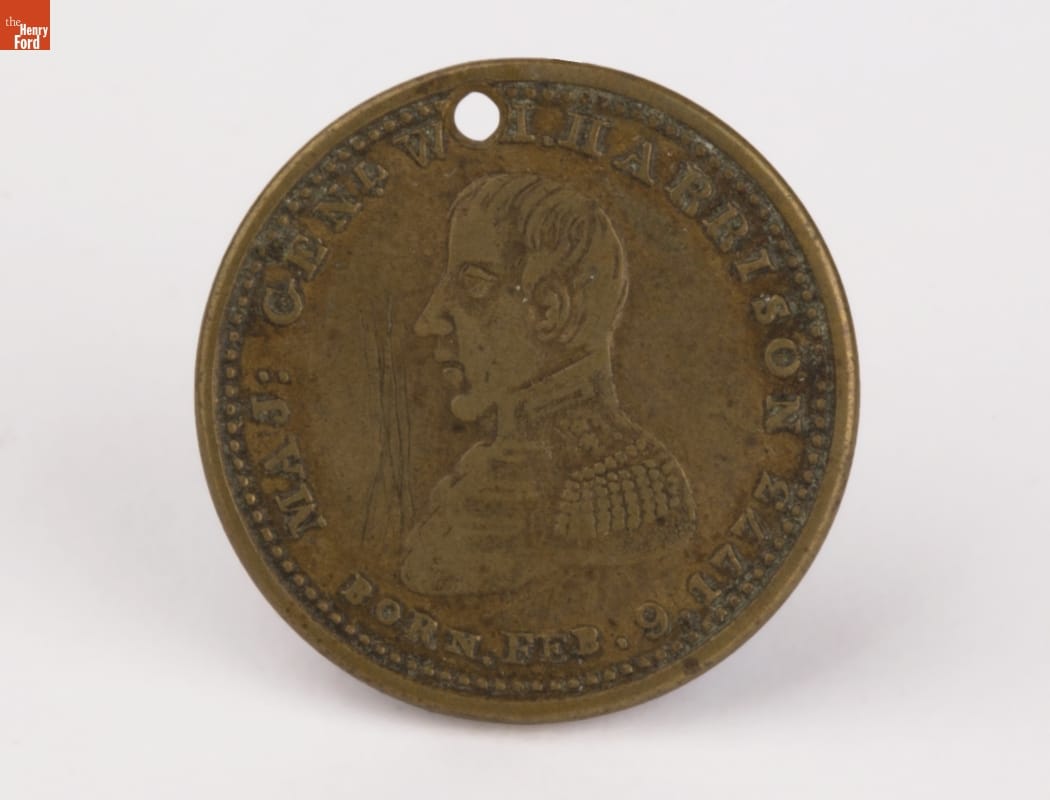
- William Henry Harrison Campaign Medal, 1840 - William Henry Harrison gained national fame in 1811 when he defeated a band of Native Americans at Tippecanoe near present-day Lafayette, Indiana. Though Harrison retired from the army in 1814, most Americans remembered his military service. When he ran for president in 1840, campaign slogans, songs and materials, such as this coin, constantly referred to Harrison as Tippecanoe.
- 1840
- Collections - Artifact
William Henry Harrison Campaign Medal, 1840
William Henry Harrison gained national fame in 1811 when he defeated a band of Native Americans at Tippecanoe near present-day Lafayette, Indiana. Though Harrison retired from the army in 1814, most Americans remembered his military service. When he ran for president in 1840, campaign slogans, songs and materials, such as this coin, constantly referred to Harrison as Tippecanoe.
- Music Sheet Cover, "Arouse Ye, Patriot Whigs!," 1840 -

- 1840
- Collections - Artifact
Music Sheet Cover, "Arouse Ye, Patriot Whigs!," 1840
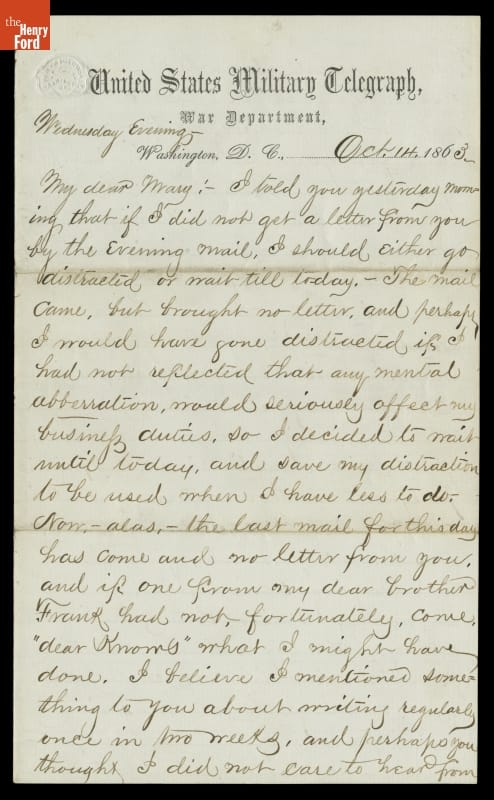
- Letter from Albert B. Chandler to Marilla Stedman, October 14, 1863 - Albert B. Chandler served as a cipher operator at the War Department office in Washington, D.C., during the Civil War. He transmitted coded messages to and decoded messages from Union military field commanders. While at this post, he became acquainted with President Abraham Lincoln. Chandler describes some of his wartime experiences in this letter to Marilla Stedman, his future bride.
- October 14, 1863
- Collections - Artifact
Letter from Albert B. Chandler to Marilla Stedman, October 14, 1863
Albert B. Chandler served as a cipher operator at the War Department office in Washington, D.C., during the Civil War. He transmitted coded messages to and decoded messages from Union military field commanders. While at this post, he became acquainted with President Abraham Lincoln. Chandler describes some of his wartime experiences in this letter to Marilla Stedman, his future bride.
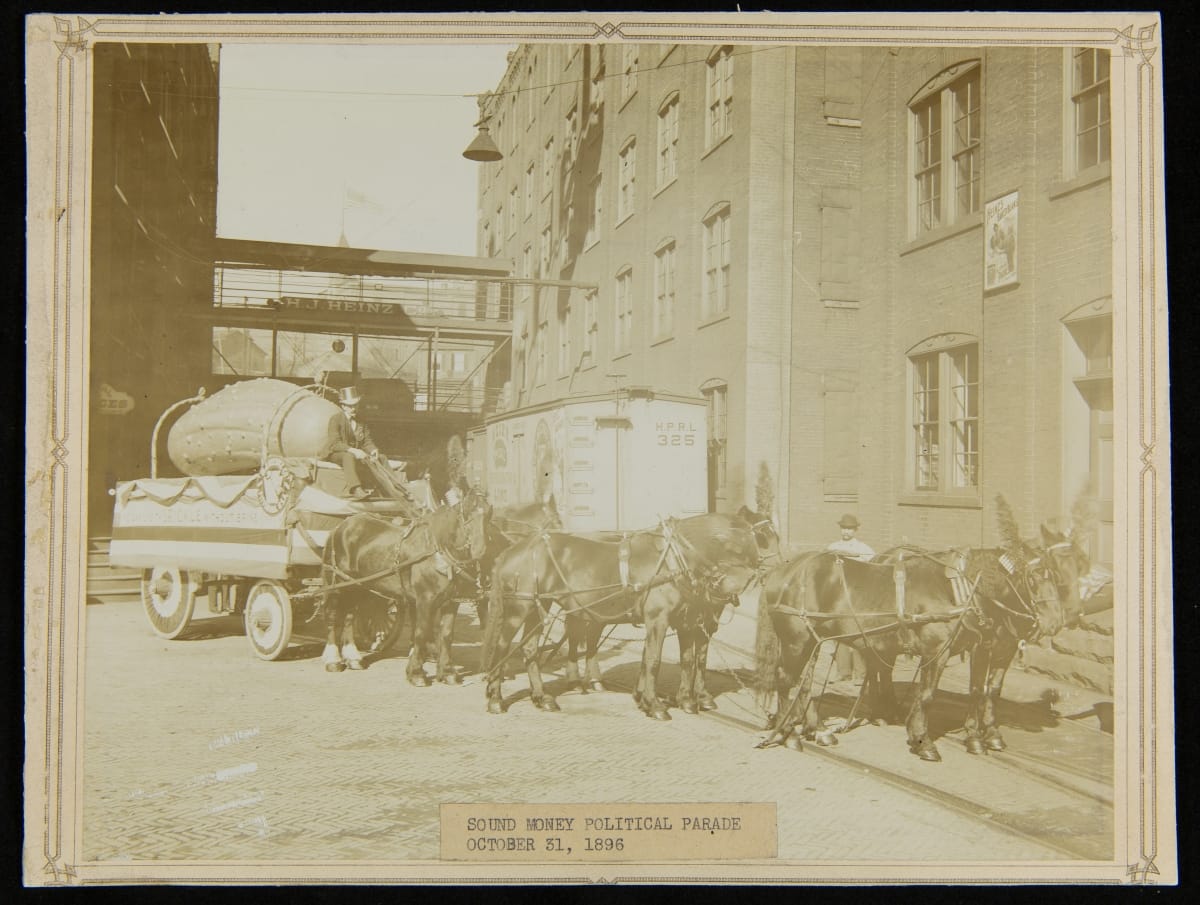
- Heinz Float for the Sound Money Political Parade in Pittsburgh, Pennsylvania, October 31, 1896 - During the 1896 election campaign, "Sound Money" political parades were held in San Francisco and New York City in support of presidential candidate William McKinley. The H.J. Heinz Company participated in the parade held in New York with this float featuring a giant pickle. McKinley would go on to defeat candidate William Jennings Bryan to become President.
- October 31, 1896
- Collections - Artifact
Heinz Float for the Sound Money Political Parade in Pittsburgh, Pennsylvania, October 31, 1896
During the 1896 election campaign, "Sound Money" political parades were held in San Francisco and New York City in support of presidential candidate William McKinley. The H.J. Heinz Company participated in the parade held in New York with this float featuring a giant pickle. McKinley would go on to defeat candidate William Jennings Bryan to become President.
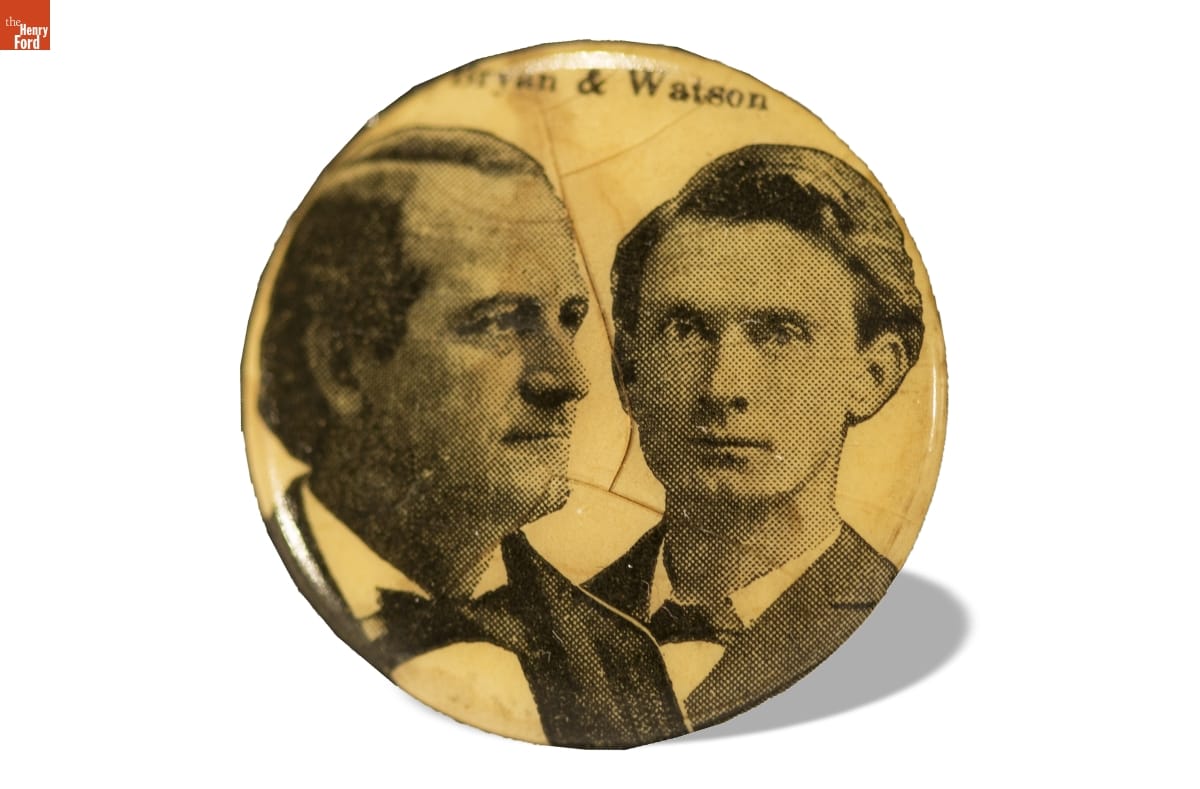
- Bryan-Watson Campaign Button, 1896 - In 1896, William Jennings Bryan captured both the Democratic and Populist Party's presidential nominations. Each party, however, nominated their own vice presidential candidates. The Democrats chose Arthur Sewall. The Populists chose Thomas E. Watson--pictured with Bryan on this campaign button. Neither ticket won. Bryan lost to the Republican nominee, William McKinley.
- 1896
- Collections - Artifact
Bryan-Watson Campaign Button, 1896
In 1896, William Jennings Bryan captured both the Democratic and Populist Party's presidential nominations. Each party, however, nominated their own vice presidential candidates. The Democrats chose Arthur Sewall. The Populists chose Thomas E. Watson--pictured with Bryan on this campaign button. Neither ticket won. Bryan lost to the Republican nominee, William McKinley.
- William Bryan Campaign Button, 1908 - William Jennings Bryan made his third and last attempt to become president in 1908. Bryan and his running mate, Indiana Senator John Kern, tried to distinguish themselves from their Republican opponents by championing a variety of domestic reforms. It didn't work. Voters chose the safe, well-qualified William Howard Taft -- President Roosevelt's hand-picked successor.
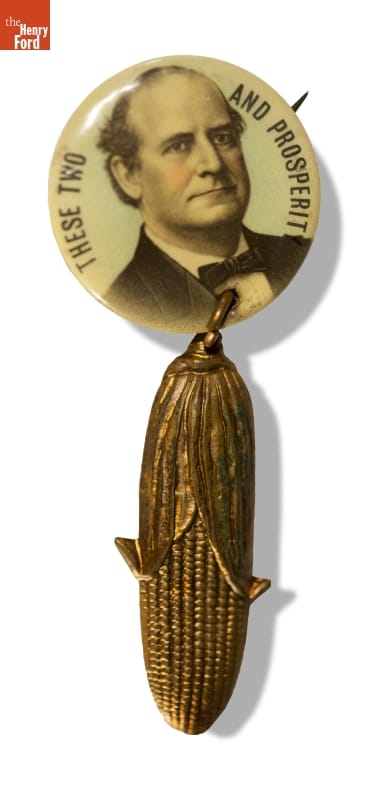
- 1908
- Collections - Artifact
William Bryan Campaign Button, 1908
William Jennings Bryan made his third and last attempt to become president in 1908. Bryan and his running mate, Indiana Senator John Kern, tried to distinguish themselves from their Republican opponents by championing a variety of domestic reforms. It didn't work. Voters chose the safe, well-qualified William Howard Taft -- President Roosevelt's hand-picked successor.
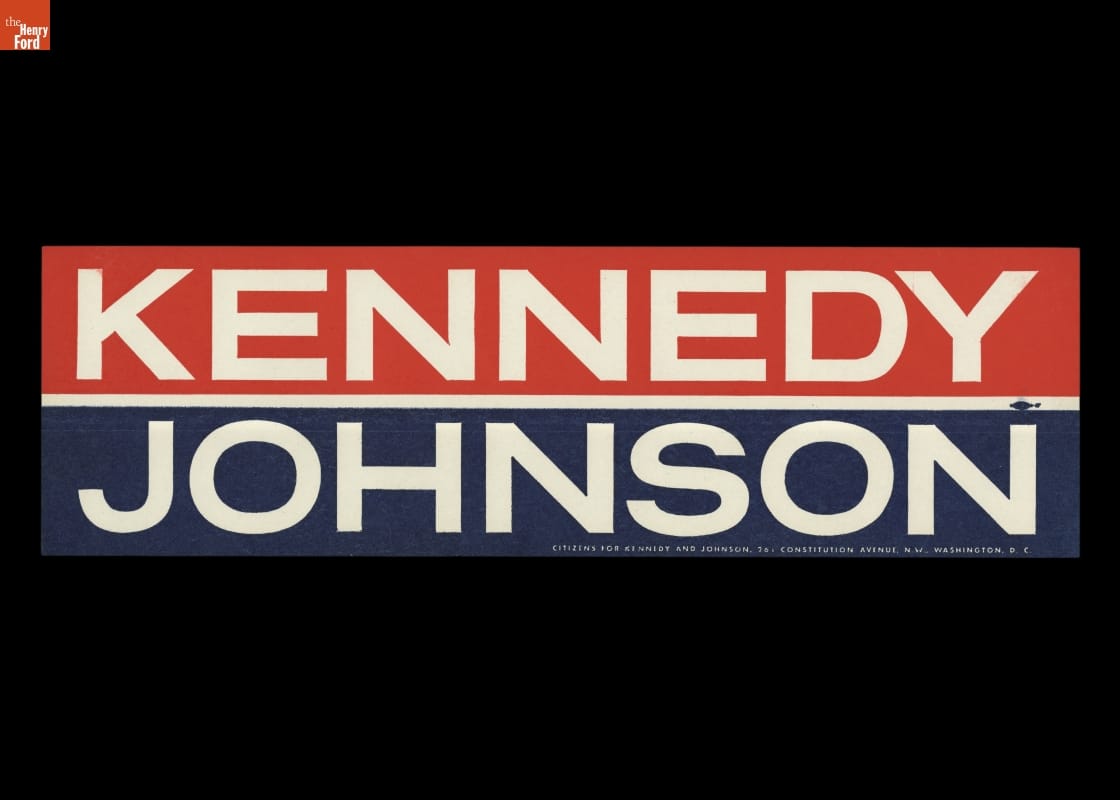
- Political Campaign Bumper Sticker, "Kennedy / Johnson," 1960 - This bumper sticker was produced for the 1960 Kennedy-Johnson presidential campaign. After John F. Kennedy defeated Texas Senator Lyndon B. Johnson in the 1960 Democratic primary, Kennedy named Johnson as his running mate. Johnson's addition brought on board an experienced old-school politician, and also provided a better chance of victory in the key swing states.
- 1960
- Collections - Artifact
Political Campaign Bumper Sticker, "Kennedy / Johnson," 1960
This bumper sticker was produced for the 1960 Kennedy-Johnson presidential campaign. After John F. Kennedy defeated Texas Senator Lyndon B. Johnson in the 1960 Democratic primary, Kennedy named Johnson as his running mate. Johnson's addition brought on board an experienced old-school politician, and also provided a better chance of victory in the key swing states.
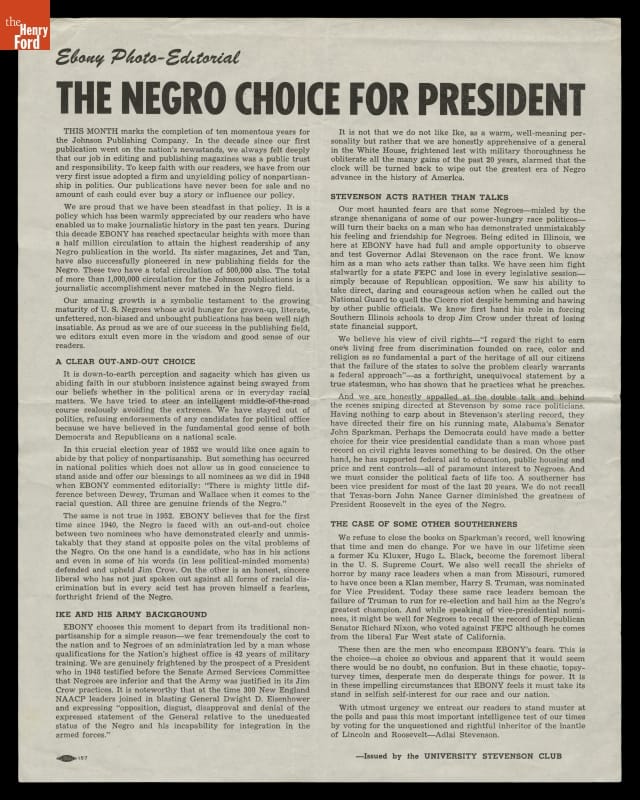
- Handbill, "The Negro Choice for President," 1952 -
- 1952
- Collections - Artifact
Handbill, "The Negro Choice for President," 1952
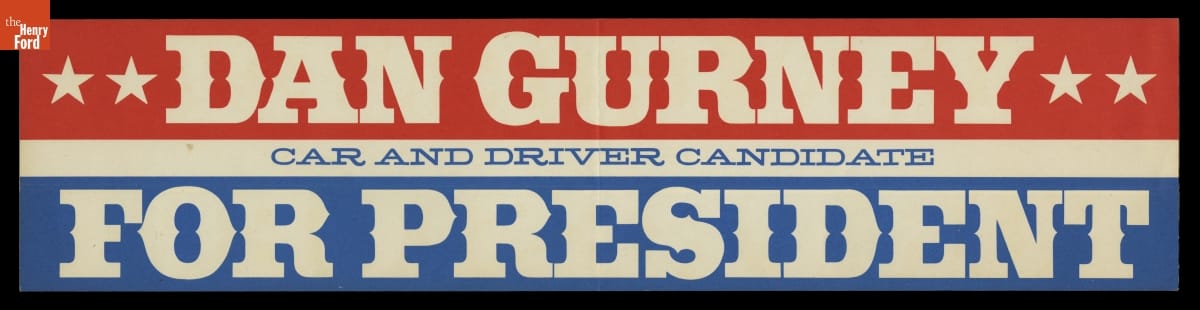
- Dan Gurney, Car and Driver Candidate for President, 1964 - In 1964, <EM>Car and Driver</EM> launched a tongue-in-cheek campaign supporting race driver Dan Gurney for President of the United States. No other candidate, the magazine wrote, represented the needs of the enthusiast driver. Throughout that summer and fall, "Dan Gurney for President" editorials and advertisements appeared in each issue and, for $1, readers could mail-order Gurney bumper stickers and buttons.
- 1964
- Collections - Artifact
Dan Gurney, Car and Driver Candidate for President, 1964
In 1964, Car and Driver launched a tongue-in-cheek campaign supporting race driver Dan Gurney for President of the United States. No other candidate, the magazine wrote, represented the needs of the enthusiast driver. Throughout that summer and fall, "Dan Gurney for President" editorials and advertisements appeared in each issue and, for $1, readers could mail-order Gurney bumper stickers and buttons.
- Sticker Showing Skull/Punisher Logo with Donald Trump Hair, 2020 - The "Punisher" skull motif originated with the fictional Marvel Comics character Frank G. Castle. A highly skilled veteran, Castle seeks to avenge the death of his family and fight crime. The skull was adopted by military personnel in the 2000s, followed by pro-police groups, white-supremacists and far-right political groups. The skull motif has been modified with Trump's iconic swooping hairstyle.

- 2020
- Collections - Artifact
Sticker Showing Skull/Punisher Logo with Donald Trump Hair, 2020
The "Punisher" skull motif originated with the fictional Marvel Comics character Frank G. Castle. A highly skilled veteran, Castle seeks to avenge the death of his family and fight crime. The skull was adopted by military personnel in the 2000s, followed by pro-police groups, white-supremacists and far-right political groups. The skull motif has been modified with Trump's iconic swooping hairstyle.