
Search
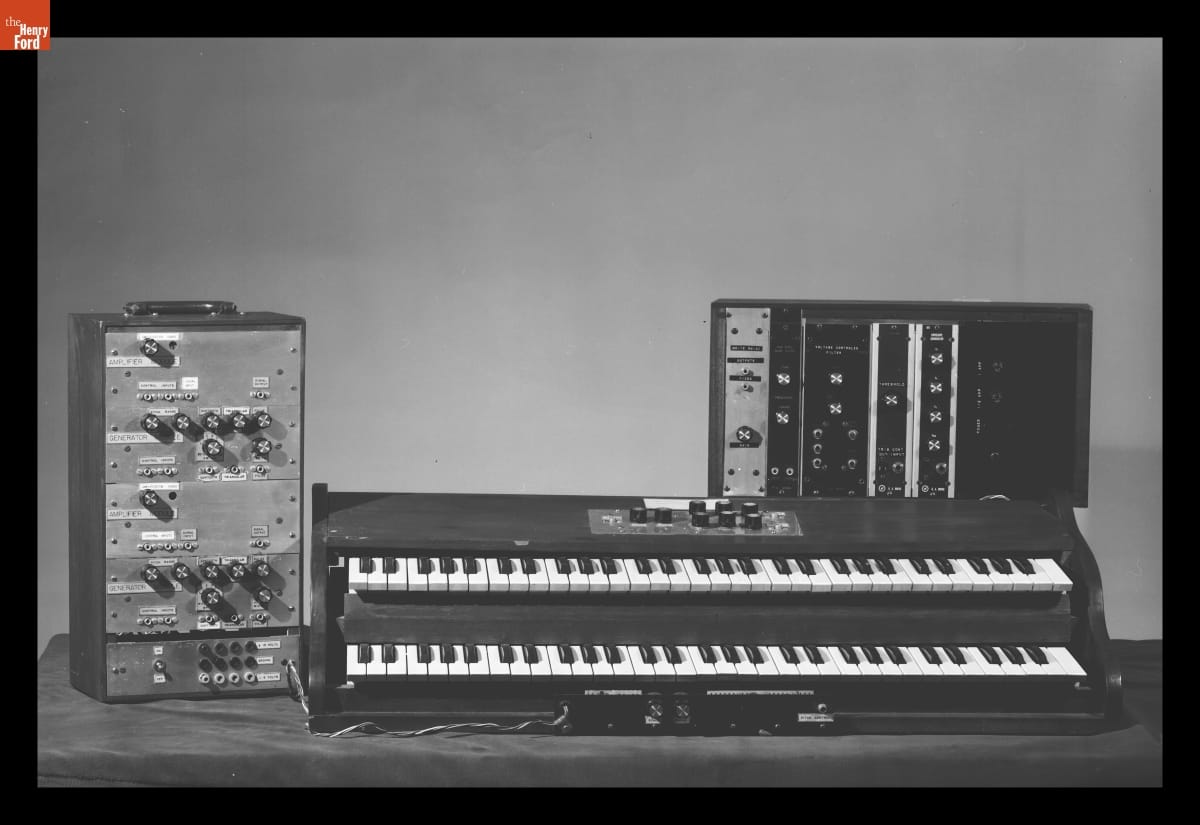
- Robert Moog's First Prototype Synthesizer in Henry Ford Museum, 1983 - This prototype synthesizer--a collaboration between engineer Robert Moog and composer Herbert Deutsch--is a musical icon. Synthesizers create unique electronically produced sounds. Moog's solid-state synthesizer was musically superior and much more portable than earlier vacuum-tube-based systems. In 1968, the album <em>Switched-On Bach</em> introduced the Moog synthesizer to a wider audience. Synthesizers quickly became a mainstay of popular music.
- 1983
- Collections - Artifact
Robert Moog's First Prototype Synthesizer in Henry Ford Museum, 1983
This prototype synthesizer--a collaboration between engineer Robert Moog and composer Herbert Deutsch--is a musical icon. Synthesizers create unique electronically produced sounds. Moog's solid-state synthesizer was musically superior and much more portable than earlier vacuum-tube-based systems. In 1968, the album Switched-On Bach introduced the Moog synthesizer to a wider audience. Synthesizers quickly became a mainstay of popular music.
- Electrical Discharge Tube -
- Collections - Artifact
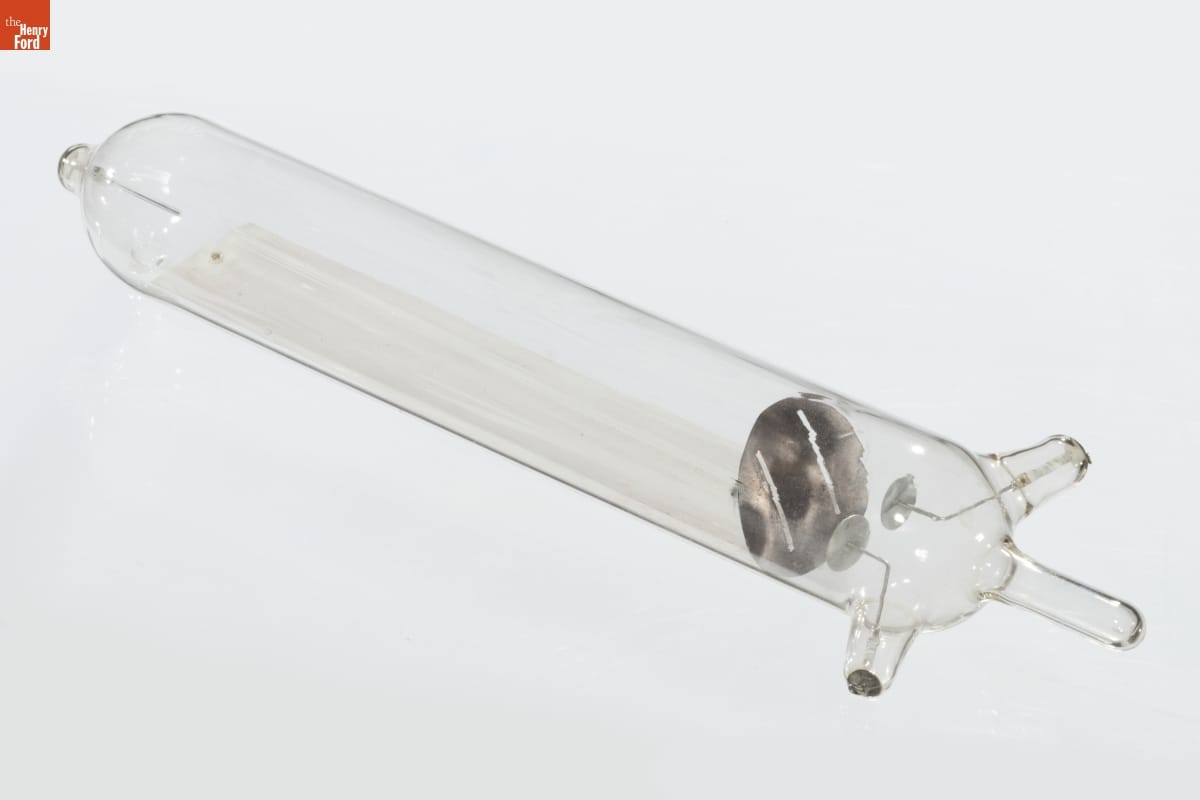
Electrical Discharge Tube
- "The Workshop," Clip from Interview with Herb Deutsch, 2014 - Herbert Deutsch is a pioneer of synthesized music--a long-time composer, music educator, and author. In 1964, he worked with Bob Moog to develop the first prototype Moog synthesizer, now in The Henry Ford's collections. Deutsch also served as the Director of Marketing & Sales during the heyday of Moog Music (1979-1983), and was a consultant for the Roland Corporation.
- 25 July 2014-26 July 2014
- Collections - Artifact
"The Workshop," Clip from Interview with Herb Deutsch, 2014
Herbert Deutsch is a pioneer of synthesized music--a long-time composer, music educator, and author. In 1964, he worked with Bob Moog to develop the first prototype Moog synthesizer, now in The Henry Ford's collections. Deutsch also served as the Director of Marketing & Sales during the heyday of Moog Music (1979-1983), and was a consultant for the Roland Corporation.
- "Synthesis Success," Clip from Interview with Herb Deutsch, 2014 - Herbert Deutsch is a pioneer of synthesized music--a long-time composer, music educator, and author. In 1964, he worked with Bob Moog to develop the first prototype Moog synthesizer, now in The Henry Ford's collections. Deutsch also served as the Director of Marketing & Sales during the heyday of Moog Music (1979-1983), and was a consultant for the Roland Corporation.

- 25 July 2014-26 July 2014
- Collections - Artifact
"Synthesis Success," Clip from Interview with Herb Deutsch, 2014
Herbert Deutsch is a pioneer of synthesized music--a long-time composer, music educator, and author. In 1964, he worked with Bob Moog to develop the first prototype Moog synthesizer, now in The Henry Ford's collections. Deutsch also served as the Director of Marketing & Sales during the heyday of Moog Music (1979-1983), and was a consultant for the Roland Corporation.
- Sharp GF-777 "The Searcher-W" Boombox, circa 1984 -
- circa 1984
- Collections - Artifact
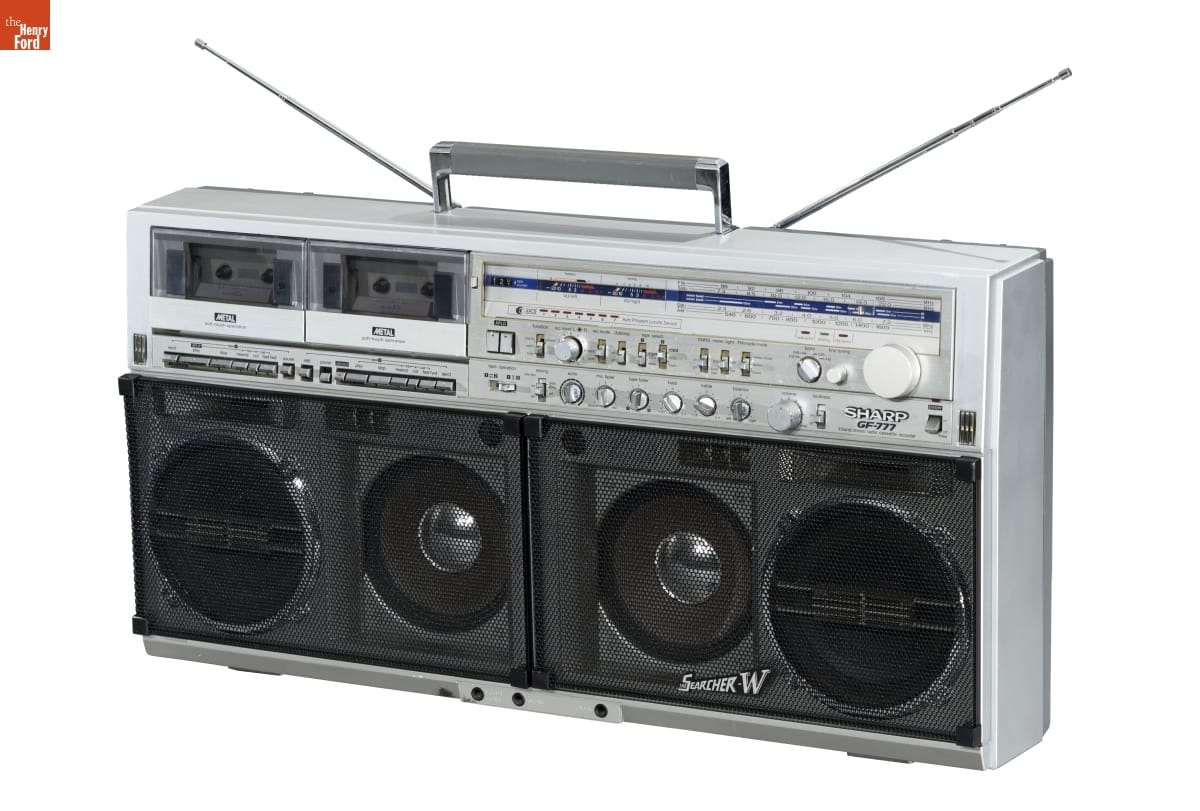
Sharp GF-777 "The Searcher-W" Boombox, circa 1984
- Macintosh 512K Personal Computer, Model M0001W, 1985 - In 1984, the Apple Macintosh became the first popular personal computer to feature the now-ubiquitous mouse and "graphical user interface" desktop. Despite the Mac's relatively high price, its user-friendly features helped it demystify computing for many people without a technical bent. This computer is a Macintosh 512k, released in 1985 with increased memory.
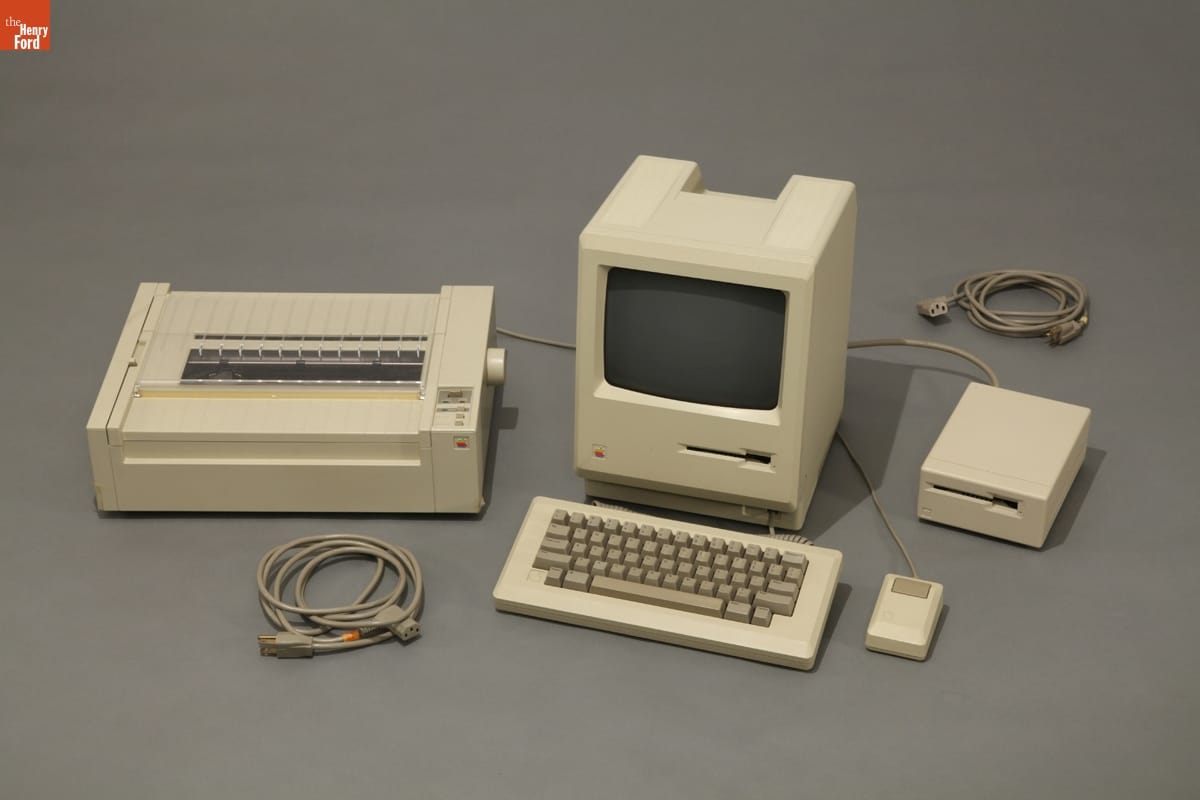
- 1985
- Collections - Artifact
Macintosh 512K Personal Computer, Model M0001W, 1985
In 1984, the Apple Macintosh became the first popular personal computer to feature the now-ubiquitous mouse and "graphical user interface" desktop. Despite the Mac's relatively high price, its user-friendly features helped it demystify computing for many people without a technical bent. This computer is a Macintosh 512k, released in 1985 with increased memory.
- Bell System Alarm Relay, circa 1965 - Connected to a telephone, this signal relay could extend typical ringtones. It amplified the volume of ringing, and distinctive tones could be created for incoming calls: chimes, horns, and vibrating bells. A system like this was useful in loud industrial settings and large spaces.
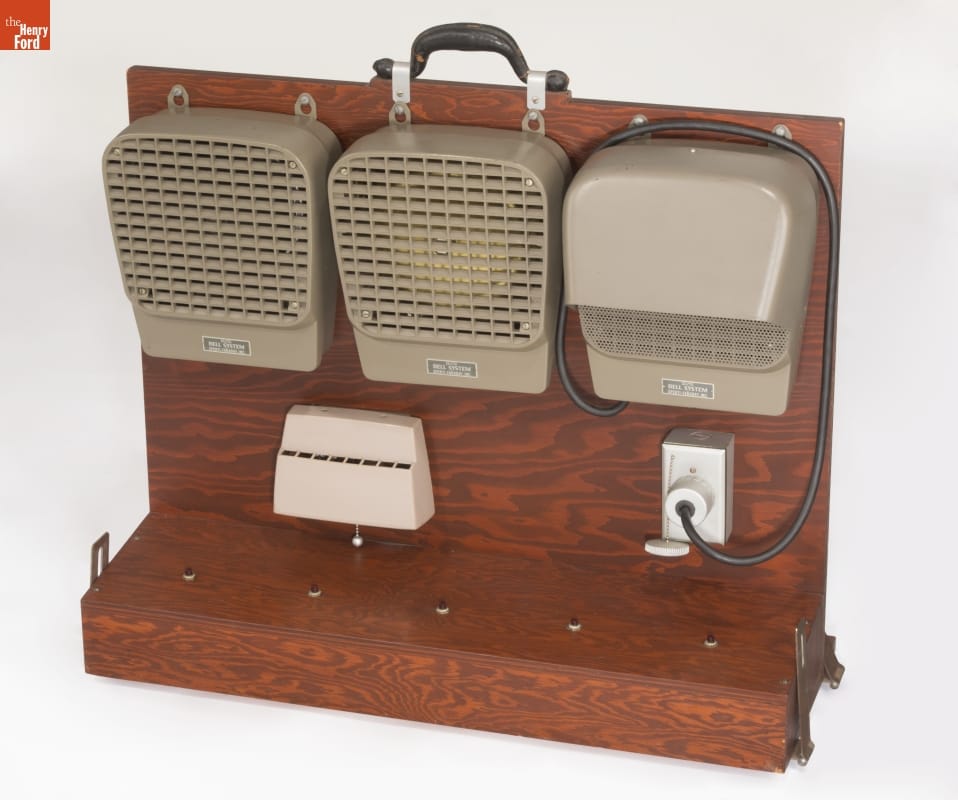
- circa 1965
- Collections - Artifact
Bell System Alarm Relay, circa 1965
Connected to a telephone, this signal relay could extend typical ringtones. It amplified the volume of ringing, and distinctive tones could be created for incoming calls: chimes, horns, and vibrating bells. A system like this was useful in loud industrial settings and large spaces.
- CPT Word Processor, Model 8525, 1981 -
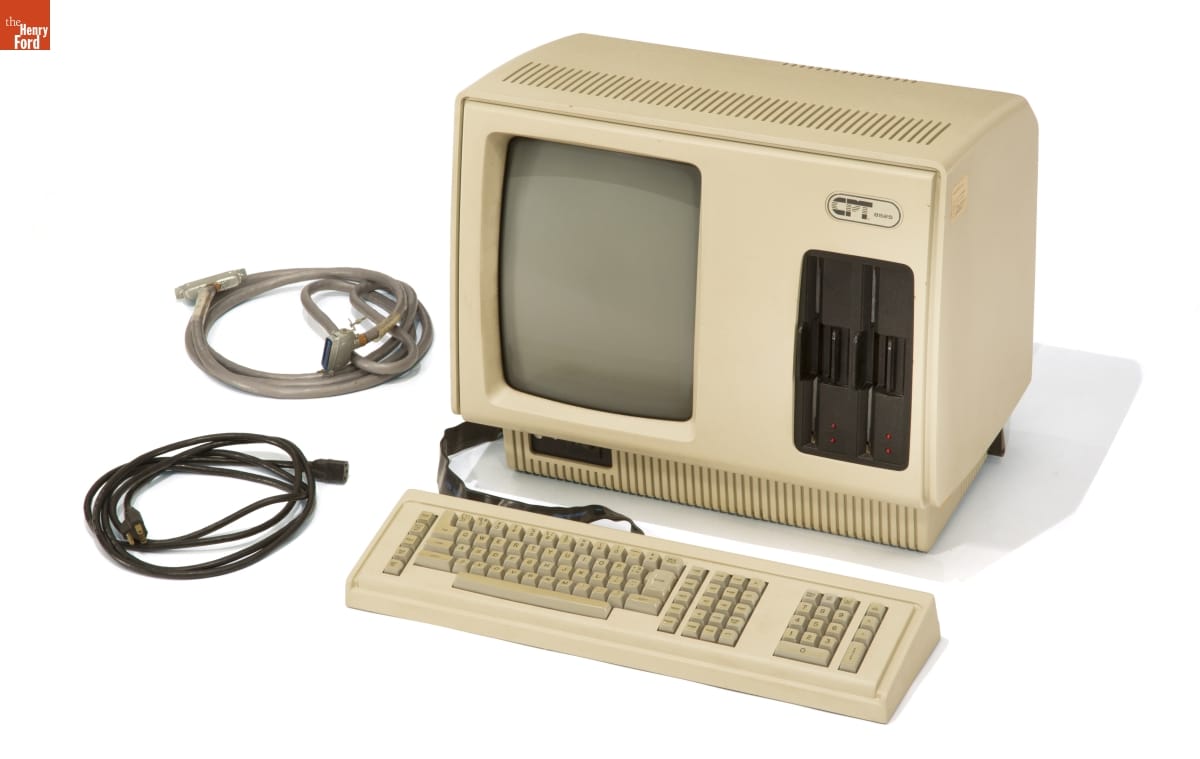
- 1981
- Collections - Artifact
CPT Word Processor, Model 8525, 1981
- Internet: A First Discovery Book, 2000 - Librarian Jean Armour Polly coined the slang idiom "surf the net" in the early 1990s. Believing the Internet--in addition to books and other printed matter--could be a resource for learning, Polly advocated for free Internet access in public libraries. She used surfing as a metaphor when she authored a guide titled "Surfing the Internet: An introduction." The phrase quickly caught on.

- 2000
- Collections - Artifact
Internet: A First Discovery Book, 2000
Librarian Jean Armour Polly coined the slang idiom "surf the net" in the early 1990s. Believing the Internet--in addition to books and other printed matter--could be a resource for learning, Polly advocated for free Internet access in public libraries. She used surfing as a metaphor when she authored a guide titled "Surfing the Internet: An introduction." The phrase quickly caught on.
- Experimental High Voltage Mercury Rectifier -
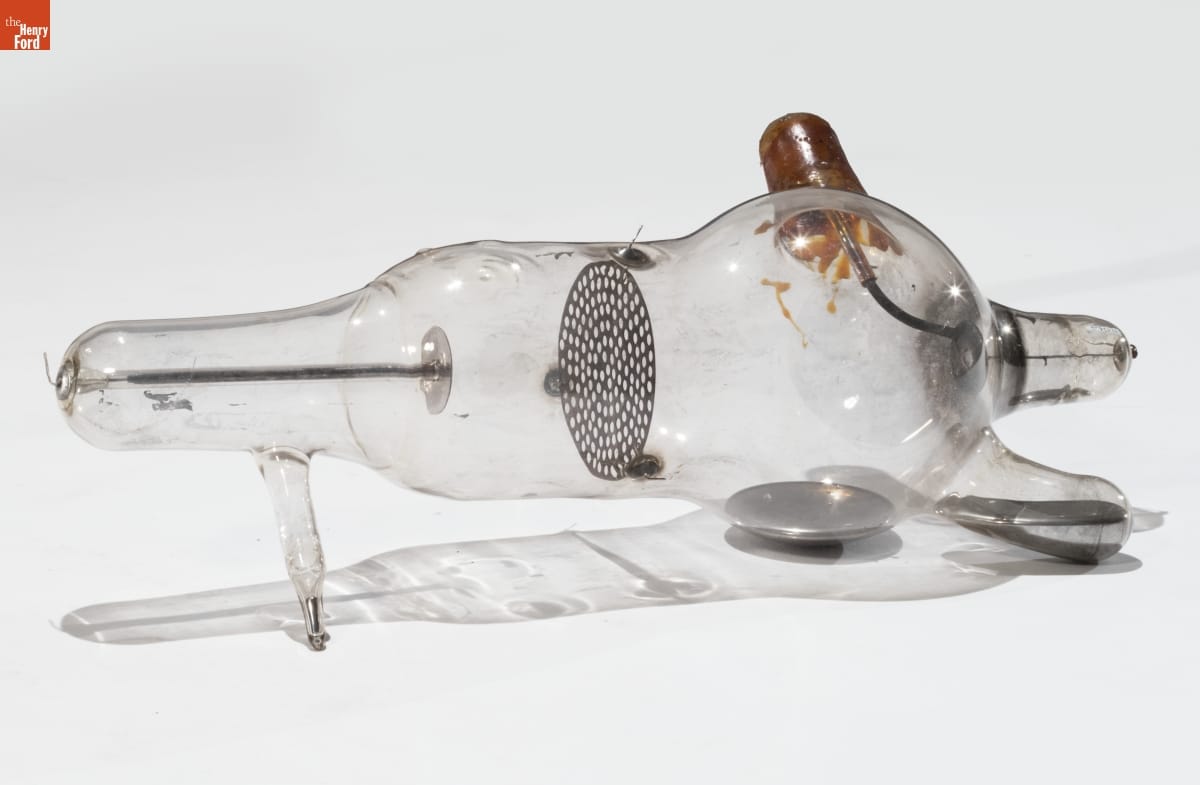
- Collections - Artifact
Experimental High Voltage Mercury Rectifier