
Search
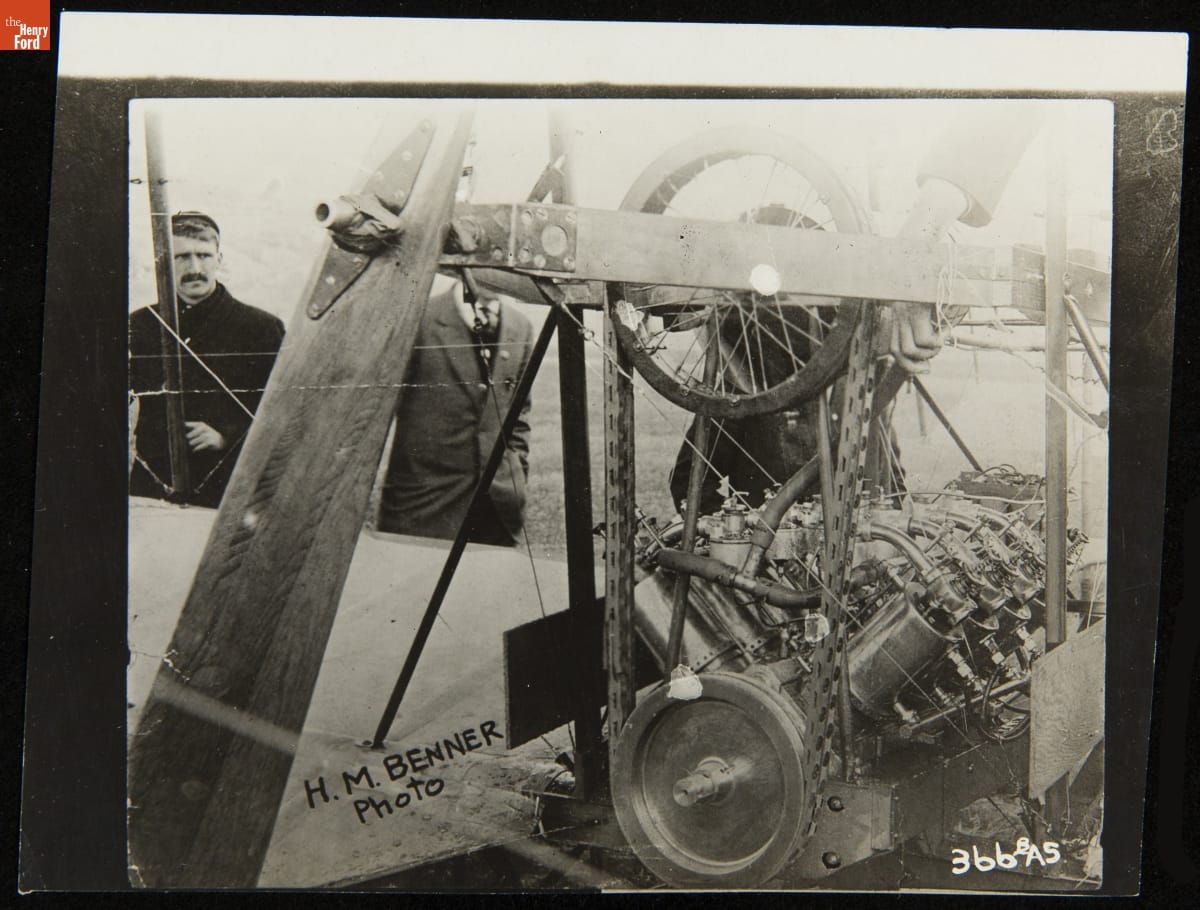
- Engine Designed by Glenn Curtiss for the Aerial Experiment Association's "Silver Dart" Airplane, 1908-1909 - In 1907, Alexander Graham Bell recruited a team of young aviation enthusiasts for his elite Aerial Experiment Association (AEA). The group produced a string of airplanes that ultimately achieved manned flight and contributed key developments to the fledgling field of aviation. AEA "motor expert" Glenn Curtiss designed this water-cooled engine to prevent overheating and allow for longer flights.
- 1908-1909
- Collections - Artifact
Engine Designed by Glenn Curtiss for the Aerial Experiment Association's "Silver Dart" Airplane, 1908-1909
In 1907, Alexander Graham Bell recruited a team of young aviation enthusiasts for his elite Aerial Experiment Association (AEA). The group produced a string of airplanes that ultimately achieved manned flight and contributed key developments to the fledgling field of aviation. AEA "motor expert" Glenn Curtiss designed this water-cooled engine to prevent overheating and allow for longer flights.
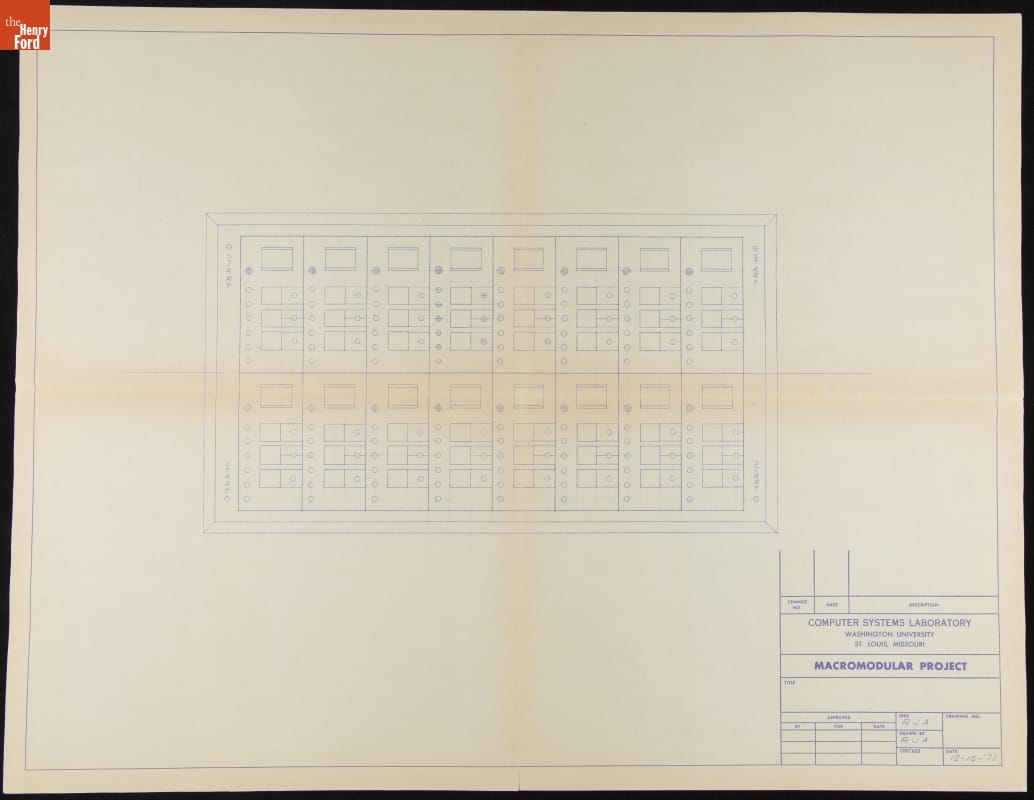
- Technical Drawing for the "TOWTMTEWP" Computer, December 1971 - In 1936, Alan Turing wrote about a theoretical universal computer now referred to as a "Turing Machine." In 1972, Washington University professors Wesley Clark and Bob Arnzen likely made the first physical version of Turing's machine. Clark used the TOWTMTEWP ("The Only Working Turing Machine There Ever Was Probably") as an educational tool, demonstrating basic computer theory for his students.
- December 15, 1971
- Collections - Artifact
Technical Drawing for the "TOWTMTEWP" Computer, December 1971
In 1936, Alan Turing wrote about a theoretical universal computer now referred to as a "Turing Machine." In 1972, Washington University professors Wesley Clark and Bob Arnzen likely made the first physical version of Turing's machine. Clark used the TOWTMTEWP ("The Only Working Turing Machine There Ever Was Probably") as an educational tool, demonstrating basic computer theory for his students.
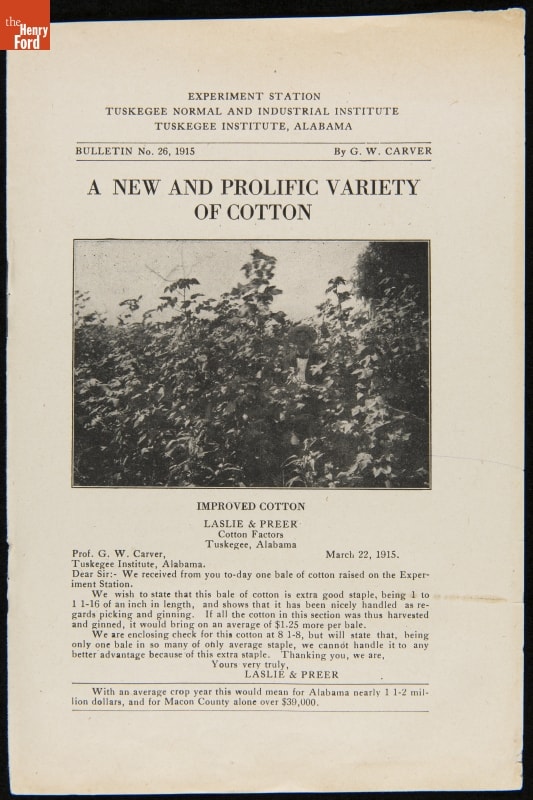
- A New and Prolific Variety of Cotton, Bulletin No. 26, 1915 -
- 1915
- Collections - Artifact
A New and Prolific Variety of Cotton, Bulletin No. 26, 1915
- Photograph Album of the H. J. Heinz Company War Production Division, circa 1945 - Company photograph albums are often reminders of the company's history, significant moments in time, and the employees who worked there. This album, compiled by the H.J. Heinz Company, includes text and photographs describing the company's involvement in producing airplane parts during World War II.
- circa 1945
- Collections - Artifact
Photograph Album of the H. J. Heinz Company War Production Division, circa 1945
Company photograph albums are often reminders of the company's history, significant moments in time, and the employees who worked there. This album, compiled by the H.J. Heinz Company, includes text and photographs describing the company's involvement in producing airplane parts during World War II.
- J.H. McEwen Manufacturing Company Thompson-Ryan Dynamo, 1894 -
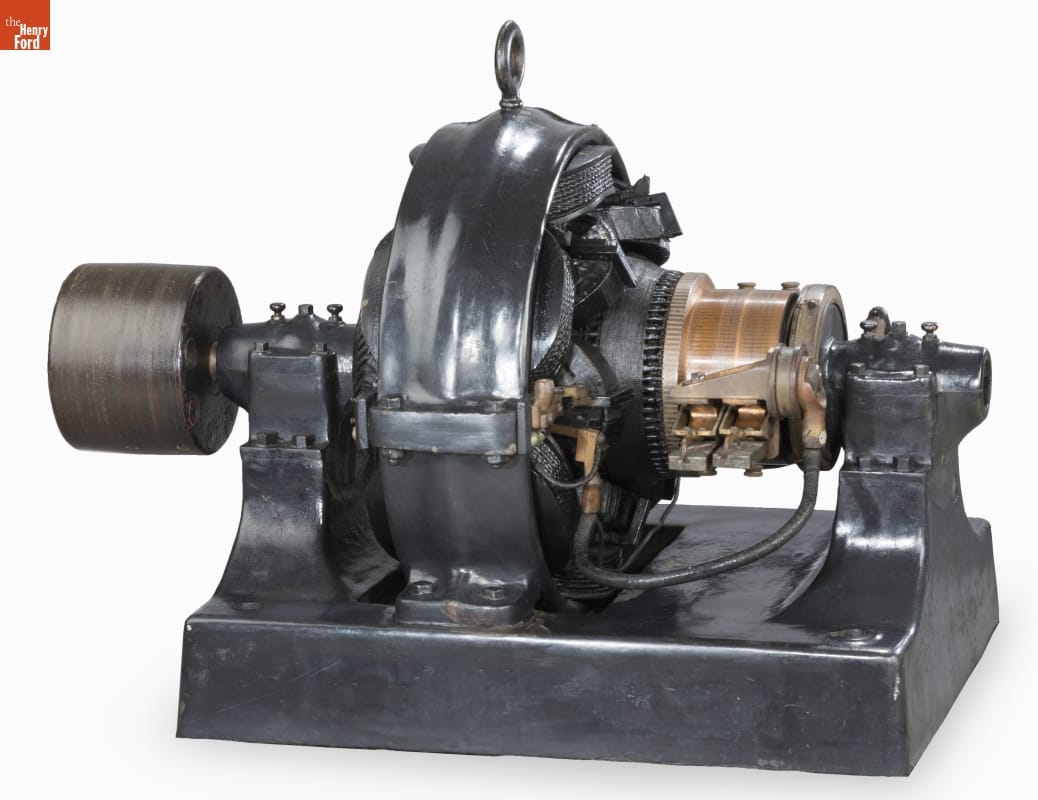
- 1894
- Collections - Artifact
J.H. McEwen Manufacturing Company Thompson-Ryan Dynamo, 1894
- Stator for Experimental Westinghouse Induction Motor, 1889-1893 -
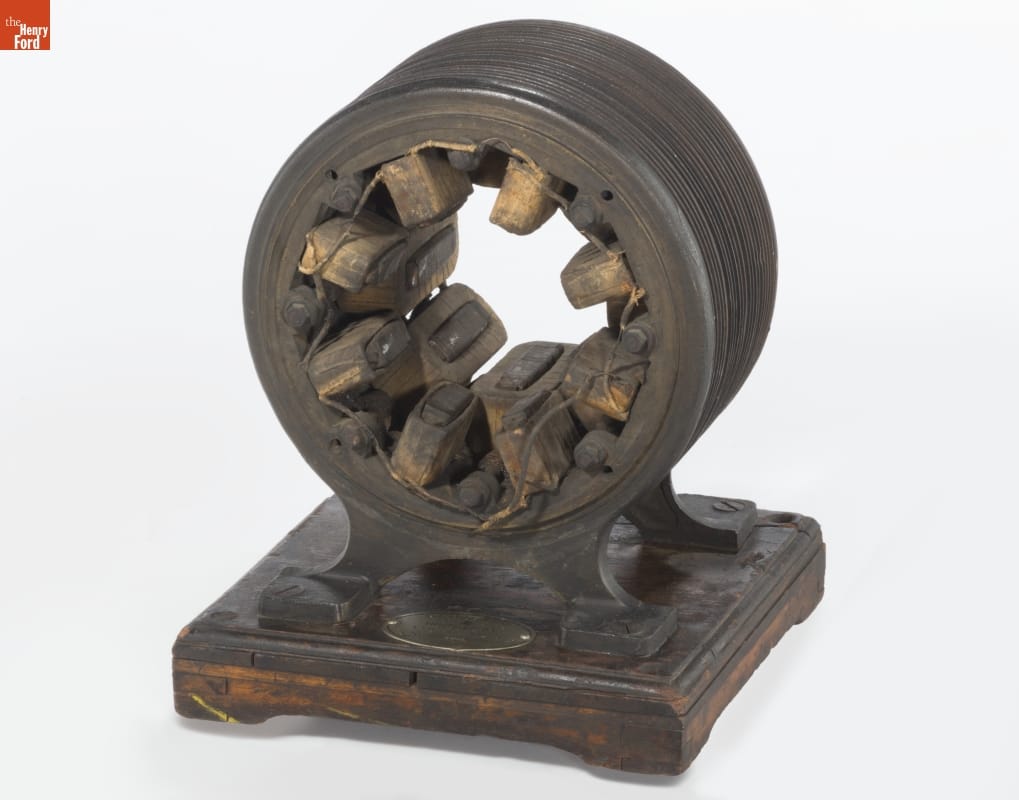
- 1889-1893
- Collections - Artifact
Stator for Experimental Westinghouse Induction Motor, 1889-1893
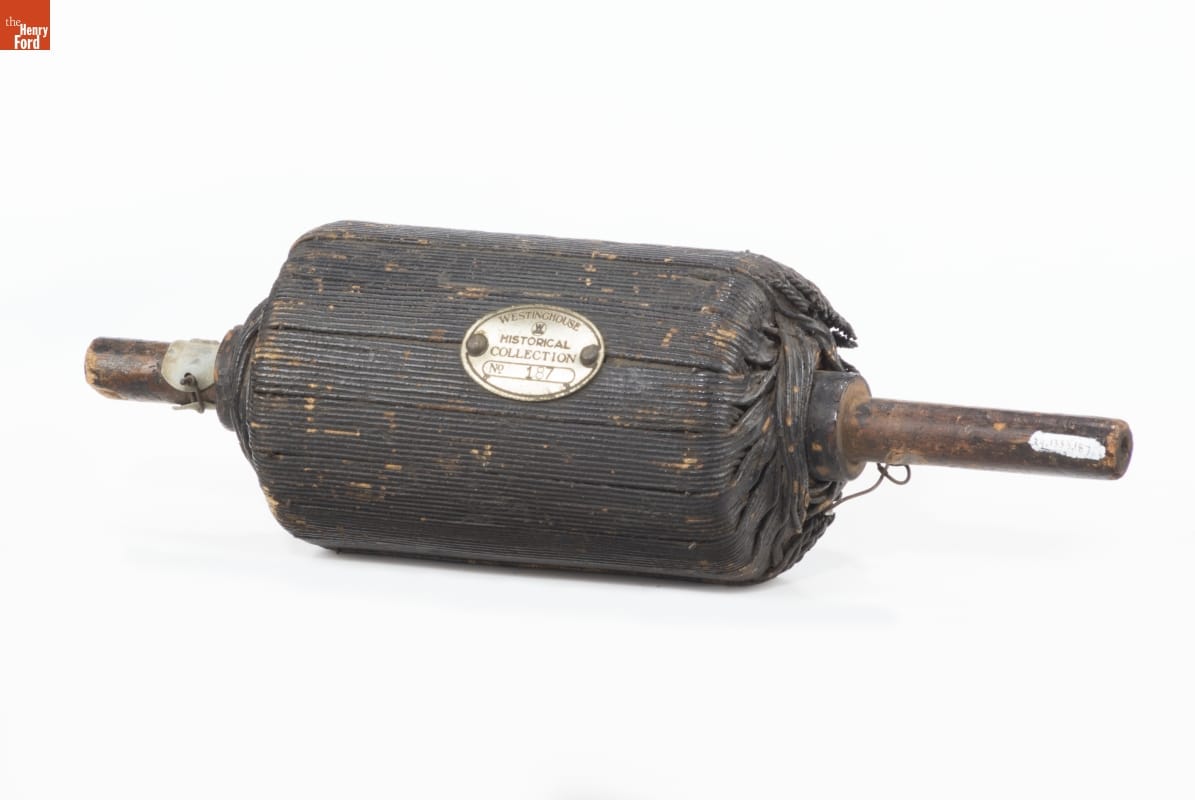
- Short Circuited Rotor for Experimental Westinghouse Induction Motor, 1889-1893 - Nikola Tesla's name is inseparable from the development of alternating current electricity--particularly with regard to polyphase transmission, but especially with regard to the induction motor. His motor, patented in 1888, was the first practical AC motor. George Westinghouse licensed Tesla's motor patents that same year--enabling the Westinghouse AC lighting system to become a real competitor with direct current systems.
- 1889-1893
- Collections - Artifact
Short Circuited Rotor for Experimental Westinghouse Induction Motor, 1889-1893
Nikola Tesla's name is inseparable from the development of alternating current electricity--particularly with regard to polyphase transmission, but especially with regard to the induction motor. His motor, patented in 1888, was the first practical AC motor. George Westinghouse licensed Tesla's motor patents that same year--enabling the Westinghouse AC lighting system to become a real competitor with direct current systems.
- G.H. Curtiss Manufacturing Company Workshop Building, Hammondsport, N.Y., 1906-1907 - Glenn Curtiss formed the G.H. Curtiss Manufacturing Company in his hometown of Hammondsport, New York, in 1901. The company built motorcycles until 1913, and Curtiss himself set several speed records. In 1907, he reached 136.36 mph on a 40-horsepower V-8 racing motorcycle. By that time. Curtiss's interests and efforts were increasingly focused on aviation.

- 1906-1907
- Collections - Artifact
G.H. Curtiss Manufacturing Company Workshop Building, Hammondsport, N.Y., 1906-1907
Glenn Curtiss formed the G.H. Curtiss Manufacturing Company in his hometown of Hammondsport, New York, in 1901. The company built motorcycles until 1913, and Curtiss himself set several speed records. In 1907, he reached 136.36 mph on a 40-horsepower V-8 racing motorcycle. By that time. Curtiss's interests and efforts were increasingly focused on aviation.
- Cullets, Created by Harvey Littleton, circa 1960 -
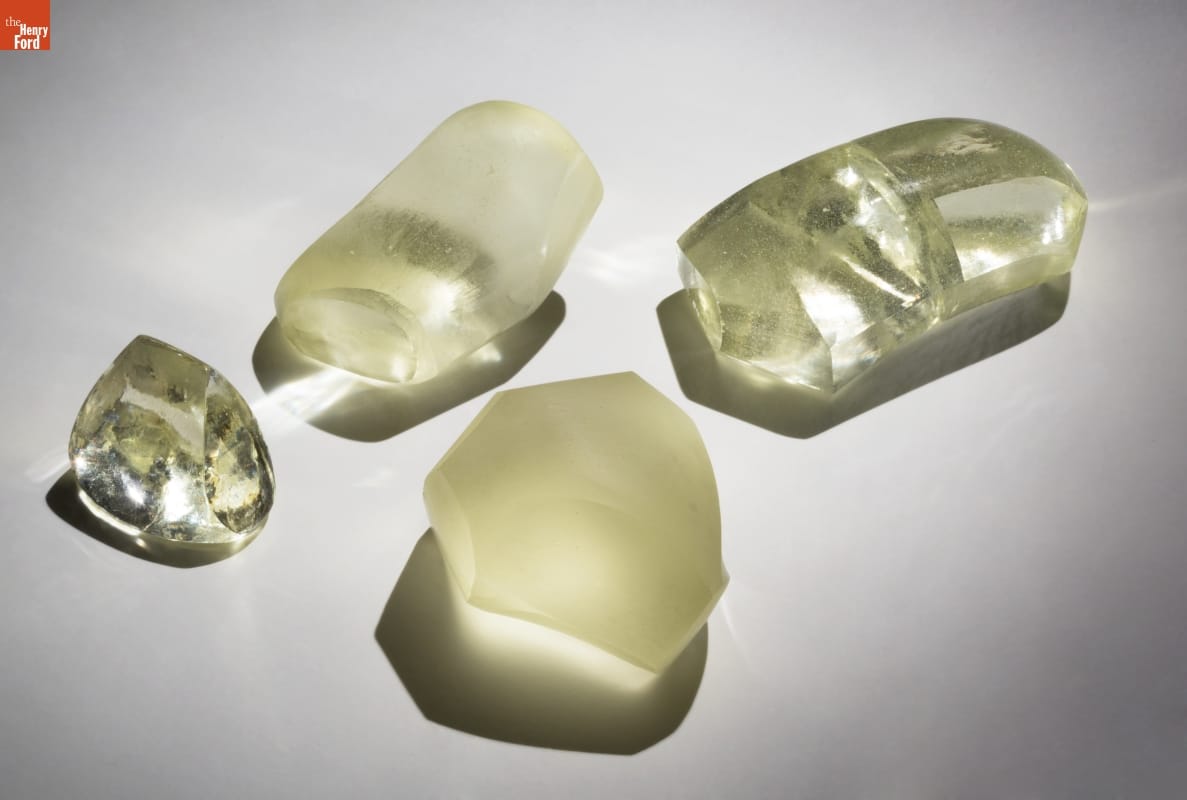
- circa 1960
- Collections - Artifact
Cullets, Created by Harvey Littleton, circa 1960
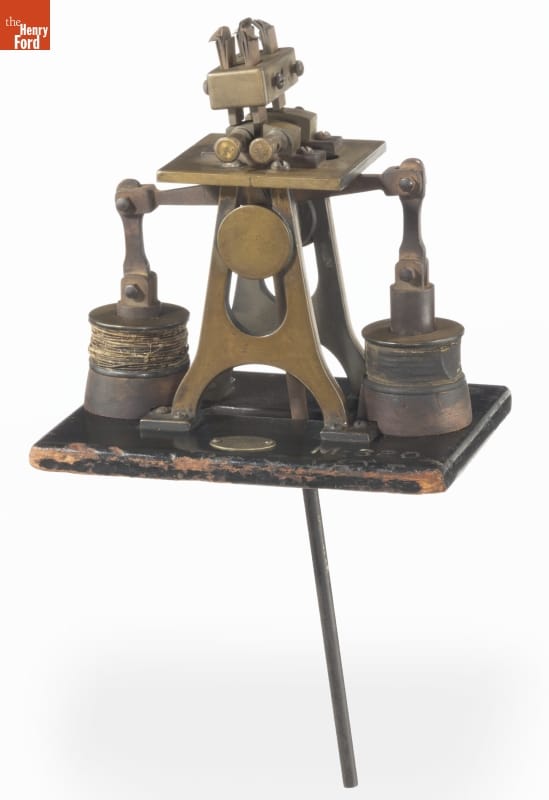
- Experimental Relay Switch -
- Collections - Artifact
Experimental Relay Switch