
Search
- Employee Working at Heinz Glass Factory, Sharpsburg, Pennsylvania, 1885-1910 - Before complete mechanization of the manufacturing process, many tasks at the Heinz factory were done by hand. The H.J. Heinz Company made their own boxes, glassware, cans, advertisements, and labels, allowing most production to be completed in-house. This photograph features a worker at the Heinz Glass Factory.
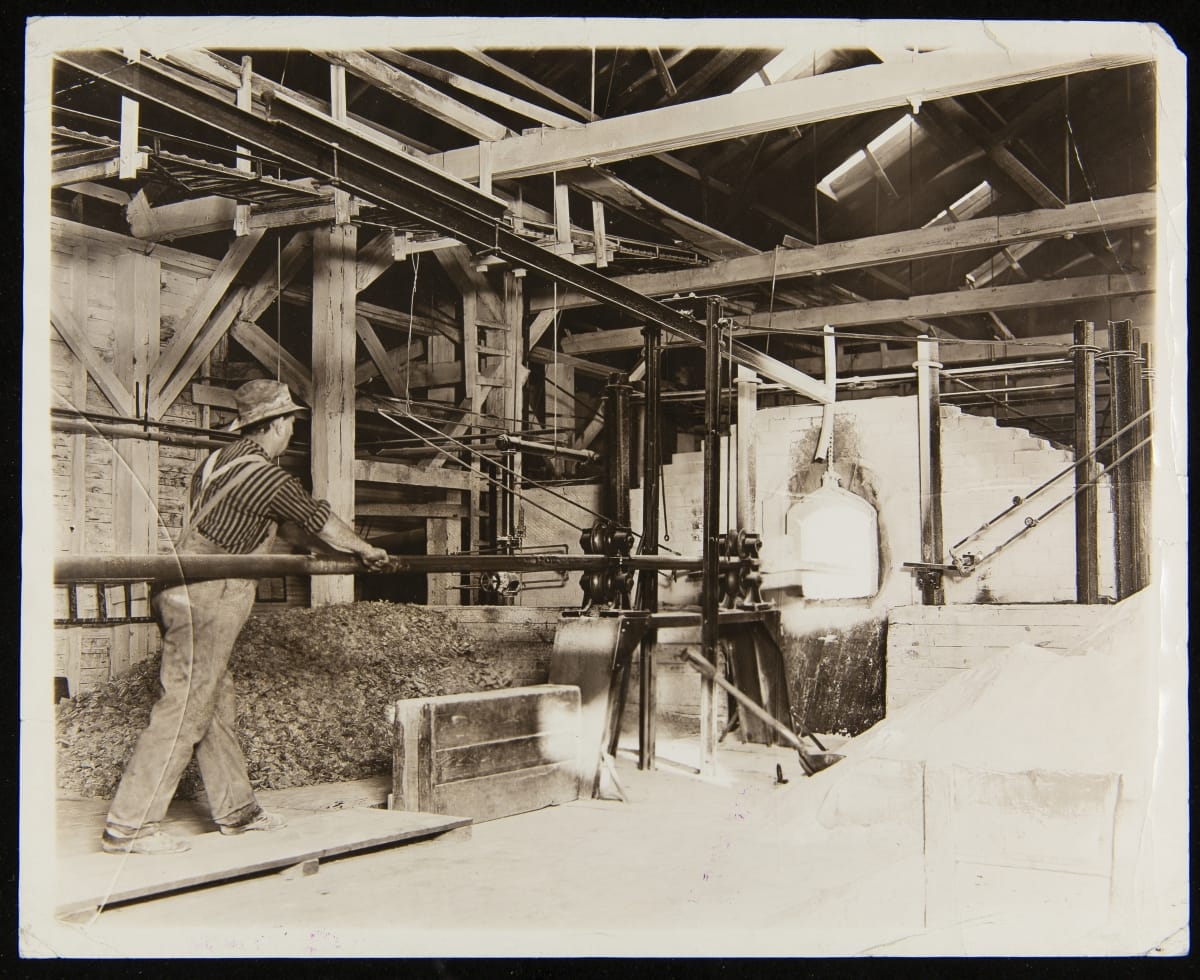
- 1885-1910
- Collections - Artifact
Employee Working at Heinz Glass Factory, Sharpsburg, Pennsylvania, 1885-1910
Before complete mechanization of the manufacturing process, many tasks at the Heinz factory were done by hand. The H.J. Heinz Company made their own boxes, glassware, cans, advertisements, and labels, allowing most production to be completed in-house. This photograph features a worker at the Heinz Glass Factory.
- Ford Motor Company Rouge Plant Coke Ovens, 1927 - Coke ovens at Ford Motor Company's Rouge plant converted coal into high-carbon coke, used in the factory's blast furnaces to produce iron. In 1921, the Rouge's ovens could produce up to 3,600 tons of coke daily. New, more efficient coke ovens opened in 1937. The coking process also produced gas used to heat some of the factory's other furnaces.
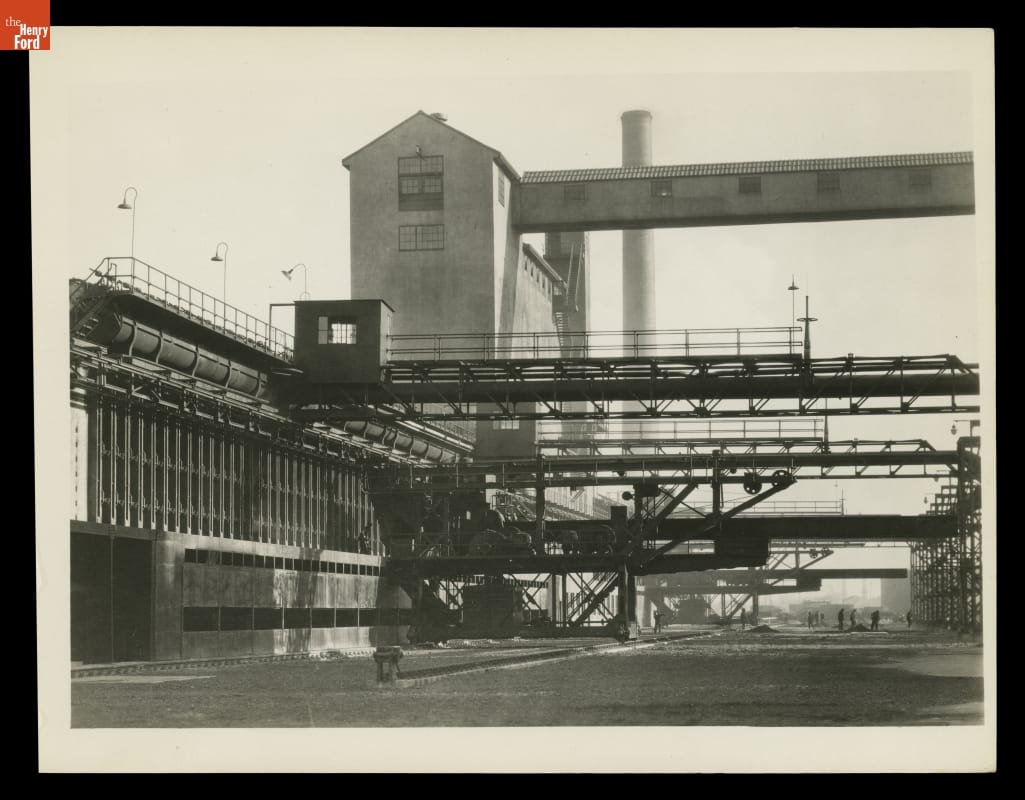
- 1927
- Collections - Artifact
Ford Motor Company Rouge Plant Coke Ovens, 1927
Coke ovens at Ford Motor Company's Rouge plant converted coal into high-carbon coke, used in the factory's blast furnaces to produce iron. In 1921, the Rouge's ovens could produce up to 3,600 tons of coke daily. New, more efficient coke ovens opened in 1937. The coking process also produced gas used to heat some of the factory's other furnaces.
- Ford Motor Company Rouge Plant, December 1919 - Three blast furnaces at Ford's Rouge plant converted raw iron oxide ore into metallic iron. The furnaces were named for Henry Ford's grandsons. Blast Furnace A, the "Henry Ford II," opened in May 1920, while the identical Blast Furnace B, the "Benson Ford," followed in October 1922. The larger Blast Furnace C, the "William Clay Ford," opened in November 1948.
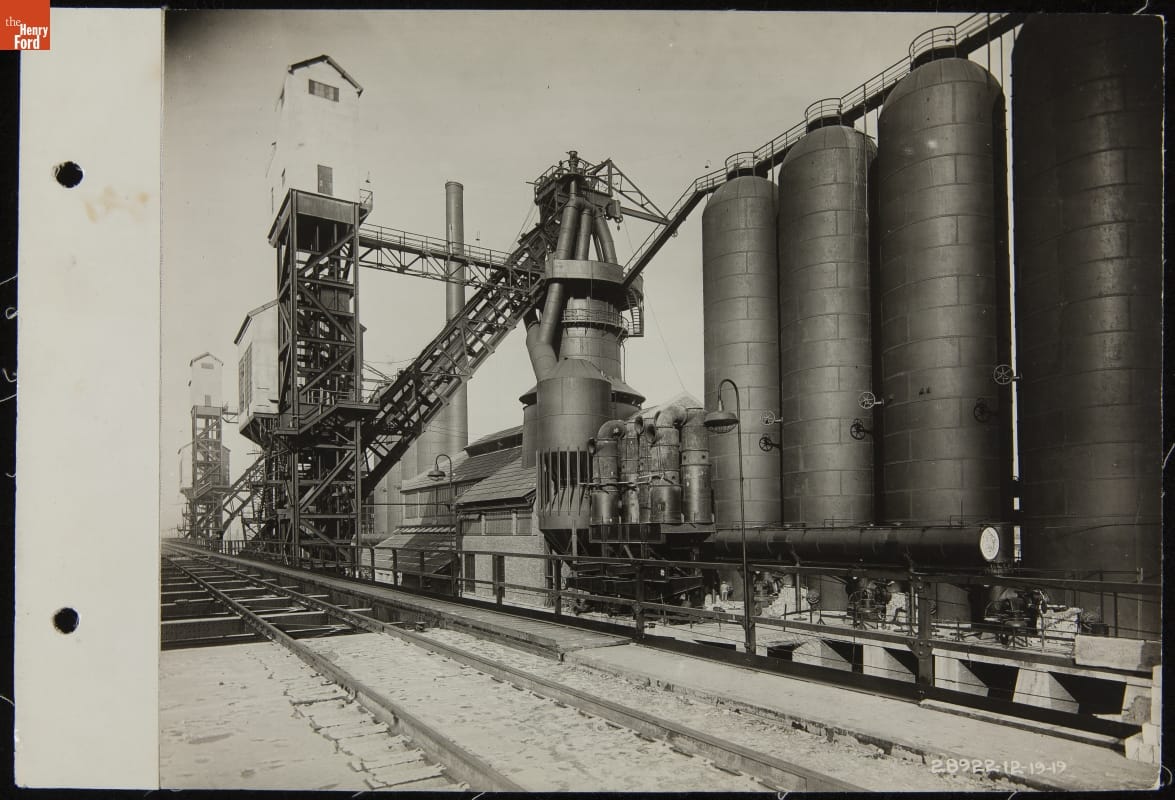
- December 19, 2019
- Collections - Artifact
Ford Motor Company Rouge Plant, December 1919
Three blast furnaces at Ford's Rouge plant converted raw iron oxide ore into metallic iron. The furnaces were named for Henry Ford's grandsons. Blast Furnace A, the "Henry Ford II," opened in May 1920, while the identical Blast Furnace B, the "Benson Ford," followed in October 1922. The larger Blast Furnace C, the "William Clay Ford," opened in November 1948.
- Ford Motor Company Rouge Plant Coke Ovens from Southwest Corner, August 1923 - Coke ovens at Ford Motor Company's Rouge plant converted coal into high-carbon coke, used in the factory's blast furnaces to produce iron. In 1921, the Rouge's ovens could produce up to 3,600 tons of coke daily. New, more efficient coke ovens opened in 1937. The coking process also produced gas used to heat some of the factory's other furnaces.
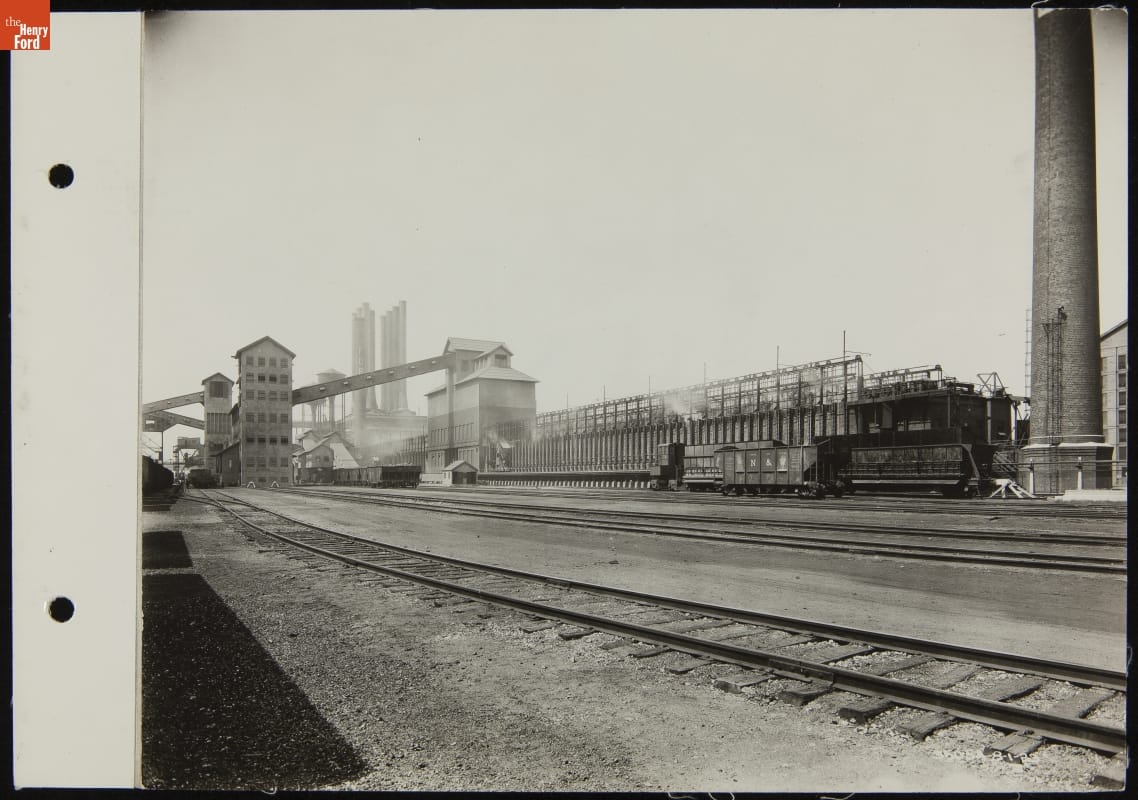
- August 01, 1923
- Collections - Artifact
Ford Motor Company Rouge Plant Coke Ovens from Southwest Corner, August 1923
Coke ovens at Ford Motor Company's Rouge plant converted coal into high-carbon coke, used in the factory's blast furnaces to produce iron. In 1921, the Rouge's ovens could produce up to 3,600 tons of coke daily. New, more efficient coke ovens opened in 1937. The coking process also produced gas used to heat some of the factory's other furnaces.
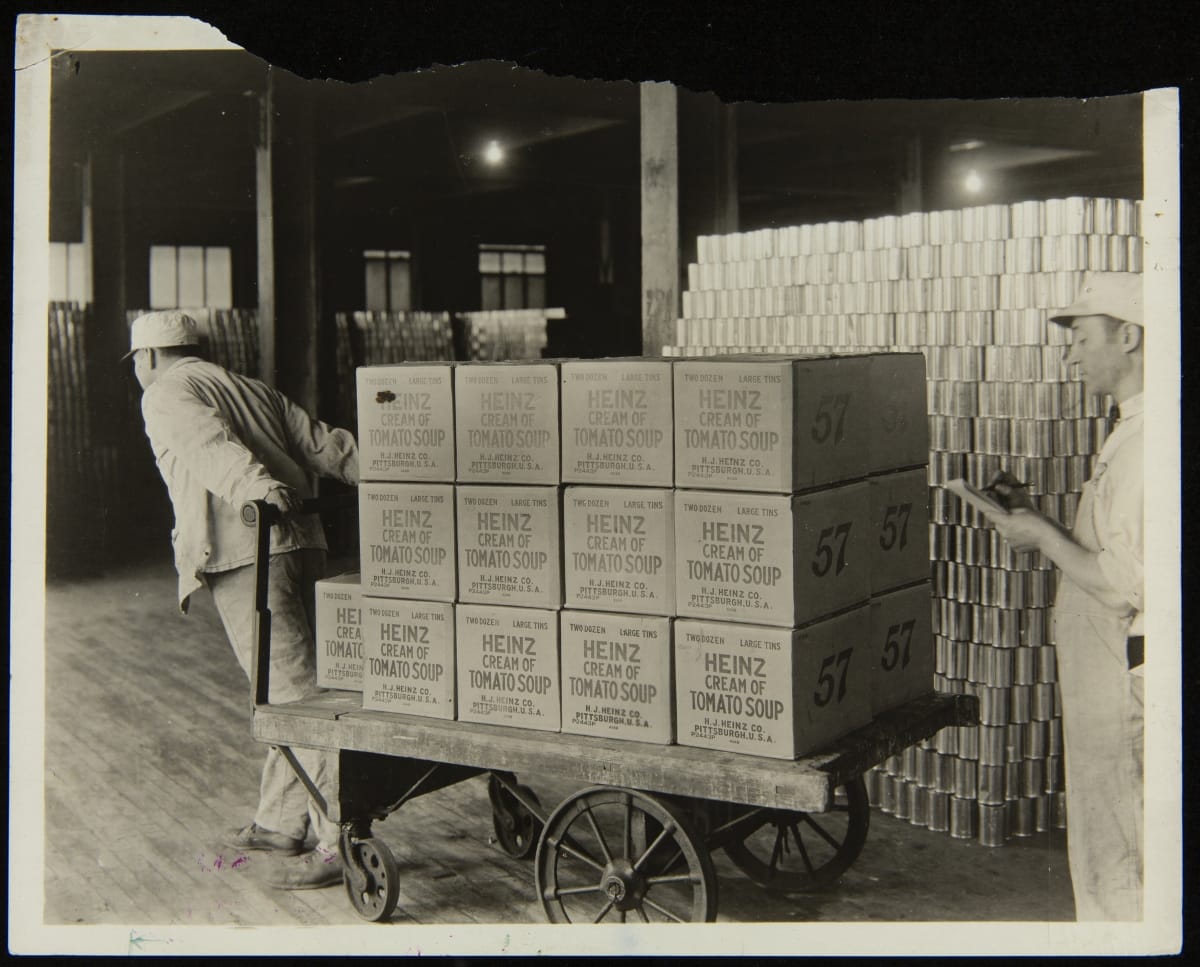
- Employee Moving Boxes of H. J. Heinz Cream of Tomato Soup, Pittsburgh, Pennsylvania, circa 1920 - Before complete mechanization of the manufacturing process, many tasks at the Heinz factory were done by hand. The H.J. Heinz Company documented the many departments of the manufacturing process through photographs. This photograph shows an employee moving boxes. These boxes were possibly heading for the shipping dock to be loaded onto a train or truck.
- circa 1920
- Collections - Artifact
Employee Moving Boxes of H. J. Heinz Cream of Tomato Soup, Pittsburgh, Pennsylvania, circa 1920
Before complete mechanization of the manufacturing process, many tasks at the Heinz factory were done by hand. The H.J. Heinz Company documented the many departments of the manufacturing process through photographs. This photograph shows an employee moving boxes. These boxes were possibly heading for the shipping dock to be loaded onto a train or truck.
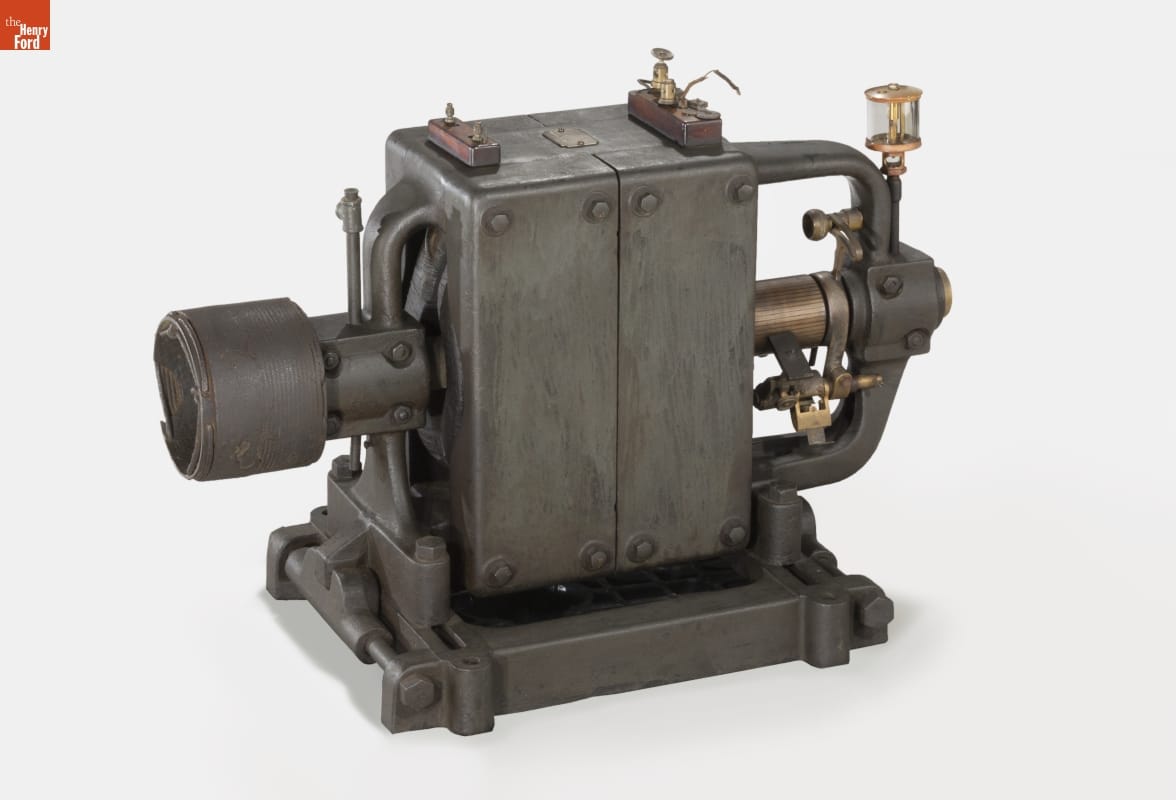
- Eickemeyer Dynamo, Used by the Haxton Canning Company, 1889 - Rudolf Eickemeyer developed his "ironclad" dynamo in the 1880s. The unique method of construction--its heavy iron field coil construction and iron sheathing--gave the dynamo its nickname. It was compact, rugged and efficient, though the ironclad design made it difficult to cool. This dynamo supplied power for the lighting system and small motors at the Haxton Canning Company in Oakfield, New York, for 15 years.
- 1889
- Collections - Artifact
Eickemeyer Dynamo, Used by the Haxton Canning Company, 1889
Rudolf Eickemeyer developed his "ironclad" dynamo in the 1880s. The unique method of construction--its heavy iron field coil construction and iron sheathing--gave the dynamo its nickname. It was compact, rugged and efficient, though the ironclad design made it difficult to cool. This dynamo supplied power for the lighting system and small motors at the Haxton Canning Company in Oakfield, New York, for 15 years.
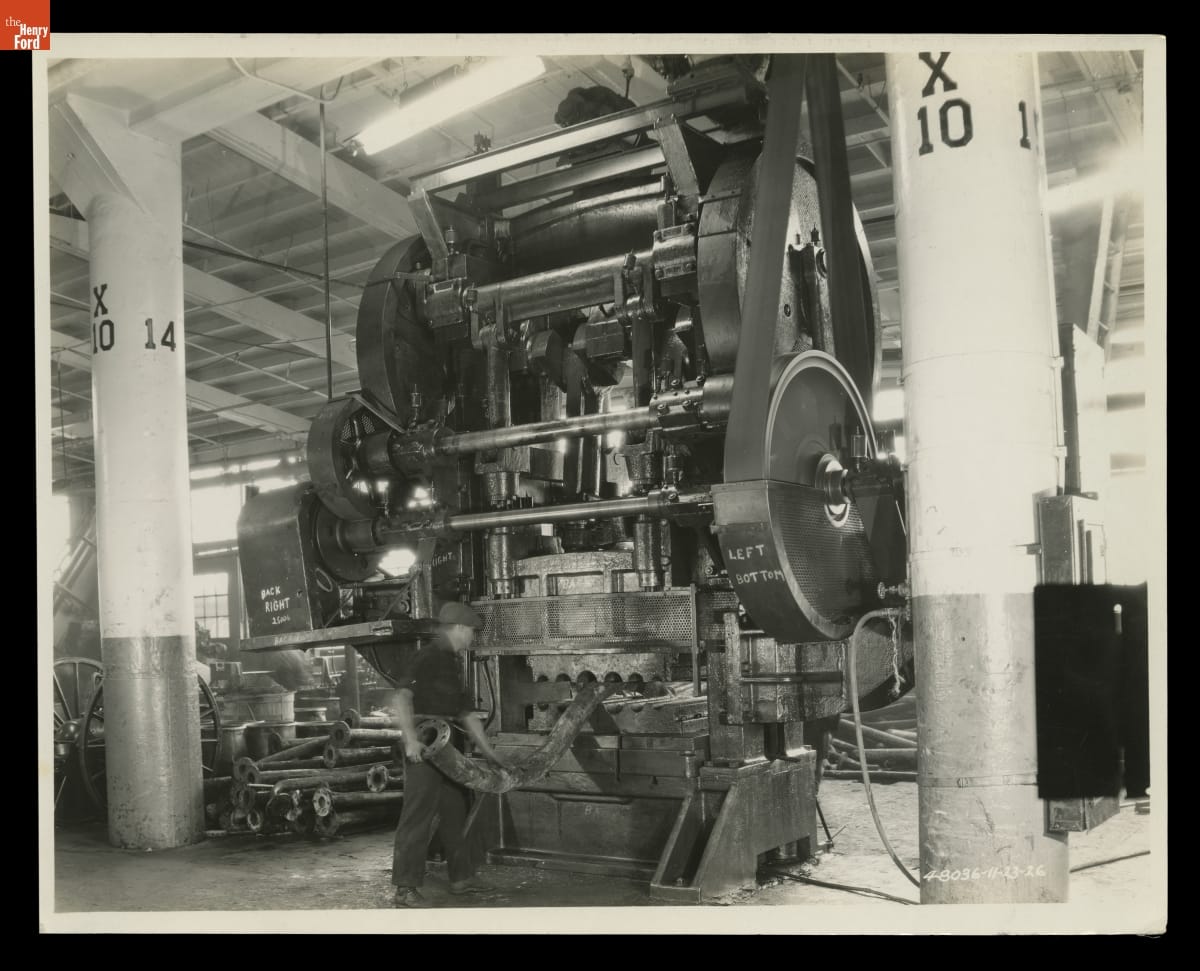
- Worker Operating a Press in the Salvage Department at the Ford Motor Company Rouge Plant, November 1926 - In 1925, Ford Motor Company purchased 199 surplus World War I merchant ships from the U.S. government. The vessels were towed by tugs to the Rouge, where most were cut into scrap metal used in the plant's steel-making facilities. Serviceable parts were salvaged. Here, a worker straightens a pipe from one of the ships for use elsewhere.
- November 23, 1926
- Collections - Artifact
Worker Operating a Press in the Salvage Department at the Ford Motor Company Rouge Plant, November 1926
In 1925, Ford Motor Company purchased 199 surplus World War I merchant ships from the U.S. government. The vessels were towed by tugs to the Rouge, where most were cut into scrap metal used in the plant's steel-making facilities. Serviceable parts were salvaged. Here, a worker straightens a pipe from one of the ships for use elsewhere.
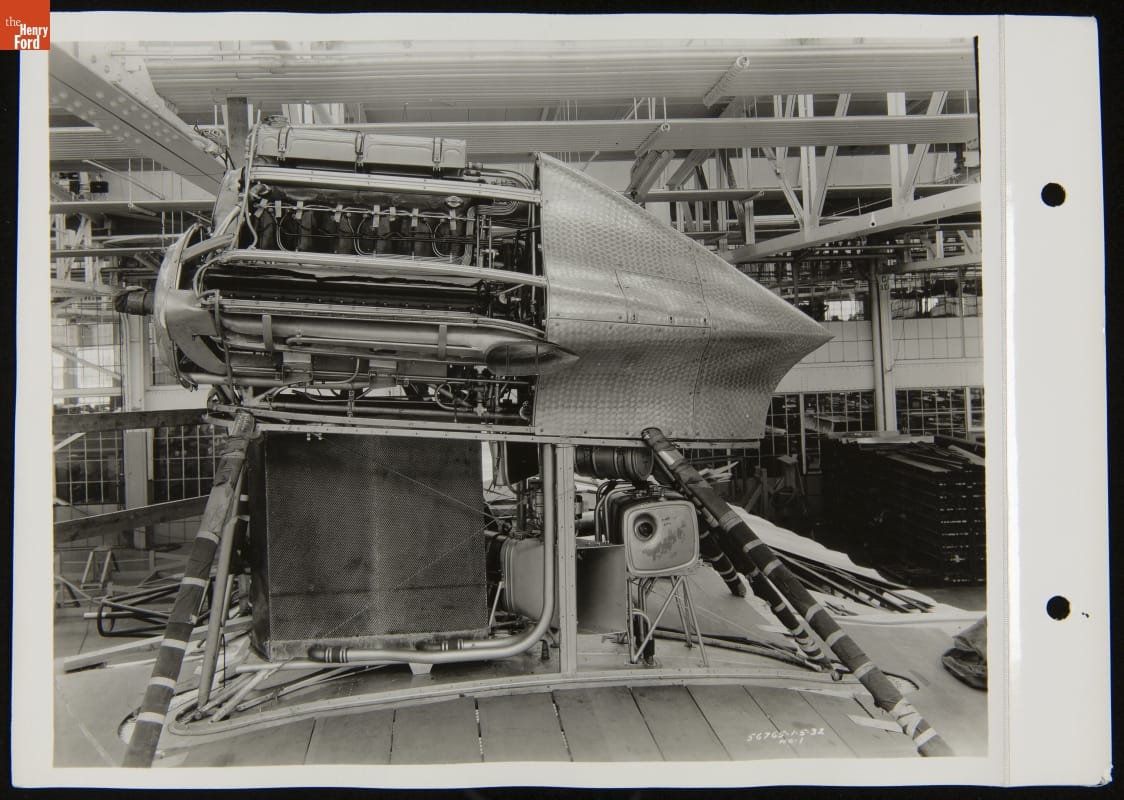
- Construction of Ford Tri-Motor 14-AT Showing Center Hispano Suiza Engine, January 1932 - Ford Motor Company's Tri-Motor, built from 1926-1933, flew in many early American airline fleets. The all-metal airplane was rugged, dependable, and equally adaptable to passenger and freight service. Tri-Motors were built with some of the same mass production techniques used in Ford's automobile plants. This version, the 14-AT, featured three Hispano-Suiza Engines. This photograph reveals the interior of the central engine.
- January 05, 1932
- Collections - Artifact
Construction of Ford Tri-Motor 14-AT Showing Center Hispano Suiza Engine, January 1932
Ford Motor Company's Tri-Motor, built from 1926-1933, flew in many early American airline fleets. The all-metal airplane was rugged, dependable, and equally adaptable to passenger and freight service. Tri-Motors were built with some of the same mass production techniques used in Ford's automobile plants. This version, the 14-AT, featured three Hispano-Suiza Engines. This photograph reveals the interior of the central engine.
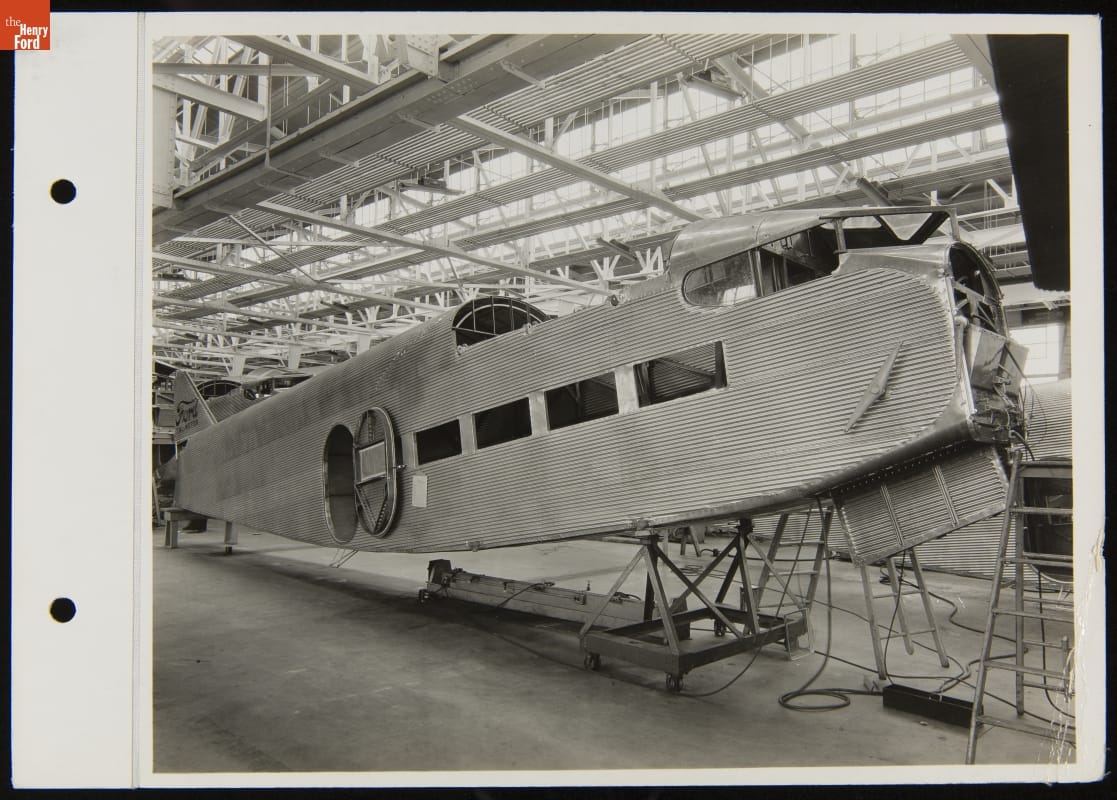
- Ford Tri-Motor Airplane Fuselage Being Constructed at the Stout Factory, Dearborn, Michigan, April 1929 - Ford Motor Company's Tri-Motor, built from 1926-1933, flew in many early American airline fleets. The all-metal airplane was rugged, dependable, and equally adaptable to passenger and freight service. Tri-Motors were built with some of the same mass production techniques used in Ford's automobile plants. The fuselage, or the main body of the airplane, is constructed in this photograph.
- April 30, 1929
- Collections - Artifact
Ford Tri-Motor Airplane Fuselage Being Constructed at the Stout Factory, Dearborn, Michigan, April 1929
Ford Motor Company's Tri-Motor, built from 1926-1933, flew in many early American airline fleets. The all-metal airplane was rugged, dependable, and equally adaptable to passenger and freight service. Tri-Motors were built with some of the same mass production techniques used in Ford's automobile plants. The fuselage, or the main body of the airplane, is constructed in this photograph.
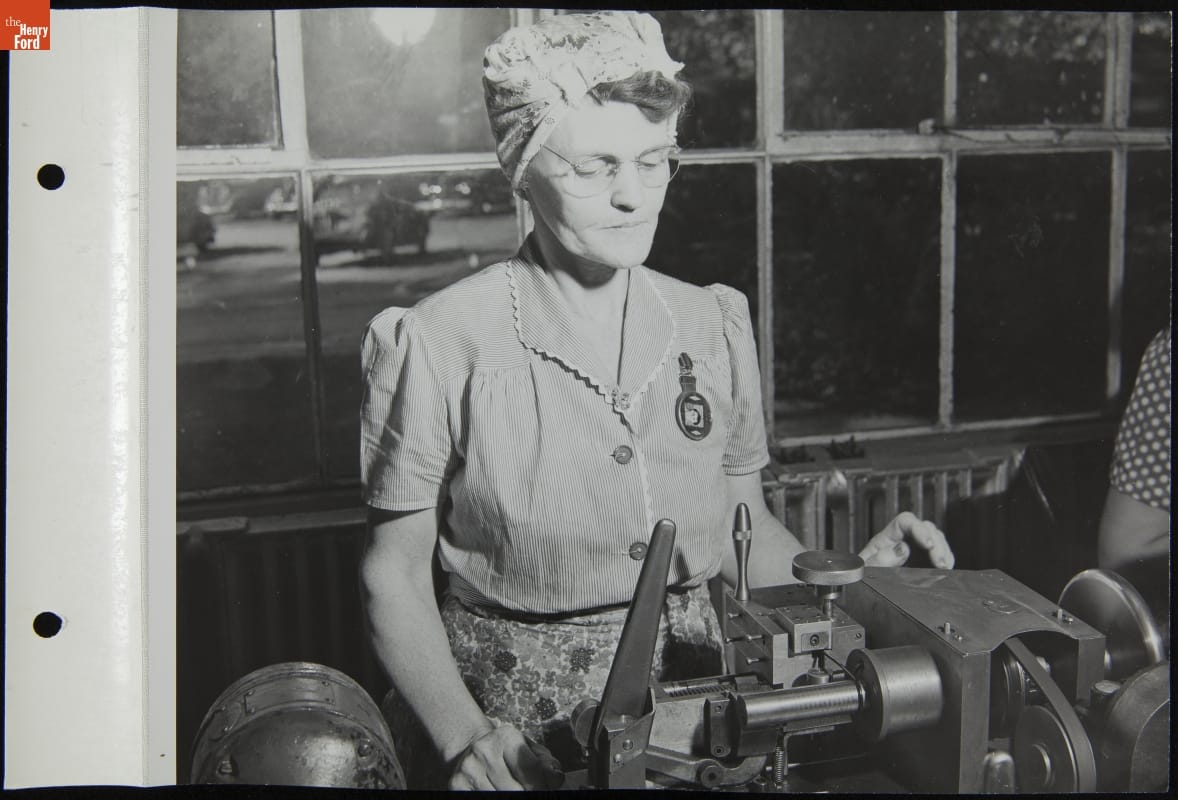
- Women Making Electric Harnesses for B-24 Bombers at Phoenix Mills, September 1944 - In the early 1920s, Henry Ford began locating small hydroelectrically powered plants in rural southeast Michigan. These "Village Industries" employed local people who could maintain farms while working at the factory. Women represented most of the workforce at Phoenix Mill. During World War II, they manufactured electrical harnesses for B-24 bomber airplanes assembled at Ford's nearby Willow Run plant.
- September 25, 1944
- Collections - Artifact
Women Making Electric Harnesses for B-24 Bombers at Phoenix Mills, September 1944
In the early 1920s, Henry Ford began locating small hydroelectrically powered plants in rural southeast Michigan. These "Village Industries" employed local people who could maintain farms while working at the factory. Women represented most of the workforce at Phoenix Mill. During World War II, they manufactured electrical harnesses for B-24 bomber airplanes assembled at Ford's nearby Willow Run plant.