
Search
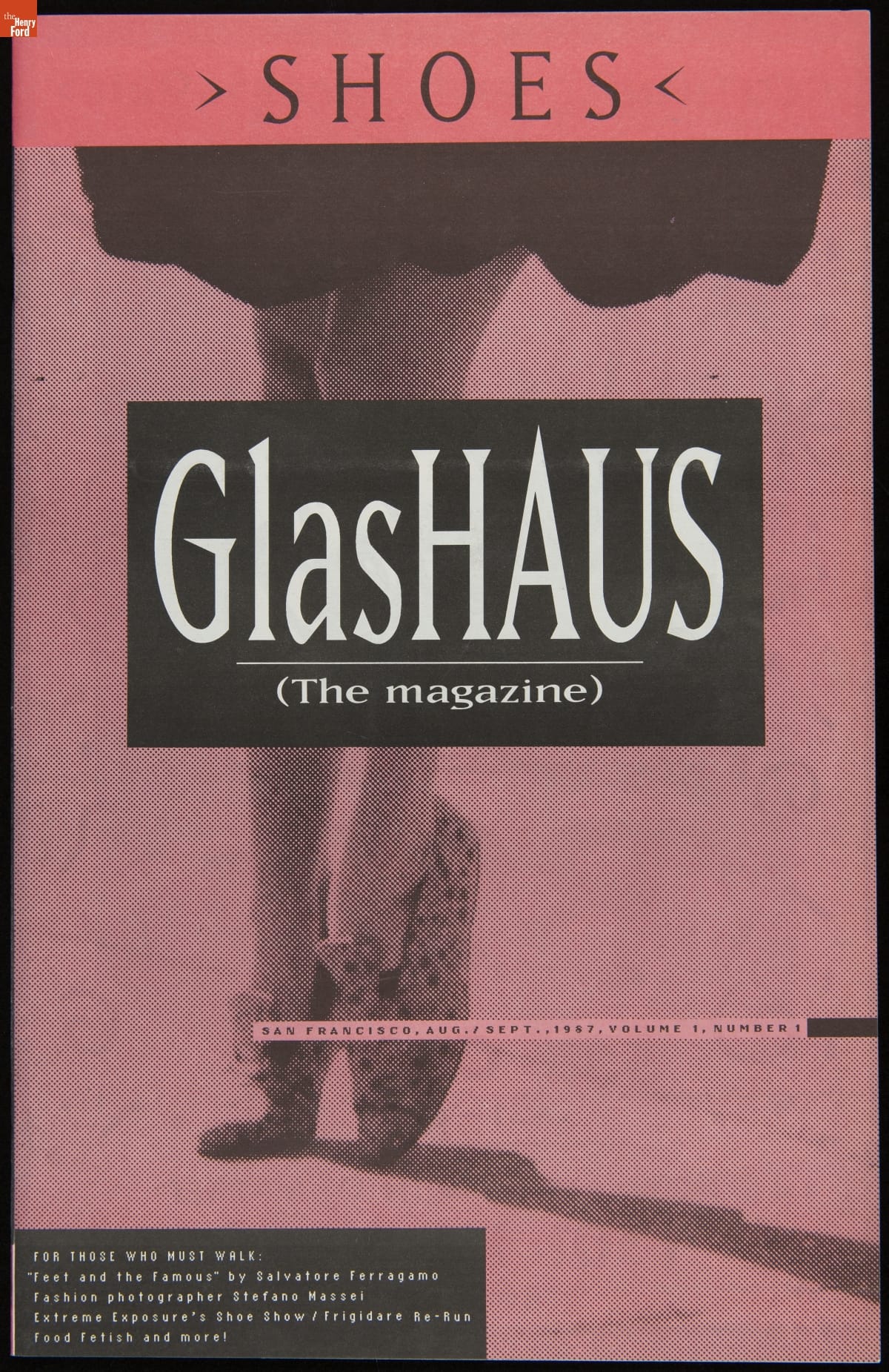
- Magazine, GlasHaus, Vol. 1, No. 1, "Shoes," August 8, 1987 - <em>GlasHaus</em> magazine was designed by Rudy VanderLans, co-founder of the digital type foundry, Emigre, Inc. VanderLans tested the limits of the Macintosh computer as a creative design tool, producing adventurous magazine layouts for several publications. <em>Glashaus</em> was a San Francisco "hot house for international style, fashion, and entertainment." This thematic magazine advertised their activities and the local fashion scene.
- August 08, 1987
- Collections - Artifact
Magazine, GlasHaus, Vol. 1, No. 1, "Shoes," August 8, 1987
GlasHaus magazine was designed by Rudy VanderLans, co-founder of the digital type foundry, Emigre, Inc. VanderLans tested the limits of the Macintosh computer as a creative design tool, producing adventurous magazine layouts for several publications. Glashaus was a San Francisco "hot house for international style, fashion, and entertainment." This thematic magazine advertised their activities and the local fashion scene.
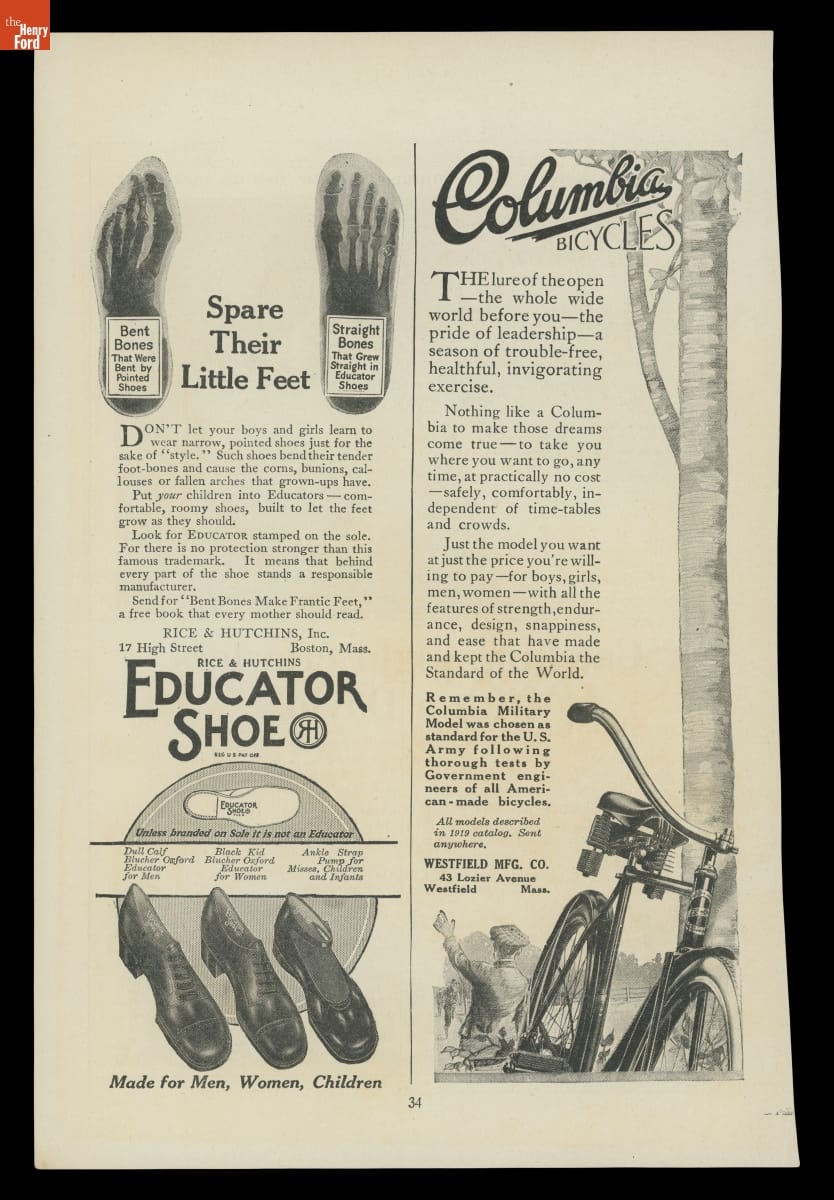
- "Spare Their Little Feet," 1917-1921 - Educator Shoe brand was a subsidiary of Massachusetts-based footwear manufacturer and wholesaler Rice & Hutchins. Although the brand was primarily for children, mothers were their target customers. Educator commonly took out advertisements in women's magazines that claimed the shoes "let feet grow as they should;" ads juxtaposed images of the brand's wide toebox with other popular styles of the time.
- 1917-1921
- Collections - Artifact
"Spare Their Little Feet," 1917-1921
Educator Shoe brand was a subsidiary of Massachusetts-based footwear manufacturer and wholesaler Rice & Hutchins. Although the brand was primarily for children, mothers were their target customers. Educator commonly took out advertisements in women's magazines that claimed the shoes "let feet grow as they should;" ads juxtaposed images of the brand's wide toebox with other popular styles of the time.
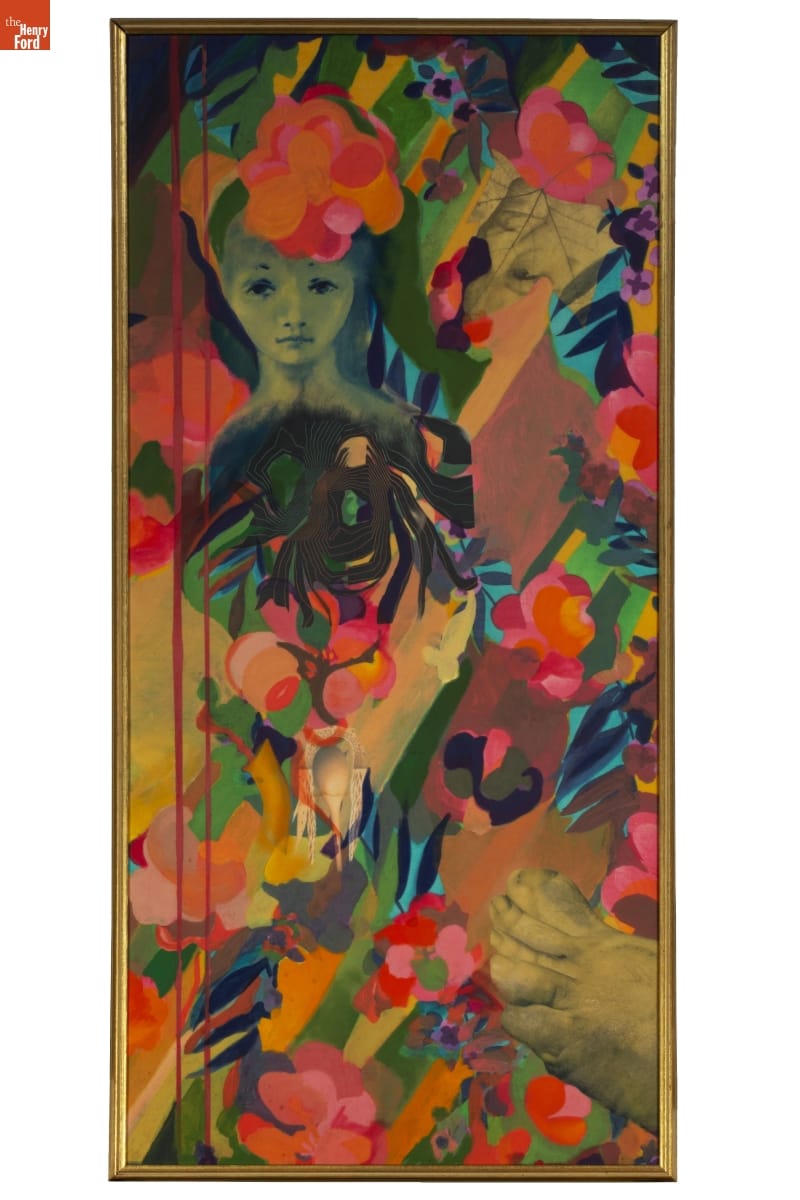
- "Lady with Foot" by Lillian F. Schwartz, 1962 - Lillian Schwartz is a pioneer of computer-generated art. From 1969-2002, she was a "resident visitor" at Bell Laboratories, producing groundbreaking films, videos, and multimedia works. The Schwartz Collection spans Lillian's childhood into her late career, documenting an expansive mindset, mastery over traditional and experimental mediums alike--and above all--an ability to create inspirational connections between science, art, and technology.
- 1962
- Collections - Artifact
"Lady with Foot" by Lillian F. Schwartz, 1962
Lillian Schwartz is a pioneer of computer-generated art. From 1969-2002, she was a "resident visitor" at Bell Laboratories, producing groundbreaking films, videos, and multimedia works. The Schwartz Collection spans Lillian's childhood into her late career, documenting an expansive mindset, mastery over traditional and experimental mediums alike--and above all--an ability to create inspirational connections between science, art, and technology.
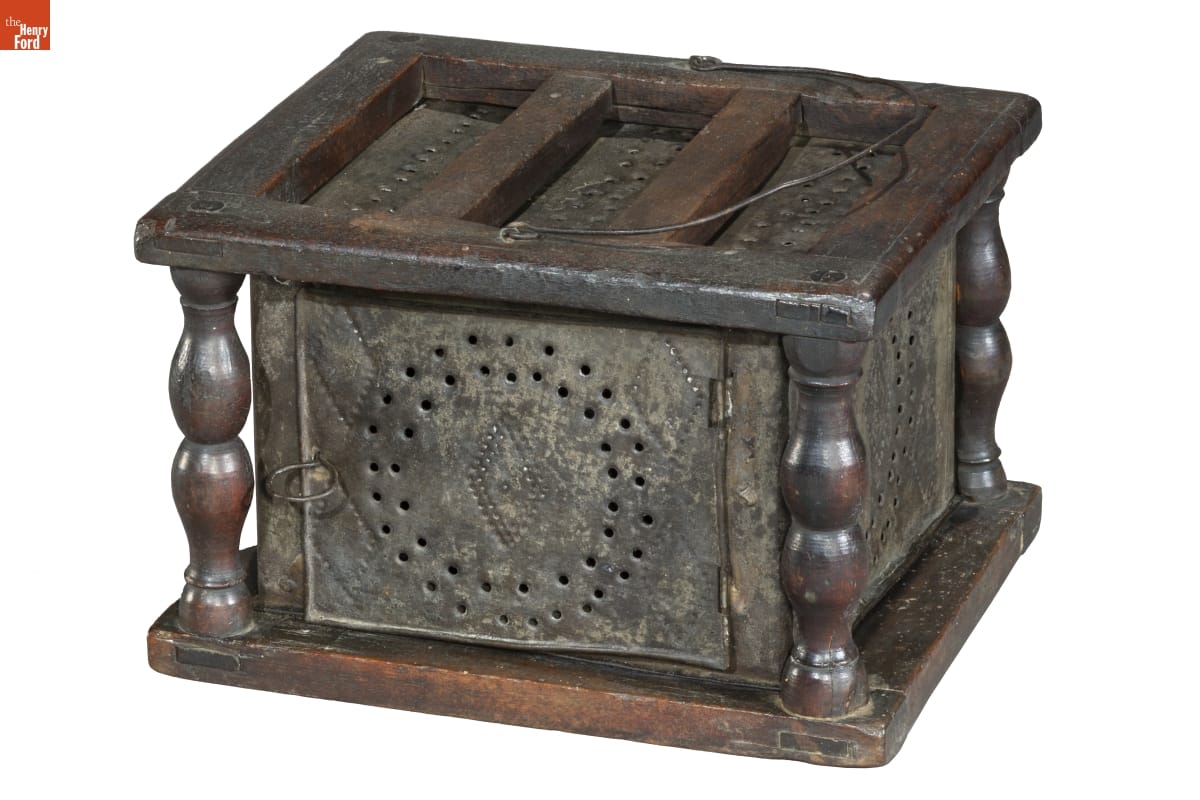
- Footwarmer, 1830-1860 - Nineteenth-century Americans filled this footwarmer's punched tin box with hot coals or charcoal to help keep their feet warm. People placed the footwarmer under their feet then wrapped a blanket around their legs, providing welcomed warmth when out for a carriage ride or attending church on a cold day. Other footwarmers used hot water or heated soapstone to solve the problem of cold feet.
- 1830-1860
- Collections - Artifact
Footwarmer, 1830-1860
Nineteenth-century Americans filled this footwarmer's punched tin box with hot coals or charcoal to help keep their feet warm. People placed the footwarmer under their feet then wrapped a blanket around their legs, providing welcomed warmth when out for a carriage ride or attending church on a cold day. Other footwarmers used hot water or heated soapstone to solve the problem of cold feet.
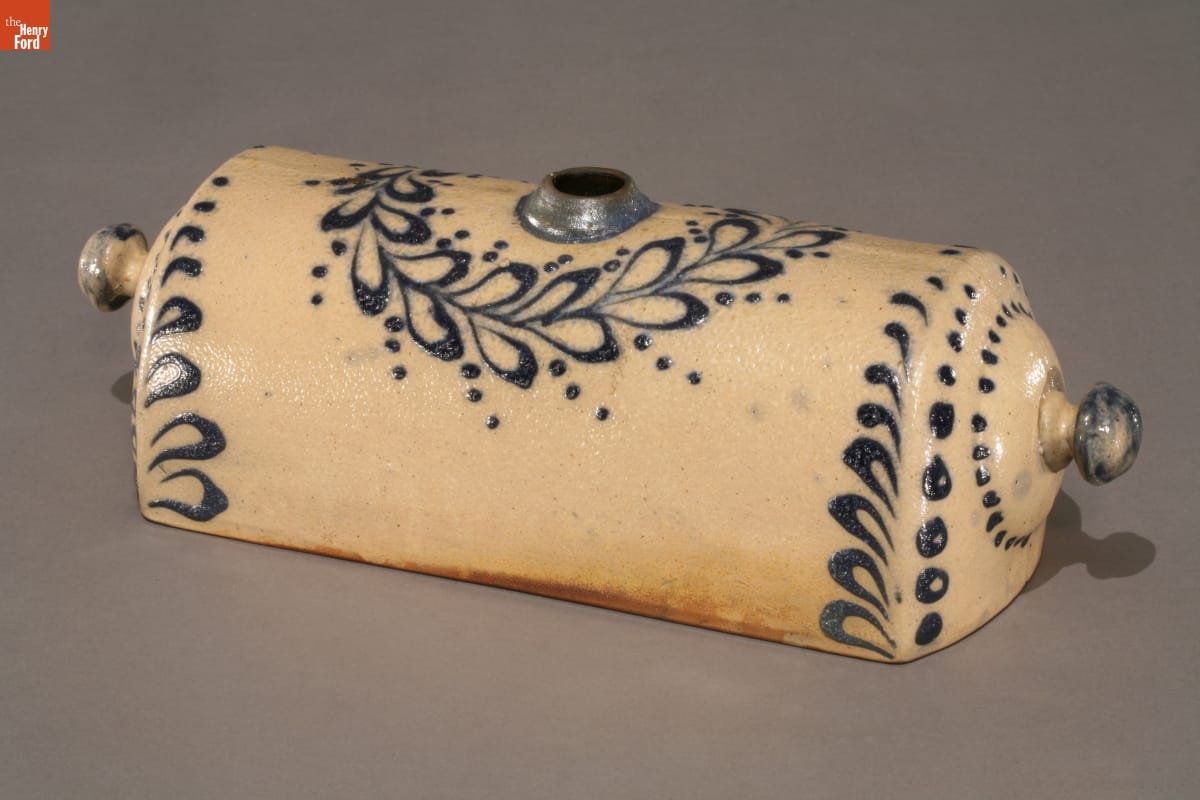
- Stoneware Foot Warmer, 1840-1860 - Foot warmers solved the problem of cold feet in past generations. Some warmers held charcoal, others held hot water. Pottery, tin, and soapstone were the favored materials to conduct the heat. The warmer was kept under the feet, then the legs and feet were tucked into a blanket, providing welcome warmth in a cold carriage or unheated church.
- 1840-1860
- Collections - Artifact
Stoneware Foot Warmer, 1840-1860
Foot warmers solved the problem of cold feet in past generations. Some warmers held charcoal, others held hot water. Pottery, tin, and soapstone were the favored materials to conduct the heat. The warmer was kept under the feet, then the legs and feet were tucked into a blanket, providing welcome warmth in a cold carriage or unheated church.
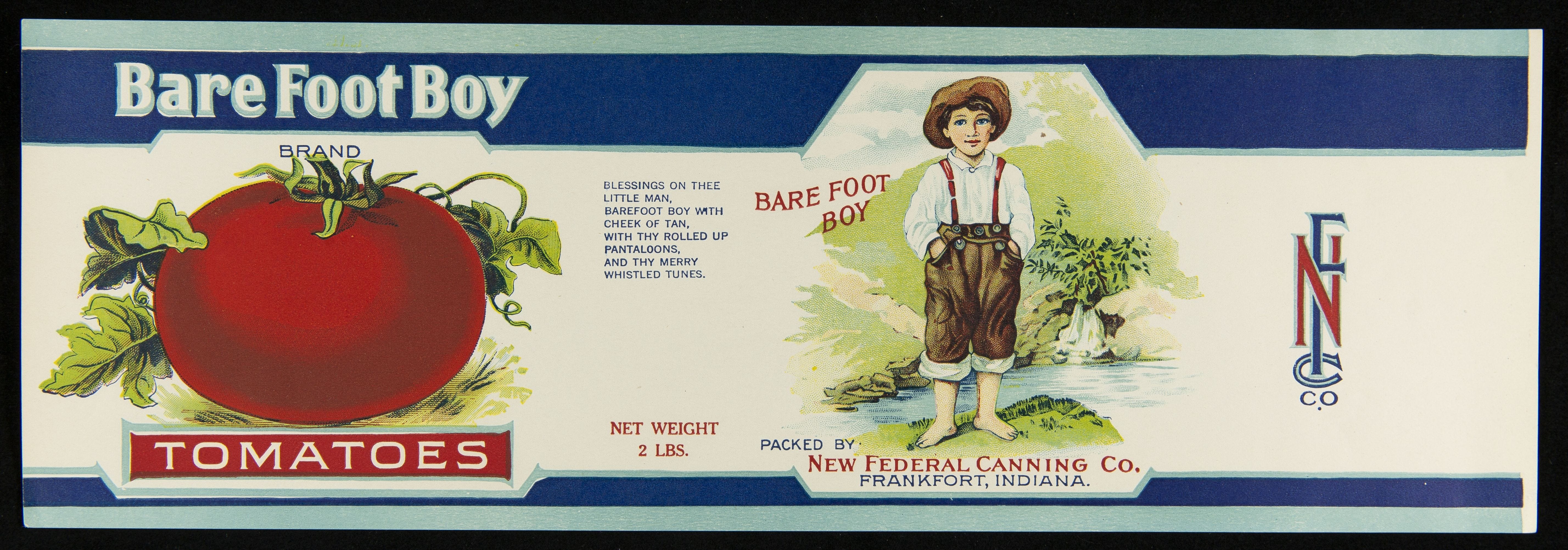
- Can Label, "Bare Foot Boy Brand Tomatoes," circa 1910 - Manufacturers of similar products sought ways to make their companies' goods stand out on store shelves. Eye-catching and attractive labels encouraged potential customers to purchase the company's product rather than that of a competitor. Characters, like the Bare Foot Boy featured in this label, were common design elements in product advertising, evoking an emotion or personal connection between the product and the customer.
- circa 1910
- Collections - Artifact
Can Label, "Bare Foot Boy Brand Tomatoes," circa 1910
Manufacturers of similar products sought ways to make their companies' goods stand out on store shelves. Eye-catching and attractive labels encouraged potential customers to purchase the company's product rather than that of a competitor. Characters, like the Bare Foot Boy featured in this label, were common design elements in product advertising, evoking an emotion or personal connection between the product and the customer.
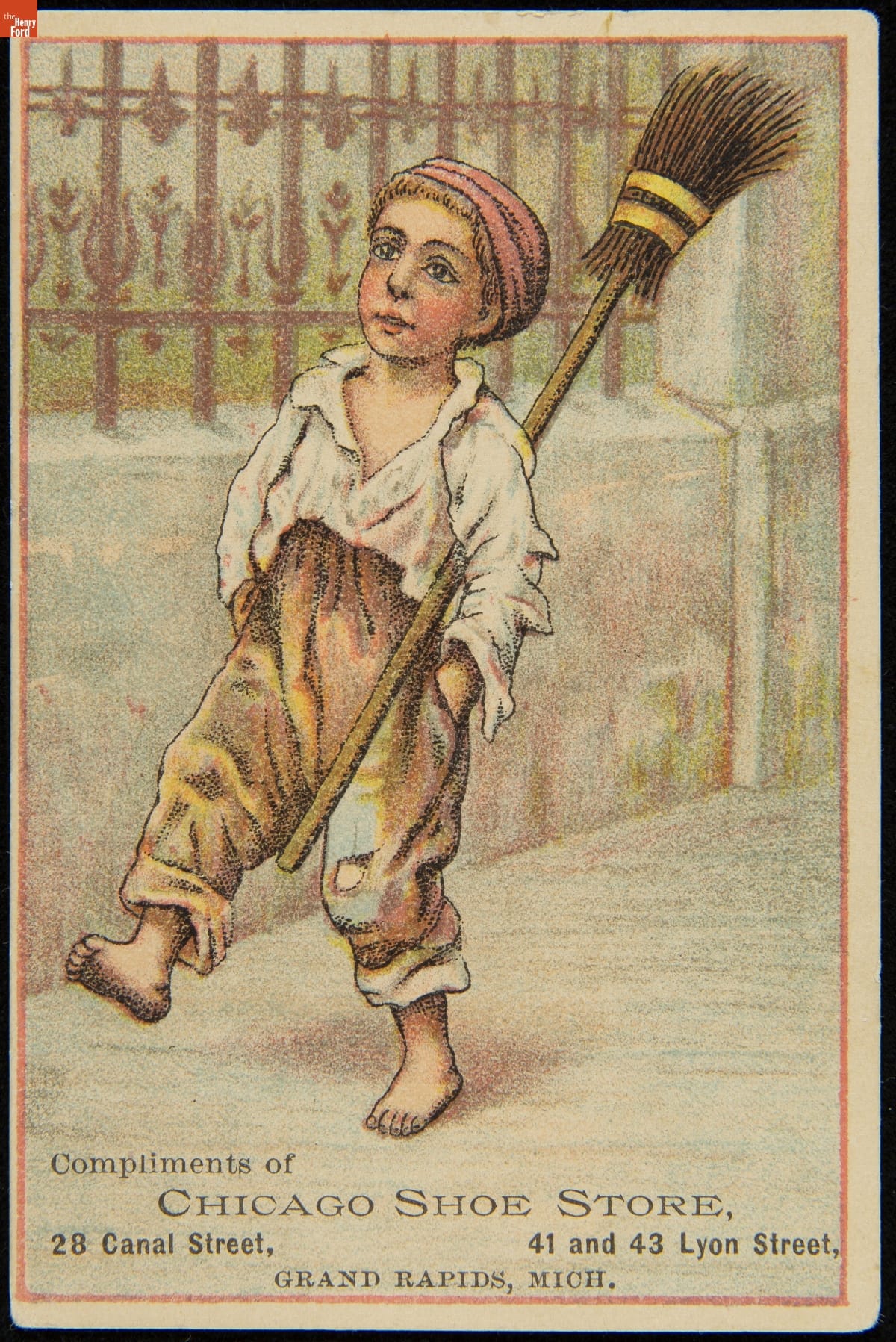
- Trade Card for the Chicago Shoe Store, 1870-1890 - In the last third of the nineteenth century, an unprecedented variety of consumer goods and services flooded the American market. Advertisers, armed with new methods of color printing, bombarded potential customers with trade cards. Americans enjoyed and often saved the vibrant little advertisements found in product packages or distributed by local merchants. Many survive as historical records of commercialism in the United States.
- 1870-1890
- Collections - Artifact
Trade Card for the Chicago Shoe Store, 1870-1890
In the last third of the nineteenth century, an unprecedented variety of consumer goods and services flooded the American market. Advertisers, armed with new methods of color printing, bombarded potential customers with trade cards. Americans enjoyed and often saved the vibrant little advertisements found in product packages or distributed by local merchants. Many survive as historical records of commercialism in the United States.