
Search
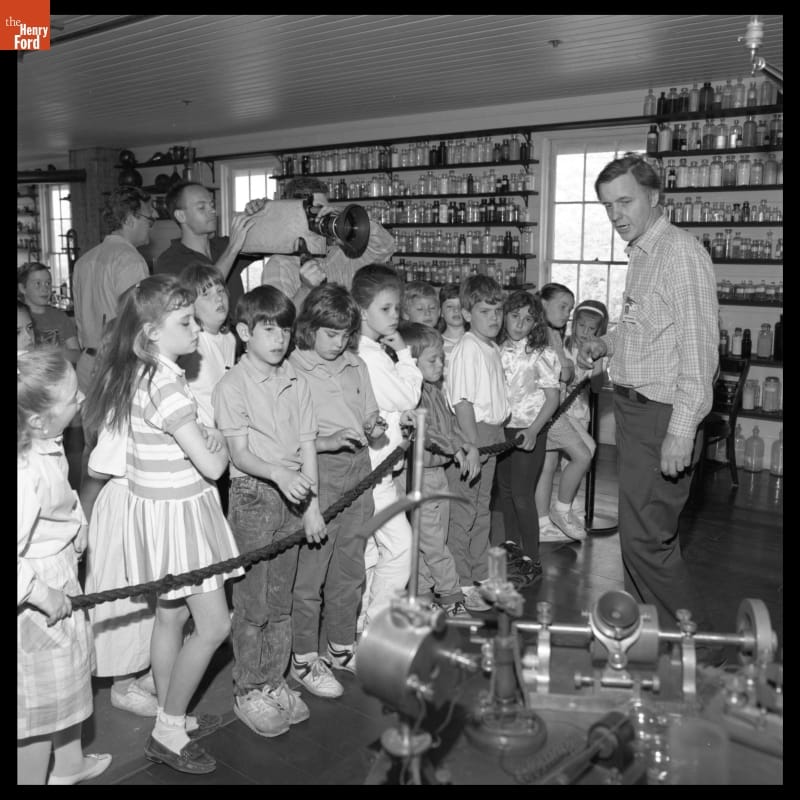
- Filming ABC-TV's World of Discovery at Menlo Park Laboratory in Greenfield Village, May 22, 1989 - In May 1989, ABC television crews filmed segments of <EM>World of Discovery - Inventors: Out of their Minds</EM> at the Henry Ford Museum and Greenfield Village. The show linked the experiences of late 20th-century inventors with Thomas Edison's innovative work. In one of the program's final segments, museum curator John Bowditch explains Edison's greatest invention -- the research laboratory -- to a group of students.
- May 22, 1989
- Collections - Artifact
Filming ABC-TV's World of Discovery at Menlo Park Laboratory in Greenfield Village, May 22, 1989
In May 1989, ABC television crews filmed segments of World of Discovery - Inventors: Out of their Minds at the Henry Ford Museum and Greenfield Village. The show linked the experiences of late 20th-century inventors with Thomas Edison's innovative work. In one of the program's final segments, museum curator John Bowditch explains Edison's greatest invention -- the research laboratory -- to a group of students.
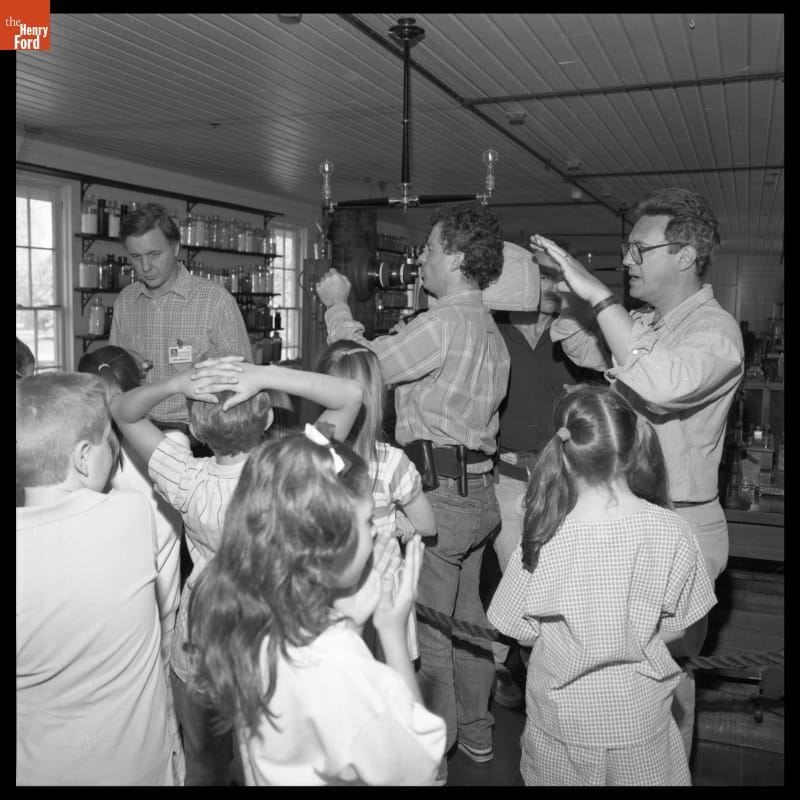
- Filming ABC-TV's World of Discovery at Menlo Park Laboratory in Greenfield Village, May 22, 1989 - In May 1989, ABC television crews filmed segments of <EM>World of Discovery - Inventors: Out of their Minds</EM> at the Henry Ford Museum and Greenfield Village. The show linked the experiences of late 20th-century inventors with Thomas Edison's innovative work. In one of the program's final segments, museum curator John Bowditch explains Edison's greatest invention -- the research laboratory -- to a group of students.
- May 22, 1989
- Collections - Artifact
Filming ABC-TV's World of Discovery at Menlo Park Laboratory in Greenfield Village, May 22, 1989
In May 1989, ABC television crews filmed segments of World of Discovery - Inventors: Out of their Minds at the Henry Ford Museum and Greenfield Village. The show linked the experiences of late 20th-century inventors with Thomas Edison's innovative work. In one of the program's final segments, museum curator John Bowditch explains Edison's greatest invention -- the research laboratory -- to a group of students.
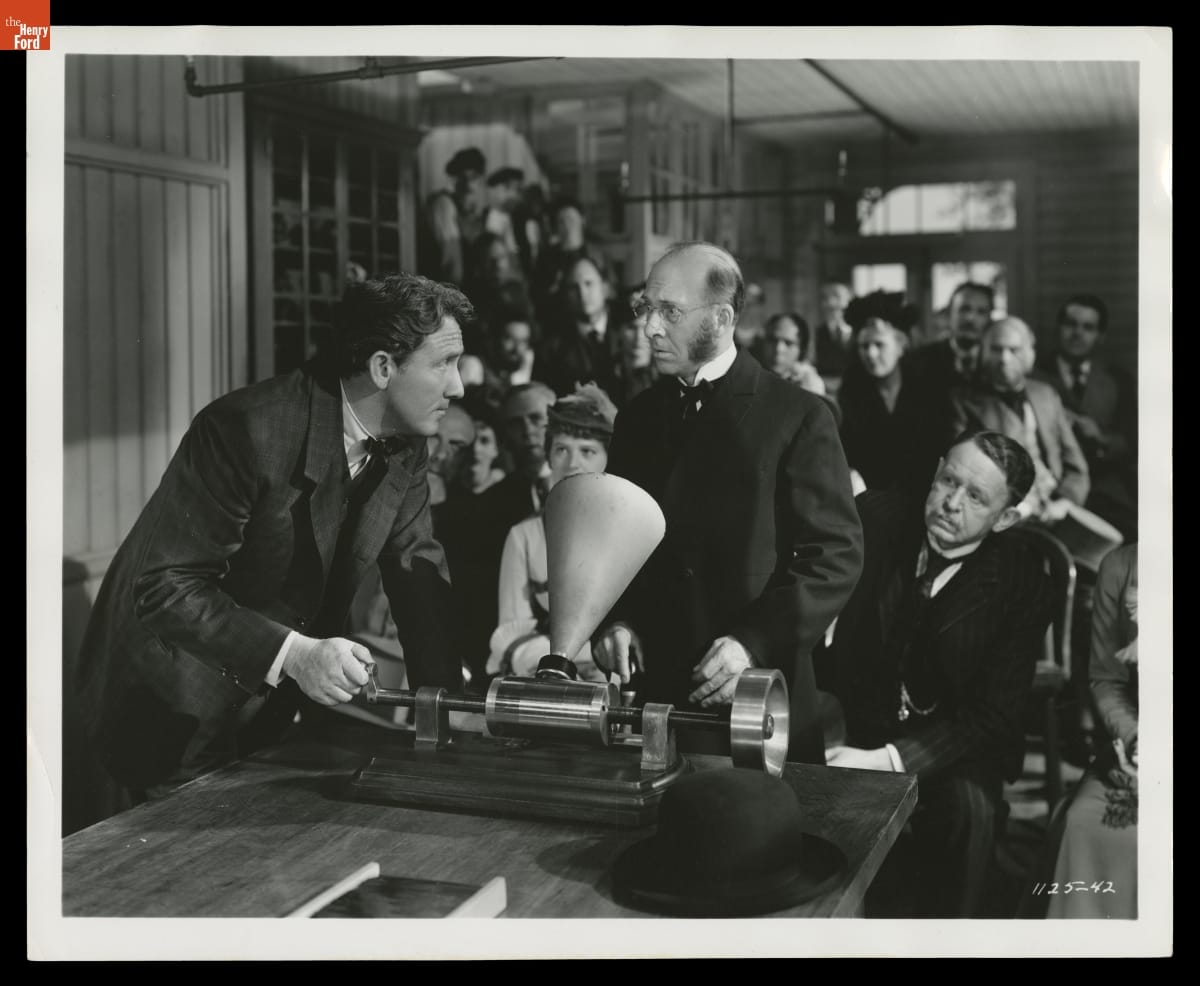
- Spencer Tracy and George Meader in a Movie Still from "Edison, The Man," 1939 - The 1940 MGM film <em>Edison, the Man</em> starred Spencer Tracy, but Edison's Menlo Park laboratory played a supporting role. The 1870s laboratory -- where Edison made many of his famous discoveries -- had been moved to Henry Ford's Greenfield Village in the late 1920s. With documentation provided by Greenfield Village staff, MGM built an impressive full-sized movie set of the laboratory in California.
- 1939
- Collections - Artifact
Spencer Tracy and George Meader in a Movie Still from "Edison, The Man," 1939
The 1940 MGM film Edison, the Man starred Spencer Tracy, but Edison's Menlo Park laboratory played a supporting role. The 1870s laboratory -- where Edison made many of his famous discoveries -- had been moved to Henry Ford's Greenfield Village in the late 1920s. With documentation provided by Greenfield Village staff, MGM built an impressive full-sized movie set of the laboratory in California.
- Photo Taken during the Filming of "These Thirty Years" for Ford Motor Company, 1933-1934 -
- 1933-1934
- Collections - Artifact
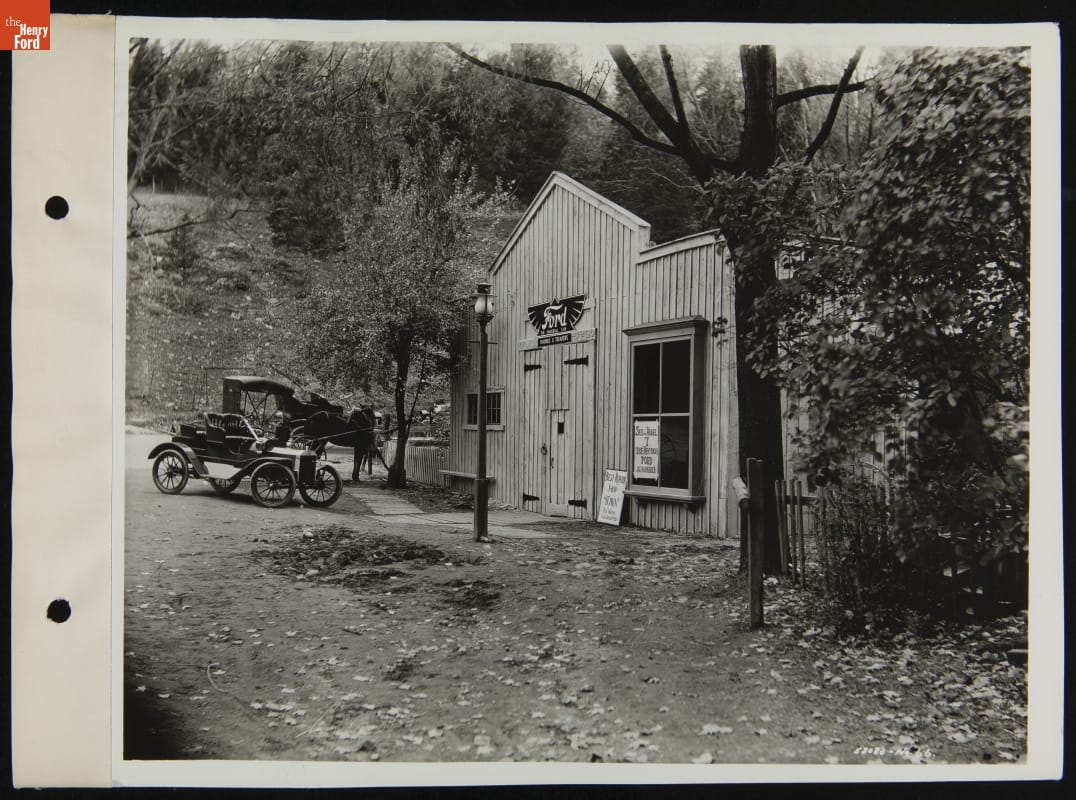
Photo Taken during the Filming of "These Thirty Years" for Ford Motor Company, 1933-1934
- Letter from Thomas Ince Inviting Henry Ford to Visit Inceville Motion Picture Studio, October 1915 -
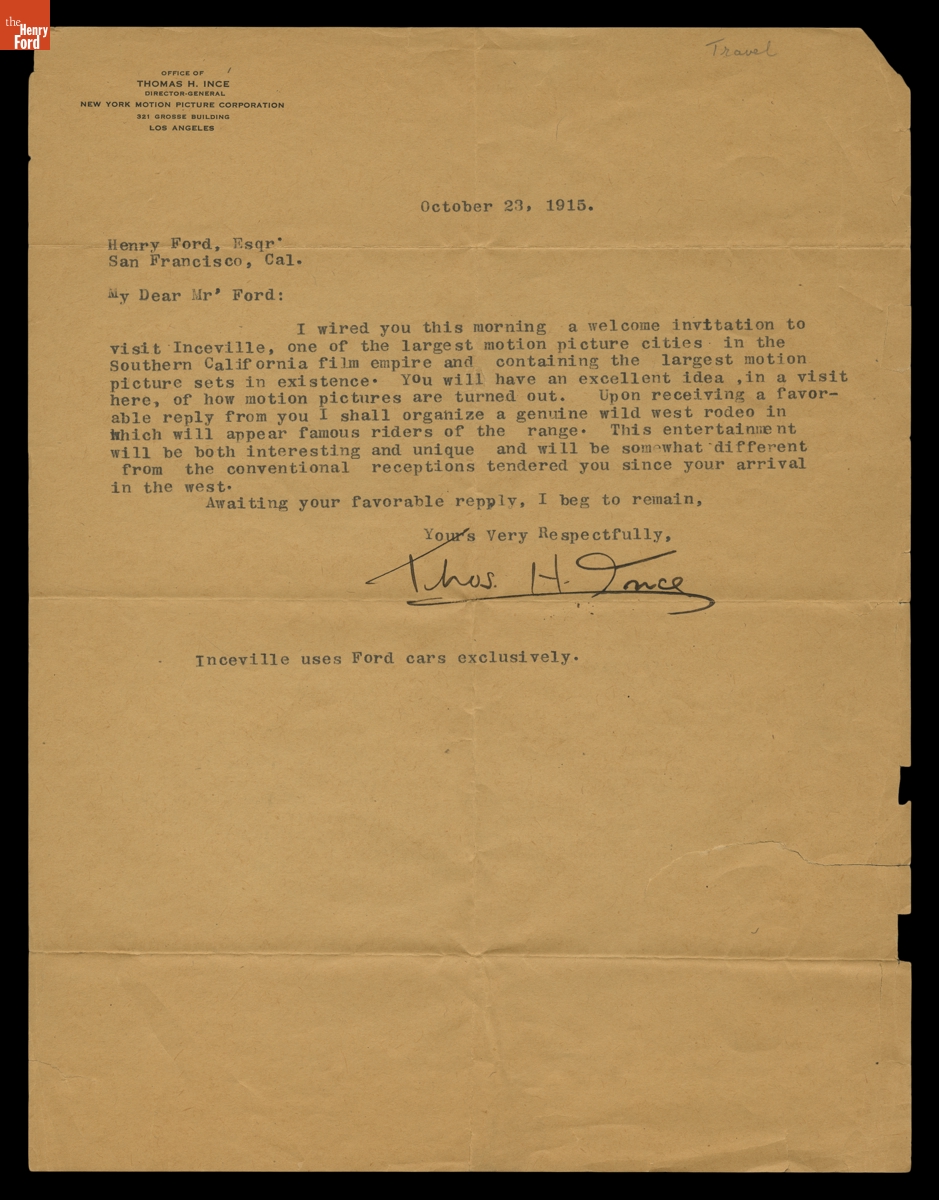
- October 23, 1915
- Collections - Artifact
Letter from Thomas Ince Inviting Henry Ford to Visit Inceville Motion Picture Studio, October 1915
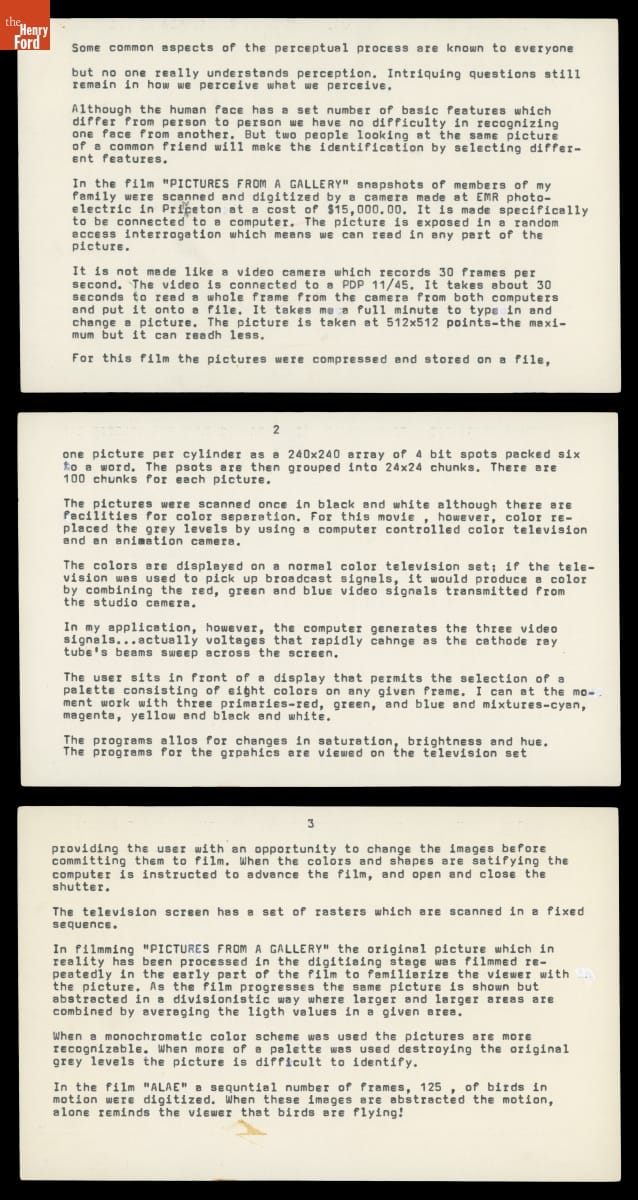
- Lillian Schwartz's Notes on Creating the Films "Pictures From a Gallery" and "Alae" - Lillian Schwartz is a pioneer of computer-generated art. From 1969-2002, she was a "resident visitor" at Bell Laboratories, producing groundbreaking films, videos, and multimedia works. The Schwartz Collection spans Lillian's childhood into her late career, documenting an expansive mindset, mastery over traditional and experimental mediums alike--and above all--an ability to create inspirational connections between science, art, and technology.
- 1975-1976
- Collections - Artifact
Lillian Schwartz's Notes on Creating the Films "Pictures From a Gallery" and "Alae"
Lillian Schwartz is a pioneer of computer-generated art. From 1969-2002, she was a "resident visitor" at Bell Laboratories, producing groundbreaking films, videos, and multimedia works. The Schwartz Collection spans Lillian's childhood into her late career, documenting an expansive mindset, mastery over traditional and experimental mediums alike--and above all--an ability to create inspirational connections between science, art, and technology.
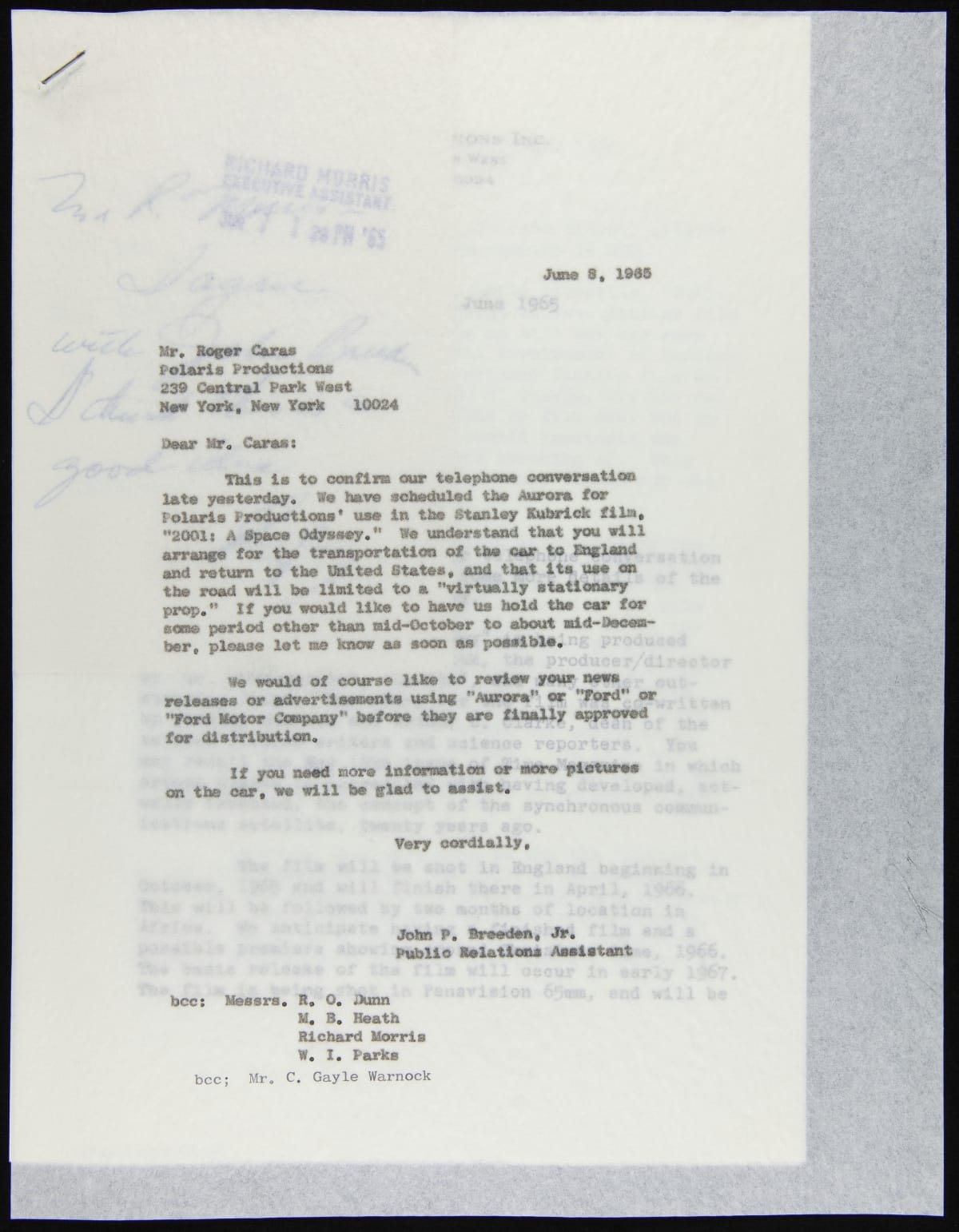
- Correspondence between John Breeden, Jr. and Roger A. Caras regarding Ford Aurora in "2001: Space Odyssey," June, 1965 - In 1965, Polaris Productions contacted Ford Motor Company about using the automaker's Aurora concept car in the forthcoming Stanley Kubrick film <em>2001: A Space Odyssey</em>. Ford agreed to loan the futuristic station wagon. In the end, the production team chose not to use the Aurora, believing that the car didn't fit with the film's overall design aesthetic.
- June 01, 1965
- Collections - Artifact
Correspondence between John Breeden, Jr. and Roger A. Caras regarding Ford Aurora in "2001: Space Odyssey," June, 1965
In 1965, Polaris Productions contacted Ford Motor Company about using the automaker's Aurora concept car in the forthcoming Stanley Kubrick film 2001: A Space Odyssey. Ford agreed to loan the futuristic station wagon. In the end, the production team chose not to use the Aurora, believing that the car didn't fit with the film's overall design aesthetic.
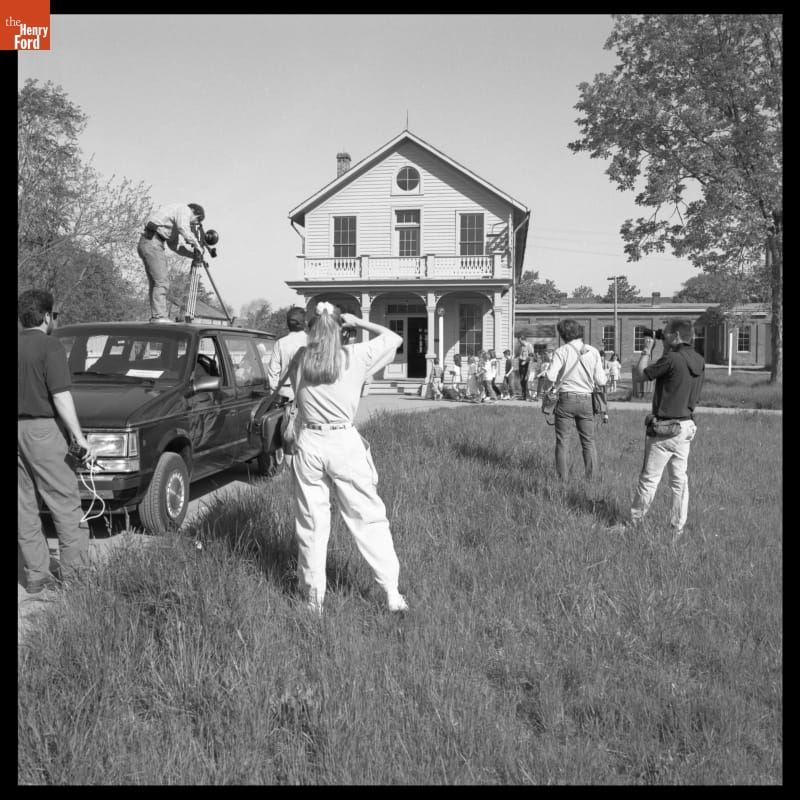
- Filming ABC-TV's World of Discovery outside Menlo Park Laboratory in Greenfield Village, May 22, 1989 - In May 1989, ABC television crews filmed segments of <EM>World of Discovery - Inventors: Out of their Minds</EM> at the Henry Ford Museum and Greenfield Village. The show linked the experiences of late 20th-century inventors with Thomas Edison's innovative work. In one of the program's final segments, students visit the reconstructed Menlo Park Laboratory in Greenfield Village to learn about Edison's inventive genius.
- May 22, 1989
- Collections - Artifact
Filming ABC-TV's World of Discovery outside Menlo Park Laboratory in Greenfield Village, May 22, 1989
In May 1989, ABC television crews filmed segments of World of Discovery - Inventors: Out of their Minds at the Henry Ford Museum and Greenfield Village. The show linked the experiences of late 20th-century inventors with Thomas Edison's innovative work. In one of the program's final segments, students visit the reconstructed Menlo Park Laboratory in Greenfield Village to learn about Edison's inventive genius.
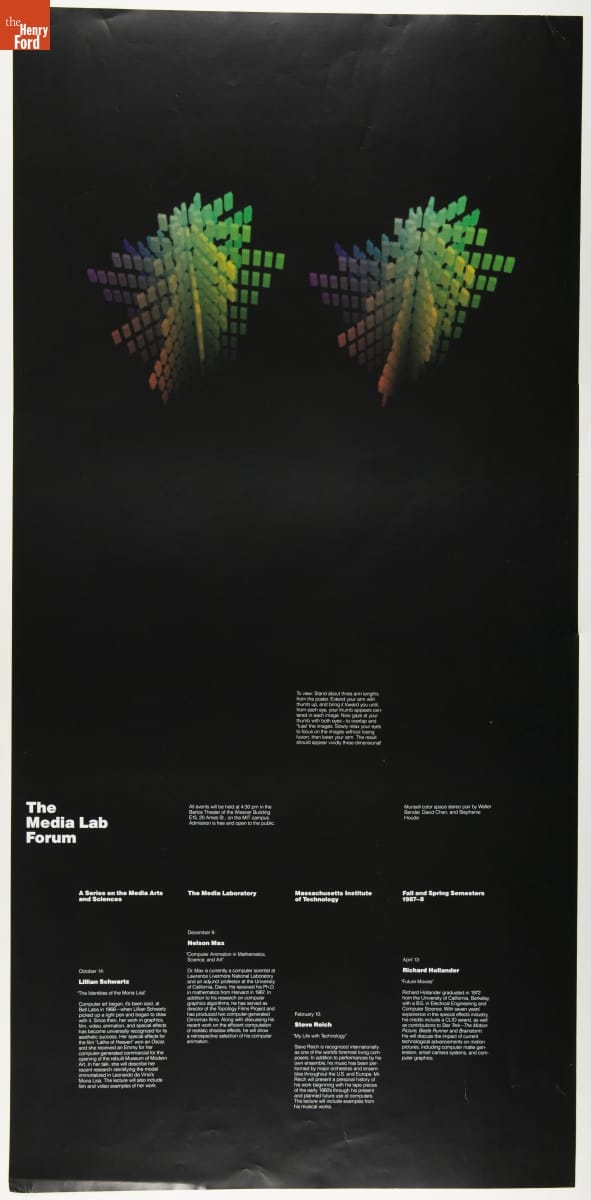
- Poster, "The Media Lab Forum," 1987-1988 - Lillian Schwartz is a pioneer of computer-generated art. From 1969-2002, she was a "resident visitor" at Bell Laboratories, producing groundbreaking films, videos, and multimedia works. The Schwartz Collection spans Lillian's childhood into her late career, documenting an expansive mindset, mastery over traditional and experimental mediums alike--and above all--an ability to create inspirational connections between science, art, and technology.
- 1987
- Collections - Artifact
Poster, "The Media Lab Forum," 1987-1988
Lillian Schwartz is a pioneer of computer-generated art. From 1969-2002, she was a "resident visitor" at Bell Laboratories, producing groundbreaking films, videos, and multimedia works. The Schwartz Collection spans Lillian's childhood into her late career, documenting an expansive mindset, mastery over traditional and experimental mediums alike--and above all--an ability to create inspirational connections between science, art, and technology.
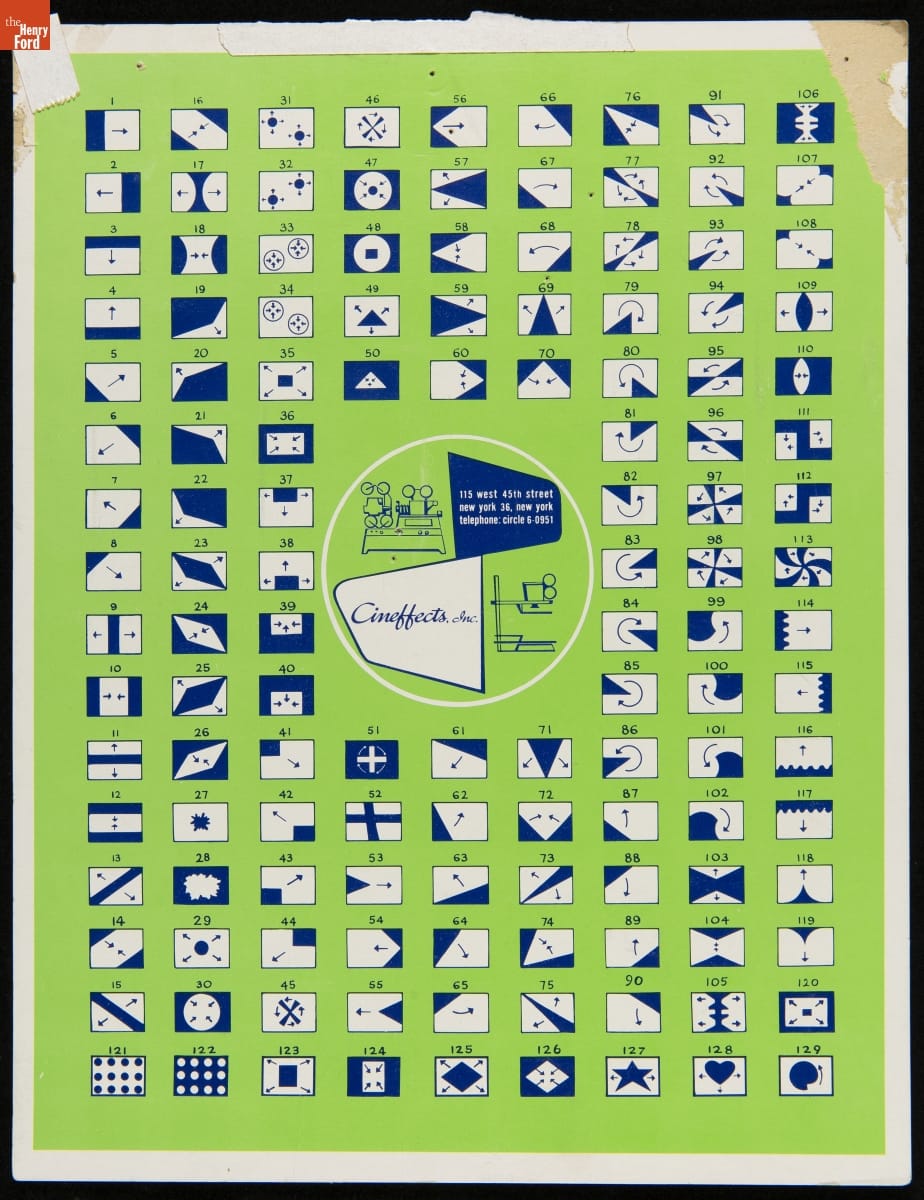
- Compositional Techniques, Cineffects, Inc. - Lillian Schwartz is a pioneer of computer-generated art. From 1969-2002, she was a "resident visitor" at Bell Laboratories, producing groundbreaking films, videos, and multimedia works. The Schwartz Collection spans Lillian's childhood into her late career, documenting an expansive mindset, mastery over traditional and experimental mediums alike--and above all--an ability to create inspirational connections between science, art, and technology.
- Collections - Artifact
Compositional Techniques, Cineffects, Inc.
Lillian Schwartz is a pioneer of computer-generated art. From 1969-2002, she was a "resident visitor" at Bell Laboratories, producing groundbreaking films, videos, and multimedia works. The Schwartz Collection spans Lillian's childhood into her late career, documenting an expansive mindset, mastery over traditional and experimental mediums alike--and above all--an ability to create inspirational connections between science, art, and technology.