
Search
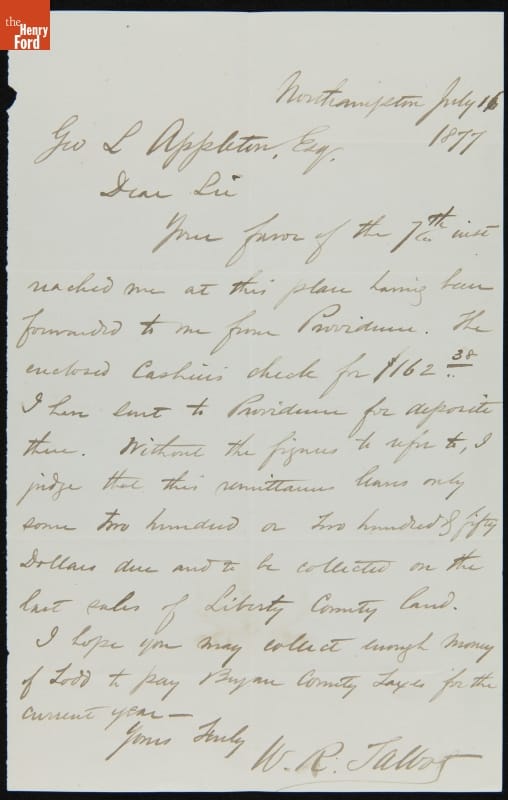
- Letter from William Talbot to George Appleton, July 16, 1877 -
- July 16, 1877
- Collections - Artifact
Letter from William Talbot to George Appleton, July 16, 1877
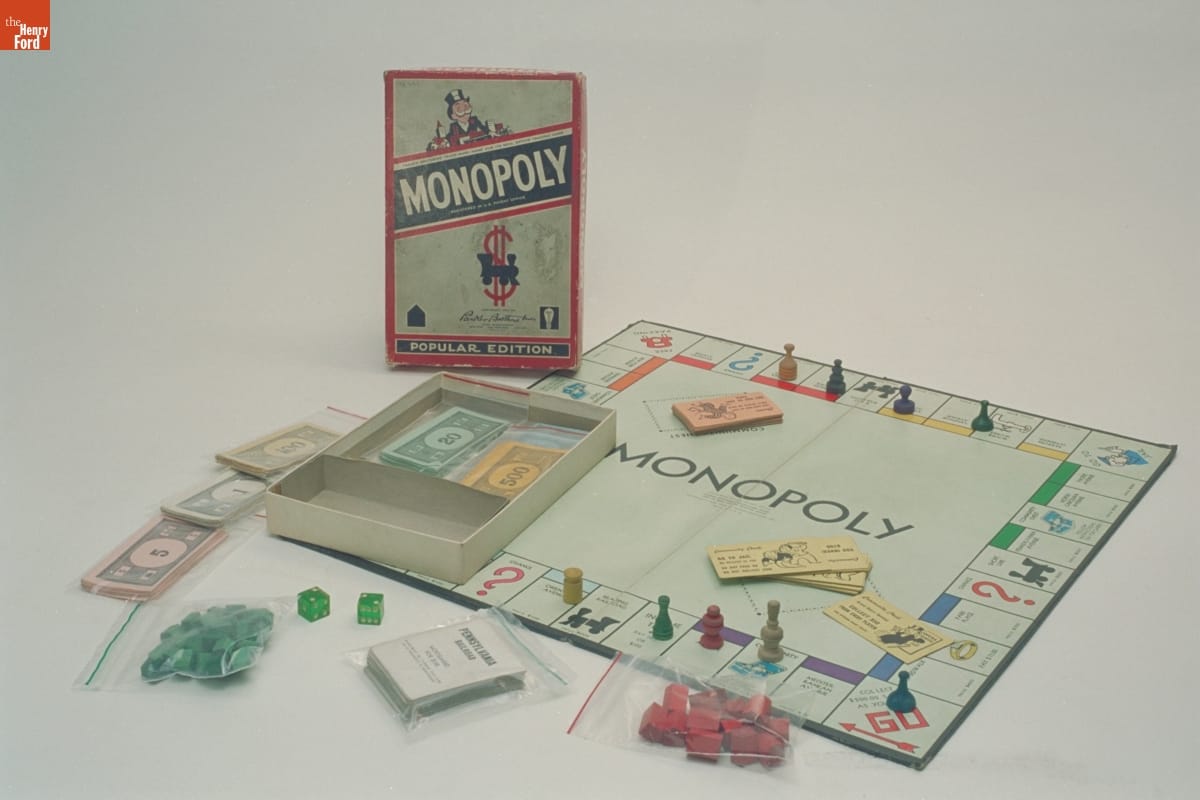
- Monopoly Game, 1954-1960 - Buy property. Build hotels. Charge rent. Make money. Monopoly derived from The Landlord's Game created in 1904 -- a game with the objective to point out the <EM>inequities</EM> of wealth. Monopoly's fun and popularity, however, came from amassing piles of play money and winning it all. Parker Brothers secured the game's rights in 1935 and it became the most popular board game in history.
- 1954-1960
- Collections - Artifact
Monopoly Game, 1954-1960
Buy property. Build hotels. Charge rent. Make money. Monopoly derived from The Landlord's Game created in 1904 -- a game with the objective to point out the inequities of wealth. Monopoly's fun and popularity, however, came from amassing piles of play money and winning it all. Parker Brothers secured the game's rights in 1935 and it became the most popular board game in history.
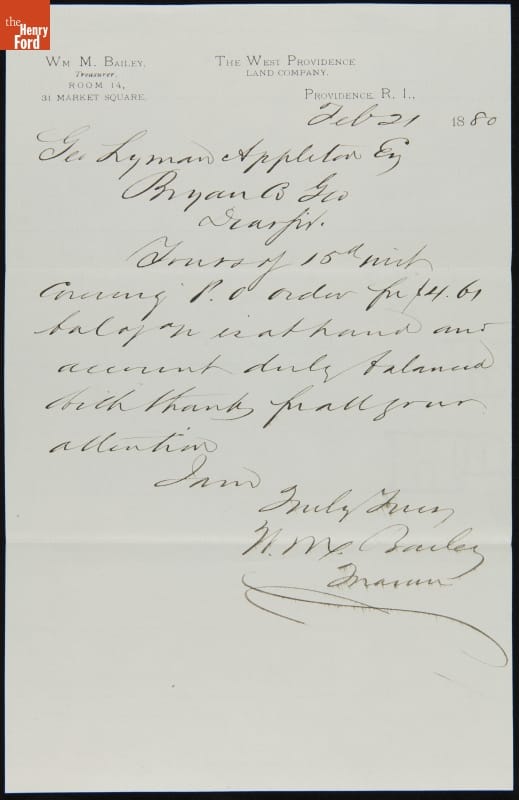
- Letter from William Bailey to George Appleton, February 21, 1880 -
- February 21, 1880
- Collections - Artifact
Letter from William Bailey to George Appleton, February 21, 1880
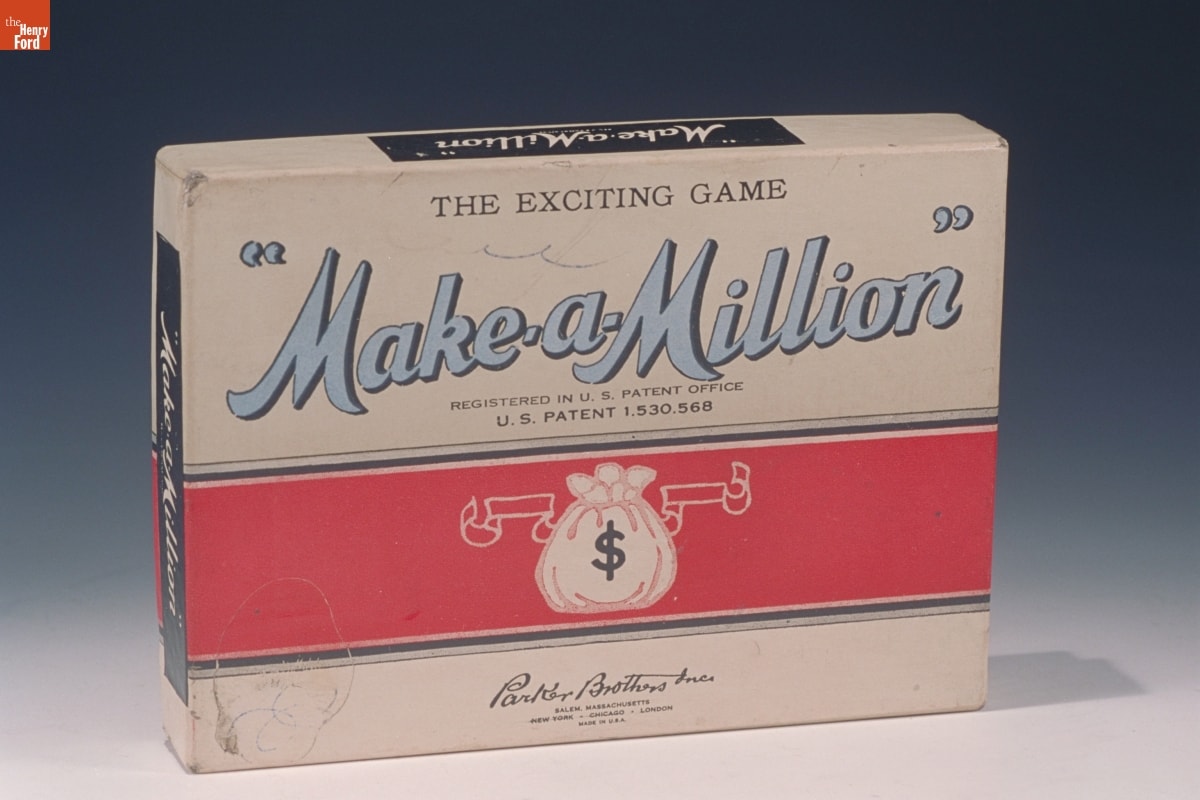
- The Exciting Game: "Make-A-Million," 1945-1955 - Parker Brothers copyrighted this card game in 1934. Teams work to make a million dollars (points) by winning tricks during the play of the game. A 55-card deck contains 52 colored number and money cards -- money cards count to the total. An additional three wild cards -- tiger, bull, and bear -- influence values won during play.
- 1945-1955
- Collections - Artifact
The Exciting Game: "Make-A-Million," 1945-1955
Parker Brothers copyrighted this card game in 1934. Teams work to make a million dollars (points) by winning tricks during the play of the game. A 55-card deck contains 52 colored number and money cards -- money cards count to the total. An additional three wild cards -- tiger, bull, and bear -- influence values won during play.
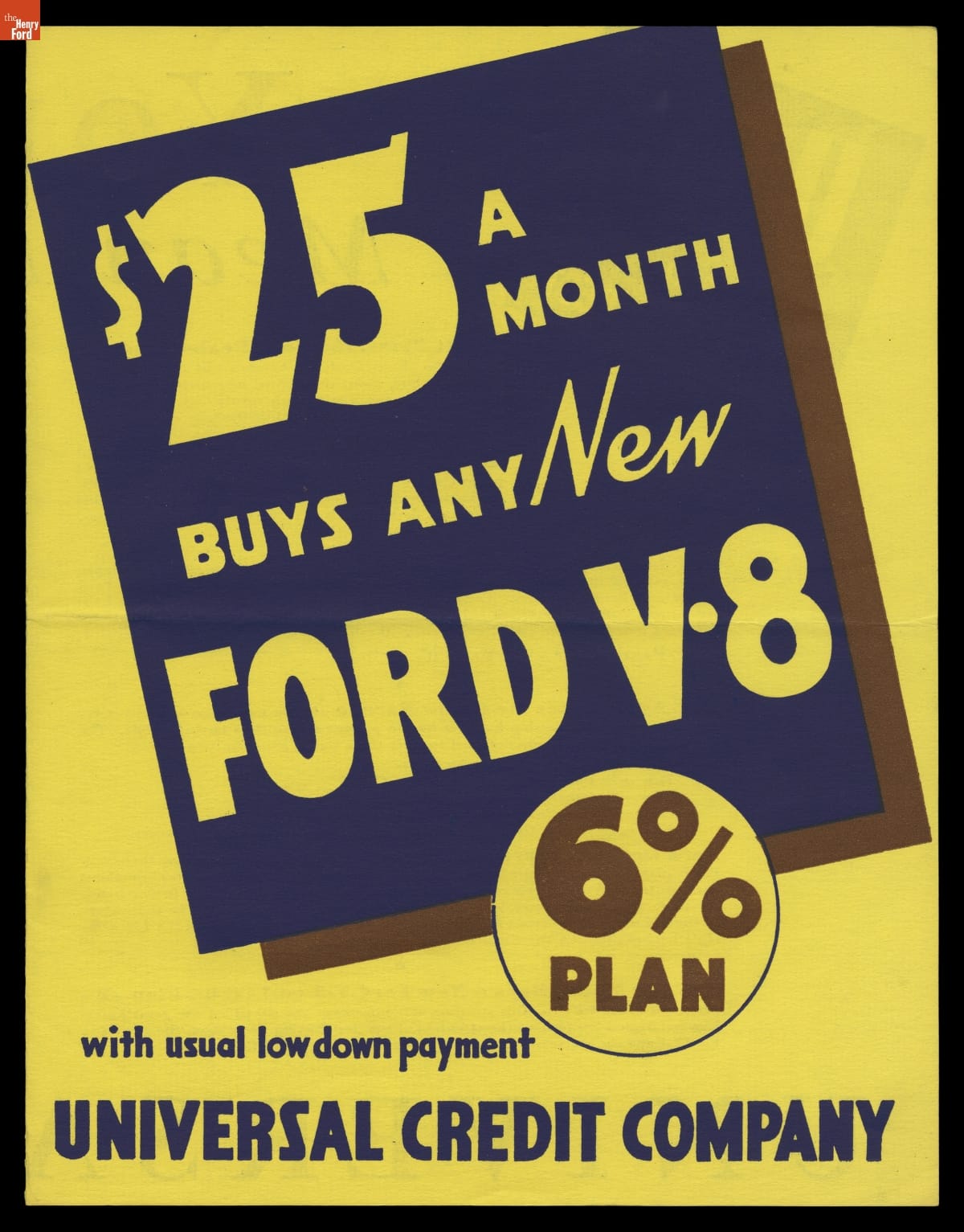
- Brochure, "$25 a Month Buys Any New Ford V-8," 1935-1936 - In 1928, Ford Motor Company established Universal Credit Company (UCC) to allow customers to finance their cars. UCC loaned money that buyers paid back over time. Like the all-new Model A, introduced for the same year, UCC helped Ford and its dealers in an increasingly competitive marketplace. Financing became even more important during the Great Depression, when this brochure was printed.
- 1935-1936
- Collections - Artifact
Brochure, "$25 a Month Buys Any New Ford V-8," 1935-1936
In 1928, Ford Motor Company established Universal Credit Company (UCC) to allow customers to finance their cars. UCC loaned money that buyers paid back over time. Like the all-new Model A, introduced for the same year, UCC helped Ford and its dealers in an increasingly competitive marketplace. Financing became even more important during the Great Depression, when this brochure was printed.
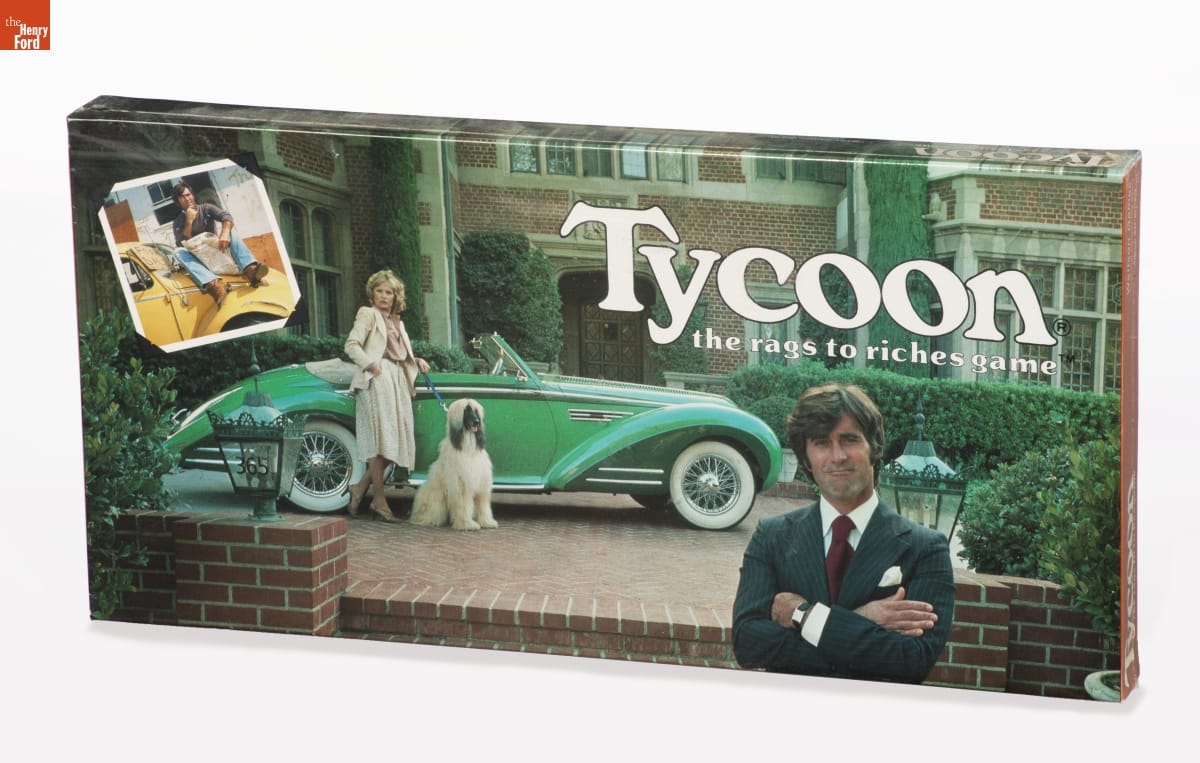
- Tycoon Board Game, 1981 -
- 1981
- Collections - Artifact
Tycoon Board Game, 1981
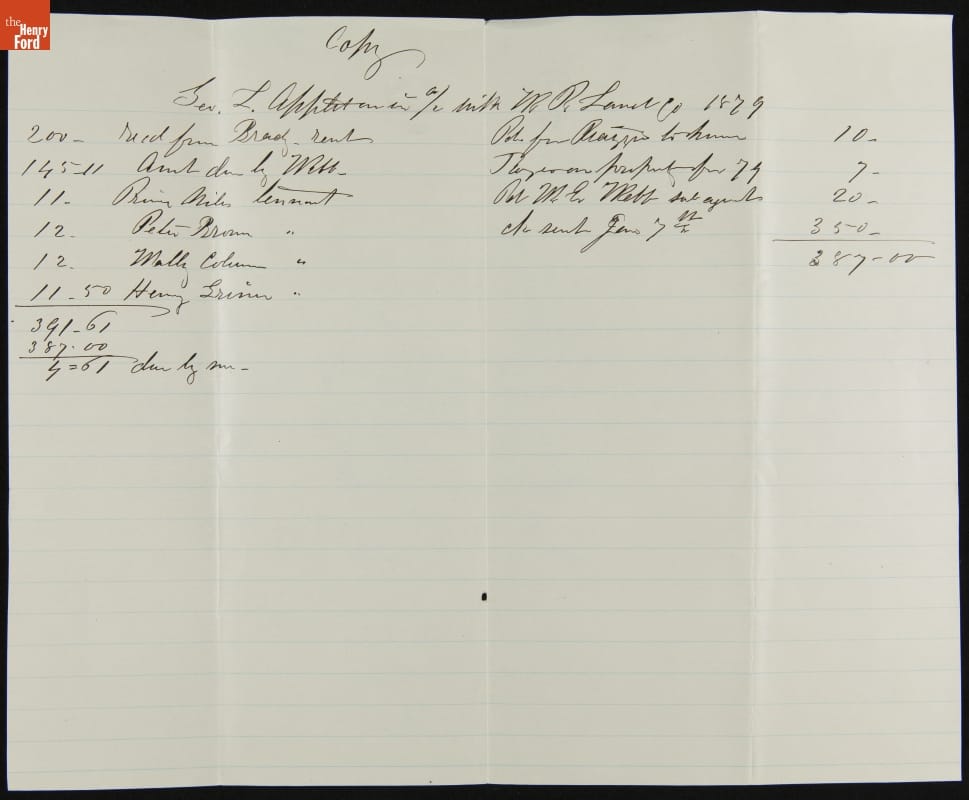
- George L. Appleton's Account Held at The West Providence Land Company, 1879 -
- 1879
- Collections - Artifact
George L. Appleton's Account Held at The West Providence Land Company, 1879
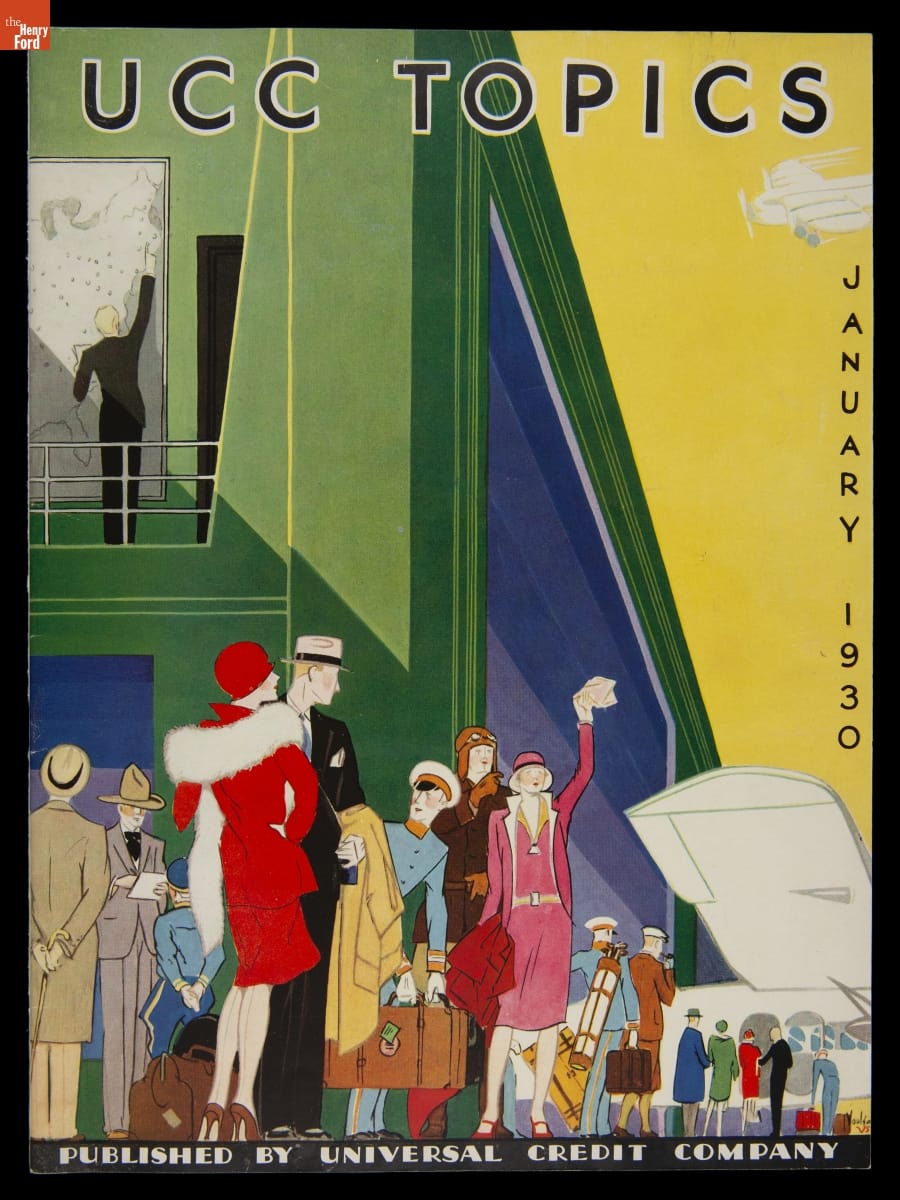
- "UCC Topics," January 1930 - In 1928, Ford Motor Company established Universal Credit Company (UCC) to allow customers to finance their cars. UCC loaned money that buyers paid back over time, and it helped Ford and its dealers in an increasingly competitive marketplace. Ford sold the company five years later, but UCC remained a primary financer for buyers of Ford vehicles.
- January 01, 1930
- Collections - Artifact
"UCC Topics," January 1930
In 1928, Ford Motor Company established Universal Credit Company (UCC) to allow customers to finance their cars. UCC loaned money that buyers paid back over time, and it helped Ford and its dealers in an increasingly competitive marketplace. Ford sold the company five years later, but UCC remained a primary financer for buyers of Ford vehicles.
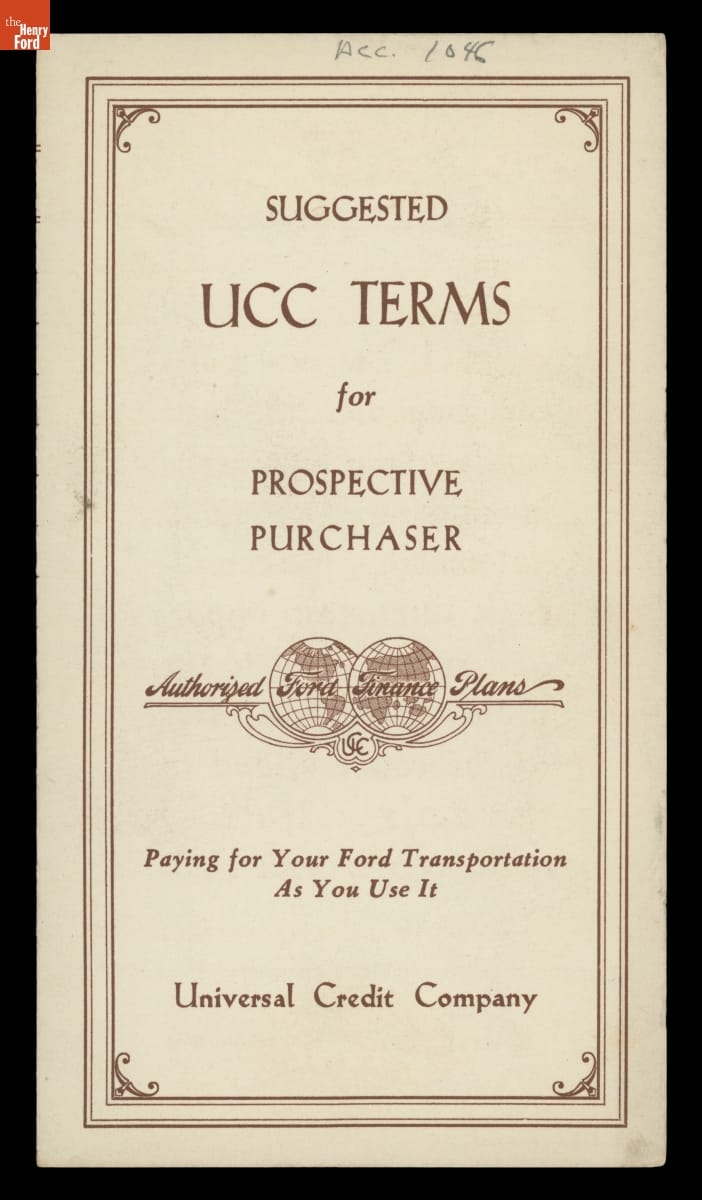
- "Suggested UCC Terms for Prospective Purchaser," 1932 - In 1928, Ford Motor Company established Universal Credit Company (UCC) to allow customers to finance their cars. UCC loaned money that buyers paid back over time, and it helped Ford and its dealers in an increasingly competitive marketplace. Ford sold the company five years later, but UCC remained a primary financer for buyers of Ford vehicles.
- 1932
- Collections - Artifact
"Suggested UCC Terms for Prospective Purchaser," 1932
In 1928, Ford Motor Company established Universal Credit Company (UCC) to allow customers to finance their cars. UCC loaned money that buyers paid back over time, and it helped Ford and its dealers in an increasingly competitive marketplace. Ford sold the company five years later, but UCC remained a primary financer for buyers of Ford vehicles.
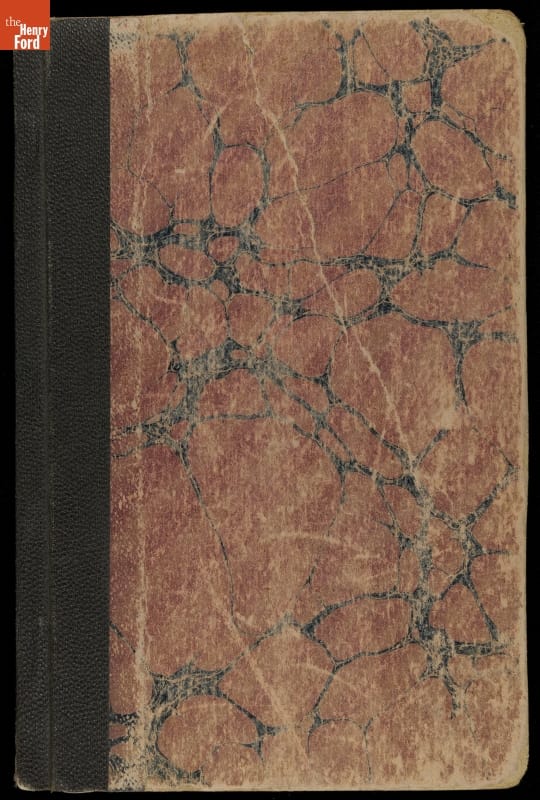
- Ford Motor Company Checkbook, 1903 - Ford Motor Company's first checkbook, kept by Secretary James Couzens, shows the struggling company's transition. The bank account started with $14,500 on June 26, 1903. It sank to $223.65 by July 10 after 60 checks. Then on July 15, Ford sold its first car for $850. From then on, the balance kept increasing and the company was off and running.
- 26 June 1903-20 August 1903
- Collections - Artifact
Ford Motor Company Checkbook, 1903
Ford Motor Company's first checkbook, kept by Secretary James Couzens, shows the struggling company's transition. The bank account started with $14,500 on June 26, 1903. It sank to $223.65 by July 10 after 60 checks. Then on July 15, Ford sold its first car for $850. From then on, the balance kept increasing and the company was off and running.