
Search
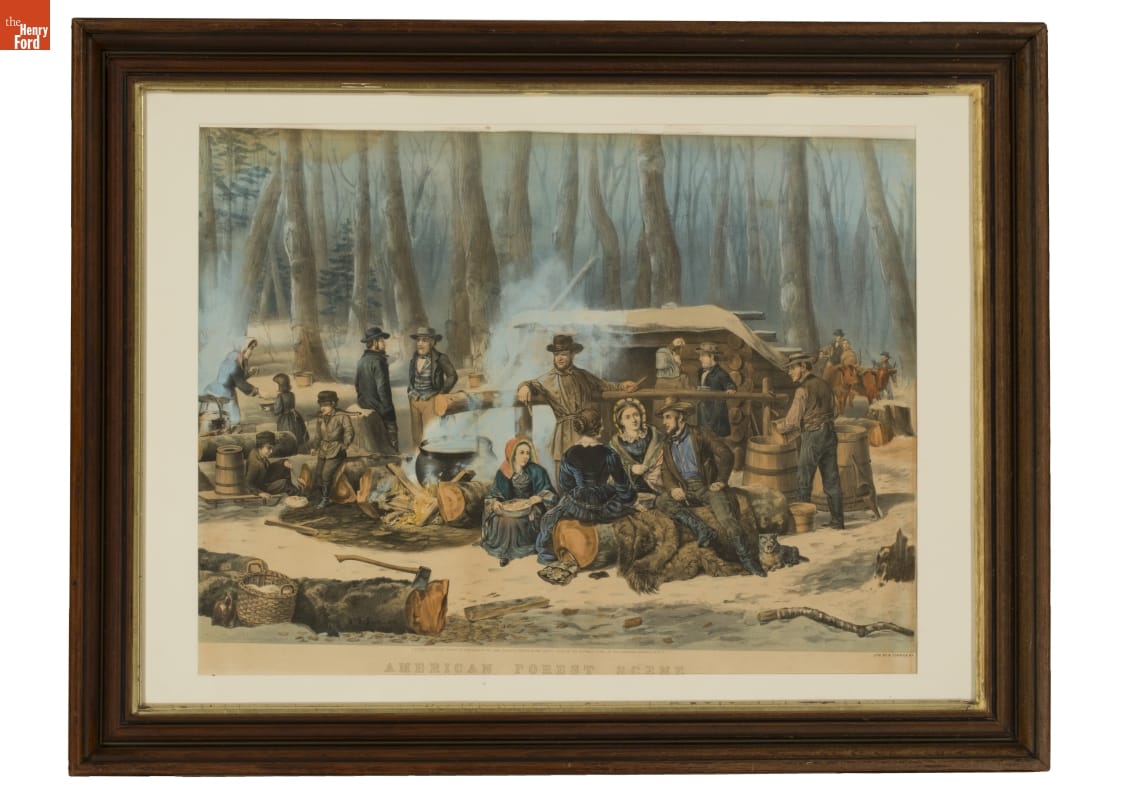
- LIthograph, "American Forest Scene," 1856 -
- 1856
- Collections - Artifact
LIthograph, "American Forest Scene," 1856
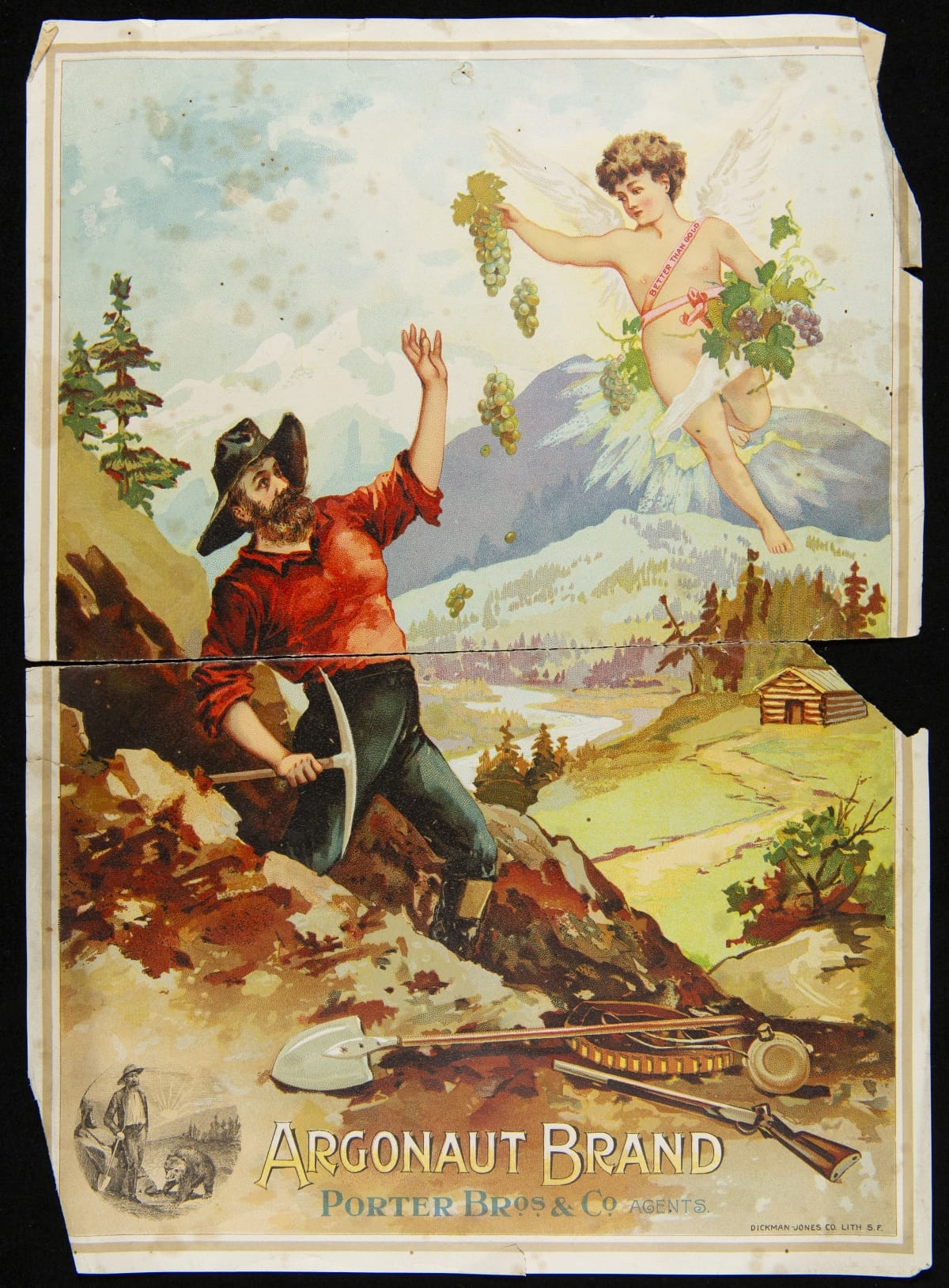
- Label, "Argonaut Brand Grapes," 1888-1899 -
- 1888-1899
- Collections - Artifact
Label, "Argonaut Brand Grapes," 1888-1899
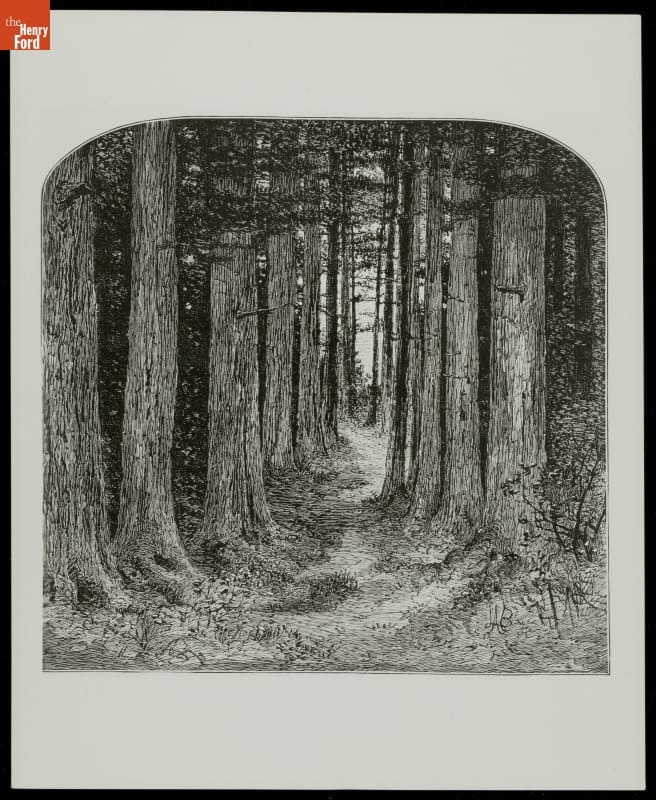
- 19th Century Illustration Showing a Path through a Primeval Forest - This sketch illustrates the often densely forested 19th-century American interior. Such trails could hardly accommodate a horse and rider, yet alone horse-drawn vehicles. The construction of practical transportation routes - roads, canals, and railroads - would be an immense undertaking in the United States throughout the 1800s.
- circa 1850
- Collections - Artifact
19th Century Illustration Showing a Path through a Primeval Forest
This sketch illustrates the often densely forested 19th-century American interior. Such trails could hardly accommodate a horse and rider, yet alone horse-drawn vehicles. The construction of practical transportation routes - roads, canals, and railroads - would be an immense undertaking in the United States throughout the 1800s.
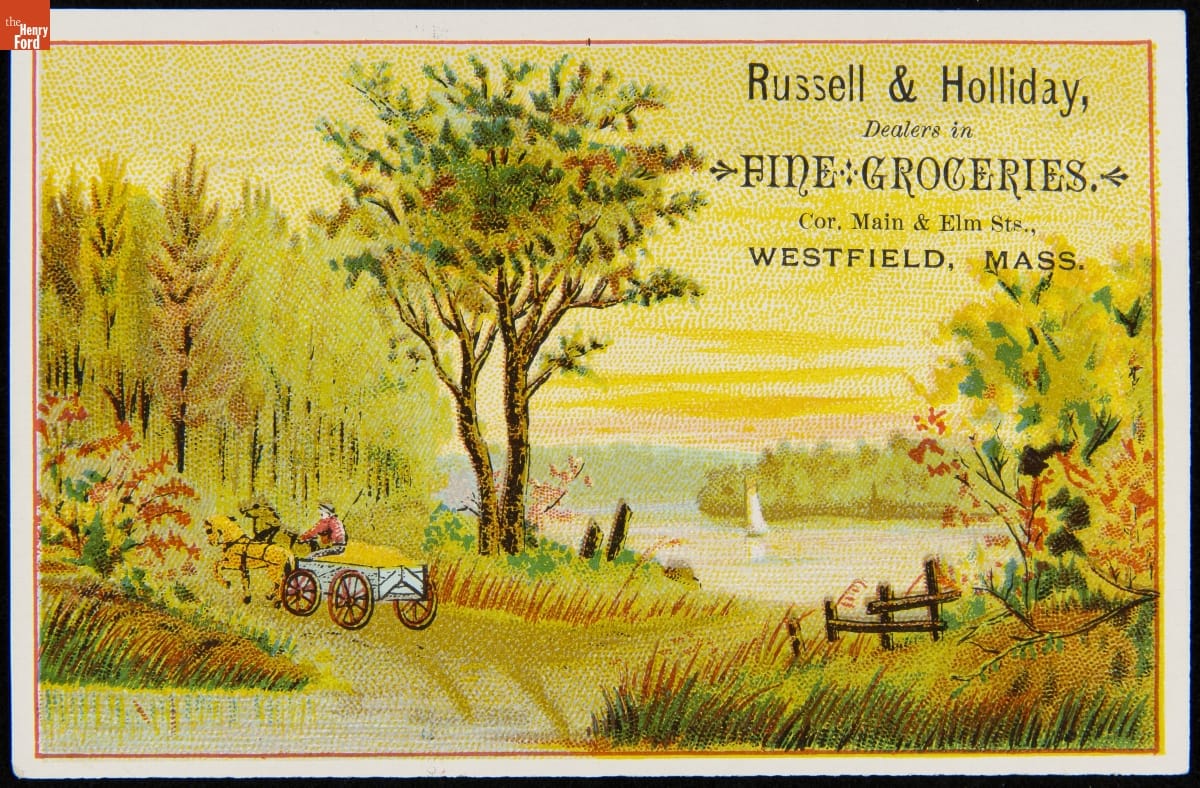
- Trade Card for Russell & Holliday, Grocer, 1880-1890 - In the last third of the nineteenth century, an unprecedented variety of consumer goods and services flooded the American market. Advertisers, armed with new methods of color printing, bombarded potential customers with trade cards. Americans enjoyed and often saved the vibrant little advertisements found in product packages or distributed by local merchants. Many survive as historical records of commercialism in the United States.
- 1880-1890
- Collections - Artifact
Trade Card for Russell & Holliday, Grocer, 1880-1890
In the last third of the nineteenth century, an unprecedented variety of consumer goods and services flooded the American market. Advertisers, armed with new methods of color printing, bombarded potential customers with trade cards. Americans enjoyed and often saved the vibrant little advertisements found in product packages or distributed by local merchants. Many survive as historical records of commercialism in the United States.
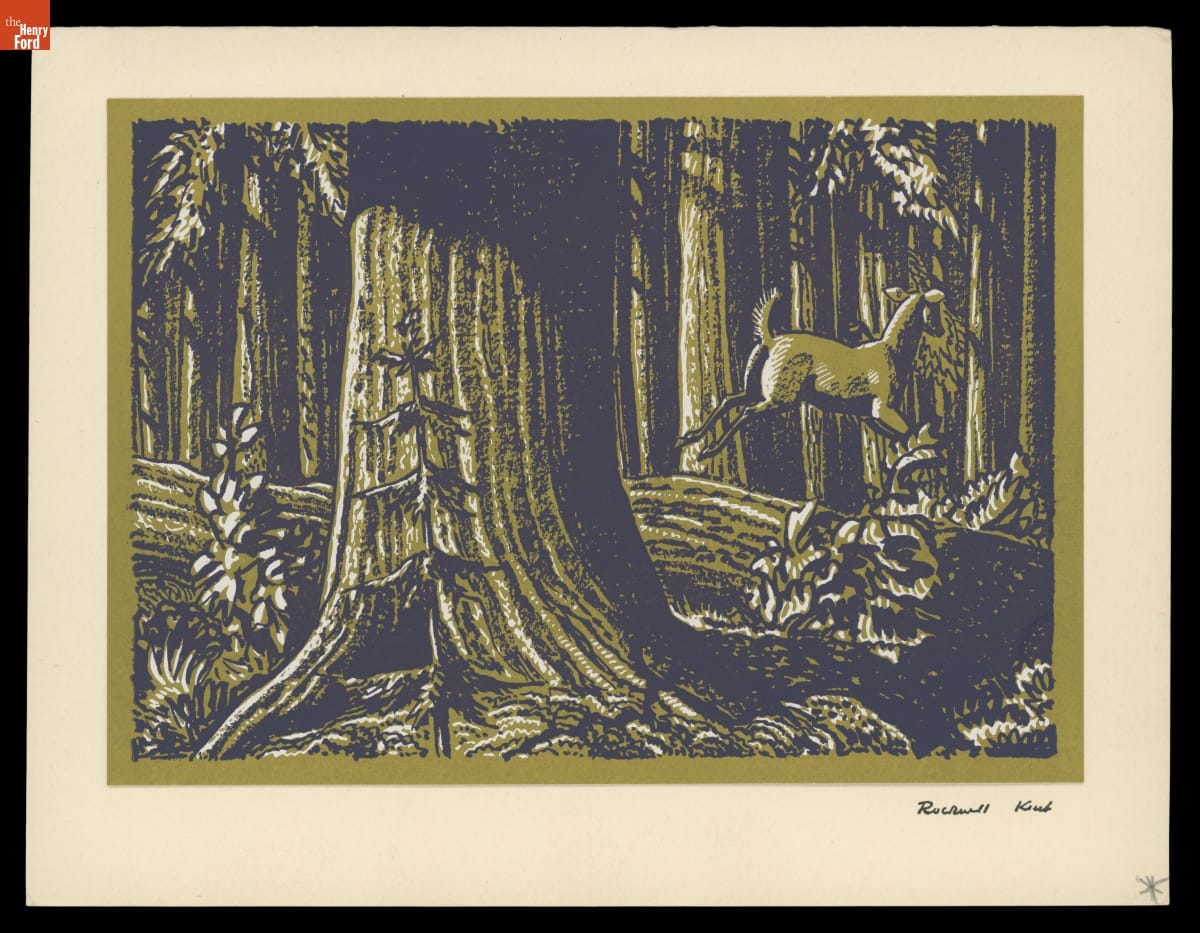
- "Season's Greetings and Best Wishes for a Happy New Year," 1945 - Artist and illustrator Rockwell Kent (1882-1971) began taking classes at William Merritt Chase's art school in the early 1900s. He took up wood engraving around 1920 and developed a modern graphic style that was instantly recognizable and widely emulated. In the mid-1930s, Kent was a member of the American Artist Group and, with others, encouraged the organization to introduce artist-designed Christmas cards.
- 1945
- Collections - Artifact
"Season's Greetings and Best Wishes for a Happy New Year," 1945
Artist and illustrator Rockwell Kent (1882-1971) began taking classes at William Merritt Chase's art school in the early 1900s. He took up wood engraving around 1920 and developed a modern graphic style that was instantly recognizable and widely emulated. In the mid-1930s, Kent was a member of the American Artist Group and, with others, encouraged the organization to introduce artist-designed Christmas cards.
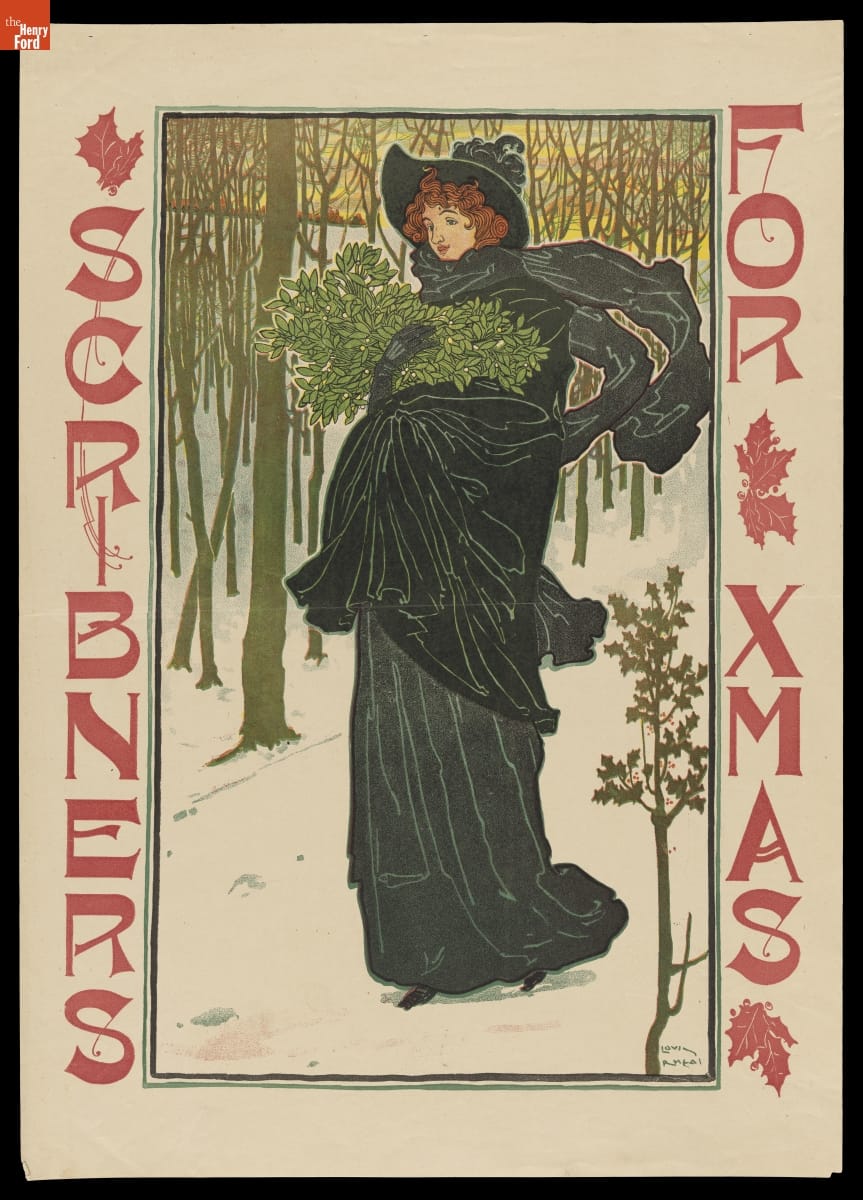
- Lithograph, "Scribner's for Xmas," 1896 - For a few years in the 1890s, a poster craze swept America. Bold, colorful art posters printed for bookstores and newsstands became collector'' items--sometimes more popular than the books and magazines they were designed to promote. Many posters, like this one by Louis Rhead for a Christmas issue of <em>Scribner's Magazine</em>, featured eye-catching illustrations inspired by Art Nouveau trends.
- 1895
- Collections - Artifact
Lithograph, "Scribner's for Xmas," 1896
For a few years in the 1890s, a poster craze swept America. Bold, colorful art posters printed for bookstores and newsstands became collector'' items--sometimes more popular than the books and magazines they were designed to promote. Many posters, like this one by Louis Rhead for a Christmas issue of Scribner's Magazine, featured eye-catching illustrations inspired by Art Nouveau trends.
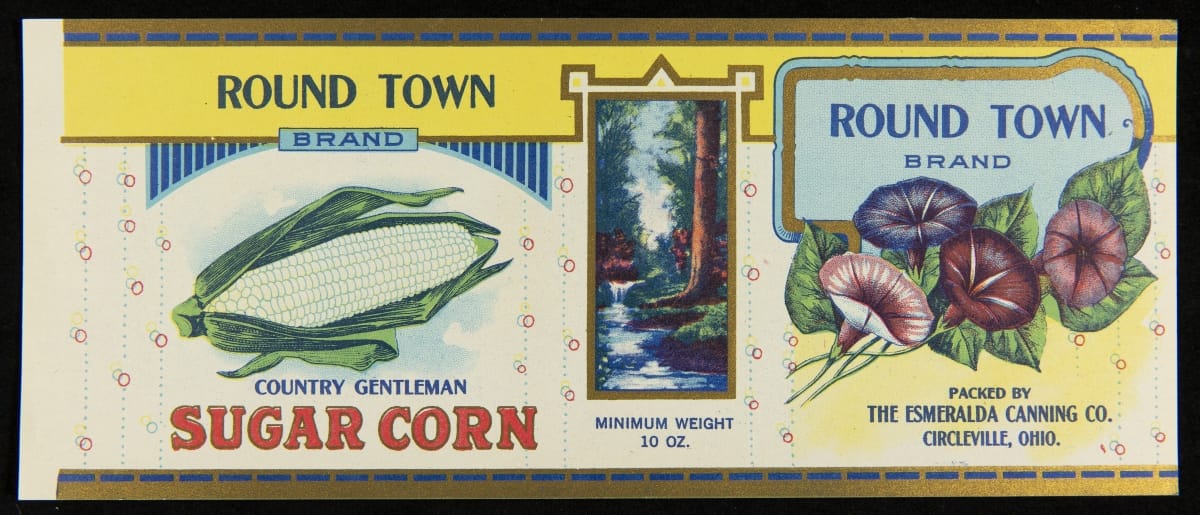
- Can Label, "Round Town Brand Sugar Corn," 1910-1940 - Manufacturers of similar products sought ways to make their company's goods stand out on store shelves. Attractive labels, like this design for Round Town Brand Sugar Corn, helped catch the attention of potential customers - hopefully encouraging them to purchase the company's product rather than that of a competitor.
- 1910-1940
- Collections - Artifact
Can Label, "Round Town Brand Sugar Corn," 1910-1940
Manufacturers of similar products sought ways to make their company's goods stand out on store shelves. Attractive labels, like this design for Round Town Brand Sugar Corn, helped catch the attention of potential customers - hopefully encouraging them to purchase the company's product rather than that of a competitor.
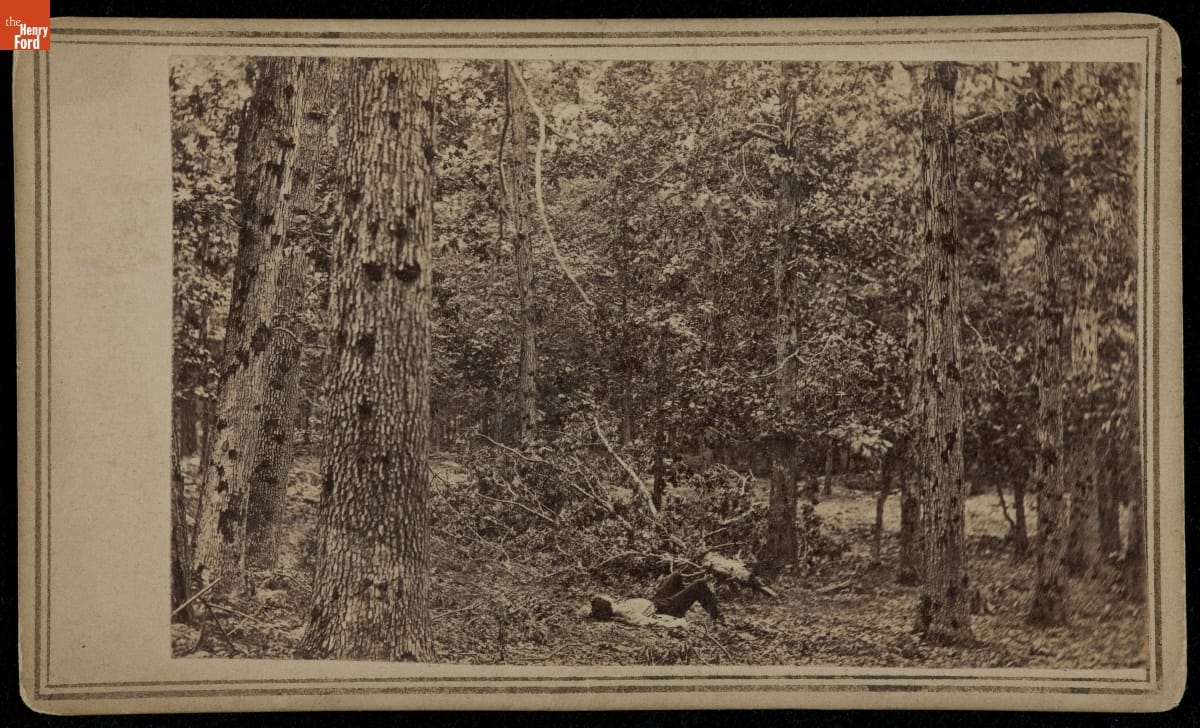
- Man Lying on the Forest Floor, circa 1865 - This carte-de-visite, made around 1865 in New York by the E. & H.T. Anthony photography firm, shows a man lying amid a stand of trees. Cartes-de-visite were small photographic prints on cardboard stock made by professional photographers. Americans commonly collected and exchanged cartes-de-visites, which remained popular in the United States from the Civil War in the 1860s through the 1880s.
- circa 1865
- Collections - Artifact
Man Lying on the Forest Floor, circa 1865
This carte-de-visite, made around 1865 in New York by the E. & H.T. Anthony photography firm, shows a man lying amid a stand of trees. Cartes-de-visite were small photographic prints on cardboard stock made by professional photographers. Americans commonly collected and exchanged cartes-de-visites, which remained popular in the United States from the Civil War in the 1860s through the 1880s.
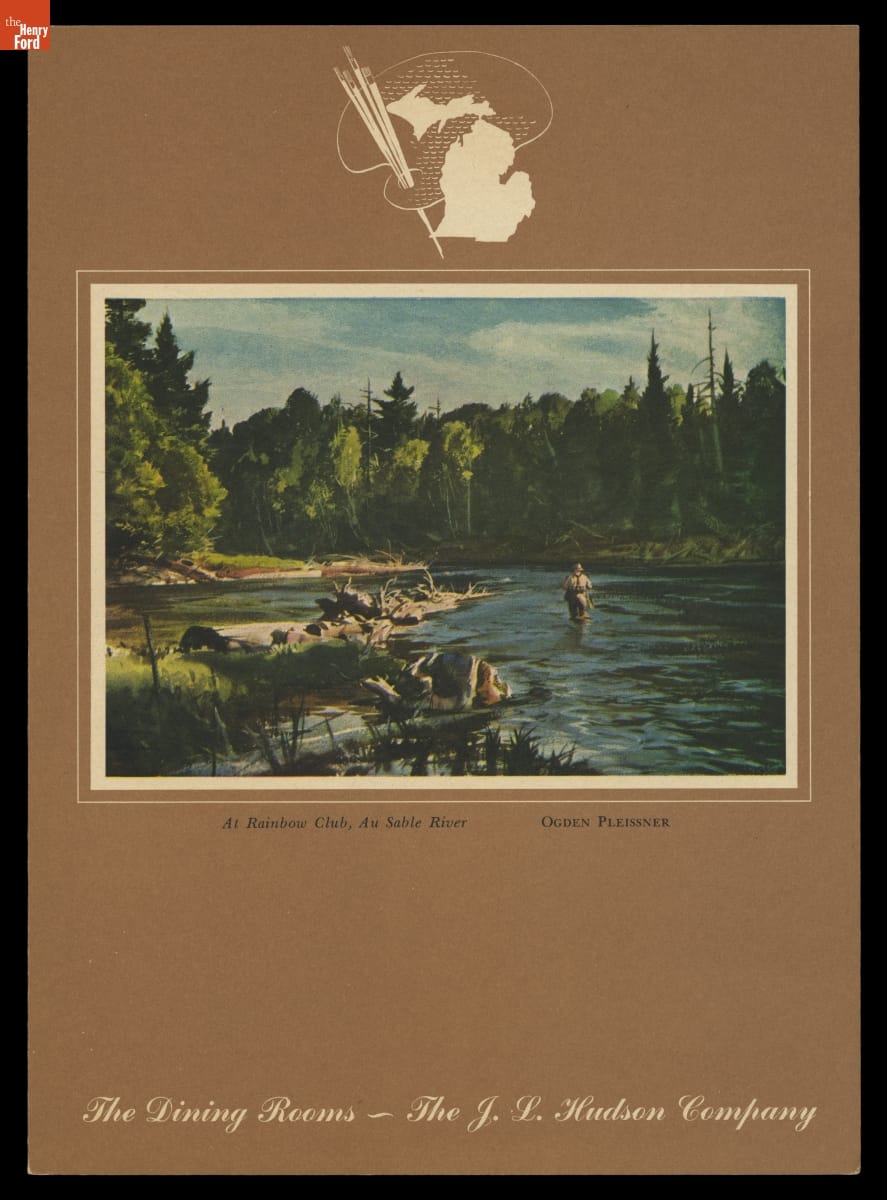
- "The Dining Rooms - The J.L. Hudson Company" Menu Showing "At Rainbow Club, Au Sable River," 1949 - In 1946, the J.L. Hudson Company, a Detroit department store, commissioned ten American artists to create works that portrayed the people and places of Michigan. A committee selected 95 paintings that toured the state in the exhibition "Michigan on Canvas." J.L. Hudson also reproduced selected works for the covers of menus used in its Detroit flagship store's dining rooms.
- March 01, 1949
- Collections - Artifact
"The Dining Rooms - The J.L. Hudson Company" Menu Showing "At Rainbow Club, Au Sable River," 1949
In 1946, the J.L. Hudson Company, a Detroit department store, commissioned ten American artists to create works that portrayed the people and places of Michigan. A committee selected 95 paintings that toured the state in the exhibition "Michigan on Canvas." J.L. Hudson also reproduced selected works for the covers of menus used in its Detroit flagship store's dining rooms.
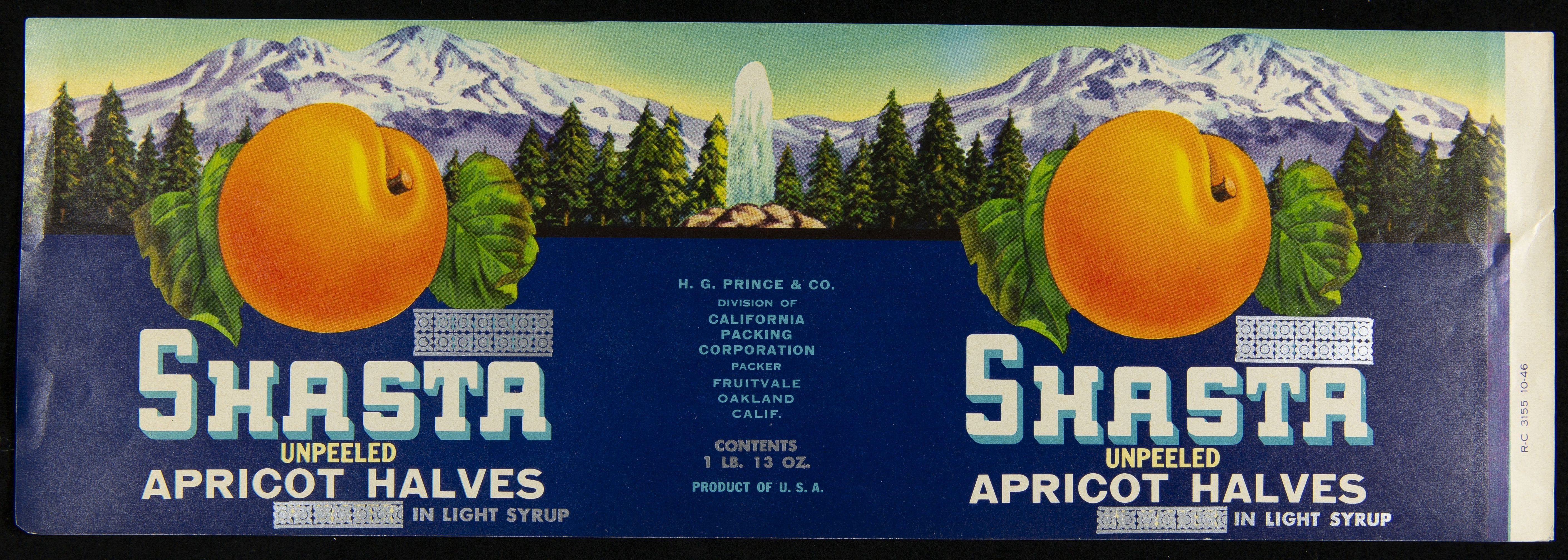
- Can Label, "Shasta Brand Unpeeled Apricot Halves," 1928-1940 - Manufacturers of similar products sought ways to make their company's goods stand out on store shelves. Attractive labels, like this design for Shasta Brand Unpeeled Apricot Halves, helped catch the attention of potential customers - hopefully encouraging them to purchase the company's product rather than that of a competitor.
- 1928-1940
- Collections - Artifact
Can Label, "Shasta Brand Unpeeled Apricot Halves," 1928-1940
Manufacturers of similar products sought ways to make their company's goods stand out on store shelves. Attractive labels, like this design for Shasta Brand Unpeeled Apricot Halves, helped catch the attention of potential customers - hopefully encouraging them to purchase the company's product rather than that of a competitor.