
Search
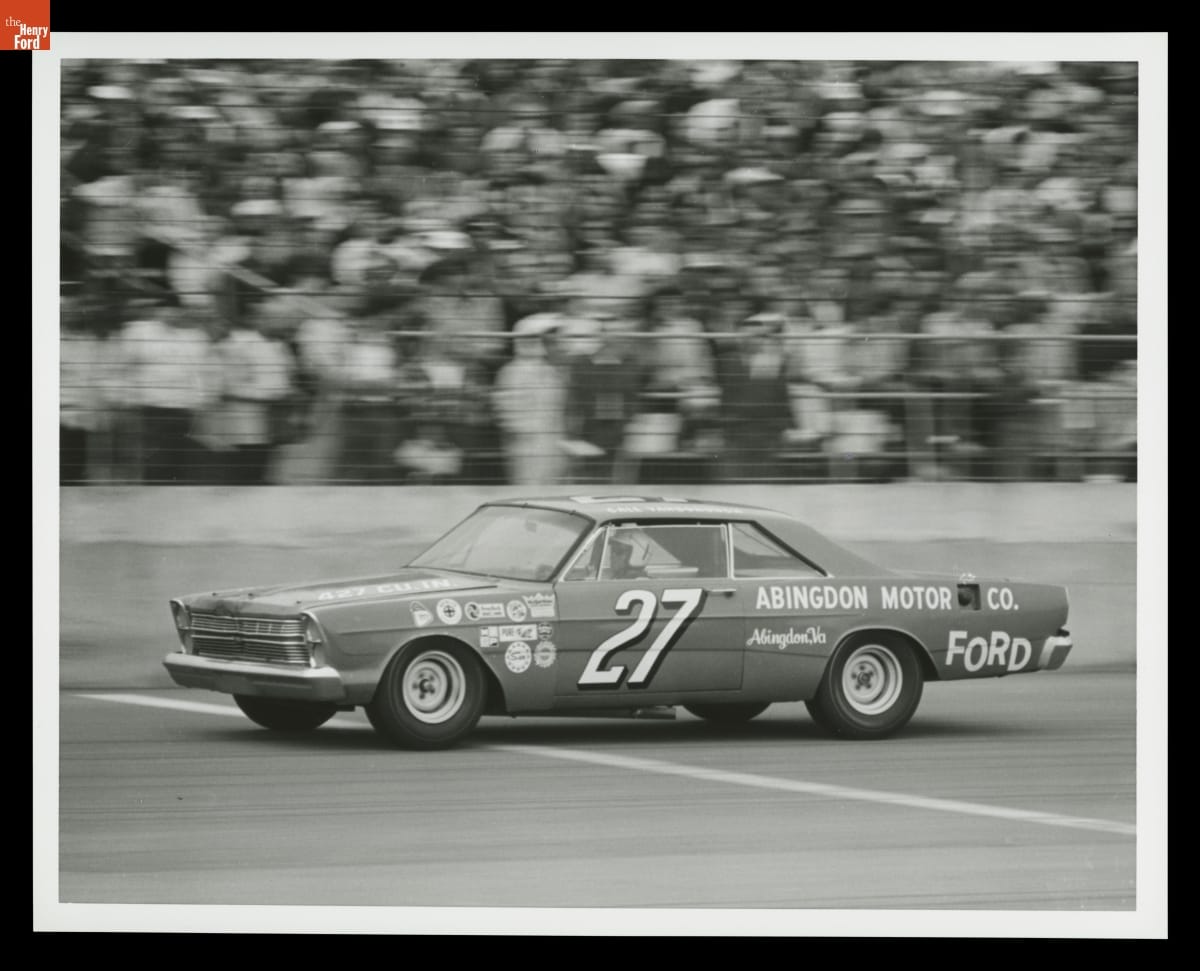
- 1966 Ford Galaxie Driven by Cale Yarborough in the Daytona 500, February 1966 - Cale Yarborough finished second at the 1966 Daytona 500, behind Richard Petty. Yarborough drove the #27 1966 Ford Galaxie for the Holman-Moody racing team. The following season, Yarborough's Galaxie was acquired by Wendell Scott, who drove it under #34 through 1968. Scott, the first African American driver to compete in NASCAR full-time, stretched his limited budget with secondhand equipment.
- February 27, 1966
- Collections - Artifact
1966 Ford Galaxie Driven by Cale Yarborough in the Daytona 500, February 1966
Cale Yarborough finished second at the 1966 Daytona 500, behind Richard Petty. Yarborough drove the #27 1966 Ford Galaxie for the Holman-Moody racing team. The following season, Yarborough's Galaxie was acquired by Wendell Scott, who drove it under #34 through 1968. Scott, the first African American driver to compete in NASCAR full-time, stretched his limited budget with secondhand equipment.
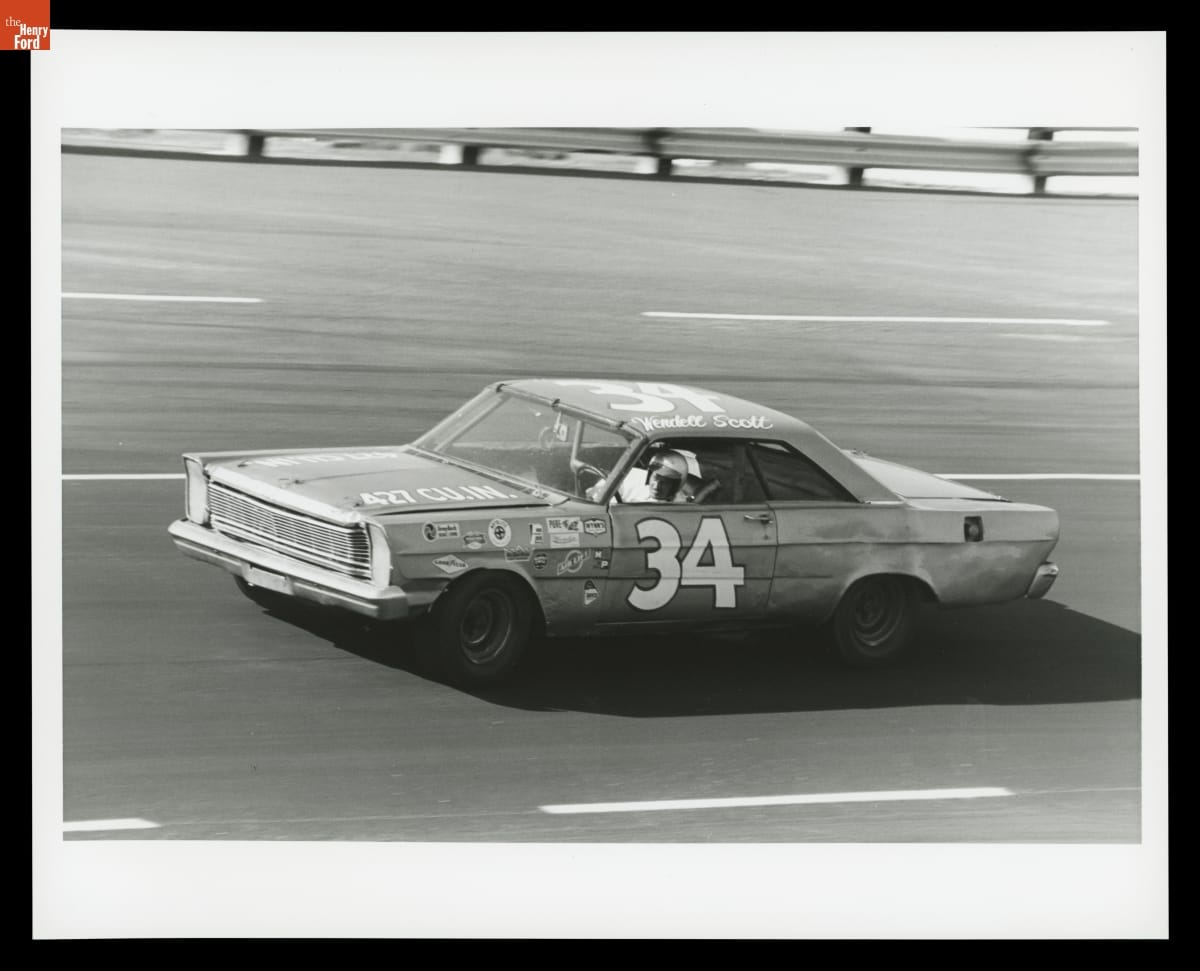
- 1965 Ford Galaxie Driven by Wendell Scott in the Daytona 500, February 1966 - Wendell Scott broke NASCAR's color barrier, becoming the first African American driver to win a Cup-level race, with his victory in a 100-mile event at Jacksonville's Speedway Park in 1963. He made 495 starts and earned 147 top-ten finishes in his 13-year Cup Series career. Scott was inducted into the NASCAR Hall of Fame in 2015.
- February 27, 1966
- Collections - Artifact
1965 Ford Galaxie Driven by Wendell Scott in the Daytona 500, February 1966
Wendell Scott broke NASCAR's color barrier, becoming the first African American driver to win a Cup-level race, with his victory in a 100-mile event at Jacksonville's Speedway Park in 1963. He made 495 starts and earned 147 top-ten finishes in his 13-year Cup Series career. Scott was inducted into the NASCAR Hall of Fame in 2015.
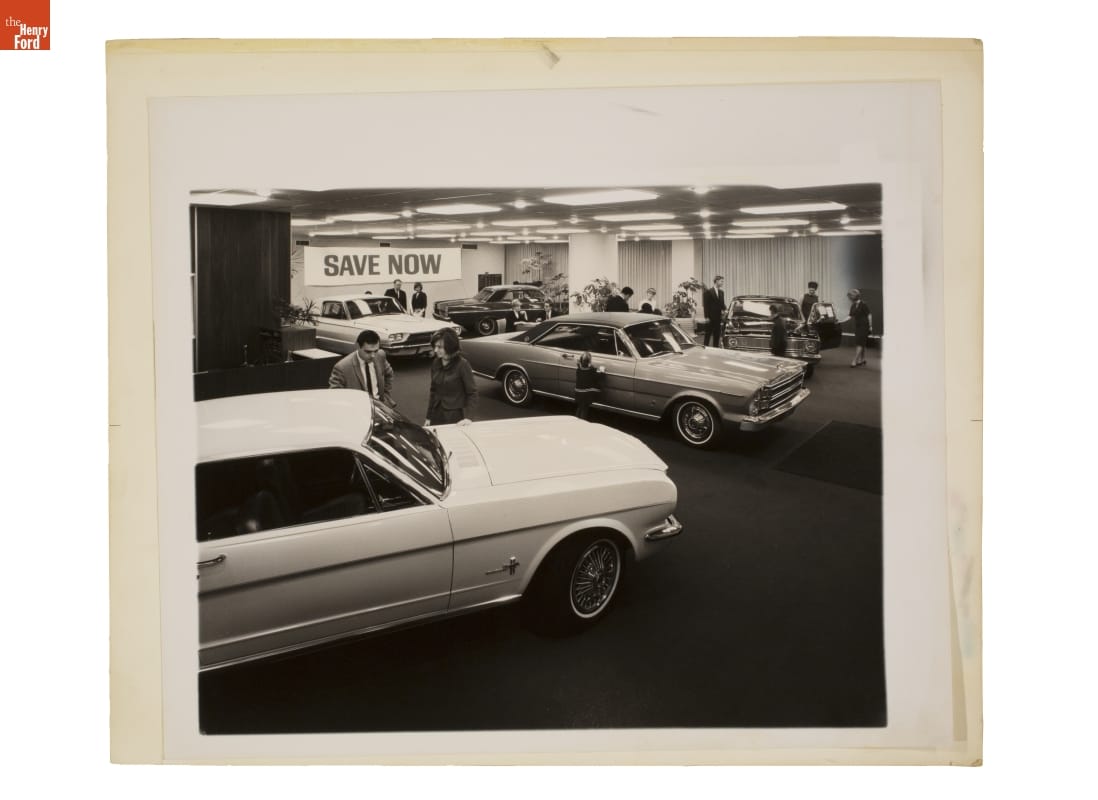
- Process Photograph for 1966 Ford Mustang, Galaxie, Falcon, Thunderbird, and Fairlane Advertising - Ford promoted the Mustang with a series of flashy newspaper and magazine advertisements. The ads typically showed the car in exciting or glamorous situations, or attracting attention from others. Men and women, young and old, singles and families were all depicted. The message was clear: Mustang wasn't just a car, it was a vibrant lifestyle that appealed to everyone.
- 1966
- Collections - Artifact
Process Photograph for 1966 Ford Mustang, Galaxie, Falcon, Thunderbird, and Fairlane Advertising
Ford promoted the Mustang with a series of flashy newspaper and magazine advertisements. The ads typically showed the car in exciting or glamorous situations, or attracting attention from others. Men and women, young and old, singles and families were all depicted. The message was clear: Mustang wasn't just a car, it was a vibrant lifestyle that appealed to everyone.
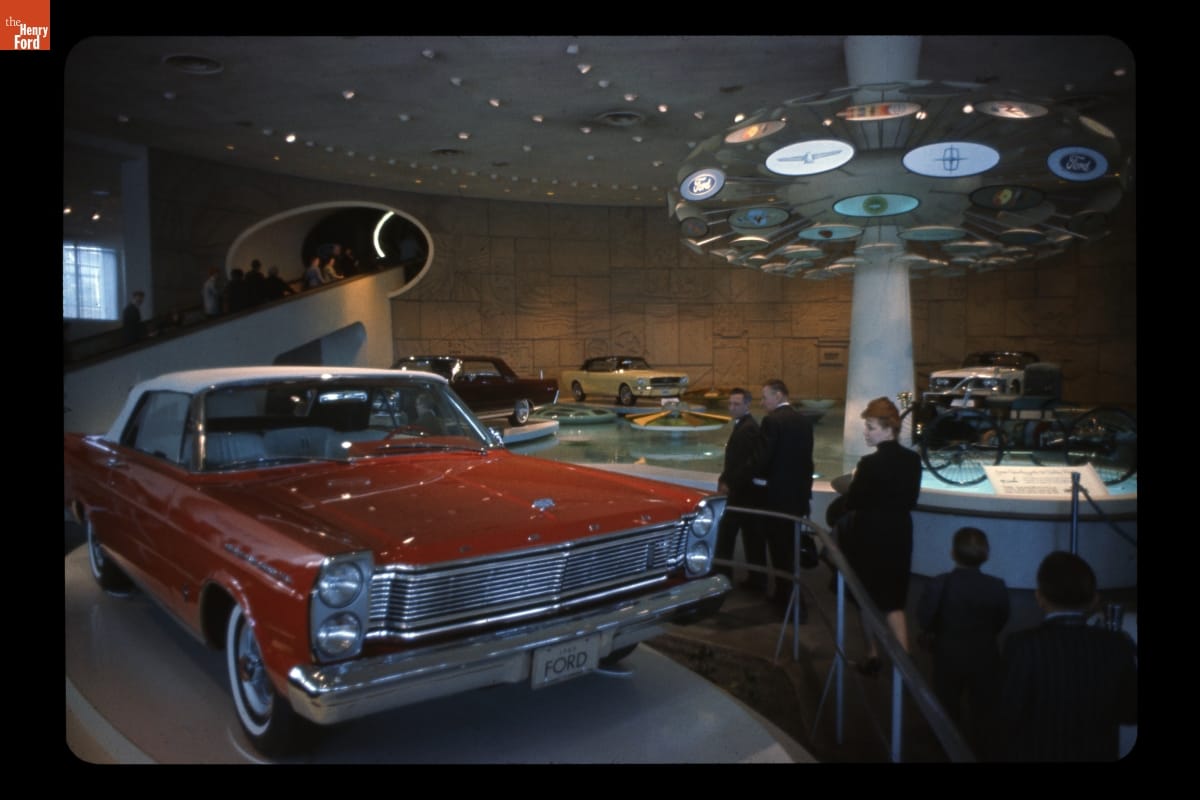
- 1965 Ford Galaxie inside the Ford Wonder Rotunda at the New York World's Fair, 1964-1965 - For its pavilion at the 1964-65 New York World's Fair, Ford Motor Company brought in Walt Disney to design a "unique and memorable entertainment adventure" that would outshine its competitors. This became the Magic Skyway ride, in which guests sat in Ford convertibles through a Disney-designed show. First, though, guests encountered Ford products from Henry Ford's Quadricycle to the Mustang.
- 1964-1965
- Collections - Artifact
1965 Ford Galaxie inside the Ford Wonder Rotunda at the New York World's Fair, 1964-1965
For its pavilion at the 1964-65 New York World's Fair, Ford Motor Company brought in Walt Disney to design a "unique and memorable entertainment adventure" that would outshine its competitors. This became the Magic Skyway ride, in which guests sat in Ford convertibles through a Disney-designed show. First, though, guests encountered Ford products from Henry Ford's Quadricycle to the Mustang.
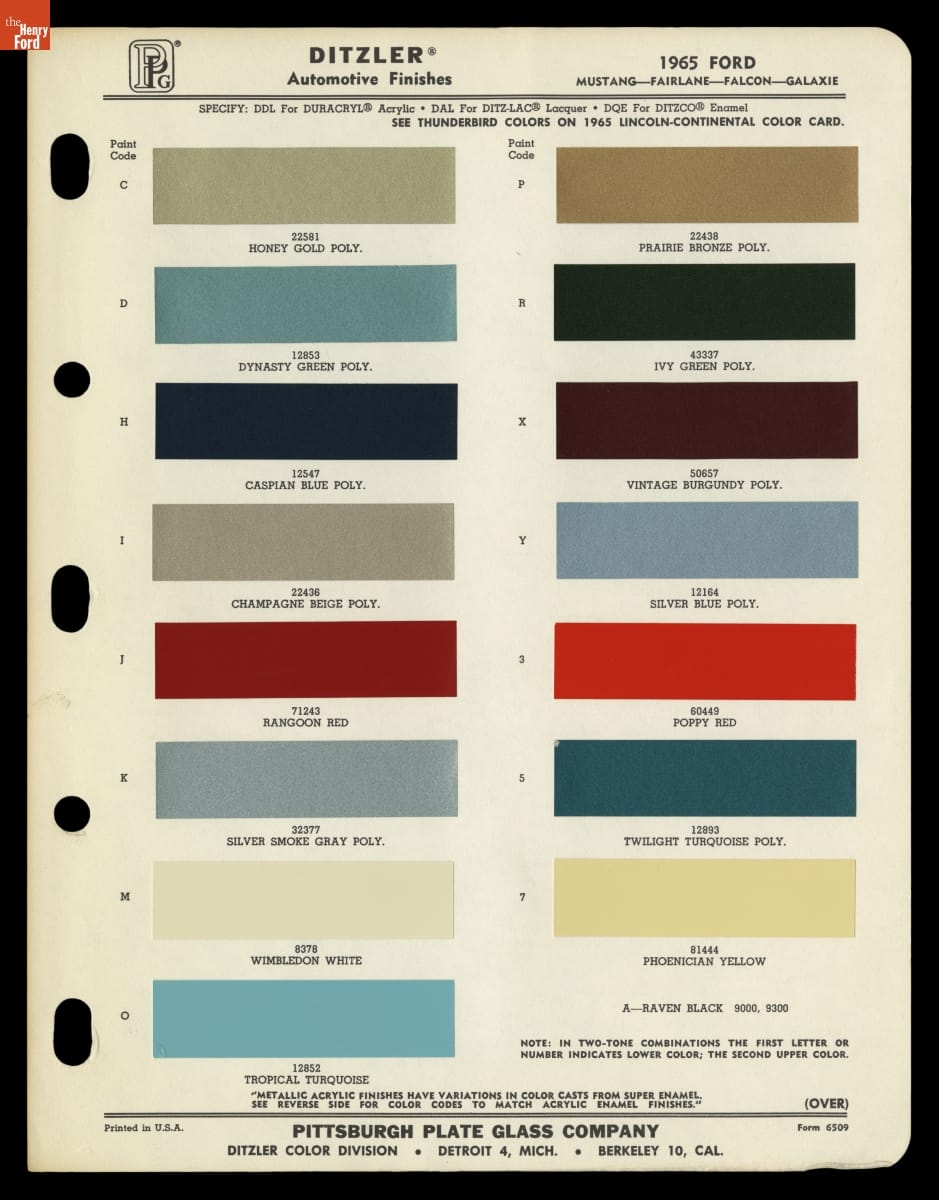
- "Ditzler Automotive Finishes," Paint Colors for 1965 Ford Mustang, Fairlane, Falcon and Galaxie Cars - Ford Motor Company's color sample cards provided dealers and customers with a look at exterior color options for Ford automobiles. The cards contained paint samples of available exterior finishes. Color options presented in early-release advanced cards were always subject to change.
- 1965
- Collections - Artifact
"Ditzler Automotive Finishes," Paint Colors for 1965 Ford Mustang, Fairlane, Falcon and Galaxie Cars
Ford Motor Company's color sample cards provided dealers and customers with a look at exterior color options for Ford automobiles. The cards contained paint samples of available exterior finishes. Color options presented in early-release advanced cards were always subject to change.
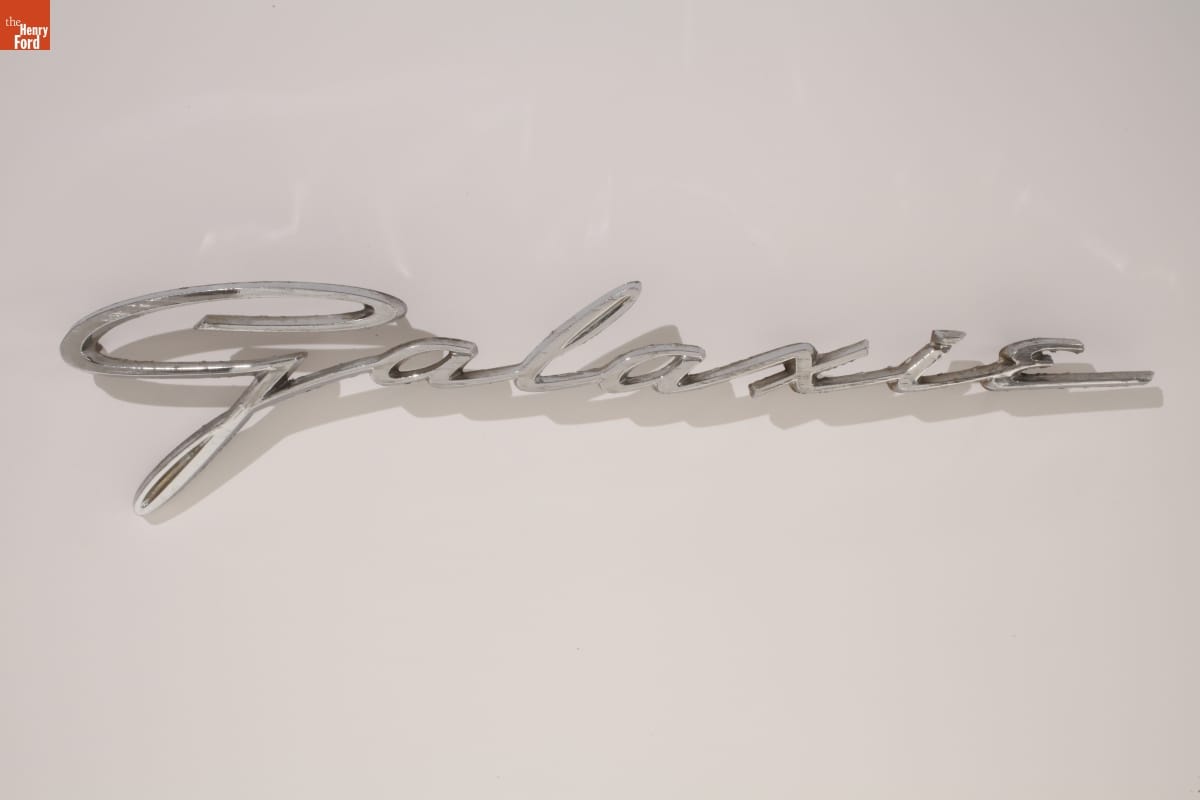
- Ford Galaxie Nameplate, 1963 - Car model names might seem straightforward (especially once they are well-established and familiar) but most are masterpieces of allusion, rife with references to glamorous locations, social rank, rugged environment -- all tied to the self-image and aspirations of potential car buyers. Different styles of lettering -- whether bold, high-tech, freehand, or formal -- offer further reinforcement to the power of a model name.
- 1963
- Collections - Artifact
Ford Galaxie Nameplate, 1963
Car model names might seem straightforward (especially once they are well-established and familiar) but most are masterpieces of allusion, rife with references to glamorous locations, social rank, rugged environment -- all tied to the self-image and aspirations of potential car buyers. Different styles of lettering -- whether bold, high-tech, freehand, or formal -- offer further reinforcement to the power of a model name.
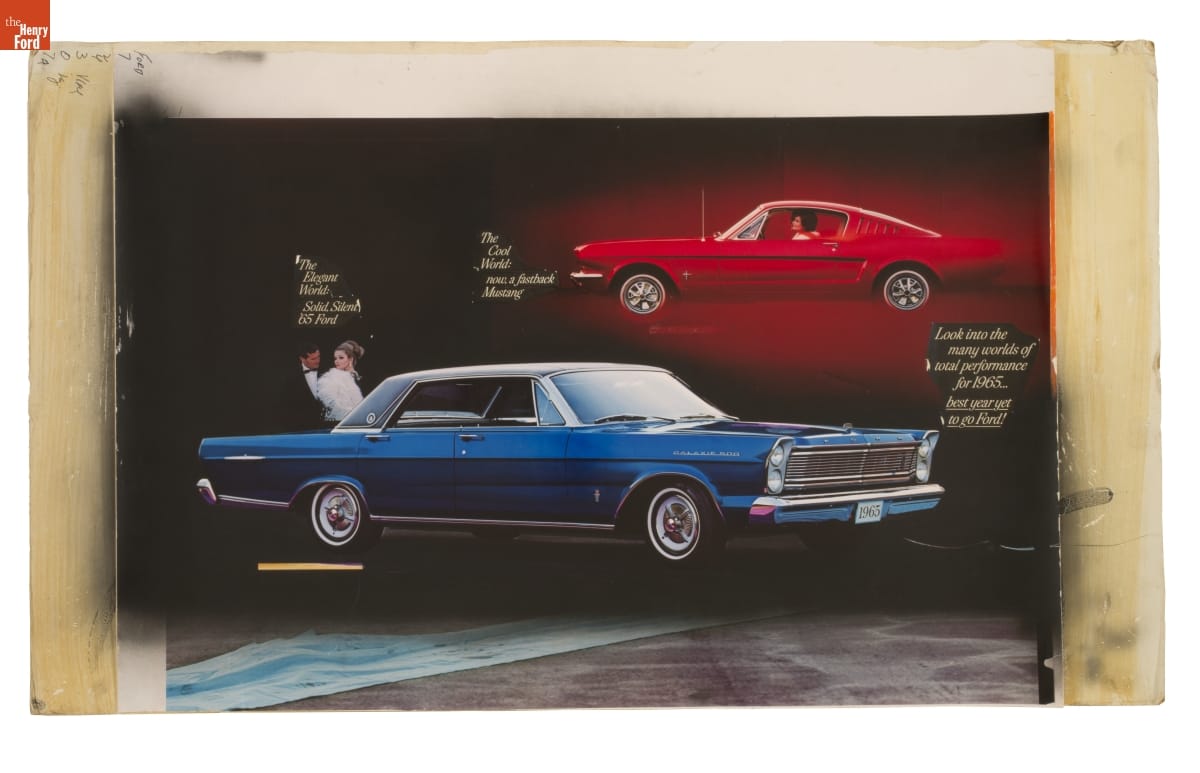
- Process Photomontage for 1965 Ford Mustang and Ford Galaxie Advertising - Ford promoted the Mustang with a series of flashy newspaper and magazine advertisements. The ads typically showed the car in exciting or glamorous situations, or attracting attention from others. Men and women, young and old, singles and families were all depicted. The message was clear: Mustang wasn't just a car, it was a vibrant lifestyle that appealed to everyone.
- 1965
- Collections - Artifact
Process Photomontage for 1965 Ford Mustang and Ford Galaxie Advertising
Ford promoted the Mustang with a series of flashy newspaper and magazine advertisements. The ads typically showed the car in exciting or glamorous situations, or attracting attention from others. Men and women, young and old, singles and families were all depicted. The message was clear: Mustang wasn't just a car, it was a vibrant lifestyle that appealed to everyone.
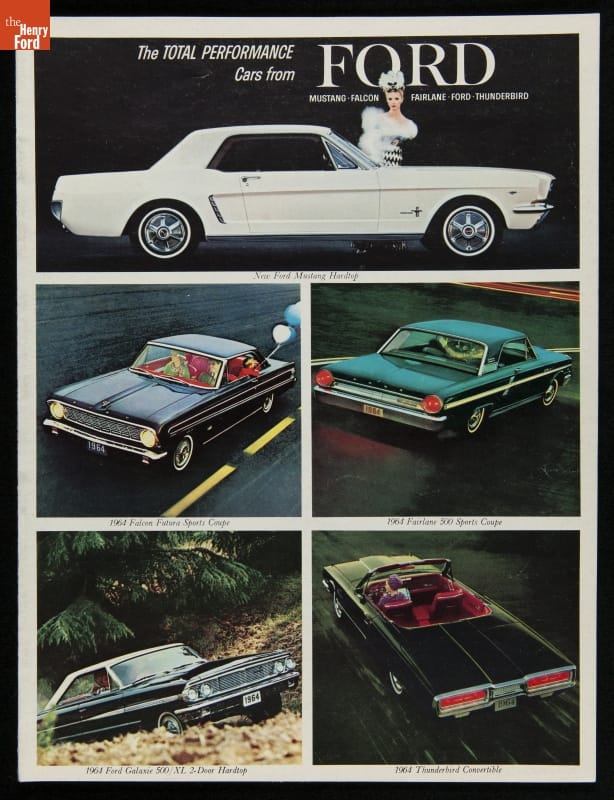
- Sales Brochure, "The Total Performance Cars from Ford," 1964 - Partly in response to competition from Chevrolet and Pontiac, Ford rebuilt its image as a performance-oriented automaker in the 1960s. The company's "Total Performance" campaign involved everything from refreshed automobile styling to renewed efforts on the race track. When the Mustang arrived in 1964, it fit nicely into Ford's aggressive new image.
- 1964
- Collections - Artifact
Sales Brochure, "The Total Performance Cars from Ford," 1964
Partly in response to competition from Chevrolet and Pontiac, Ford rebuilt its image as a performance-oriented automaker in the 1960s. The company's "Total Performance" campaign involved everything from refreshed automobile styling to renewed efforts on the race track. When the Mustang arrived in 1964, it fit nicely into Ford's aggressive new image.