
Search
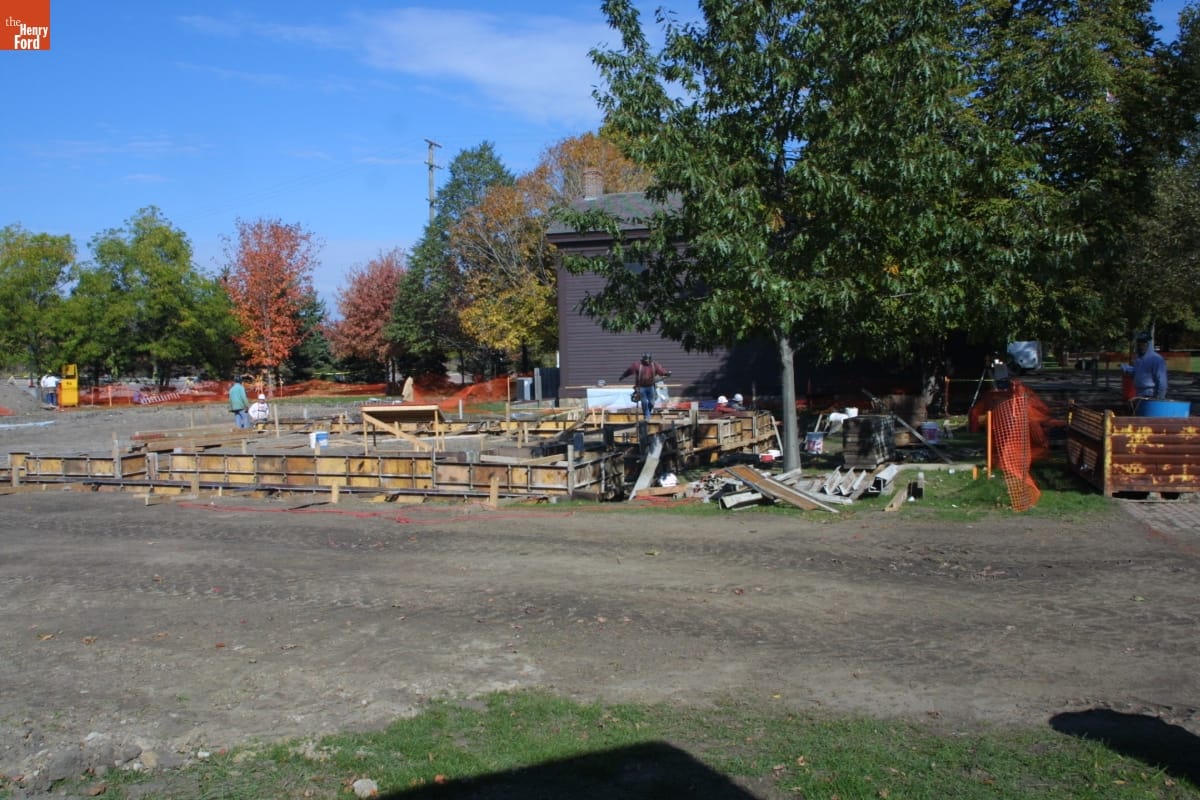
- Lodge at Christie & Main Construction Site, Greenfield Village Restoration Project, November 2002 - By 2000, Greenfield Village began showing its age. Buildings and crumbling infrastructure desperately needed repair. Museum planners envisioned a revitalized village. They relocated and refurbished the historic structures into themed "Historic Districts" and added new support buildings--shops, restaurants, and a special-event venue. In June 2003, nine months after restoration began, visitors passed through a new entrance into a reborn Greenfield Village.

- November 01, 2002
- Collections - Artifact
Lodge at Christie & Main Construction Site, Greenfield Village Restoration Project, November 2002
By 2000, Greenfield Village began showing its age. Buildings and crumbling infrastructure desperately needed repair. Museum planners envisioned a revitalized village. They relocated and refurbished the historic structures into themed "Historic Districts" and added new support buildings--shops, restaurants, and a special-event venue. In June 2003, nine months after restoration began, visitors passed through a new entrance into a reborn Greenfield Village.
- Lodge at Christie & Main Site, Greenfield Village Restoration Project, October 2002 - By 2000, Greenfield Village began showing its age. Buildings and crumbling infrastructure desperately needed repair. Museum planners envisioned a revitalized village. They relocated and refurbished the historic structures into themed "Historic Districts" and added new support buildings--shops, restaurants, and a special-event venue. In June 2003, nine months after restoration began, visitors passed through a new entrance into a reborn Greenfield Village.
- October 01, 2002
- Collections - Artifact
Lodge at Christie & Main Site, Greenfield Village Restoration Project, October 2002
By 2000, Greenfield Village began showing its age. Buildings and crumbling infrastructure desperately needed repair. Museum planners envisioned a revitalized village. They relocated and refurbished the historic structures into themed "Historic Districts" and added new support buildings--shops, restaurants, and a special-event venue. In June 2003, nine months after restoration began, visitors passed through a new entrance into a reborn Greenfield Village.
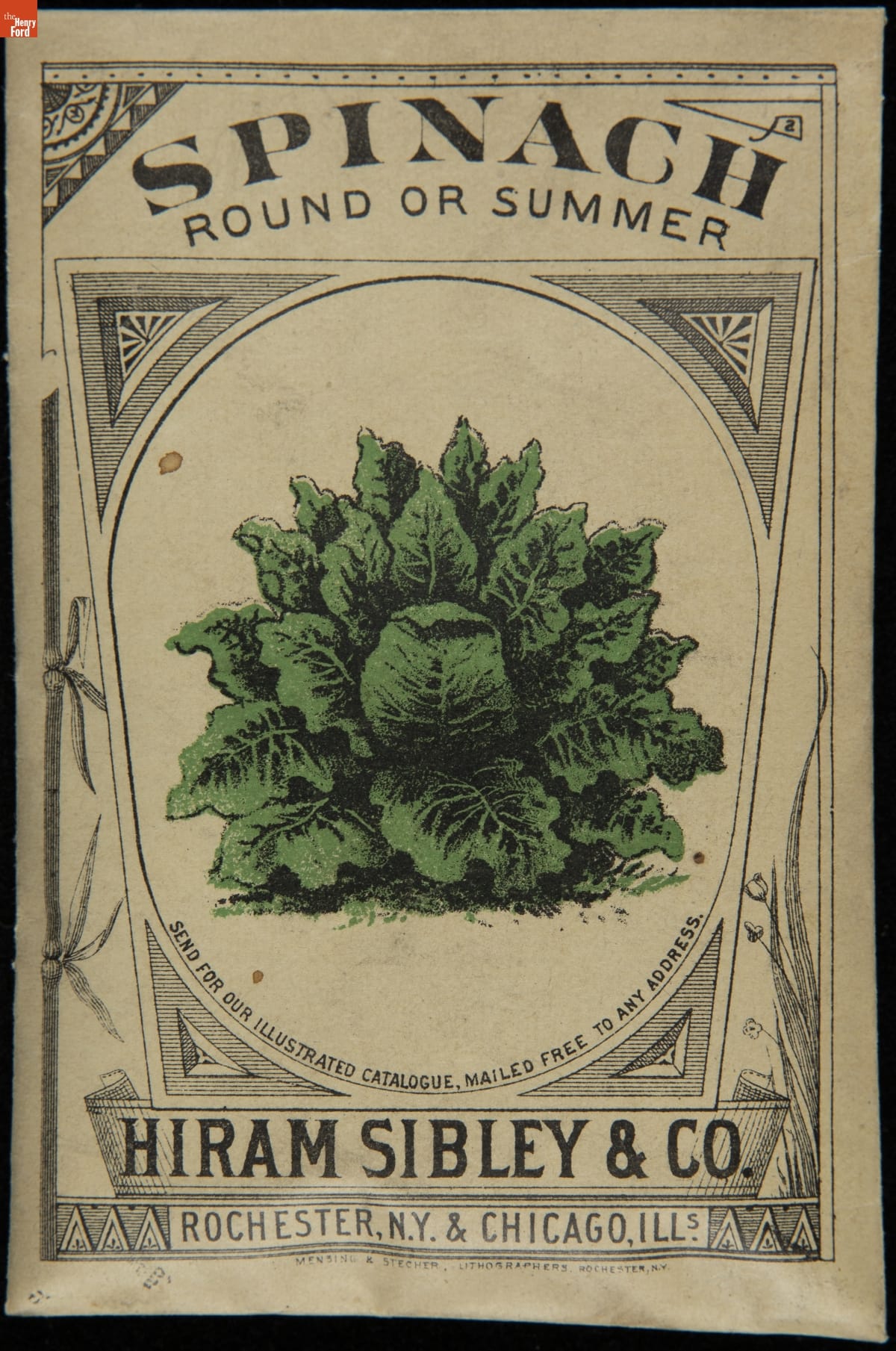
- Hiram Sibley & Co. "Spinach Round or Summer" Seed Packet, Used in the C.W. Barnes Store, 1882-1888 - Distributing seeds required sealing them into little packets or "papers" constructed like envelopes. Seed companies advertised their businesses on these packets, illustrated the vegetable with hand-colored images, and specified growing directions, sometimes in multiple languages. Hiram Sibley and Co. packaged collections of vegetable seeds in specially designed boxes and shipped them to general stores for sale to home gardeners.
- 1882-1888
- Collections - Artifact
Hiram Sibley & Co. "Spinach Round or Summer" Seed Packet, Used in the C.W. Barnes Store, 1882-1888
Distributing seeds required sealing them into little packets or "papers" constructed like envelopes. Seed companies advertised their businesses on these packets, illustrated the vegetable with hand-colored images, and specified growing directions, sometimes in multiple languages. Hiram Sibley and Co. packaged collections of vegetable seeds in specially designed boxes and shipped them to general stores for sale to home gardeners.
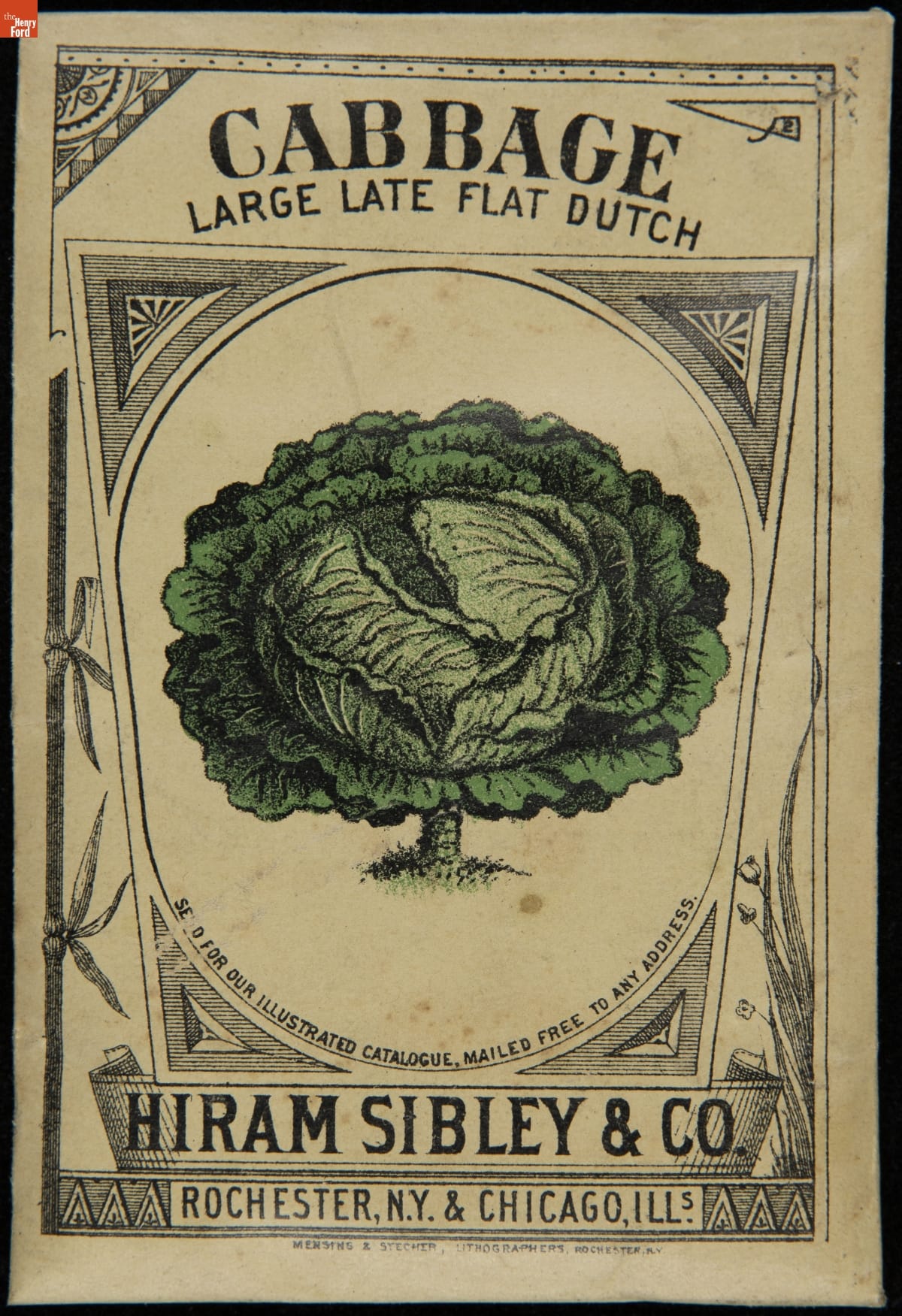
- Hiram Sibley & Co. "Cabbage Large Late Flat Dutch" Seed Packet, Used in the C.W. Barnes Store, 1882-1888 - Distributing seeds required sealing them into little packets or "papers" constructed like envelopes. Seed companies advertised their businesses on these packets, illustrated the vegetable with hand-colored images, and specified growing directions, sometimes in multiple languages. Hiram Sibley and Co. packaged collections of vegetable seeds in specially designed boxes and shipped them to general stores for sale to home gardeners.
- 1882-1888
- Collections - Artifact
Hiram Sibley & Co. "Cabbage Large Late Flat Dutch" Seed Packet, Used in the C.W. Barnes Store, 1882-1888
Distributing seeds required sealing them into little packets or "papers" constructed like envelopes. Seed companies advertised their businesses on these packets, illustrated the vegetable with hand-colored images, and specified growing directions, sometimes in multiple languages. Hiram Sibley and Co. packaged collections of vegetable seeds in specially designed boxes and shipped them to general stores for sale to home gardeners.
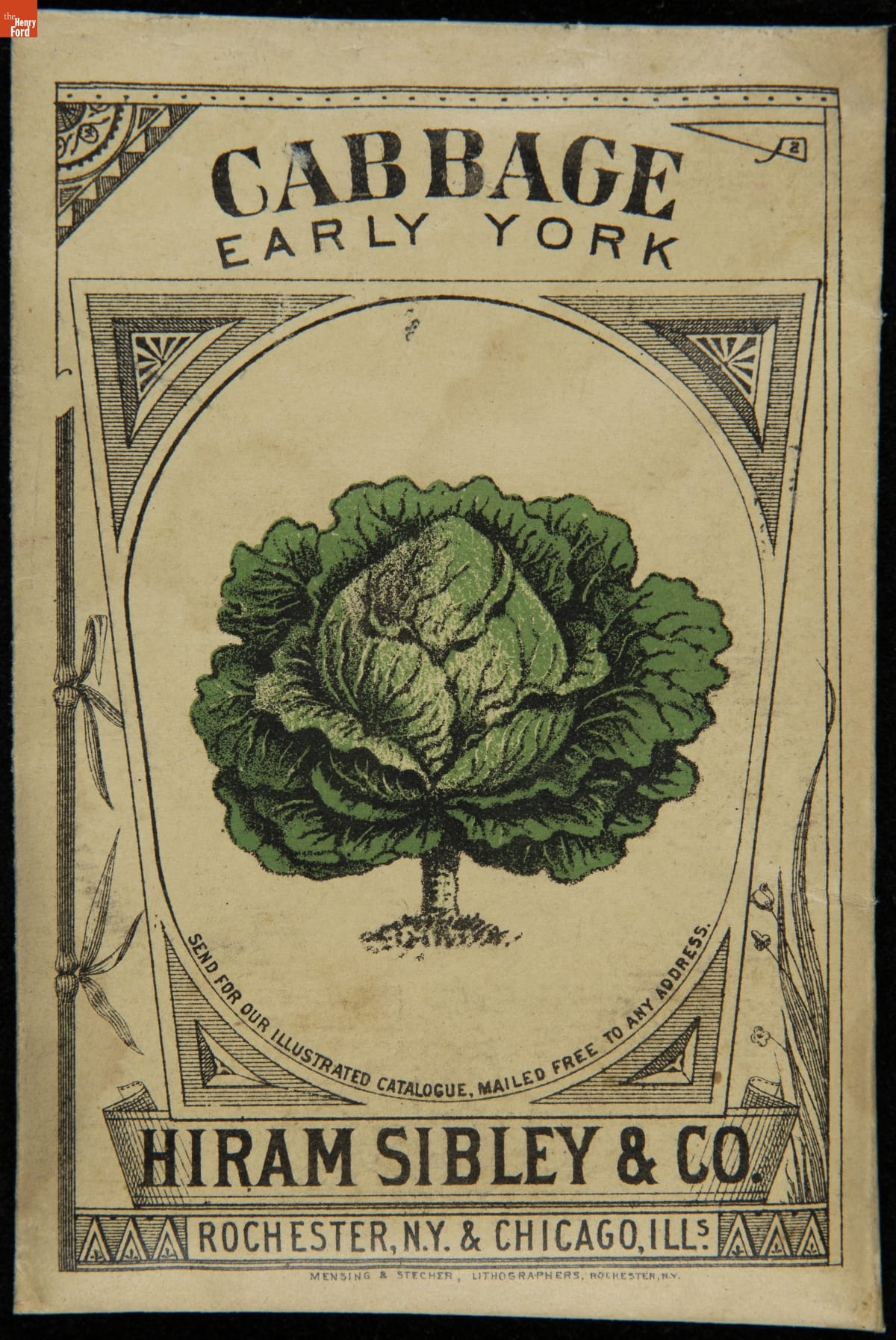
- Hiram Sibley & Co. "Cabbage Early York" Seed Packet, Used in the C.W. Barnes Store, 1882-1888 - Distributing seeds required sealing them into little packets or "papers" constructed like envelopes. Seed companies advertised their businesses on these packets, illustrated the vegetable with hand-colored images, and specified growing directions, sometimes in multiple languages. Hiram Sibley and Co. packaged collections of vegetable seeds in specially designed boxes and shipped them to general stores for sale to home gardeners.
- 1882-1888
- Collections - Artifact
Hiram Sibley & Co. "Cabbage Early York" Seed Packet, Used in the C.W. Barnes Store, 1882-1888
Distributing seeds required sealing them into little packets or "papers" constructed like envelopes. Seed companies advertised their businesses on these packets, illustrated the vegetable with hand-colored images, and specified growing directions, sometimes in multiple languages. Hiram Sibley and Co. packaged collections of vegetable seeds in specially designed boxes and shipped them to general stores for sale to home gardeners.
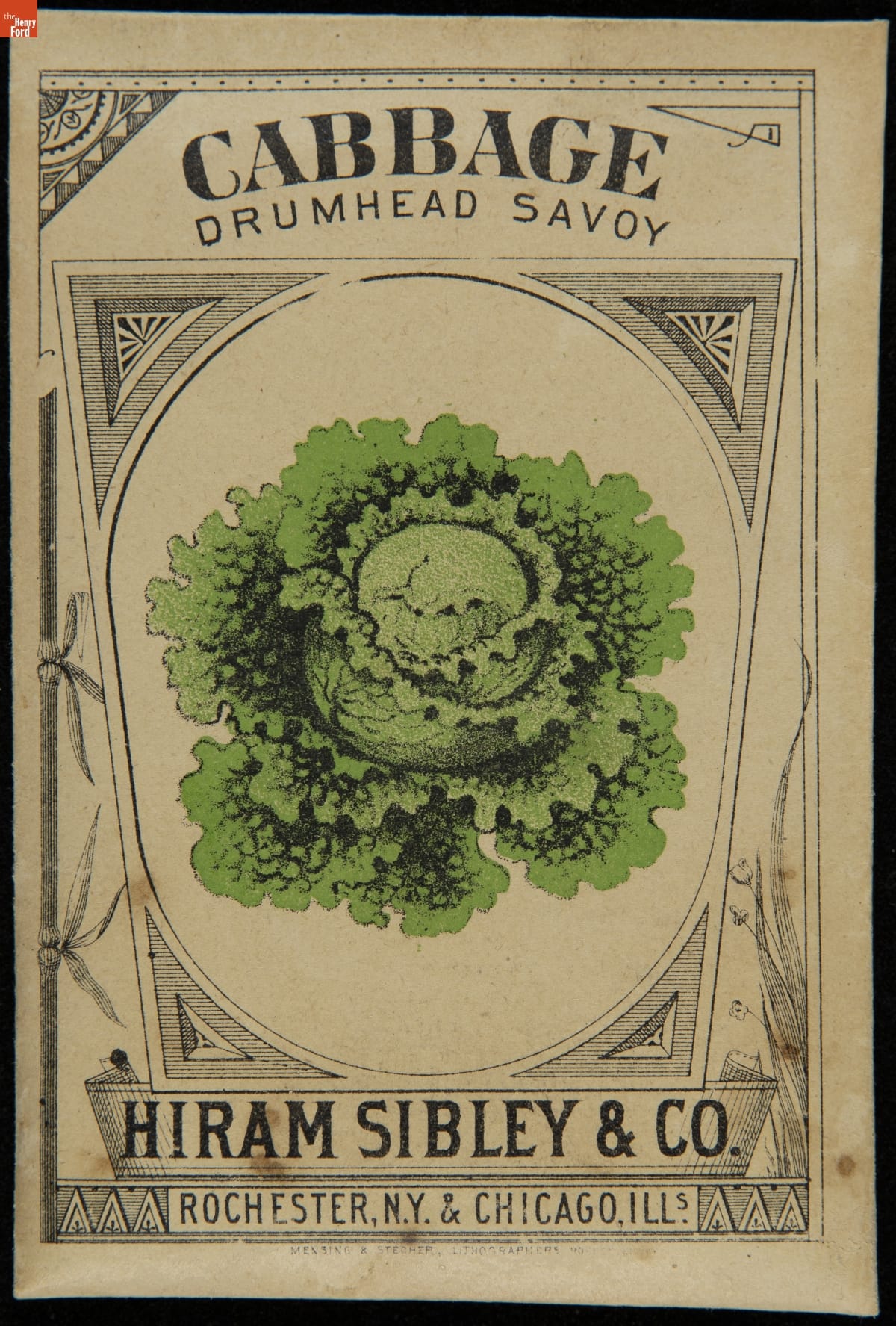
- Hiram Sibley & Co. "Cabbage Drumhead Savoy" Seed Packet, Used in the C.W. Barnes Store, 1882-1888 - Distributing seeds required sealing them into little packets or "papers" constructed like envelopes. Seed companies advertised their businesses on these packets, illustrated the vegetable with hand-colored images, and specified growing directions, sometimes in multiple languages. Hiram Sibley and Co. packaged collections of vegetable seeds in specially designed boxes and shipped them to general stores for sale to home gardeners.
- 1882-1888
- Collections - Artifact
Hiram Sibley & Co. "Cabbage Drumhead Savoy" Seed Packet, Used in the C.W. Barnes Store, 1882-1888
Distributing seeds required sealing them into little packets or "papers" constructed like envelopes. Seed companies advertised their businesses on these packets, illustrated the vegetable with hand-colored images, and specified growing directions, sometimes in multiple languages. Hiram Sibley and Co. packaged collections of vegetable seeds in specially designed boxes and shipped them to general stores for sale to home gardeners.
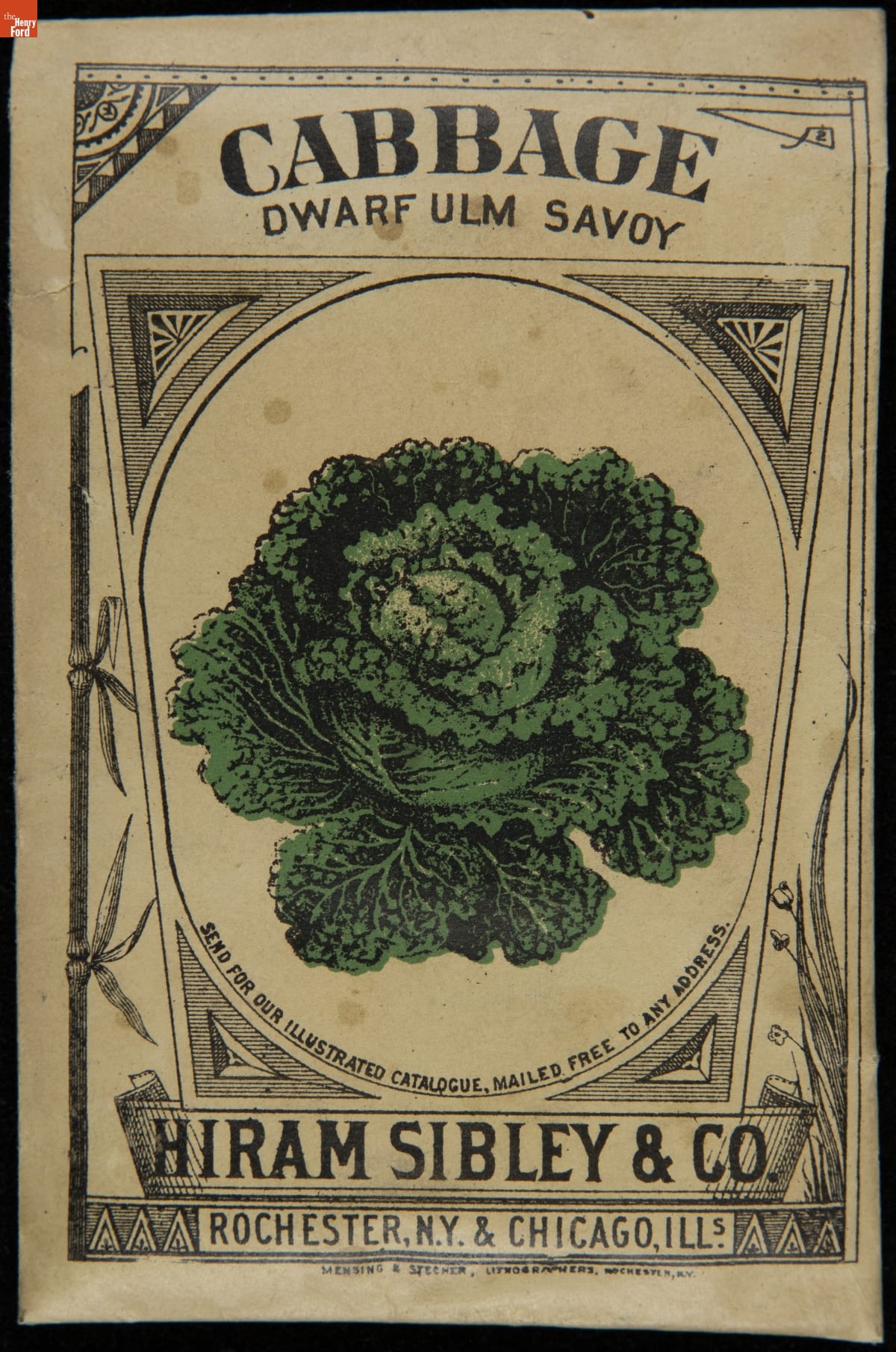
- Hiram Sibley & Co. "Cabbage Dwarf Ulm Savoy" Seed Packet, Used in the C.W. Barnes Store, 1882-1888 - Distributing seeds required sealing them into little packets or "papers" constructed like envelopes. Seed companies advertised their businesses on these packets, illustrated the vegetable with hand-colored images, and specified growing directions, sometimes in multiple languages. Hiram Sibley and Co. packaged collections of vegetable seeds in specially designed boxes and shipped them to general stores for sale to home gardeners.
- 1882-1888
- Collections - Artifact
Hiram Sibley & Co. "Cabbage Dwarf Ulm Savoy" Seed Packet, Used in the C.W. Barnes Store, 1882-1888
Distributing seeds required sealing them into little packets or "papers" constructed like envelopes. Seed companies advertised their businesses on these packets, illustrated the vegetable with hand-colored images, and specified growing directions, sometimes in multiple languages. Hiram Sibley and Co. packaged collections of vegetable seeds in specially designed boxes and shipped them to general stores for sale to home gardeners.
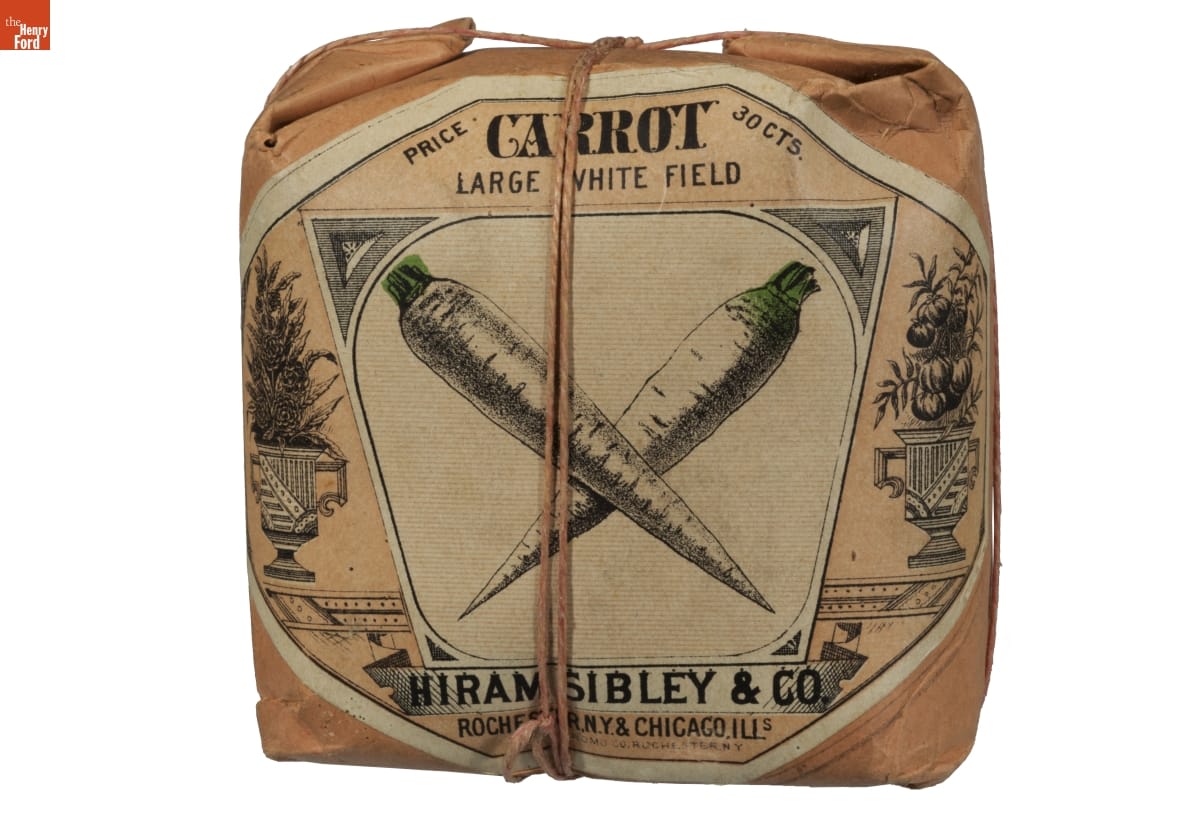
- Hiram Sibley & Co. "Carrot Large White Field" Seed Packet, Used in the C.W. Barnes Store, 1882-1888 - Commercial seed production and distribution depended on standardized practices. Employees at Hiram Sibley and Co. measured vegetable seeds by the quarter pound into printed and hand-tinted packages, tied them with colorful string, and packed them in specially designed boxes for shipment. Sibley marketed pre-packed collections of seeds to home gardeners and general stores owners alike during the mid-1880s.
- 1882-1888
- Collections - Artifact
Hiram Sibley & Co. "Carrot Large White Field" Seed Packet, Used in the C.W. Barnes Store, 1882-1888
Commercial seed production and distribution depended on standardized practices. Employees at Hiram Sibley and Co. measured vegetable seeds by the quarter pound into printed and hand-tinted packages, tied them with colorful string, and packed them in specially designed boxes for shipment. Sibley marketed pre-packed collections of seeds to home gardeners and general stores owners alike during the mid-1880s.
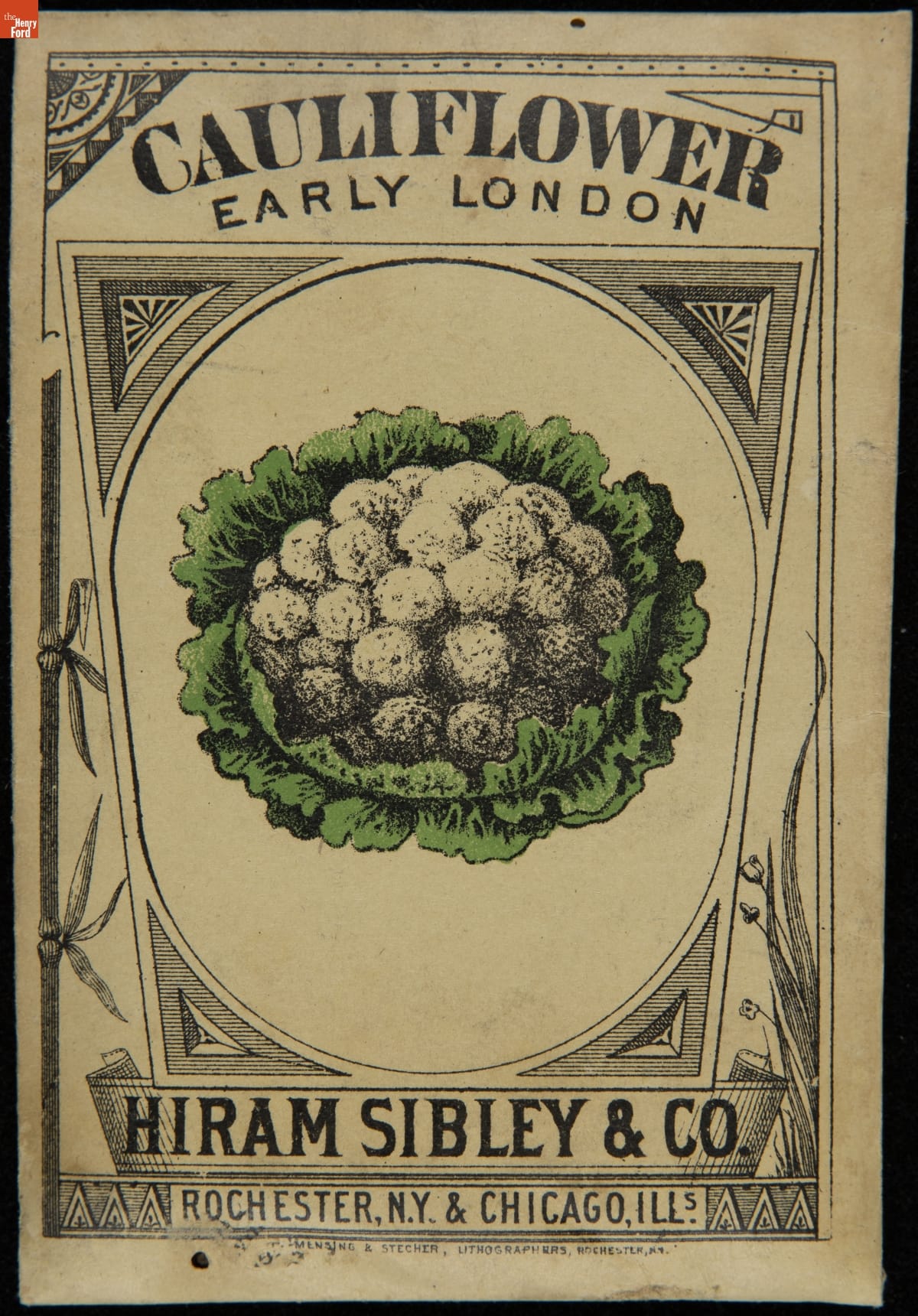
- Hiram Sibley & Co. "Cauliflower Early London" Seed Packet, Used in the C.W. Barnes Store, 1882-1888 - Distributing seeds required sealing them into little packets or "papers" constructed like envelopes. Seed companies advertised their businesses on these packets, illustrated the vegetable with hand-colored images, and specified growing directions, sometimes in multiple languages. Hiram Sibley and Co. packaged collections of vegetable seeds in specially designed boxes and shipped them to general stores for sale to home gardeners.
- 1882-1888
- Collections - Artifact
Hiram Sibley & Co. "Cauliflower Early London" Seed Packet, Used in the C.W. Barnes Store, 1882-1888
Distributing seeds required sealing them into little packets or "papers" constructed like envelopes. Seed companies advertised their businesses on these packets, illustrated the vegetable with hand-colored images, and specified growing directions, sometimes in multiple languages. Hiram Sibley and Co. packaged collections of vegetable seeds in specially designed boxes and shipped them to general stores for sale to home gardeners.
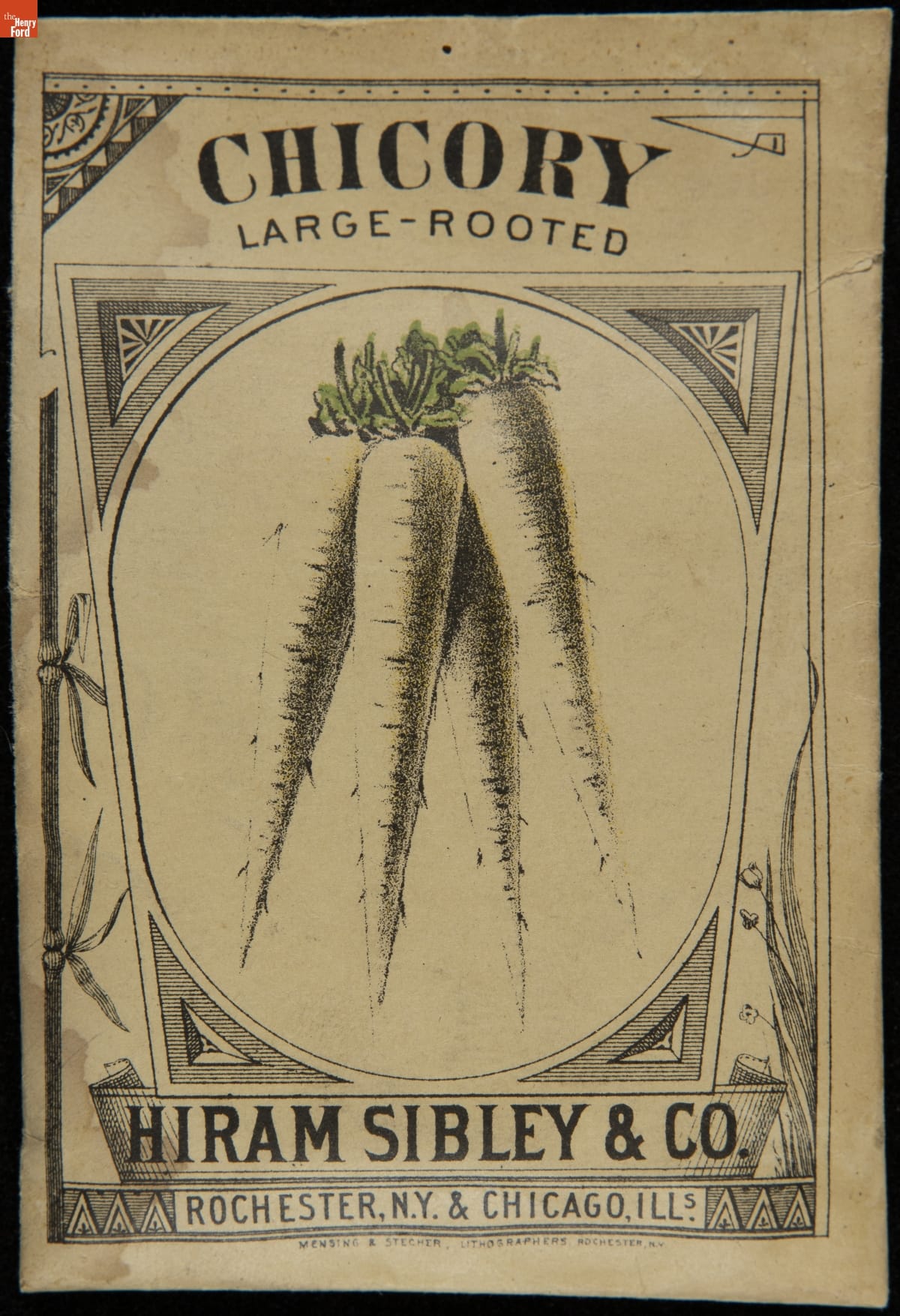
- Hiram Sibley & Co. "Chicory Large-Rooted" Seed Packet, Used in the C.W. Barnes Store, 1882-1888 - Distributing seeds required sealing them into little packets or "papers" constructed like envelopes. Seed companies advertised their businesses on these packets, illustrated the vegetable with hand-colored images, and specified growing directions, sometimes in multiple languages. Hiram Sibley and Co. packaged collections of vegetable seeds in specially designed boxes and shipped them to general stores for sale to home gardeners.
- 1882-1888
- Collections - Artifact
Hiram Sibley & Co. "Chicory Large-Rooted" Seed Packet, Used in the C.W. Barnes Store, 1882-1888
Distributing seeds required sealing them into little packets or "papers" constructed like envelopes. Seed companies advertised their businesses on these packets, illustrated the vegetable with hand-colored images, and specified growing directions, sometimes in multiple languages. Hiram Sibley and Co. packaged collections of vegetable seeds in specially designed boxes and shipped them to general stores for sale to home gardeners.