
Search
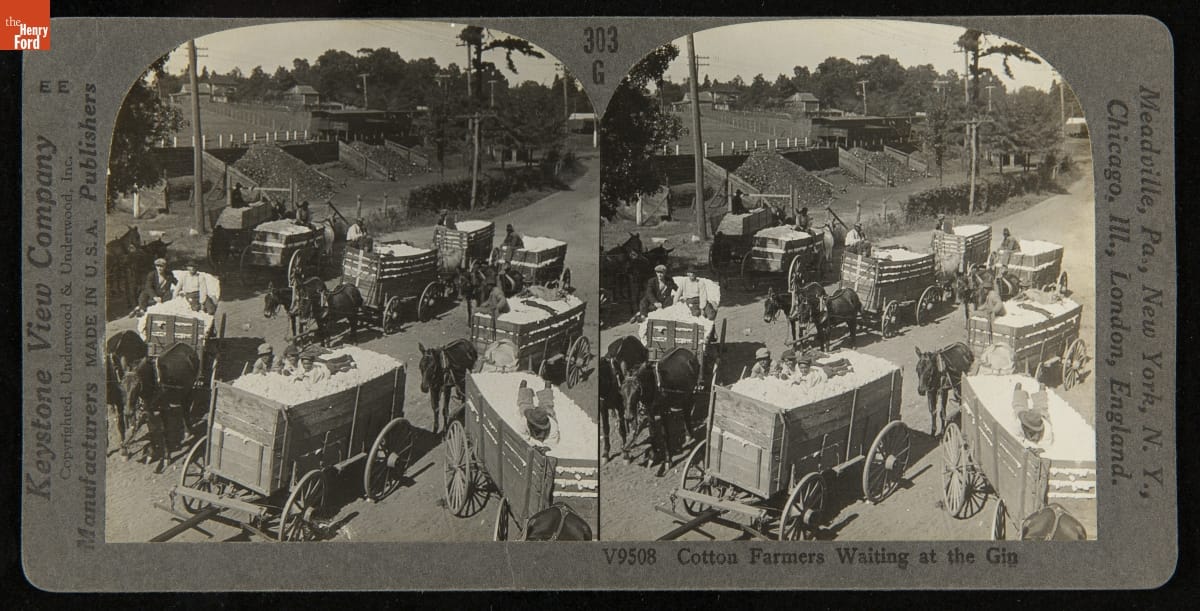
- Cotton Farmers Waiting at the Gin, 1906-1922 -
- 1906-1922
- Collections - Artifact
Cotton Farmers Waiting at the Gin, 1906-1922
- Recipe Booklet, "Fleischmann's Mixer's Manual," 1955 -
- 1955
- Collections - Artifact
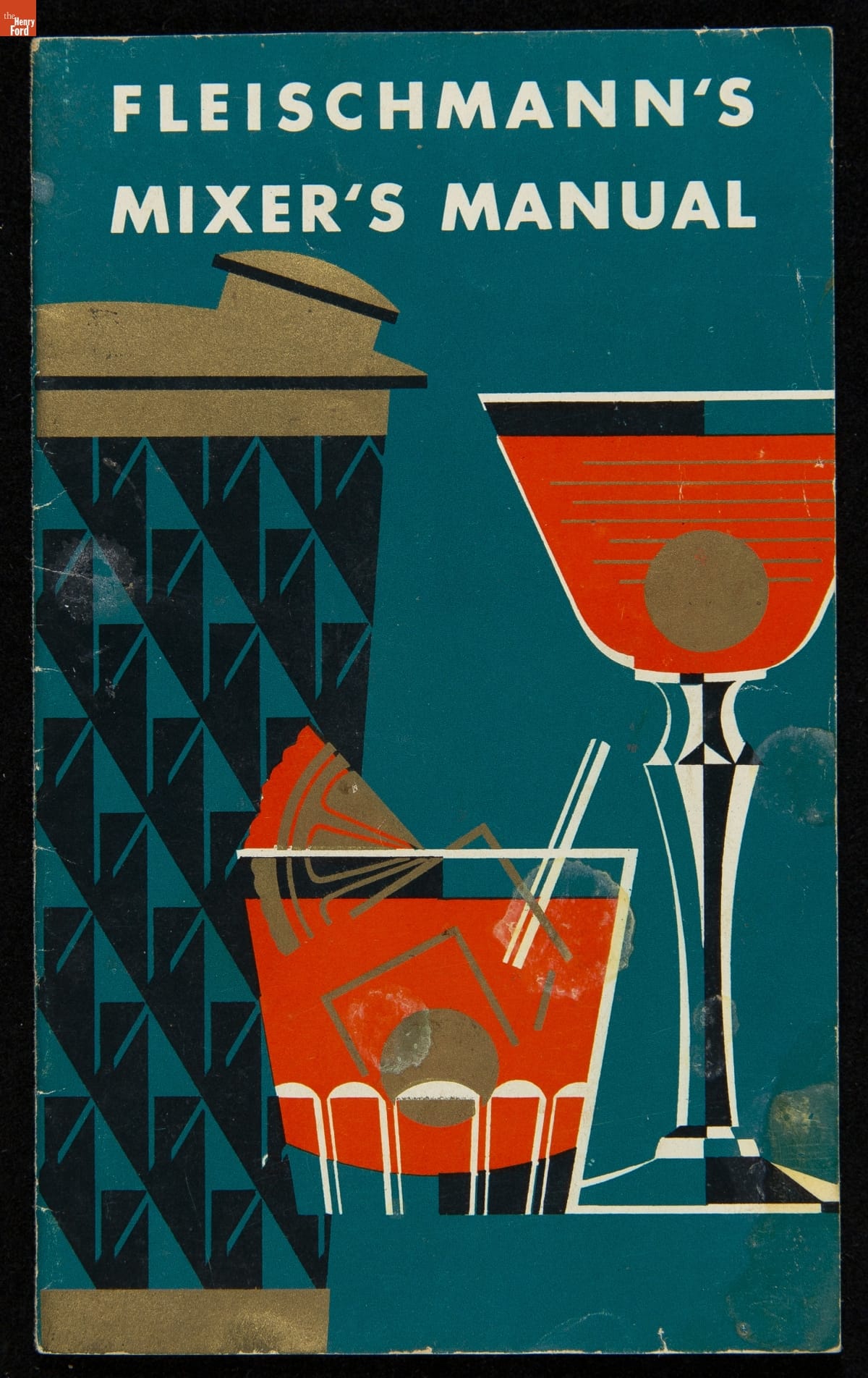
Recipe Booklet, "Fleischmann's Mixer's Manual," 1955
- "Excelsior" Cotton Gin, circa 1875 -
- circa 1875
- Collections - Artifact
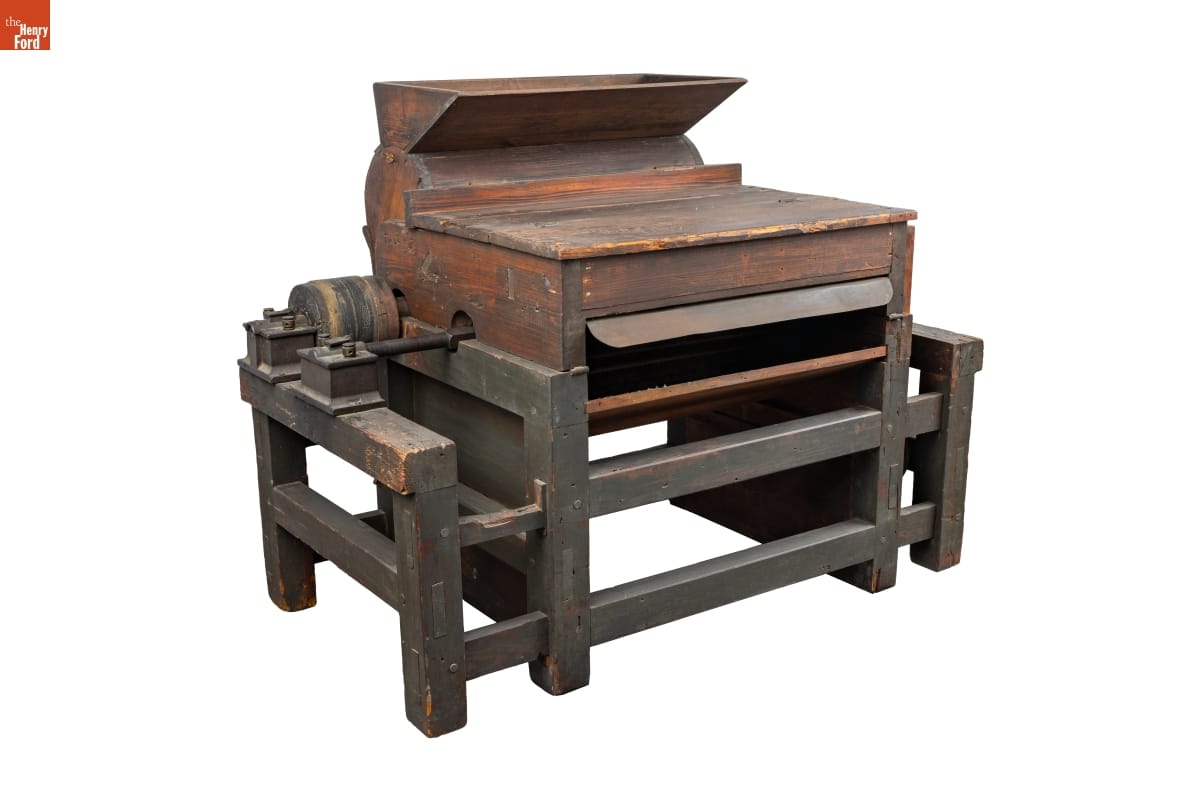
"Excelsior" Cotton Gin, circa 1875
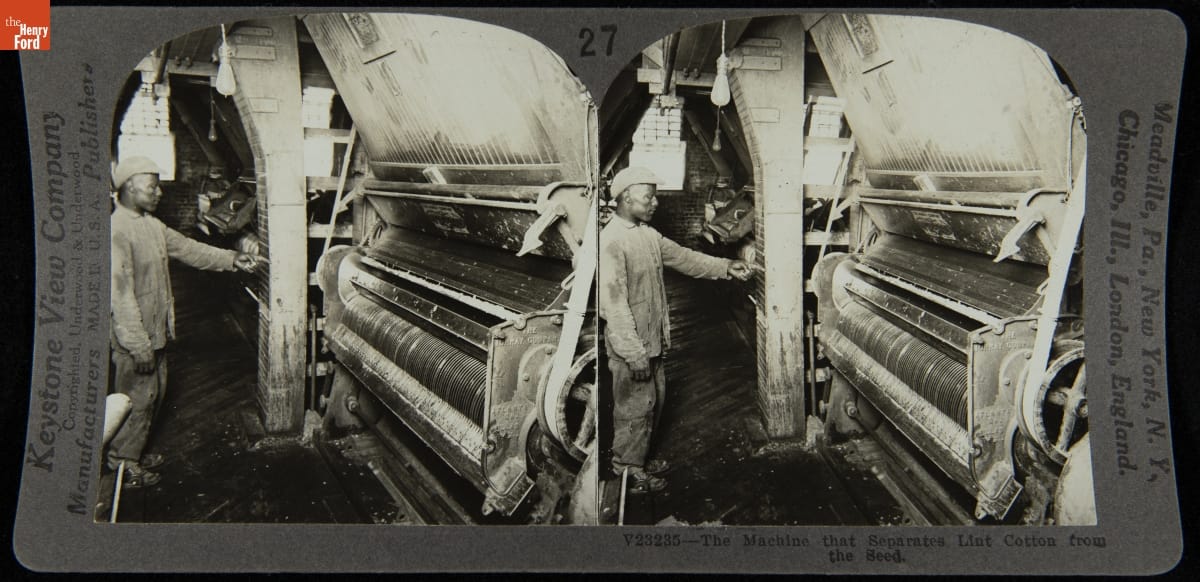
- The Machine that Separates Lint Cotton from the Seed -
- Collections - Artifact
The Machine that Separates Lint Cotton from the Seed
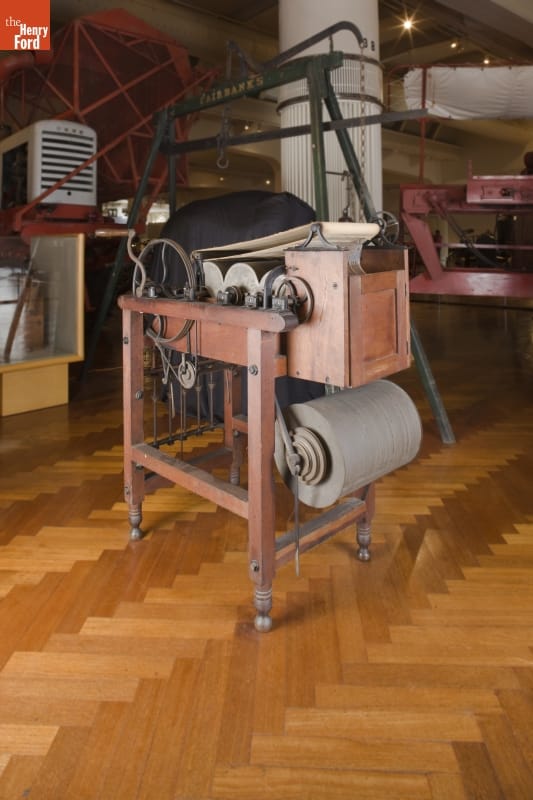
- Cotton Ginning, Carding, & Spinning Machine, 1835-1840 - Called a "plantation spinner" or "spinster", this small machine combined the three processes required to convert raw cotton to yarn -- ginning, carding and spinning. Its small size and human-powered design was made for enslaved plantation laborers. By the time of the Civil War, there were 3,000 in use across the south. After emancipation they were no longer economically viable.
- 1835-1840
- Collections - Artifact
Cotton Ginning, Carding, & Spinning Machine, 1835-1840
Called a "plantation spinner" or "spinster", this small machine combined the three processes required to convert raw cotton to yarn -- ginning, carding and spinning. Its small size and human-powered design was made for enslaved plantation laborers. By the time of the Civil War, there were 3,000 in use across the south. After emancipation they were no longer economically viable.
- "Report on the J. & T. Pierce Ginning, Carding & Spinning Machine," 1931 -
- 1931
- Collections - Artifact
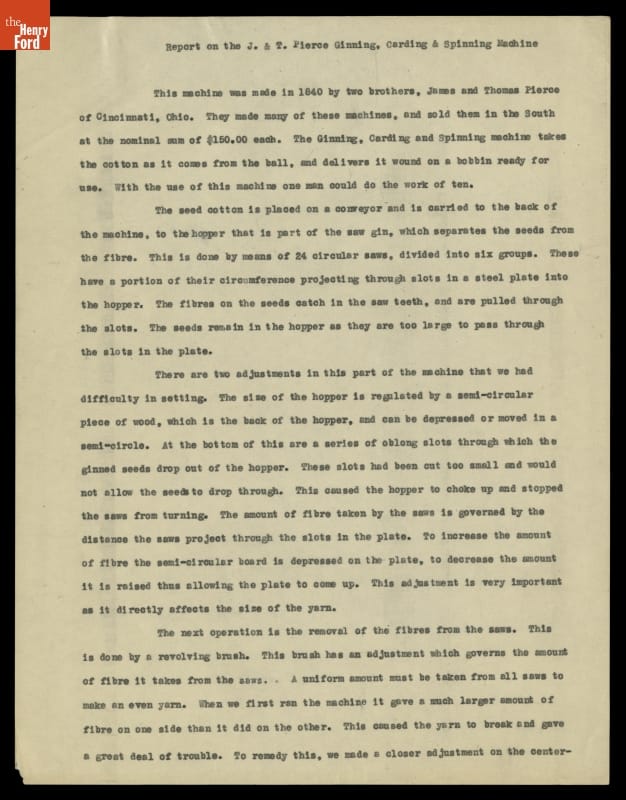
"Report on the J. & T. Pierce Ginning, Carding & Spinning Machine," 1931
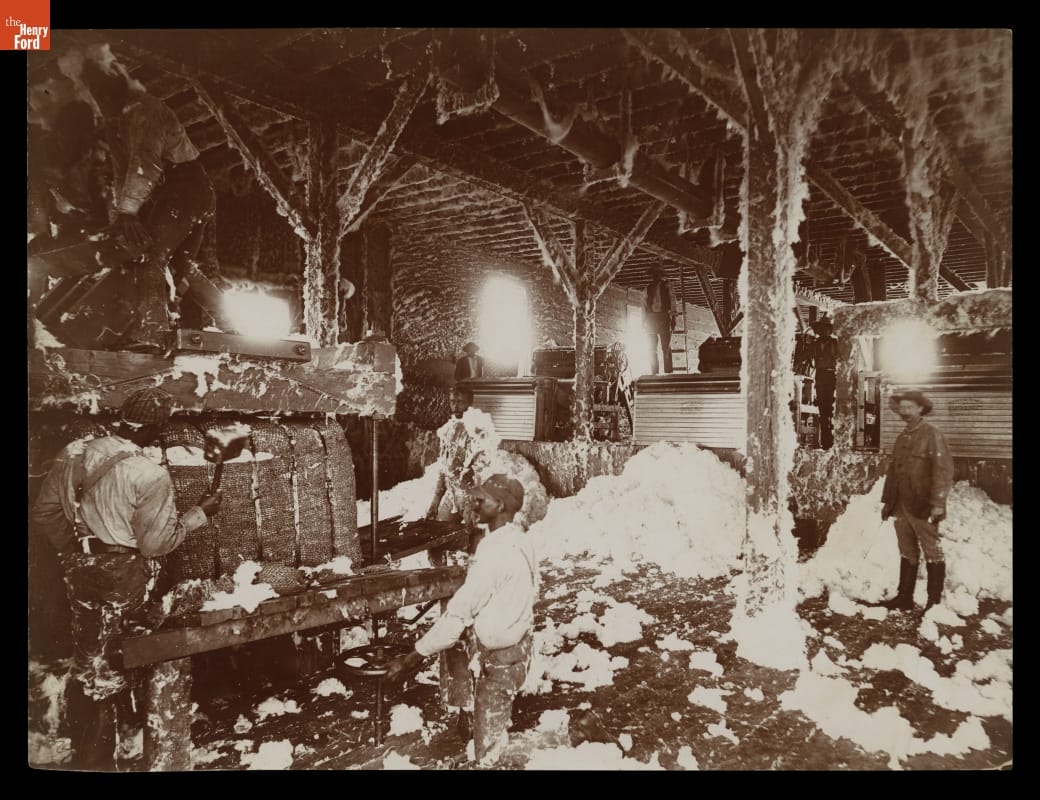
- Cotton Gin at Dahomy, Mississippi, 1899 - Mechanical cotton gins separated billions of pounds of fiber from seed in the late 19th century to meet textile-factory demand. William Henry Jackson of the Detroit Publishing Company captured a typical scene inside a Mississippi cotton gin in 1899. It shows three gin stands with engineers standing close by, and other men compressing fiber into a 500-pound cotton bale.
- 1899
- Collections - Artifact
Cotton Gin at Dahomy, Mississippi, 1899
Mechanical cotton gins separated billions of pounds of fiber from seed in the late 19th century to meet textile-factory demand. William Henry Jackson of the Detroit Publishing Company captured a typical scene inside a Mississippi cotton gin in 1899. It shows three gin stands with engineers standing close by, and other men compressing fiber into a 500-pound cotton bale.
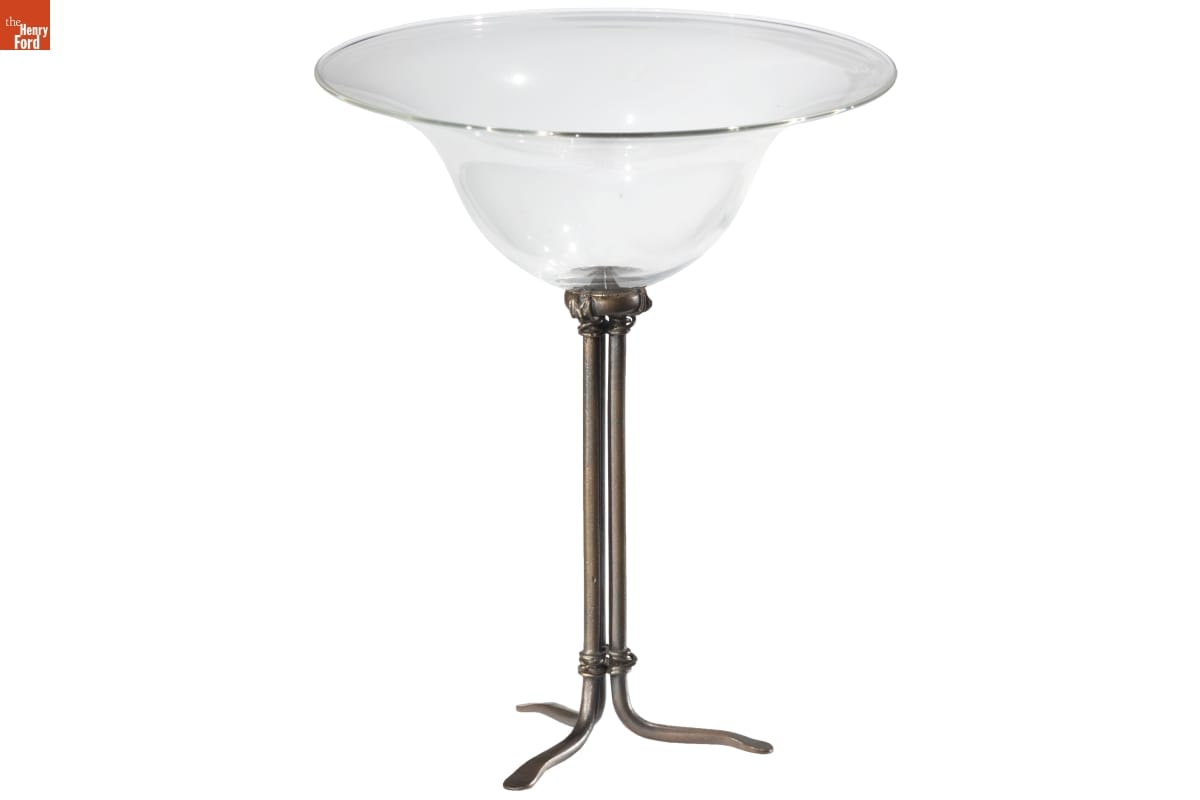
- Bombay Sapphire Martini Glass, 1990 - Starting in the early 1980s--and already established as an internationally recognized architect--Michael Graves began to pursue a parallel career as a product designer. Over the following three and a half decades he and his collaborators designed everything from humble household goods to limited edition luxury items for clients as diverse as Steuben, Alessi, Target, J. C. Penney, and Disney.
- 1990
- Collections - Artifact
Bombay Sapphire Martini Glass, 1990
Starting in the early 1980s--and already established as an internationally recognized architect--Michael Graves began to pursue a parallel career as a product designer. Over the following three and a half decades he and his collaborators designed everything from humble household goods to limited edition luxury items for clients as diverse as Steuben, Alessi, Target, J. C. Penney, and Disney.
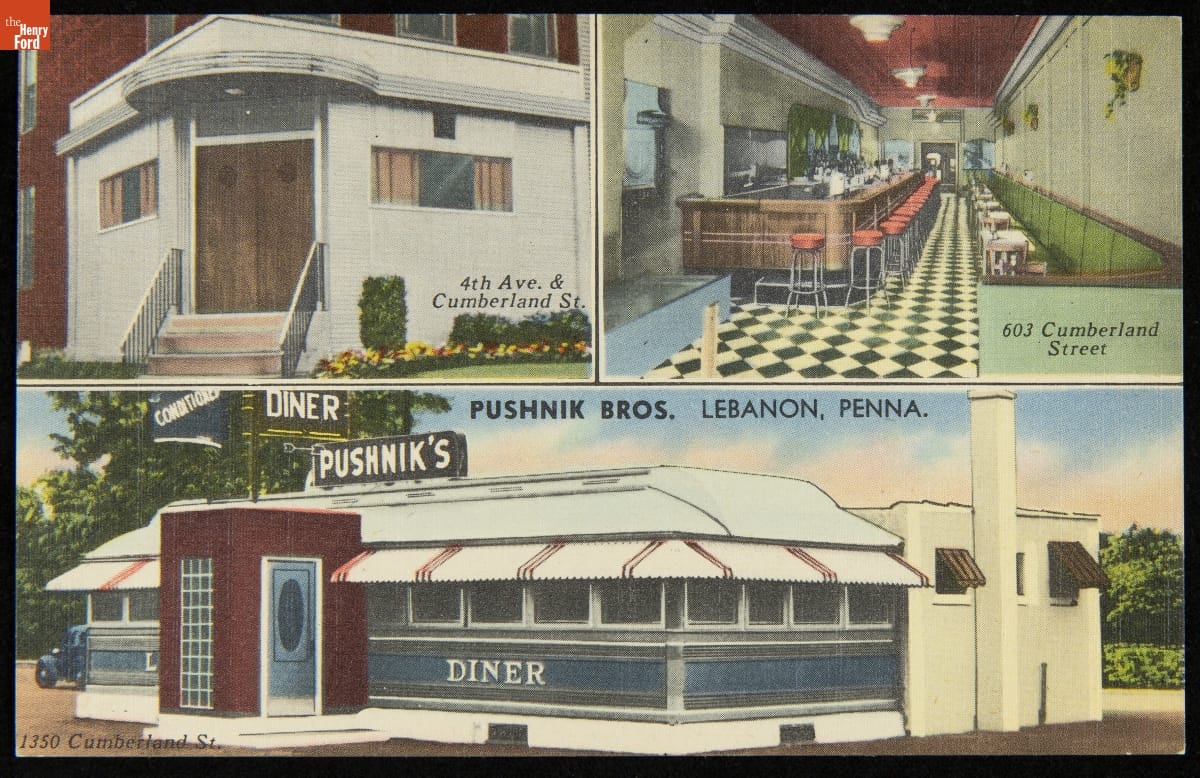
- Pushnik Bros. Diners, Lebanon, Pennsylvania, 1940-1960 - From the late 1930s into the 1950s, diners became a familiar sight along roadsides, especially in the eastern United States. The Lebanon Diner, shown in the lower image of this postcard, was one of three food and drink establishments owned by the Pushnik Brothers in Lancaster, Pennsylvania. The other two are shown above.
- 1940-1960
- Collections - Artifact
Pushnik Bros. Diners, Lebanon, Pennsylvania, 1940-1960
From the late 1930s into the 1950s, diners became a familiar sight along roadsides, especially in the eastern United States. The Lebanon Diner, shown in the lower image of this postcard, was one of three food and drink establishments owned by the Pushnik Brothers in Lancaster, Pennsylvania. The other two are shown above.
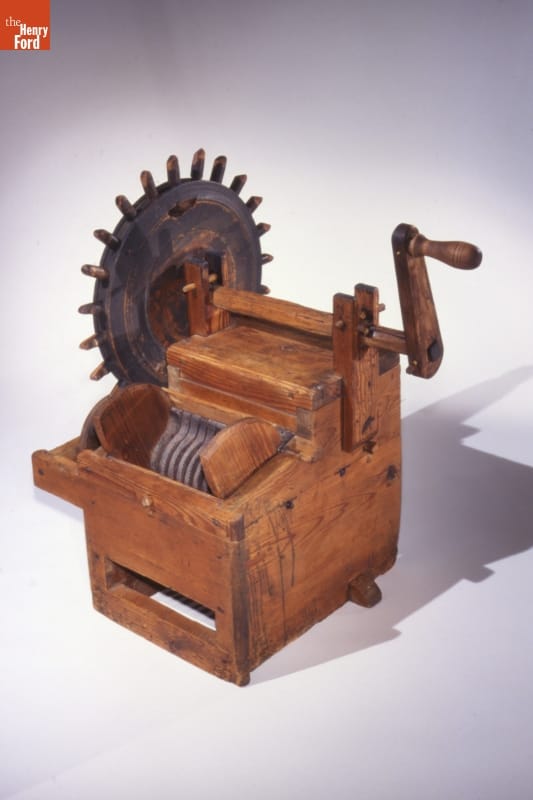
- Cotton Gin Model, circa 1830 - Removing seed from cotton fiber was the main obstacle to large scale cotton production. A new design of gin, the saw-type, was developed by Eli Whitney, Hodgen Holmes and others in the 1790s. The dispute over who invented the saw-type gin was the first battle of the new US Patent system. This model is most likely closest to Holmes's design.
- circa 1830
- Collections - Artifact
Cotton Gin Model, circa 1830
Removing seed from cotton fiber was the main obstacle to large scale cotton production. A new design of gin, the saw-type, was developed by Eli Whitney, Hodgen Holmes and others in the 1790s. The dispute over who invented the saw-type gin was the first battle of the new US Patent system. This model is most likely closest to Holmes's design.