
Search
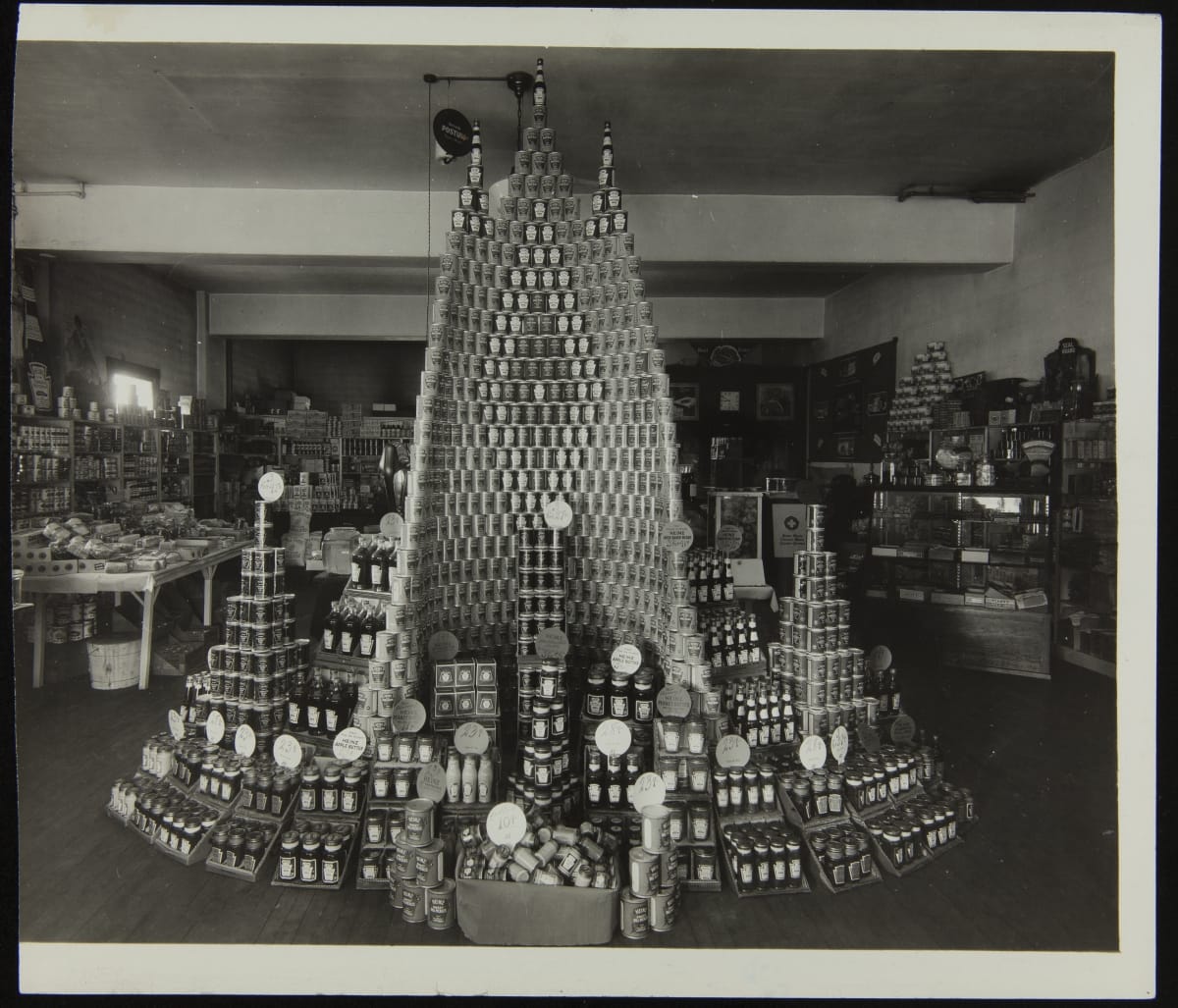
- O. C. Bedell Grocery Store, Floor Display of Heinz Products, Newton, Ohio, circa 1930 - H. J. Heinz was at the forefront of creative marketing in the manufactured food industry. He developed a comprehensive advertising strategy that included elaborate product displays in local grocery stores. Shoppers were greeted with colorful posters and meticulously designed floor-to-ceiling pyramids of canned and jarred products created by Heinz salespeople.
- circa 1930
- Collections - Artifact
O. C. Bedell Grocery Store, Floor Display of Heinz Products, Newton, Ohio, circa 1930
H. J. Heinz was at the forefront of creative marketing in the manufactured food industry. He developed a comprehensive advertising strategy that included elaborate product displays in local grocery stores. Shoppers were greeted with colorful posters and meticulously designed floor-to-ceiling pyramids of canned and jarred products created by Heinz salespeople.
- Sam Joseph Grocery Store Display of Heinz Products, Grand Rapids, Michigan, 1929 - "Pickle King" H. J. Heinz's confidence in his products prompted his extraordinary guarantee -- if you didn't find his food satisfactory, you could get your money back. His faith in his product established trust in his customers and provided them with zero financial risk in trying a new product. His guarantee is featured here in the middle of his other advertisements.

- 1929
- Collections - Artifact
Sam Joseph Grocery Store Display of Heinz Products, Grand Rapids, Michigan, 1929
"Pickle King" H. J. Heinz's confidence in his products prompted his extraordinary guarantee -- if you didn't find his food satisfactory, you could get your money back. His faith in his product established trust in his customers and provided them with zero financial risk in trying a new product. His guarantee is featured here in the middle of his other advertisements.
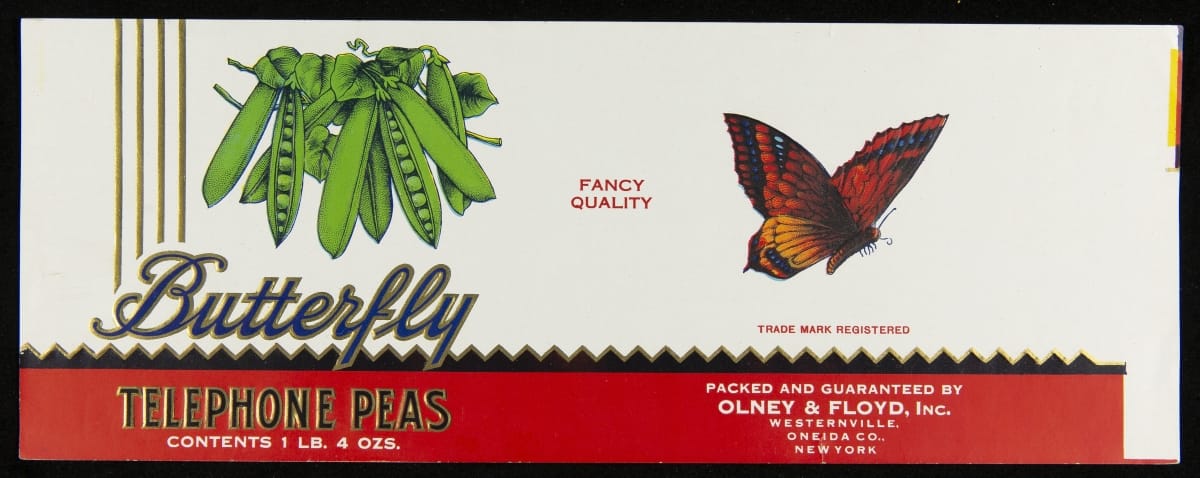
- Can Label, "Butterfly Brand Telephone Peas," circa 1950 - Throughout the late-19th to early-20th centuries, lithographers created labels to help sell products. Manufacturers of foodstuffs utilized the same design for several different products -- a strategy which helped customers distinguish one brand over another. Olney and Floyd's Butterfly Brand products were easy to identify with their colorful, eye-catching labels and signature butterfly.
- circa 1950
- Collections - Artifact
Can Label, "Butterfly Brand Telephone Peas," circa 1950
Throughout the late-19th to early-20th centuries, lithographers created labels to help sell products. Manufacturers of foodstuffs utilized the same design for several different products -- a strategy which helped customers distinguish one brand over another. Olney and Floyd's Butterfly Brand products were easy to identify with their colorful, eye-catching labels and signature butterfly.
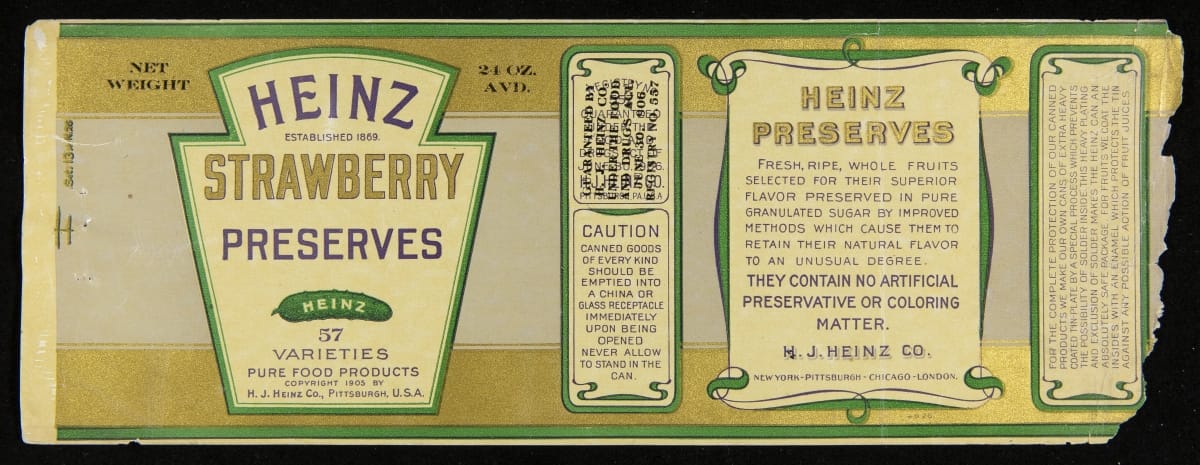
- Can Label, "Heinz Brand Strawberry Preserves," 1906-1910 - Manufacturers of similar products sought ways to make their companies' goods stand out on store shelves. Some companies established a uniform label design for their multi-product offerings -- a strategy which helped customers distinguish one brand over another. H.J. Heinz products were identified by the famous Heinz pickle and signature "keystone" logo. These design features are still found on Heinz products today.
- 1906-1910
- Collections - Artifact
Can Label, "Heinz Brand Strawberry Preserves," 1906-1910
Manufacturers of similar products sought ways to make their companies' goods stand out on store shelves. Some companies established a uniform label design for their multi-product offerings -- a strategy which helped customers distinguish one brand over another. H.J. Heinz products were identified by the famous Heinz pickle and signature "keystone" logo. These design features are still found on Heinz products today.
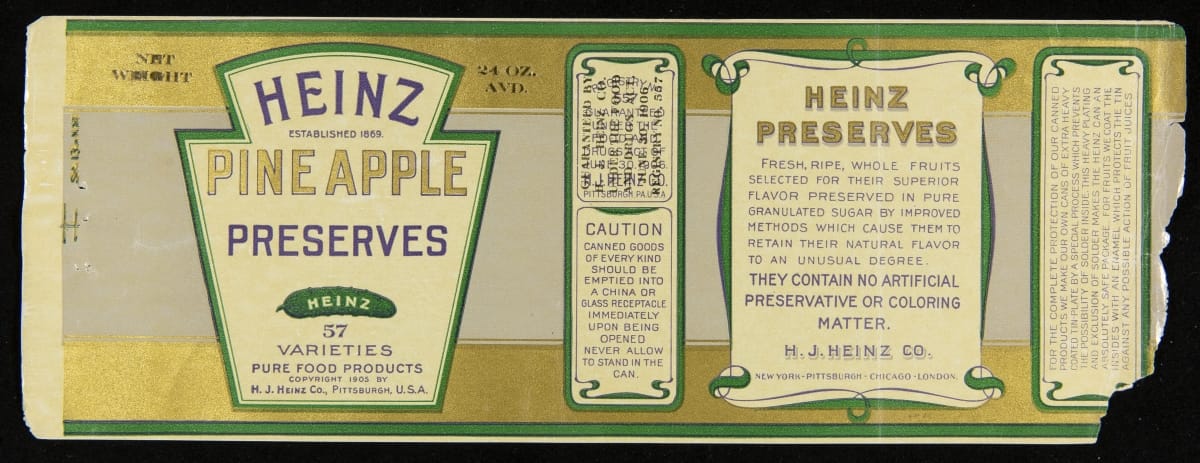
- Can Label, "Heinz Brand Pineapple Preserves," 1906-1910 - Manufacturers of similar products sought ways to make their companies' goods stand out on store shelves. Some companies established a uniform label design for their multi-product offerings -- a strategy which helped customers distinguish one brand over another. H.J. Heinz products were identified by the famous Heinz pickle and signature "keystone" logo. These design features are still found on Heinz products today.
- 1906-1910
- Collections - Artifact
Can Label, "Heinz Brand Pineapple Preserves," 1906-1910
Manufacturers of similar products sought ways to make their companies' goods stand out on store shelves. Some companies established a uniform label design for their multi-product offerings -- a strategy which helped customers distinguish one brand over another. H.J. Heinz products were identified by the famous Heinz pickle and signature "keystone" logo. These design features are still found on Heinz products today.
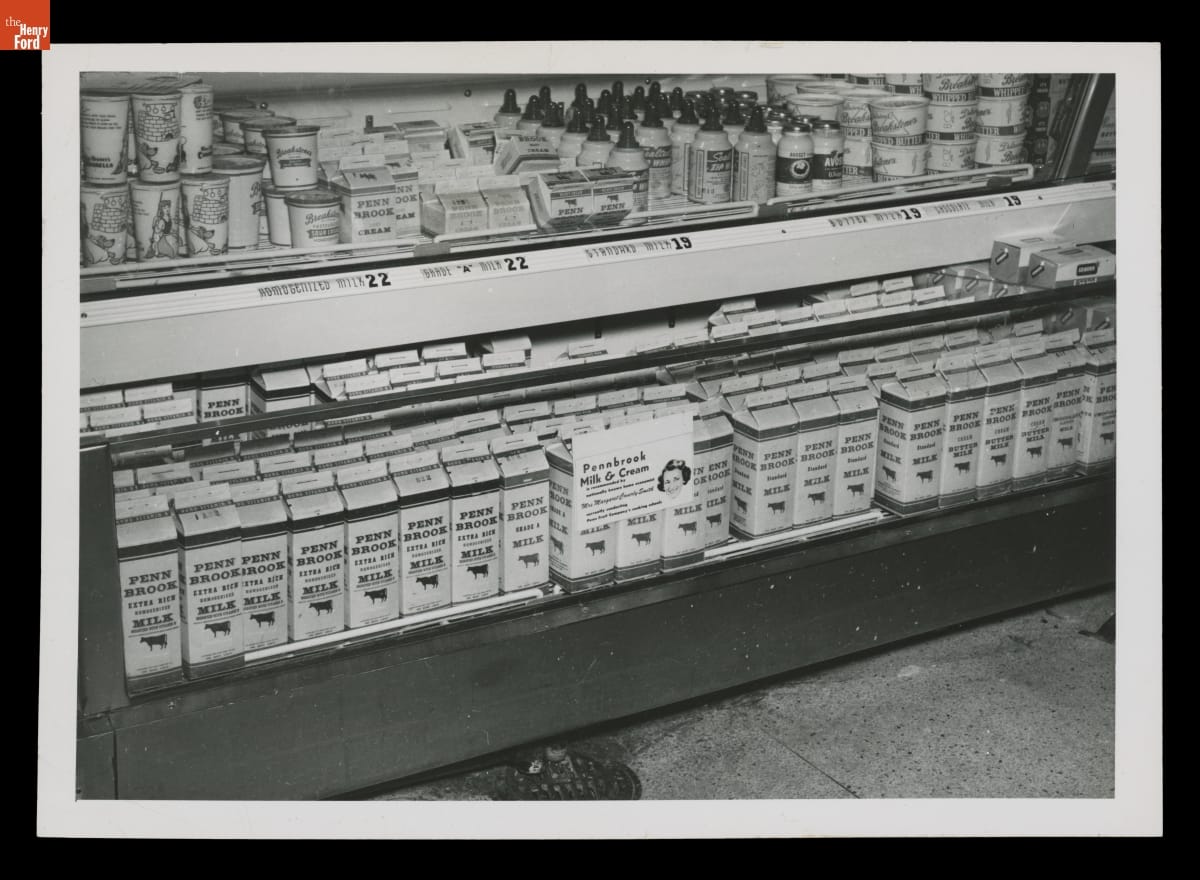
- Grocery Store Dairy Case Stocked with Pennbrook Milk Company Products, circa 1950 -
- circa 1950
- Collections - Artifact
Grocery Store Dairy Case Stocked with Pennbrook Milk Company Products, circa 1950
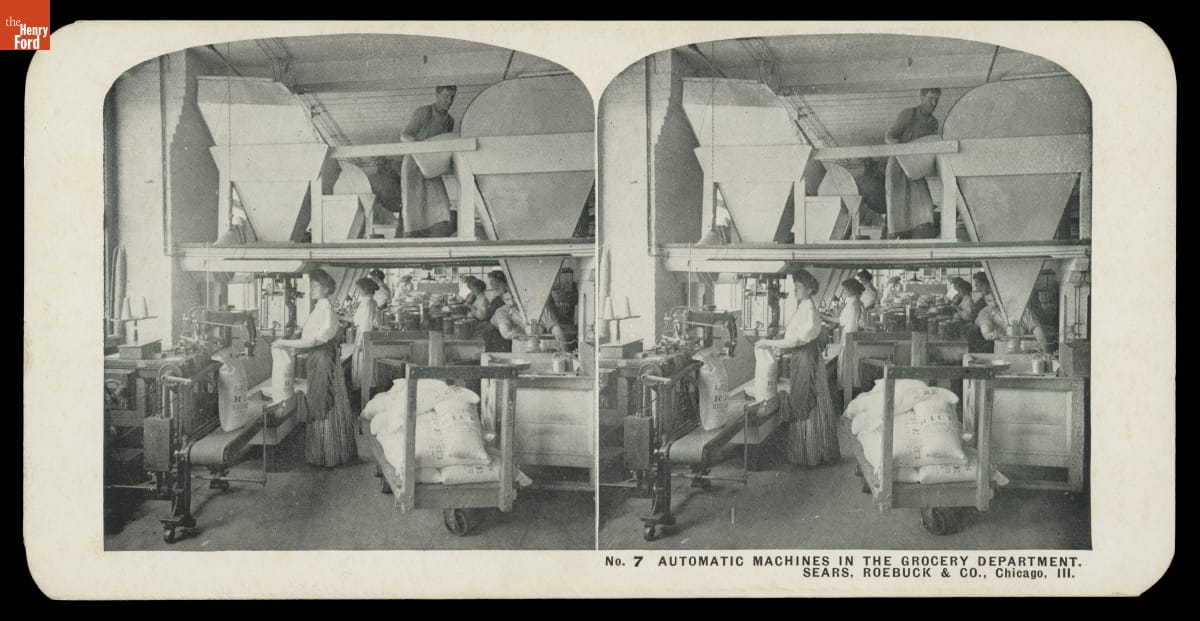
- "Automatic Machines in the Grocery Department. Sears, Roebuck & Co., Chicago, Ill.," 1906-1908 - Mail-order firm Sears, Roebuck, & Co. had become one of America's largest corporations by the early 1900s. Sears was particularly popular among rural Americans, as it offered better options, lower costs, and more efficient delivery methods than traditional general stores. This stereograph, one of a set of 50 sold through the Sears catalog beginning in 1908, offered a behind-the-scenes look at the company's operation.
- 1906-1908
- Collections - Artifact
"Automatic Machines in the Grocery Department. Sears, Roebuck & Co., Chicago, Ill.," 1906-1908
Mail-order firm Sears, Roebuck, & Co. had become one of America's largest corporations by the early 1900s. Sears was particularly popular among rural Americans, as it offered better options, lower costs, and more efficient delivery methods than traditional general stores. This stereograph, one of a set of 50 sold through the Sears catalog beginning in 1908, offered a behind-the-scenes look at the company's operation.
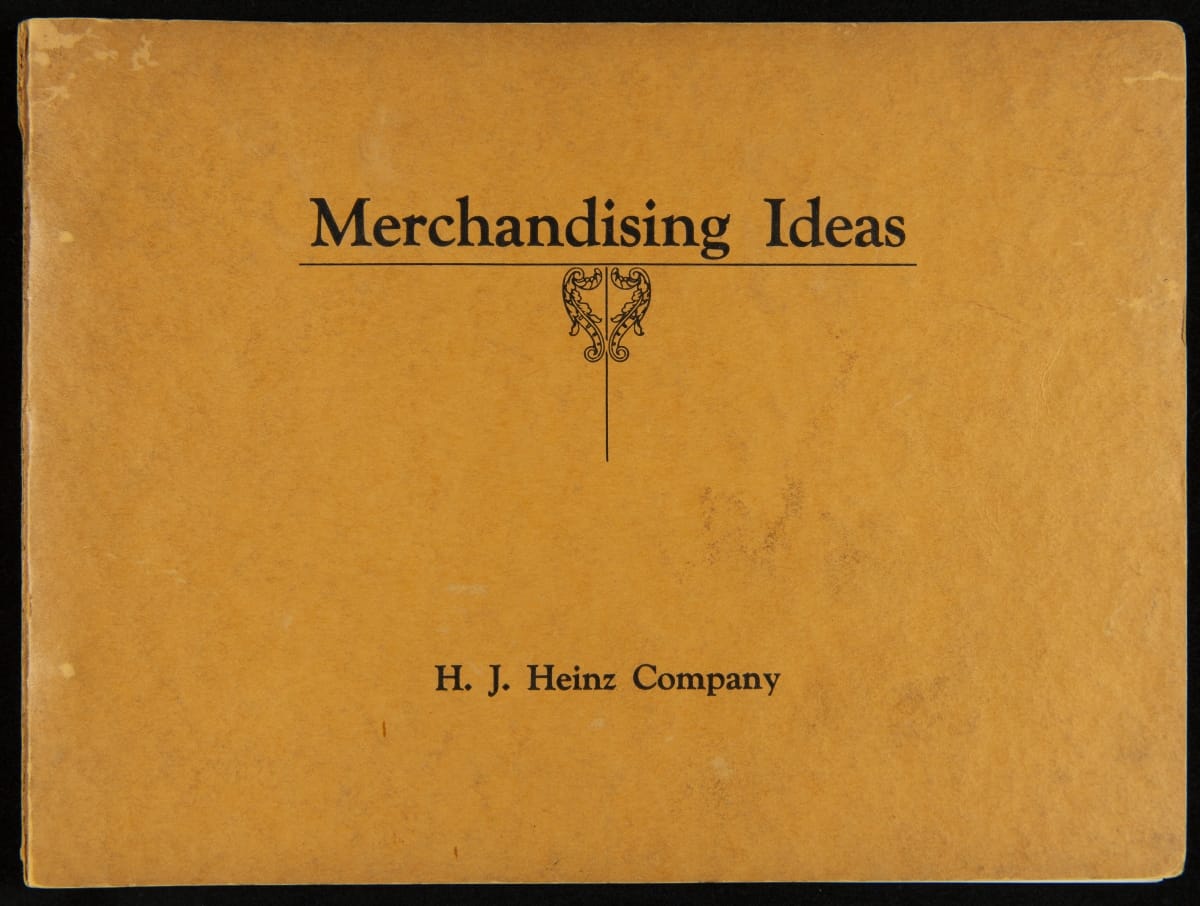
- "Merchandising Ideas," Instruction Booklet for Heinz Product and Advertising Displays, H. J. Heinz Company, circa 1935 - The H.J. Heinz Company's advertising strategy was a recipe for success. Elaborate and creative displays and signage encouraged customers to buy Heinz products. This booklet provided grocers with suggestions for counter, floor, and window displays, explained how to set-up a "Saturday sampling" table, and included an extensive selection of advertising designs available for purchase.
- circa 1935
- Collections - Artifact
"Merchandising Ideas," Instruction Booklet for Heinz Product and Advertising Displays, H. J. Heinz Company, circa 1935
The H.J. Heinz Company's advertising strategy was a recipe for success. Elaborate and creative displays and signage encouraged customers to buy Heinz products. This booklet provided grocers with suggestions for counter, floor, and window displays, explained how to set-up a "Saturday sampling" table, and included an extensive selection of advertising designs available for purchase.
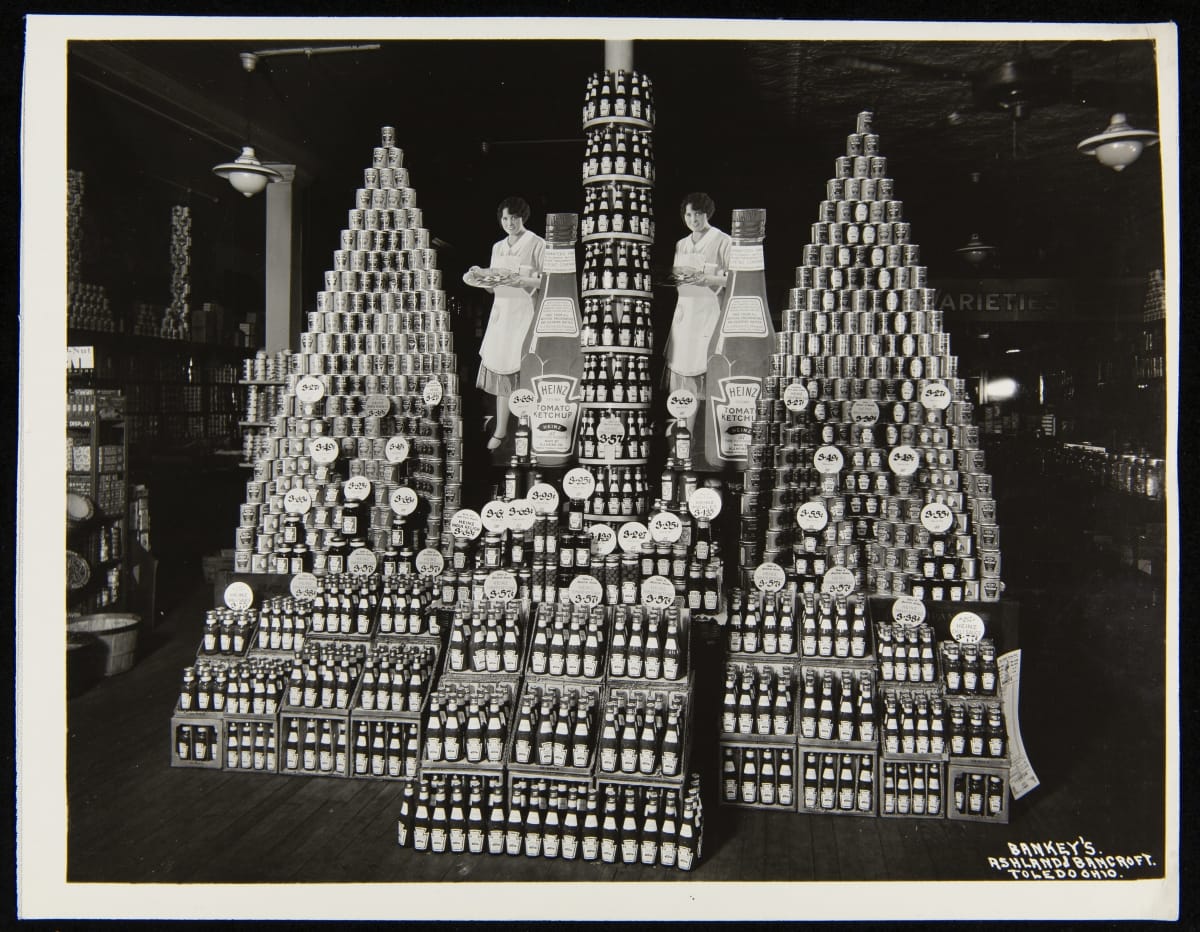
- Bankey Grocery Store Display of Heinz Products, Toledo, Ohio, circa 1929 - H. J. Heinz was at the forefront of creative marketing in the manufactured food industry. He developed a comprehensive advertising strategy that included elaborate product displays in local grocery stores. Shoppers were greeted with colorful posters and meticulously designed floor-to-ceiling pyramids of canned and jarred products created by Heinz salespeople.
- circa 1929
- Collections - Artifact
Bankey Grocery Store Display of Heinz Products, Toledo, Ohio, circa 1929
H. J. Heinz was at the forefront of creative marketing in the manufactured food industry. He developed a comprehensive advertising strategy that included elaborate product displays in local grocery stores. Shoppers were greeted with colorful posters and meticulously designed floor-to-ceiling pyramids of canned and jarred products created by Heinz salespeople.
- GEM Grocery Company Display of Heinz Products, Topeka, Kansas, circa 1930 - H. J. Heinz was at the forefront of creative marketing in the manufactured food industry. He developed a comprehensive advertising strategy that included elaborate product displays in local grocery stores. Shoppers were greeted with colorful posters and meticulously designed floor-to-ceiling pyramids of canned and jarred products created by Heinz salespeople.
- circa 1930
- Collections - Artifact
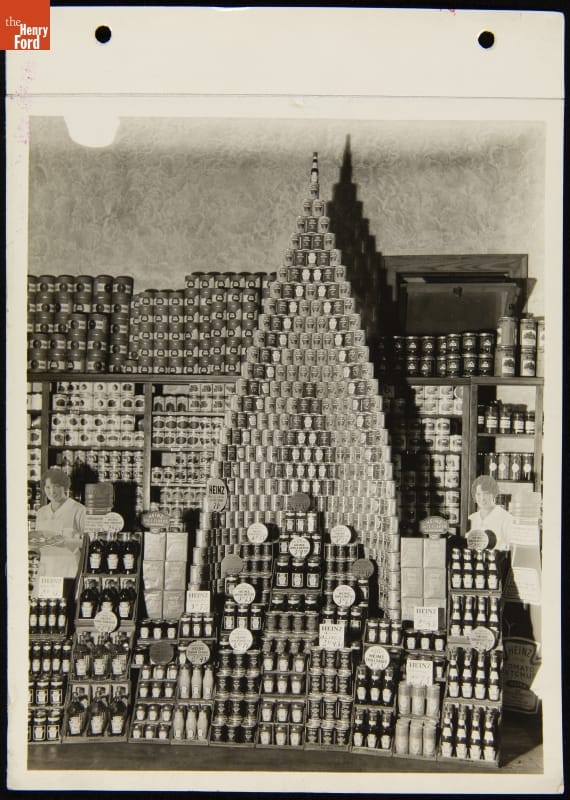
GEM Grocery Company Display of Heinz Products, Topeka, Kansas, circa 1930
H. J. Heinz was at the forefront of creative marketing in the manufactured food industry. He developed a comprehensive advertising strategy that included elaborate product displays in local grocery stores. Shoppers were greeted with colorful posters and meticulously designed floor-to-ceiling pyramids of canned and jarred products created by Heinz salespeople.