
Search
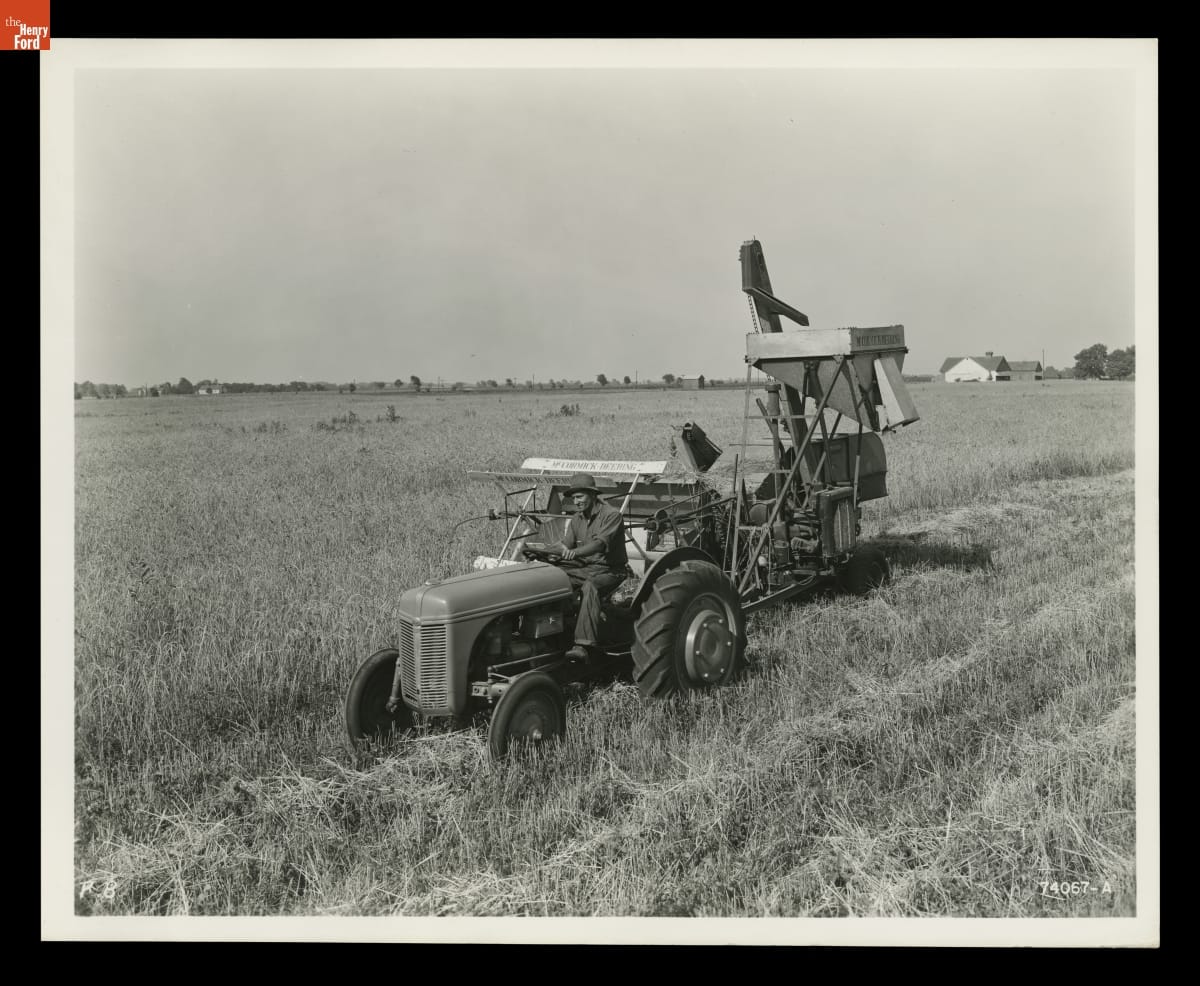
- Man Harvesting Wheat Using a Ford-Ferguson Tractor with Combine Attached, Indiana, August 1940 - Ford Motor Company introduced the 9N tractor in 1939. It featured the "Ferguson System:" a 3-point hydraulic hitch-and-lift system invented by Irishman Harry Ferguson. Ferguson's revolutionary hitch kept agricultural implements, like the combine seen here, in line with the tractor. It also provided stability. By 1940, nearly 8 percent of tractors sold in the U.S. were 9Ns.
- August 05, 1940
- Collections - Artifact
Man Harvesting Wheat Using a Ford-Ferguson Tractor with Combine Attached, Indiana, August 1940
Ford Motor Company introduced the 9N tractor in 1939. It featured the "Ferguson System:" a 3-point hydraulic hitch-and-lift system invented by Irishman Harry Ferguson. Ferguson's revolutionary hitch kept agricultural implements, like the combine seen here, in line with the tractor. It also provided stability. By 1940, nearly 8 percent of tractors sold in the U.S. were 9Ns.
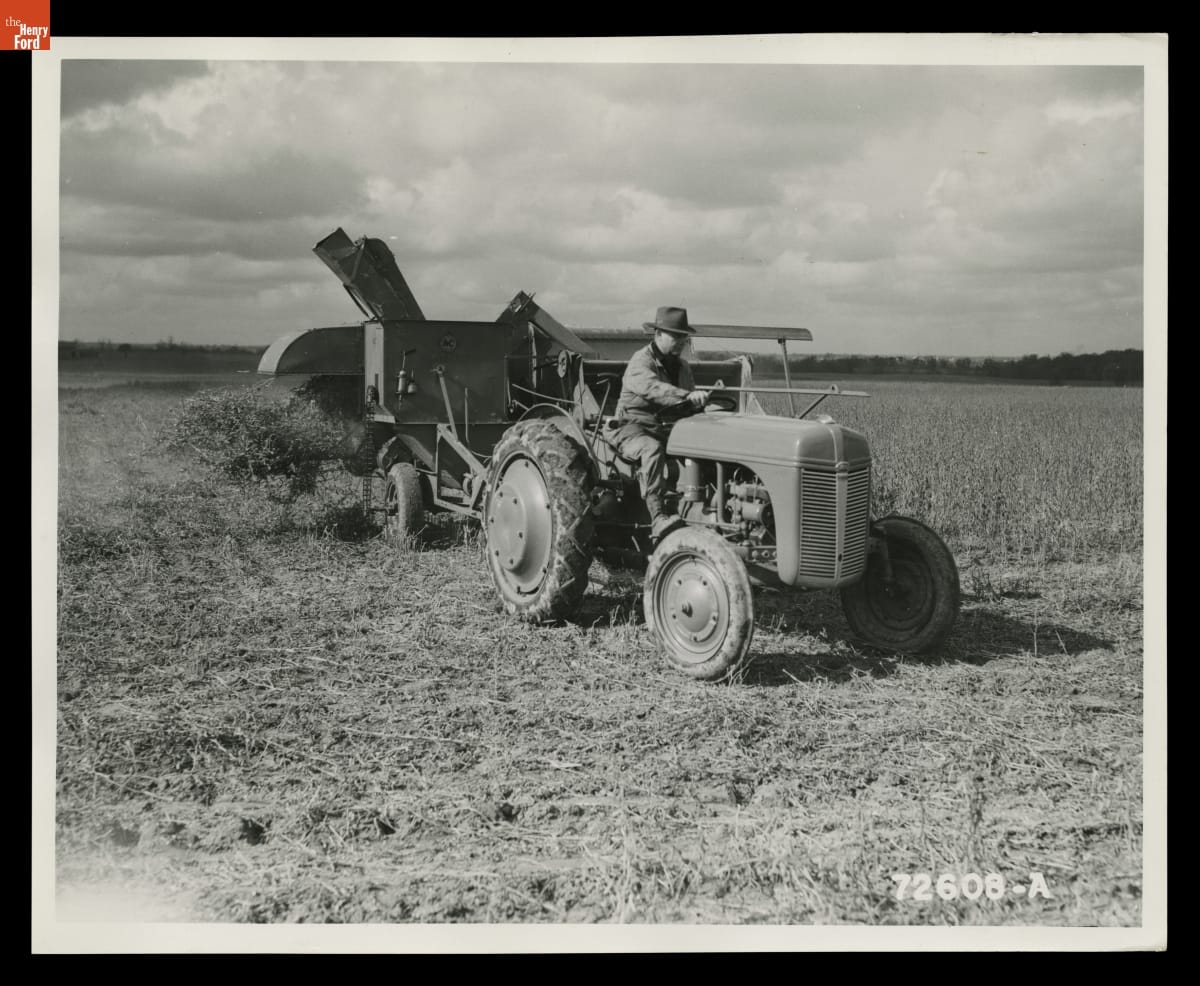
- Ford-Ferguson Model 9N Tractor Pulling a Combine, Macon, Michigan, November 1939 - Henry Ford acquired thousands of acres of farmland in southeast Michigan, collectively known as the Ford Farms. Much of the Farms' acreage was dedicated to one of Ford's agricultural interests at that time: soybeans. This 1939 image shows a tractor-drawn combine harvesting soybeans in Macon, Michigan.
- November 01, 1939
- Collections - Artifact
Ford-Ferguson Model 9N Tractor Pulling a Combine, Macon, Michigan, November 1939
Henry Ford acquired thousands of acres of farmland in southeast Michigan, collectively known as the Ford Farms. Much of the Farms' acreage was dedicated to one of Ford's agricultural interests at that time: soybeans. This 1939 image shows a tractor-drawn combine harvesting soybeans in Macon, Michigan.
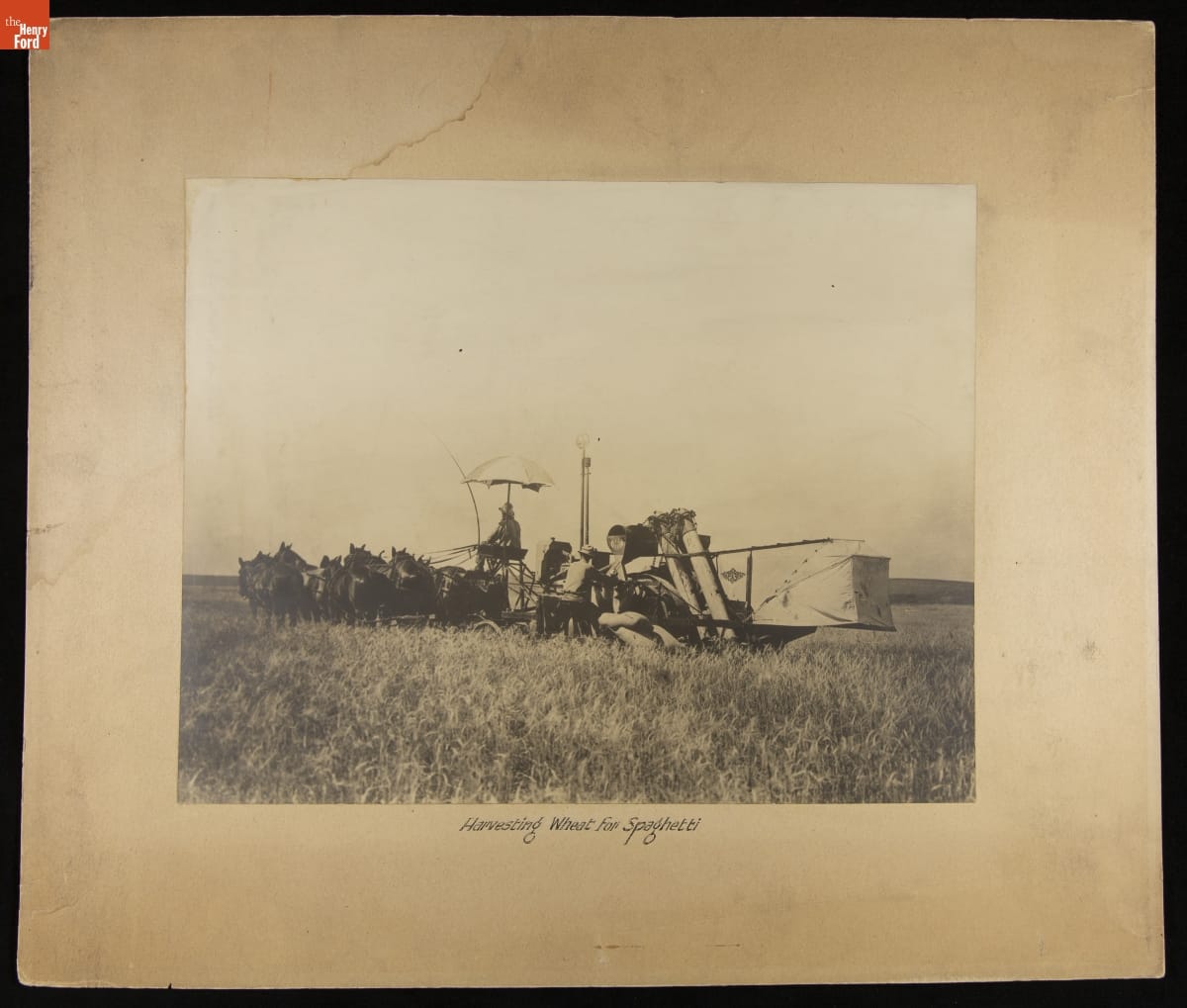
- Harvesting Wheat for Spaghetti, H. J. Heinz Company, 1930-1940 - Entrepreneur H.J. Heinz recognized that producing the highest quality products began with where the ingredients were grown and how they were harvested. The H.J. Heinz Company took great care in managing every aspect of the process to ensure the best ingredients were used in its products. In this photograph, workers are harvesting wheat for the company's heat-and-serve spaghetti products.
- 1930-1940
- Collections - Artifact
Harvesting Wheat for Spaghetti, H. J. Heinz Company, 1930-1940
Entrepreneur H.J. Heinz recognized that producing the highest quality products began with where the ingredients were grown and how they were harvested. The H.J. Heinz Company took great care in managing every aspect of the process to ensure the best ingredients were used in its products. In this photograph, workers are harvesting wheat for the company's heat-and-serve spaghetti products.
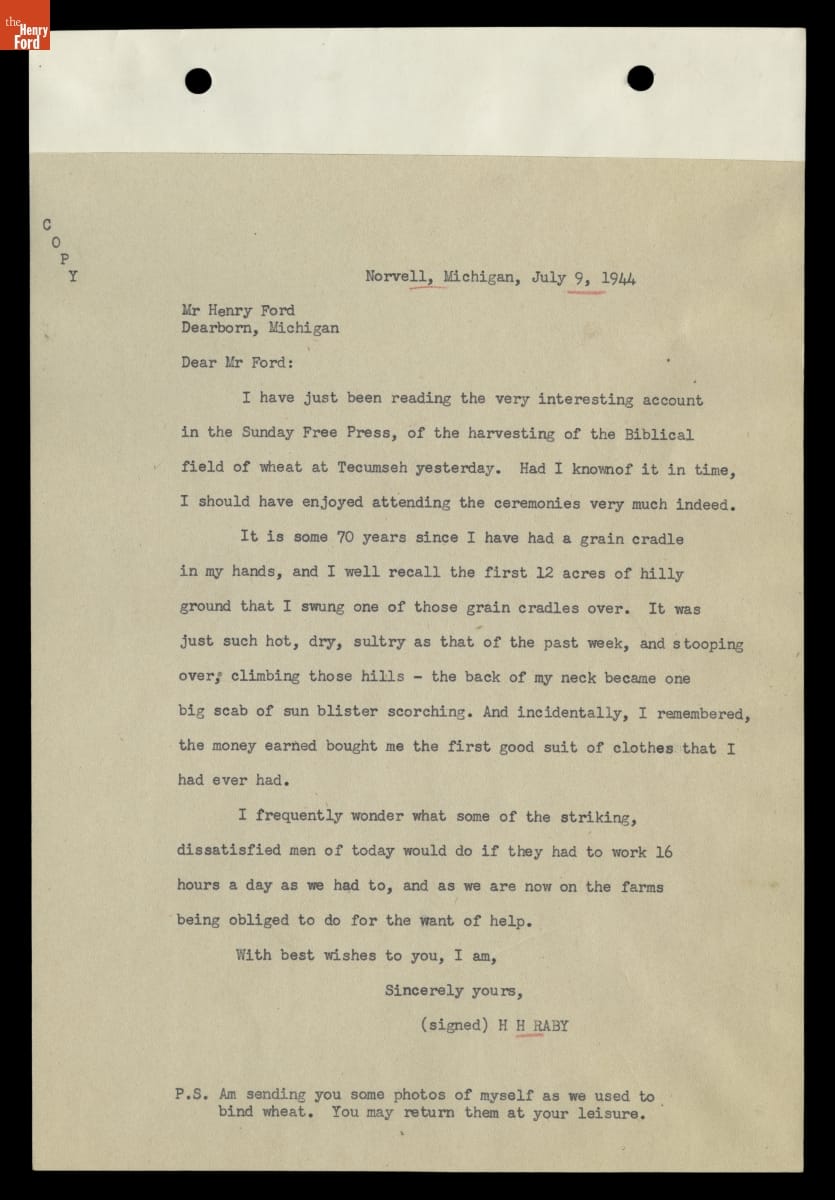
- Letter to Henry Ford from H.H. Raby, July 9, 1944 -
- July 09, 1944
- Collections - Artifact
Letter to Henry Ford from H.H. Raby, July 9, 1944
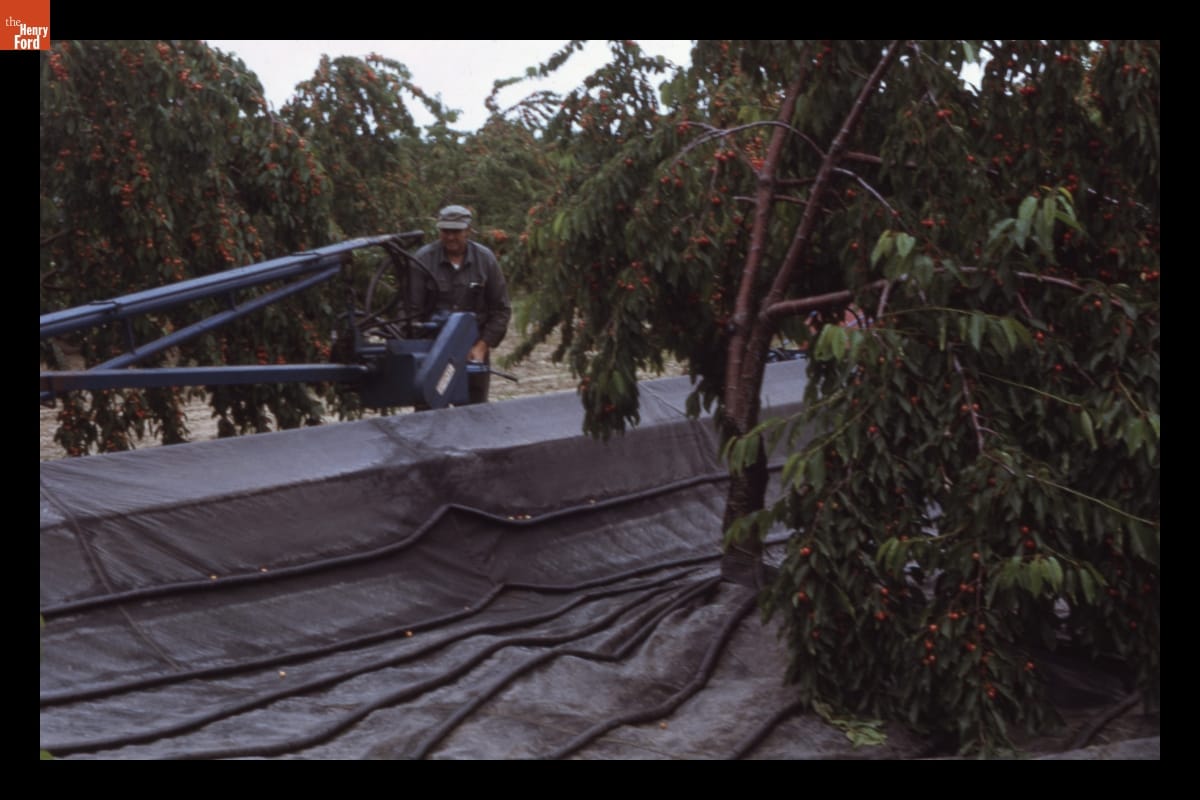
- Henry Gee Preparing the Tree Shaker during Cherry Harvest, 1972 - Cherry growers hired pickers (often migrant laborers) to harvest their crops, but growers sought faster, less labor-intensive solutions. Agricultural engineers developed mechanical harvesters by the late 1960s. These machines shook the trees, causing the ripe fruit to drop onto collecting mats. This slide shows a stage in a mechanical harvest on a family farm in Michigan's cherry-growing region near Traverse City.
- 1972
- Collections - Artifact
Henry Gee Preparing the Tree Shaker during Cherry Harvest, 1972
Cherry growers hired pickers (often migrant laborers) to harvest their crops, but growers sought faster, less labor-intensive solutions. Agricultural engineers developed mechanical harvesters by the late 1960s. These machines shook the trees, causing the ripe fruit to drop onto collecting mats. This slide shows a stage in a mechanical harvest on a family farm in Michigan's cherry-growing region near Traverse City.
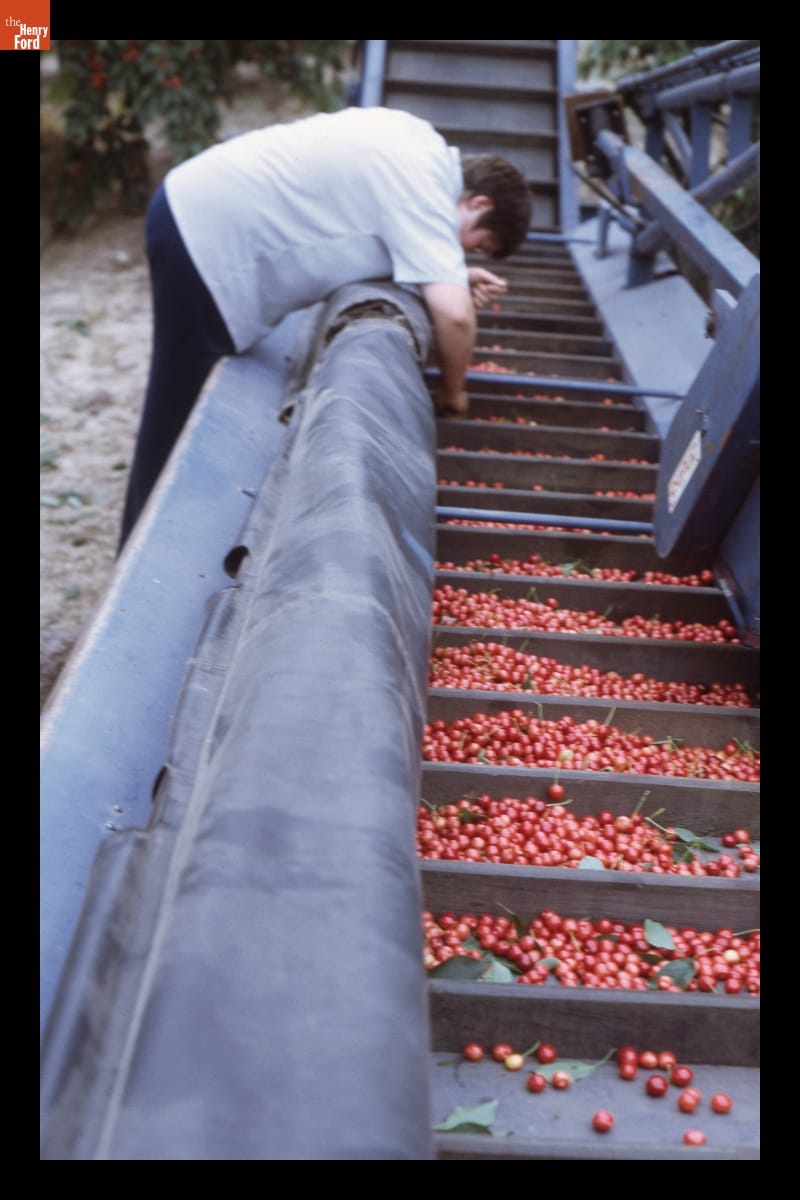
- Linda Malosh Gee Removing Leaves and Debris from Harvested Cherries, 1972 - Cherry growers hired pickers (often migrant laborers) to harvest their crops, but growers sought faster, less labor-intensive solutions. Agricultural engineers developed mechanical harvesters by the late 1960s. These machines shook the trees, causing the ripe fruit to drop onto collecting mats. This slide shows a stage in a mechanical harvest on a family farm in Michigan's cherry-growing region near Traverse City.
- 1972
- Collections - Artifact
Linda Malosh Gee Removing Leaves and Debris from Harvested Cherries, 1972
Cherry growers hired pickers (often migrant laborers) to harvest their crops, but growers sought faster, less labor-intensive solutions. Agricultural engineers developed mechanical harvesters by the late 1960s. These machines shook the trees, causing the ripe fruit to drop onto collecting mats. This slide shows a stage in a mechanical harvest on a family farm in Michigan's cherry-growing region near Traverse City.
- Men Using Field Forage Harvester, circa 1952 -
- circa 1952
- Collections - Artifact
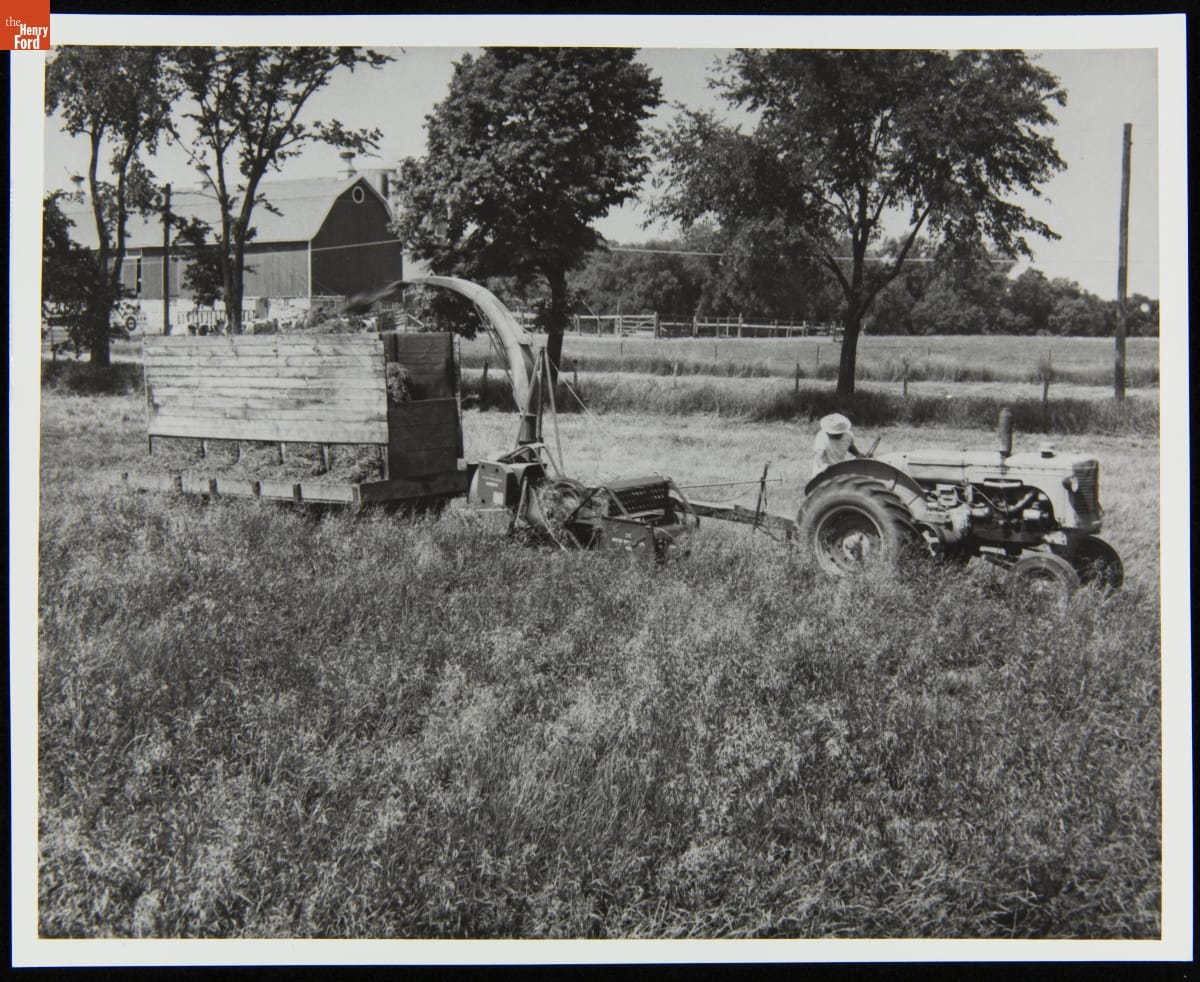
Men Using Field Forage Harvester, circa 1952
- Peter Cousins with Rust Cotton Picker in Henry Ford Museum, 1995 -
- February 13, 1995
- Collections - Artifact
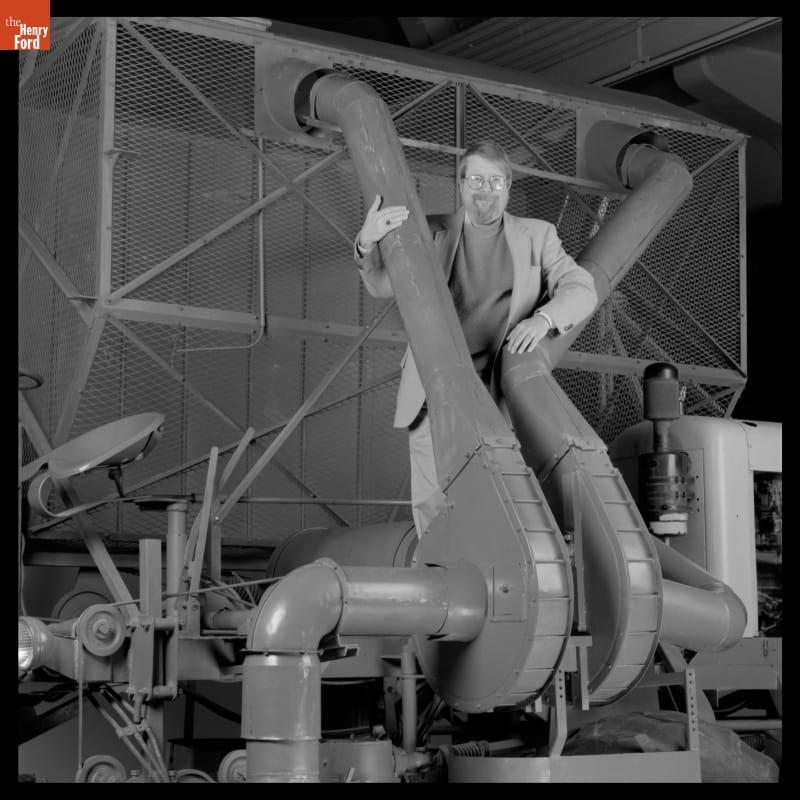
Peter Cousins with Rust Cotton Picker in Henry Ford Museum, 1995
- Ford F-7 Dump Truck and a Tractor-drawn Sugar Beet Harvester in a Field, 1950 -
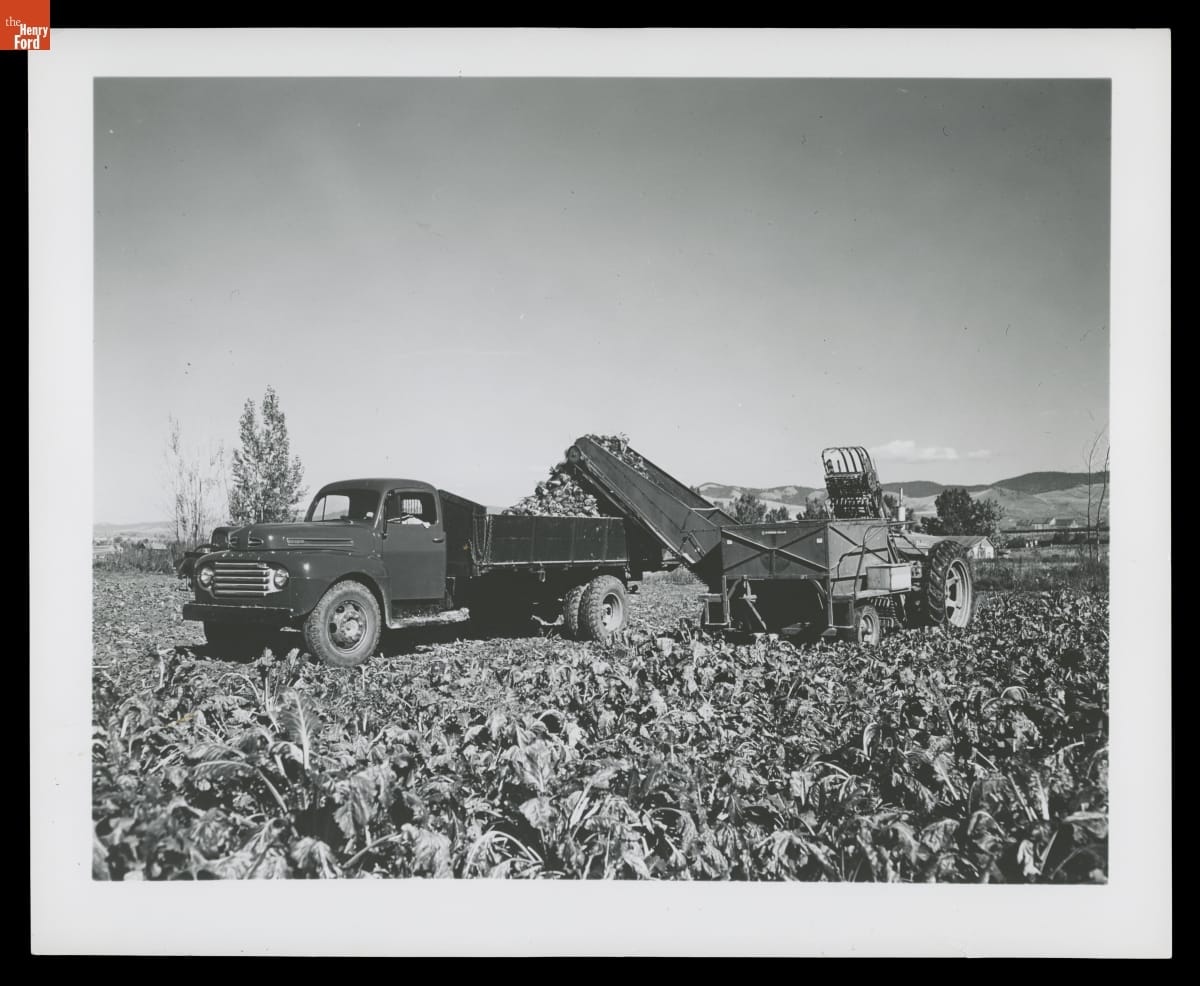
- March 23, 1951
- Collections - Artifact
Ford F-7 Dump Truck and a Tractor-drawn Sugar Beet Harvester in a Field, 1950
- Trade Catalog, "Price List of Extra Parts for Regular Continental Reaper," 1897 -
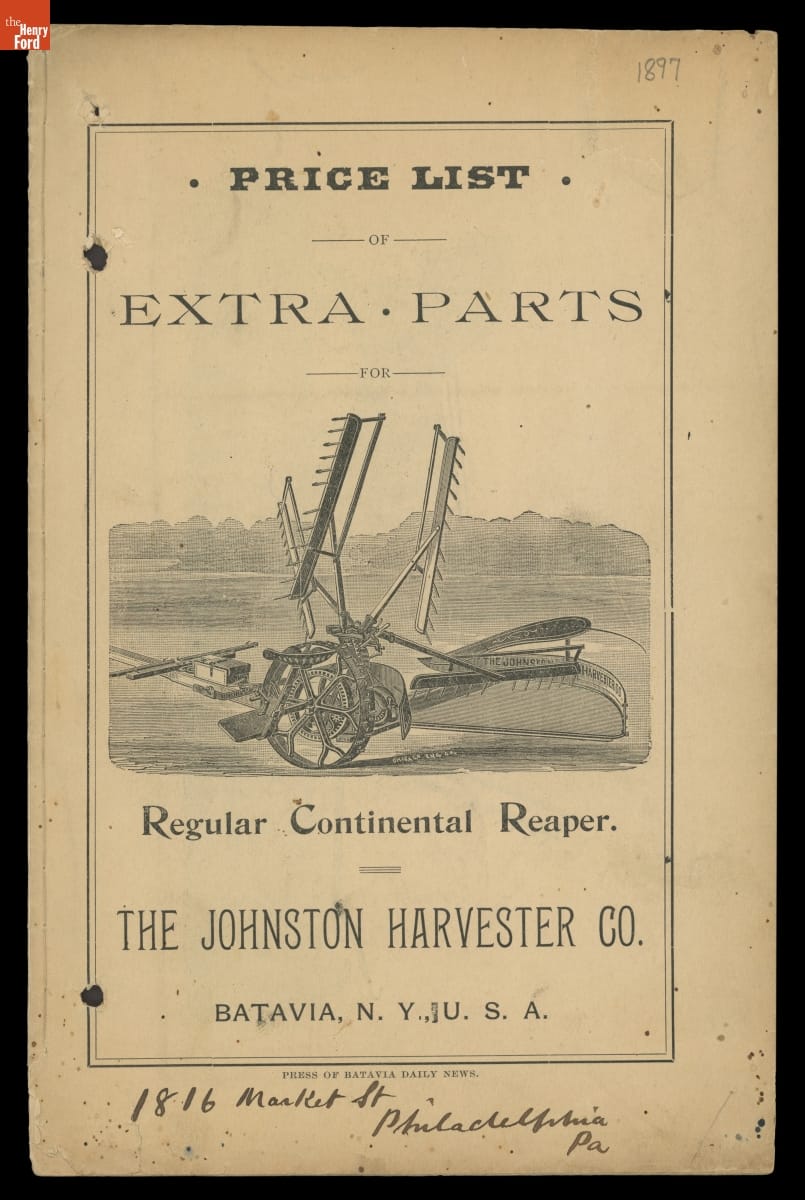
- 1897
- Collections - Artifact
Trade Catalog, "Price List of Extra Parts for Regular Continental Reaper," 1897