
Search
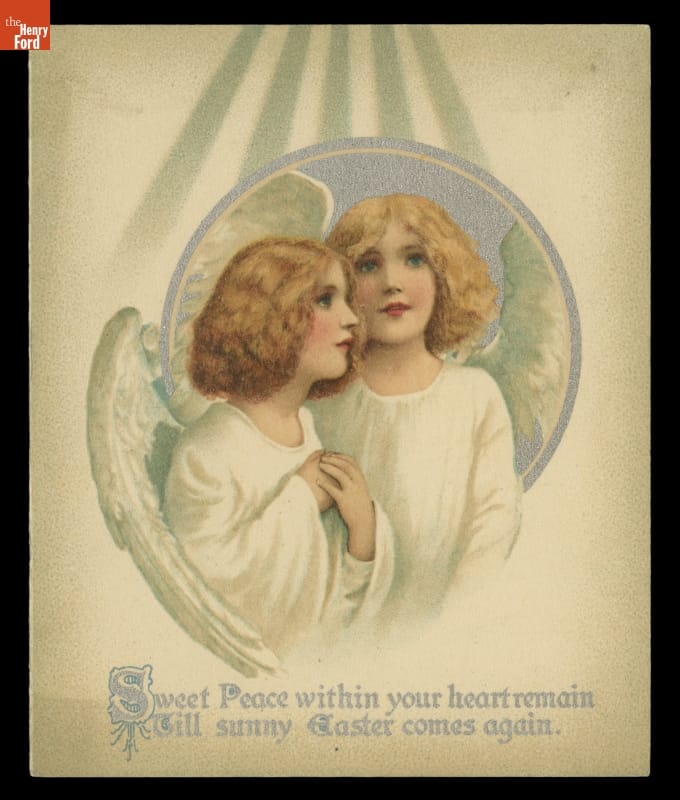
- Easter Greeting Card, "Sweet Peace Within Your Heart Remain Till Sunny Easter Comes Again," 1905 - Sending greeting cards and postcards for the Easter holiday became popular in the United States by the 1880s. Publishers made cards with themes of a religious nature as well as secular decorations to celebrate the arrival of spring. Artists working for these publishers illustrated the cards with images symbolic of the season, such as crosses, angels, flowers, eggs, children, birds, and rabbits.
- circa 1905
- Collections - Artifact
Easter Greeting Card, "Sweet Peace Within Your Heart Remain Till Sunny Easter Comes Again," 1905
Sending greeting cards and postcards for the Easter holiday became popular in the United States by the 1880s. Publishers made cards with themes of a religious nature as well as secular decorations to celebrate the arrival of spring. Artists working for these publishers illustrated the cards with images symbolic of the season, such as crosses, angels, flowers, eggs, children, birds, and rabbits.
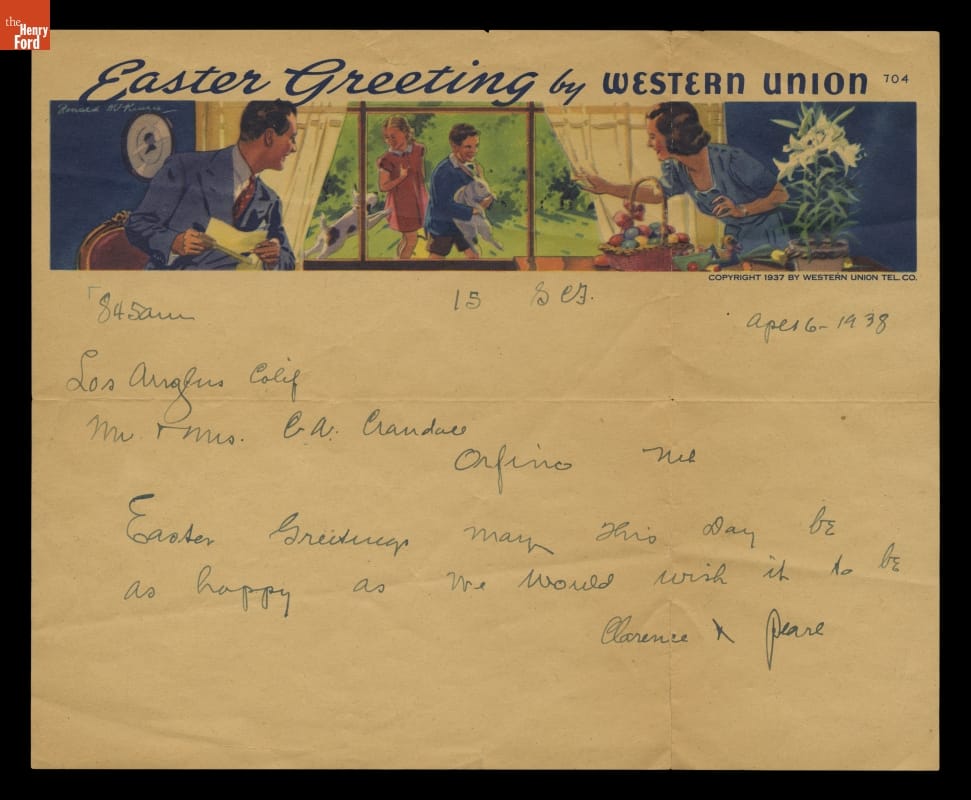
- Easter Telegram, "Easter Greeting by Western Union," 1938 - Telegraph companies in the early 20th century wanted people to send more telegrams, but many average Americans were wary of them -- the few these customers received (or sent) usually relayed urgent, sometimes tragic, news. Telegraph companies created colorful telegrams with matching envelopes to convey good wishes especially for holidays. These designs helped allay the recipient's fear of receiving bad news.
- April 08, 1938
- Collections - Artifact
Easter Telegram, "Easter Greeting by Western Union," 1938
Telegraph companies in the early 20th century wanted people to send more telegrams, but many average Americans were wary of them -- the few these customers received (or sent) usually relayed urgent, sometimes tragic, news. Telegraph companies created colorful telegrams with matching envelopes to convey good wishes especially for holidays. These designs helped allay the recipient's fear of receiving bad news.
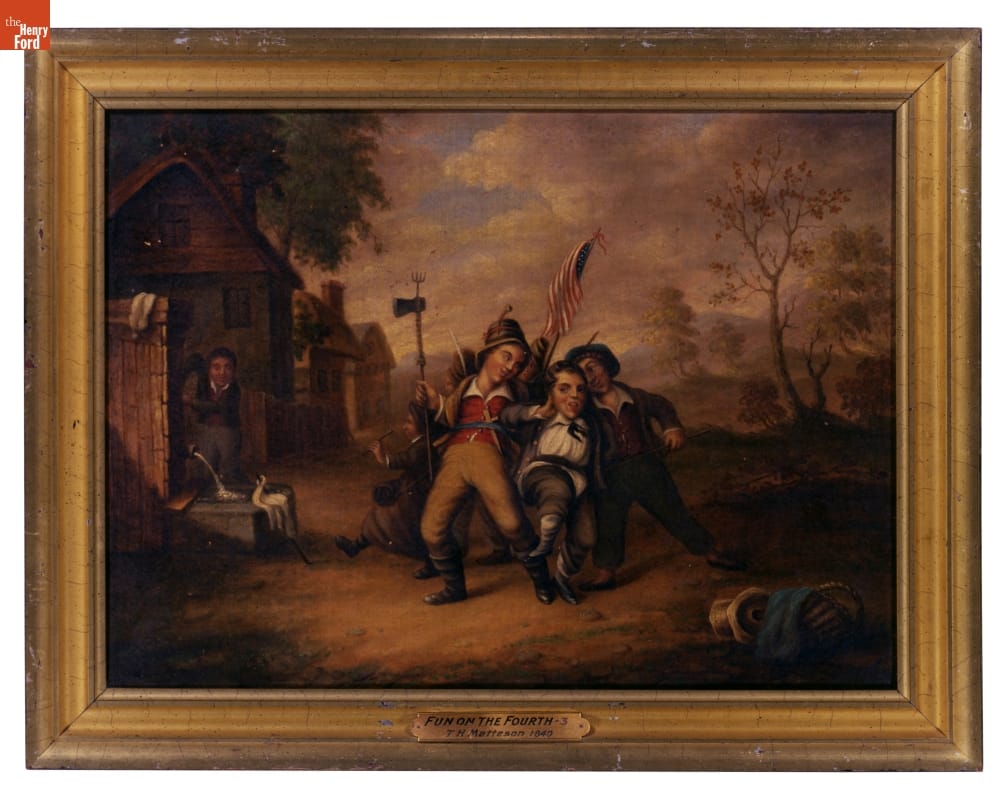
- Oil Painting, "Fun On the Fourth" by Tompkins H. Matteson, 1840-1850 -
- 1840-1850
- Collections - Artifact
Oil Painting, "Fun On the Fourth" by Tompkins H. Matteson, 1840-1850
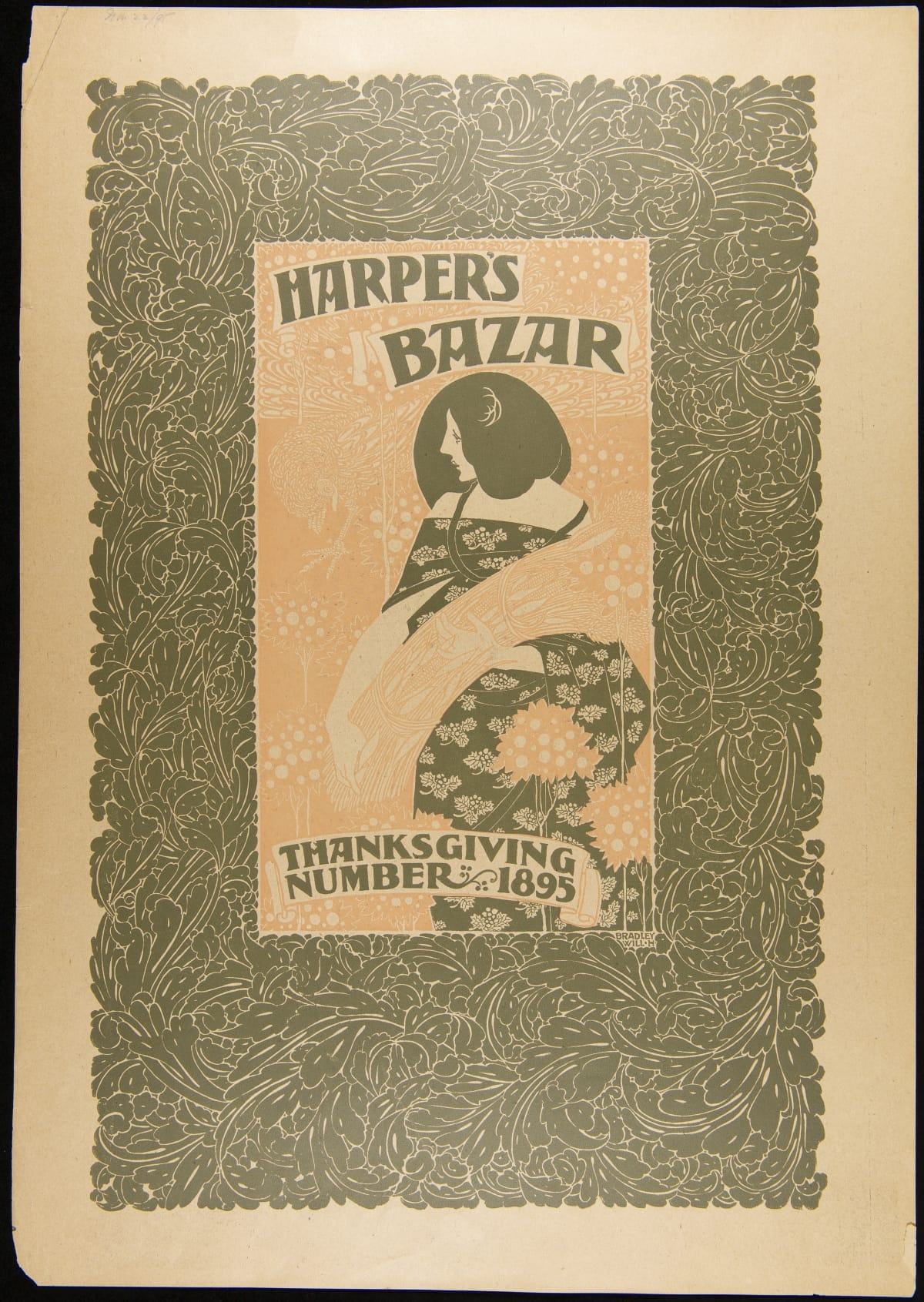
- Harper's Bazar Thanksgiving, Number 1895 - For a few years in the 1890s, a poster craze swept America. Bold, colorful art posters printed for bookstores and newsstands became collectors' items--sometimes more popular than the books and magazines they were designed to promote. Many posters, like this one by Will H. Bradley for a Thanksgiving issue of <em>Harper's Bazar</em>, featured eye-catching illustrations inspired by Art Nouveau trends.
- November 22, 1895
- Collections - Artifact
Harper's Bazar Thanksgiving, Number 1895
For a few years in the 1890s, a poster craze swept America. Bold, colorful art posters printed for bookstores and newsstands became collectors' items--sometimes more popular than the books and magazines they were designed to promote. Many posters, like this one by Will H. Bradley for a Thanksgiving issue of Harper's Bazar, featured eye-catching illustrations inspired by Art Nouveau trends.
- Lisa Korzetz and Edward Korzetz Dressed in Halloween Costumes, circa 1966 -
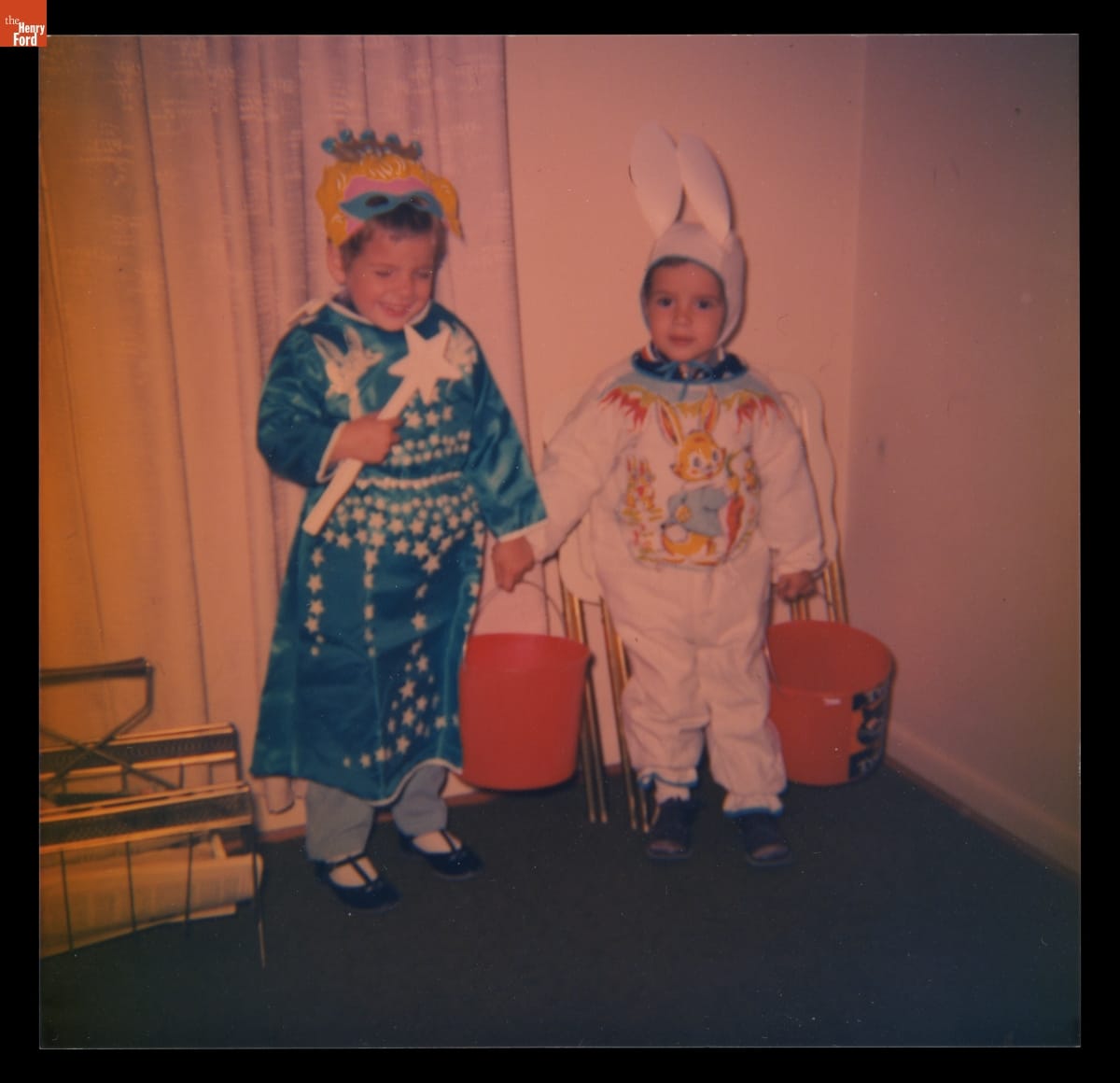
- circa 1966
- Collections - Artifact
Lisa Korzetz and Edward Korzetz Dressed in Halloween Costumes, circa 1966
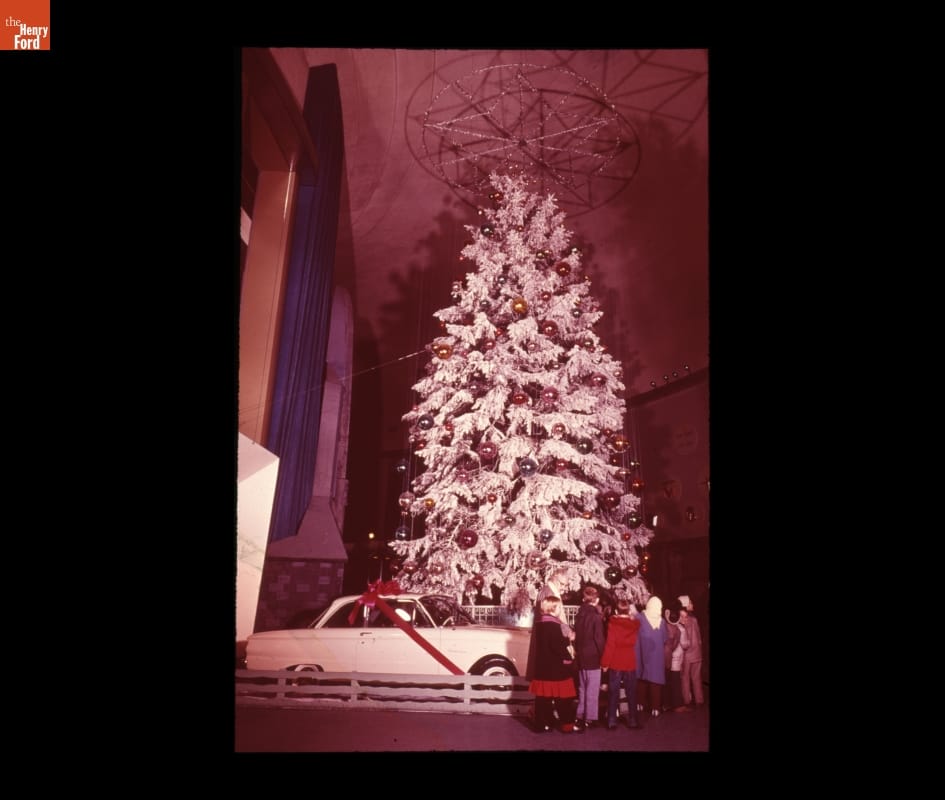
- Ford Falcon Automobile and Christmas Tree Inside the Ford Rotunda Building, Dearborn, Michigan, 1959 - After the Chicago Century of Progress Exposition ended in 1934, Ford Motor Company brought back its central Rotunda building from that fair to Dearborn, to serve as a visitor center and starting point for Rouge Plant tours. However, its biggest draw between 1953 and 1961 was the annual "Christmas Fantasy," shown here. Unfortunately, the Rotunda burned down in November 1962.
- 1959
- Collections - Artifact
Ford Falcon Automobile and Christmas Tree Inside the Ford Rotunda Building, Dearborn, Michigan, 1959
After the Chicago Century of Progress Exposition ended in 1934, Ford Motor Company brought back its central Rotunda building from that fair to Dearborn, to serve as a visitor center and starting point for Rouge Plant tours. However, its biggest draw between 1953 and 1961 was the annual "Christmas Fantasy," shown here. Unfortunately, the Rotunda burned down in November 1962.
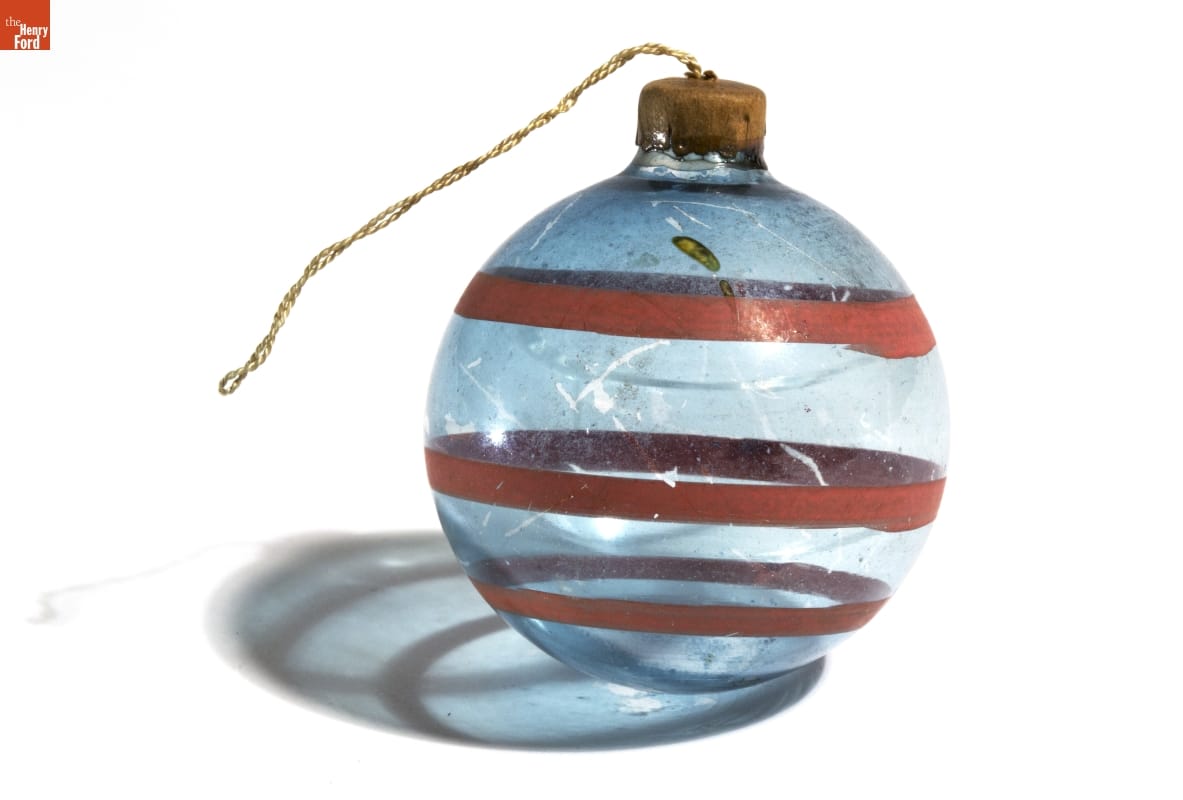
- Christmas Tree Ornament, 1943-1945 - When Americans stopped importing hand-blown Christmas ornaments from Germany during World War II, an enterprising importer of German goods named Max Eckardt convinced the Corning Glass Company to mass produce machine-blown bulbs. At other American firms, such as Eckardt's, workers decorated the plain glass balls. When wartime shortages limited the availability of lacquer and metal, they used paint and cardboard.
- 1943-1945
- Collections - Artifact
Christmas Tree Ornament, 1943-1945
When Americans stopped importing hand-blown Christmas ornaments from Germany during World War II, an enterprising importer of German goods named Max Eckardt convinced the Corning Glass Company to mass produce machine-blown bulbs. At other American firms, such as Eckardt's, workers decorated the plain glass balls. When wartime shortages limited the availability of lacquer and metal, they used paint and cardboard.
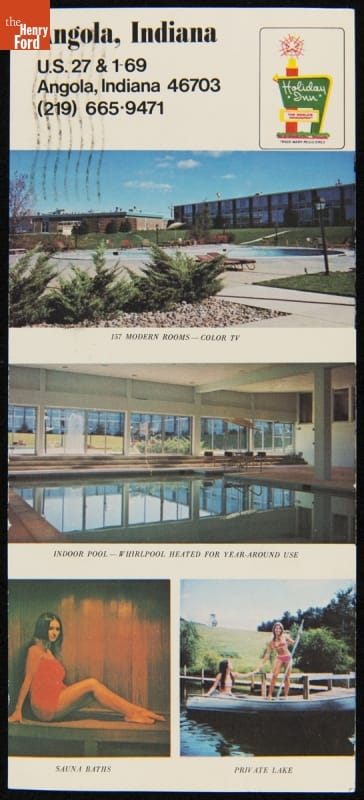
- Holiday Inn of Angola, Indiana, 1974 - Holiday Inns achieved success in the 1950s by providing consistent, quality service and amenities at reasonable prices. In-room televisions and outdoor pools were standard at early Holiday Inns, but many locations upgraded their offerings to meet changing demands. In 1974, this Indiana location touted color TVs, an indoor pool, and a whirlpool and sauna.
- May 20, 1974
- Collections - Artifact
Holiday Inn of Angola, Indiana, 1974
Holiday Inns achieved success in the 1950s by providing consistent, quality service and amenities at reasonable prices. In-room televisions and outdoor pools were standard at early Holiday Inns, but many locations upgraded their offerings to meet changing demands. In 1974, this Indiana location touted color TVs, an indoor pool, and a whirlpool and sauna.
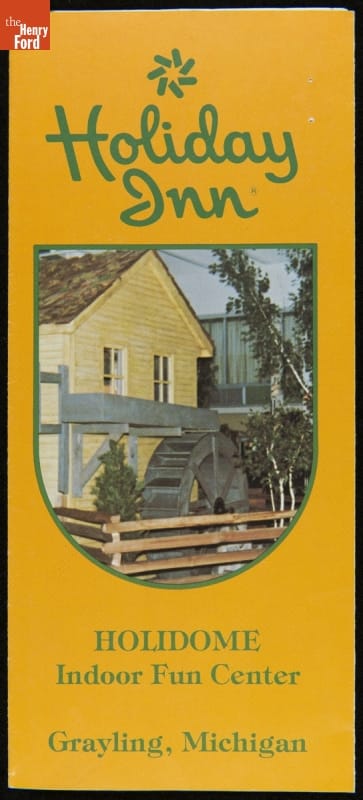
- Holiday Inn Holidome Indoor Fun Center, Grayling, Michigan, 1987 - In the 1970s, Holiday Inns developed the Holidome concept to bring in new business. Holidome inns featured a large indoor public area with a swimming pool, restaurant, and other attractions. The design was ideal for year-round family getaways as well as conferences and group gatherings. This northern Michigan Holidome featured a mill designed to depict "the nostalgic days of the logging era."
- 1987
- Collections - Artifact
Holiday Inn Holidome Indoor Fun Center, Grayling, Michigan, 1987
In the 1970s, Holiday Inns developed the Holidome concept to bring in new business. Holidome inns featured a large indoor public area with a swimming pool, restaurant, and other attractions. The design was ideal for year-round family getaways as well as conferences and group gatherings. This northern Michigan Holidome featured a mill designed to depict "the nostalgic days of the logging era."
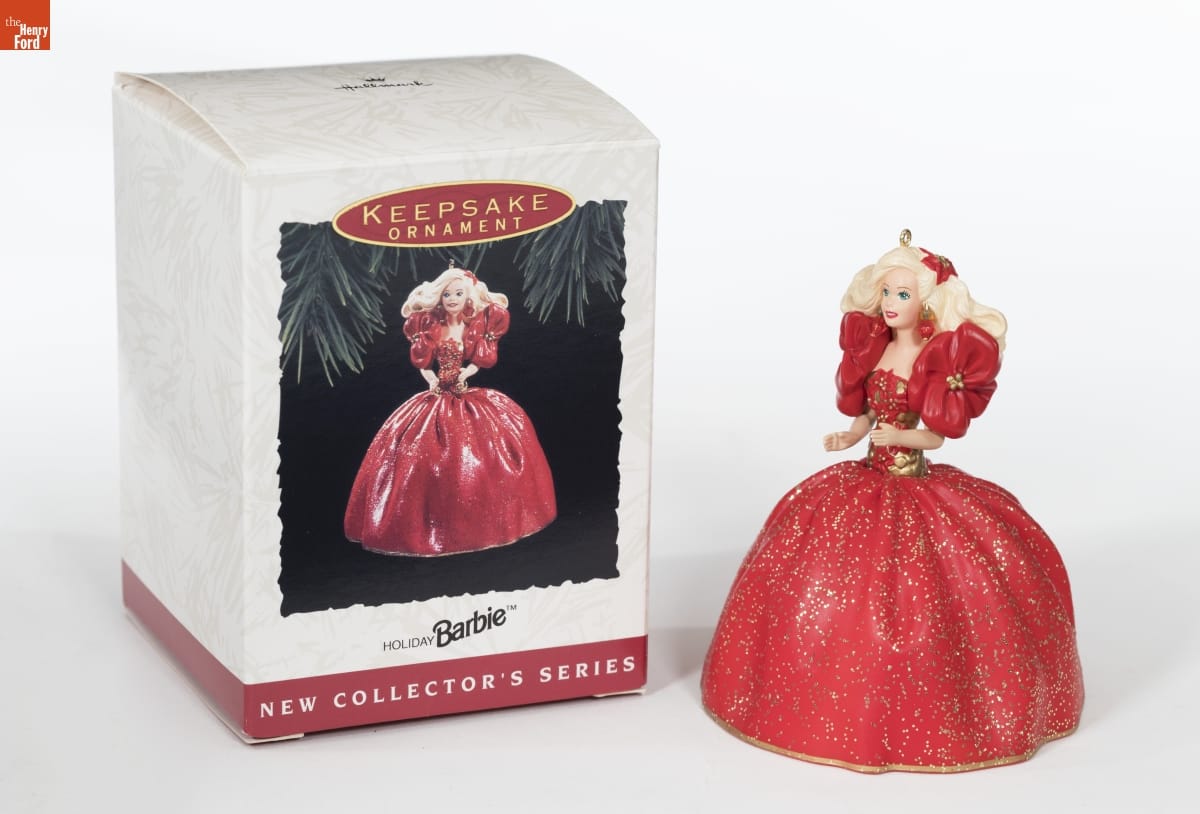
- Hallmark "Holiday Barbie Series" Christmas Ornament, 1993 - This was the first in a series of Holiday Barbie ornaments, which have proven extremely popular with enthusiasts and collectors. Artist Patricia Andrews, who created almost all the Barbie ornaments, began as an illustrator and gained a passion for sculpting. She landed her first job at Hallmark in the Engraving Studio because of her highly detailed work.
- 1993
- Collections - Artifact
Hallmark "Holiday Barbie Series" Christmas Ornament, 1993
This was the first in a series of Holiday Barbie ornaments, which have proven extremely popular with enthusiasts and collectors. Artist Patricia Andrews, who created almost all the Barbie ornaments, began as an illustrator and gained a passion for sculpting. She landed her first job at Hallmark in the Engraving Studio because of her highly detailed work.