
Search
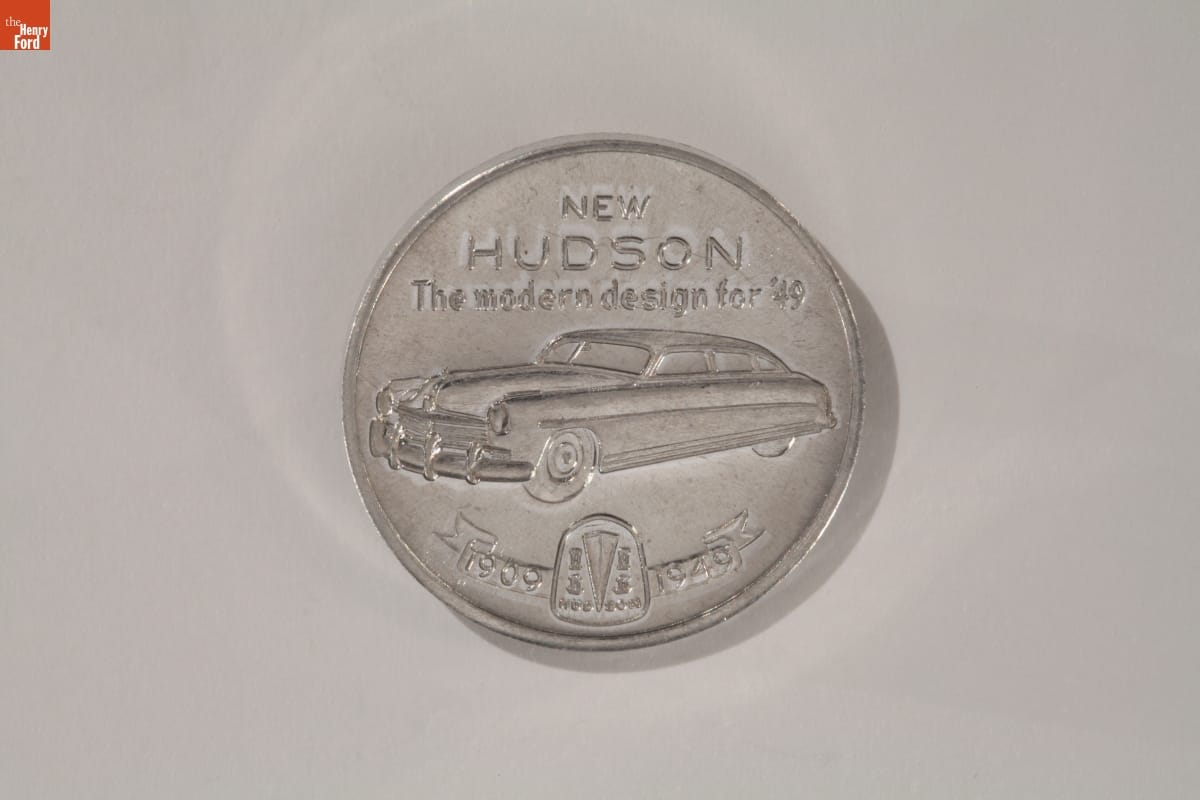
- Hudson Commemorative Medallion, 1949 - Hudson's 1949 cars continued to reflect the unit-body construction and "step-down" design introduced by the company a year earlier. Customers could choose from the Super Six or Super Eight, or the more deluxe Commodore Custom. Body styles ranged from four-door sedans, to two-door coupes, to the elegant Convertible Brougham. Hudson sold more than 159,000 cars for the model year.
- 1949
- Collections - Artifact
Hudson Commemorative Medallion, 1949
Hudson's 1949 cars continued to reflect the unit-body construction and "step-down" design introduced by the company a year earlier. Customers could choose from the Super Six or Super Eight, or the more deluxe Commodore Custom. Body styles ranged from four-door sedans, to two-door coupes, to the elegant Convertible Brougham. Hudson sold more than 159,000 cars for the model year.
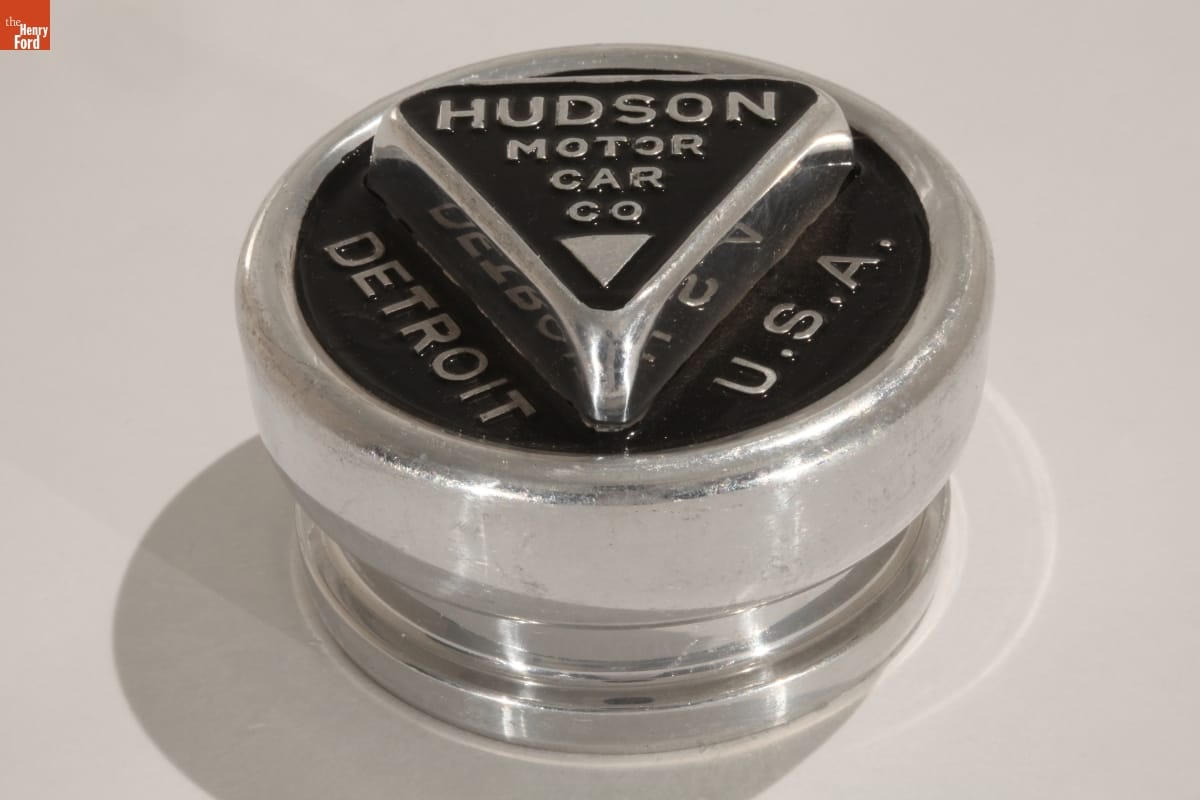
- Hudson Hubcap, circa 1925 - Early automobile wheels had a central hub with a greased wheel bearing. Hub caps kept grease in and dust out. As wheels evolved and hubcaps became functionally unnecessary, they remained important to both manufacturers -- who branded wheel covers with maker names or logos -- and consumers -- who identified with hubcaps as statements about their cars and themselves.
- circa 1925
- Collections - Artifact
Hudson Hubcap, circa 1925
Early automobile wheels had a central hub with a greased wheel bearing. Hub caps kept grease in and dust out. As wheels evolved and hubcaps became functionally unnecessary, they remained important to both manufacturers -- who branded wheel covers with maker names or logos -- and consumers -- who identified with hubcaps as statements about their cars and themselves.
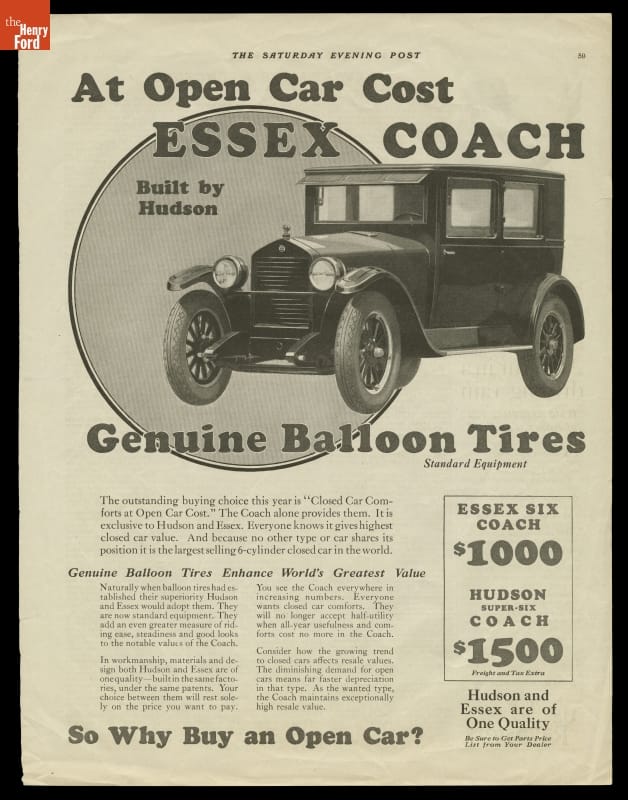
- "Essex Coach at Open Car Cost, Built by Hudson," 1924 - "Open" cars, automobiles without permanent roofs, exposed riders to dirt, noise, and the elements. The Essex Coach, seen in this advertisement from 1924, allowed driver and passengers to ride in comfort year round. The Essex was also priced as cheap as "open" cars. "So Why Buy an Open Car?"
- September 13, 1924
- Collections - Artifact
"Essex Coach at Open Car Cost, Built by Hudson," 1924
"Open" cars, automobiles without permanent roofs, exposed riders to dirt, noise, and the elements. The Essex Coach, seen in this advertisement from 1924, allowed driver and passengers to ride in comfort year round. The Essex was also priced as cheap as "open" cars. "So Why Buy an Open Car?"
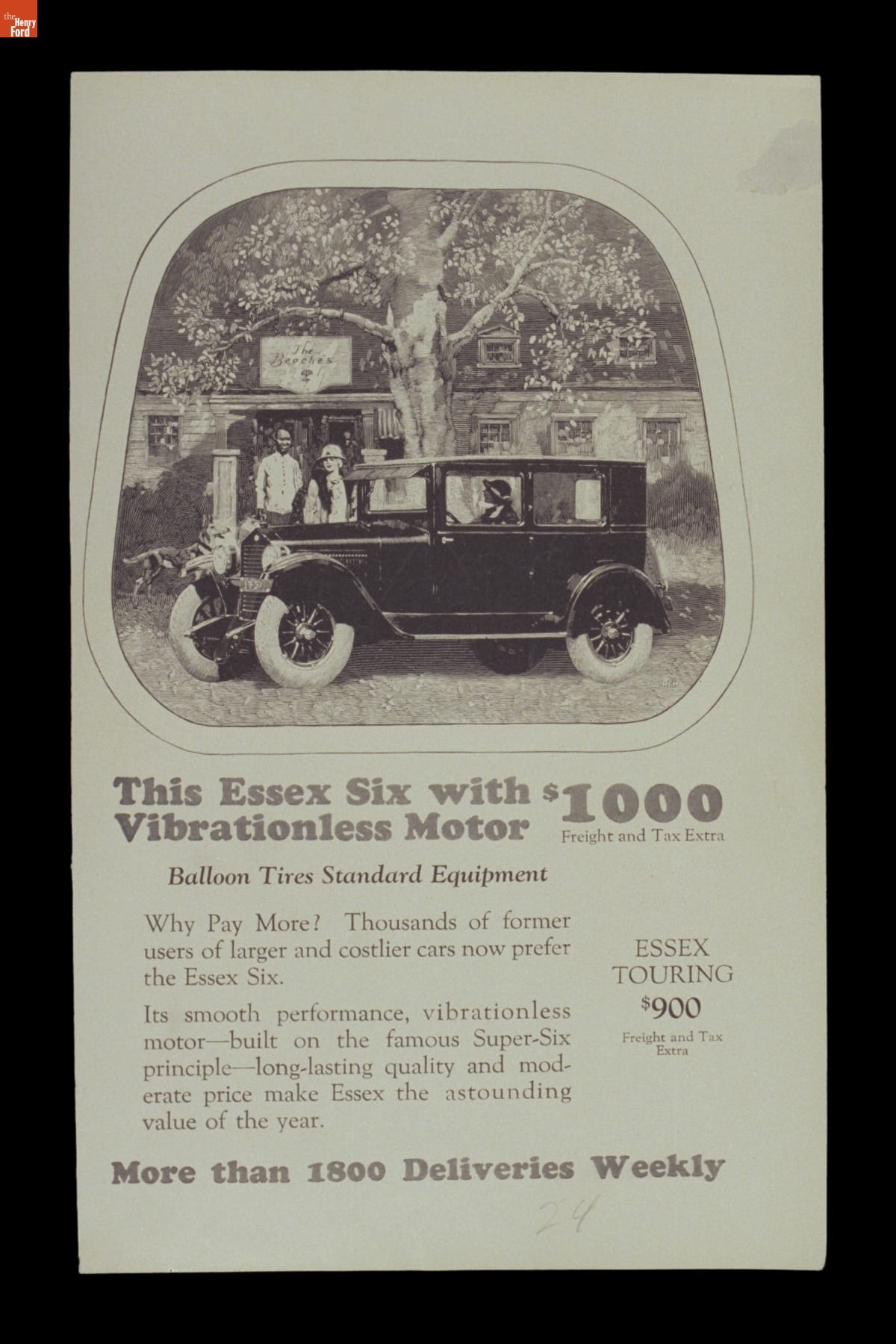
- This Essex Six with Vibrationless Motor, 1924 - Essex Motor Company was formed by Hudson Motor Car Company in 1918. Essex debuted its first models the following year. Its mid-priced cars sold well. When Essex introduced an affordably priced closed car in 1922, it spurred a general move by consumers away from open touring cars to closed models. Hudson phased out the Essex brand beginning in 1932.
- 1924
- Collections - Artifact
This Essex Six with Vibrationless Motor, 1924
Essex Motor Company was formed by Hudson Motor Car Company in 1918. Essex debuted its first models the following year. Its mid-priced cars sold well. When Essex introduced an affordably priced closed car in 1922, it spurred a general move by consumers away from open touring cars to closed models. Hudson phased out the Essex brand beginning in 1932.
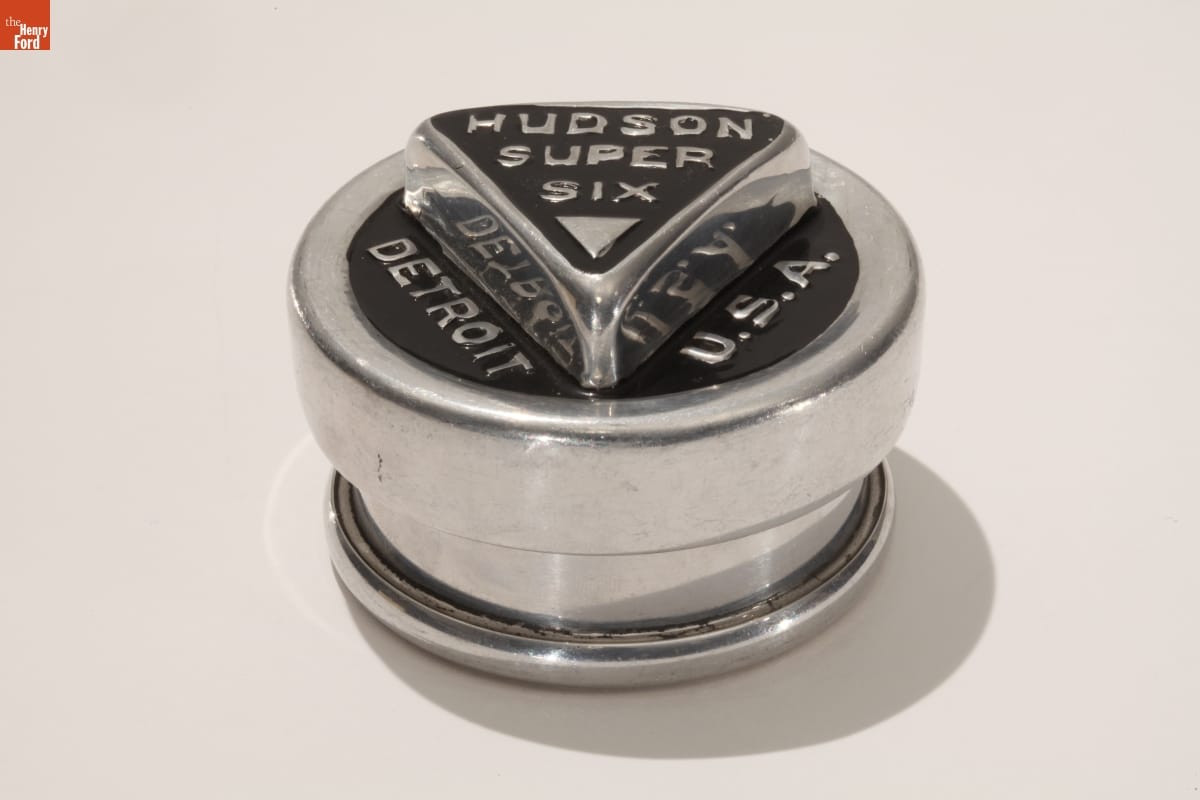
- Hudson Super Six Hubcap, 1916-1926 - An automobile manufacturer's badge is fundamental to the company's brand identity -- just as the maker's name is often important to <EM>our</EM> identity as consumers and drivers. Early automobile badges tended to be small and often discreetly located; today they have evolved into enlarged, prominently placed, and frequently symmetrical logos -- easy to recognize, even at a glance in a rear-view mirror.
- 1916-1926
- Collections - Artifact
Hudson Super Six Hubcap, 1916-1926
An automobile manufacturer's badge is fundamental to the company's brand identity -- just as the maker's name is often important to our identity as consumers and drivers. Early automobile badges tended to be small and often discreetly located; today they have evolved into enlarged, prominently placed, and frequently symmetrical logos -- easy to recognize, even at a glance in a rear-view mirror.
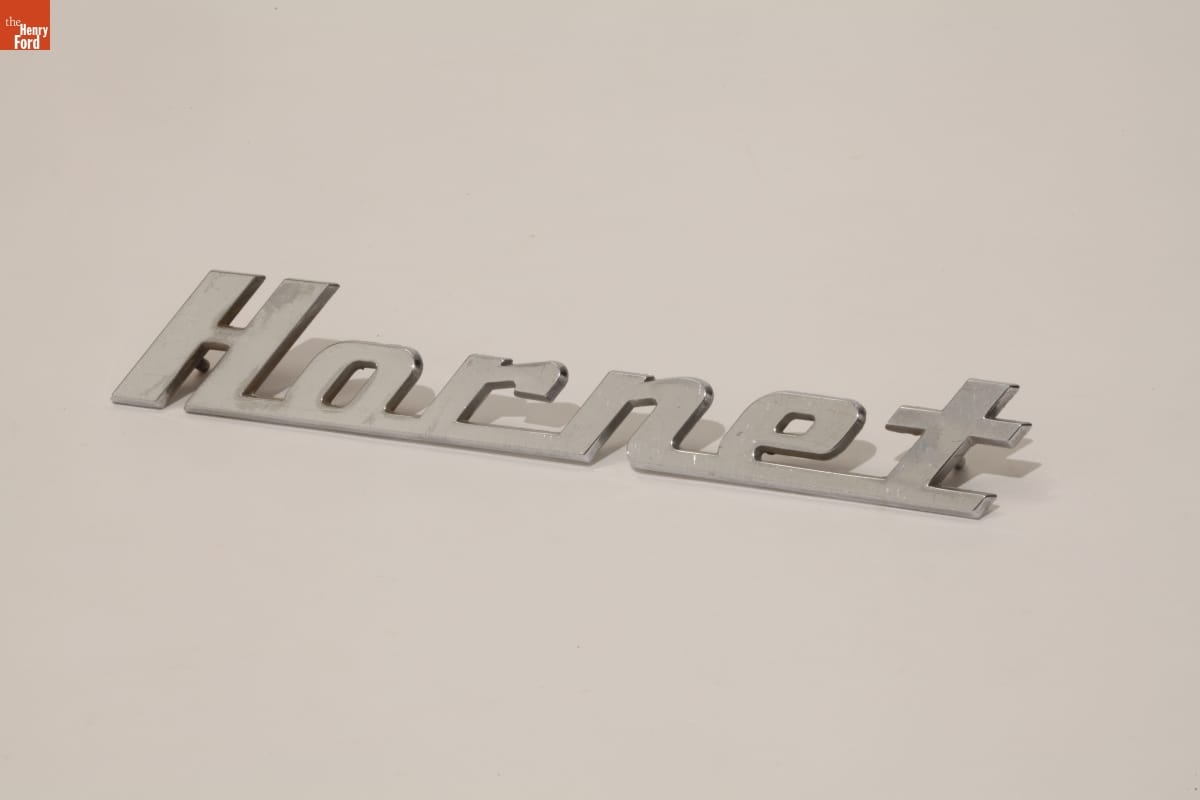
- Hudson Hornet Nameplate, 1955 - The Hornet model name has a long history. Hudson used it on a series of full-size cars built from 1951-1957. Those "Fabulous Hudson Hornets" dominated NASCAR racing in the early 1950s. Hudson successor AMC applied Hornet to a compact car manufactured for the 1970-1977 model years. The name returned once more on the Dodge Hornet compact crossover of 2023-2025.
- 1955
- Collections - Artifact
Hudson Hornet Nameplate, 1955
The Hornet model name has a long history. Hudson used it on a series of full-size cars built from 1951-1957. Those "Fabulous Hudson Hornets" dominated NASCAR racing in the early 1950s. Hudson successor AMC applied Hornet to a compact car manufactured for the 1970-1977 model years. The name returned once more on the Dodge Hornet compact crossover of 2023-2025.
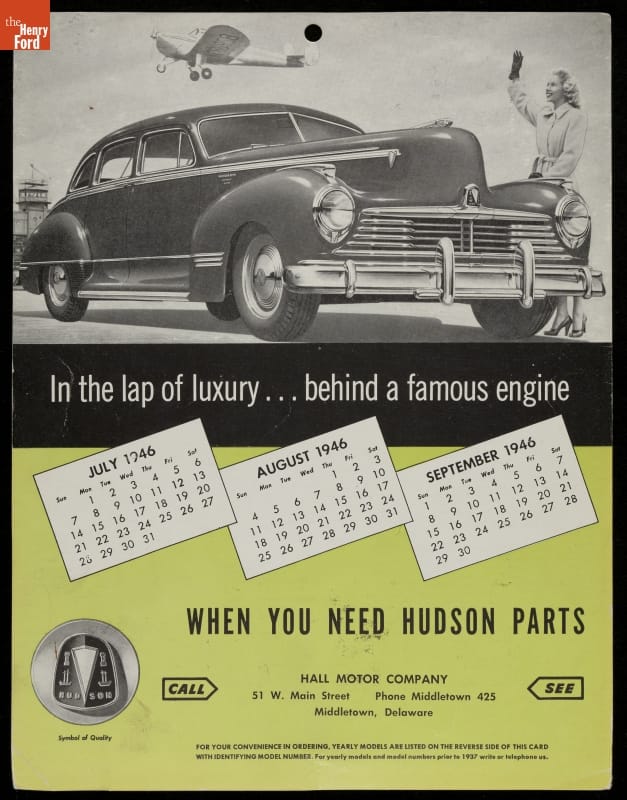
- Advertising Calendar, "When You Need Hudson Parts Call Hall Motor Company," 1946 - Promotional giveaways can place advertising messages deeper into people's lives than billboards or magazine ads. The power of branding -- coupled with consumer brand loyalty -- has also led to the creation of promotional items designed for sale to the public. Other common items, like this 1946 calendar from a Delaware Hudson dealer, could reinforce the brand 365 day a year.
- July 1946-September 1946
- Collections - Artifact
Advertising Calendar, "When You Need Hudson Parts Call Hall Motor Company," 1946
Promotional giveaways can place advertising messages deeper into people's lives than billboards or magazine ads. The power of branding -- coupled with consumer brand loyalty -- has also led to the creation of promotional items designed for sale to the public. Other common items, like this 1946 calendar from a Delaware Hudson dealer, could reinforce the brand 365 day a year.
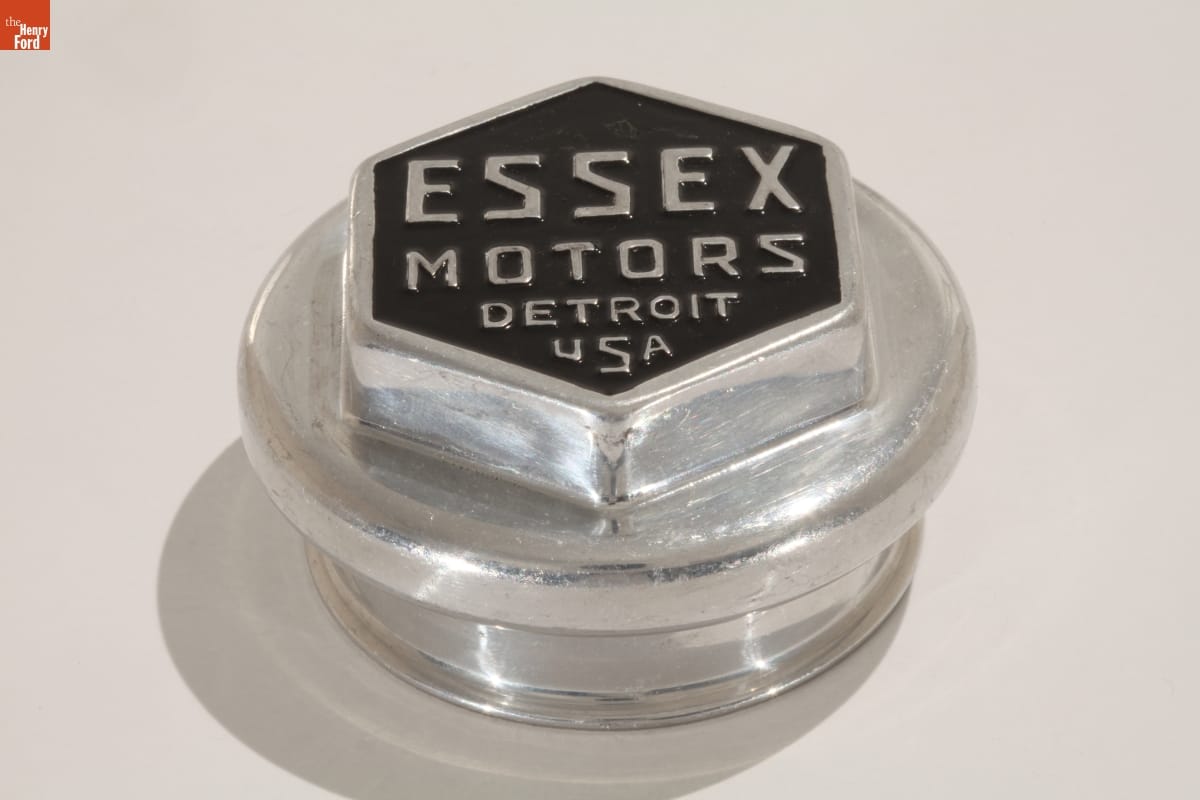
- Essex Hubcap, circa 1928 - Early automobile wheels had a central hub with a greased wheel bearing. Hub caps kept grease in and dust out. As wheels evolved and hubcaps became functionally unnecessary, they remained important to both manufacturers -- who branded wheel covers with maker names or logos -- and consumers -- who identified with hubcaps as statements about their cars and themselves.
- circa 1928
- Collections - Artifact
Essex Hubcap, circa 1928
Early automobile wheels had a central hub with a greased wheel bearing. Hub caps kept grease in and dust out. As wheels evolved and hubcaps became functionally unnecessary, they remained important to both manufacturers -- who branded wheel covers with maker names or logos -- and consumers -- who identified with hubcaps as statements about their cars and themselves.
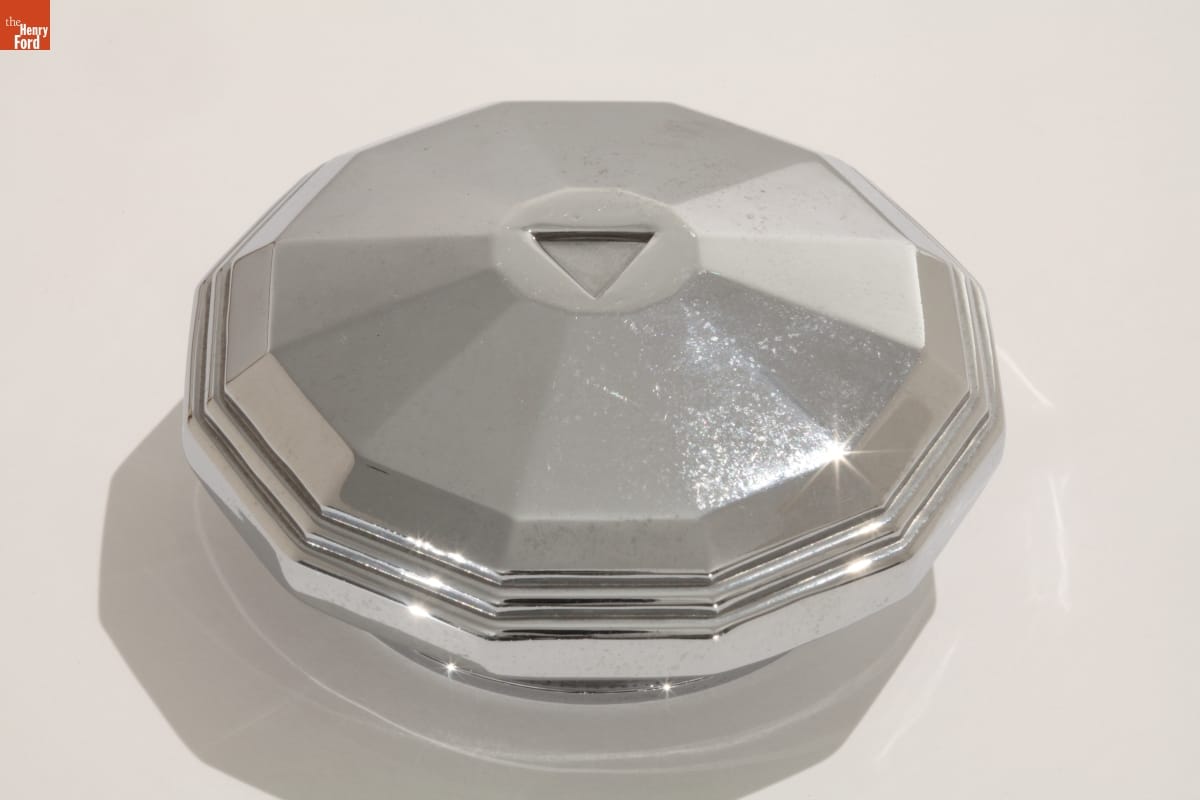
- Hudson Hubcap, 1919-1929 - Early automobile wheels had a central hub with a greased wheel bearing. Hub caps kept grease in and dust out. As wheels evolved and hubcaps became functionally unnecessary, they remained important to both manufacturers -- who branded wheel covers with maker names or logos -- and consumers -- who identified with hubcaps as statements about their cars and themselves.
- 1919-1929
- Collections - Artifact
Hudson Hubcap, 1919-1929
Early automobile wheels had a central hub with a greased wheel bearing. Hub caps kept grease in and dust out. As wheels evolved and hubcaps became functionally unnecessary, they remained important to both manufacturers -- who branded wheel covers with maker names or logos -- and consumers -- who identified with hubcaps as statements about their cars and themselves.
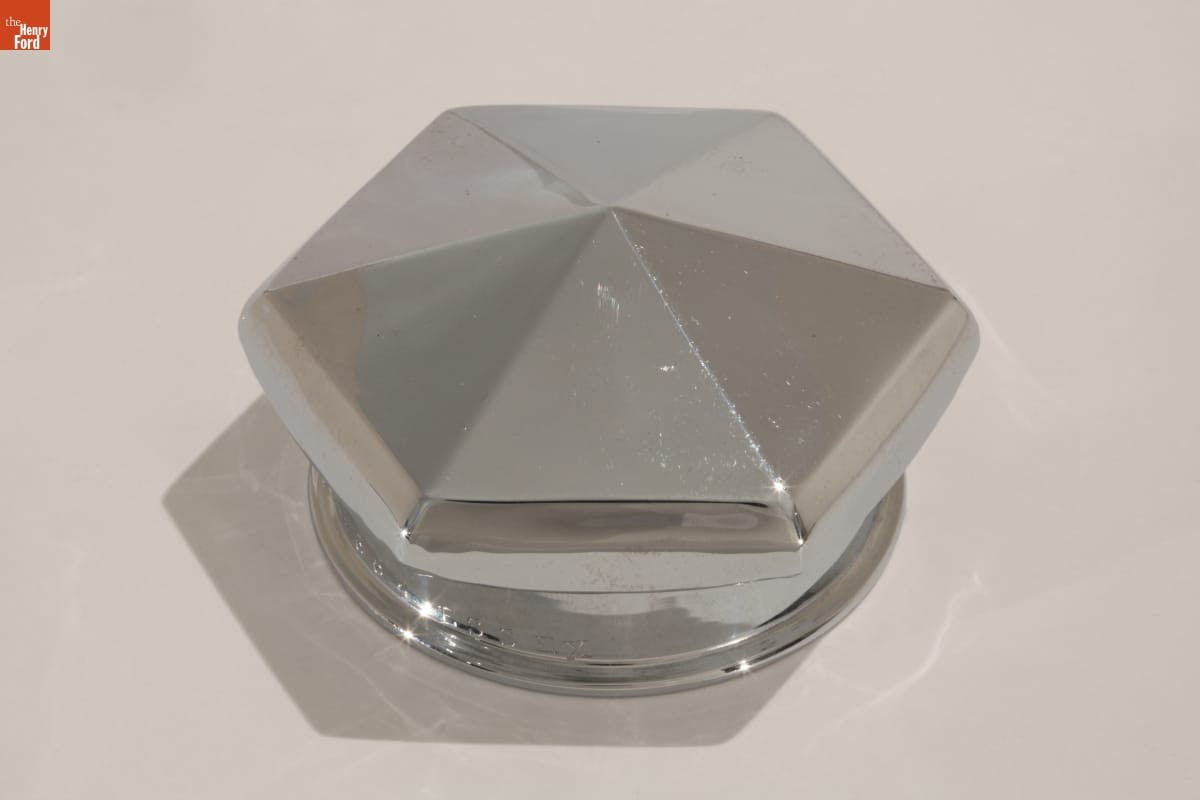
- Essex Hubcap, 1922-1932 - Early automobile wheels had a central hub with a greased wheel bearing. Hub caps kept grease in and dust out. Beginning in 1915, the Aluminum Goods Manufacturing Company of Manitowoc, Wisconsin, supplied hubcaps -- including this one -- to many automotive manufacturers. Hubcaps became functionally unnecessary as wheels evolved, but they remained important components of style and marketing.
- 1922-1932
- Collections - Artifact
Essex Hubcap, 1922-1932
Early automobile wheels had a central hub with a greased wheel bearing. Hub caps kept grease in and dust out. Beginning in 1915, the Aluminum Goods Manufacturing Company of Manitowoc, Wisconsin, supplied hubcaps -- including this one -- to many automotive manufacturers. Hubcaps became functionally unnecessary as wheels evolved, but they remained important components of style and marketing.