
Search
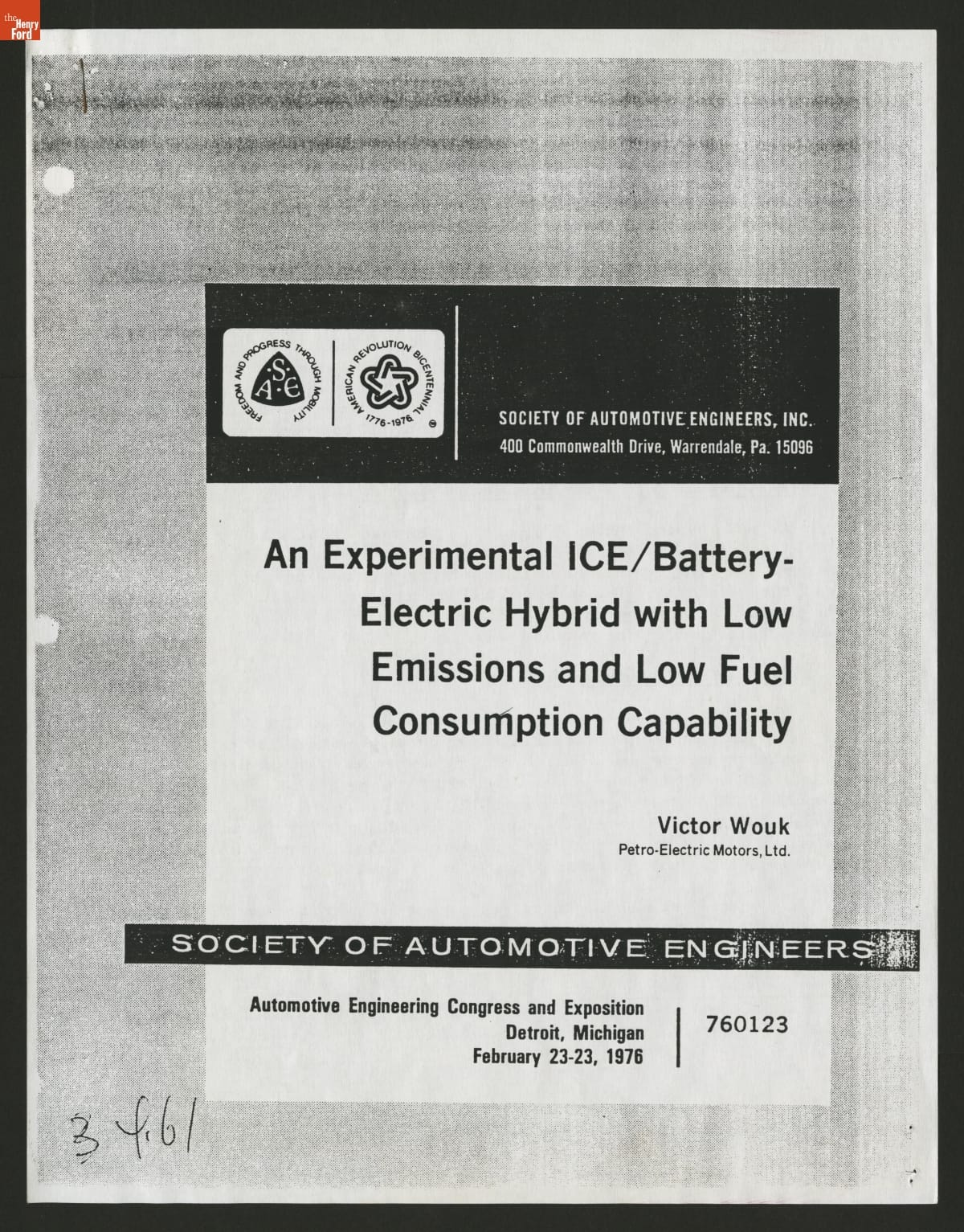
- An Experimental ICE/Battery-Electric Hybrid with Low Emissions and Low Fuel Consumption Capability, February 23, 1976 - In 1974, electrical engineer Victor Wouk entered a gasoline-electric hybrid in an Environmental Protection Agency competition to encourage development of low-polluting cars. It was the only vehicle to meet the emissions requirements. This 1976 paper on gasoline-electric hybrids is one of more than 100 Wouk wrote between 1974 and 2000.
- February 23, 1976
- Collections - Artifact
An Experimental ICE/Battery-Electric Hybrid with Low Emissions and Low Fuel Consumption Capability, February 23, 1976
In 1974, electrical engineer Victor Wouk entered a gasoline-electric hybrid in an Environmental Protection Agency competition to encourage development of low-polluting cars. It was the only vehicle to meet the emissions requirements. This 1976 paper on gasoline-electric hybrids is one of more than 100 Wouk wrote between 1974 and 2000.
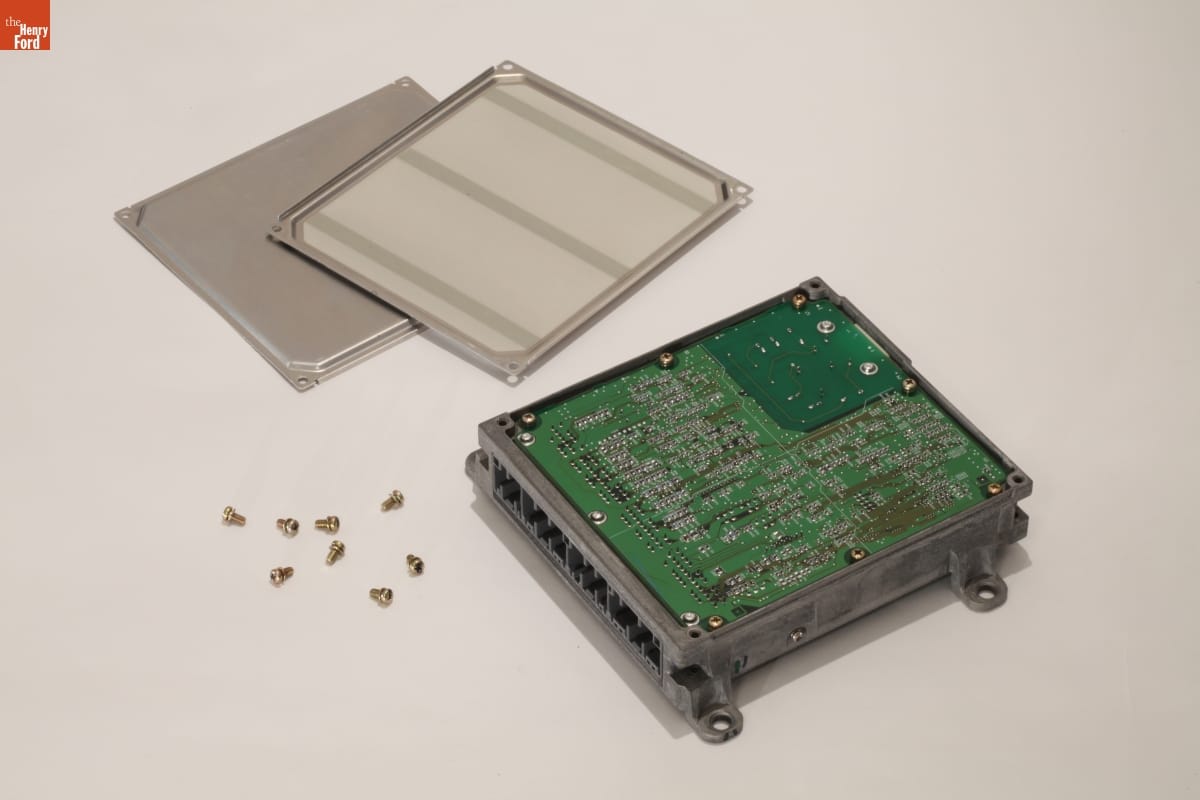
- Electric Motor Control Module for Honda Insight Automobile, 2000-2001 - Early hybrid cars relied on the driver to manually switch from one power source to the other. Modern hybrids use computers to manage power. This circuit board was the brains of a 2000 Honda Insight hybrid. It sent signals that controlled how much electric-motor power was added to the internal-combustion-engine output.
- 2000-2001
- Collections - Artifact
Electric Motor Control Module for Honda Insight Automobile, 2000-2001
Early hybrid cars relied on the driver to manually switch from one power source to the other. Modern hybrids use computers to manage power. This circuit board was the brains of a 2000 Honda Insight hybrid. It sent signals that controlled how much electric-motor power was added to the internal-combustion-engine output.
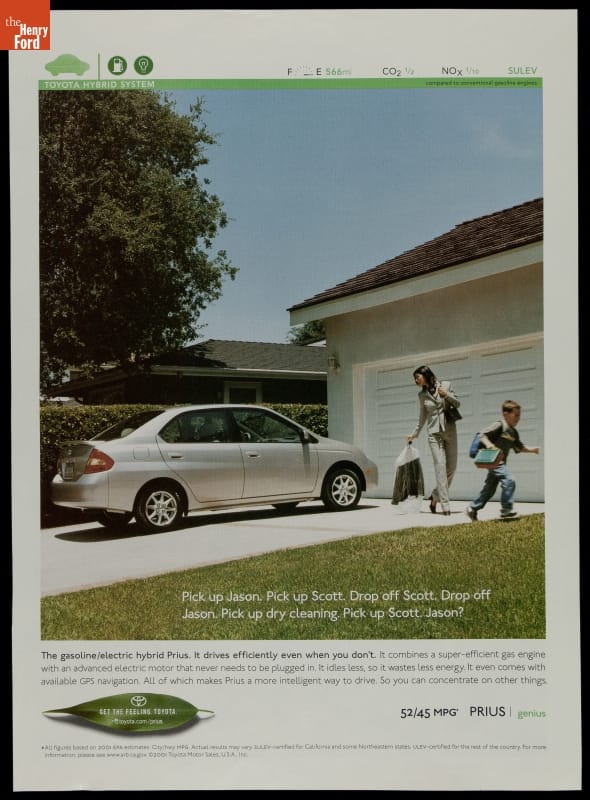
- Toyota Prius Hybrid Advertisement, 2002 - The automobile is a paradox -- a practical tool that plays host to both human needs and fantasies. Like car consumers, automotive ads seem to land somewhere between fantasy and reality, emotions and rationality. Many ads incorporate apparent opposites: fantasy can sell practicality, and vice versa. Sometimes the car has disappeared completely -- an emotional appeal prompts us to complete the ad.
- July 01, 2002
- Collections - Artifact
Toyota Prius Hybrid Advertisement, 2002
The automobile is a paradox -- a practical tool that plays host to both human needs and fantasies. Like car consumers, automotive ads seem to land somewhere between fantasy and reality, emotions and rationality. Many ads incorporate apparent opposites: fantasy can sell practicality, and vice versa. Sometimes the car has disappeared completely -- an emotional appeal prompts us to complete the ad.
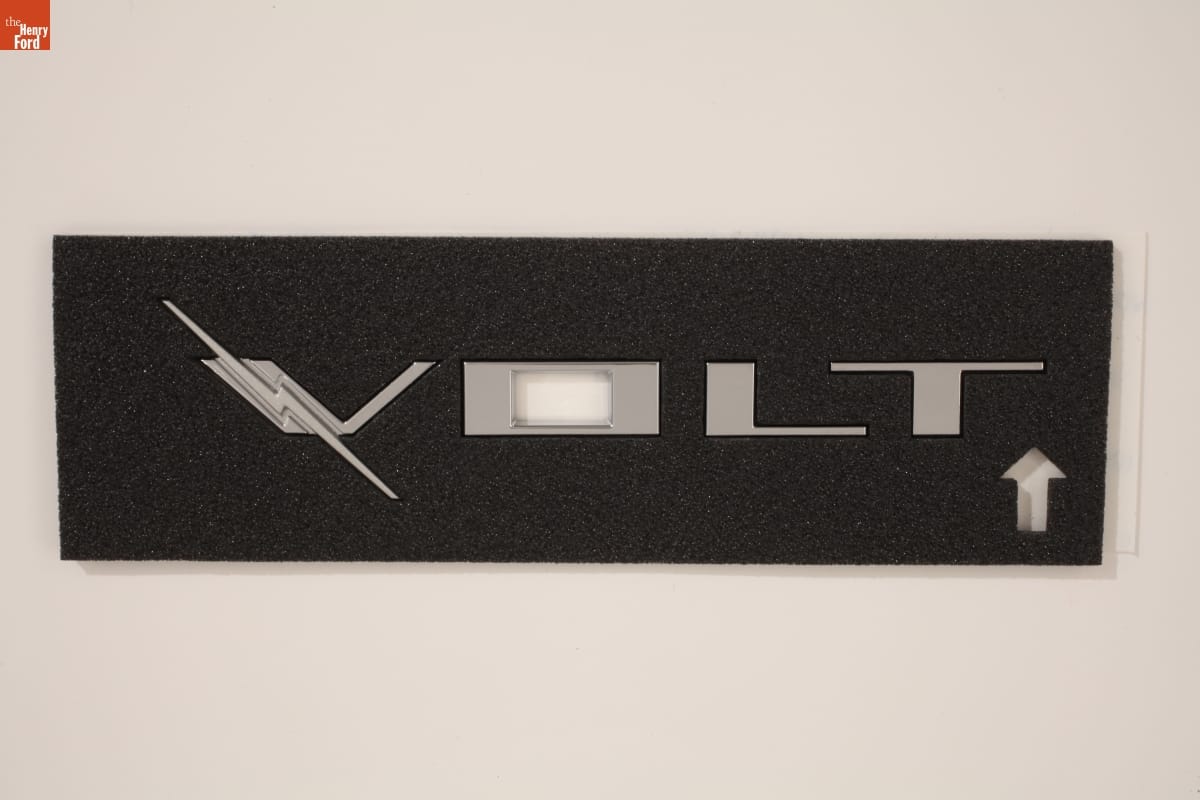
- Chevrolet Volt Nameplate, 2011 - Car model names might seem straightforward (especially once they are well-established and familiar) but most are masterpieces of allusion, rife with references to glamorous locations, social rank, rugged environment -- all tied to the self-image and aspirations of potential car buyers. Different styles of lettering -- whether bold, high-tech, freehand, or formal -- offer further reinforcement to the power of a model name.
- 2011
- Collections - Artifact
Chevrolet Volt Nameplate, 2011
Car model names might seem straightforward (especially once they are well-established and familiar) but most are masterpieces of allusion, rife with references to glamorous locations, social rank, rugged environment -- all tied to the self-image and aspirations of potential car buyers. Different styles of lettering -- whether bold, high-tech, freehand, or formal -- offer further reinforcement to the power of a model name.
- Stanford Ovshinsky's Hydrogen-Powered Hybrid Prius Car, 2009 - The Prius pictured here is not your typical gasoline-electric hybrid car. Stanford Ovshinsky, an innovator for renewable resources, replaced the standard gasoline fuel tank with a hydrogen fuel tank. The change from gasoline to hydrogen fuel results in a vehicle that releases only water through the exhaust instead of carbon monoxide, carbon dioxide, and oxides of nitrogen.

- April 01, 2009
- Collections - Artifact
Stanford Ovshinsky's Hydrogen-Powered Hybrid Prius Car, 2009
The Prius pictured here is not your typical gasoline-electric hybrid car. Stanford Ovshinsky, an innovator for renewable resources, replaced the standard gasoline fuel tank with a hydrogen fuel tank. The change from gasoline to hydrogen fuel results in a vehicle that releases only water through the exhaust instead of carbon monoxide, carbon dioxide, and oxides of nitrogen.
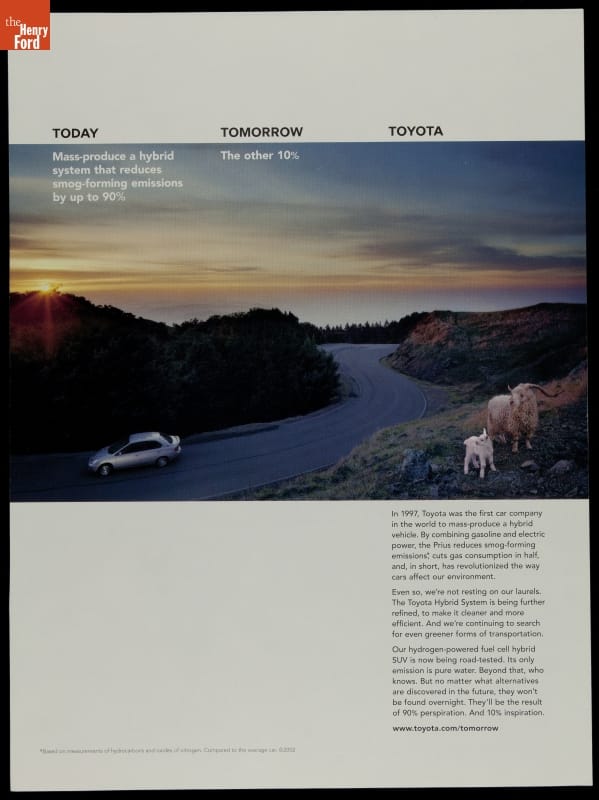
- Toyota Prius Hybrid Advertisement, 2001 - The automobile is a paradox -- a practical tool that plays host to both human needs and fantasies. Like car consumers, automotive ads seem to land somewhere between fantasy and reality, emotions and rationality. Many ads incorporate apparent opposites: fantasy can sell practicality, and vice versa. Sometimes the car has disappeared completely -- an emotional appeal prompts us to complete the ad.
- 2001
- Collections - Artifact
Toyota Prius Hybrid Advertisement, 2001
The automobile is a paradox -- a practical tool that plays host to both human needs and fantasies. Like car consumers, automotive ads seem to land somewhere between fantasy and reality, emotions and rationality. Many ads incorporate apparent opposites: fantasy can sell practicality, and vice versa. Sometimes the car has disappeared completely -- an emotional appeal prompts us to complete the ad.
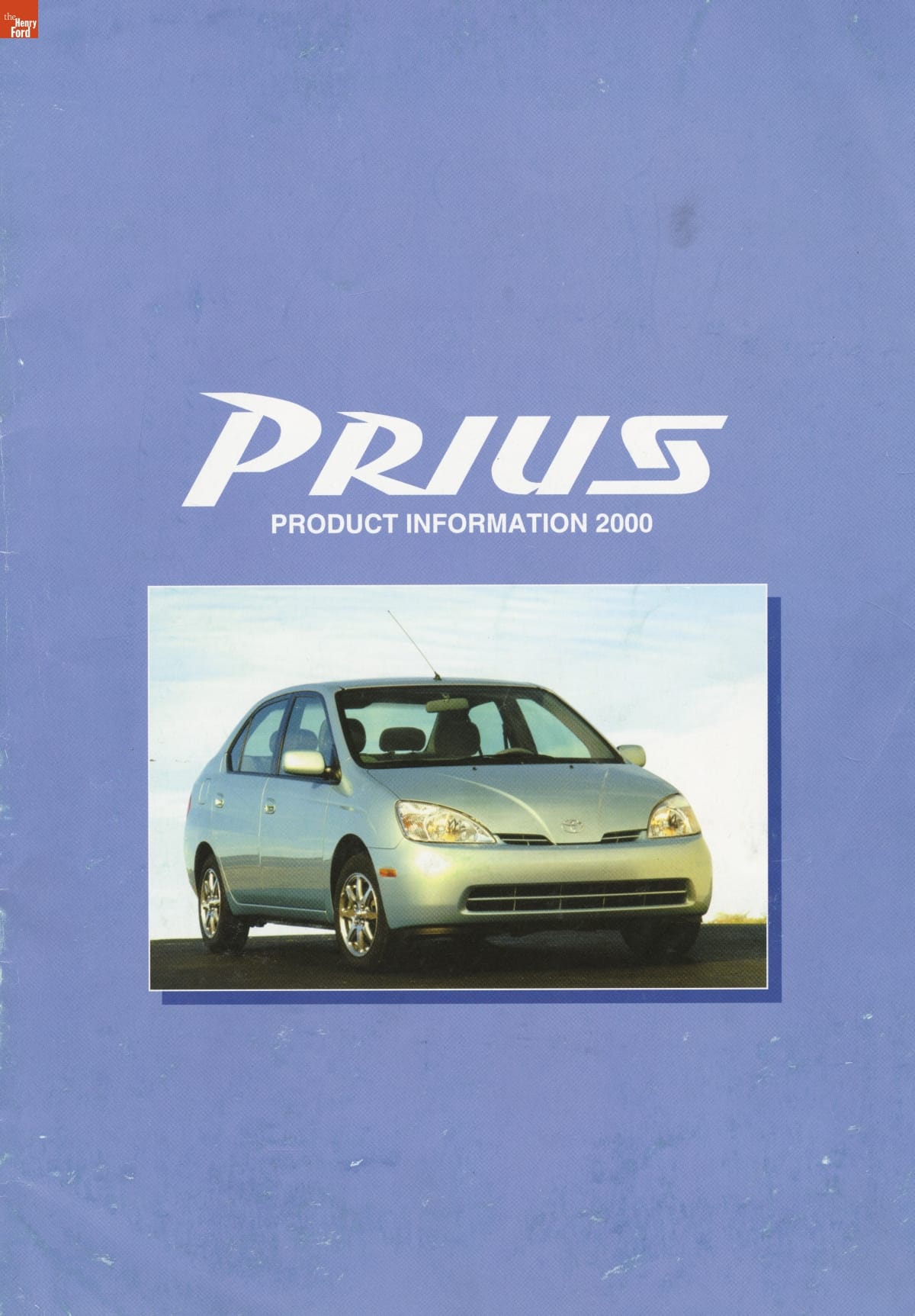
- Sales and Product Information for the 2000 Toyota Prius - Toyota debuted its Prius model in Japan in 1997, and then introduced it to the U.S. market three years later. The fuel-efficient, gas-electric hybrid attracted both ecologically and economically conscious consumers. This product information booklet highlighted Prius's advanced technology, well suited to the dawning 21st century.
- 2000
- Collections - Artifact
Sales and Product Information for the 2000 Toyota Prius
Toyota debuted its Prius model in Japan in 1997, and then introduced it to the U.S. market three years later. The fuel-efficient, gas-electric hybrid attracted both ecologically and economically conscious consumers. This product information booklet highlighted Prius's advanced technology, well suited to the dawning 21st century.
- 1916 Woods Dual-Power Hybrid Coupe - In 1916, gasoline was cheap, and no one cared about tailpipe emissions. But this hybrid wasn't about fuel prices or pollution. Woods Motor Vehicle Company built it to capture new customers. Sales of the company's electric cars were falling as more people chose gasoline-burning cars. The Dual-Power supposedly combined the best of both, but customers disagreed. The car and the company disappeared in 1918.

- 1916
- Collections - Artifact
1916 Woods Dual-Power Hybrid Coupe
In 1916, gasoline was cheap, and no one cared about tailpipe emissions. But this hybrid wasn't about fuel prices or pollution. Woods Motor Vehicle Company built it to capture new customers. Sales of the company's electric cars were falling as more people chose gasoline-burning cars. The Dual-Power supposedly combined the best of both, but customers disagreed. The car and the company disappeared in 1918.
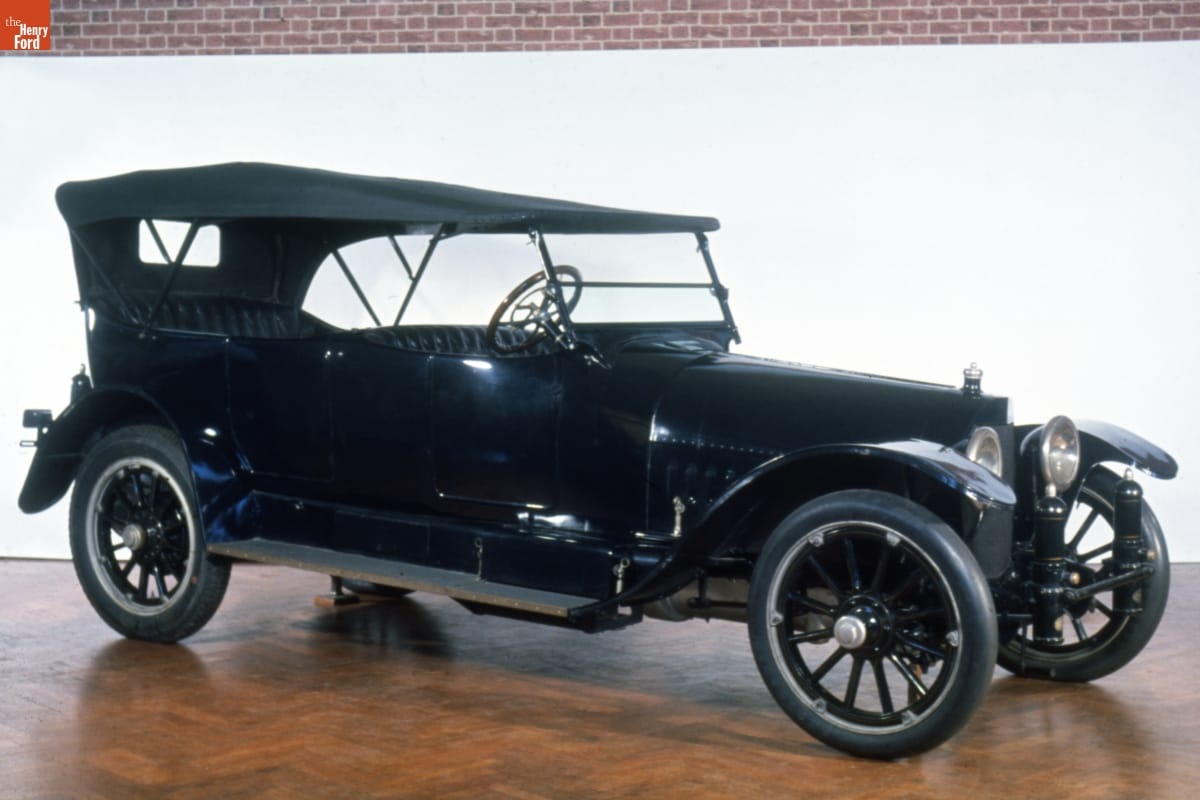
- 1915 Owen Magnetic Touring Car - The Owen Magnetic had no mechanical connection between its engine and driveshaft. Power was sent from the gasoline engine to the wheels through a magnetic clutch and an electric motor. The result, in effect, was an automatic transmission with no clutch pedal to push and no gears to shift. But the complex system was expensive, and the company fell into receivership in 1920.
- 1915
- Collections - Artifact
1915 Owen Magnetic Touring Car
The Owen Magnetic had no mechanical connection between its engine and driveshaft. Power was sent from the gasoline engine to the wheels through a magnetic clutch and an electric motor. The result, in effect, was an automatic transmission with no clutch pedal to push and no gears to shift. But the complex system was expensive, and the company fell into receivership in 1920.
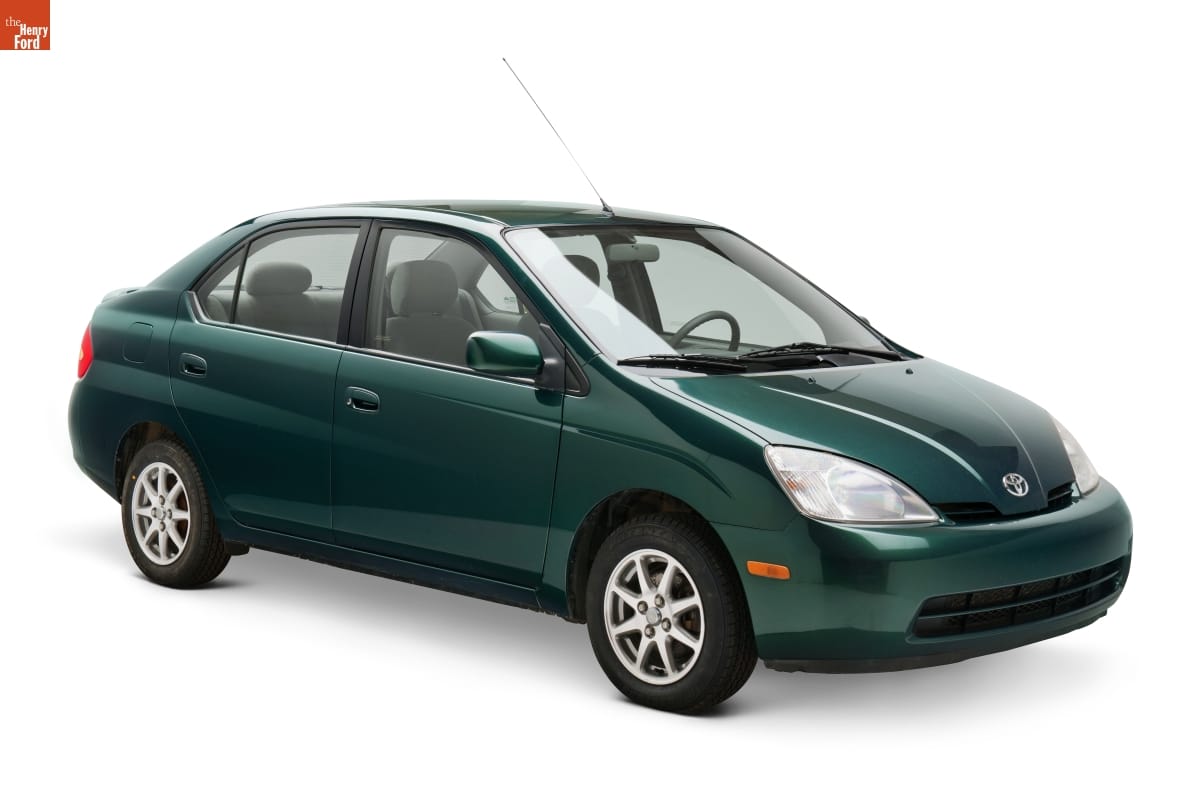
- 2002 Toyota Prius Sedan - Hybrid automobiles improve fuel efficiency and reduce tailpipe emissions compared with standard internal combustion-powered cars. Hybrids use small internal combustion engines and battery-powered electric motors. Powerful computers and sophisticated software coordinate the smooth, seamless transfer of power between the two units. This Prius is one of Toyota's first-generation hybrids, introduced in the United States in 2000.
- 2002
- Collections - Artifact
2002 Toyota Prius Sedan
Hybrid automobiles improve fuel efficiency and reduce tailpipe emissions compared with standard internal combustion-powered cars. Hybrids use small internal combustion engines and battery-powered electric motors. Powerful computers and sophisticated software coordinate the smooth, seamless transfer of power between the two units. This Prius is one of Toyota's first-generation hybrids, introduced in the United States in 2000.