
Search
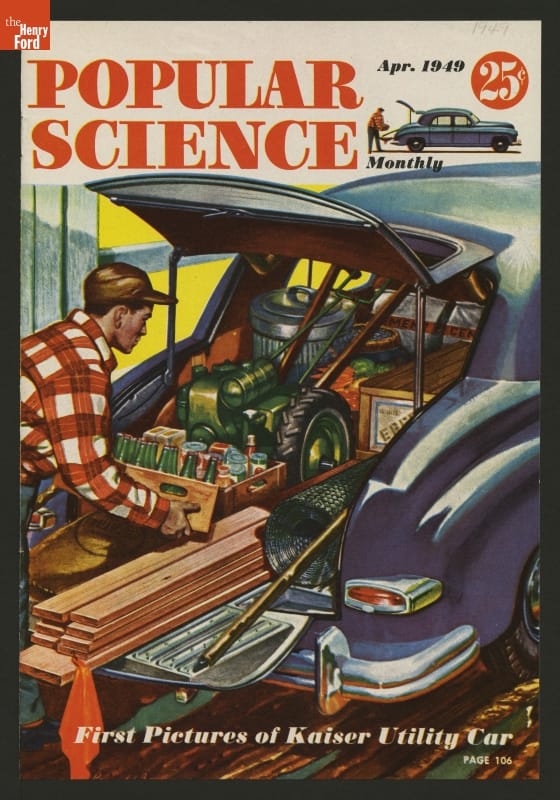
- Article on 1949 Kaiser Sedan Reprinted from "Popular Science Monthly" - The front cover of the April 1949 issue of <EM>Popular Science</EM> depicted the utility and cargo capacity of the Kaiser Traveler. Drivers created the large space by folding down the rear passenger seat. And the two rear hatches allowed easy access for placing whatever material owners needed to carry.
- April 01, 1949
- Collections - Artifact
Article on 1949 Kaiser Sedan Reprinted from "Popular Science Monthly"
The front cover of the April 1949 issue of Popular Science depicted the utility and cargo capacity of the Kaiser Traveler. Drivers created the large space by folding down the rear passenger seat. And the two rear hatches allowed easy access for placing whatever material owners needed to carry.
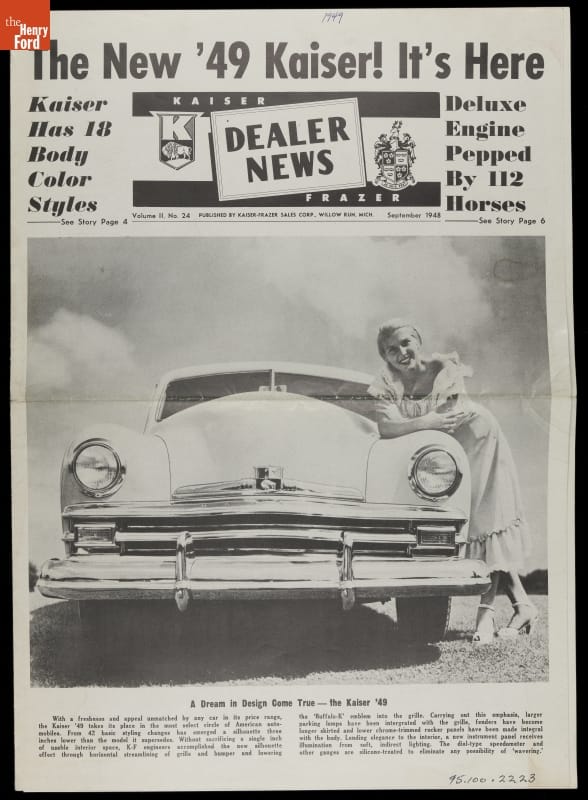
- "Kaiser-Frazer Dealer News: The New '49 Kaiser," September 1948 - Henry Kaiser and Joseph Frazer formed their automobile company in 1945 to take advantage of the post-World War II seller's market. They established production at Willow Run, Michigan, in the same plant where Ford had built B-24 bombers during the war. After a promising start, Kaiser-Frazer sales fell. The company left the passenger car market in 1955.
- September 01, 1948
- Collections - Artifact
"Kaiser-Frazer Dealer News: The New '49 Kaiser," September 1948
Henry Kaiser and Joseph Frazer formed their automobile company in 1945 to take advantage of the post-World War II seller's market. They established production at Willow Run, Michigan, in the same plant where Ford had built B-24 bombers during the war. After a promising start, Kaiser-Frazer sales fell. The company left the passenger car market in 1955.
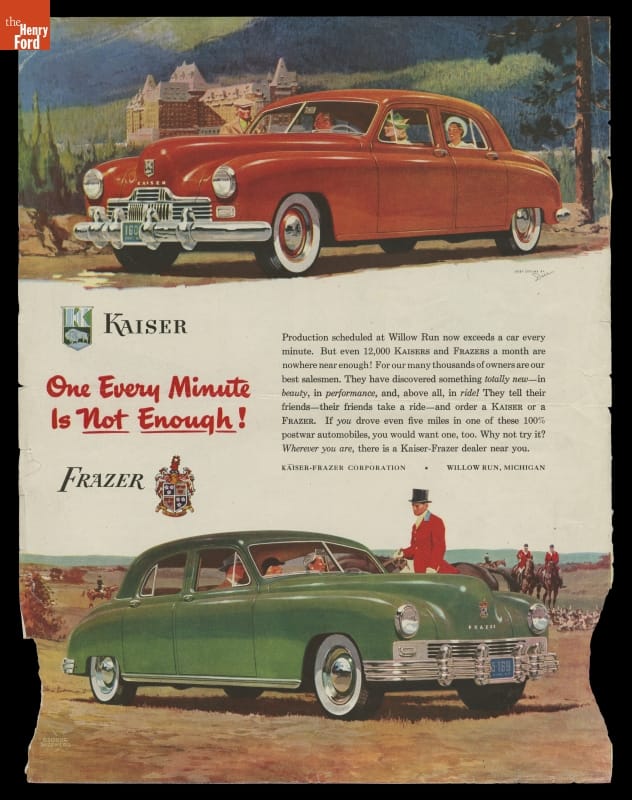
- 1947 Kaiser-Frazer Advertisement, "One Every Minute is Not Enough!" - Henry Kaiser and Joseph Frazer formed their automobile company in 1945 to take advantage of the post-World War II seller's market. They established production at Willow Run, Michigan, in the same plant where Ford had built B-24 bombers during the war. After a promising start, Kaiser-Frazer sales fell. The company left the passenger car market in 1955.
- 1947
- Collections - Artifact
1947 Kaiser-Frazer Advertisement, "One Every Minute is Not Enough!"
Henry Kaiser and Joseph Frazer formed their automobile company in 1945 to take advantage of the post-World War II seller's market. They established production at Willow Run, Michigan, in the same plant where Ford had built B-24 bombers during the war. After a promising start, Kaiser-Frazer sales fell. The company left the passenger car market in 1955.
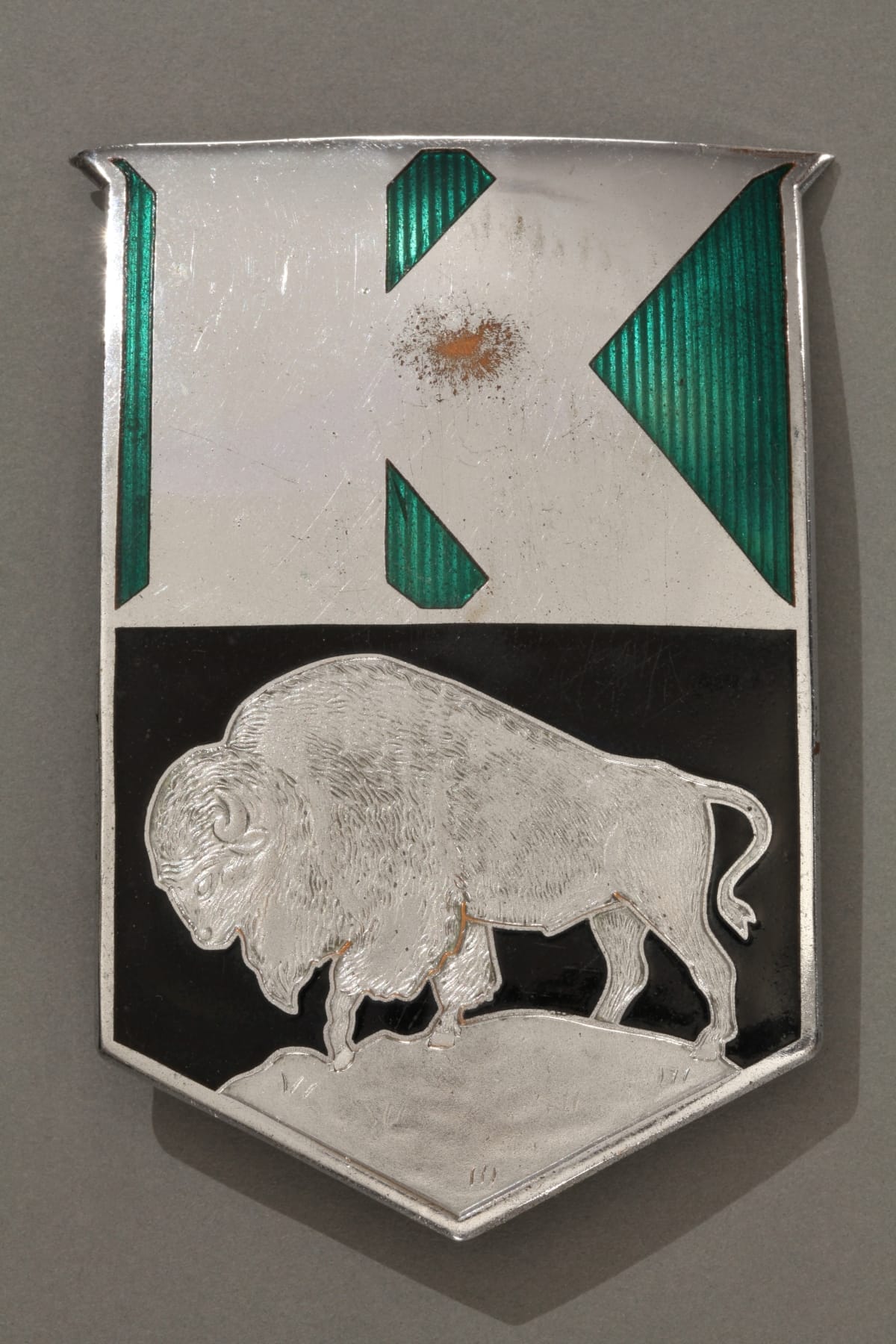
- Kaiser Radiator Emblem, 1950 - Early automobile manufacturers took advantage of the prominent location of radiators and affixed branded emblems to them. As cars evolved and radiators were hidden within vehicle bodies, manufacturers retained this practice by branding hoods or grilles. Emblems remained important branding tools, but also became meaningful to consumers as statements about their cars and themselves.
- 1950
- Collections - Artifact
Kaiser Radiator Emblem, 1950
Early automobile manufacturers took advantage of the prominent location of radiators and affixed branded emblems to them. As cars evolved and radiators were hidden within vehicle bodies, manufacturers retained this practice by branding hoods or grilles. Emblems remained important branding tools, but also became meaningful to consumers as statements about their cars and themselves.
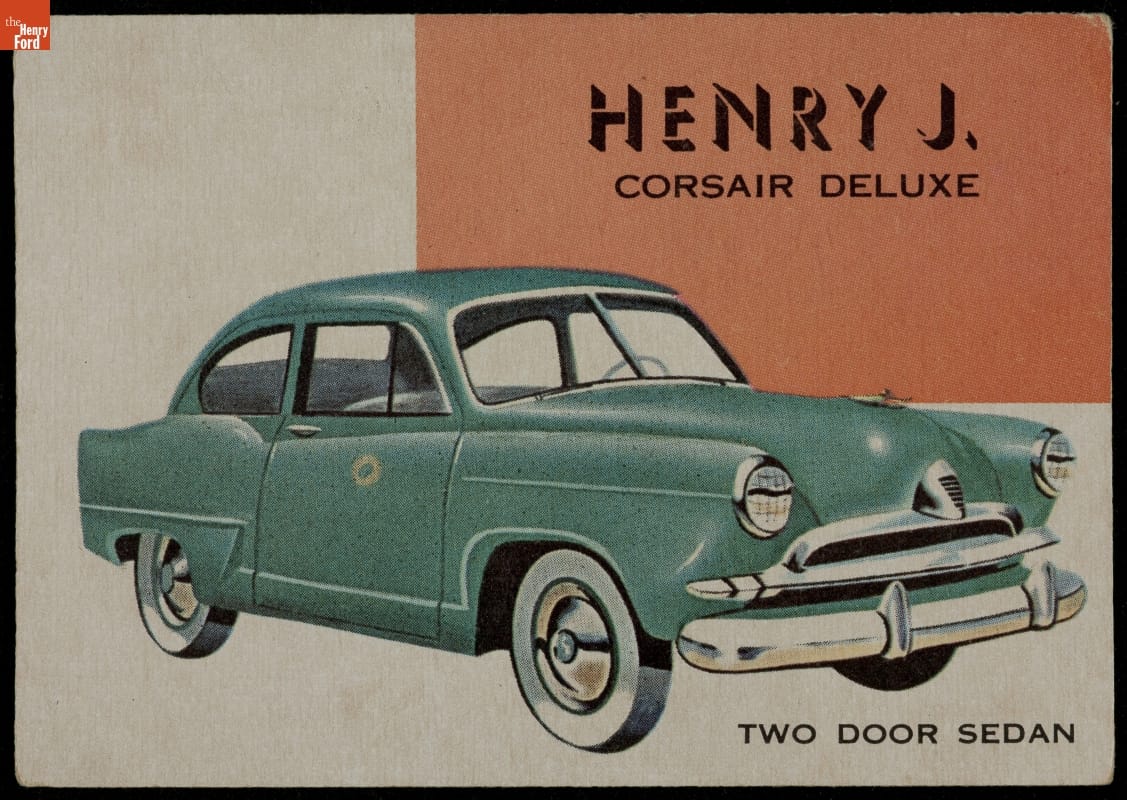
- Topps "World on Wheels" Series, circa 1953 Kaiser-Frazer Henry J. Corsair Deluxe Two Door Sedan, circa 1954 - The Topps Chewing Gum Company produced a series of vehicle trading cards in the 1950s. Now known as the "World on Wheels" set, the face of the card depicted an historic or modern car, truck, or other vehicle. The back contained interesting facts about the vehicle and usually a trivia question or information about transportation, roads, or traffic safety.
- circa 1954
- Collections - Artifact
Topps "World on Wheels" Series, circa 1953 Kaiser-Frazer Henry J. Corsair Deluxe Two Door Sedan, circa 1954
The Topps Chewing Gum Company produced a series of vehicle trading cards in the 1950s. Now known as the "World on Wheels" set, the face of the card depicted an historic or modern car, truck, or other vehicle. The back contained interesting facts about the vehicle and usually a trivia question or information about transportation, roads, or traffic safety.
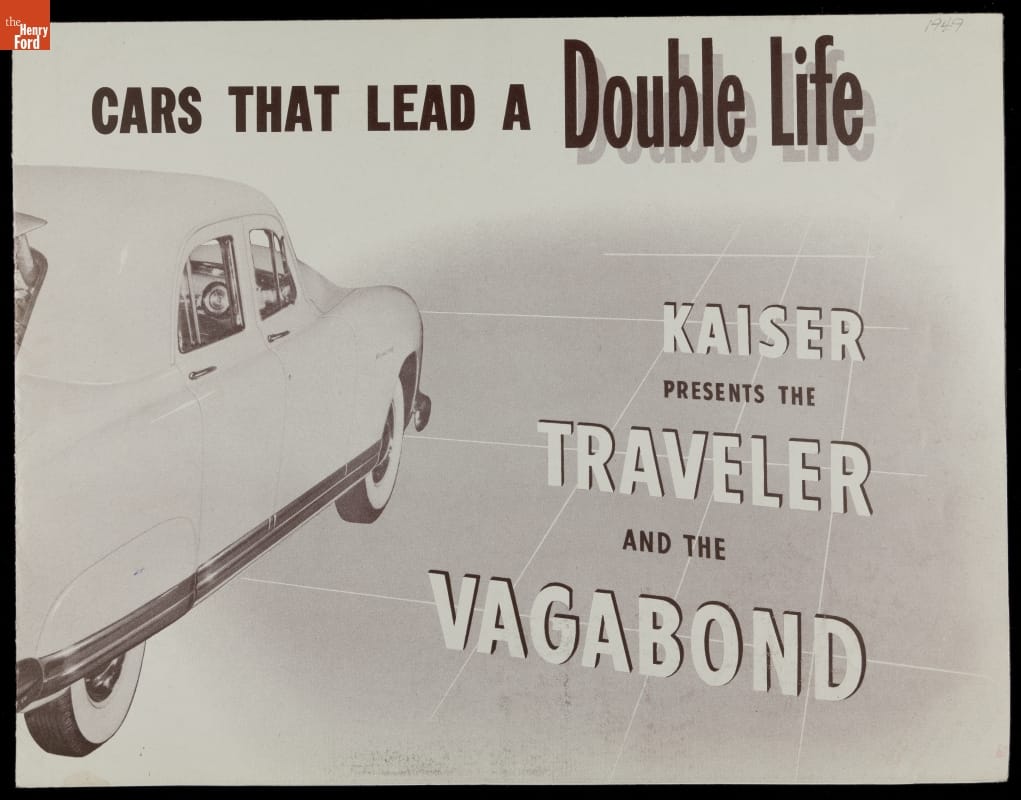
- 1949 Kaiser Catalog, "Cars that Lead a Double Life" - Car brochures have evolved from straightforward product catalogues into polished creative sales tools. Their quality paper, rich color, inventive formats, and sophisticated graphic design all contribute to a buyer's developing impression of a car in a showroom. Advertising might entice people to a dealership, but brochures extend and deepen the relationship between vehicle and potential buyer.
- 1949
- Collections - Artifact
1949 Kaiser Catalog, "Cars that Lead a Double Life"
Car brochures have evolved from straightforward product catalogues into polished creative sales tools. Their quality paper, rich color, inventive formats, and sophisticated graphic design all contribute to a buyer's developing impression of a car in a showroom. Advertising might entice people to a dealership, but brochures extend and deepen the relationship between vehicle and potential buyer.