
Search
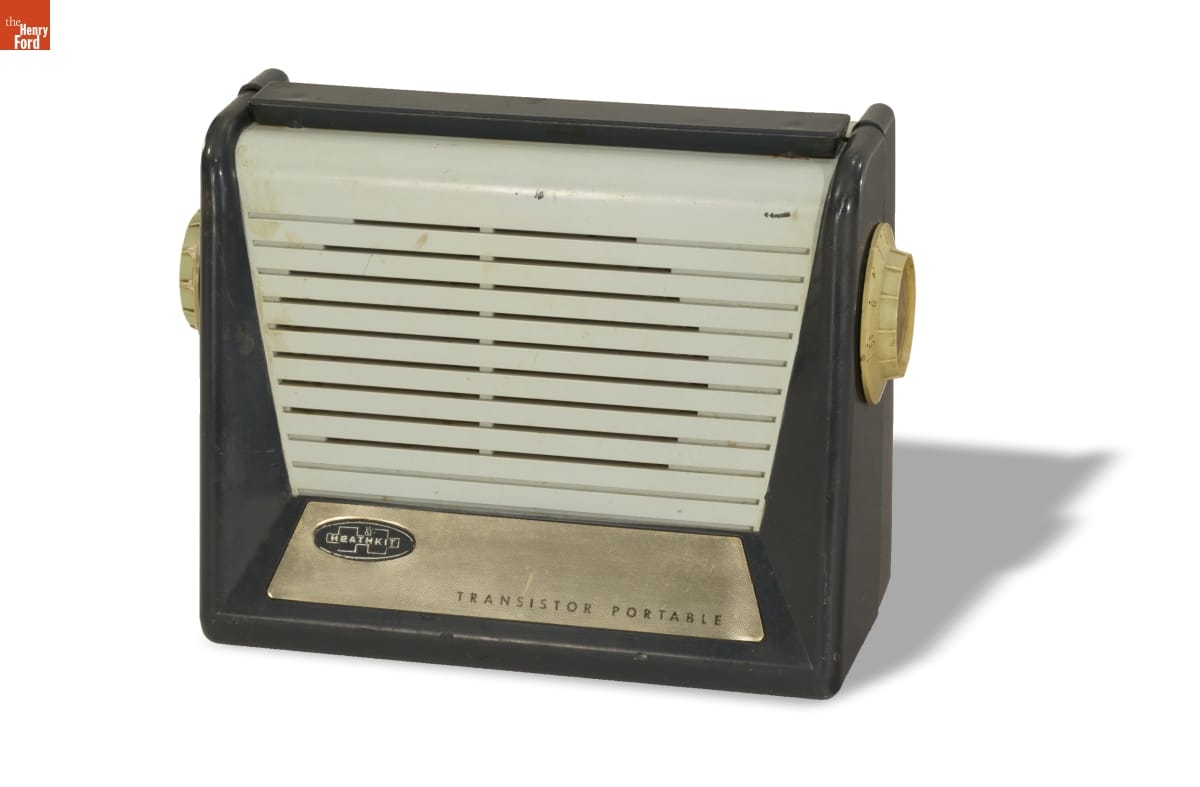
- Heathkit Portable AM Transistor Radio, Model XR-2P, circa 1962 - The Heath Company was founded in the 1920s as a "do-it-yourself" electronics kit provider. "Heathkits" provided simple, accessible instructions understandable to amateurs and experts alike. As hobbyists built radios, televisions, and computers from scratch, they gained electronics skills. These kits were not novelties, but emphasized access to affordable, advanced, high-performance technology. Parallels can easily be seen within present-day "Maker" culture.
- circa 1962
- Collections - Artifact
Heathkit Portable AM Transistor Radio, Model XR-2P, circa 1962
The Heath Company was founded in the 1920s as a "do-it-yourself" electronics kit provider. "Heathkits" provided simple, accessible instructions understandable to amateurs and experts alike. As hobbyists built radios, televisions, and computers from scratch, they gained electronics skills. These kits were not novelties, but emphasized access to affordable, advanced, high-performance technology. Parallels can easily be seen within present-day "Maker" culture.
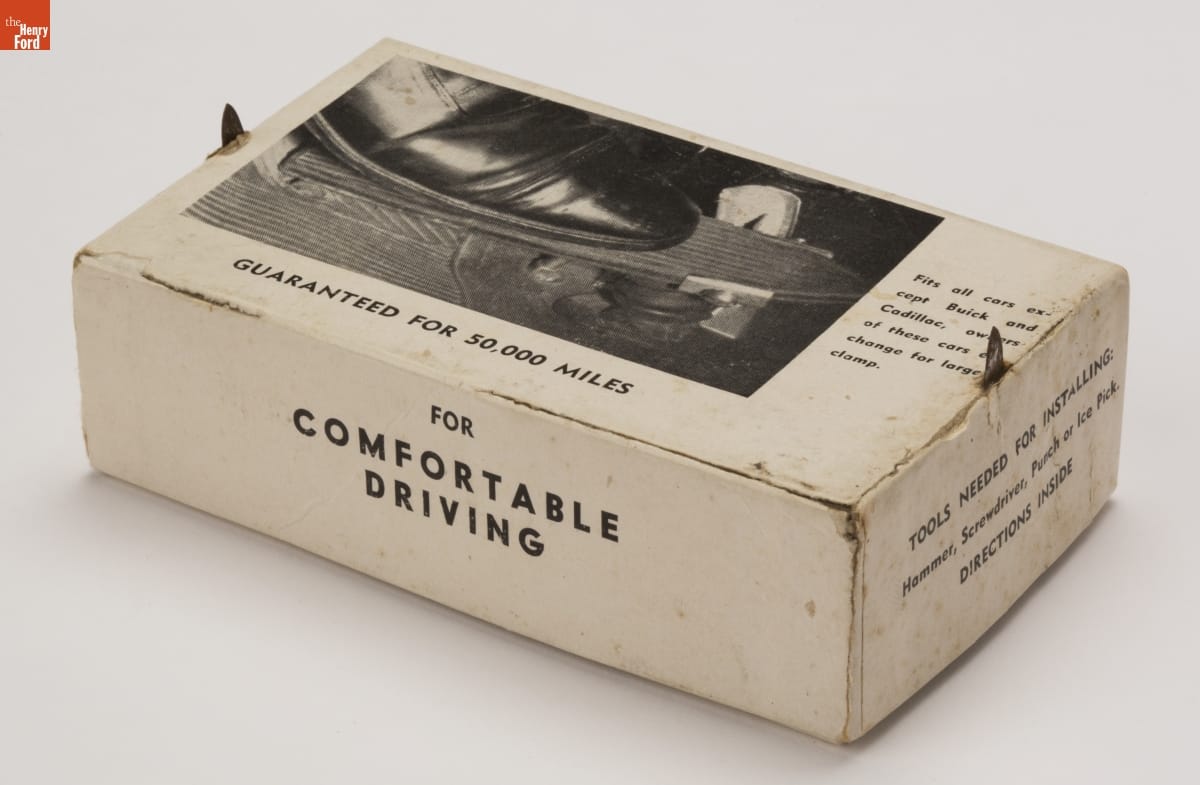
- Automatic Accelerator Control Kit, circa 1950 - This aftermarket device, which used a ratchet mechanism to clamp down a car's accelerator pedal, was a basic version of cruise control. The device simply held the gas pedal in one position, rather than holding the car at one speed like true cruise control. The mechanism interlocked with the brake pedal and released the ratchet whenever the brake was pressed.
- circa 1950
- Collections - Artifact
Automatic Accelerator Control Kit, circa 1950
This aftermarket device, which used a ratchet mechanism to clamp down a car's accelerator pedal, was a basic version of cruise control. The device simply held the gas pedal in one position, rather than holding the car at one speed like true cruise control. The mechanism interlocked with the brake pedal and released the ratchet whenever the brake was pressed.
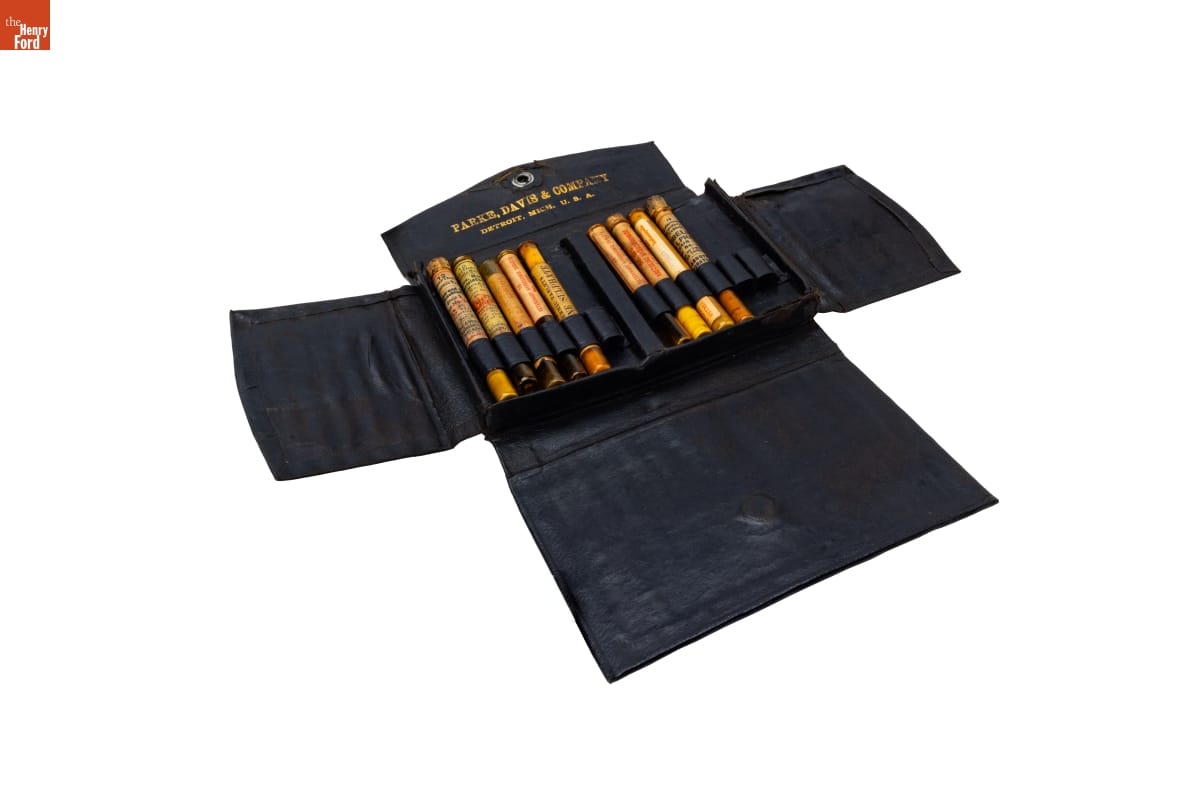
- Veterinary Pharmaceutical Kit, 1910-1920 - Veterinarians carried medicines and drugs in kits like this as they traveled to care for animals. This case, emblazoned with the name of Parke, Davis and Company, a large pharmaceutical firm that manufactured high-quality drugs, contained medicines they might need to do their work. Dr. F. Eugene Eads, who once headed the veterinary department at Parke-Davis, owned this case.
- 1910-1920
- Collections - Artifact
Veterinary Pharmaceutical Kit, 1910-1920
Veterinarians carried medicines and drugs in kits like this as they traveled to care for animals. This case, emblazoned with the name of Parke, Davis and Company, a large pharmaceutical firm that manufactured high-quality drugs, contained medicines they might need to do their work. Dr. F. Eugene Eads, who once headed the veterinary department at Parke-Davis, owned this case.
- Paragon Needlecraft "American Glory" Quilt Kit, circa 1961 -
- circa 1961
- Collections - Artifact
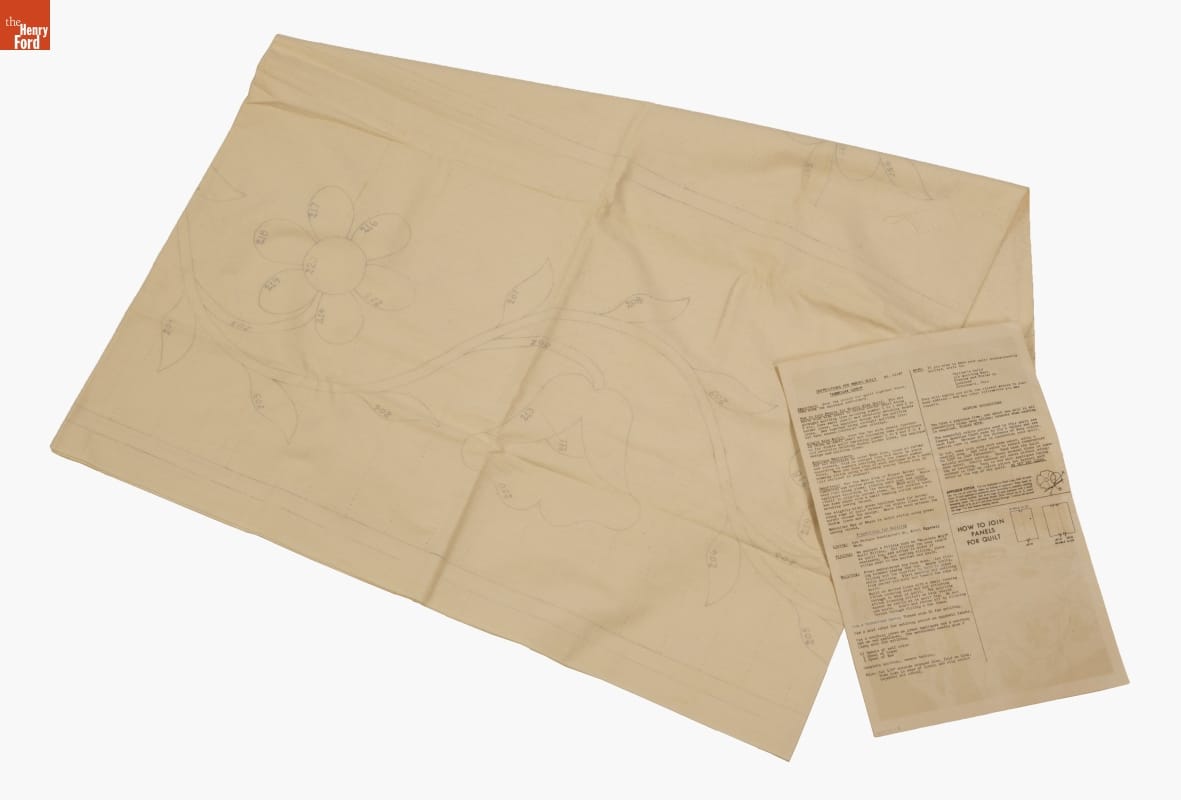
Paragon Needlecraft "American Glory" Quilt Kit, circa 1961
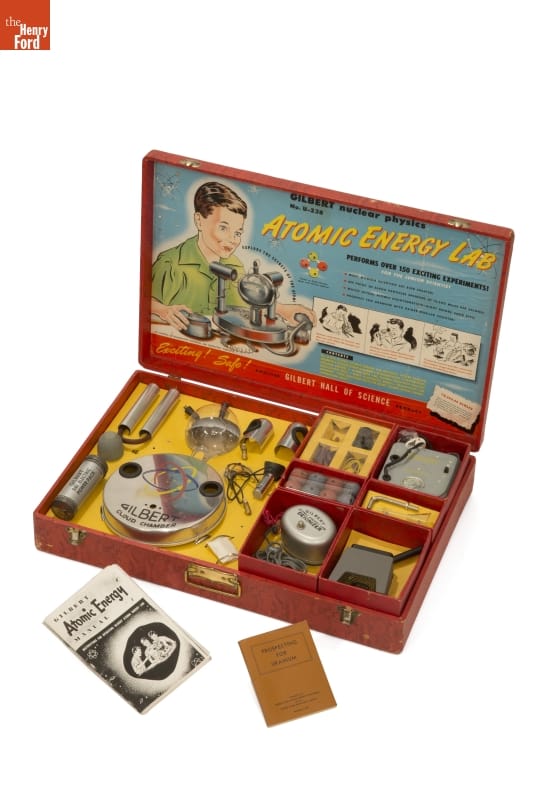
- Atomic Energy Lab by A.C. Gilbert Co., 1950 -
- 1950
- Collections - Artifact
Atomic Energy Lab by A.C. Gilbert Co., 1950
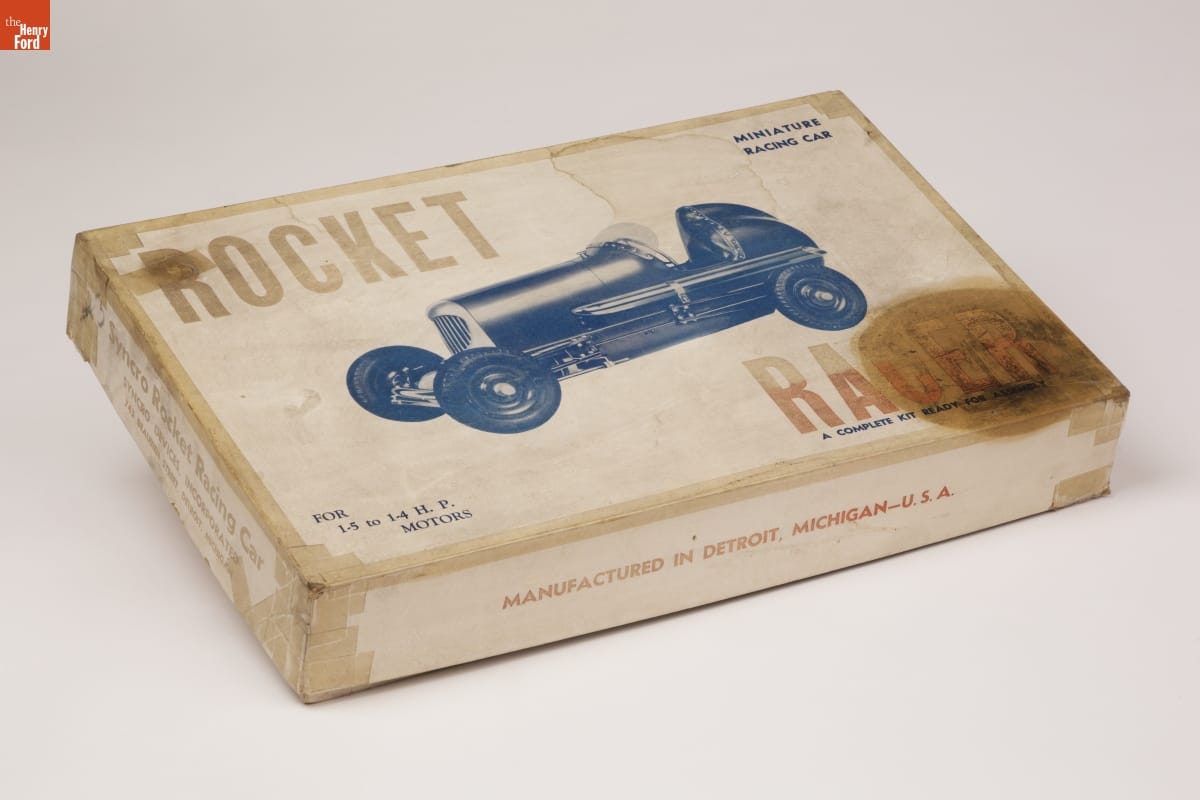
- Syncro Rocket Gas-Powered Racing Tether Car Kit, 1938-1939 - Tether cars, gas-powered model race cars, were popular in the 1930s and 1940s. They were raced individually while tethered to a central pivot, or against each other on a scaled-down board track. Syncro Devices, Inc., of Detroit, Michigan, made this model kit of an open-cockpit racer about 1938. Syncro built approximately 75-100 kits during its two years in production.
- 1938-1939
- Collections - Artifact
Syncro Rocket Gas-Powered Racing Tether Car Kit, 1938-1939
Tether cars, gas-powered model race cars, were popular in the 1930s and 1940s. They were raced individually while tethered to a central pivot, or against each other on a scaled-down board track. Syncro Devices, Inc., of Detroit, Michigan, made this model kit of an open-cockpit racer about 1938. Syncro built approximately 75-100 kits during its two years in production.
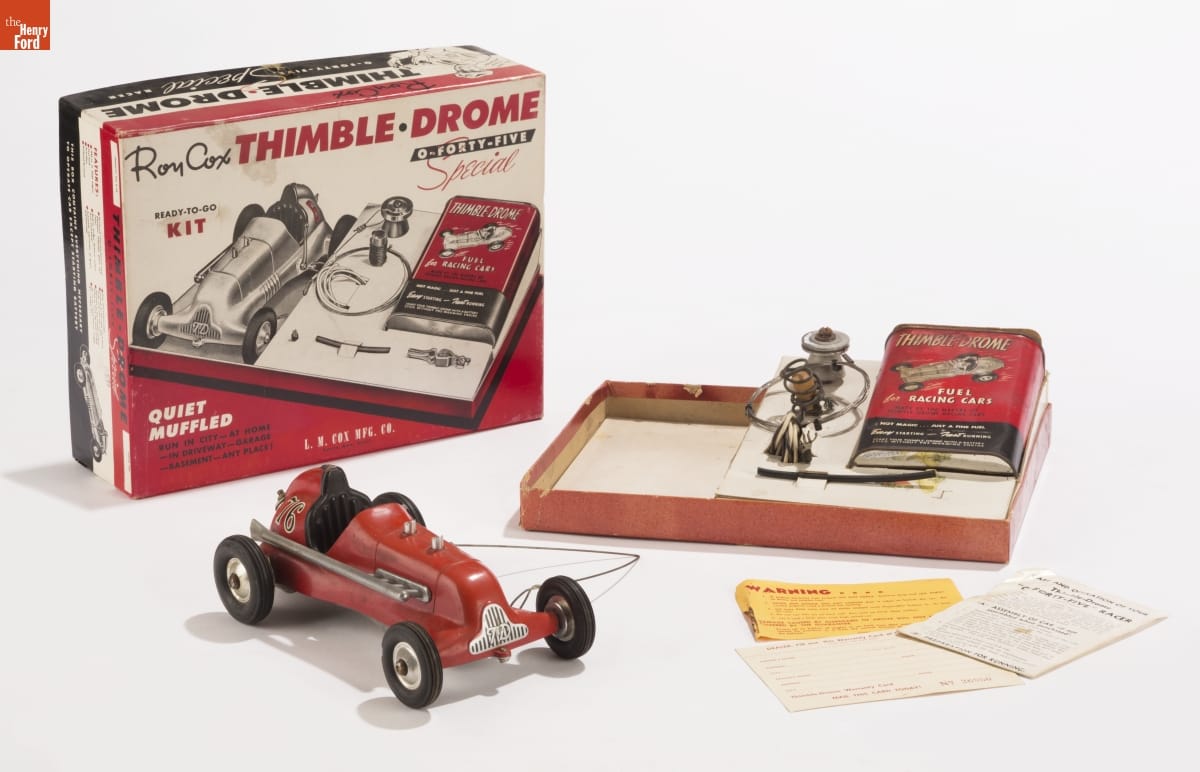
- Cox Thimble-Drome "0-Forty-Five Special" Gas-Powered Racing Tether Car Kit, 1946 - Tether cars, gas-powered model race cars, were popular in the 1930s and 1940s. They were raced individually while tethered to a central pivot, or against each other on a scaled-down board track. Racers could build cars from scratch or from kits, or they could purchase fully assembled models like this Cox "0-Forty-Five." The package contains everything a person needed to get started.
- 1946
- Collections - Artifact
Cox Thimble-Drome "0-Forty-Five Special" Gas-Powered Racing Tether Car Kit, 1946
Tether cars, gas-powered model race cars, were popular in the 1930s and 1940s. They were raced individually while tethered to a central pivot, or against each other on a scaled-down board track. Racers could build cars from scratch or from kits, or they could purchase fully assembled models like this Cox "0-Forty-Five." The package contains everything a person needed to get started.
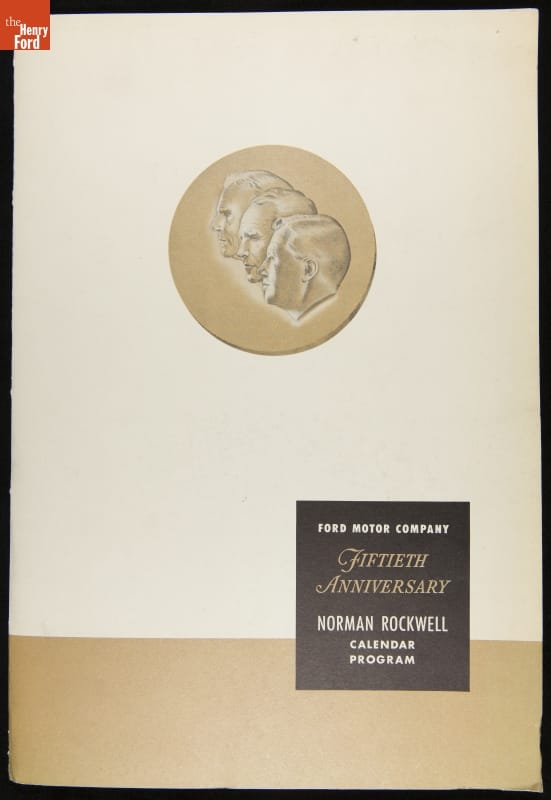
- "Ford Motor Company Fiftieth Anniversary Norman Rockwell Calendar Program," Order Kit for Ford Dealers, 1952-1953 - Henry Ford II, president of Ford Motor Company, commissioned a calendar from the celebrated American illustrator Norman Rockwell to commemorate the company's 50th anniversary in 1953. Ford urged its dealers to purchase these calendars and distribute them to their customers, other businesses, and local civic organizations. The company offered two versions: a smaller one described as a home calendar and a larger community version.
- 1953
- Collections - Artifact
"Ford Motor Company Fiftieth Anniversary Norman Rockwell Calendar Program," Order Kit for Ford Dealers, 1952-1953
Henry Ford II, president of Ford Motor Company, commissioned a calendar from the celebrated American illustrator Norman Rockwell to commemorate the company's 50th anniversary in 1953. Ford urged its dealers to purchase these calendars and distribute them to their customers, other businesses, and local civic organizations. The company offered two versions: a smaller one described as a home calendar and a larger community version.
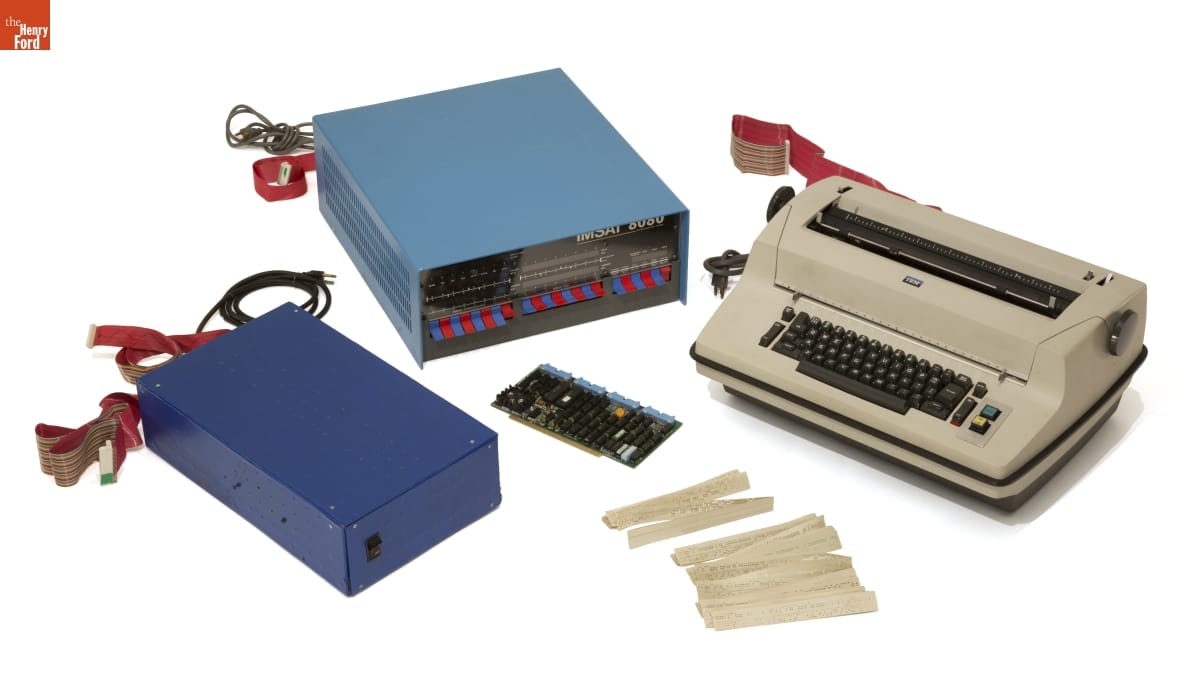
- IMSAI 8080 Microcomputer, Used with Home Built Interface and IBM Selectric Typewriter, Assembled in 1977 - The IMSAI 8080 was a clone of the Altair 8800, the first mass marketed personal computer. It was a popular "kit computer," requiring assembly and programming. With no keyboard, toggle switches allowed input and LED lights signaled output. This could be modified using an IBM I/O typewriter. The donor, O.S. Narayanaswami, was a mechanical engineer interested in the educative power of computers.
- 1977
- Collections - Artifact
IMSAI 8080 Microcomputer, Used with Home Built Interface and IBM Selectric Typewriter, Assembled in 1977
The IMSAI 8080 was a clone of the Altair 8800, the first mass marketed personal computer. It was a popular "kit computer," requiring assembly and programming. With no keyboard, toggle switches allowed input and LED lights signaled output. This could be modified using an IBM I/O typewriter. The donor, O.S. Narayanaswami, was a mechanical engineer interested in the educative power of computers.
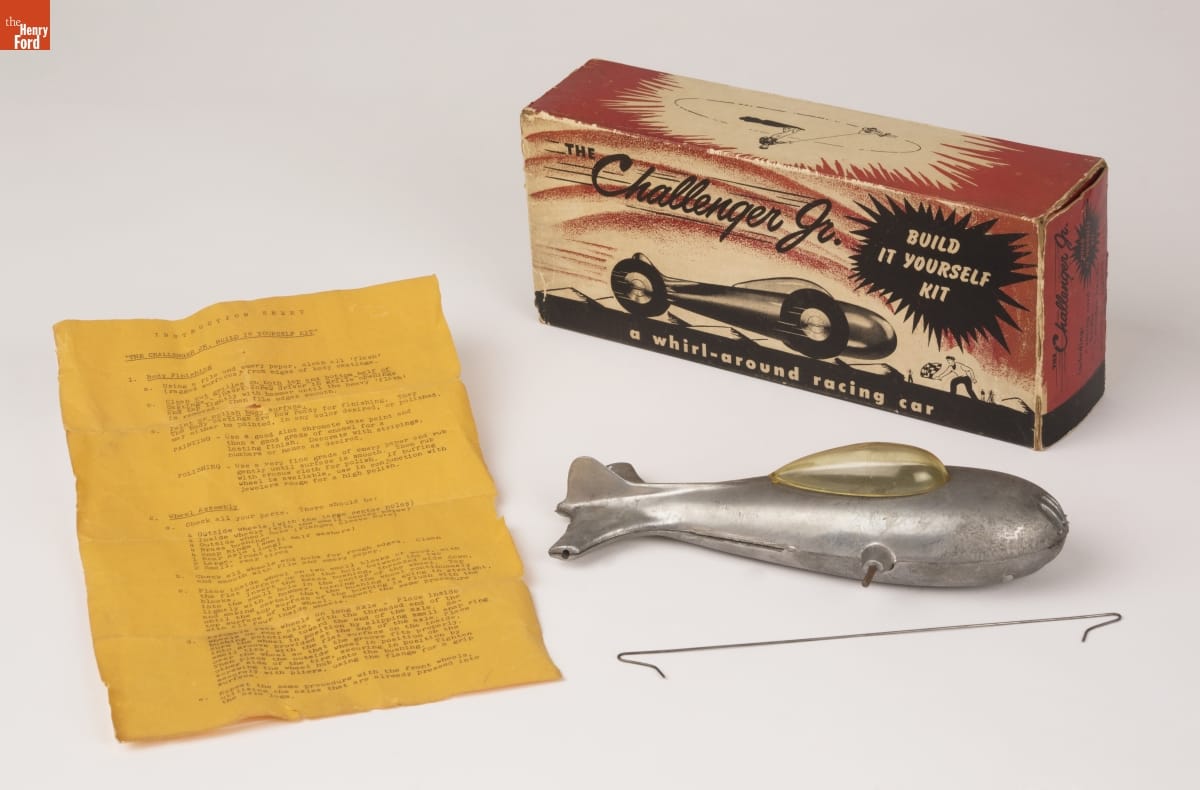
- A.L. Maxey "Challenger Jr." Model Race Car Kit, 1946-1950 - Tether cars, gas-powered model race cars, were popular in the 1930s and 1940s. They were raced individually while tethered to a central pivot, or against each other on a scaled-down board track. The A.L. Maxey Company of Burbank, California, produced this kit of an unpowered streamlined car in the late 1940s.
- 1946-1950
- Collections - Artifact
A.L. Maxey "Challenger Jr." Model Race Car Kit, 1946-1950
Tether cars, gas-powered model race cars, were popular in the 1930s and 1940s. They were raced individually while tethered to a central pivot, or against each other on a scaled-down board track. The A.L. Maxey Company of Burbank, California, produced this kit of an unpowered streamlined car in the late 1940s.