
Search
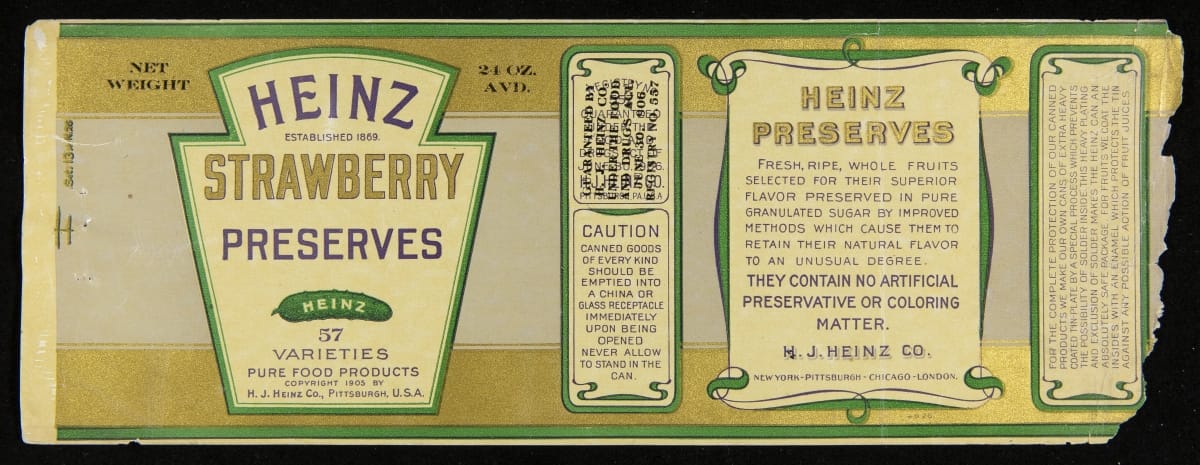
- Can Label, "Heinz Brand Strawberry Preserves," 1906-1910 - Manufacturers of similar products sought ways to make their companies' goods stand out on store shelves. Some companies established a uniform label design for their multi-product offerings -- a strategy which helped customers distinguish one brand over another. H.J. Heinz products were identified by the famous Heinz pickle and signature "keystone" logo. These design features are still found on Heinz products today.
- 1906-1910
- Collections - Artifact
Can Label, "Heinz Brand Strawberry Preserves," 1906-1910
Manufacturers of similar products sought ways to make their companies' goods stand out on store shelves. Some companies established a uniform label design for their multi-product offerings -- a strategy which helped customers distinguish one brand over another. H.J. Heinz products were identified by the famous Heinz pickle and signature "keystone" logo. These design features are still found on Heinz products today.
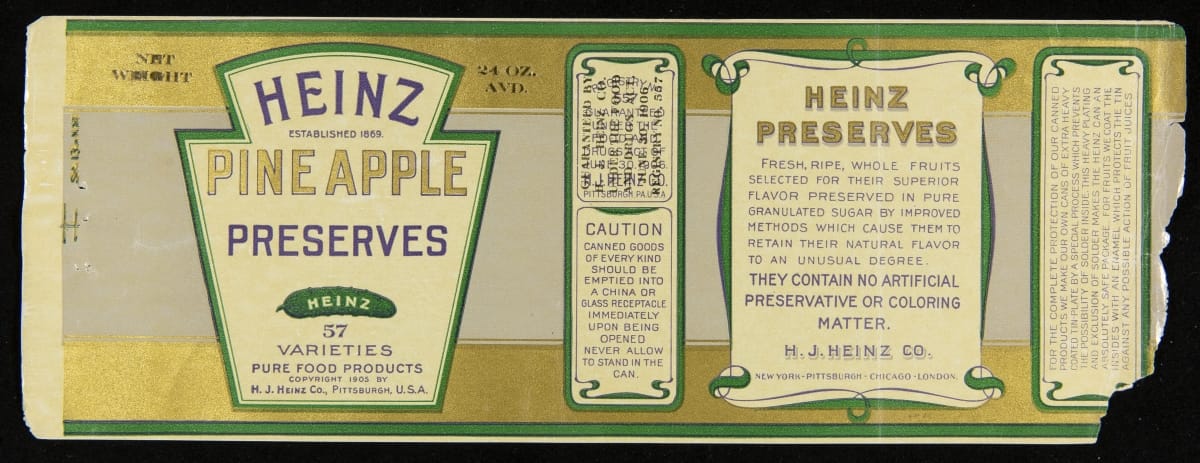
- Can Label, "Heinz Brand Pineapple Preserves," 1906-1910 - Manufacturers of similar products sought ways to make their companies' goods stand out on store shelves. Some companies established a uniform label design for their multi-product offerings -- a strategy which helped customers distinguish one brand over another. H.J. Heinz products were identified by the famous Heinz pickle and signature "keystone" logo. These design features are still found on Heinz products today.
- 1906-1910
- Collections - Artifact
Can Label, "Heinz Brand Pineapple Preserves," 1906-1910
Manufacturers of similar products sought ways to make their companies' goods stand out on store shelves. Some companies established a uniform label design for their multi-product offerings -- a strategy which helped customers distinguish one brand over another. H.J. Heinz products were identified by the famous Heinz pickle and signature "keystone" logo. These design features are still found on Heinz products today.
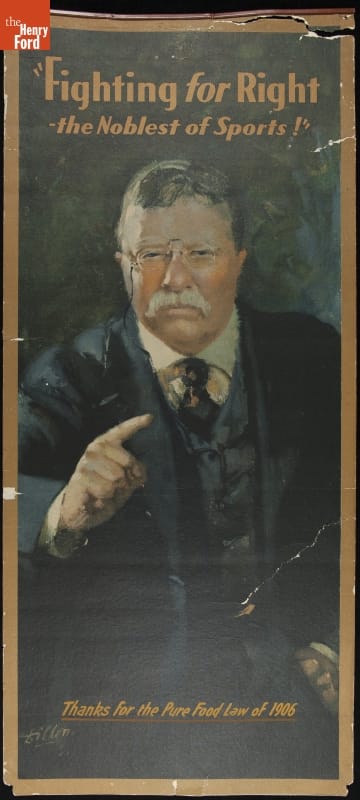
- Advertising Poster, "Fighting for Right - the Noblest of Sports! Thanks for the Pure Food Law of 1906" - At a time when many in the manufactured food industry used adulterants (inferior substitutes or additives) and false advertising, H.J. Heinz prided himself on his "Strictly Pure" products. He became an advocate for the Pure Food & Drug Act of 1906 -- the first of several Congress-enacted consumer protection laws -- and was instrumental in lobbying to President Roosevelt (seen here) to get the law passed.
- 1906
- Collections - Artifact
Advertising Poster, "Fighting for Right - the Noblest of Sports! Thanks for the Pure Food Law of 1906"
At a time when many in the manufactured food industry used adulterants (inferior substitutes or additives) and false advertising, H.J. Heinz prided himself on his "Strictly Pure" products. He became an advocate for the Pure Food & Drug Act of 1906 -- the first of several Congress-enacted consumer protection laws -- and was instrumental in lobbying to President Roosevelt (seen here) to get the law passed.
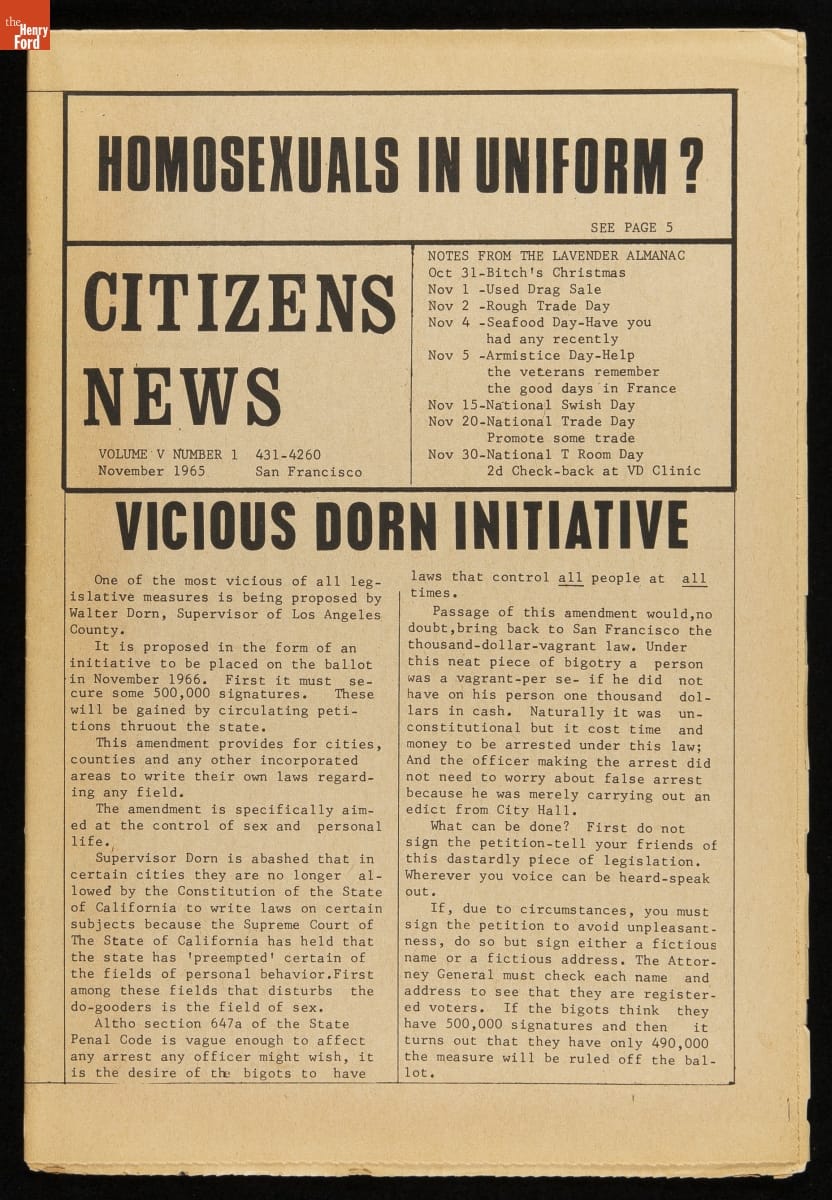
- Citizens News, Volume V, Number 1, November 1965 - LGBTQ+ newspapers became more available beginning in the 1950s as organizations added print media to their activist tool kit. These newspapers were a regionally focused way to rally the LGBTQ+ community, share information, and fight discrimination. Many of these newspapers came to rely on gay bars as a location for disbursement as they were among the only private gay spaces in many cities.
- November 01, 1965
- Collections - Artifact
Citizens News, Volume V, Number 1, November 1965
LGBTQ+ newspapers became more available beginning in the 1950s as organizations added print media to their activist tool kit. These newspapers were a regionally focused way to rally the LGBTQ+ community, share information, and fight discrimination. Many of these newspapers came to rely on gay bars as a location for disbursement as they were among the only private gay spaces in many cities.
- Letter from P. C. Knox to President Theodore Roosevelt about Howard Heinz and the Pure Food and Drug Act, May 28, 1907 - The H.J. Heinz Company had humble beginnings in 1869 and has since become one of the most recognized names in the food industry today. This artifact, from the H.J. Heinz Company Collection, is one from The Henry Ford's sizeable collection of material dedicated to telling the company's history of innovative business practices and marketing techniques.
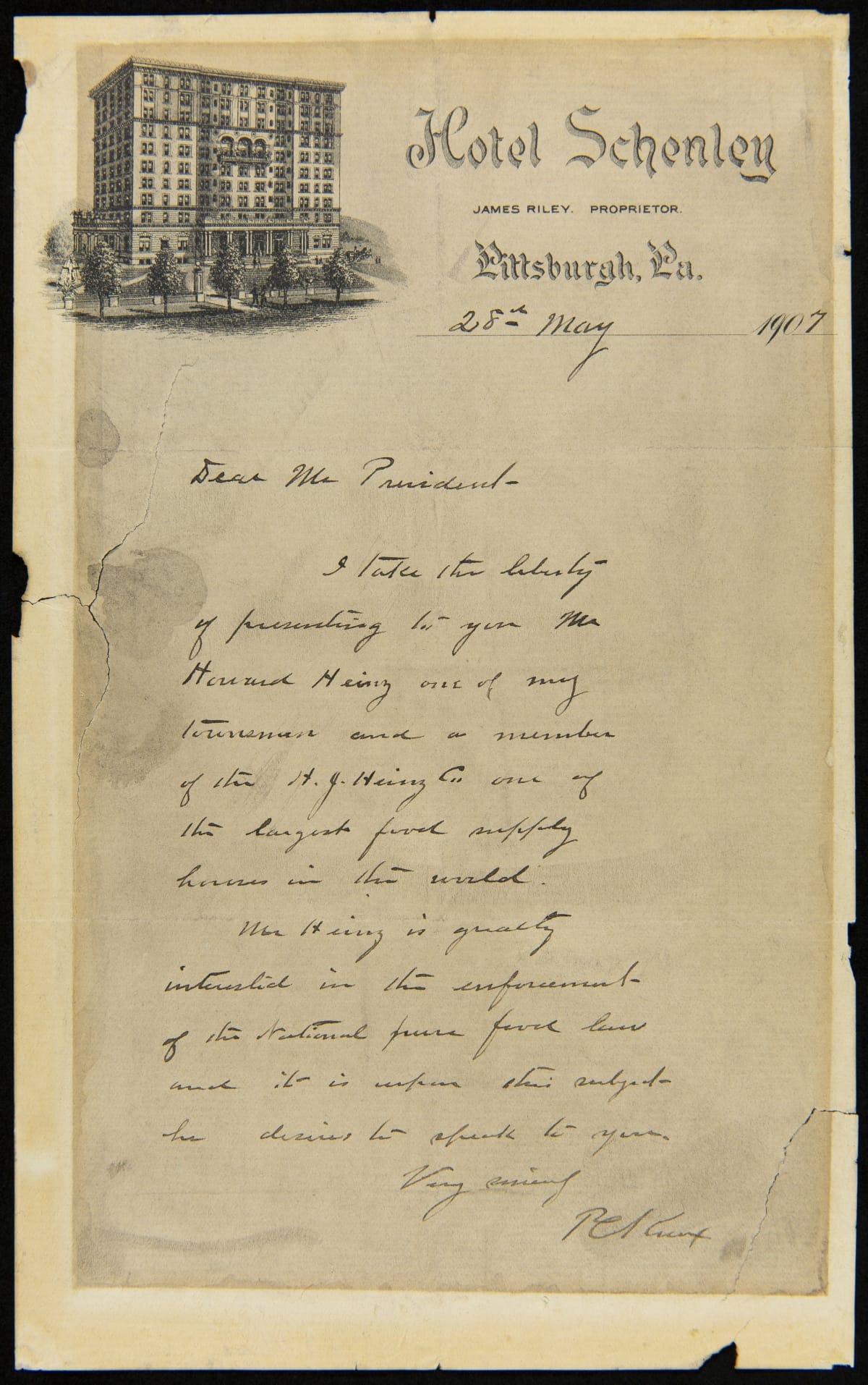
- May 28, 1907
- Collections - Artifact
Letter from P. C. Knox to President Theodore Roosevelt about Howard Heinz and the Pure Food and Drug Act, May 28, 1907
The H.J. Heinz Company had humble beginnings in 1869 and has since become one of the most recognized names in the food industry today. This artifact, from the H.J. Heinz Company Collection, is one from The Henry Ford's sizeable collection of material dedicated to telling the company's history of innovative business practices and marketing techniques.
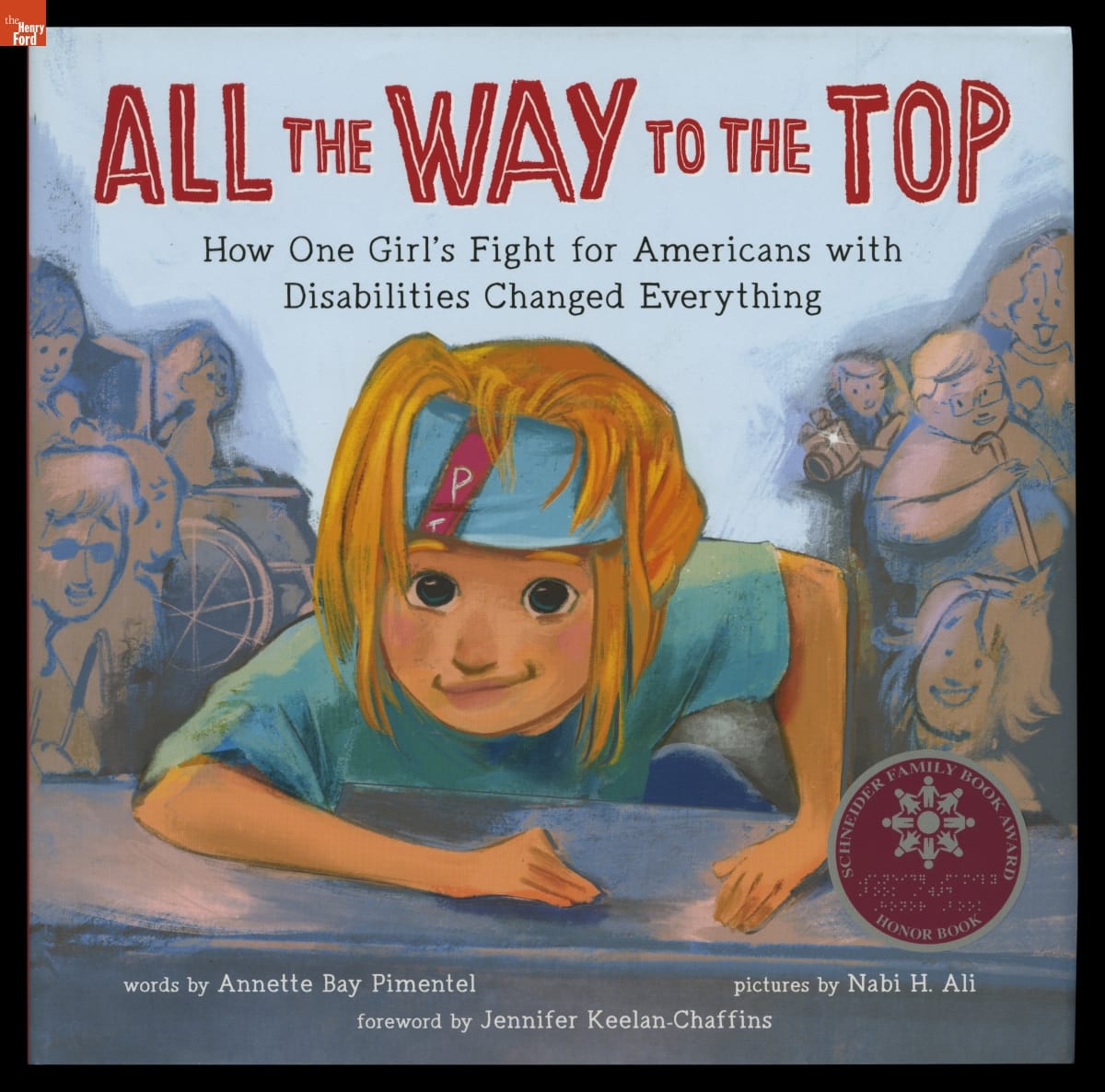
- "All the Way to the Top: How One Girl's Fight for Americans with Disabilities Changed Everything," 2020 -
- 1990
- Collections - Artifact
"All the Way to the Top: How One Girl's Fight for Americans with Disabilities Changed Everything," 2020
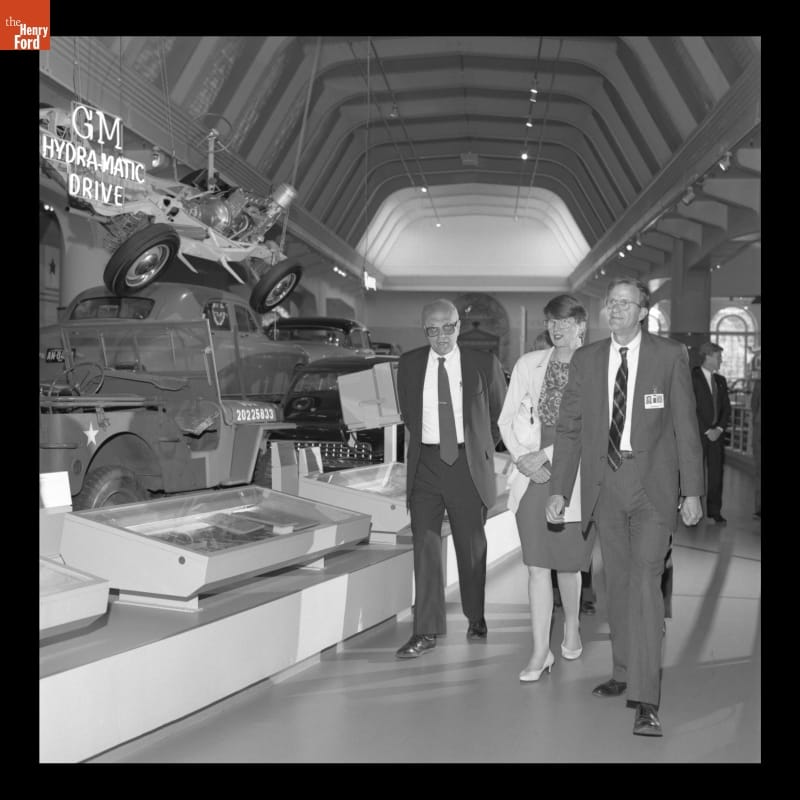
- Representative John Dingell and Attorney General Janet Reno in Henry Ford Museum, May 23, 1994 - United States Representative John Dingell and Attorney General Janet Reno were photographed in Henry Ford Museum's <em>The Automobile in American Life</em> exhibit, with museum president Harold Skramstad, in May 1994. Reno and Dingell were at the museum to attend a conference for municipal leaders.
- May 23, 1994
- Collections - Artifact
Representative John Dingell and Attorney General Janet Reno in Henry Ford Museum, May 23, 1994
United States Representative John Dingell and Attorney General Janet Reno were photographed in Henry Ford Museum's The Automobile in American Life exhibit, with museum president Harold Skramstad, in May 1994. Reno and Dingell were at the museum to attend a conference for municipal leaders.
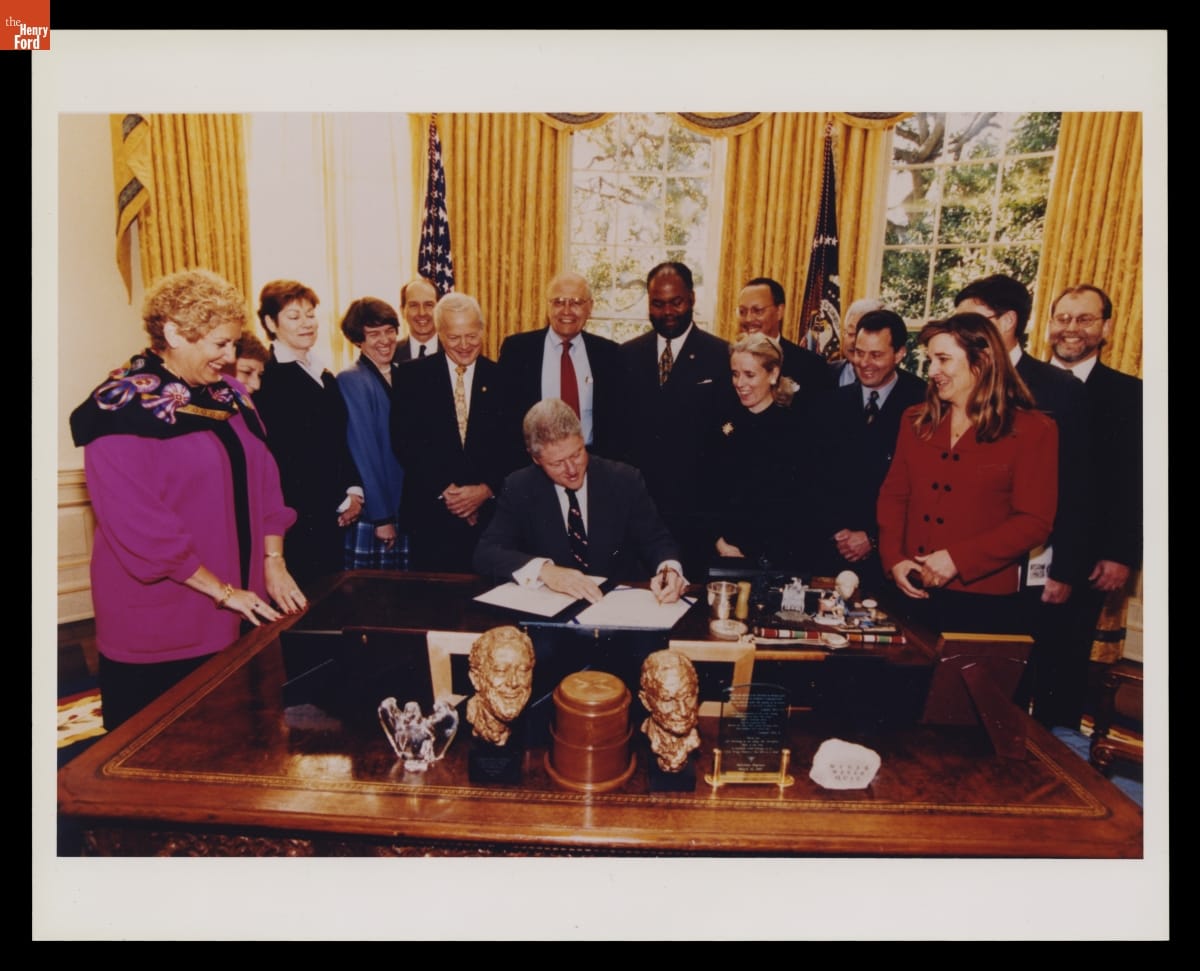
- President Bill Clinton Signing the Automobile National Heritage Area Act, November 6, 1998 - When President Bill Clinton signed the National Automobile Heritage Act of 1998, he paved the way for what became the MotorCities National Heritage Area. The organization, an affiliate of the National Park Service, grew to include more than 1,200 automotive-related sides in metro Detroit and throughout portions of 16 counties in southern Michigan.
- November 06, 1998
- Collections - Artifact
President Bill Clinton Signing the Automobile National Heritage Area Act, November 6, 1998
When President Bill Clinton signed the National Automobile Heritage Act of 1998, he paved the way for what became the MotorCities National Heritage Area. The organization, an affiliate of the National Park Service, grew to include more than 1,200 automotive-related sides in metro Detroit and throughout portions of 16 counties in southern Michigan.
- "Jim Crow Guide to the U.S.A.," 1959 - Activist, folklorist and author Stetson Kennedy exposed American racism in his book <EM>Jim Crow Guide to the U.S.A.</EM> First published in France in 1956 -- he could find no American publisher to take on the project -- this mock guidebook uncovered the reach of Jim Crow inequality. Kennedy examined a number of areas including where one could live, work, travel, eat, sleep or study.

- 1959
- Collections - Artifact
"Jim Crow Guide to the U.S.A.," 1959
Activist, folklorist and author Stetson Kennedy exposed American racism in his book Jim Crow Guide to the U.S.A. First published in France in 1956 -- he could find no American publisher to take on the project -- this mock guidebook uncovered the reach of Jim Crow inequality. Kennedy examined a number of areas including where one could live, work, travel, eat, sleep or study.
- "Harper's Weekly" Bound Volume of Issues for the Year 1870 - Readers of <em>Harper's Weekly</em> could find news, fictional works, essays and illustrations depicting life in America and from around the world. This 1870 volume has an article on Hiram Revels, the Senator-elect from Mississippi. Revels, born a free person of color, became the first African American to serve in the United States Congress. He was elected to finish the term of one of Mississippi's Senators, left vacant since the Civil War.

- 01 January 1870 - 31 December 1870
- Collections - Artifact
"Harper's Weekly" Bound Volume of Issues for the Year 1870
Readers of Harper's Weekly could find news, fictional works, essays and illustrations depicting life in America and from around the world. This 1870 volume has an article on Hiram Revels, the Senator-elect from Mississippi. Revels, born a free person of color, became the first African American to serve in the United States Congress. He was elected to finish the term of one of Mississippi's Senators, left vacant since the Civil War.