
Search
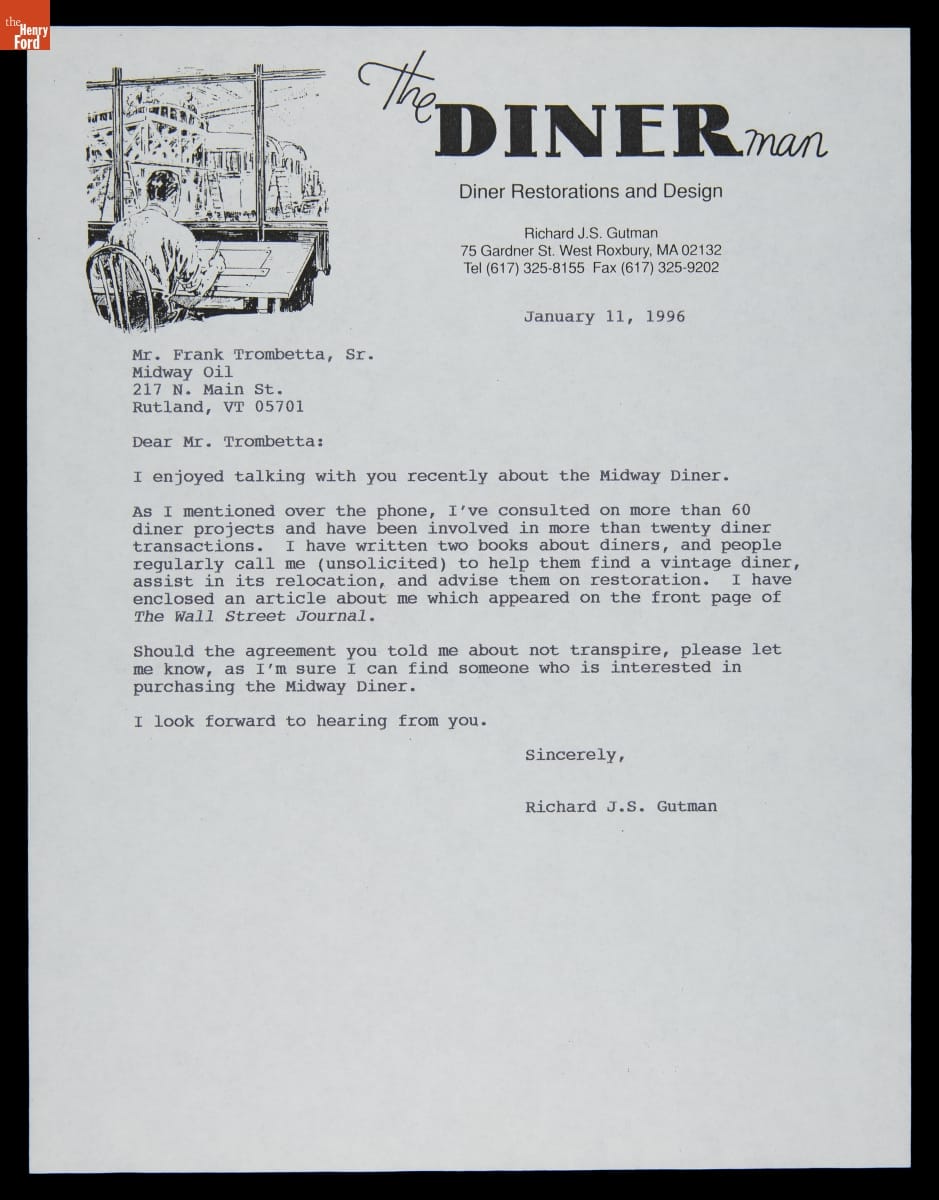
- Letter from Richard Gutman to Frank Trombetta concerning the Midway Diner, January 11, 1996 -
- January 11, 1996
- Collections - Artifact
Letter from Richard Gutman to Frank Trombetta concerning the Midway Diner, January 11, 1996
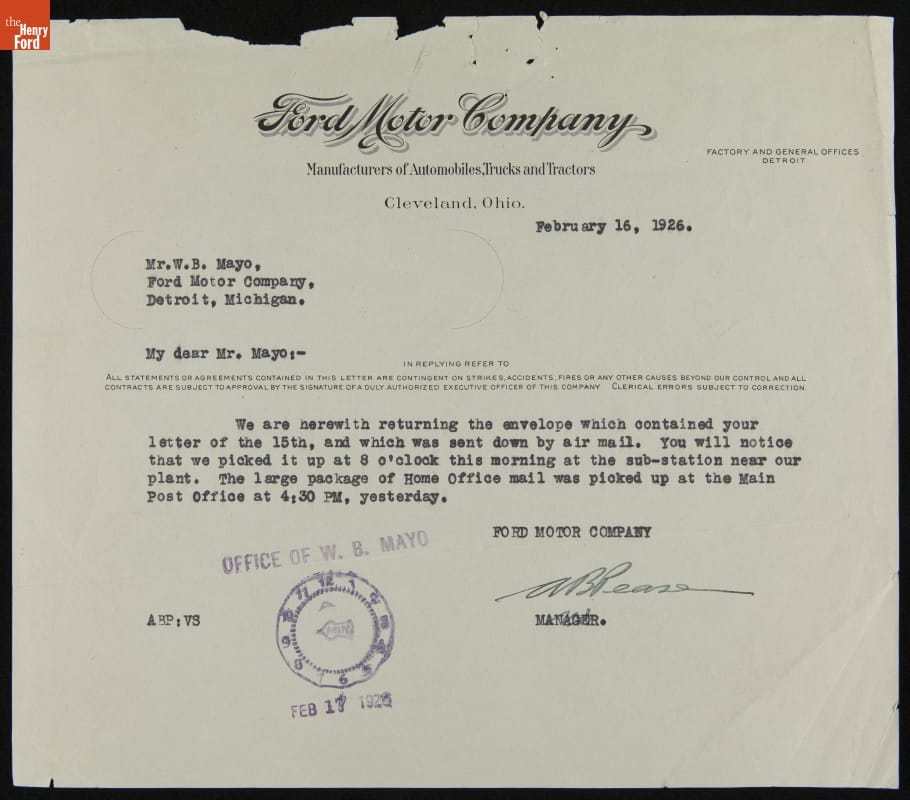
- Letter from Ford Motor Company Cleveland Branch Manager A.B. Pease regarding the First Commercial Air Mail Flight (CAM-6), February 1926 - After operating air mail flights itself for eight years, the U.S. Post Office Department contracted with commercial air carriers in 1926. The first two contract routes, connecting Detroit with Cleveland and Chicago, were awarded to Ford Air Transport, Ford Motor Company's airline subsidiary. Ford planes carried more than 32,000 pounds of mail before the contract ended in July 1928.
- February 15, 1925
- Collections - Artifact
Letter from Ford Motor Company Cleveland Branch Manager A.B. Pease regarding the First Commercial Air Mail Flight (CAM-6), February 1926
After operating air mail flights itself for eight years, the U.S. Post Office Department contracted with commercial air carriers in 1926. The first two contract routes, connecting Detroit with Cleveland and Chicago, were awarded to Ford Air Transport, Ford Motor Company's airline subsidiary. Ford planes carried more than 32,000 pounds of mail before the contract ended in July 1928.
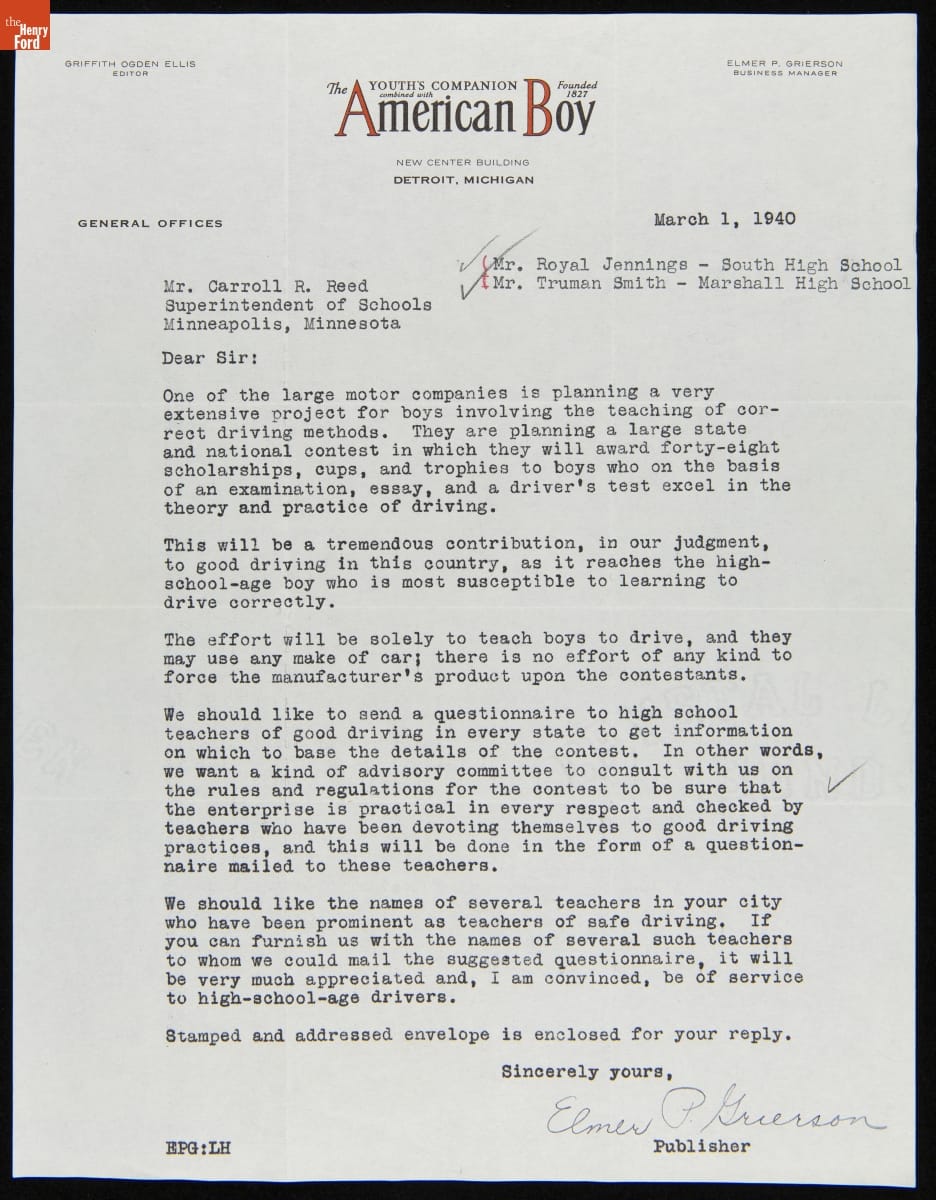
- Letter from Elmer Grierson, Publisher of The American Boy, to Carroll R. Reed, March 1, 1940 - Ford Motor Company created the Ford Good Drivers League in 1940 to promote safe driving habits among high school students. Young drivers would compete in state and national championships, which included a driving test. Elmer Grierson, the publisher of <em>The American Boy</em> magazine, was among the organization's supporters. Grierson reached out to state school systems for advice on structuring the League's driving contests.
- March 01, 1940
- Collections - Artifact
Letter from Elmer Grierson, Publisher of The American Boy, to Carroll R. Reed, March 1, 1940
Ford Motor Company created the Ford Good Drivers League in 1940 to promote safe driving habits among high school students. Young drivers would compete in state and national championships, which included a driving test. Elmer Grierson, the publisher of The American Boy magazine, was among the organization's supporters. Grierson reached out to state school systems for advice on structuring the League's driving contests.
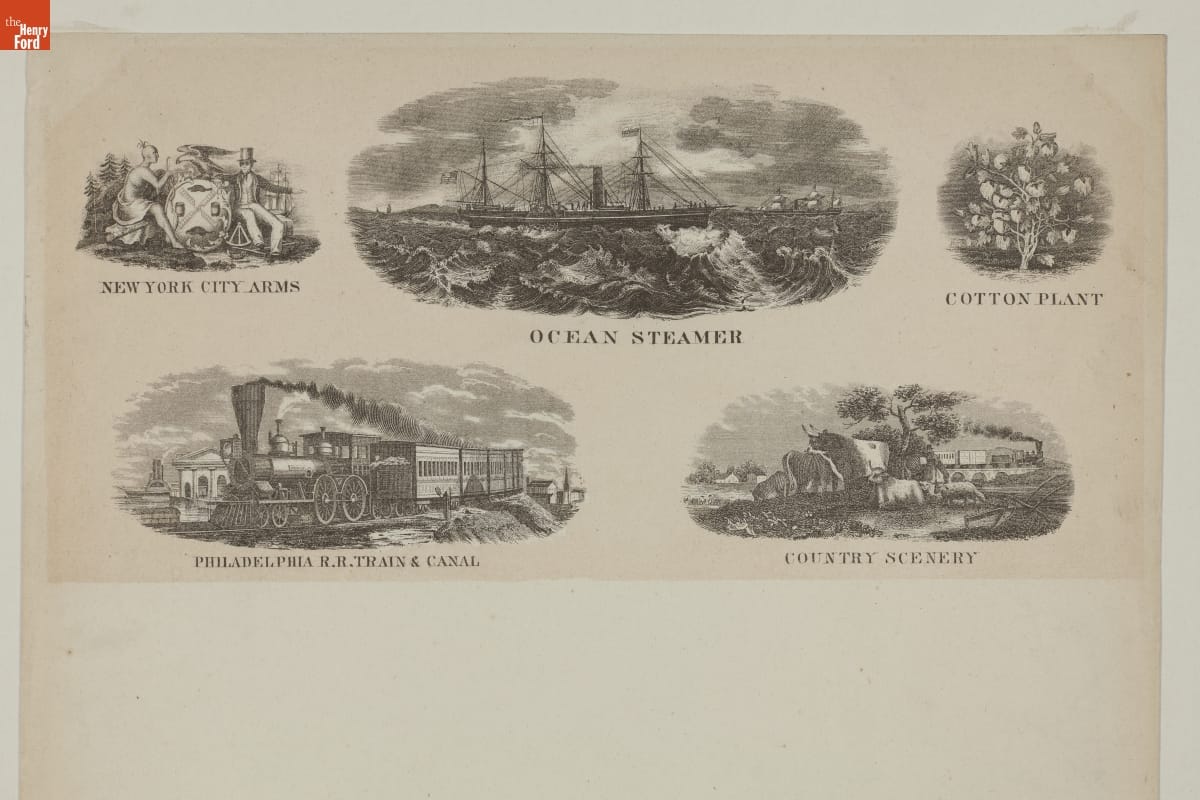
- Letterhead Samples, circa 1855 - Steam power stood at the technological forefront in the 19th century, so it's not surprising that steamships and steam locomotives were popular letterhead vignettes for companies wishing to project a modern image. Natural scenes still held some appeal, as shown by the cotton plant at upper right. The "country scenery" vignette at lower right blended the pastoral with the industrial.
- circa 1855
- Collections - Artifact
Letterhead Samples, circa 1855
Steam power stood at the technological forefront in the 19th century, so it's not surprising that steamships and steam locomotives were popular letterhead vignettes for companies wishing to project a modern image. Natural scenes still held some appeal, as shown by the cotton plant at upper right. The "country scenery" vignette at lower right blended the pastoral with the industrial.
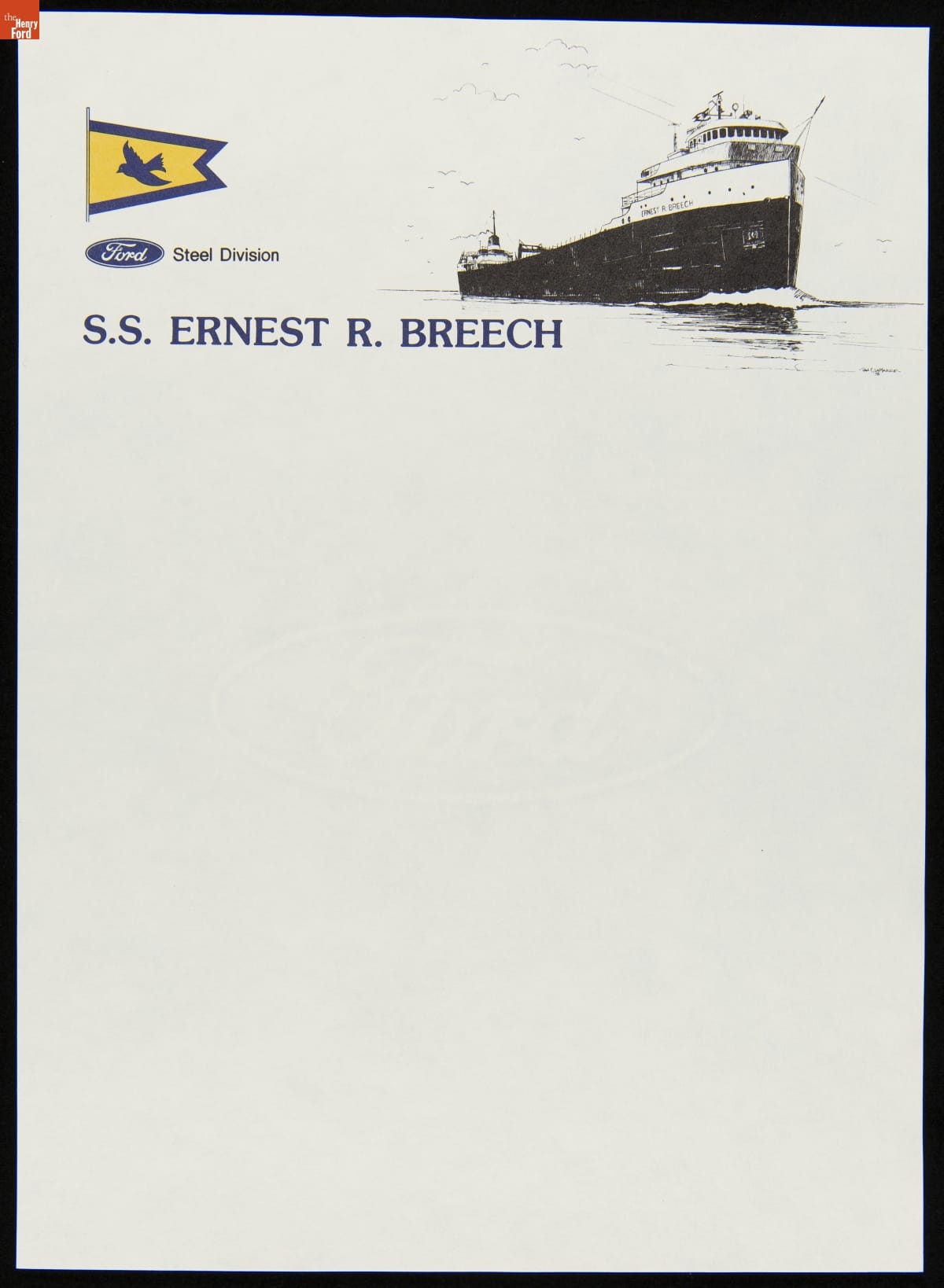
- Stationery from Ford Motor Company Freighter "Ernest R. Breech," circa 1970 - Stationery for the Ford Motor Company's ore carrier <em>Ernest R. Breech</em> contains images of the freighter, the Ford logo, and the house flag flown when the ship was underway. The flag depicts a bluebird -- a favorite of Henry Ford, an amateur birdwatcher. The <em>Breech</em>, named for a former board chairman at Ford, hauled raw material to Ford's River Rouge factory near Detroit, Michigan.
- circa 1970
- Collections - Artifact
Stationery from Ford Motor Company Freighter "Ernest R. Breech," circa 1970
Stationery for the Ford Motor Company's ore carrier Ernest R. Breech contains images of the freighter, the Ford logo, and the house flag flown when the ship was underway. The flag depicts a bluebird -- a favorite of Henry Ford, an amateur birdwatcher. The Breech, named for a former board chairman at Ford, hauled raw material to Ford's River Rouge factory near Detroit, Michigan.
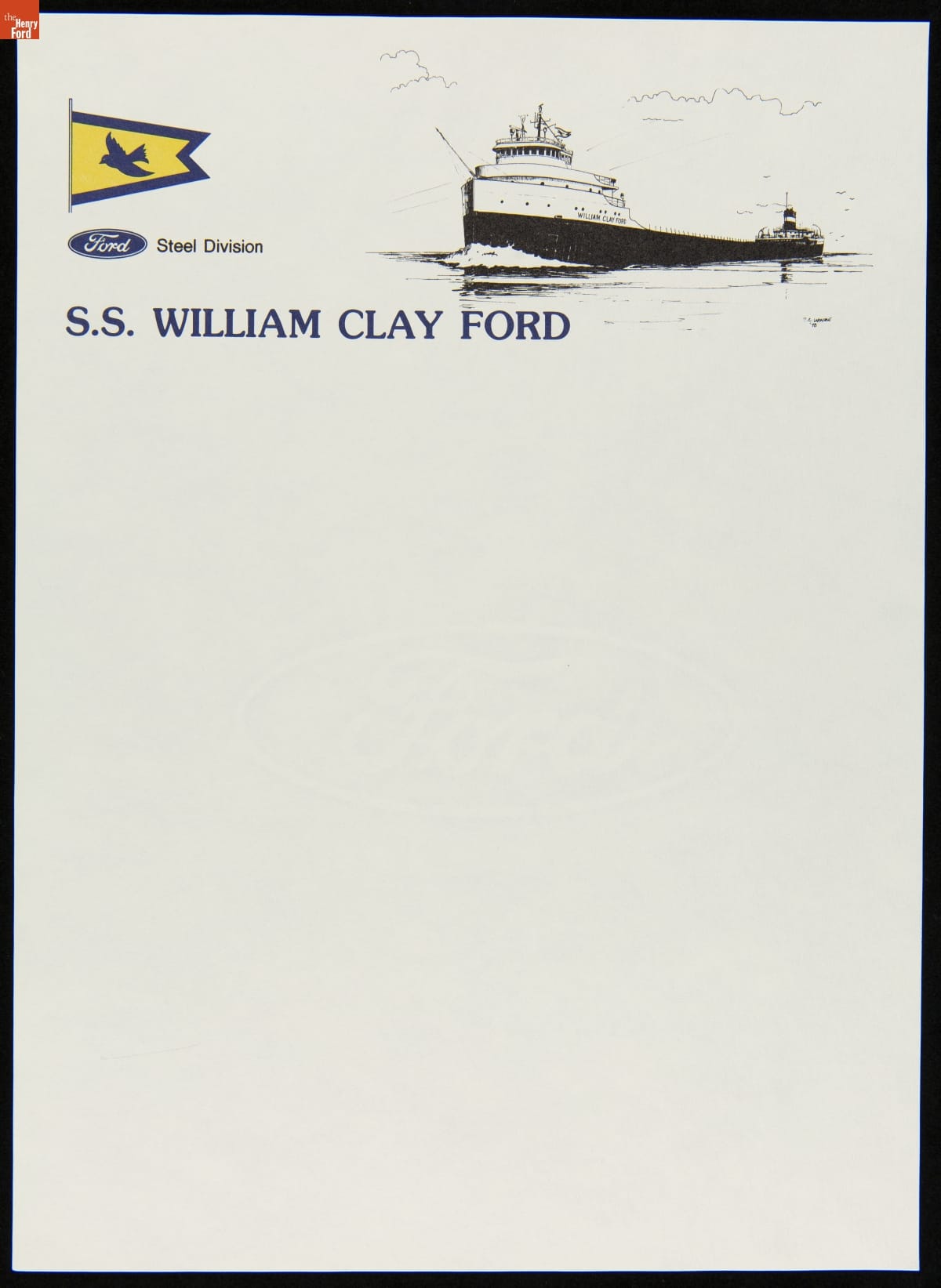
- Stationery from Ford Motor Company Freighter "William Clay Ford," circa 1970 - Stationery for the Ford Motor Company's ore carrier <em>William Clay Ford</em> contains images of the freighter, the Ford logo, and the house flag flown when the ship was underway. The flag depicts a bluebird -- a favorite of Henry Ford, an amateur birdwatcher. The ship, launched in 1953, hauled raw material to Ford's River Rouge factory near Detroit, Michigan.
- circa 1970
- Collections - Artifact
Stationery from Ford Motor Company Freighter "William Clay Ford," circa 1970
Stationery for the Ford Motor Company's ore carrier William Clay Ford contains images of the freighter, the Ford logo, and the house flag flown when the ship was underway. The flag depicts a bluebird -- a favorite of Henry Ford, an amateur birdwatcher. The ship, launched in 1953, hauled raw material to Ford's River Rouge factory near Detroit, Michigan.
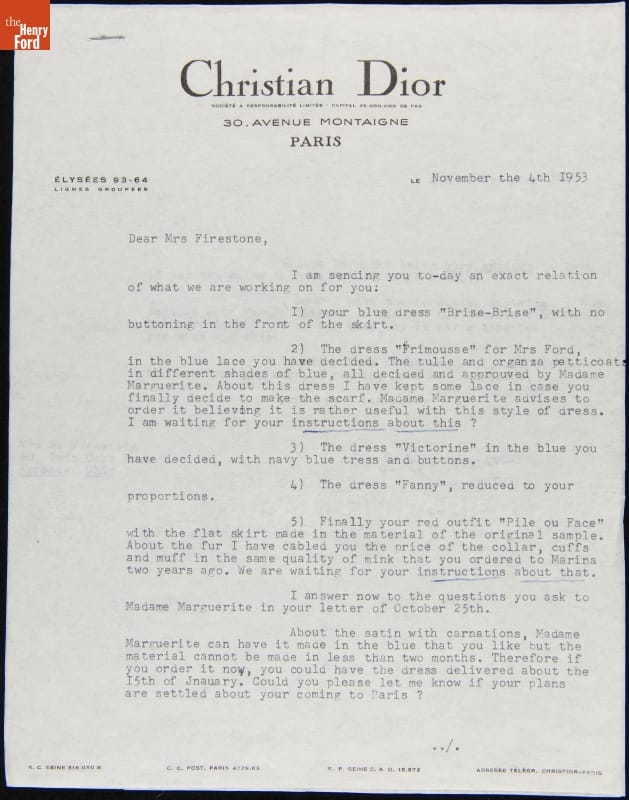
- Letter from S. Azemar (for House of Dior) to Elizabeth Parke Firestone, November 4, 1953 -
- November 04, 1953
- Collections - Artifact
Letter from S. Azemar (for House of Dior) to Elizabeth Parke Firestone, November 4, 1953
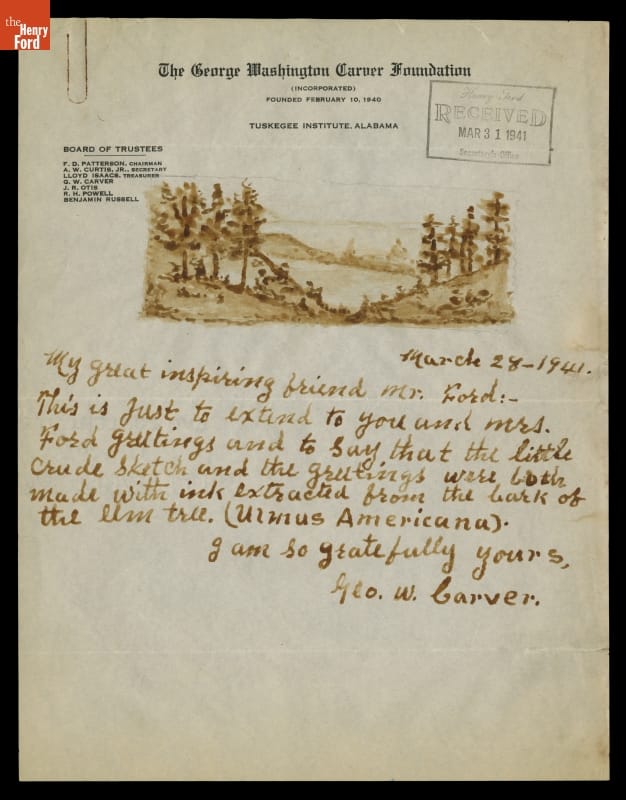
- Letter and Drawing by George Washington Carver Sent to Henry Ford, 1941 - George Washington Carver and Henry Ford became friends in the late 1930s, drawn together by a mutual interest in developing new industrial products from the fruits of the soil. Carver's warm letters to Ford, Clara Ford, and Ford's secretary Frank Campsall speak to the genuine depth of the friendship. Carver often gives Ford advice on research avenues to pursue and suggests recipes for natural health.
- March 28, 1941
- Collections - Artifact
Letter and Drawing by George Washington Carver Sent to Henry Ford, 1941
George Washington Carver and Henry Ford became friends in the late 1930s, drawn together by a mutual interest in developing new industrial products from the fruits of the soil. Carver's warm letters to Ford, Clara Ford, and Ford's secretary Frank Campsall speak to the genuine depth of the friendship. Carver often gives Ford advice on research avenues to pursue and suggests recipes for natural health.
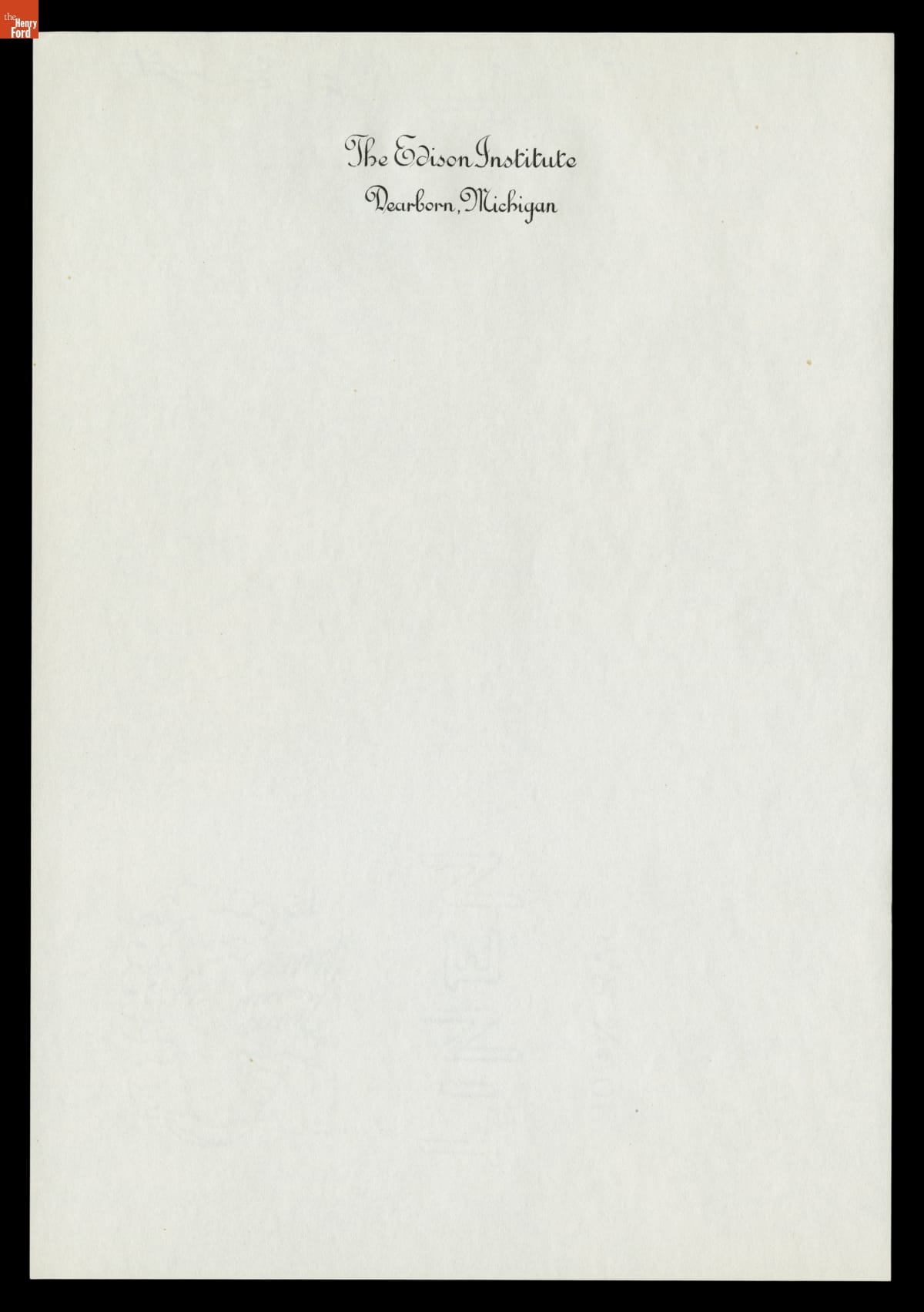
- Letterhead Stationery for The Edison Institute, Dearborn, Michigan, circa 1952 -
- circa 1952
- Collections - Artifact
Letterhead Stationery for The Edison Institute, Dearborn, Michigan, circa 1952
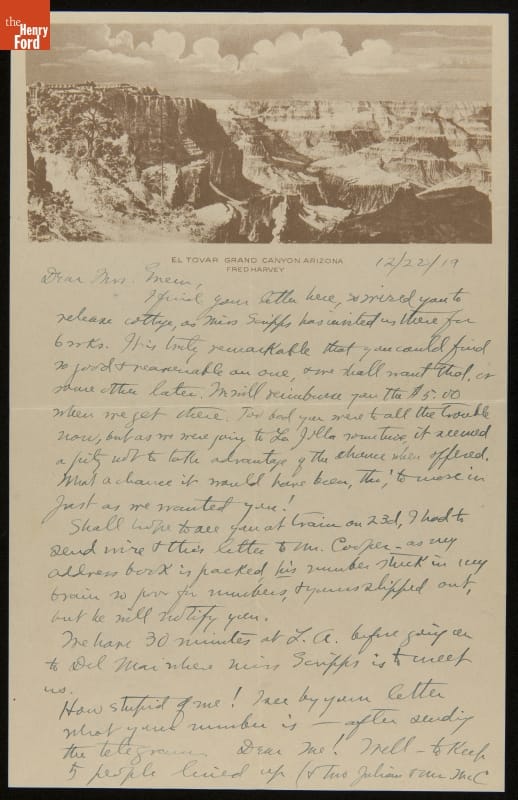
- Letter from Clara Barrus to Mrs. J. Edward B. Greene, December 22, 1919 - Dr. Clara Barrus was one of a small number of women who graduated from medical school in the late 19th century. In 1901, she began a close friendship with John Burroughs, the famous naturalist. Burroughs later named Barrus his literary executor and official biographer. Her correspondence covers a variety of subjects, including her relationship with Burroughs and her experiences setting up her own private sanatorium.
- December 22, 1919
- Collections - Artifact
Letter from Clara Barrus to Mrs. J. Edward B. Greene, December 22, 1919
Dr. Clara Barrus was one of a small number of women who graduated from medical school in the late 19th century. In 1901, she began a close friendship with John Burroughs, the famous naturalist. Burroughs later named Barrus his literary executor and official biographer. Her correspondence covers a variety of subjects, including her relationship with Burroughs and her experiences setting up her own private sanatorium.