
Search
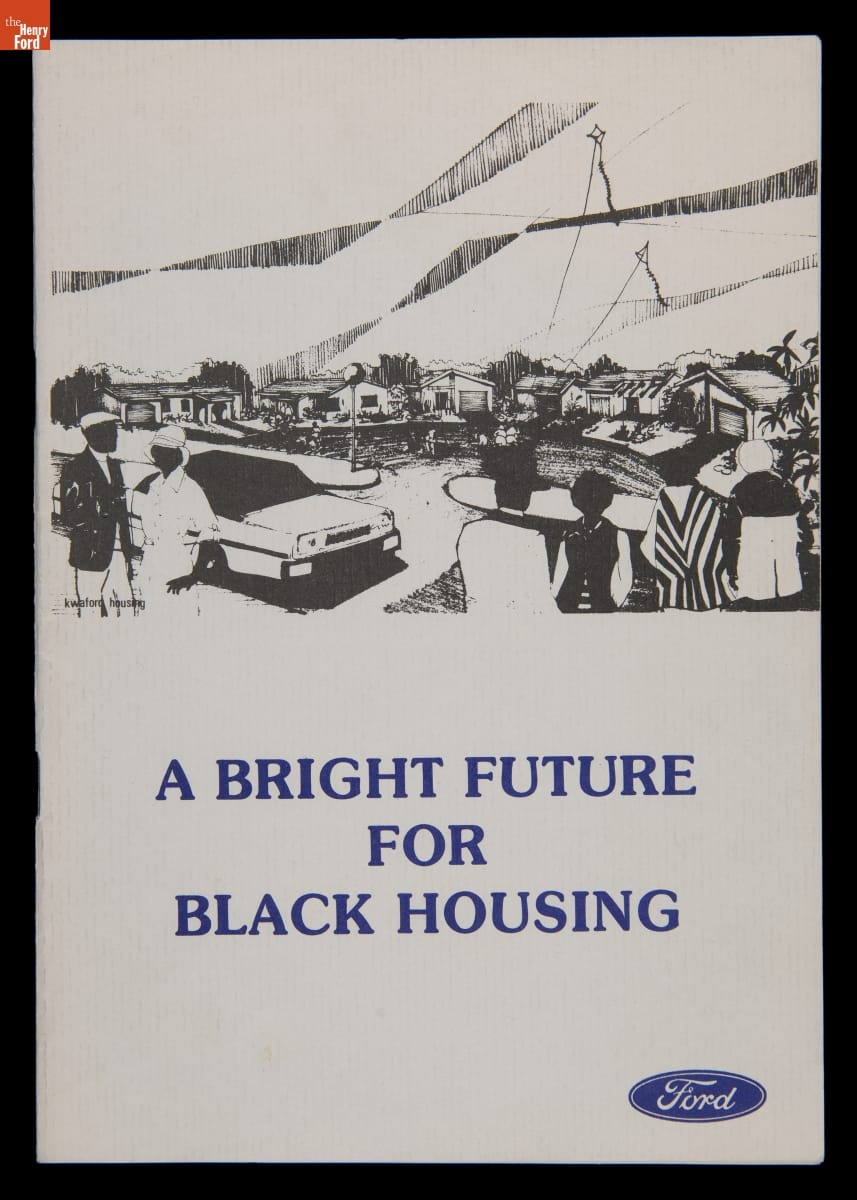
- "A Bright Future for Black Housing," 1979 - In the 1970s, U.S. firms doing business in South Africa committed resources to improve the working and living conditions of their nonwhite employees to pressure the minority white-led government to end apartheid -- South Africa's systemized segregation of races. Ford Motor Company outlined its housing efforts in this publication. These policies had little effect on apartheid, which ended in the early 1990s only after strict economic sanctions.
- 1979
- Collections - Artifact
"A Bright Future for Black Housing," 1979
In the 1970s, U.S. firms doing business in South Africa committed resources to improve the working and living conditions of their nonwhite employees to pressure the minority white-led government to end apartheid -- South Africa's systemized segregation of races. Ford Motor Company outlined its housing efforts in this publication. These policies had little effect on apartheid, which ended in the early 1990s only after strict economic sanctions.
- Agreement between Charles A. Harden and Richard J. Arnold, 1839 -
- April 22, 1839
- Collections - Artifact
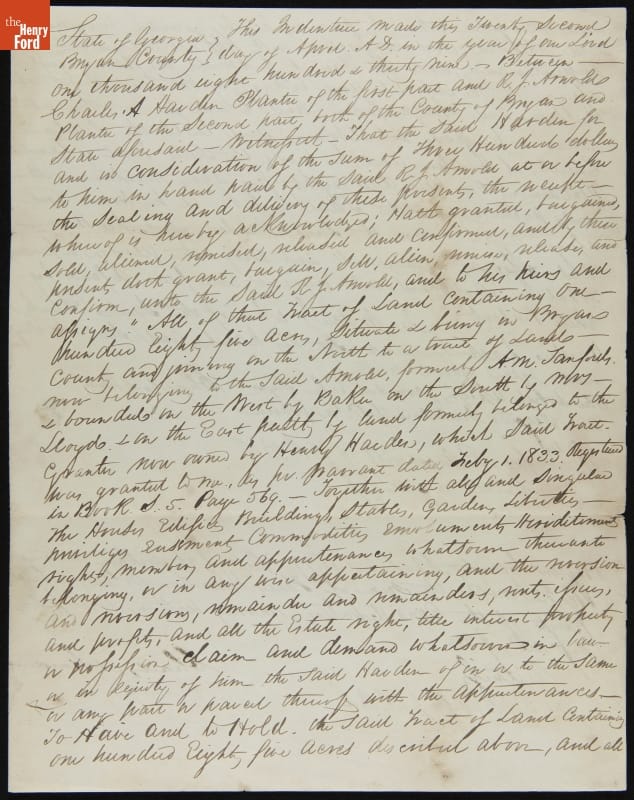
Agreement between Charles A. Harden and Richard J. Arnold, 1839
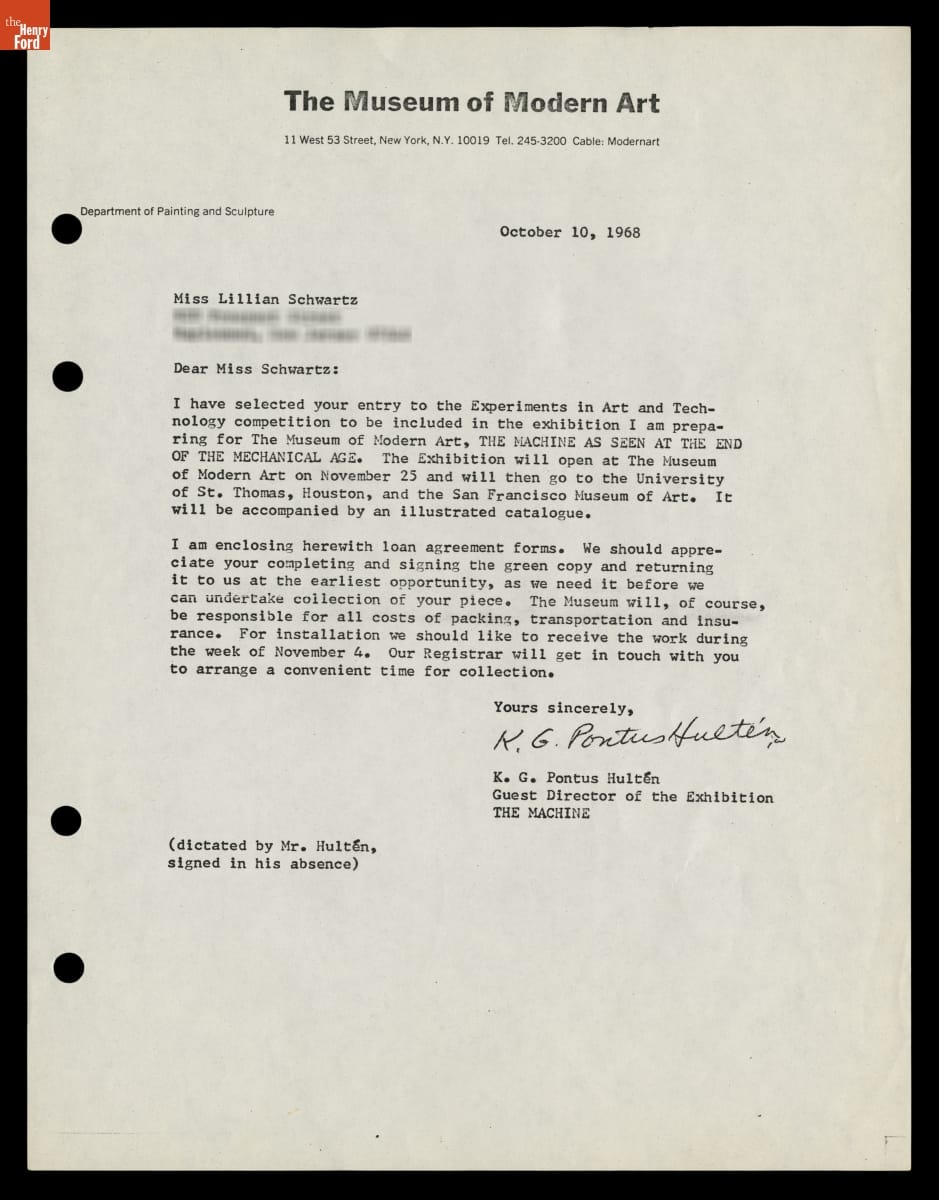
- Acceptance Letter to Lillian Schwartz Offering to Exhibit "Proxima Centauri" at MoMA, October 10, 1968 - Lillian Schwartz is a pioneer of computer-generated art. From 1969-2002, she was a "resident visitor" at Bell Laboratories, producing groundbreaking films, videos, and multimedia works. The Schwartz Collection spans Lillian's childhood into her late career, documenting an expansive mindset, mastery over traditional and experimental mediums alike--and above all--an ability to create inspirational connections between science, art, and technology.
- October 10, 1968
- Collections - Artifact
Acceptance Letter to Lillian Schwartz Offering to Exhibit "Proxima Centauri" at MoMA, October 10, 1968
Lillian Schwartz is a pioneer of computer-generated art. From 1969-2002, she was a "resident visitor" at Bell Laboratories, producing groundbreaking films, videos, and multimedia works. The Schwartz Collection spans Lillian's childhood into her late career, documenting an expansive mindset, mastery over traditional and experimental mediums alike--and above all--an ability to create inspirational connections between science, art, and technology.
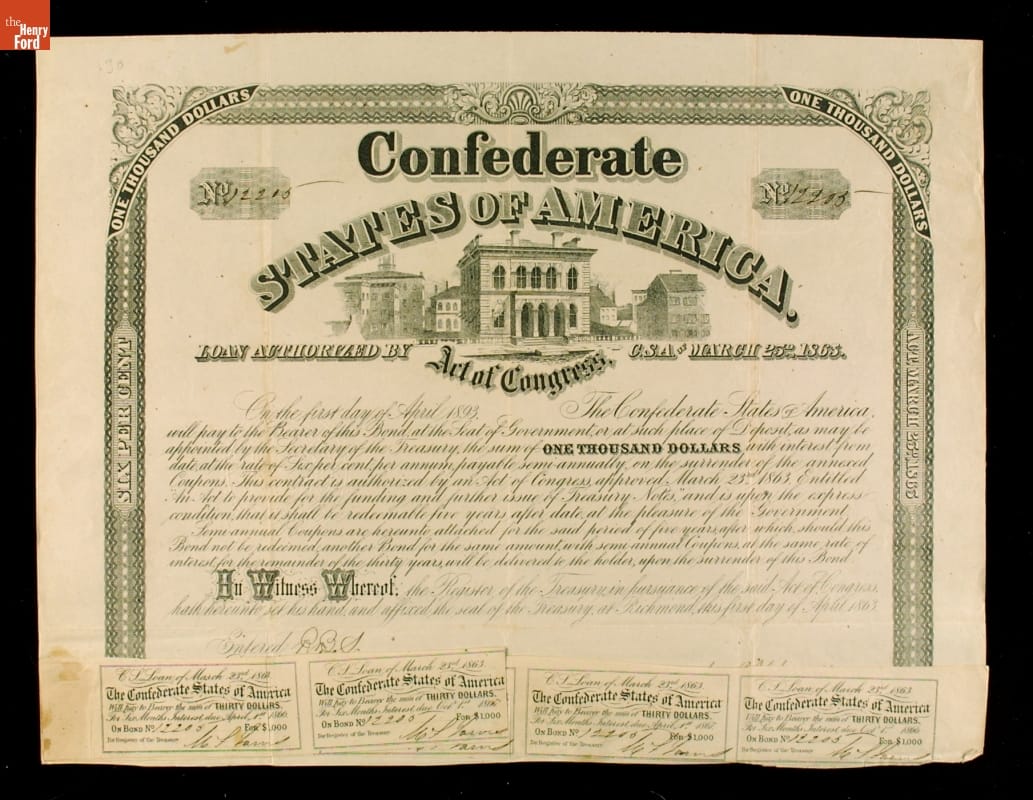
- "Confederate States of America... Loan... One Thousand Dollars...," March 25, 1863 - To help raise money, the Confederate States of America issued bonds. Early in the Civil War, these bonds seemed a worthwhile, even patriotic, investment to the Southerners who bought them. The war was going well for the Confederacy and the bonds promised a tidy profit in interest. At war's end, Southerners were left holding now worthless Confederate bonds.
- March 25, 1863
- Collections - Artifact
"Confederate States of America... Loan... One Thousand Dollars...," March 25, 1863
To help raise money, the Confederate States of America issued bonds. Early in the Civil War, these bonds seemed a worthwhile, even patriotic, investment to the Southerners who bought them. The war was going well for the Confederacy and the bonds promised a tidy profit in interest. At war's end, Southerners were left holding now worthless Confederate bonds.
- Letter from William Gwynn to F. Lucas Junior concerning a Loan on Railroad Stock Shares, 1830 - The Baltimore & Ohio Railroad, chartered in 1827, was the first common-carrier railroad in the United States. Baltimore merchants, competing against New York City and Philadelphia for trade, connected their port to the Ohio River with a railway. B&O stockholders included William Gwynn, Fielding Lucas, Jr., and Charles Carroll of Carrollton -- the last surviving signer of the Declaration of Independence.
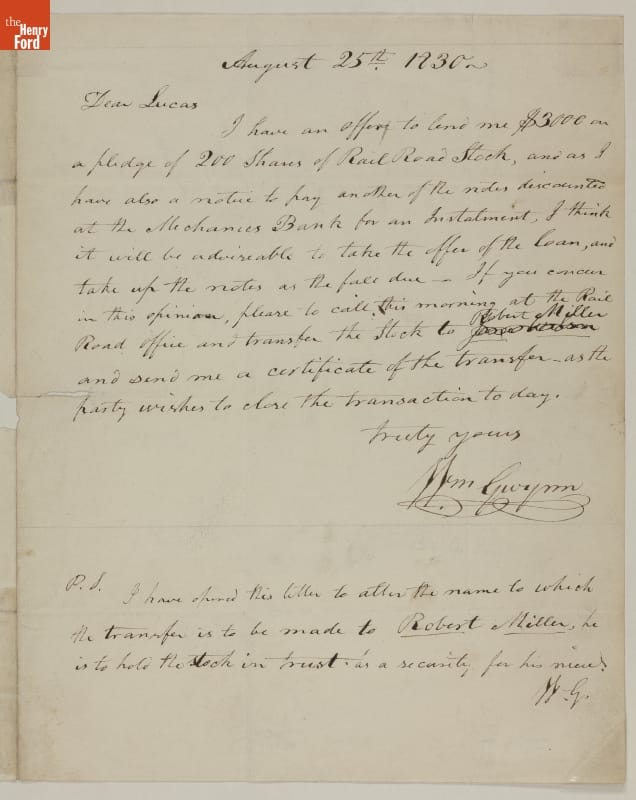
- August 25, 1830
- Collections - Artifact
Letter from William Gwynn to F. Lucas Junior concerning a Loan on Railroad Stock Shares, 1830
The Baltimore & Ohio Railroad, chartered in 1827, was the first common-carrier railroad in the United States. Baltimore merchants, competing against New York City and Philadelphia for trade, connected their port to the Ohio River with a railway. B&O stockholders included William Gwynn, Fielding Lucas, Jr., and Charles Carroll of Carrollton -- the last surviving signer of the Declaration of Independence.
- "The Satellite Bank", circa 1961 - Many early space toys depicted outer space as a futuristic fantasy world. But when space travel became possible, these toys became more realistic-looking. This bank, made about 1961, resembles rocket ships that launched people into orbit. It also commemorates the six U.S. astronauts chosen to be the first Americans in space.
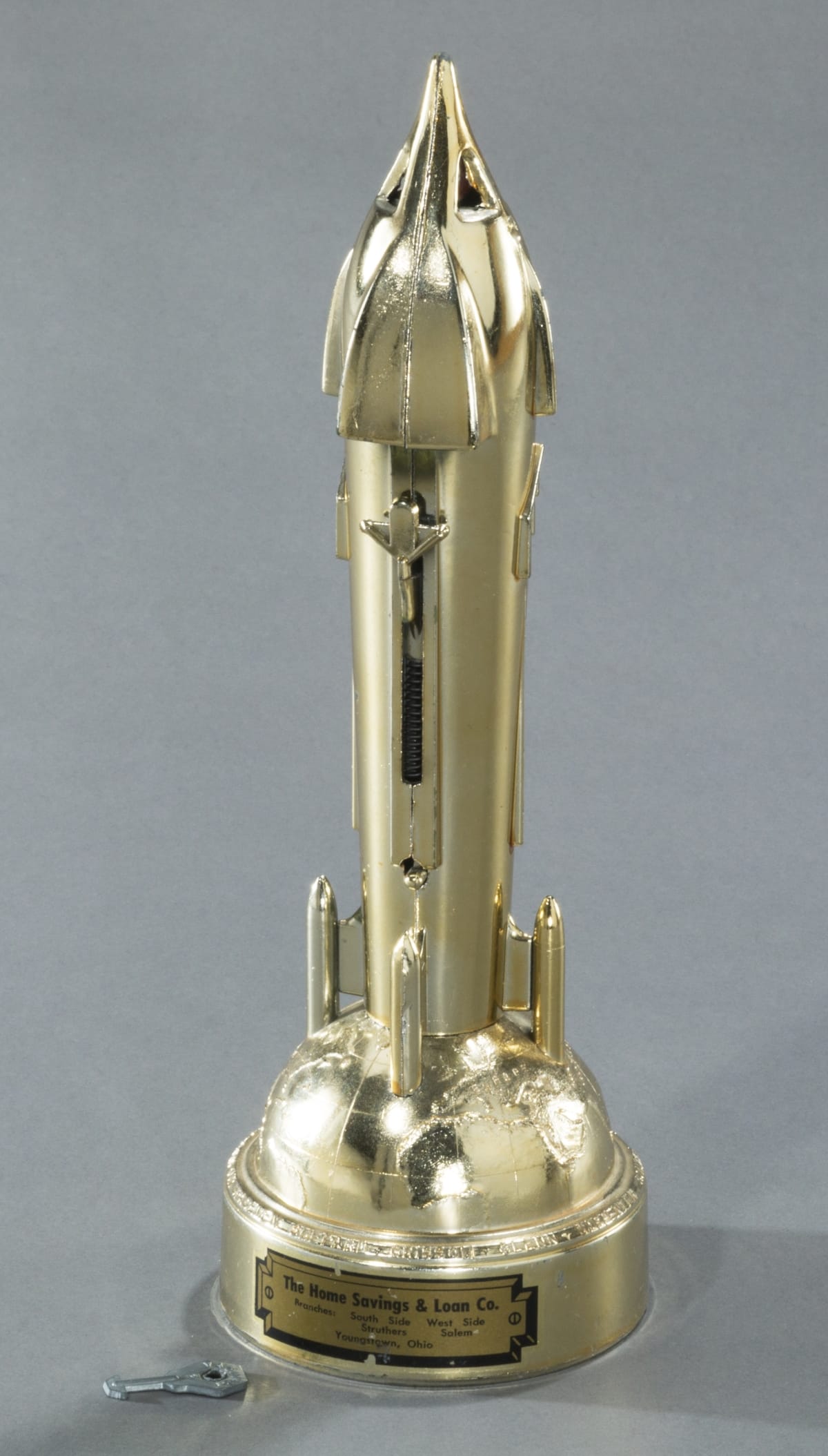
- circa 1961
- Collections - Artifact
"The Satellite Bank", circa 1961
Many early space toys depicted outer space as a futuristic fantasy world. But when space travel became possible, these toys became more realistic-looking. This bank, made about 1961, resembles rocket ships that launched people into orbit. It also commemorates the six U.S. astronauts chosen to be the first Americans in space.