
Search
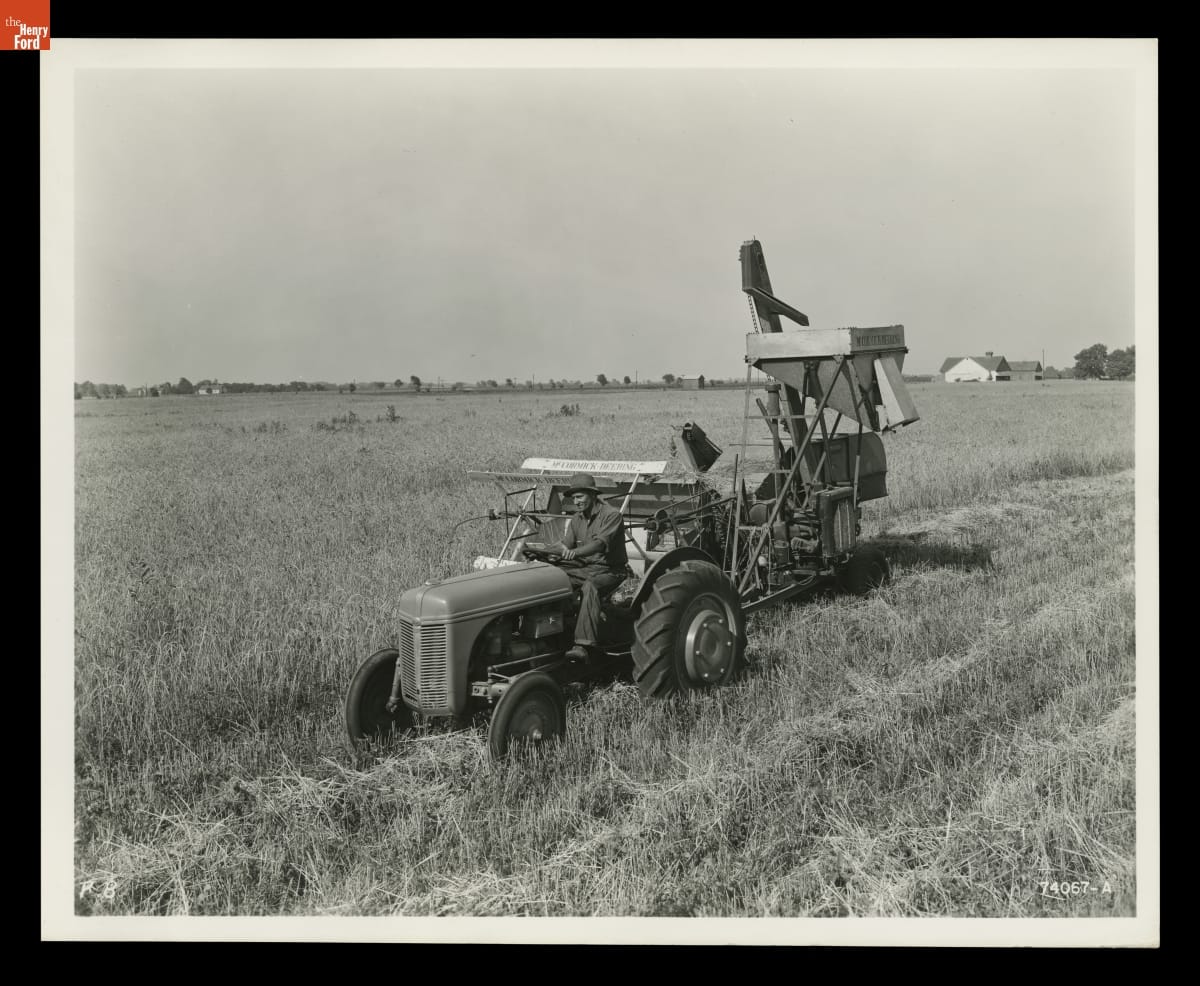
- Man Harvesting Wheat Using a Ford-Ferguson Tractor with Combine Attached, Indiana, August 1940 - Ford Motor Company introduced the 9N tractor in 1939. It featured the "Ferguson System:" a 3-point hydraulic hitch-and-lift system invented by Irishman Harry Ferguson. Ferguson's revolutionary hitch kept agricultural implements, like the combine seen here, in line with the tractor. It also provided stability. By 1940, nearly 8 percent of tractors sold in the U.S. were 9Ns.
- August 05, 1940
- Collections - Artifact
Man Harvesting Wheat Using a Ford-Ferguson Tractor with Combine Attached, Indiana, August 1940
Ford Motor Company introduced the 9N tractor in 1939. It featured the "Ferguson System:" a 3-point hydraulic hitch-and-lift system invented by Irishman Harry Ferguson. Ferguson's revolutionary hitch kept agricultural implements, like the combine seen here, in line with the tractor. It also provided stability. By 1940, nearly 8 percent of tractors sold in the U.S. were 9Ns.
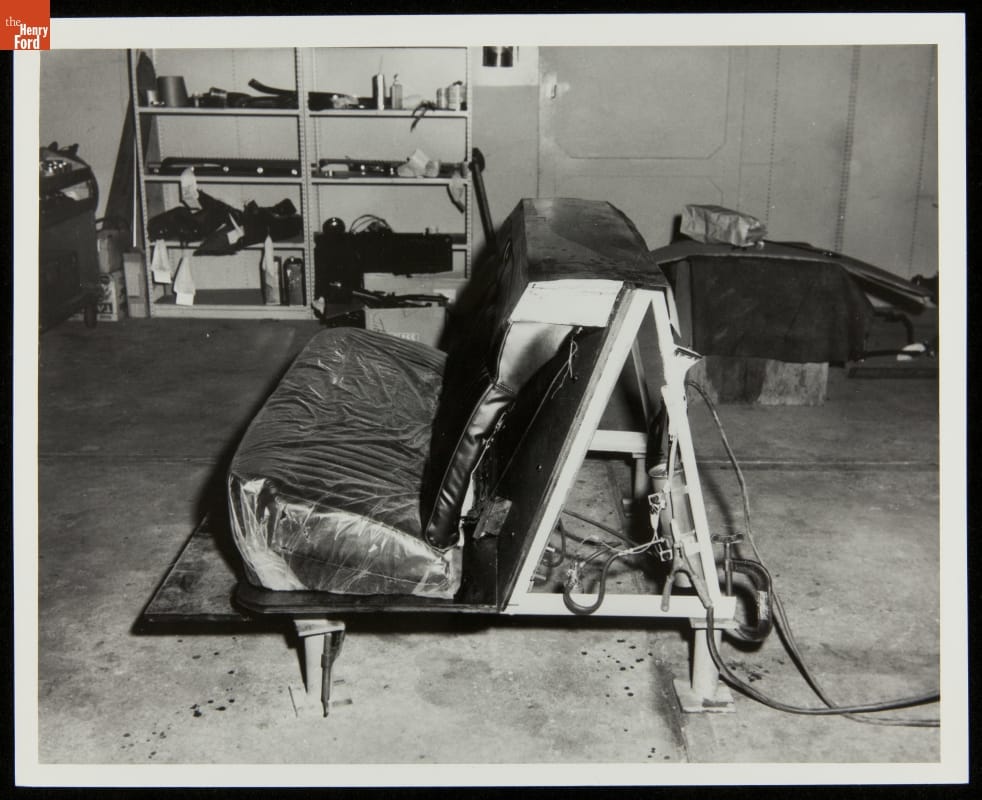
- Lincoln Continental Presidential Limousine Customization, Testing Adjustable Hydraulic Seat, 1961 - The Hess & Eisenhardt Company of Cincinnati, Ohio, transformed a stock 1961 Lincoln Continental convertible into the presidential limousine. Among the special modifications was a hydraulic lift installed on the rear seat. At the touch of a button, the president could raise the seat 10-1/2 inches to make himself and his passengers more visible to crowds watching the limousine pass.
- 1961
- Collections - Artifact
Lincoln Continental Presidential Limousine Customization, Testing Adjustable Hydraulic Seat, 1961
The Hess & Eisenhardt Company of Cincinnati, Ohio, transformed a stock 1961 Lincoln Continental convertible into the presidential limousine. Among the special modifications was a hydraulic lift installed on the rear seat. At the touch of a button, the president could raise the seat 10-1/2 inches to make himself and his passengers more visible to crowds watching the limousine pass.
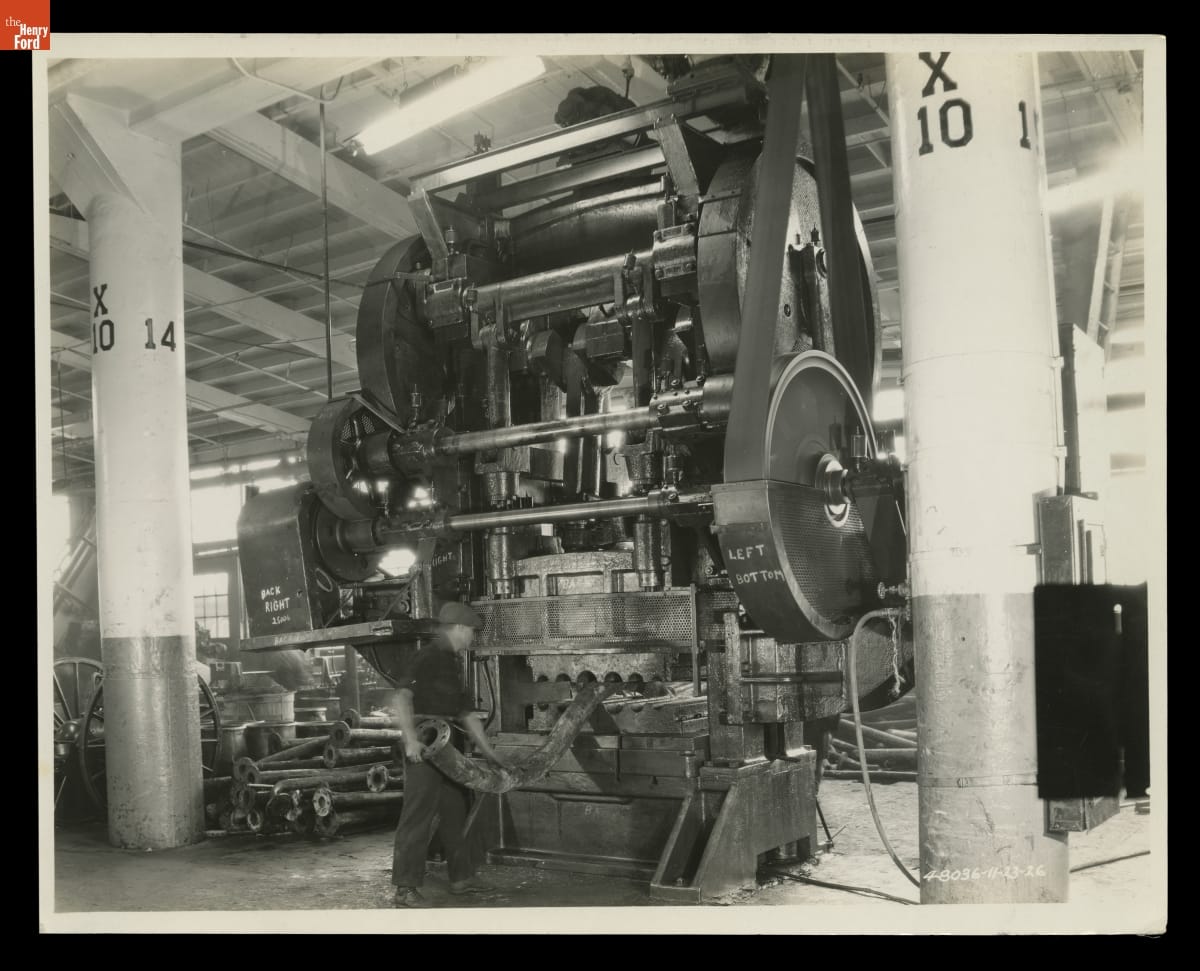
- Worker Operating a Press in the Salvage Department at the Ford Motor Company Rouge Plant, November 1926 - In 1925, Ford Motor Company purchased 199 surplus World War I merchant ships from the U.S. government. The vessels were towed by tugs to the Rouge, where most were cut into scrap metal used in the plant's steel-making facilities. Serviceable parts were salvaged. Here, a worker straightens a pipe from one of the ships for use elsewhere.
- November 23, 1926
- Collections - Artifact
Worker Operating a Press in the Salvage Department at the Ford Motor Company Rouge Plant, November 1926
In 1925, Ford Motor Company purchased 199 surplus World War I merchant ships from the U.S. government. The vessels were towed by tugs to the Rouge, where most were cut into scrap metal used in the plant's steel-making facilities. Serviceable parts were salvaged. Here, a worker straightens a pipe from one of the ships for use elsewhere.
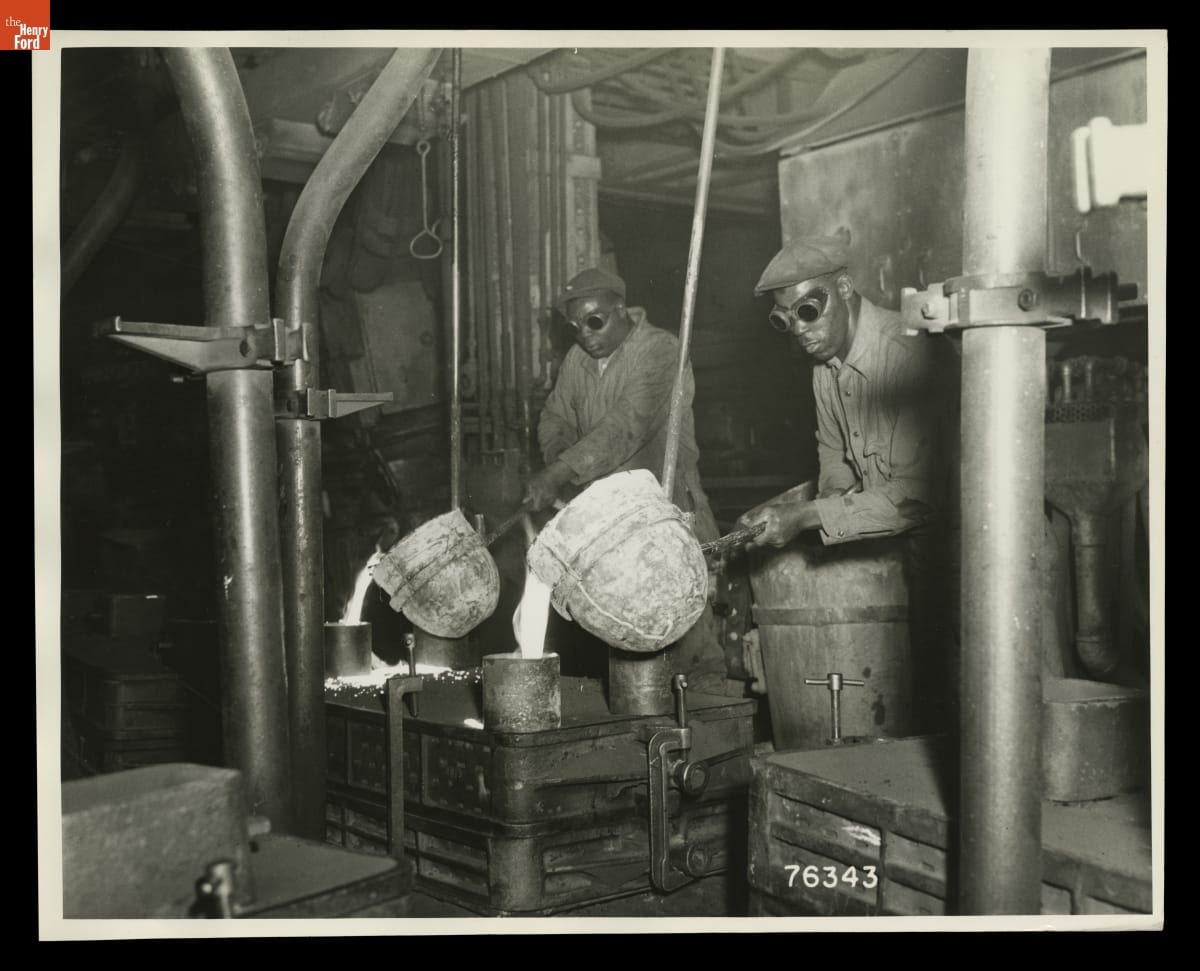
- Workers Pouring Molten Metal in the Foundry at the Ford Motor Company Rouge Plant, November 10, 1941 - Workers at the Ford Rouge plant's foundry poured a molten mixture of metal, coke, and limestone into molds to create cast-metal engine blocks and parts. Once "shaken out" of their molds, castings were roughly machined before heading elsewhere for finishing and assembly. The Rouge foundry set an industry benchmark in 1932 by successfully casting Ford's intricate, single-piece V-8 engine block.
- November 10, 1941
- Collections - Artifact
Workers Pouring Molten Metal in the Foundry at the Ford Motor Company Rouge Plant, November 10, 1941
Workers at the Ford Rouge plant's foundry poured a molten mixture of metal, coke, and limestone into molds to create cast-metal engine blocks and parts. Once "shaken out" of their molds, castings were roughly machined before heading elsewhere for finishing and assembly. The Rouge foundry set an industry benchmark in 1932 by successfully casting Ford's intricate, single-piece V-8 engine block.
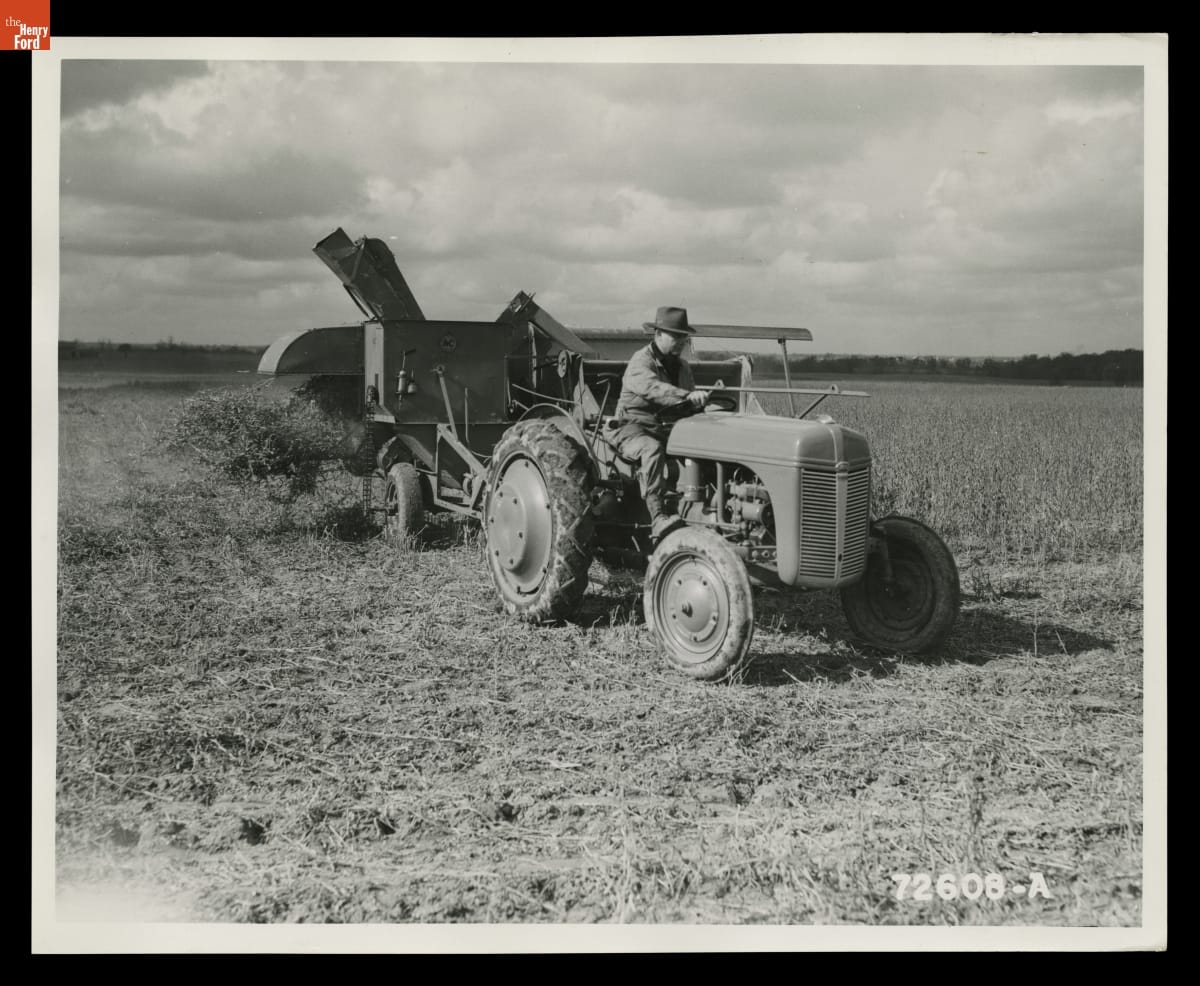
- Ford-Ferguson Model 9N Tractor Pulling a Combine, Macon, Michigan, November 1939 - Henry Ford acquired thousands of acres of farmland in southeast Michigan, collectively known as the Ford Farms. Much of the Farms' acreage was dedicated to one of Ford's agricultural interests at that time: soybeans. This 1939 image shows a tractor-drawn combine harvesting soybeans in Macon, Michigan.
- November 01, 1939
- Collections - Artifact
Ford-Ferguson Model 9N Tractor Pulling a Combine, Macon, Michigan, November 1939
Henry Ford acquired thousands of acres of farmland in southeast Michigan, collectively known as the Ford Farms. Much of the Farms' acreage was dedicated to one of Ford's agricultural interests at that time: soybeans. This 1939 image shows a tractor-drawn combine harvesting soybeans in Macon, Michigan.
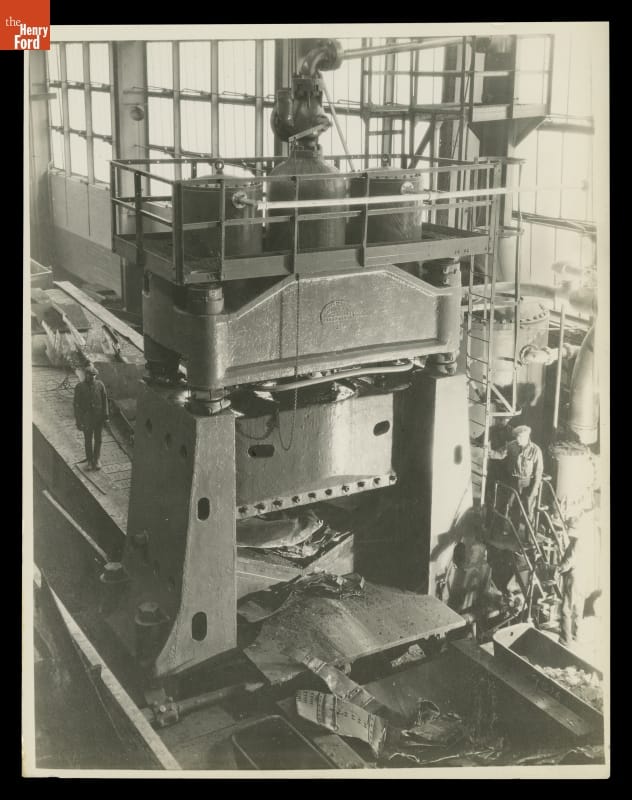
- Hydraulic Shear at Ford Rouge Plant, 1927 - To produce steel for Rouge plant operations, Ford used ten open-hearth furnaces. The furnaces, each with a capacity of at least 180 tons, resided here in the open-hearth building. These workers used a steam-powered shearer to smash scrap metal into small pieces. The bits of metal joined with molten iron in one of the furnaces and eventually became steel.
- 1927
- Collections - Artifact
Hydraulic Shear at Ford Rouge Plant, 1927
To produce steel for Rouge plant operations, Ford used ten open-hearth furnaces. The furnaces, each with a capacity of at least 180 tons, resided here in the open-hearth building. These workers used a steam-powered shearer to smash scrap metal into small pieces. The bits of metal joined with molten iron in one of the furnaces and eventually became steel.
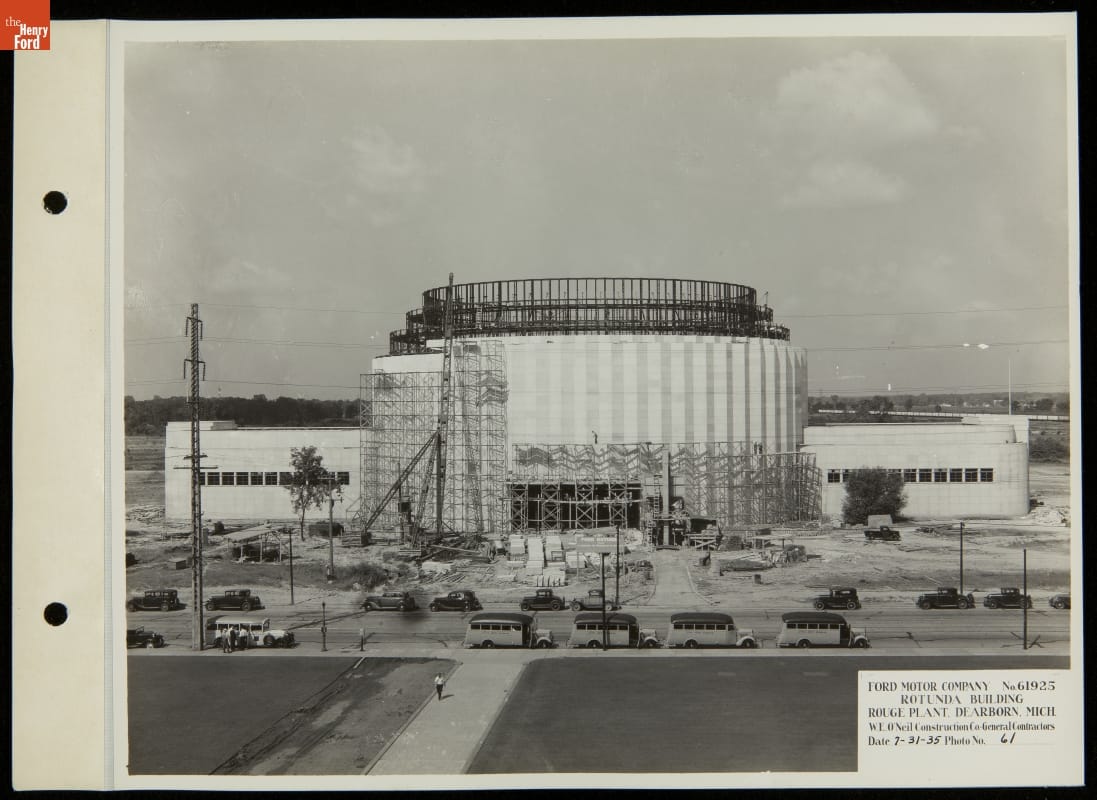
- Ford Rotunda Construction Site, Dearborn, Michigan, July 31, 1935 - After the Century of Progress Exposition ended in 1934, Ford Motor Company brought its central Rotunda building from that fair back to Dearborn. From 1936 to 1962, Ford recreated the excitement of a World's Fair exposition on its home turf. This photo, from July 31, 1935, shows the Ford Rotunda being constructed in Dearborn.
- July 31, 1935
- Collections - Artifact
Ford Rotunda Construction Site, Dearborn, Michigan, July 31, 1935
After the Century of Progress Exposition ended in 1934, Ford Motor Company brought its central Rotunda building from that fair back to Dearborn. From 1936 to 1962, Ford recreated the excitement of a World's Fair exposition on its home turf. This photo, from July 31, 1935, shows the Ford Rotunda being constructed in Dearborn.
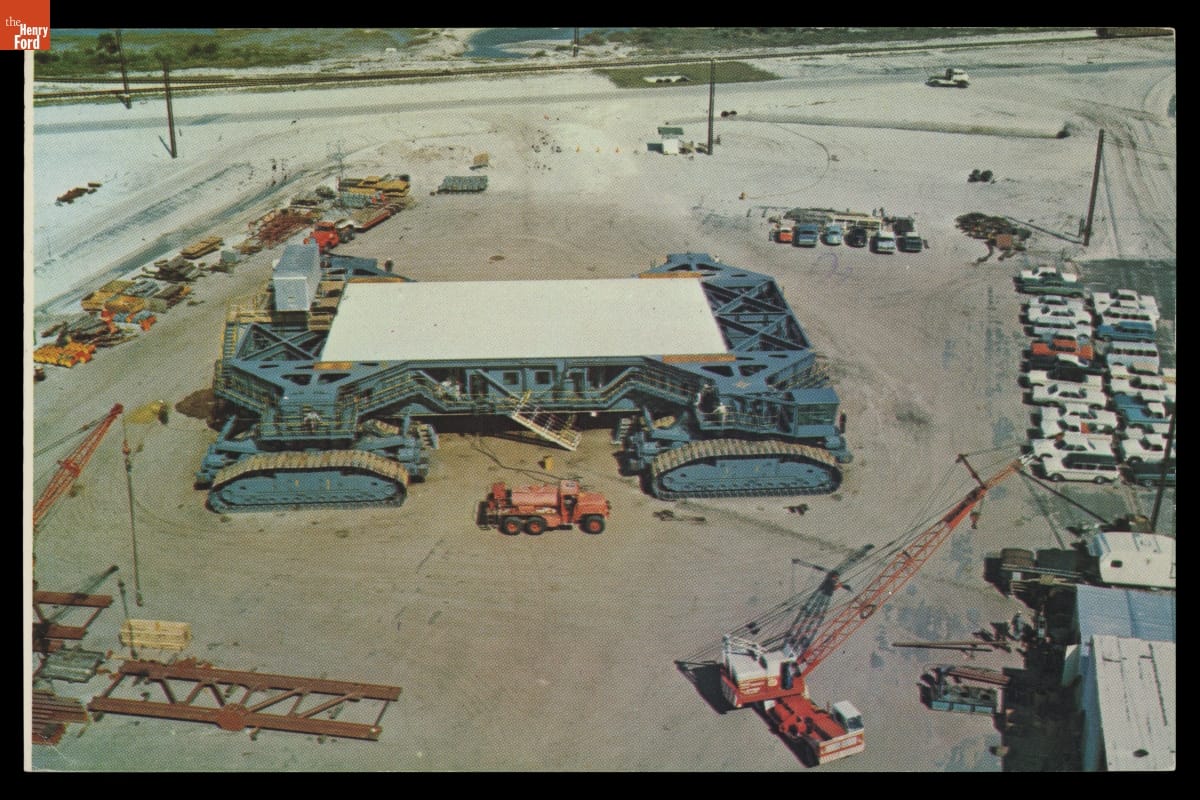
- NASA Crawler-Transporter #1, Used to Carry Apollo/Saturn V Launch Vehicle -
- 1967-1973
- Collections - Artifact
NASA Crawler-Transporter #1, Used to Carry Apollo/Saturn V Launch Vehicle
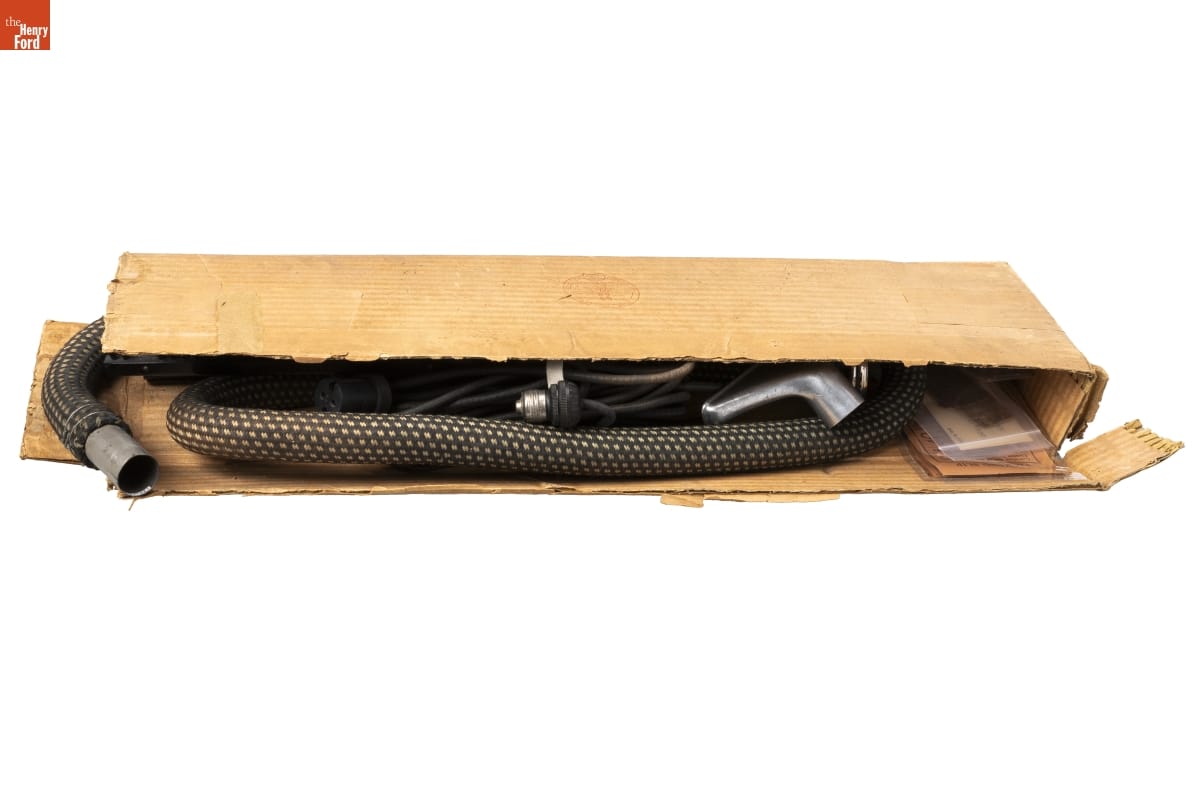
- Attachments for Eureka Grand Prize Model 11 Vacuum Cleaner, circa 1930 -
- circa 1930
- Collections - Artifact
Attachments for Eureka Grand Prize Model 11 Vacuum Cleaner, circa 1930
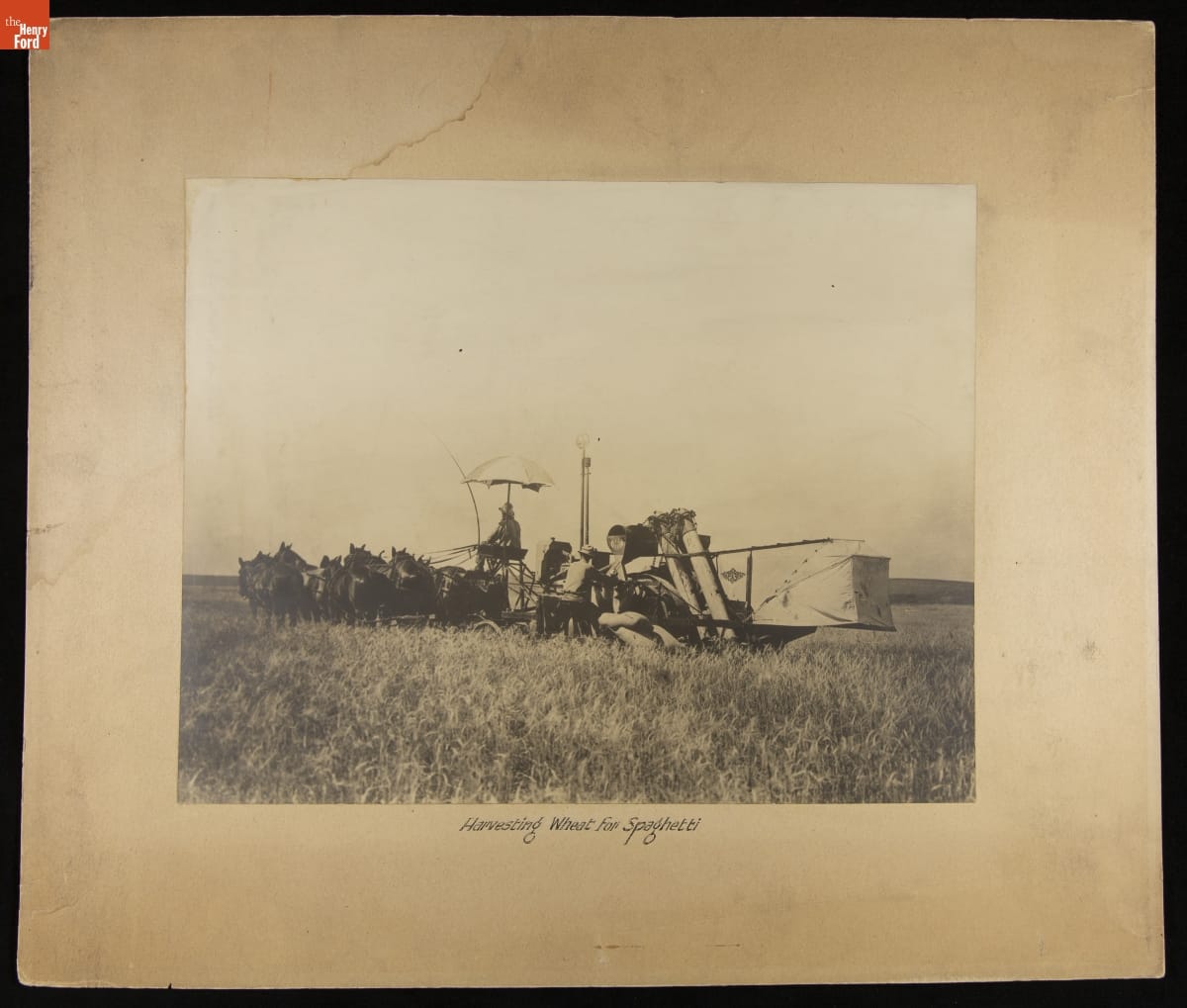
- Harvesting Wheat for Spaghetti, H. J. Heinz Company, 1930-1940 - Entrepreneur H.J. Heinz recognized that producing the highest quality products began with where the ingredients were grown and how they were harvested. The H.J. Heinz Company took great care in managing every aspect of the process to ensure the best ingredients were used in its products. In this photograph, workers are harvesting wheat for the company's heat-and-serve spaghetti products.
- 1930-1940
- Collections - Artifact
Harvesting Wheat for Spaghetti, H. J. Heinz Company, 1930-1940
Entrepreneur H.J. Heinz recognized that producing the highest quality products began with where the ingredients were grown and how they were harvested. The H.J. Heinz Company took great care in managing every aspect of the process to ensure the best ingredients were used in its products. In this photograph, workers are harvesting wheat for the company's heat-and-serve spaghetti products.