
Search
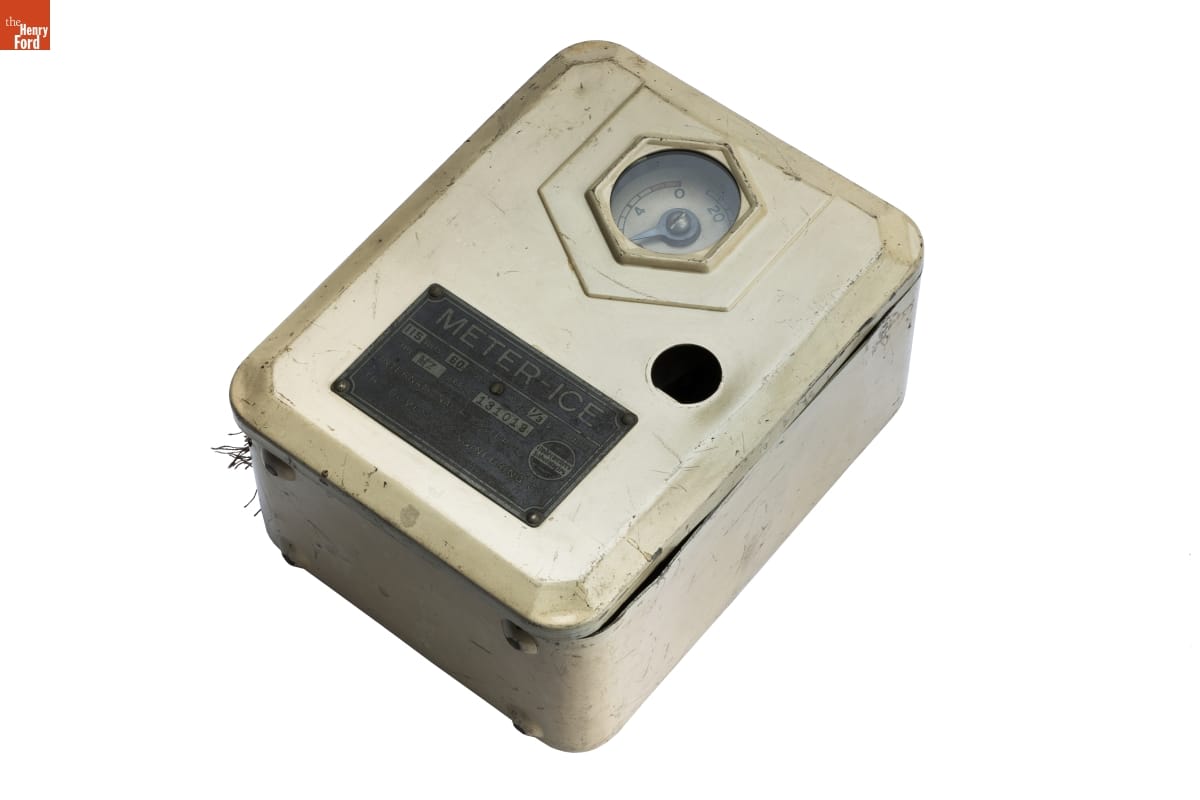
- "Meter-Ice" Coin Operated Refrigerator Meter, 1935-1945 -
- 1935-1945
- Collections - Artifact
"Meter-Ice" Coin Operated Refrigerator Meter, 1935-1945
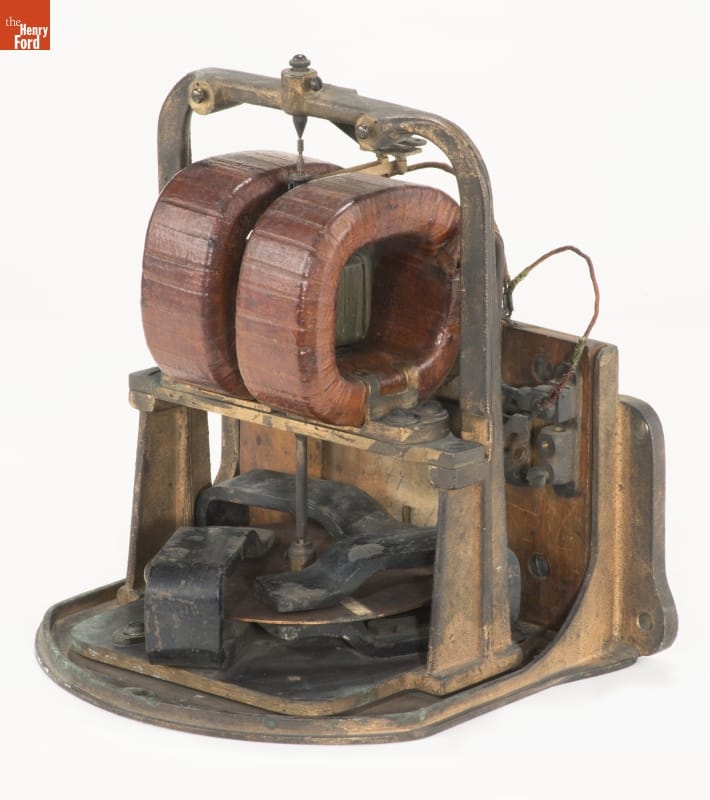
- Thomson-Houston Recording Wattmeter, 1889-1892 - Elihu Thomson, engineer, inventor and cofounder of the Thomson-Houston Electric Company, developed a commutator-type wattmeter in the late 1880s. His recording watt-hour meter helped transform the nascent electric power industry. The sturdy device provided companies that supplied electricity to consumers a way to accurately track and bill electrical power use.
- 1889-1892
- Collections - Artifact
Thomson-Houston Recording Wattmeter, 1889-1892
Elihu Thomson, engineer, inventor and cofounder of the Thomson-Houston Electric Company, developed a commutator-type wattmeter in the late 1880s. His recording watt-hour meter helped transform the nascent electric power industry. The sturdy device provided companies that supplied electricity to consumers a way to accurately track and bill electrical power use.
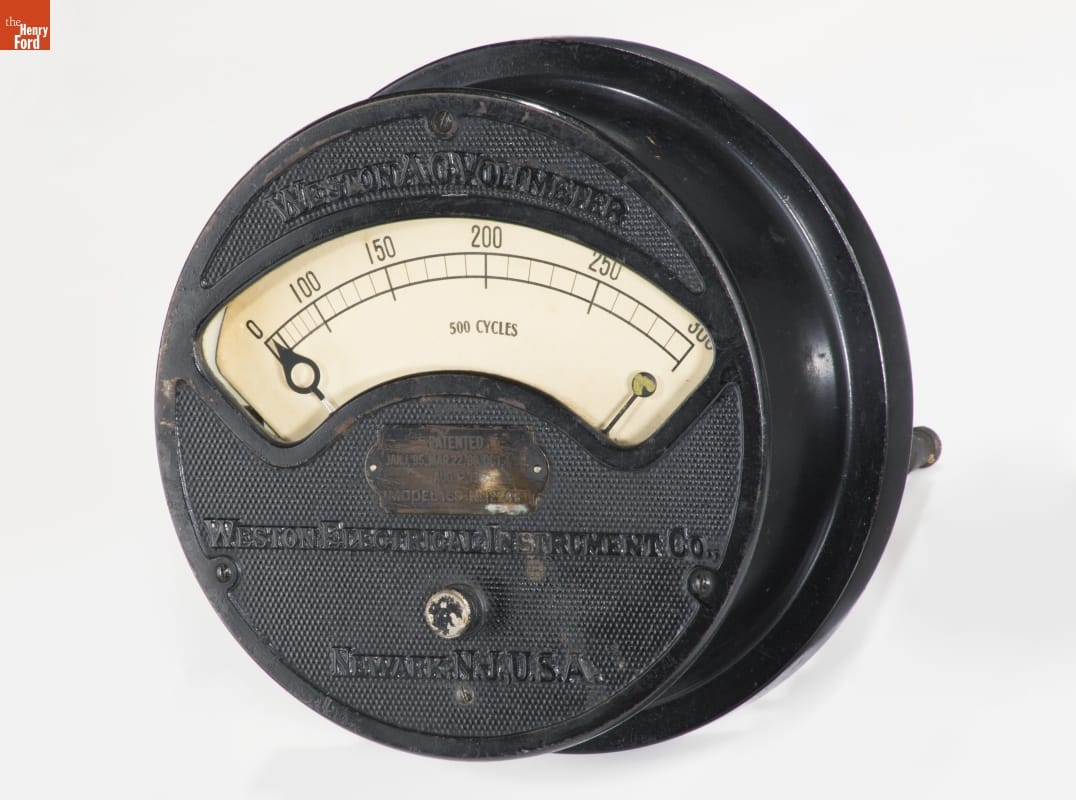
- Weston Model 156 Voltmeter, circa 1914 -
- circa 1914
- Collections - Artifact
Weston Model 156 Voltmeter, circa 1914
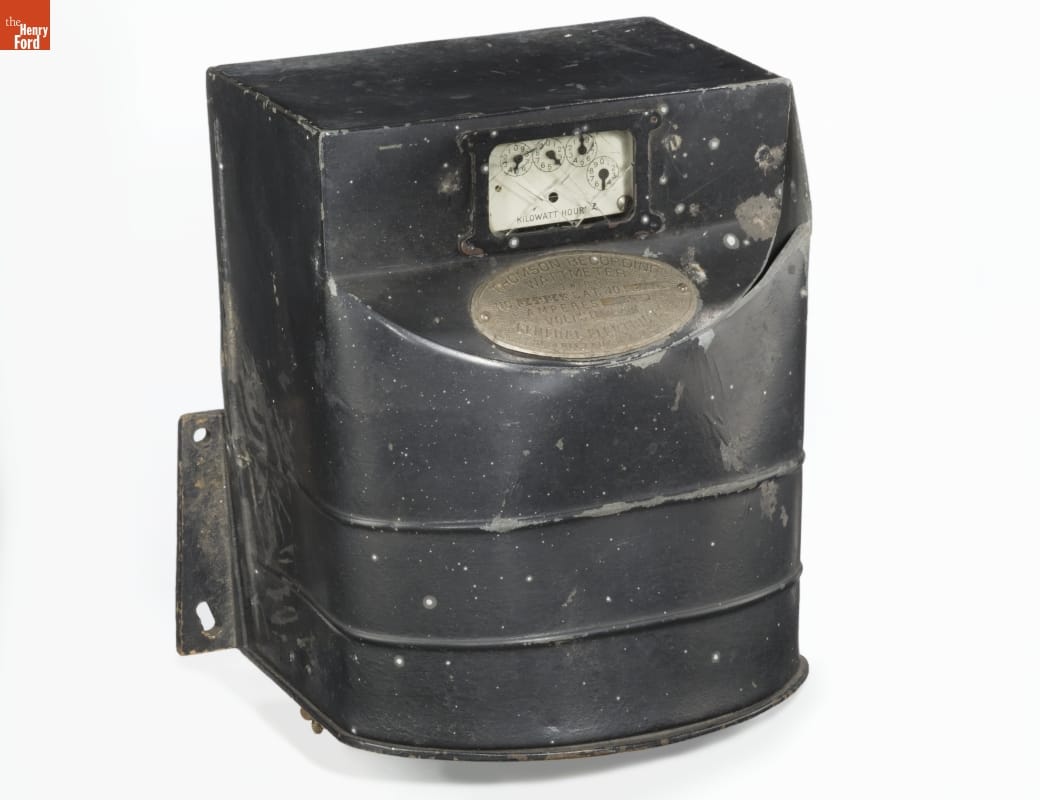
- General Electric Thomson Recording Wattmeter, circa 1903 - Elihu Thomson, engineer, inventor and cofounder of the Thomson-Houston Electric Company, developed a commutator-type wattmeter in the late 1880s. His recording watt-hour meter helped transform the nascent electric power industry. The sturdy device provided companies that supplied electricity to consumers a way to accurately track and bill electrical power use.
- circa 1903
- Collections - Artifact
General Electric Thomson Recording Wattmeter, circa 1903
Elihu Thomson, engineer, inventor and cofounder of the Thomson-Houston Electric Company, developed a commutator-type wattmeter in the late 1880s. His recording watt-hour meter helped transform the nascent electric power industry. The sturdy device provided companies that supplied electricity to consumers a way to accurately track and bill electrical power use.
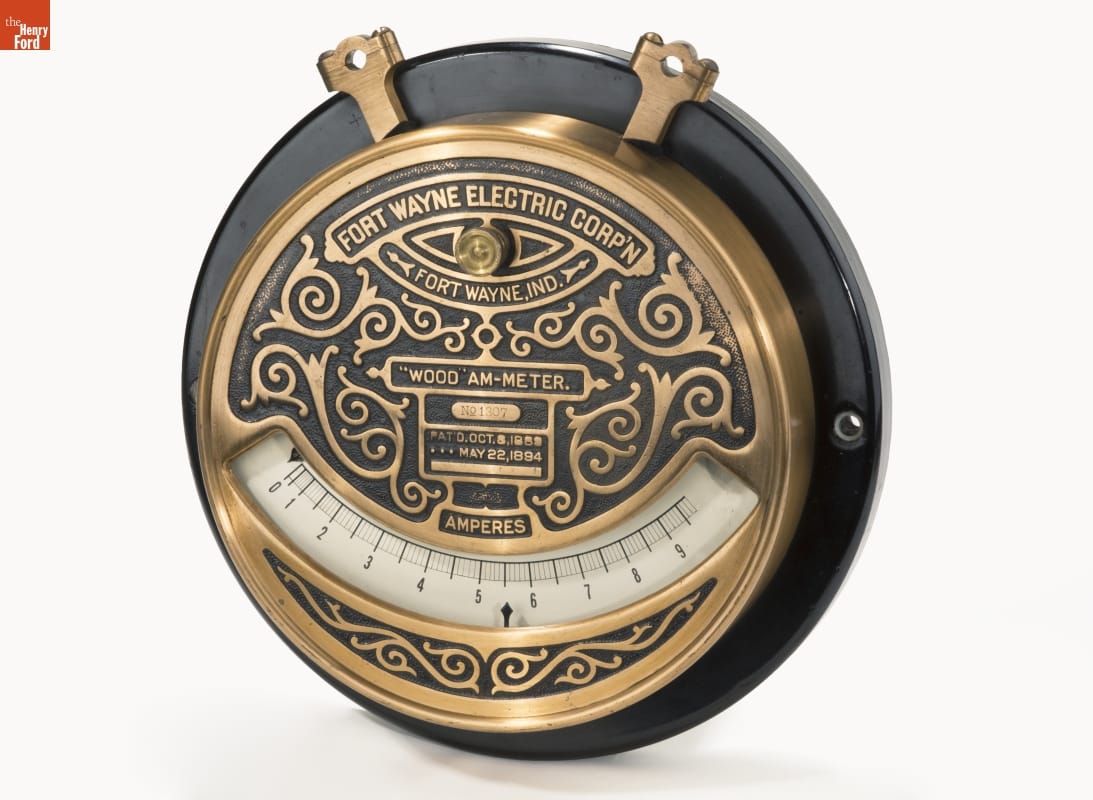
- Fort Wayne Wood Ammeter, 1895 - In the late 1800s and early 1900s, companies that supplied electricity to consumers needed a variety of instruments to regulate and monitor electrical output. These instruments were vital to the operation of power stations and needed to be accurate and rugged. Ammeters--used to measure the current in a circuit--could be found on switchboards or connected to motors and generators.
- December 02, 1895
- Collections - Artifact
Fort Wayne Wood Ammeter, 1895
In the late 1800s and early 1900s, companies that supplied electricity to consumers needed a variety of instruments to regulate and monitor electrical output. These instruments were vital to the operation of power stations and needed to be accurate and rugged. Ammeters--used to measure the current in a circuit--could be found on switchboards or connected to motors and generators.
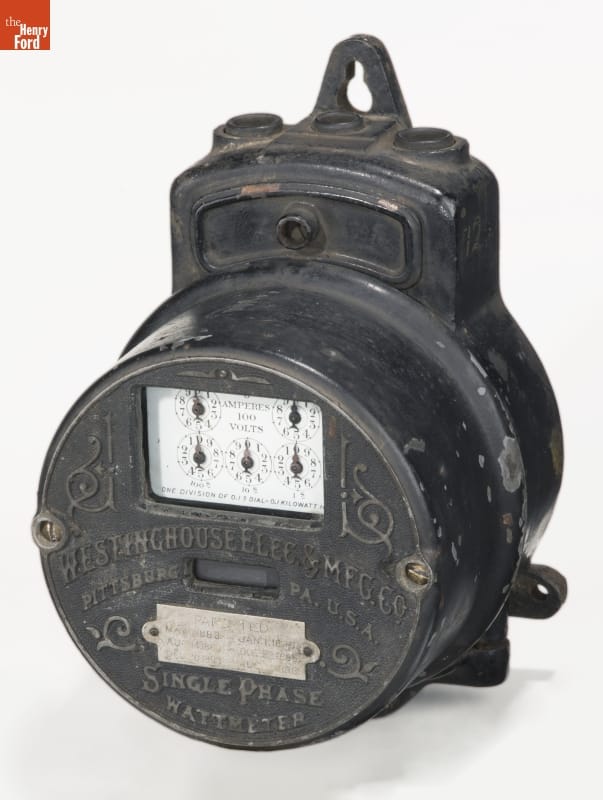
- Westinghouse Type A Wattmeter, circa 1903 - In the late 1800s, companies that supplied electricity to consumers needed a way to measure how much customers used -- and then charge them accordingly. Inventive electrical engineers developed various methods to measure electric power. Induction meters that employed magnetic fields to rotate a disc or cylinder to register energy usage would become the standard. Continued improvements made these wattmeters more compact and reliable.
- circa 1903
- Collections - Artifact
Westinghouse Type A Wattmeter, circa 1903
In the late 1800s, companies that supplied electricity to consumers needed a way to measure how much customers used -- and then charge them accordingly. Inventive electrical engineers developed various methods to measure electric power. Induction meters that employed magnetic fields to rotate a disc or cylinder to register energy usage would become the standard. Continued improvements made these wattmeters more compact and reliable.
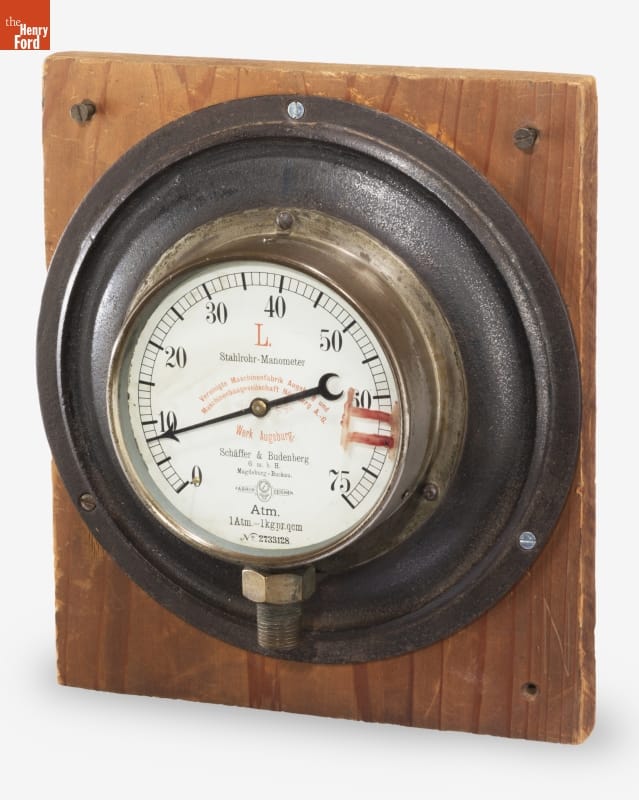
- Schaffer & Budenberg Manometer, 1898-1908 - The German firm of Schaeffner and Budenberg began manufacturing gauges in the 19th century. This manometer measures the pressure of a fluid or gas through a pipe -- such as those found on steam engines -- alerting workers so they can avoid any problems that may occur.
- 1898-1908
- Collections - Artifact
Schaffer & Budenberg Manometer, 1898-1908
The German firm of Schaeffner and Budenberg began manufacturing gauges in the 19th century. This manometer measures the pressure of a fluid or gas through a pipe -- such as those found on steam engines -- alerting workers so they can avoid any problems that may occur.
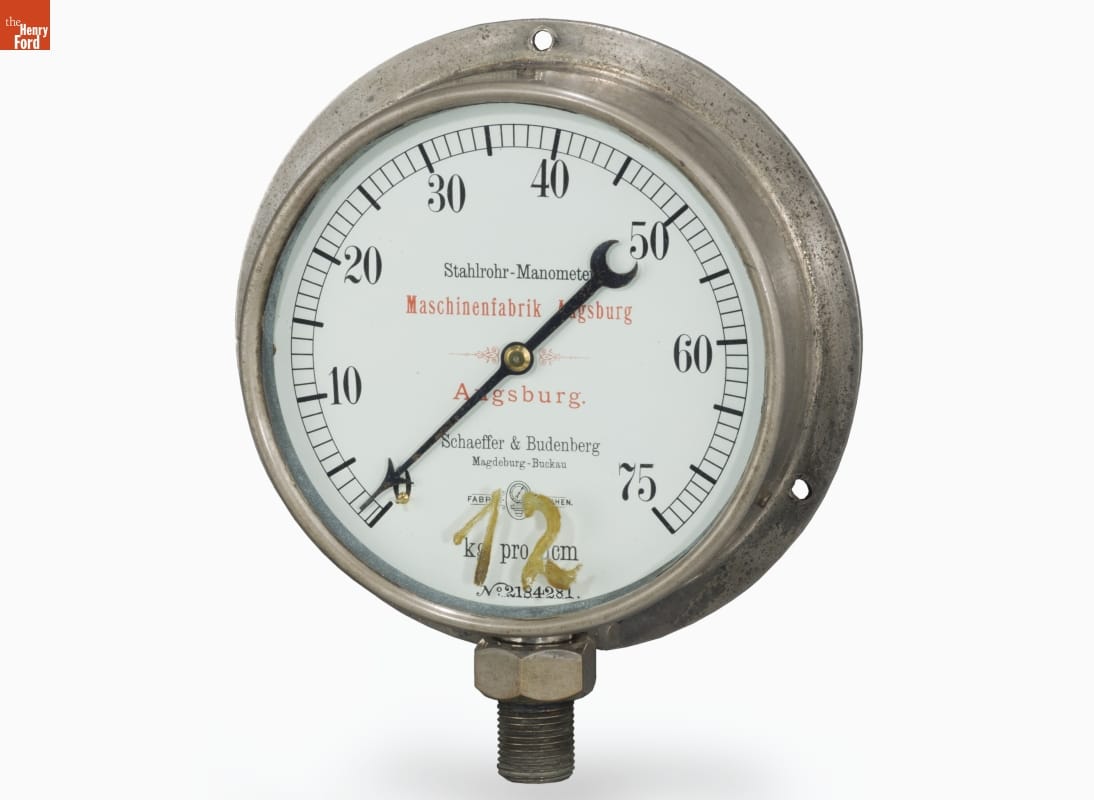
- Schaeffer & Budenberg Manometer, 1875-1898 - The German firm of Schaeffner and Budenberg began manufacturing gauges in the 19th century. This manometer measures the pressure of a fluid or gas through a pipe -- such as those found on steam engines -- alerting workers so they can avoid any problems that may occur.
- 1875-1898
- Collections - Artifact
Schaeffer & Budenberg Manometer, 1875-1898
The German firm of Schaeffner and Budenberg began manufacturing gauges in the 19th century. This manometer measures the pressure of a fluid or gas through a pipe -- such as those found on steam engines -- alerting workers so they can avoid any problems that may occur.
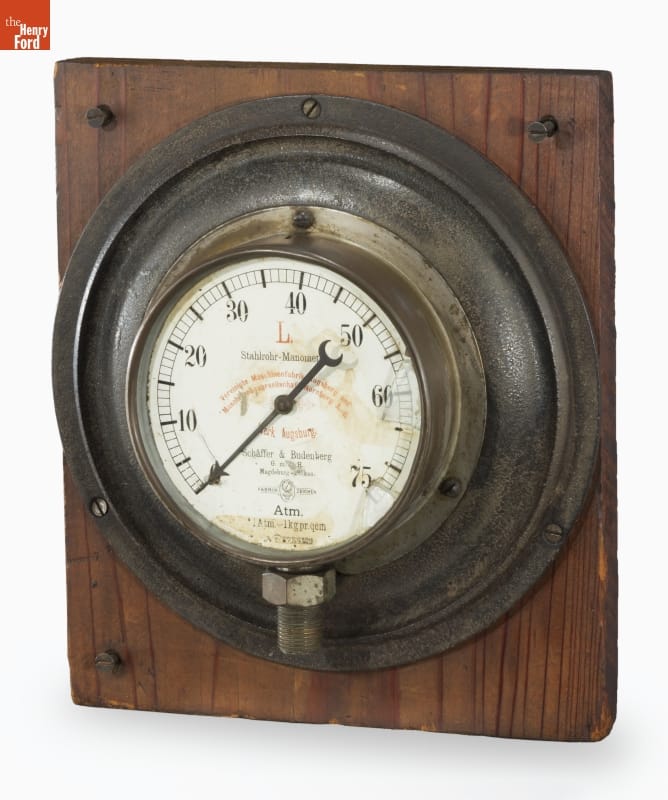
- Schaeffer & Budenberg Manometer, 1898-1908 - The German firm of Schaeffner and Budenberg began manufacturing gauges in the 19th century. This manometer measures the pressure of a fluid or gas through a pipe -- such as those found on steam engines -- alerting workers so they can avoid any problems that may occur.
- 1898-1908
- Collections - Artifact
Schaeffer & Budenberg Manometer, 1898-1908
The German firm of Schaeffner and Budenberg began manufacturing gauges in the 19th century. This manometer measures the pressure of a fluid or gas through a pipe -- such as those found on steam engines -- alerting workers so they can avoid any problems that may occur.
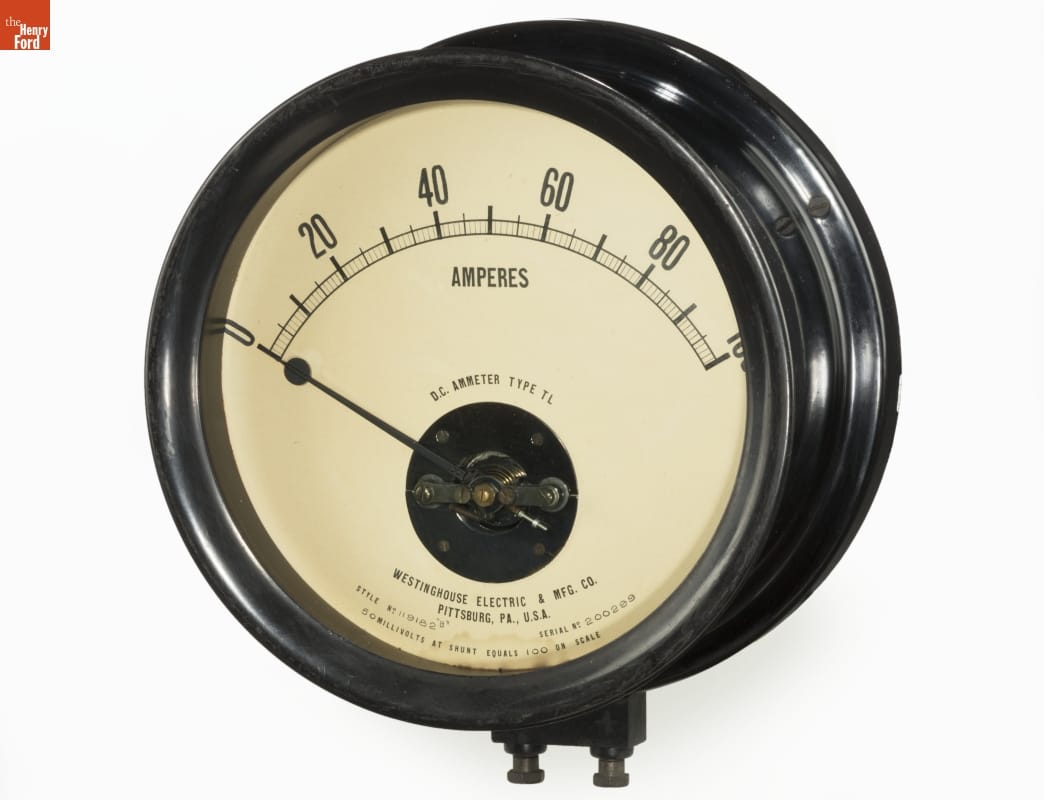
- Westinghouse Type TL Ammeter, circa 1911 - In the late 1800s and early 1900s, companies that supplied electricity to consumers needed a variety of instruments to regulate and monitor electrical output. These instruments were vital to the operation of power stations and needed to be accurate and rugged. Ammeters--used to measure the current in a circuit--could be found on switchboards or connected to motors and generators.
- circa 1911
- Collections - Artifact
Westinghouse Type TL Ammeter, circa 1911
In the late 1800s and early 1900s, companies that supplied electricity to consumers needed a variety of instruments to regulate and monitor electrical output. These instruments were vital to the operation of power stations and needed to be accurate and rugged. Ammeters--used to measure the current in a circuit--could be found on switchboards or connected to motors and generators.