
Search
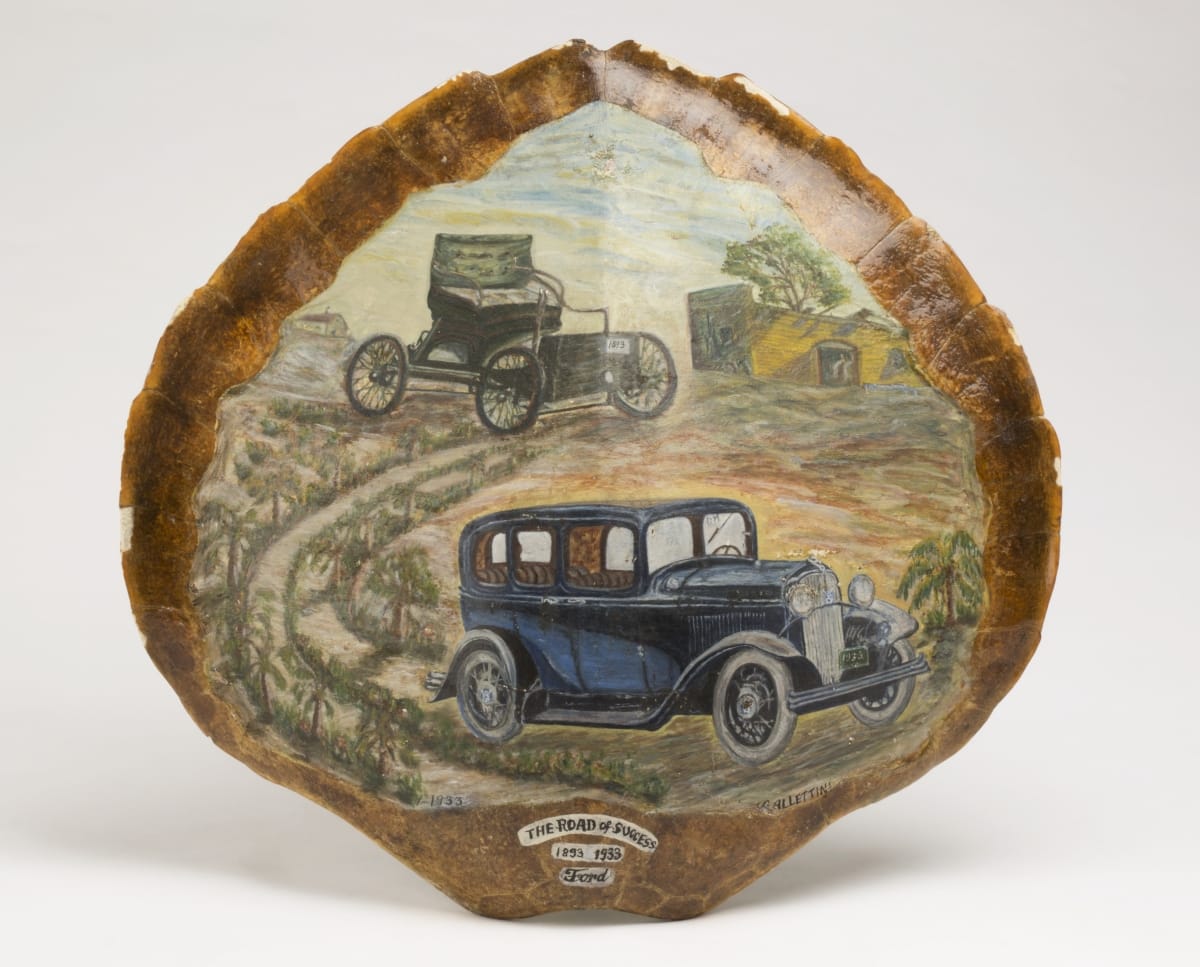
- Painting on Turtle Shell, Presented to Henry Ford, 1933 - Acknowledging Henry Ford's innovative spirit, individuals employing their own original and imaginative efforts bestowed hundreds of handmade gifts upon him. According to the creator of this unique gift, he was inspired by the ". . . warm spot I have in my heart for Ford's product. I am a satisfied Ford user."
- 1933
- Collections - Artifact
Painting on Turtle Shell, Presented to Henry Ford, 1933
Acknowledging Henry Ford's innovative spirit, individuals employing their own original and imaginative efforts bestowed hundreds of handmade gifts upon him. According to the creator of this unique gift, he was inspired by the ". . . warm spot I have in my heart for Ford's product. I am a satisfied Ford user."
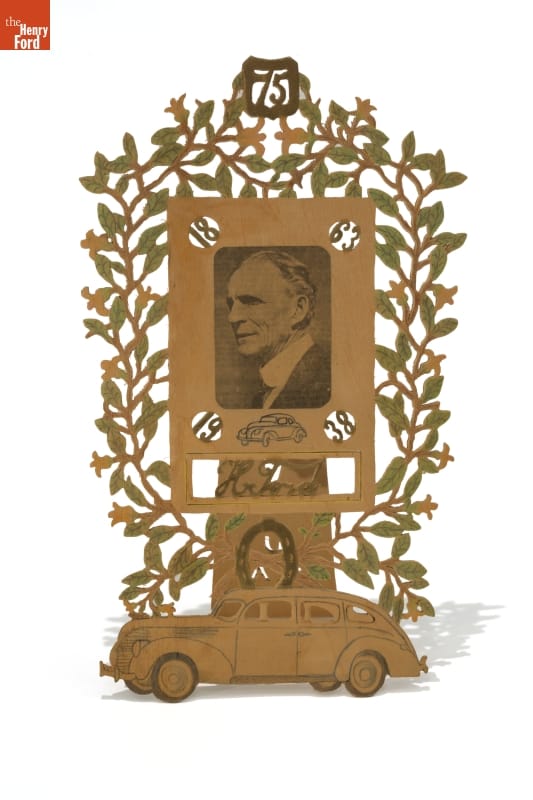
- Handmade Scrollwork Frame with Portrait of Henry Ford, 1938 - Friends and well-wishers throughout the country sent birthday greetings to the Henry Ford each July 30th. Many sent telegrams, some mailed cards and still others created special gifts or keepsakes for the famous automaker.
- 1938
- Collections - Artifact
Handmade Scrollwork Frame with Portrait of Henry Ford, 1938
Friends and well-wishers throughout the country sent birthday greetings to the Henry Ford each July 30th. Many sent telegrams, some mailed cards and still others created special gifts or keepsakes for the famous automaker.
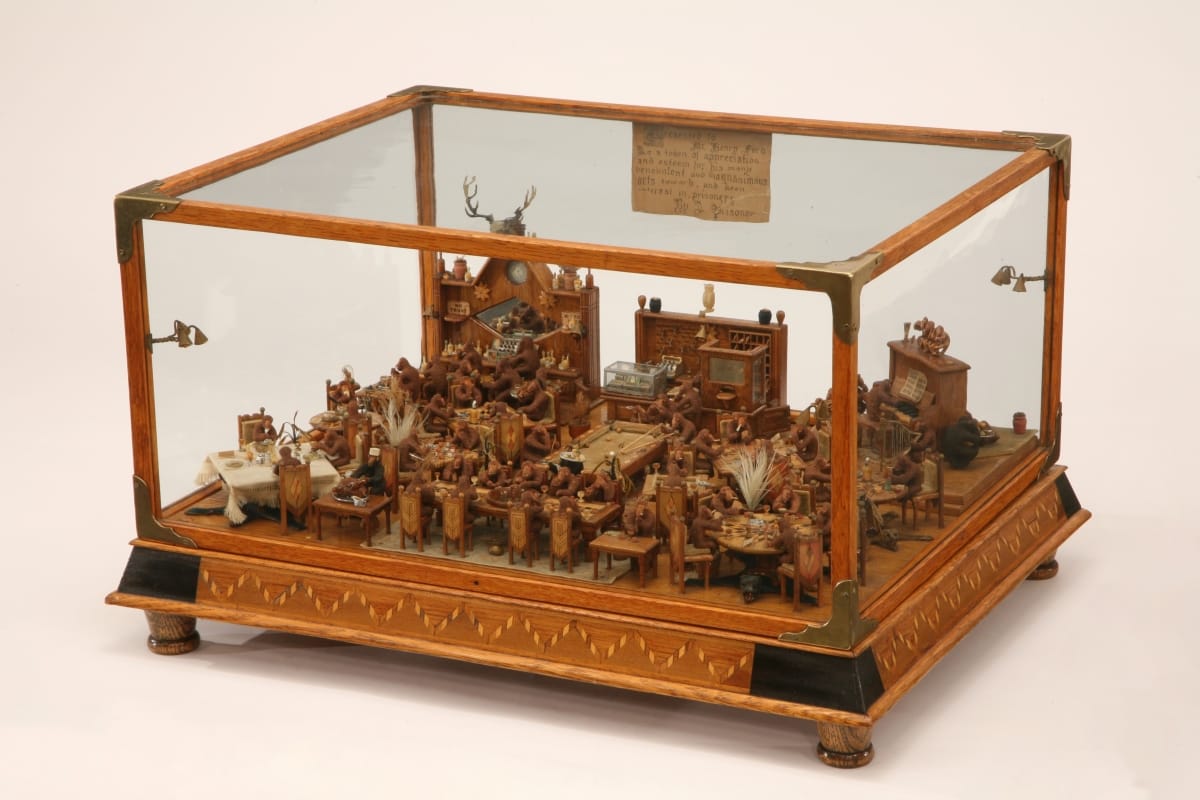
- "Monkey Bar" Diorama, Made by Prisoner Patrick J. Culhane and Presented to Henry Ford, 1914-1915 - In 1915, Patrick J. Culhane, an inmate at the Massachusetts State Prison, presented this diorama to Henry Ford. Culhane depicted monkeys engaging in activities he believed lead to the downfall of many prisoners, such as gambling and drinking alcohol. Ford, interested in the man who produced this elaborate work, probably secured Culhane's release and gave him a job at the Ford assembly plant in Cambridge, Massachusetts.
- 1914-1915
- Collections - Artifact
"Monkey Bar" Diorama, Made by Prisoner Patrick J. Culhane and Presented to Henry Ford, 1914-1915
In 1915, Patrick J. Culhane, an inmate at the Massachusetts State Prison, presented this diorama to Henry Ford. Culhane depicted monkeys engaging in activities he believed lead to the downfall of many prisoners, such as gambling and drinking alcohol. Ford, interested in the man who produced this elaborate work, probably secured Culhane's release and gave him a job at the Ford assembly plant in Cambridge, Massachusetts.