
Search
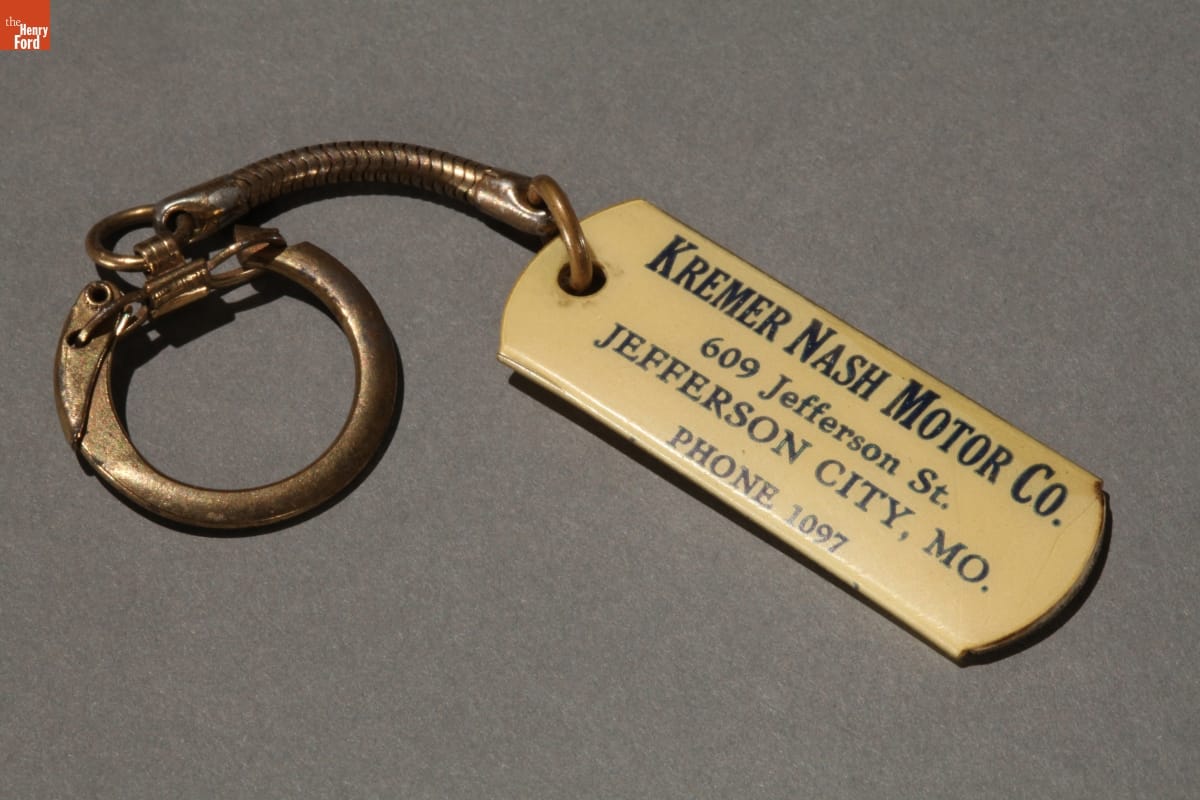
- Nash Motors Key Chain, circa 1925 - In 1916, Charles W. Nash founded Nash Motors Company in Kenosha, Wisconsin, focusing on mid-priced vehicles. The company absorbed several Wisconsin-based automobile firms in the 1920s and later merged with refrigerator manufacturer Kelvinator. Nash-Kelvinator Corporation merged with Hudson Motor Car Company to create American Motors Company in 1954. The Nash brand was phased out in 1957.
- circa 1925
- Collections - Artifact
Nash Motors Key Chain, circa 1925
In 1916, Charles W. Nash founded Nash Motors Company in Kenosha, Wisconsin, focusing on mid-priced vehicles. The company absorbed several Wisconsin-based automobile firms in the 1920s and later merged with refrigerator manufacturer Kelvinator. Nash-Kelvinator Corporation merged with Hudson Motor Car Company to create American Motors Company in 1954. The Nash brand was phased out in 1957.
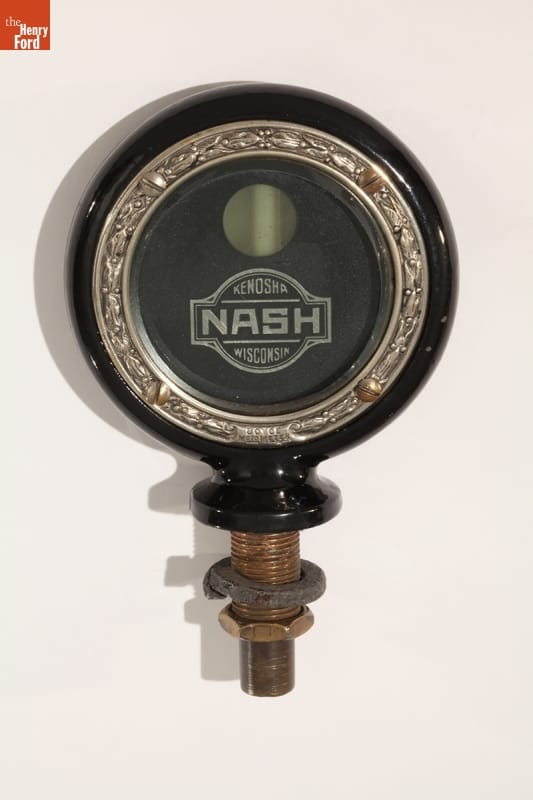
- Nash Motometer, circa 1925 - Automobiles often came without temperature gauges before the early 1930s, so enterprising manufacturers sold aftermarket motometers. Mounted on a car's radiator, these devices measured and displayed coolant water vapor temperature, notifying drivers if their automobiles were in danger of overheating. Moto-Meter Co. Inc. dominated the American market, producing the popular Boyce motometer and others featuring an automotive manufacturer's name or logo.
- circa 1925
- Collections - Artifact
Nash Motometer, circa 1925
Automobiles often came without temperature gauges before the early 1930s, so enterprising manufacturers sold aftermarket motometers. Mounted on a car's radiator, these devices measured and displayed coolant water vapor temperature, notifying drivers if their automobiles were in danger of overheating. Moto-Meter Co. Inc. dominated the American market, producing the popular Boyce motometer and others featuring an automotive manufacturer's name or logo.
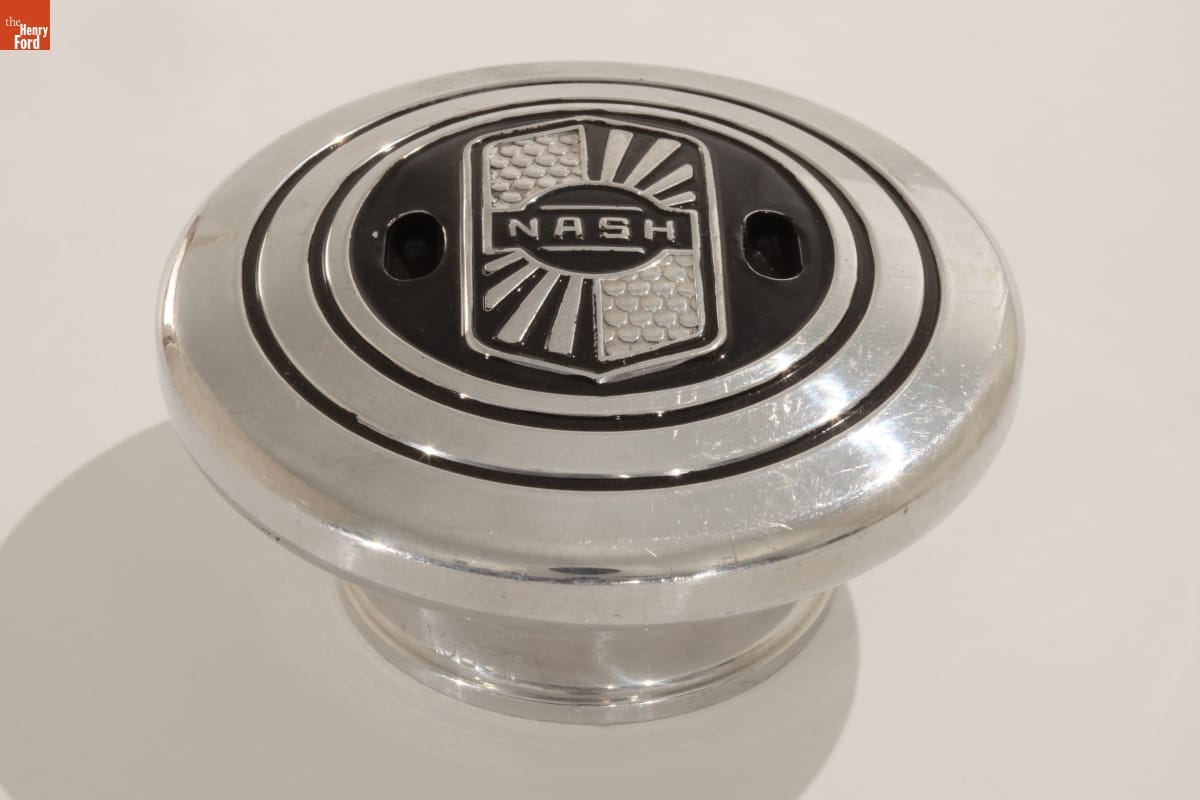
- Nash Hubcap, 1925-1930 - Early automobile wheels had a central hub with a greased wheel bearing. Hub caps kept grease in and dust out. As wheels evolved and hubcaps became functionally unnecessary, they remained important to both manufacturers -- who branded wheel covers with maker names or logos -- and consumers -- who identified with hubcaps as statements about their cars and themselves.
- 1925-1930
- Collections - Artifact
Nash Hubcap, 1925-1930
Early automobile wheels had a central hub with a greased wheel bearing. Hub caps kept grease in and dust out. As wheels evolved and hubcaps became functionally unnecessary, they remained important to both manufacturers -- who branded wheel covers with maker names or logos -- and consumers -- who identified with hubcaps as statements about their cars and themselves.
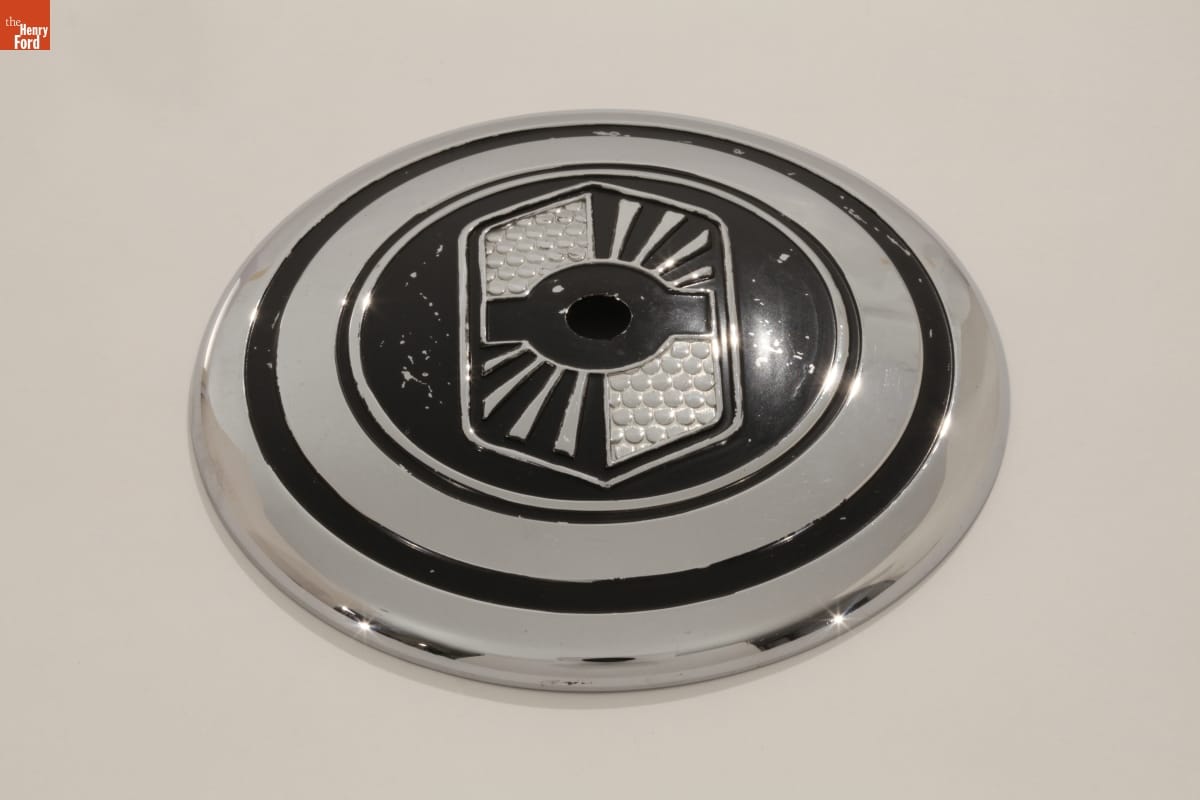
- Nash Hubcap, 1930-1938 - Early automobile wheels had a central hub with a greased wheel bearing. Hub caps kept grease in and dust out. As wheels evolved and hubcaps became functionally unnecessary, they remained important to both manufacturers -- who branded wheel covers with maker names or logos -- and consumers -- who identified with hubcaps as statements about their cars and themselves.
- 1930-1938
- Collections - Artifact
Nash Hubcap, 1930-1938
Early automobile wheels had a central hub with a greased wheel bearing. Hub caps kept grease in and dust out. As wheels evolved and hubcaps became functionally unnecessary, they remained important to both manufacturers -- who branded wheel covers with maker names or logos -- and consumers -- who identified with hubcaps as statements about their cars and themselves.
- Nash Hubcap, 1925 - Early automobile wheels had a central hub with a greased wheel bearing. Hub caps kept grease in and dust out. Beginning in 1915, the Aluminum Goods Manufacturing Company of Manitowoc, Wisconsin, supplied hubcaps -- including this one -- to many automotive manufacturers. Hubcaps became functionally unnecessary as wheels evolved, but they remained important components of style and marketing.
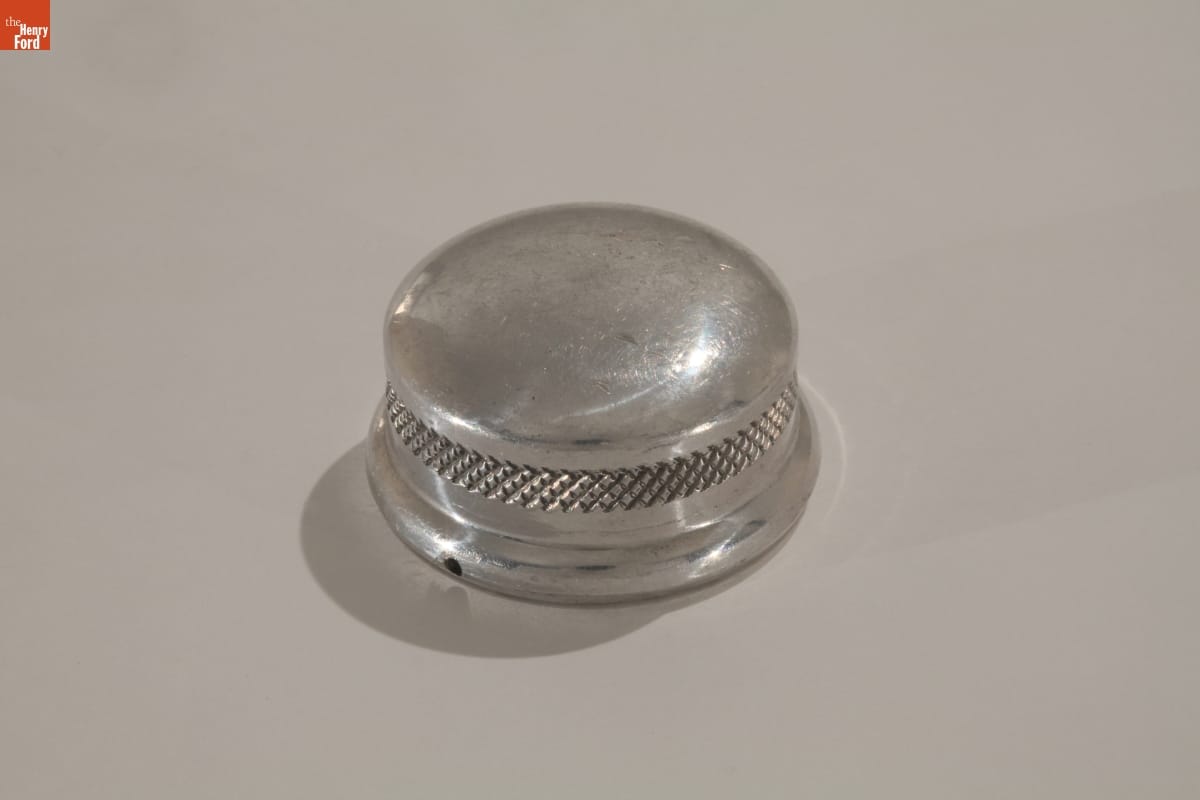
- 1925
- Collections - Artifact
Nash Hubcap, 1925
Early automobile wheels had a central hub with a greased wheel bearing. Hub caps kept grease in and dust out. Beginning in 1915, the Aluminum Goods Manufacturing Company of Manitowoc, Wisconsin, supplied hubcaps -- including this one -- to many automotive manufacturers. Hubcaps became functionally unnecessary as wheels evolved, but they remained important components of style and marketing.
- Man Driving a Jeffery Quad Loaded with Hay, 1913-1928 - The Jeffery Company, and its successor Nash Motors, built Quad trucks from 1913 to 1928. All four wheels were powered, all four wheels were used in steering, and special differentials allowed all four wheels to move independently as traction conditions required. Quads were equally at home in mud, in snow, or on the battlefield.
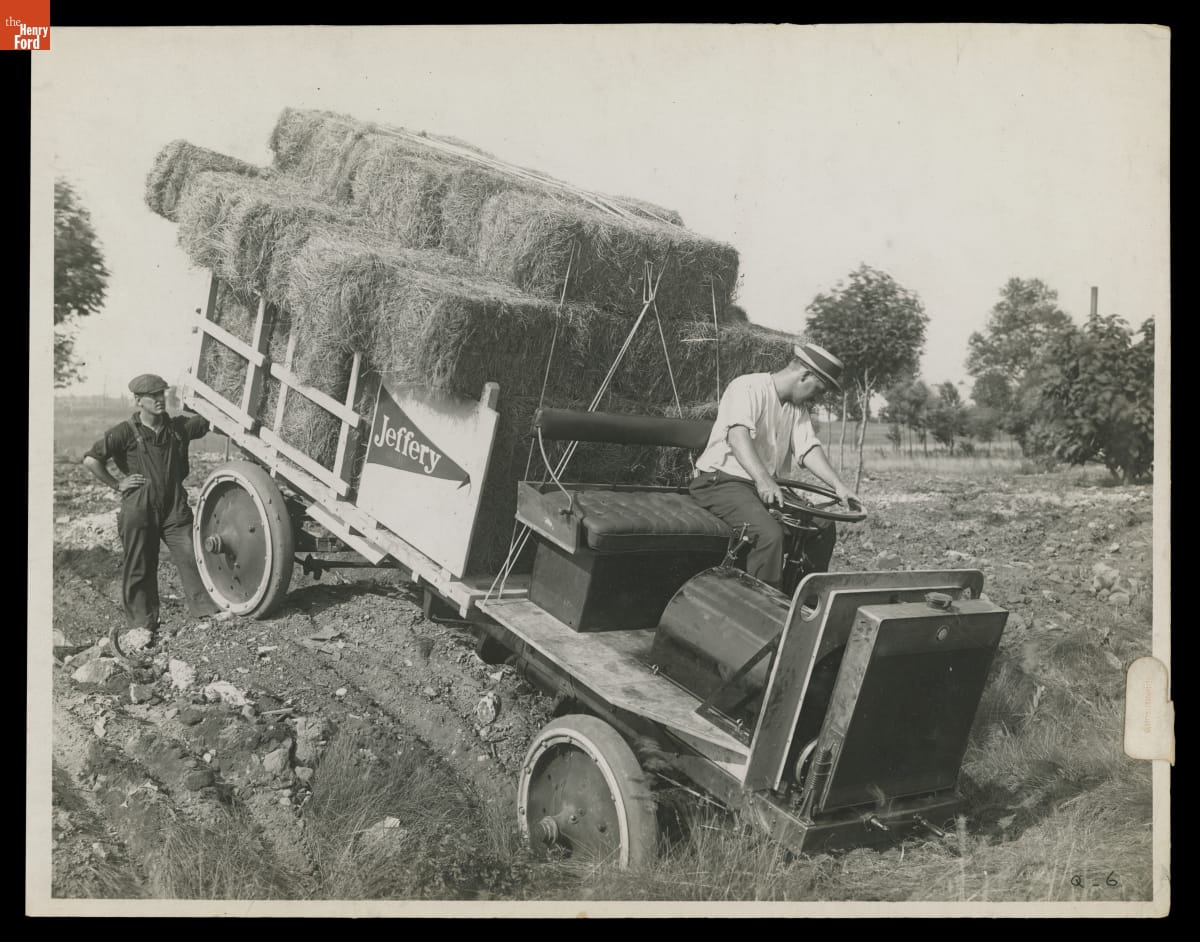
- 1913-1928
- Collections - Artifact
Man Driving a Jeffery Quad Loaded with Hay, 1913-1928
The Jeffery Company, and its successor Nash Motors, built Quad trucks from 1913 to 1928. All four wheels were powered, all four wheels were used in steering, and special differentials allowed all four wheels to move independently as traction conditions required. Quads were equally at home in mud, in snow, or on the battlefield.
- Nash Hubcap, 1925-1930 - Early automobile wheels had a central hub with a greased wheel bearing. Hub caps kept grease in and dust out. As wheels evolved and hubcaps became functionally unnecessary, they remained important to both manufacturers -- who branded wheel covers with maker names or logos -- and consumers -- who identified with hubcaps as statements about their cars and themselves.
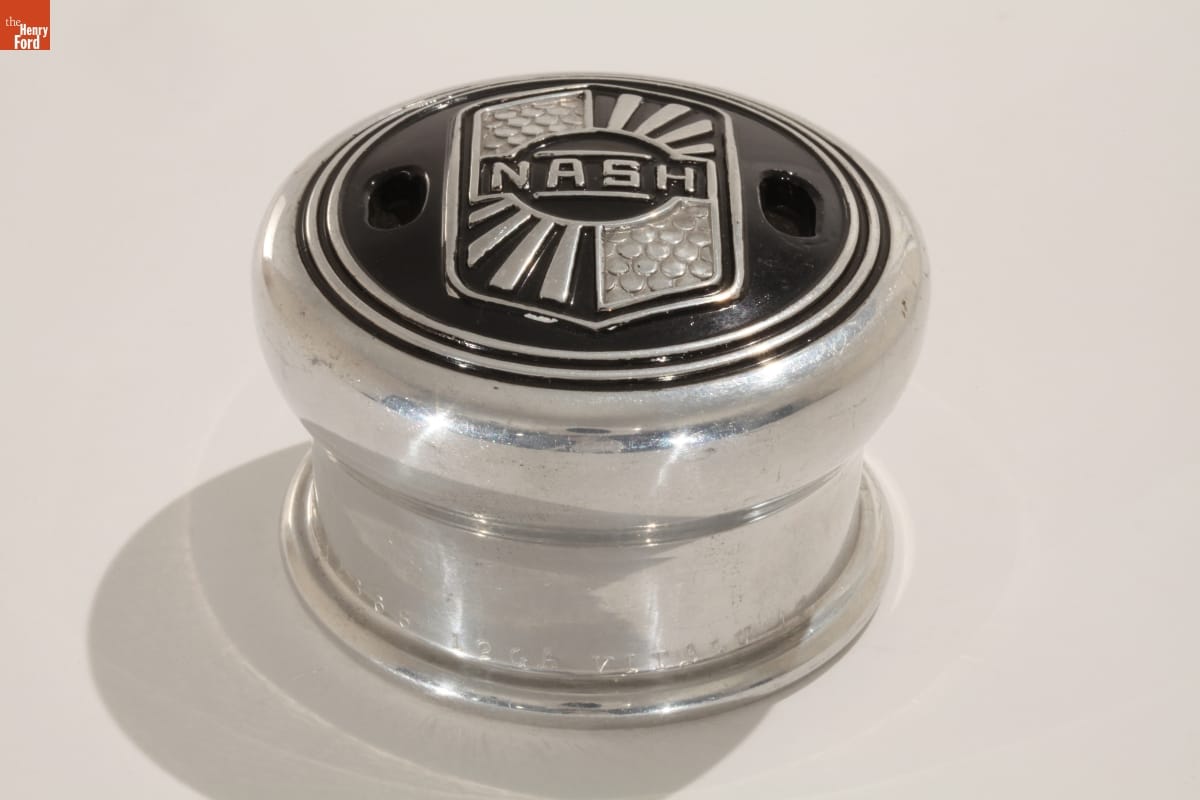
- 1925-1930
- Collections - Artifact
Nash Hubcap, 1925-1930
Early automobile wheels had a central hub with a greased wheel bearing. Hub caps kept grease in and dust out. As wheels evolved and hubcaps became functionally unnecessary, they remained important to both manufacturers -- who branded wheel covers with maker names or logos -- and consumers -- who identified with hubcaps as statements about their cars and themselves.
- Group of People Riding in a Jeffery Quad, 1913-1928 - The Jeffery Company, and its successor Nash Motors, built Quad trucks from 1913 to 1928. All four wheels were powered, all four wheels were used in steering, and special differentials allowed all four wheels to move independently as traction conditions required. Quads were equally at home in mud, in snow, or on the battlefield.
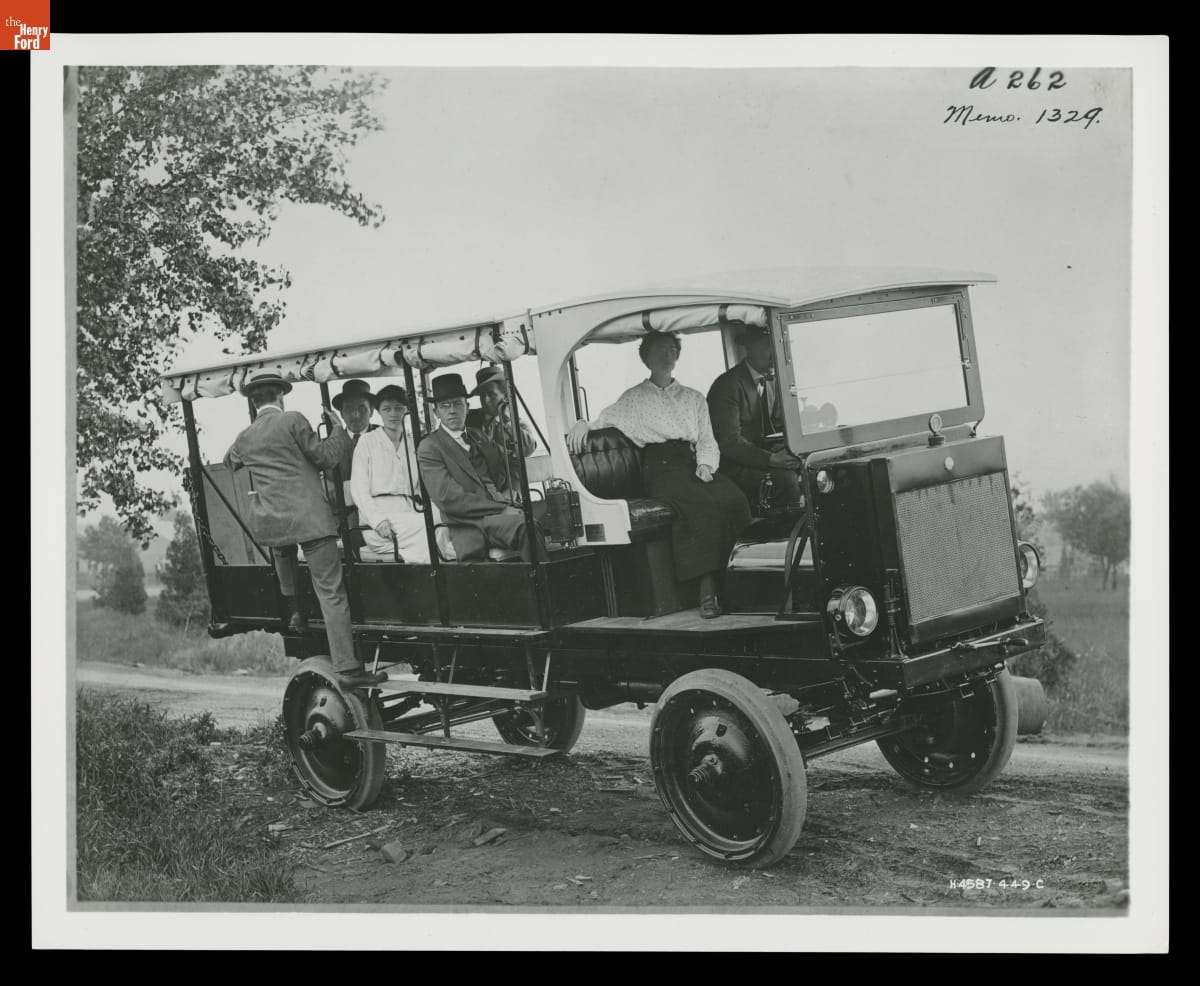
- 1913-1928
- Collections - Artifact
Group of People Riding in a Jeffery Quad, 1913-1928
The Jeffery Company, and its successor Nash Motors, built Quad trucks from 1913 to 1928. All four wheels were powered, all four wheels were used in steering, and special differentials allowed all four wheels to move independently as traction conditions required. Quads were equally at home in mud, in snow, or on the battlefield.
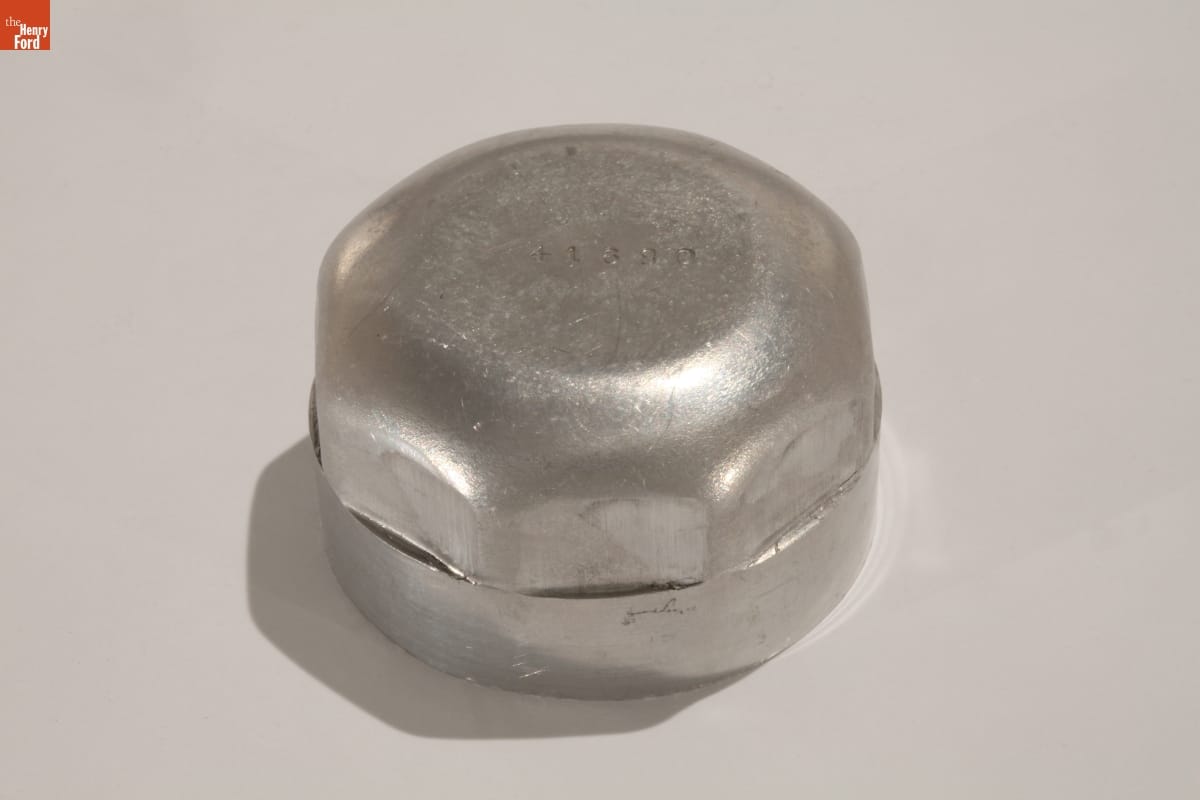
- Nash Hubcap, 1918-1929 - Early automobile wheels had a central hub with a greased wheel bearing. Hub caps kept grease in and dust out. Beginning in 1915, the Aluminum Goods Manufacturing Company of Manitowoc, Wisconsin, supplied hubcaps -- including this one -- to many automotive manufacturers. Hubcaps became functionally unnecessary as wheels evolved, but they remained important components of style and marketing.
- 1918-1929
- Collections - Artifact
Nash Hubcap, 1918-1929
Early automobile wheels had a central hub with a greased wheel bearing. Hub caps kept grease in and dust out. Beginning in 1915, the Aluminum Goods Manufacturing Company of Manitowoc, Wisconsin, supplied hubcaps -- including this one -- to many automotive manufacturers. Hubcaps became functionally unnecessary as wheels evolved, but they remained important components of style and marketing.
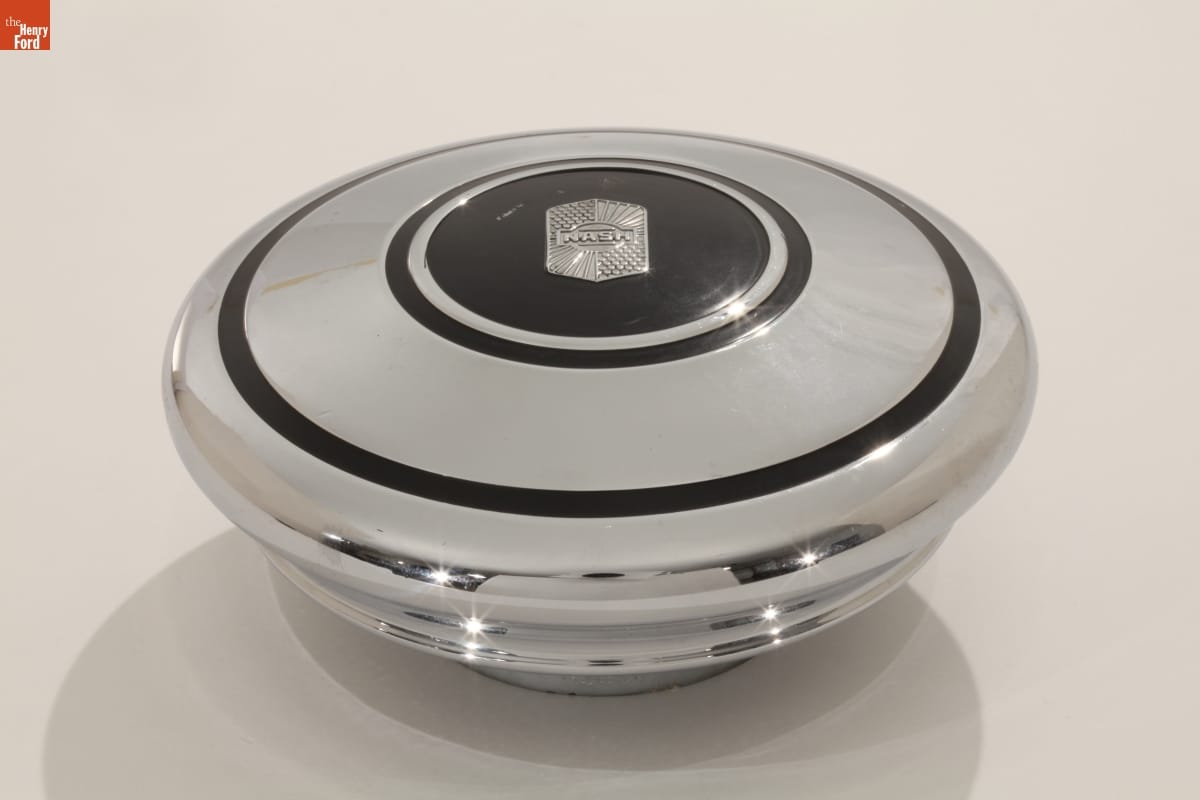
- Nash Hubcap, 1931-1935 - Early automobile wheels had a central hub with a greased wheel bearing. Hub caps kept grease in and dust out. As wheels evolved and hubcaps became functionally unnecessary, they remained important to both manufacturers -- who branded wheel covers with maker names or logos -- and consumers -- who identified with hubcaps as statements about their cars and themselves.
- 1931-1935
- Collections - Artifact
Nash Hubcap, 1931-1935
Early automobile wheels had a central hub with a greased wheel bearing. Hub caps kept grease in and dust out. As wheels evolved and hubcaps became functionally unnecessary, they remained important to both manufacturers -- who branded wheel covers with maker names or logos -- and consumers -- who identified with hubcaps as statements about their cars and themselves.