
Search
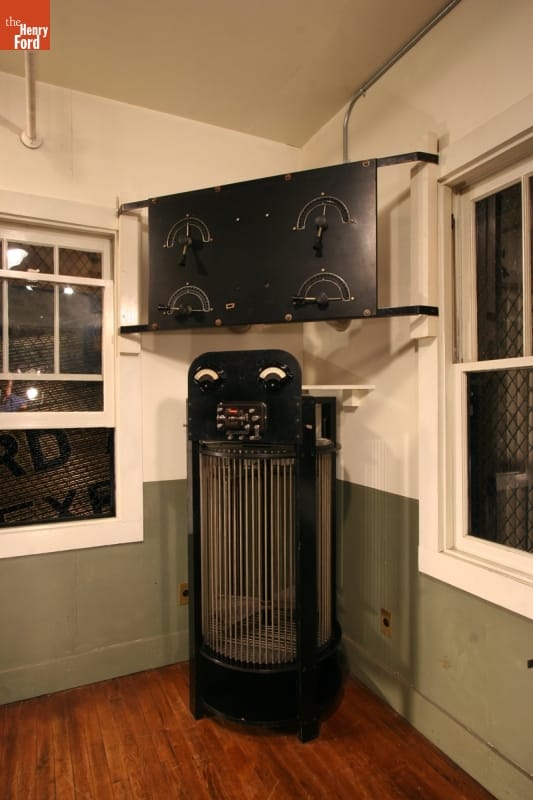
- Radio Goniometer Used at Ford Airport, circa 1927 - The radio beacon may be Henry Ford's most important contribution to aviation. Early pilots depended on landmarks, preventing reliable navigation in bad weather. Ford's engineers developed a radio beacon that simultaneously transmitted the Morse code letter "A" (dot-dash) in one direction and the letter "N" (dash-dot) in another. The pilot steered until the separate signals merged into a steady hum.
- circa 1927
- Collections - Artifact
Radio Goniometer Used at Ford Airport, circa 1927
The radio beacon may be Henry Ford's most important contribution to aviation. Early pilots depended on landmarks, preventing reliable navigation in bad weather. Ford's engineers developed a radio beacon that simultaneously transmitted the Morse code letter "A" (dot-dash) in one direction and the letter "N" (dash-dot) in another. The pilot steered until the separate signals merged into a steady hum.
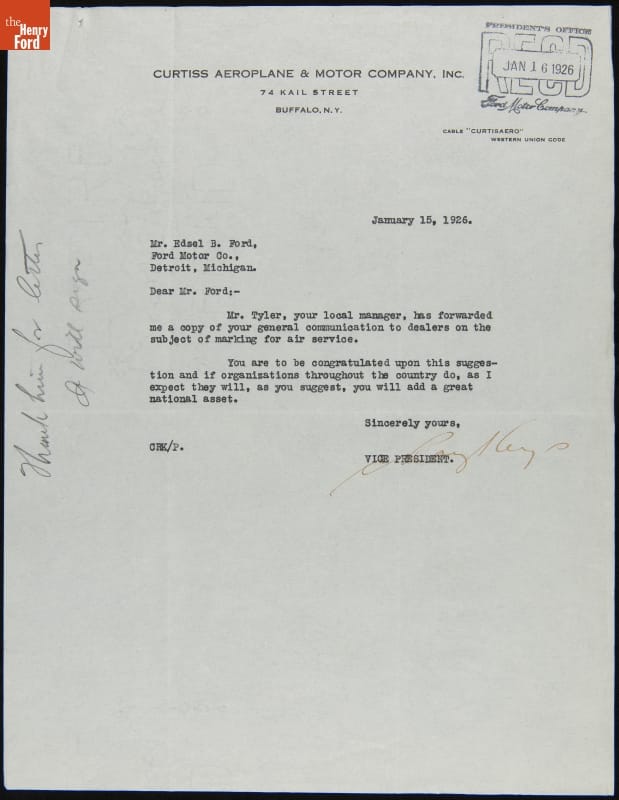
- Letter Congratulating Edsel Ford for Involving Ford Dealers with Airmarking Buildings in Their Towns, January 15, 1926 - Edsel Ford championed the development of commercial aviation in the United States. As an aid to aerial navigation, he wrote letters to Ford dealers encouraging them to paint two things on each dealer's roof: the name of the city and an arrow pointing due north. More than 4,000 communities had aerial markings of some sort by 1929.
- January 15, 1926
- Collections - Artifact
Letter Congratulating Edsel Ford for Involving Ford Dealers with Airmarking Buildings in Their Towns, January 15, 1926
Edsel Ford championed the development of commercial aviation in the United States. As an aid to aerial navigation, he wrote letters to Ford dealers encouraging them to paint two things on each dealer's roof: the name of the city and an arrow pointing due north. More than 4,000 communities had aerial markings of some sort by 1929.
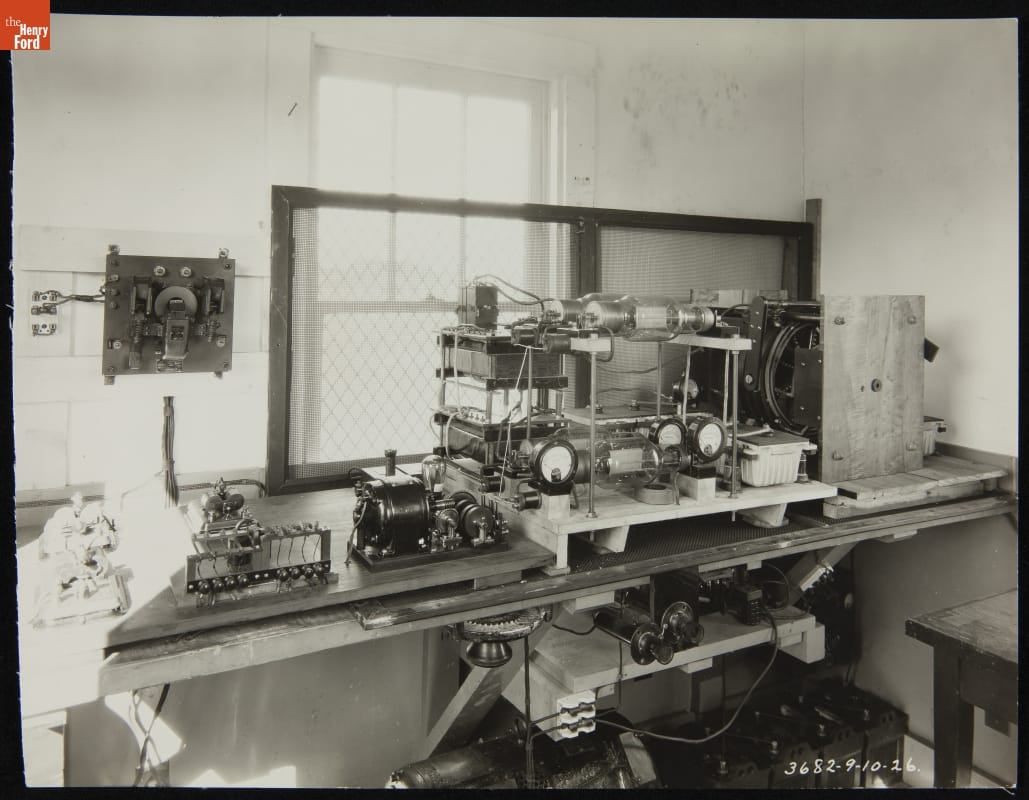
- Equipment Inside the Radio Beacon Station Building at Ford Airport, September 10, 1926 - Early pilots depended on landmarks, preventing reliable navigation in bad weather. Henry Ford's engineers developed a radio beacon that simultaneously transmitted two Morse code letters, allowing pilots to steer until the separate signals merged into a steady hum. The original beacon station at Ford Airport (shown here) was removed in 1933 and is now on display inside the museum.
- September 10, 1926
- Collections - Artifact
Equipment Inside the Radio Beacon Station Building at Ford Airport, September 10, 1926
Early pilots depended on landmarks, preventing reliable navigation in bad weather. Henry Ford's engineers developed a radio beacon that simultaneously transmitted two Morse code letters, allowing pilots to steer until the separate signals merged into a steady hum. The original beacon station at Ford Airport (shown here) was removed in 1933 and is now on display inside the museum.
- Radio Installation on Boat, View Looking Toward Bow and Pilot's Cockpit, 1918 -
- October 25, 1918
- Collections - Artifact
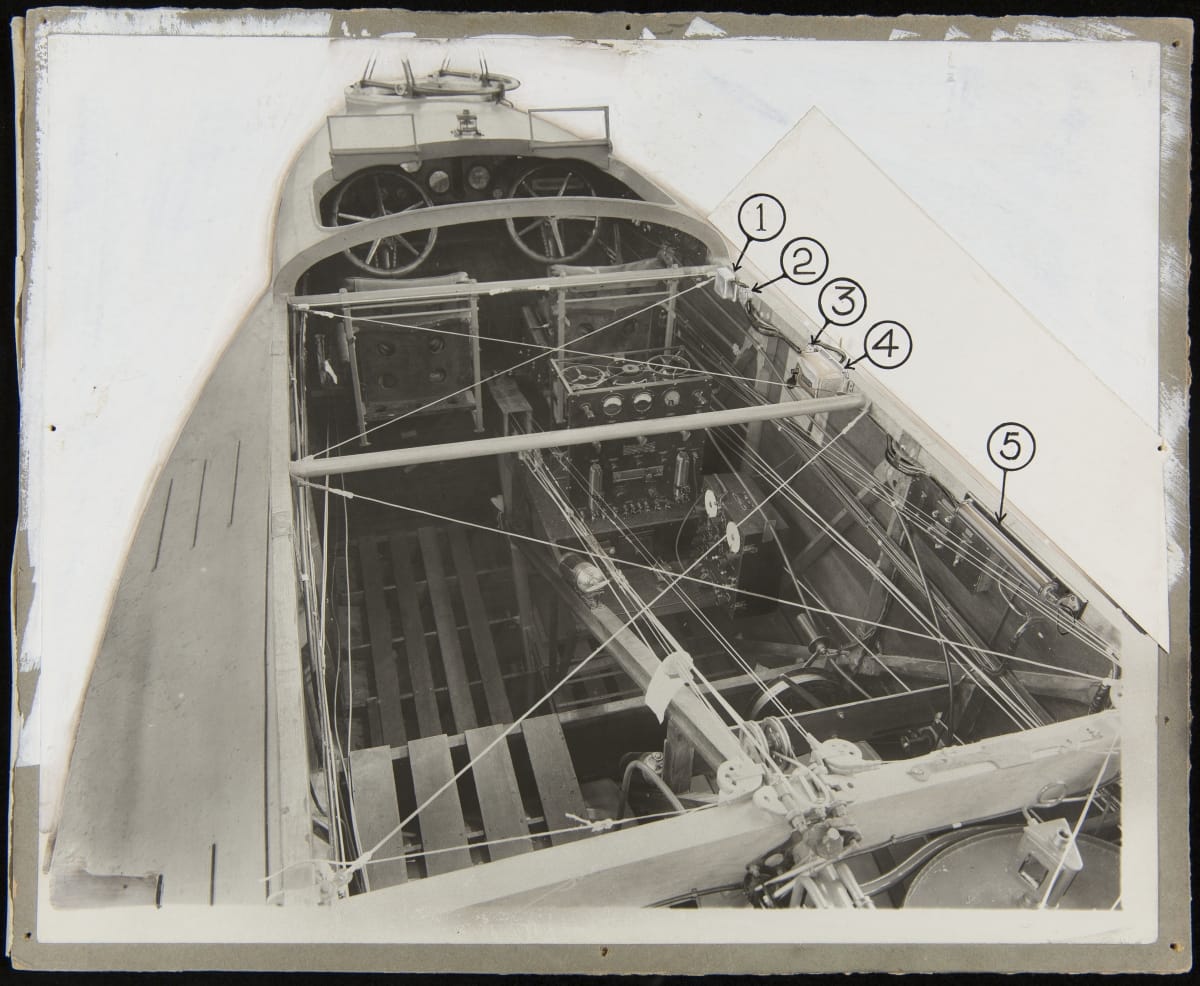
Radio Installation on Boat, View Looking Toward Bow and Pilot's Cockpit, 1918
- Airmarker Painted on a Ford Dealership Roof, Alhambra, California, July 1926 - Edsel Ford championed the development of commercial aviation in the United States. As an aid to aerial navigation, he wrote letters to Ford dealers encouraging them to paint two things on each dealer's roof: the name of the city and an arrow pointing due north. More than 4,000 communities had aerial markings of some sort by 1929.
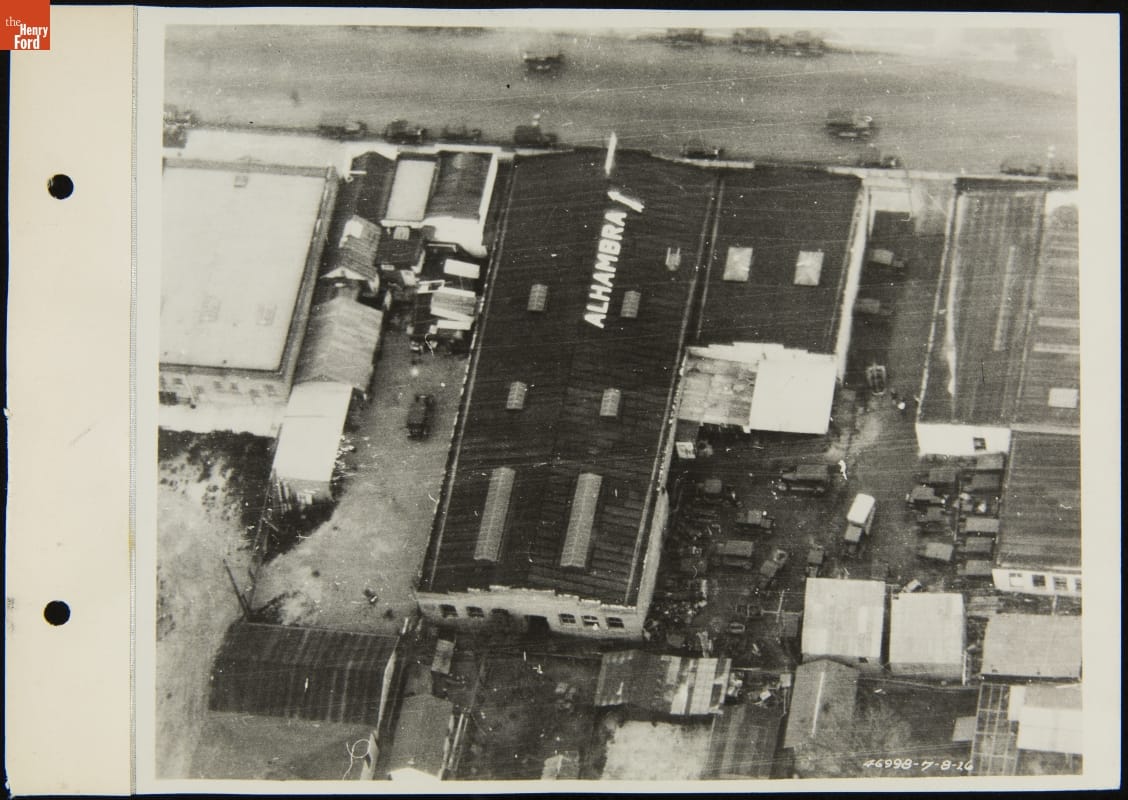
- July 08, 1926
- Collections - Artifact
Airmarker Painted on a Ford Dealership Roof, Alhambra, California, July 1926
Edsel Ford championed the development of commercial aviation in the United States. As an aid to aerial navigation, he wrote letters to Ford dealers encouraging them to paint two things on each dealer's roof: the name of the city and an arrow pointing due north. More than 4,000 communities had aerial markings of some sort by 1929.
- Edison Dynamo Used on SS Columbia, 1880 - For Thomas Edison, successful experimental results were but a prelude to continual improvements that would lead to commercial implementation. This dynamo is from the first lighting system he sold -- installed on a ship, four months after the December 1879 experimental demonstration. Its crude finish, at odds with the highly advanced technology it embodied, suggests Edison's impatient eagerness to move from experiment to market.
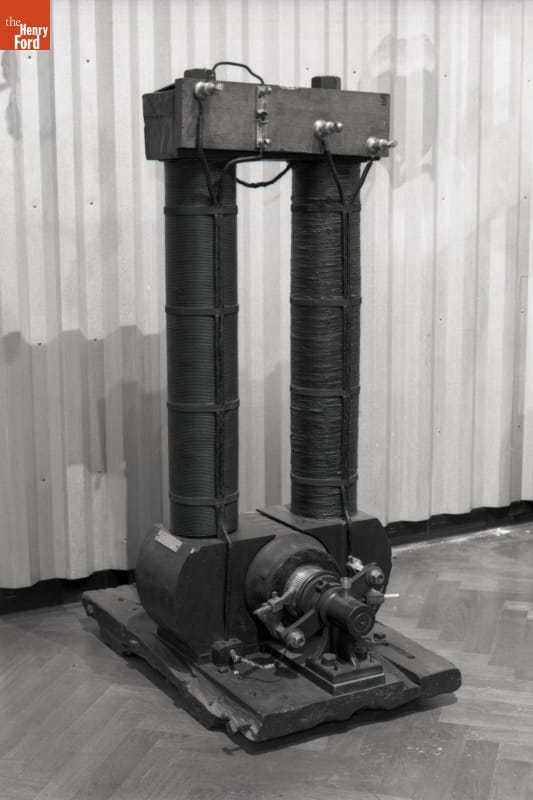
- 1880
- Collections - Artifact
Edison Dynamo Used on SS Columbia, 1880
For Thomas Edison, successful experimental results were but a prelude to continual improvements that would lead to commercial implementation. This dynamo is from the first lighting system he sold -- installed on a ship, four months after the December 1879 experimental demonstration. Its crude finish, at odds with the highly advanced technology it embodied, suggests Edison's impatient eagerness to move from experiment to market.
- Aerial Photo of Carbondale, Illinois, Showing Airmarker on a Ford Dealer's Roof, 1929 - Edsel Ford championed the development of commercial aviation in the United States. As an aid to aerial navigation, he wrote letters to Ford dealers encouraging them to paint two things on each dealer's roof: the name of the city and an arrow pointing due north. More than 4,000 communities had aerial markings of some sort by 1929.
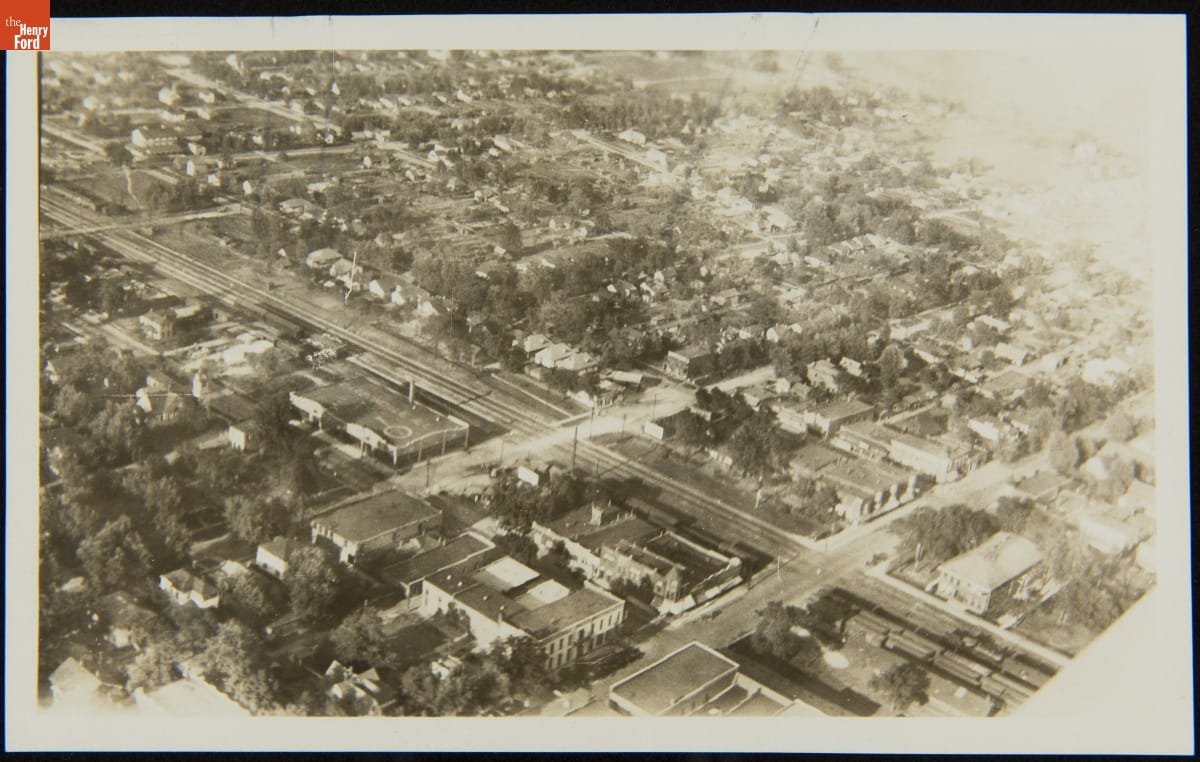
- 1929
- Collections - Artifact
Aerial Photo of Carbondale, Illinois, Showing Airmarker on a Ford Dealer's Roof, 1929
Edsel Ford championed the development of commercial aviation in the United States. As an aid to aerial navigation, he wrote letters to Ford dealers encouraging them to paint two things on each dealer's roof: the name of the city and an arrow pointing due north. More than 4,000 communities had aerial markings of some sort by 1929.
- Drawing, "Cross Sections of the Boilers, Warwick and Birmingham Canal," 1795 -
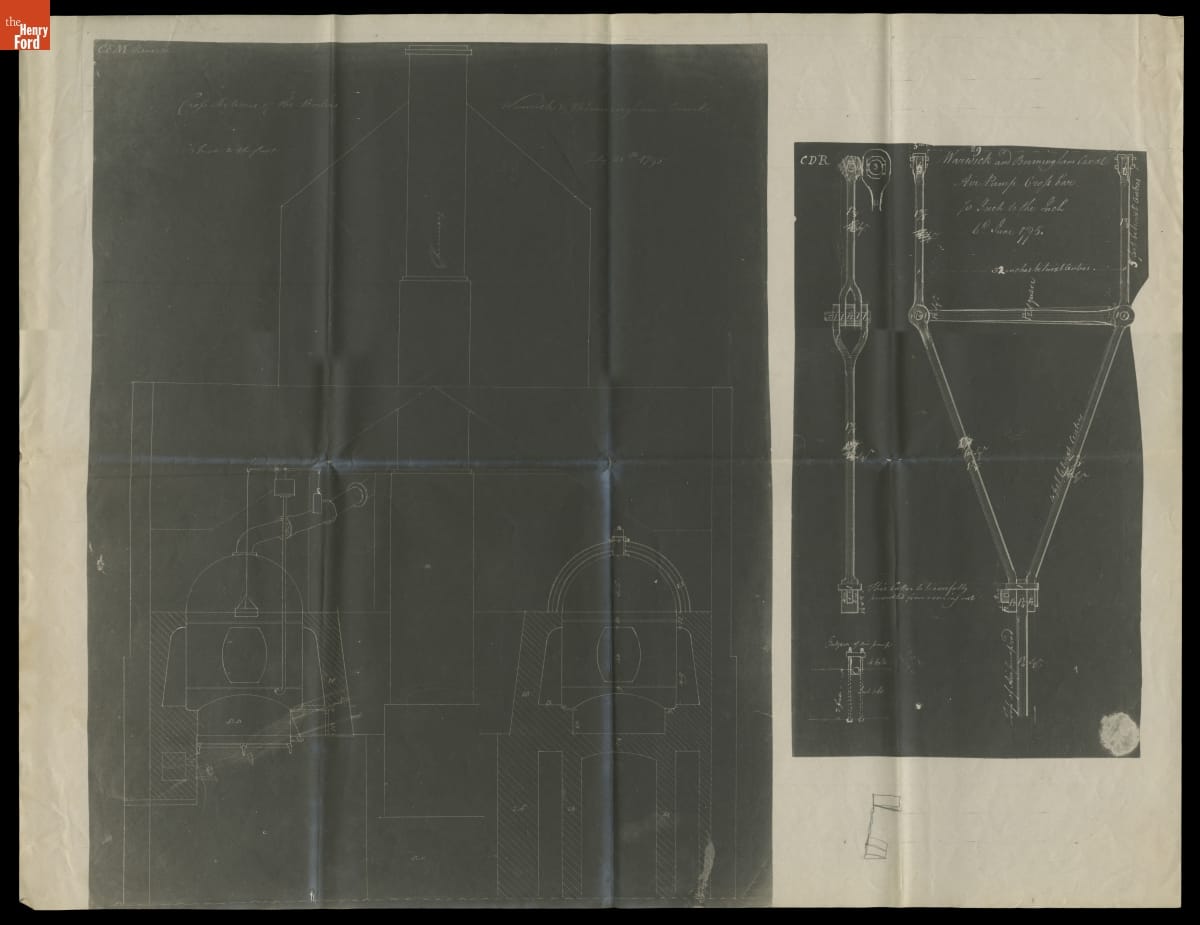
- 1795
- Collections - Artifact
Drawing, "Cross Sections of the Boilers, Warwick and Birmingham Canal," 1795
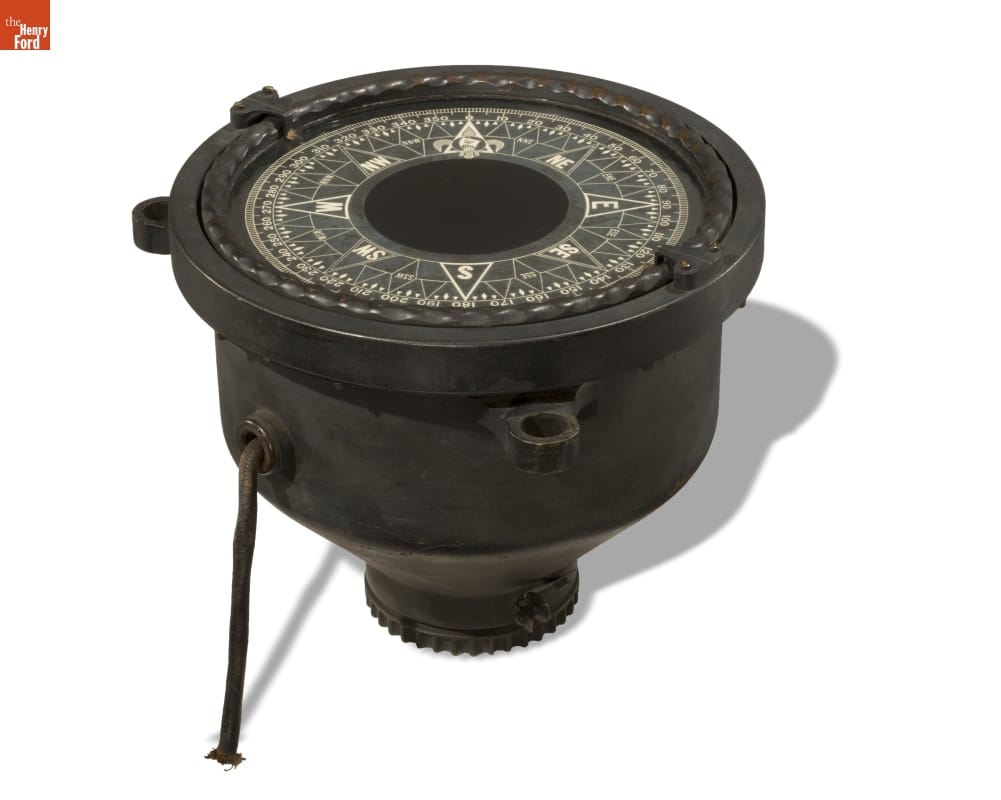
- Compass from a Wireless Direction Finder, 1920-1925 -
- 1920-1925
- Collections - Artifact
Compass from a Wireless Direction Finder, 1920-1925
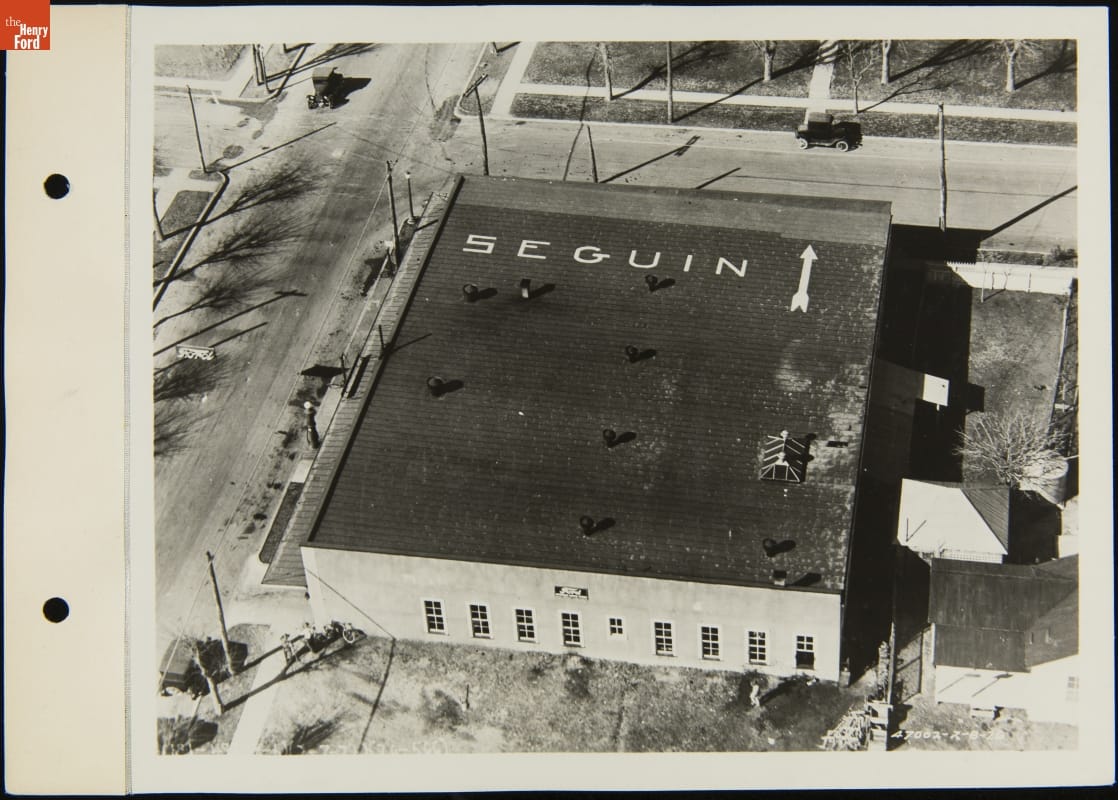
- Airmarker Painted on a Ford Dealership Roof, Seguin, Texas, July 1926 - Edsel Ford championed the development of commercial aviation in the United States. As an aid to aerial navigation, he wrote letters to Ford dealers encouraging them to paint two things on each dealer's roof: the name of the city and an arrow pointing due north. More than 4,000 communities had aerial markings of some sort by 1929.
- July 08, 1926
- Collections - Artifact
Airmarker Painted on a Ford Dealership Roof, Seguin, Texas, July 1926
Edsel Ford championed the development of commercial aviation in the United States. As an aid to aerial navigation, he wrote letters to Ford dealers encouraging them to paint two things on each dealer's roof: the name of the city and an arrow pointing due north. More than 4,000 communities had aerial markings of some sort by 1929.