
Radio Goniometer Used at Ford Airport, circa 1927
THF153075 / Radio Goniometer Used at Ford Airport, circa 1927
01
Artifact Overview
The radio beacon may be Henry Ford's most important contribution to aviation. Early pilots depended on landmarks, preventing reliable navigation in bad weather. Ford's engineers developed a radio beacon that simultaneously transmitted the Morse code letter "A" (dot-dash) in one direction and the letter "N" (dash-dot) in another. The pilot steered until the separate signals merged into a steady hum.
Artifact Details
Artifact
Goniometer
Date Made
circa 1927
Place of Creation
Location
at Henry Ford Museum in Heroes of the Sky
Object ID
36.760.1
Credit
From the Collections of The Henry Ford.
Material
Metal
Wood (Plant material)
Dimensions
Height: 59.5 in
Width: 26.5 in
Keywords |
|---|
02
Related Content
 Set
SetHenry Ford: Aviation
- 29 Artifacts
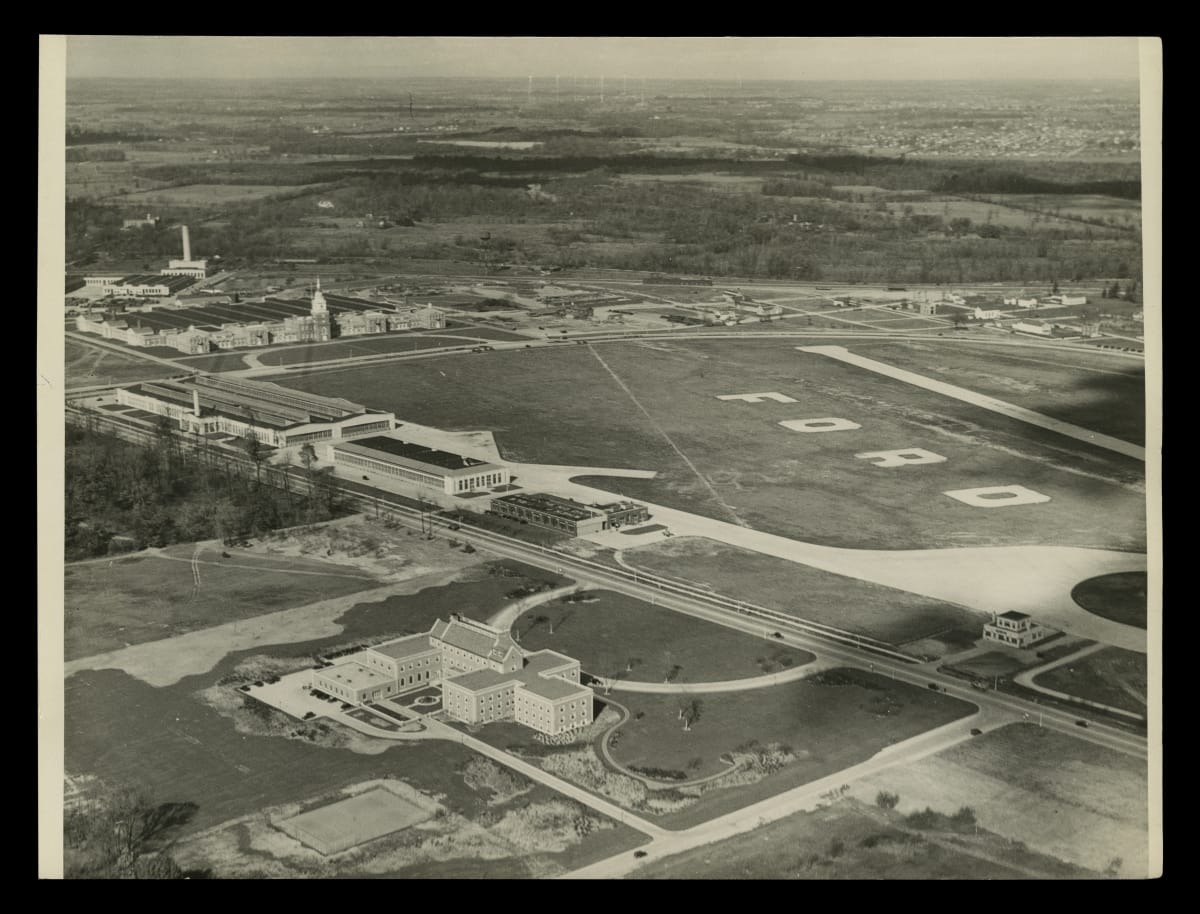
In 1925, an airport opened in Dearborn, Michigan. Edsel and Henry Ford conceived the Dearborn Inn as a business opportunity, a first-class hotel hosting pilots and travelers transiting through the Ford Airport. It is noted as one of the first airport hotels. This aerial photograph shows some of the airfield and the inn (bottom). Also note the Henry Ford Museum's clock tower in the distance.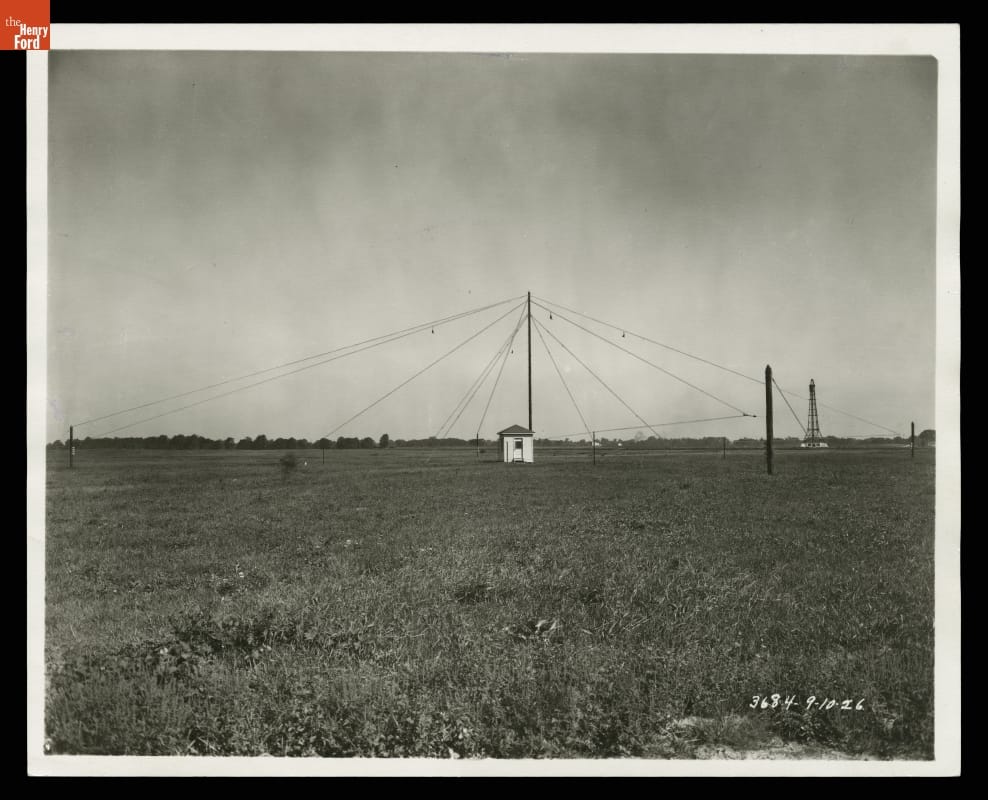 Set
SetFord Radio Beacon Station
- 8 Artifacts
Early pilots depended on landmarks, preventing reliable navigation in bad weather. Henry Ford's engineers developed a radio beacon that simultaneously transmitted two Morse code letters, allowing pilots to steer until the separate signals merged into a steady hum. The original beacon station at Ford Airport (shown here) was removed in 1933 and is now on display inside the museum. Set
SetHenry Ford
- 49 Artifacts
The Quadricycle was Henry Ford's first attempt to build a gasoline-powered automobile. It utilized commonly available materials: angle iron for the frame, a leather belt and chain drive for the transmission, and a buggy seat. Ford had to devise his own ignition system. He sold his Quadricycle for $200, then used the money to build his second car. article
Ford Radio and Fordlandia
Learn the various ways Henry Ford used radio technology in the early years of Ford Motor Company--including as a way to communicate with Fordlandia, Ford's rubber plantation in Brazil.