
Search
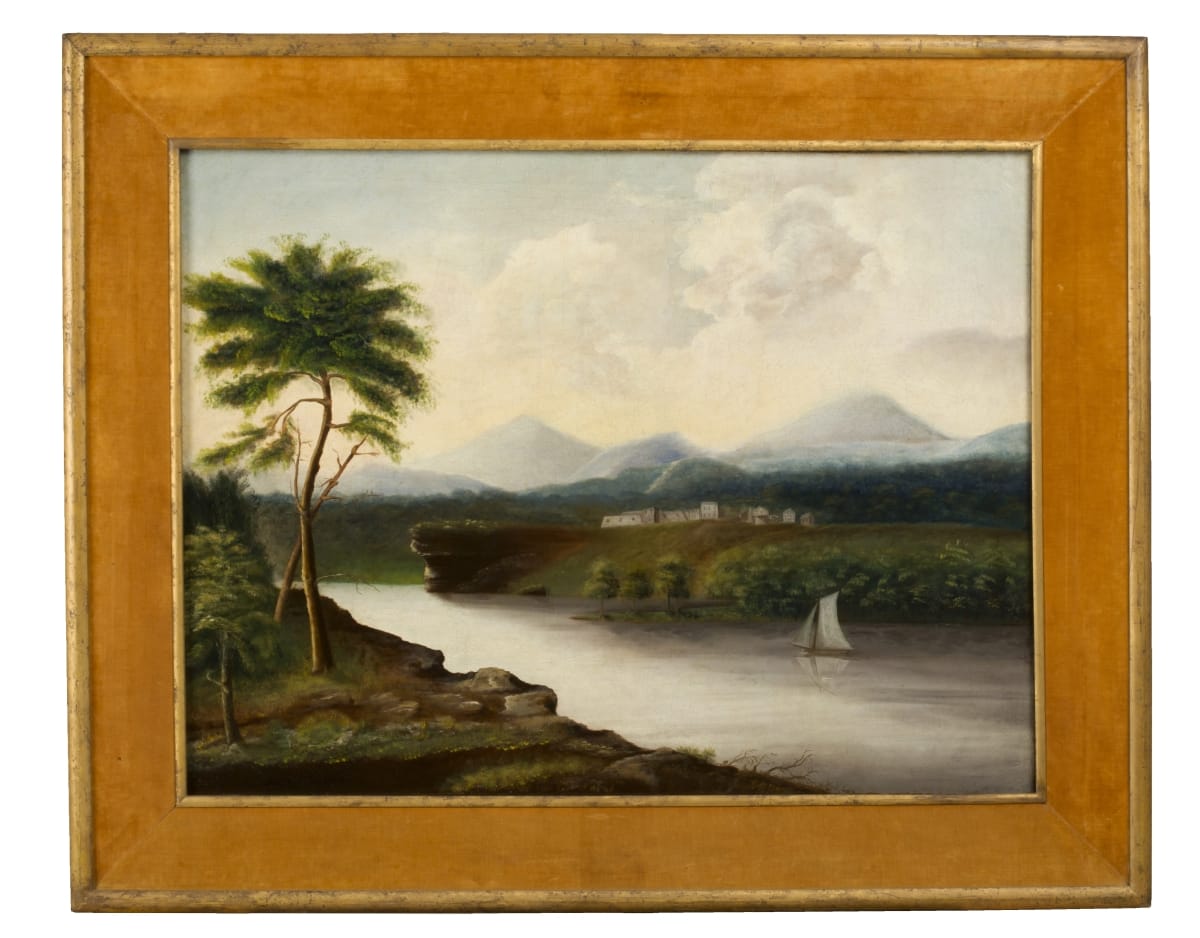
- Oil Painting, Fort Ticonderoga by George Washington Mark, circa 1845 - George Washington Mark was a successful house, sign, and furniture painter in Greenfield, Massachusetts, in the early 1800s. Sometime in the 1830s and 40s, he tried his hand at more artistic endeavors creating paintings of local interest -- generally landscapes and historic subjects. Around 1845, Mark painted this work depicting the ruins of New York's historic Fort Ticonderoga.
- circa 1845
- Collections - Artifact
Oil Painting, Fort Ticonderoga by George Washington Mark, circa 1845
George Washington Mark was a successful house, sign, and furniture painter in Greenfield, Massachusetts, in the early 1800s. Sometime in the 1830s and 40s, he tried his hand at more artistic endeavors creating paintings of local interest -- generally landscapes and historic subjects. Around 1845, Mark painted this work depicting the ruins of New York's historic Fort Ticonderoga.
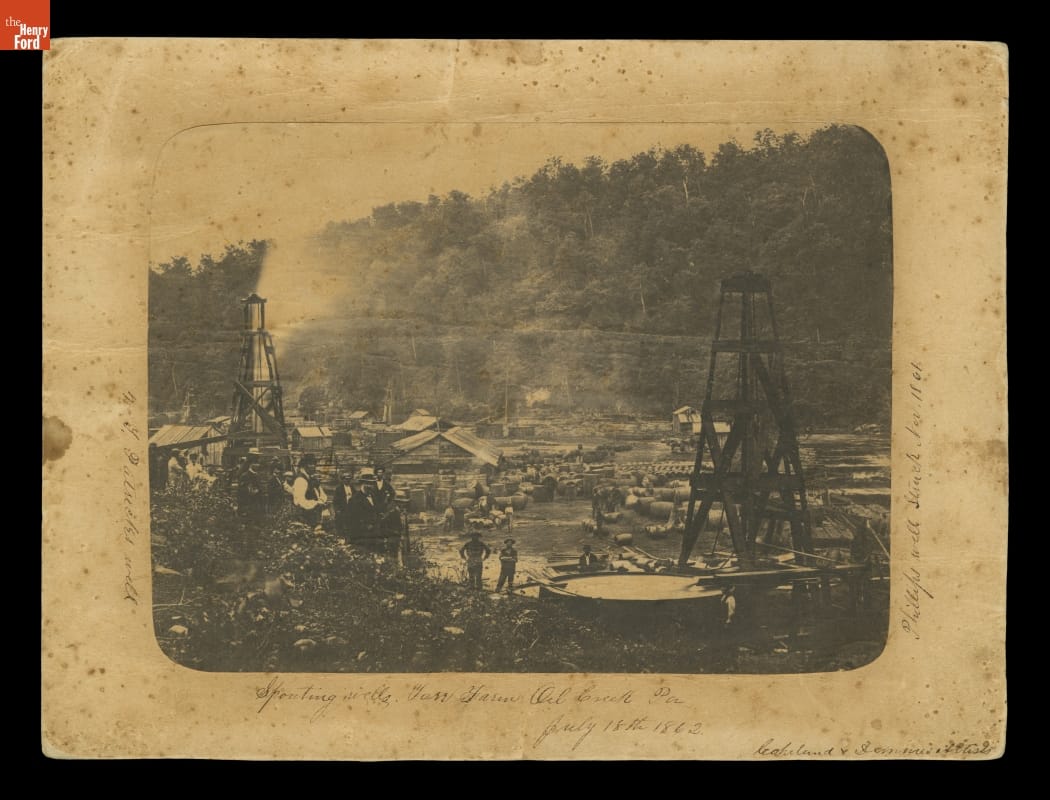
- Spouting Wells, Tarr Farm, Oil Creek, Pennsylvania, 1862 - America's first oil boom was in Pennsylvania. This is the Phillips well operation in Oil Creek, 1862.
- July 18, 1862
- Collections - Artifact
Spouting Wells, Tarr Farm, Oil Creek, Pennsylvania, 1862
America's first oil boom was in Pennsylvania. This is the Phillips well operation in Oil Creek, 1862.
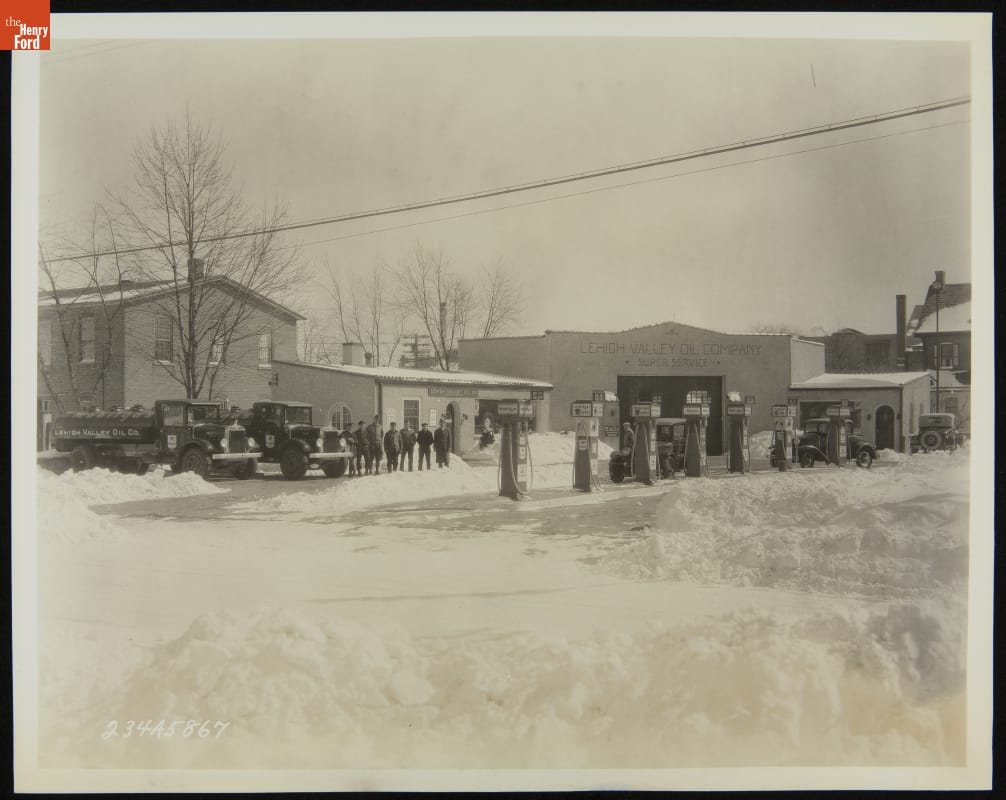
- Mack Model AB Tank Trucks at a Gas Station, February 1934 - Founded in Brooklyn, New York, in 1900, Mack Brothers Company relocated to Allentown, Pennsylvania, in 1905 and adopted the name Mack Trucks in 1922. Mack-built tank trucks like this had separate compartments for gasoline, diesel fuel, lubricants, and other oil and petroleum products. The delivery trucks transported these products from distributors to gas stations.
- February 01, 1934
- Collections - Artifact
Mack Model AB Tank Trucks at a Gas Station, February 1934
Founded in Brooklyn, New York, in 1900, Mack Brothers Company relocated to Allentown, Pennsylvania, in 1905 and adopted the name Mack Trucks in 1922. Mack-built tank trucks like this had separate compartments for gasoline, diesel fuel, lubricants, and other oil and petroleum products. The delivery trucks transported these products from distributors to gas stations.
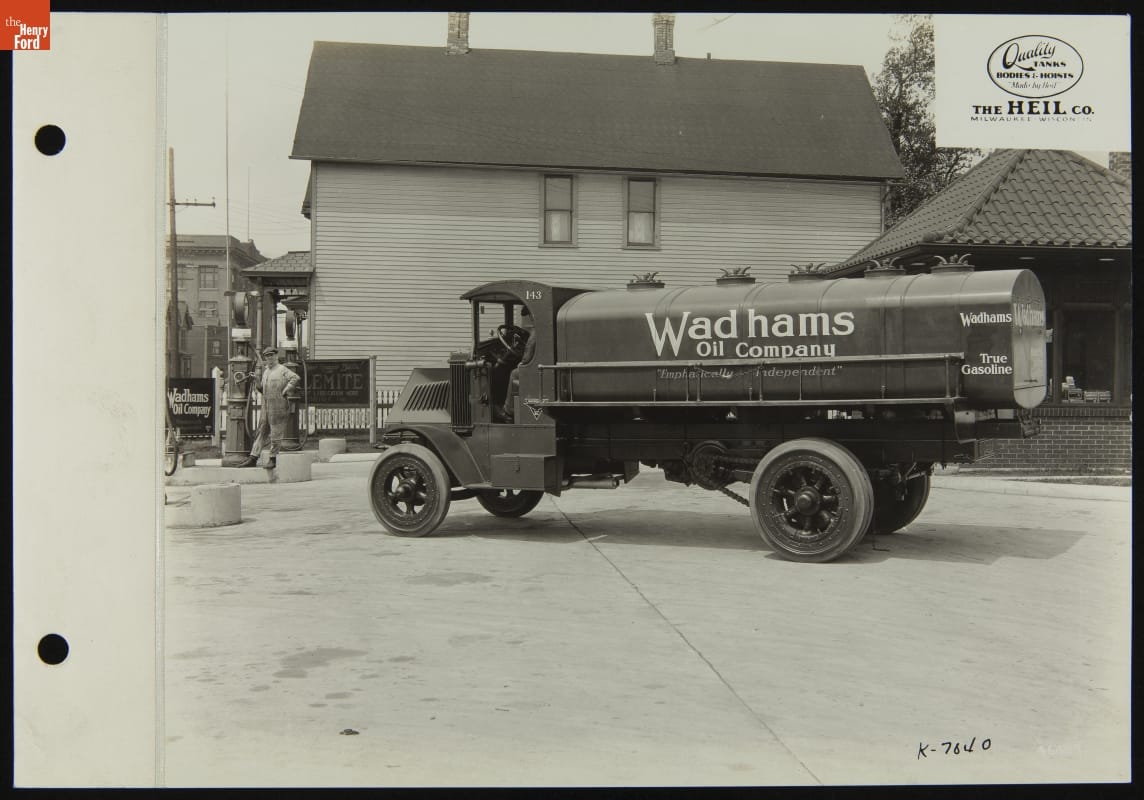
- Mack Model AC Tank Truck at a Gas Station, June 1925 - Founded in Brooklyn, New York, in 1900, Mack Brothers Company relocated to Allentown, Pennsylvania, in 1905 and adopted the name Mack Trucks in 1922. Mack-built tank trucks like this had separate compartments for gasoline, diesel fuel, lubricants, and other oil and petroleum products. The delivery trucks transported these products from distributors to gas stations.
- June 01, 1925
- Collections - Artifact
Mack Model AC Tank Truck at a Gas Station, June 1925
Founded in Brooklyn, New York, in 1900, Mack Brothers Company relocated to Allentown, Pennsylvania, in 1905 and adopted the name Mack Trucks in 1922. Mack-built tank trucks like this had separate compartments for gasoline, diesel fuel, lubricants, and other oil and petroleum products. The delivery trucks transported these products from distributors to gas stations.
- Oil Painting, "Fun On the Fourth" by Tompkins H. Matteson, 1840-1850 -
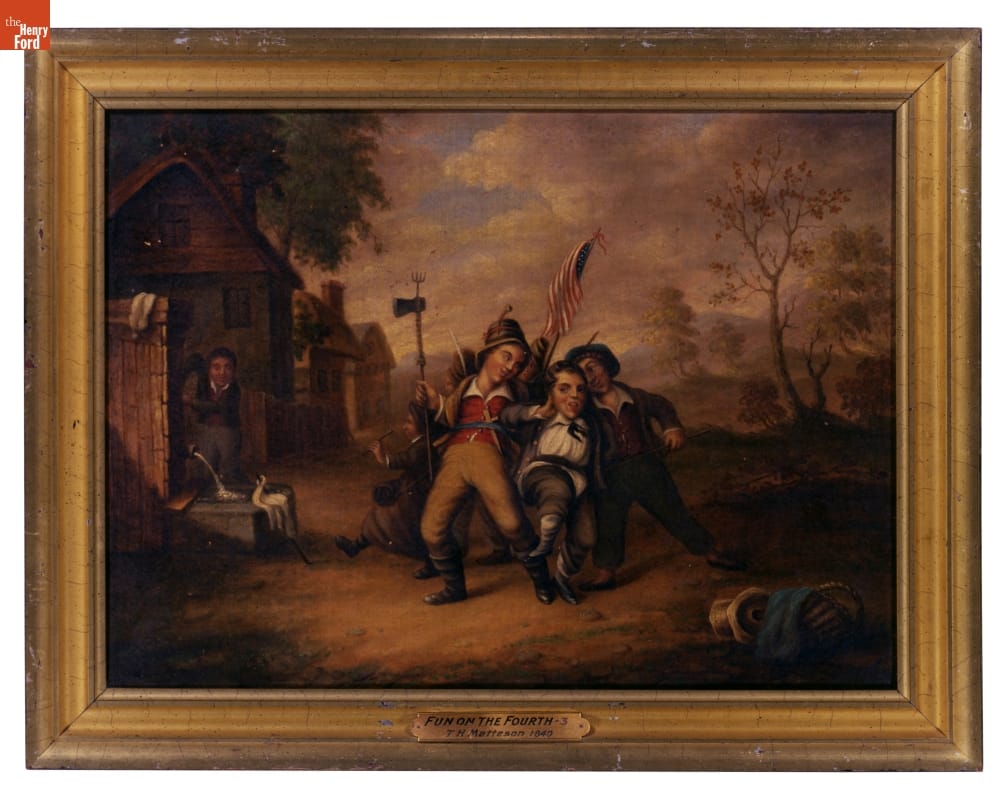
- 1840-1850
- Collections - Artifact
Oil Painting, "Fun On the Fourth" by Tompkins H. Matteson, 1840-1850
- Oil Portrait of Edsel Ford by Diego Rivera, 1932 - Partway through work on his <EM>Detroit Industry</EM> murals at the Detroit Institute of Arts, Diego Rivera took a break to paint a portrait of the frescoes' primary sponsor, Edsel Ford. Rather than posing Ford in his office, Rivera chose a more appropriate setting: an automotive design studio. The portrait depicts Ford as strong and confident in his preferred environment.
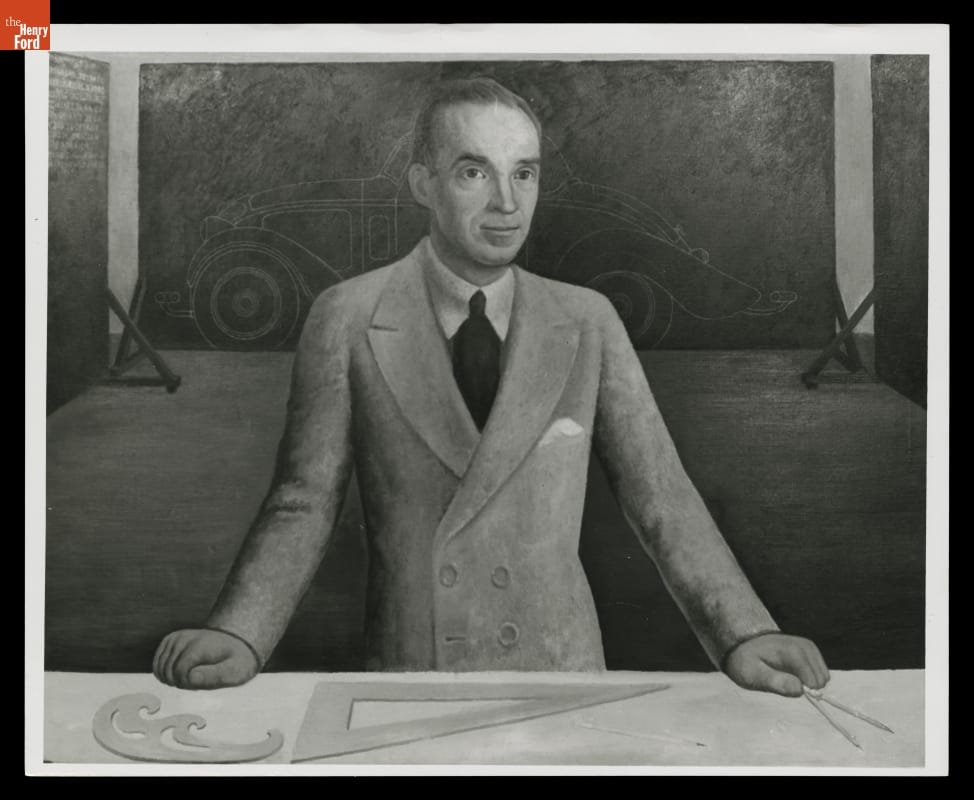
- 1932
- Collections - Artifact
Oil Portrait of Edsel Ford by Diego Rivera, 1932
Partway through work on his Detroit Industry murals at the Detroit Institute of Arts, Diego Rivera took a break to paint a portrait of the frescoes' primary sponsor, Edsel Ford. Rather than posing Ford in his office, Rivera chose a more appropriate setting: an automotive design studio. The portrait depicts Ford as strong and confident in his preferred environment.
- Mack Truck Used by Standard Oil Co. of Louisiana, circa 1920 - Founded in Brooklyn, New York, in 1900, Mack Brothers Company relocated to Allentown, Pennsylvania, in 1905 and adopted the name Mack Trucks in 1922. Mack-built tank trucks like this had separate compartments for gasoline, diesel fuel, lubricants, and other oil and petroleum products. The delivery trucks transported these products from distributors to gas stations.
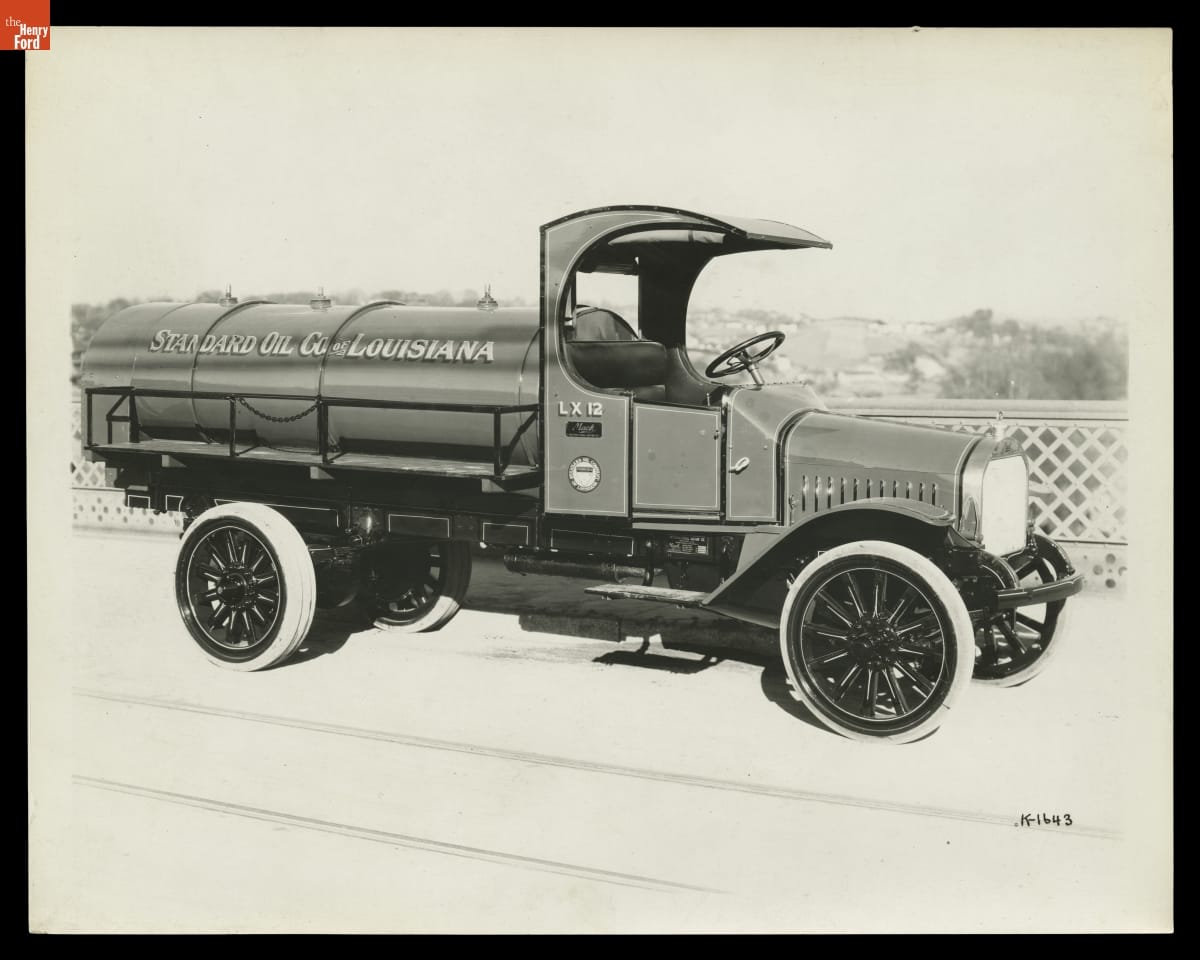
- circa 1920
- Collections - Artifact
Mack Truck Used by Standard Oil Co. of Louisiana, circa 1920
Founded in Brooklyn, New York, in 1900, Mack Brothers Company relocated to Allentown, Pennsylvania, in 1905 and adopted the name Mack Trucks in 1922. Mack-built tank trucks like this had separate compartments for gasoline, diesel fuel, lubricants, and other oil and petroleum products. The delivery trucks transported these products from distributors to gas stations.
- "Battle Scenes of the Rebellion" Battle of Chattanooga, Civil War Panorama - In the 1880s, Thomas Clarkson Gordon, a self-taught artist and Civil War veteran, created a panorama depicting scenes from the Civil War. Gordon stitched together 15 paintings -- each 7 by 14 feet -- into a canvas roll more than 100 feet long. He toured his multi-paneled panorama throughout eastern Indiana, retelling the history of the conflict through his vivid illustrations.
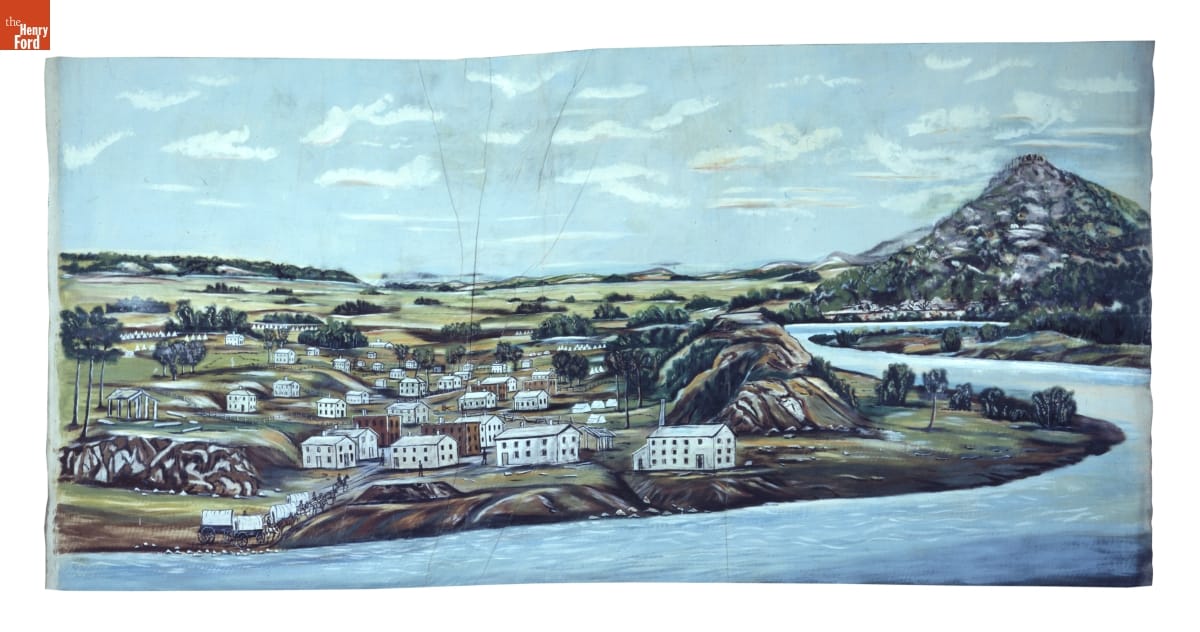
- 1863
- Collections - Artifact
"Battle Scenes of the Rebellion" Battle of Chattanooga, Civil War Panorama
In the 1880s, Thomas Clarkson Gordon, a self-taught artist and Civil War veteran, created a panorama depicting scenes from the Civil War. Gordon stitched together 15 paintings -- each 7 by 14 feet -- into a canvas roll more than 100 feet long. He toured his multi-paneled panorama throughout eastern Indiana, retelling the history of the conflict through his vivid illustrations.
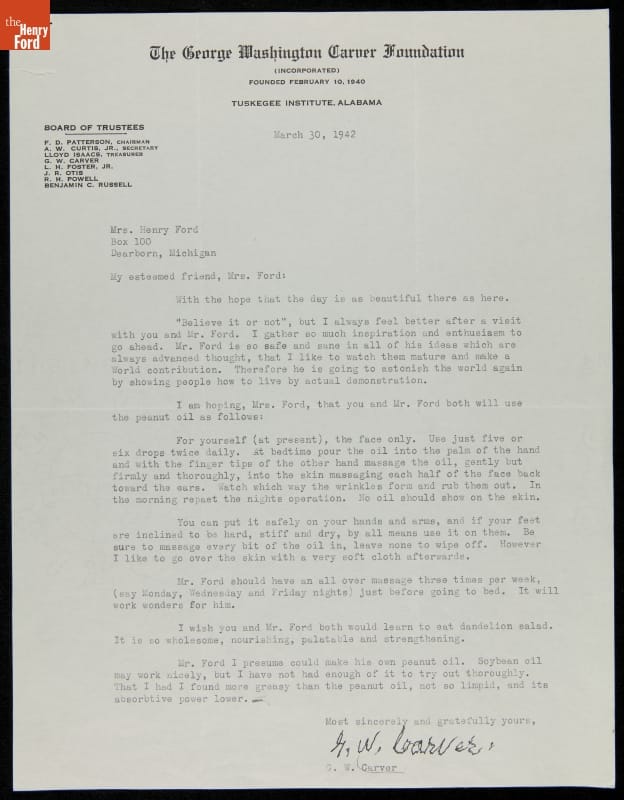
- Letter from George Washington Carver to Clara Ford, March 30, 1942 - George Washington Carver and Henry Ford became friends in the late 1930s, drawn together by a mutual interest in plants and industry. Carver's warm letters to both Henry and Clara Ford speak to the genuine depth of the friendship. In this letter to Clara, which was presumably accompanied a bottle of peanut oil, Carver offered advice on how to use the oil for natural health.
- March 30, 1942
- Collections - Artifact
Letter from George Washington Carver to Clara Ford, March 30, 1942
George Washington Carver and Henry Ford became friends in the late 1930s, drawn together by a mutual interest in plants and industry. Carver's warm letters to both Henry and Clara Ford speak to the genuine depth of the friendship. In this letter to Clara, which was presumably accompanied a bottle of peanut oil, Carver offered advice on how to use the oil for natural health.
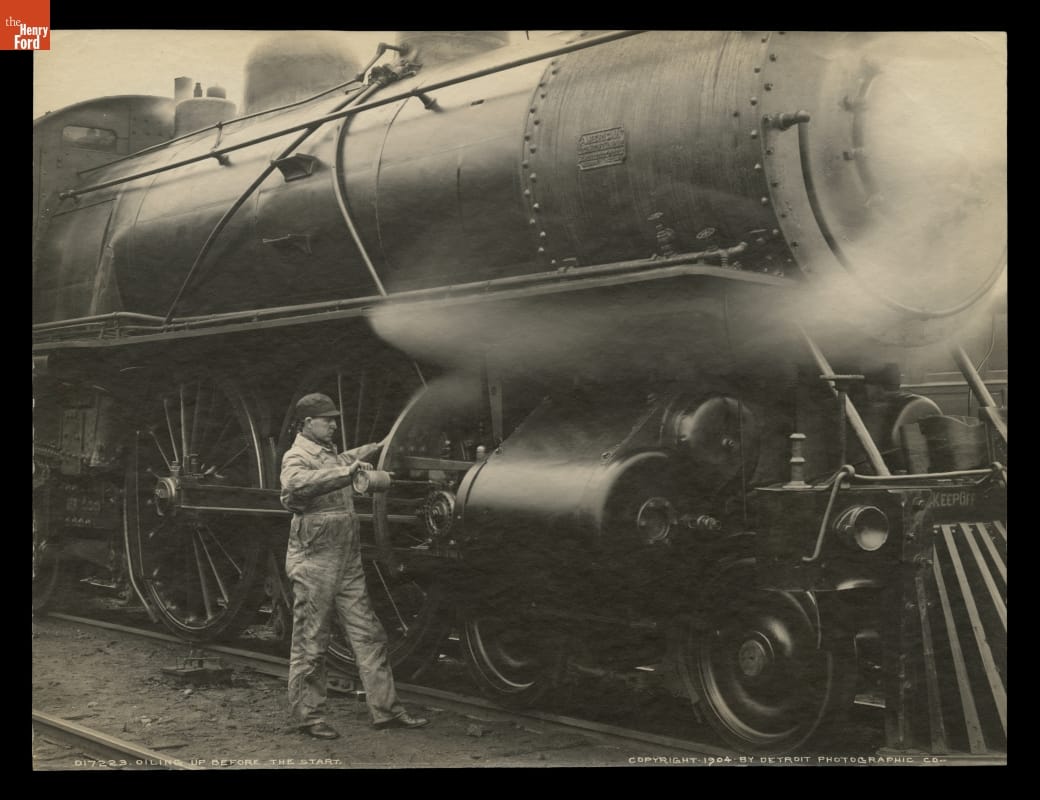
- "Oiling Up Before the Start," Engineer Working on Michigan Central Railroad K-Class Locomotive, 1904 - An engineman is seen oiling the side rods on a Michigan Central Railroad locomotive about 1905. The 4-4-2 Atlantic-type locomotive, with its tall driving wheels, was built to pull fast passenger trains on the Michigan Central's Detroit-Chicago mainline. But speed was relative. Even the fastest regularly scheduled trains might have averaged only 40 miles per hour in 1905.
- 1904
- Collections - Artifact
"Oiling Up Before the Start," Engineer Working on Michigan Central Railroad K-Class Locomotive, 1904
An engineman is seen oiling the side rods on a Michigan Central Railroad locomotive about 1905. The 4-4-2 Atlantic-type locomotive, with its tall driving wheels, was built to pull fast passenger trains on the Michigan Central's Detroit-Chicago mainline. But speed was relative. Even the fastest regularly scheduled trains might have averaged only 40 miles per hour in 1905.