
Search
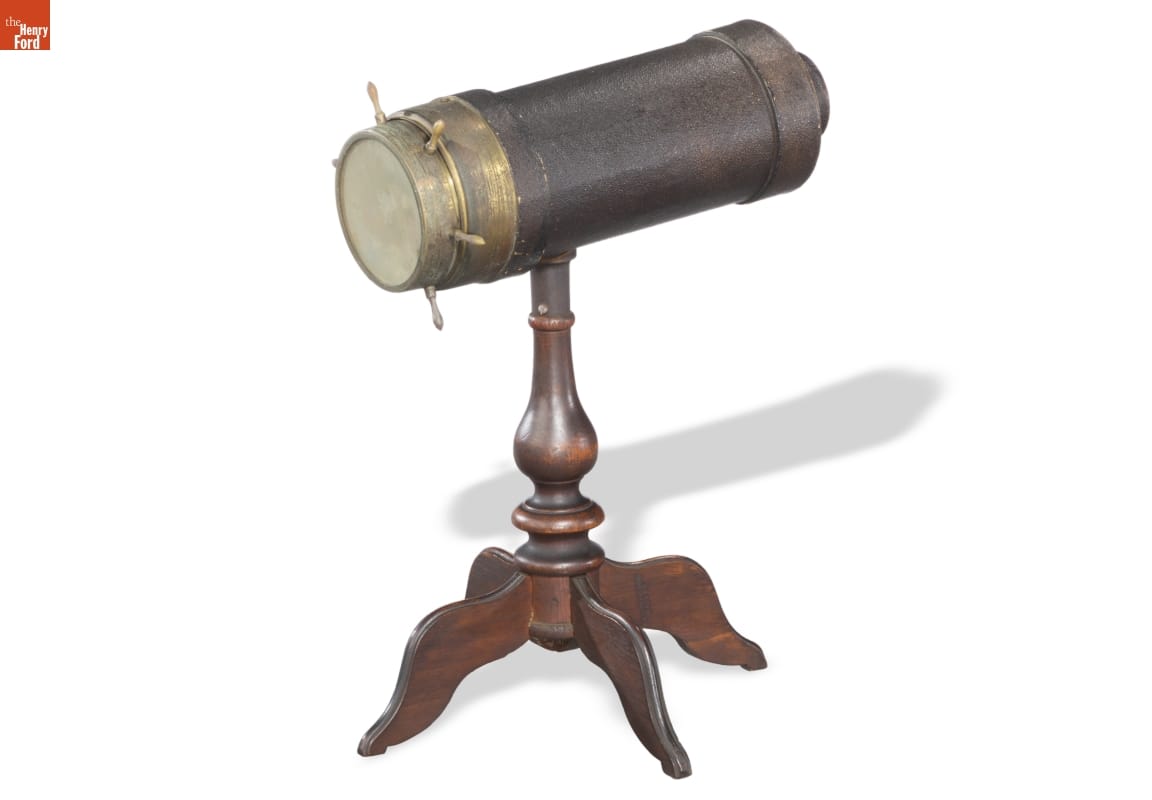
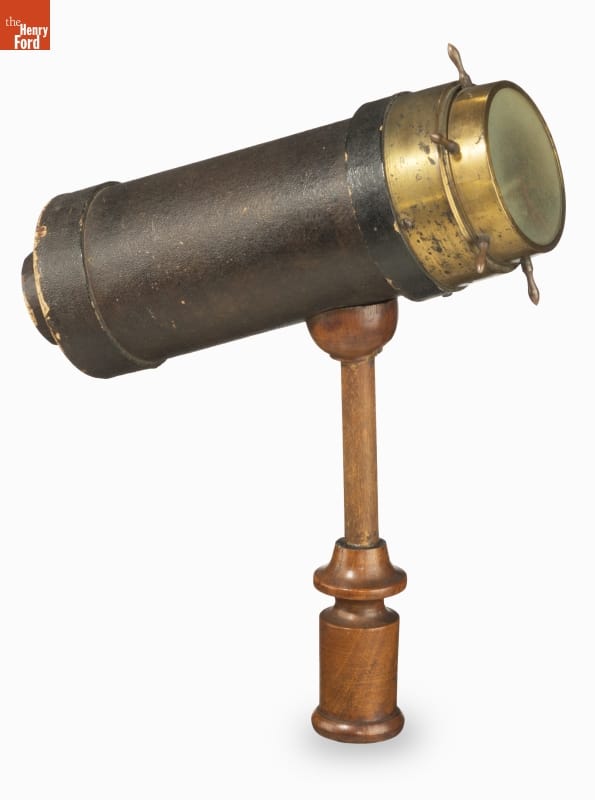
- C. G. Bush Kaleidoscope, 1874-1900 - Kaleidoscopes provide a visual feast for the eye. Angled mirrors enclosed in a tube create beautiful, ever-changing symmetrical patterns from bits of colorful glass and other translucent material. In the late 1800s, Charles Bush placed small liquid-filled vials in his kaleidoscopes. The moving liquid and bubbles in the vials provided a unique component to this optical experience.
- 1874-1900
- Collections - Artifact
C. G. Bush Kaleidoscope, 1874-1900
Kaleidoscopes provide a visual feast for the eye. Angled mirrors enclosed in a tube create beautiful, ever-changing symmetrical patterns from bits of colorful glass and other translucent material. In the late 1800s, Charles Bush placed small liquid-filled vials in his kaleidoscopes. The moving liquid and bubbles in the vials provided a unique component to this optical experience.
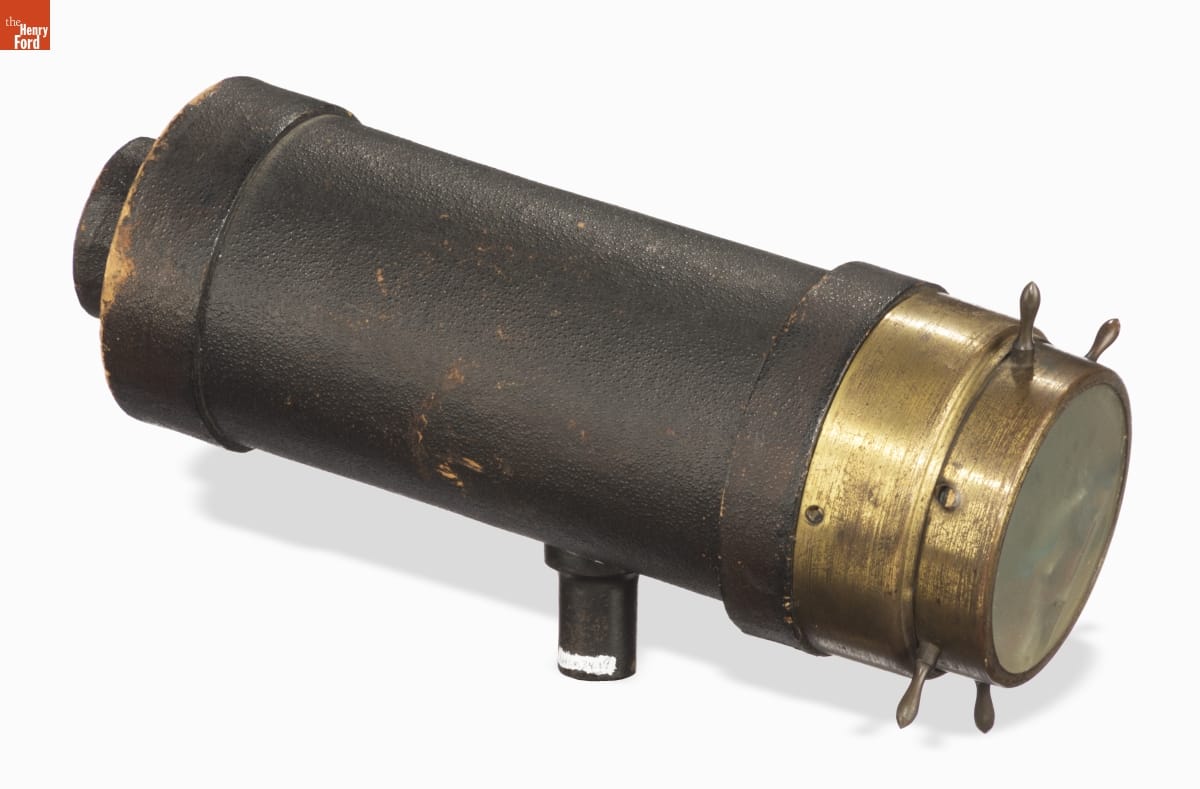
- Kaleidoscope - Kaleidoscopes provide a visual feast for the eye. Angled mirrors enclosed in a tube create beautiful, ever-changing symmetrical patterns from bits of colorful glass and other translucent material. Kaleidoscopes have mesmerized children and adults since the mid-1810s, when Scottish-born David Brewster invented the first one.
- Collections - Artifact
Kaleidoscope
Kaleidoscopes provide a visual feast for the eye. Angled mirrors enclosed in a tube create beautiful, ever-changing symmetrical patterns from bits of colorful glass and other translucent material. Kaleidoscopes have mesmerized children and adults since the mid-1810s, when Scottish-born David Brewster invented the first one.
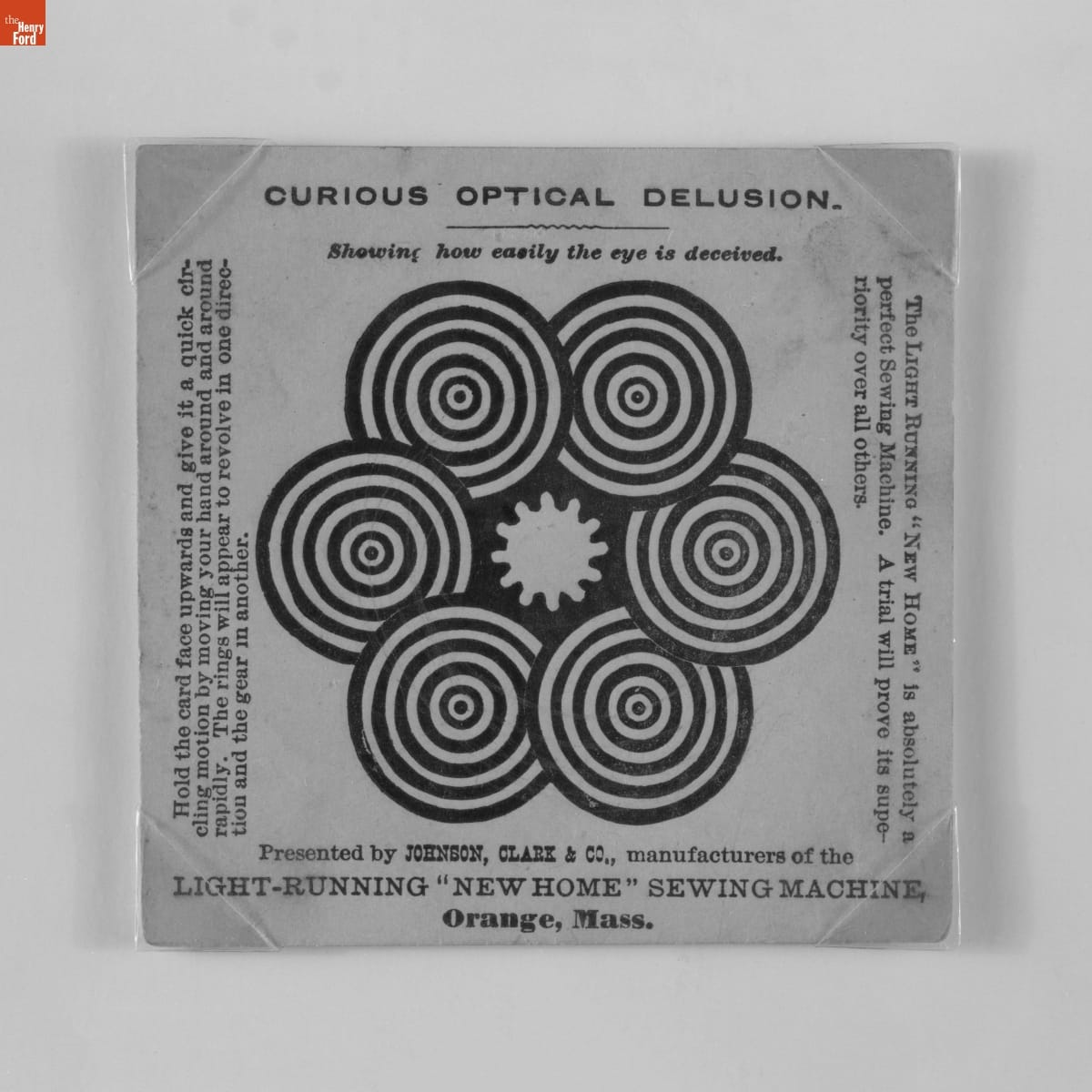
- Trade Card for the New Home Sewing Machine, 1870-1890 - In the last third of the nineteenth century, an unprecedented variety of consumer goods flooded the American market. Some enterprising advertisers sought to distinguish their products from the competition, distributing trade cards that incorporated a puzzle or game. Americans enjoyed and often saved the popular little advertisements, which survive as historical records of consumerism in the United States.
- 1870-1890
- Collections - Artifact
Trade Card for the New Home Sewing Machine, 1870-1890
In the last third of the nineteenth century, an unprecedented variety of consumer goods flooded the American market. Some enterprising advertisers sought to distinguish their products from the competition, distributing trade cards that incorporated a puzzle or game. Americans enjoyed and often saved the popular little advertisements, which survive as historical records of consumerism in the United States.
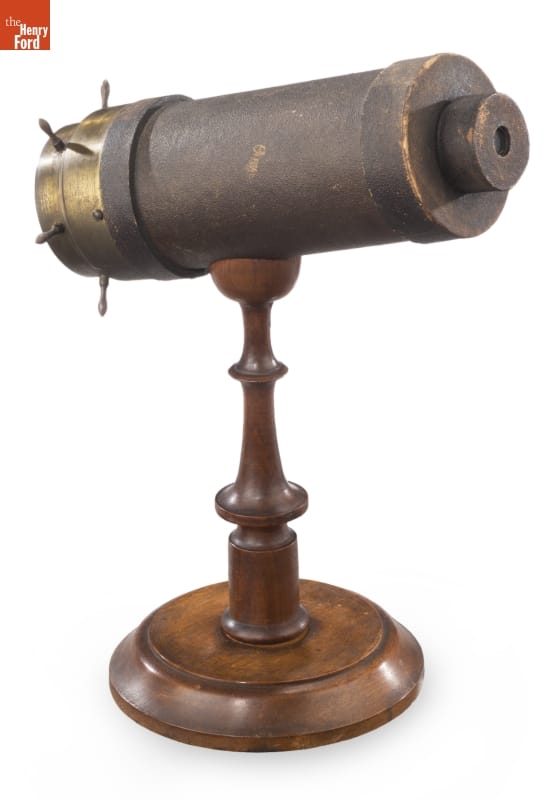
- Kaleidoscope - Kaleidoscopes provide a visual feast for the eye. Angled mirrors enclosed in a tube create beautiful, ever-changing symmetrical patterns from bits of colorful glass and other translucent material. Kaleidoscopes have mesmerized children and adults since the mid-1810s, when Scottish-born David Brewster invented the first one.
- Collections - Artifact
Kaleidoscope
Kaleidoscopes provide a visual feast for the eye. Angled mirrors enclosed in a tube create beautiful, ever-changing symmetrical patterns from bits of colorful glass and other translucent material. Kaleidoscopes have mesmerized children and adults since the mid-1810s, when Scottish-born David Brewster invented the first one.
- Kaleidoscope - Kaleidoscopes provide a visual feast for the eye. Angled mirrors enclosed in a tube create beautiful, ever-changing symmetrical patterns from bits of colorful glass and other translucent material. Kaleidoscopes have mesmerized children and adults since the mid-1810s, when Scottish-born David Brewster invented the first one.
- Collections - Artifact
Kaleidoscope
Kaleidoscopes provide a visual feast for the eye. Angled mirrors enclosed in a tube create beautiful, ever-changing symmetrical patterns from bits of colorful glass and other translucent material. Kaleidoscopes have mesmerized children and adults since the mid-1810s, when Scottish-born David Brewster invented the first one.
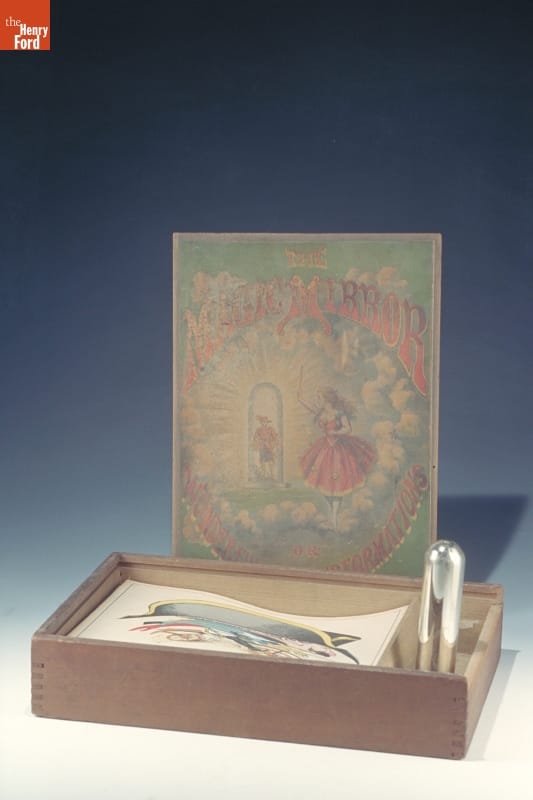
- Magic Mirror Game, 1860-1880 - As color printing technologies improved and became more affordable in the second half of the nineteenth century, many book publishers also began printing toys and games. The McLoughlin Bros. publishing firm produced this game called "The Magic Mirror, or Wonderful Transformations." Users placed a small, shiny optical toy atop distorted images to "magically" transform them into clear reflections of people or animals.
- 1860-1880
- Collections - Artifact
Magic Mirror Game, 1860-1880
As color printing technologies improved and became more affordable in the second half of the nineteenth century, many book publishers also began printing toys and games. The McLoughlin Bros. publishing firm produced this game called "The Magic Mirror, or Wonderful Transformations." Users placed a small, shiny optical toy atop distorted images to "magically" transform them into clear reflections of people or animals.
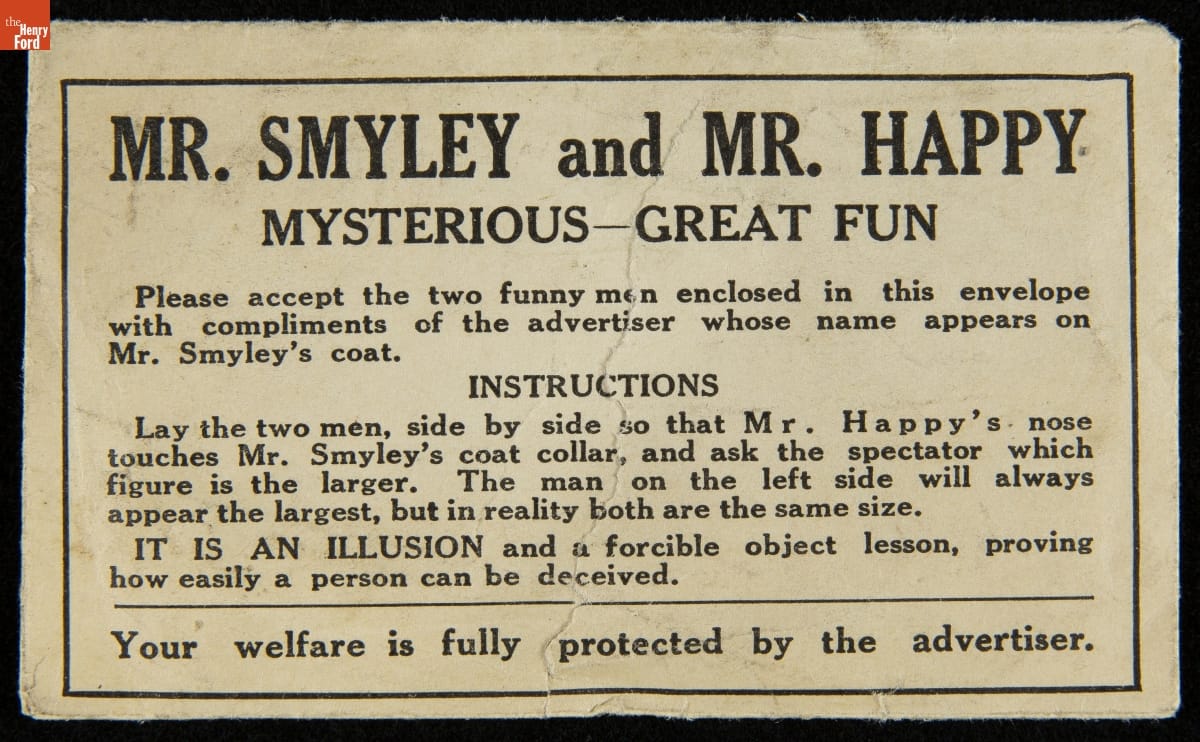
- Mr. Smyley and Mr. Happy's Optical Illusion Trade Card for Nick Pettine Tuxedo Rentals, 1924 -
- circa 1924
- Collections - Artifact
Mr. Smyley and Mr. Happy's Optical Illusion Trade Card for Nick Pettine Tuxedo Rentals, 1924