
Search
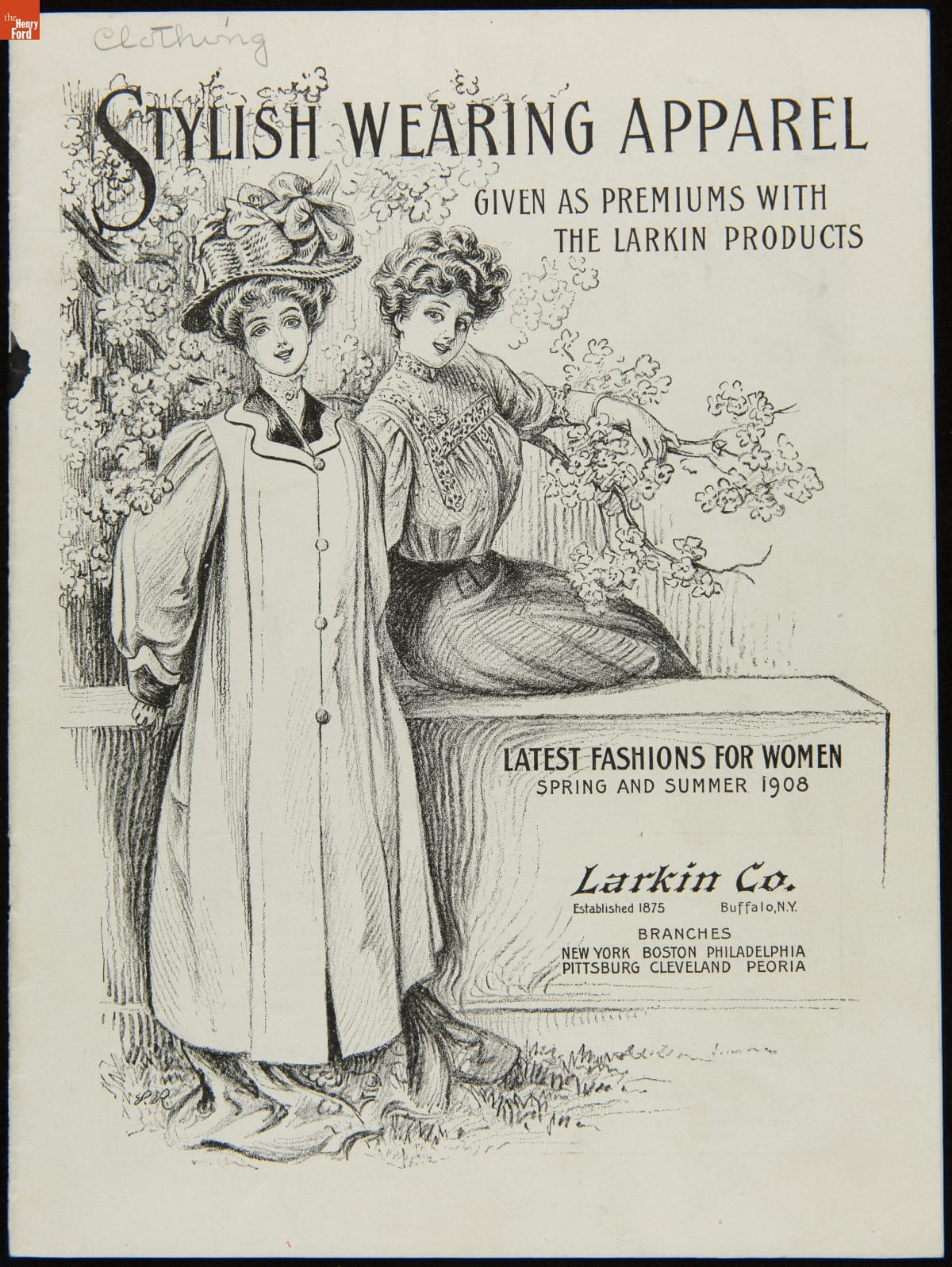
- Larkin Company Catalog, "Stylish Wearing Apparel Given as Premiums with the Larkin Products," Spring/Summer 1908 - John D. Larkin established a soap manufacturing company in 1875. He hired his brother-in-law, Elbert Hubbard, as a salesman. Hubbard developed "The Larkin Idea," a plan that sold goods directly to consumers through mail-order catalogs and offered incentivizing giveaways. It was a success. By the early 1900s, Larkin's catalogs contained pages of products and even more pages of premiums from which customers could choose.
- 1908
- Collections - Artifact
Larkin Company Catalog, "Stylish Wearing Apparel Given as Premiums with the Larkin Products," Spring/Summer 1908
John D. Larkin established a soap manufacturing company in 1875. He hired his brother-in-law, Elbert Hubbard, as a salesman. Hubbard developed "The Larkin Idea," a plan that sold goods directly to consumers through mail-order catalogs and offered incentivizing giveaways. It was a success. By the early 1900s, Larkin's catalogs contained pages of products and even more pages of premiums from which customers could choose.
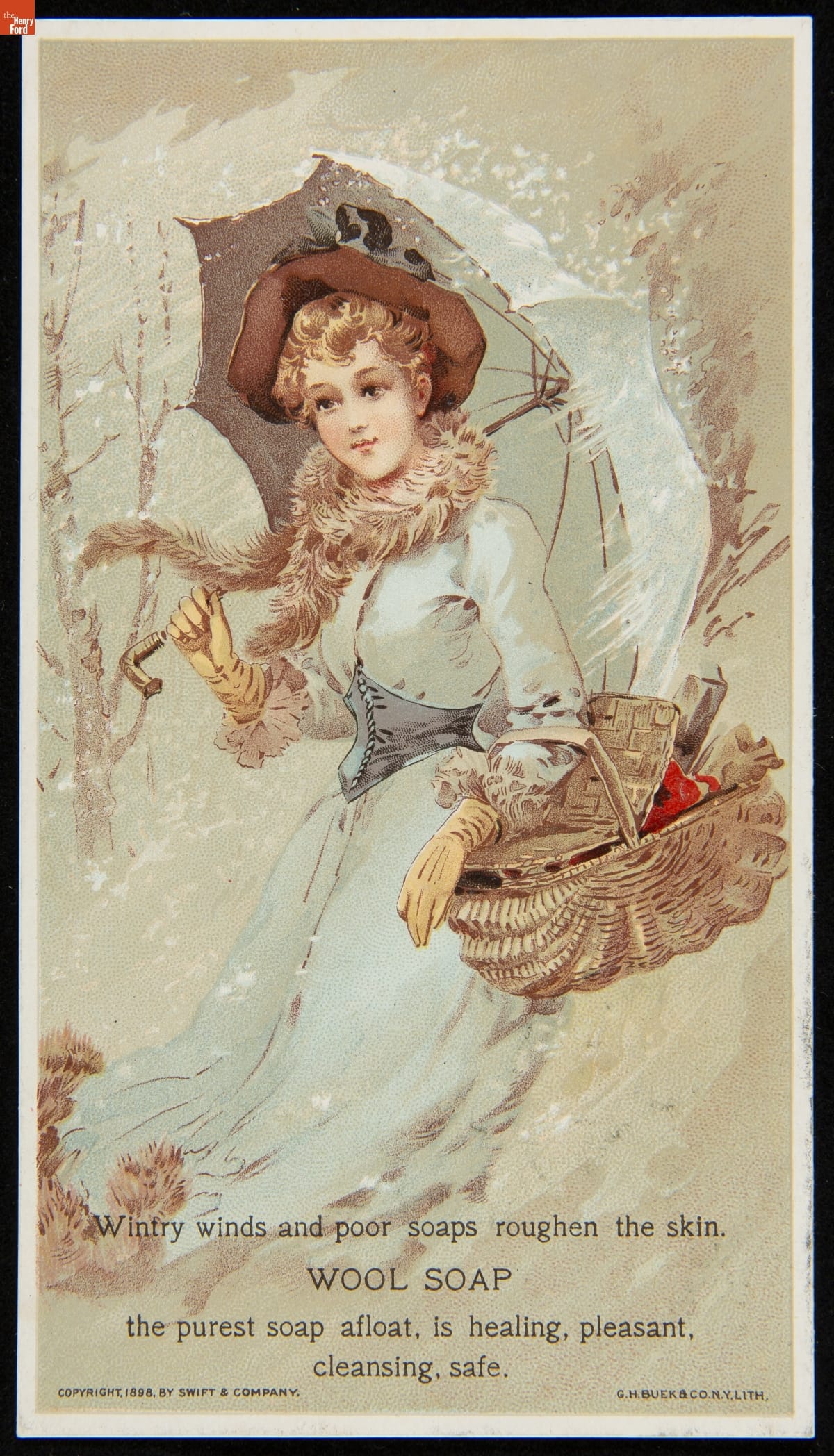
- Trade Card for Wool Soap, Swift & Co., 1898 - In the last third of the nineteenth century, an unprecedented variety of consumer goods and services flooded the American market. Advertisers, armed with new methods of color printing, bombarded potential customers with trade cards. Americans enjoyed and often saved the vibrant little advertisements found in product packages or distributed by local merchants. Many survive as historical records of commercialism in the United States.
- circa 1898
- Collections - Artifact
Trade Card for Wool Soap, Swift & Co., 1898
In the last third of the nineteenth century, an unprecedented variety of consumer goods and services flooded the American market. Advertisers, armed with new methods of color printing, bombarded potential customers with trade cards. Americans enjoyed and often saved the vibrant little advertisements found in product packages or distributed by local merchants. Many survive as historical records of commercialism in the United States.
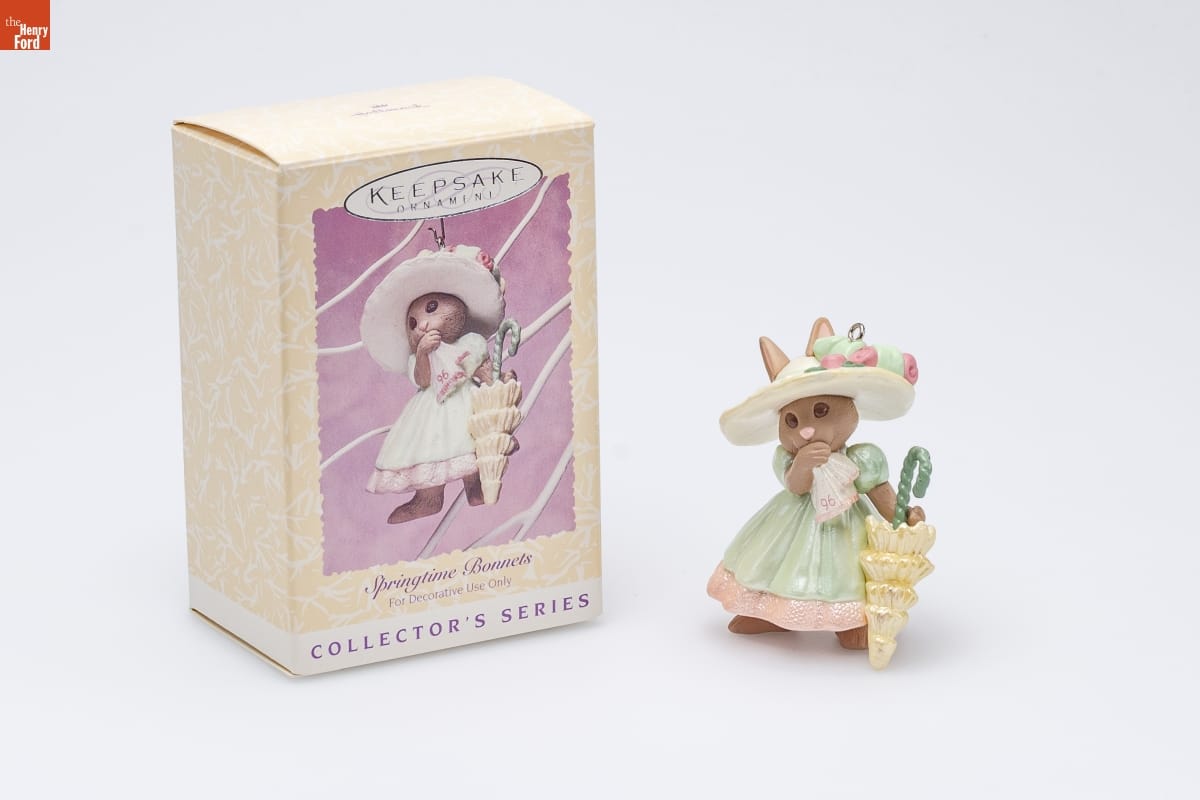
- Hallmark "Springtime Bonnets Series" Easter Ornament, 1996 - Hallmark introduced a line of Christmas ornaments in 1973. These ornaments appealed to customers' interest in marking memories, commemorating milestones, and expressing one's personality and unique tastes. This success led the company to produce ornaments for other holidays. Hallmark marketed and sold Easter and springtime ornaments in several series dating back to the 1990s.
- 1996
- Collections - Artifact
Hallmark "Springtime Bonnets Series" Easter Ornament, 1996
Hallmark introduced a line of Christmas ornaments in 1973. These ornaments appealed to customers' interest in marking memories, commemorating milestones, and expressing one's personality and unique tastes. This success led the company to produce ornaments for other holidays. Hallmark marketed and sold Easter and springtime ornaments in several series dating back to the 1990s.
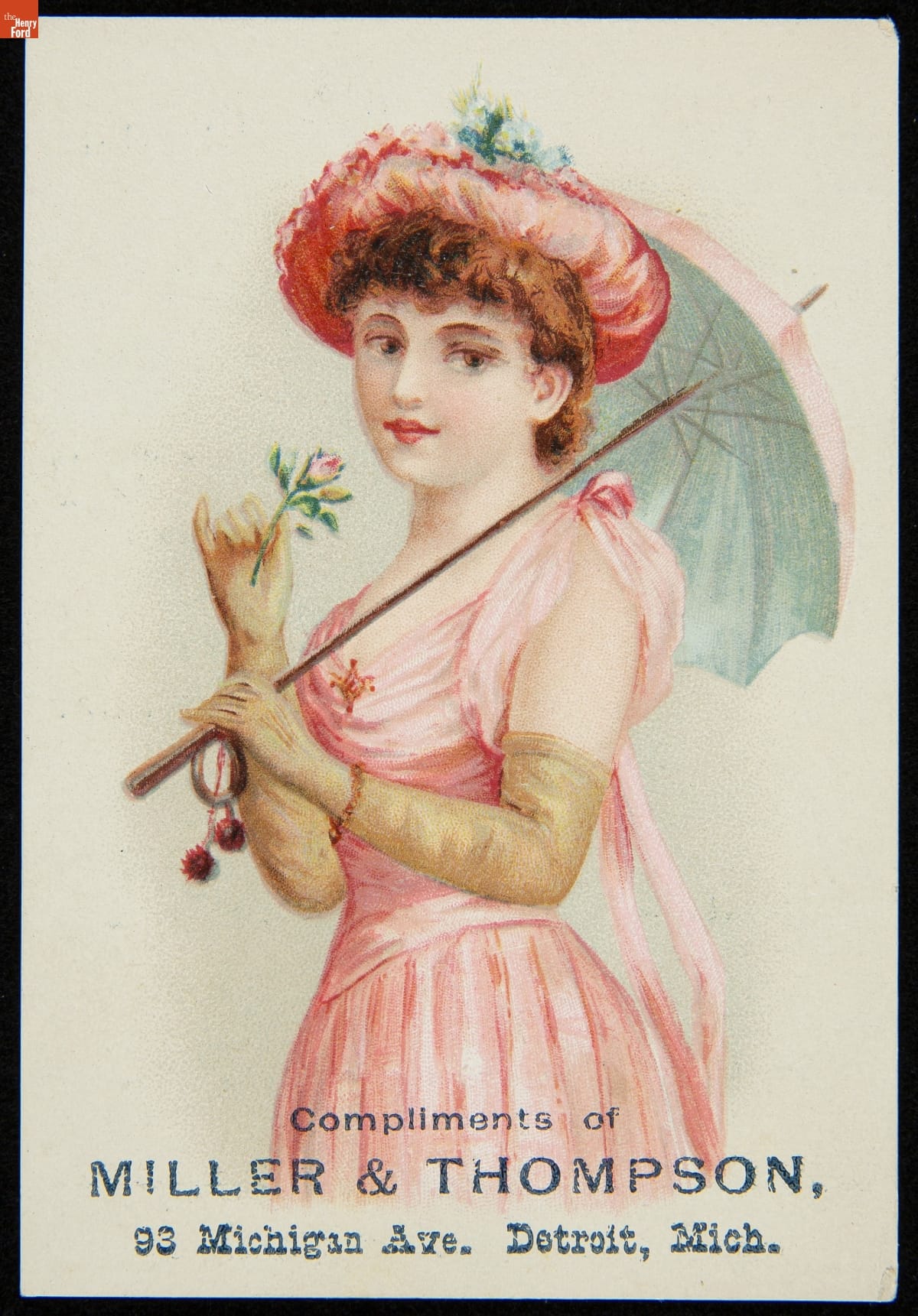
- Trade Card for Shaw Pianos, 1880-1900 - In the last third of the nineteenth century, an unprecedented variety of consumer goods and services flooded the American market. Advertisers, armed with new methods of color printing, bombarded potential customers with trade cards. Americans enjoyed and often saved the vibrant little advertisements found in product packages or distributed by local merchants. Many survive as historical records of commercialism in the United States.
- 1880-1900
- Collections - Artifact
Trade Card for Shaw Pianos, 1880-1900
In the last third of the nineteenth century, an unprecedented variety of consumer goods and services flooded the American market. Advertisers, armed with new methods of color printing, bombarded potential customers with trade cards. Americans enjoyed and often saved the vibrant little advertisements found in product packages or distributed by local merchants. Many survive as historical records of commercialism in the United States.
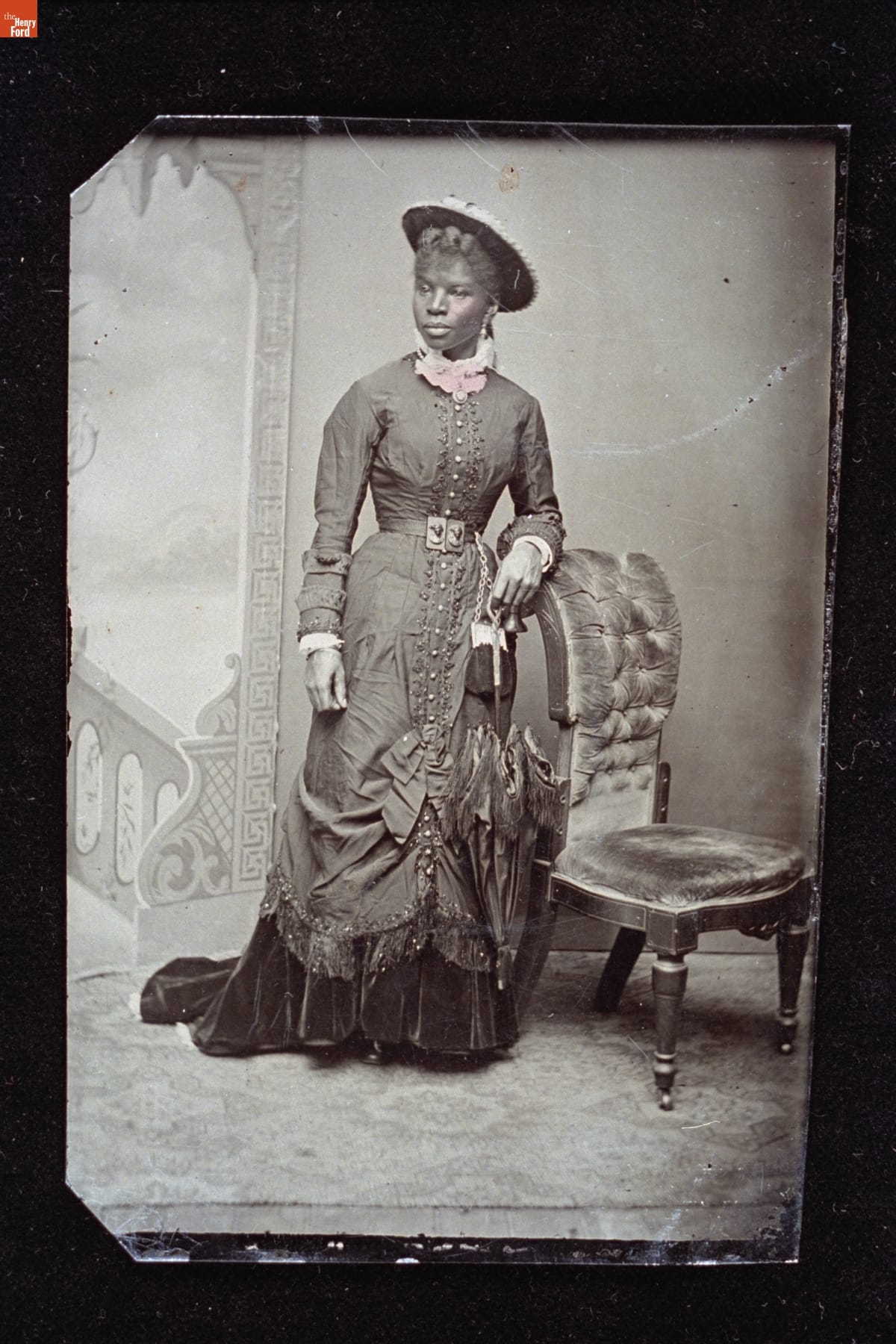
- Woman Holding a Parasol, circa 1878 - Tintypes, the popular "instant photographs" of the 19th century, could be produced in a matter of minutes at a price most people could afford. Tintypes democratized photography. Beginning in the mid-1850s, they gave more people than ever before the chance to have a real likeness of themselves--capturing unique glimpses of how everyday Americans looked and lived.
- circa 1878
- Collections - Artifact
Woman Holding a Parasol, circa 1878
Tintypes, the popular "instant photographs" of the 19th century, could be produced in a matter of minutes at a price most people could afford. Tintypes democratized photography. Beginning in the mid-1850s, they gave more people than ever before the chance to have a real likeness of themselves--capturing unique glimpses of how everyday Americans looked and lived.
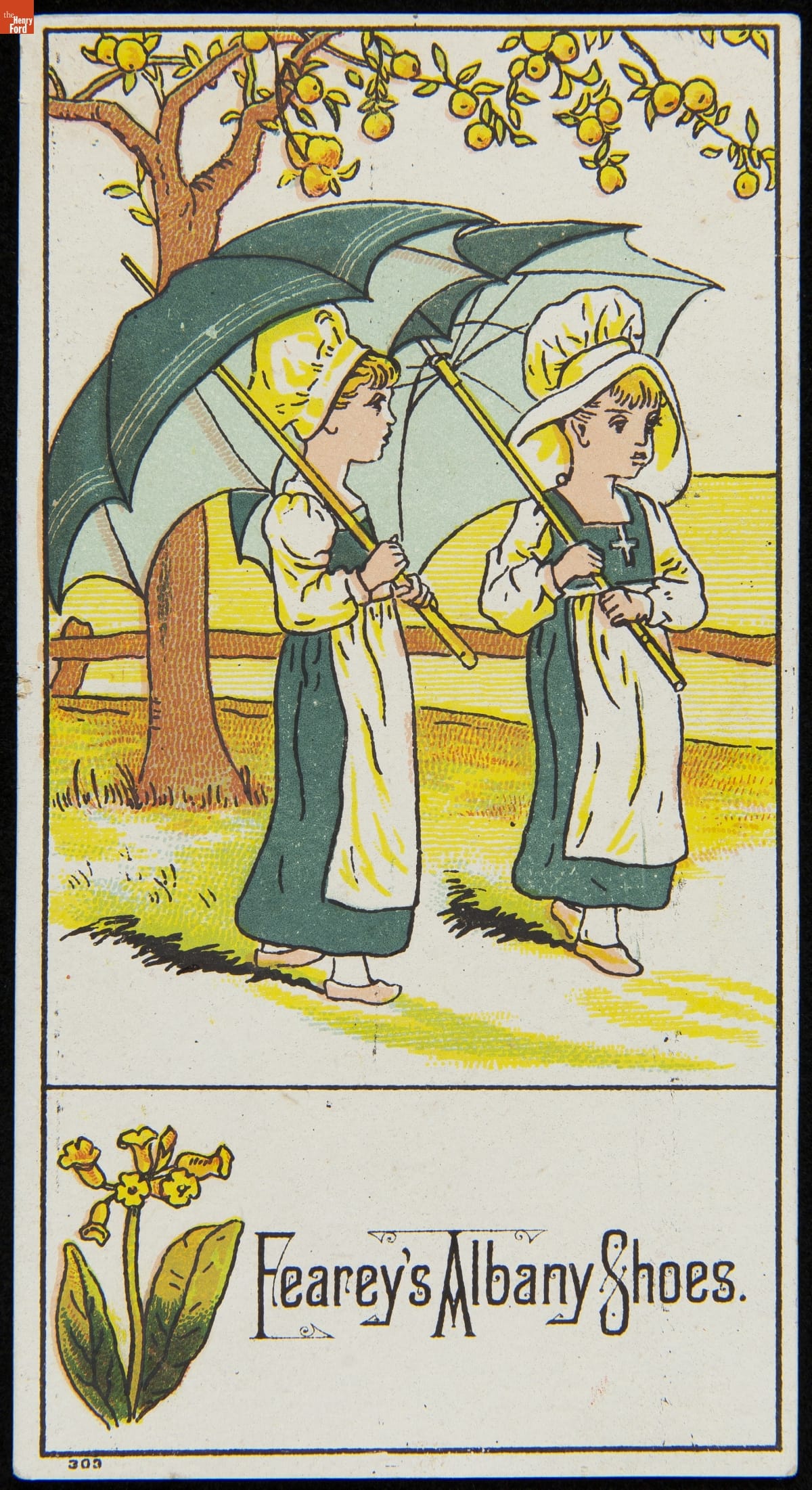
- Trade Card for Fearey's Albany Shoes, 1880-1900 - In the last third of the nineteenth century, an unprecedented variety of consumer goods and services flooded the American market. Advertisers, armed with new methods of color printing, bombarded potential customers with trade cards. Americans enjoyed and often saved the vibrant little advertisements found in product packages or distributed by local merchants. Many survive as historical records of commercialism in the United States.
- 1880-1900
- Collections - Artifact
Trade Card for Fearey's Albany Shoes, 1880-1900
In the last third of the nineteenth century, an unprecedented variety of consumer goods and services flooded the American market. Advertisers, armed with new methods of color printing, bombarded potential customers with trade cards. Americans enjoyed and often saved the vibrant little advertisements found in product packages or distributed by local merchants. Many survive as historical records of commercialism in the United States.
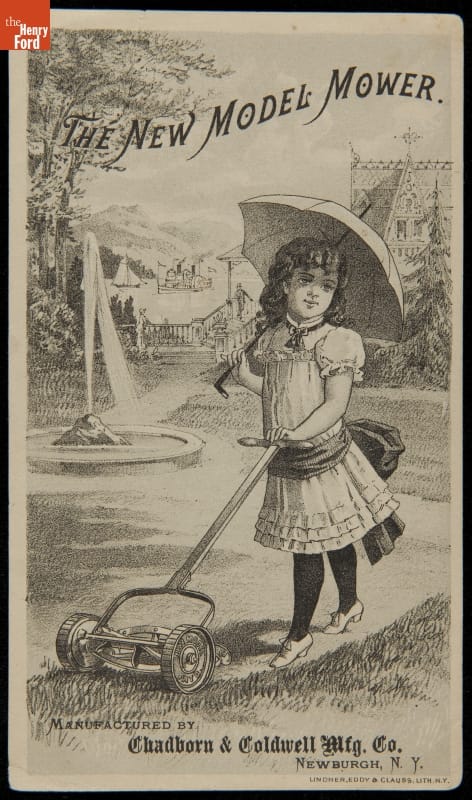
- Trade Card for the New Model Mower, Chadborn & Coldwell Mfg. Co., circa 1888 - In the late 1800s, improved transit allowed suburbs to grow around cities. Well-kept lawns were a key feature of a suburban home, and the lawn mower was an essential tool. Early mowers were often heavy and hard to push, though this trade card suggests that using the "New Model Mower" was like a walk in the park.
- circa 1888
- Collections - Artifact
Trade Card for the New Model Mower, Chadborn & Coldwell Mfg. Co., circa 1888
In the late 1800s, improved transit allowed suburbs to grow around cities. Well-kept lawns were a key feature of a suburban home, and the lawn mower was an essential tool. Early mowers were often heavy and hard to push, though this trade card suggests that using the "New Model Mower" was like a walk in the park.
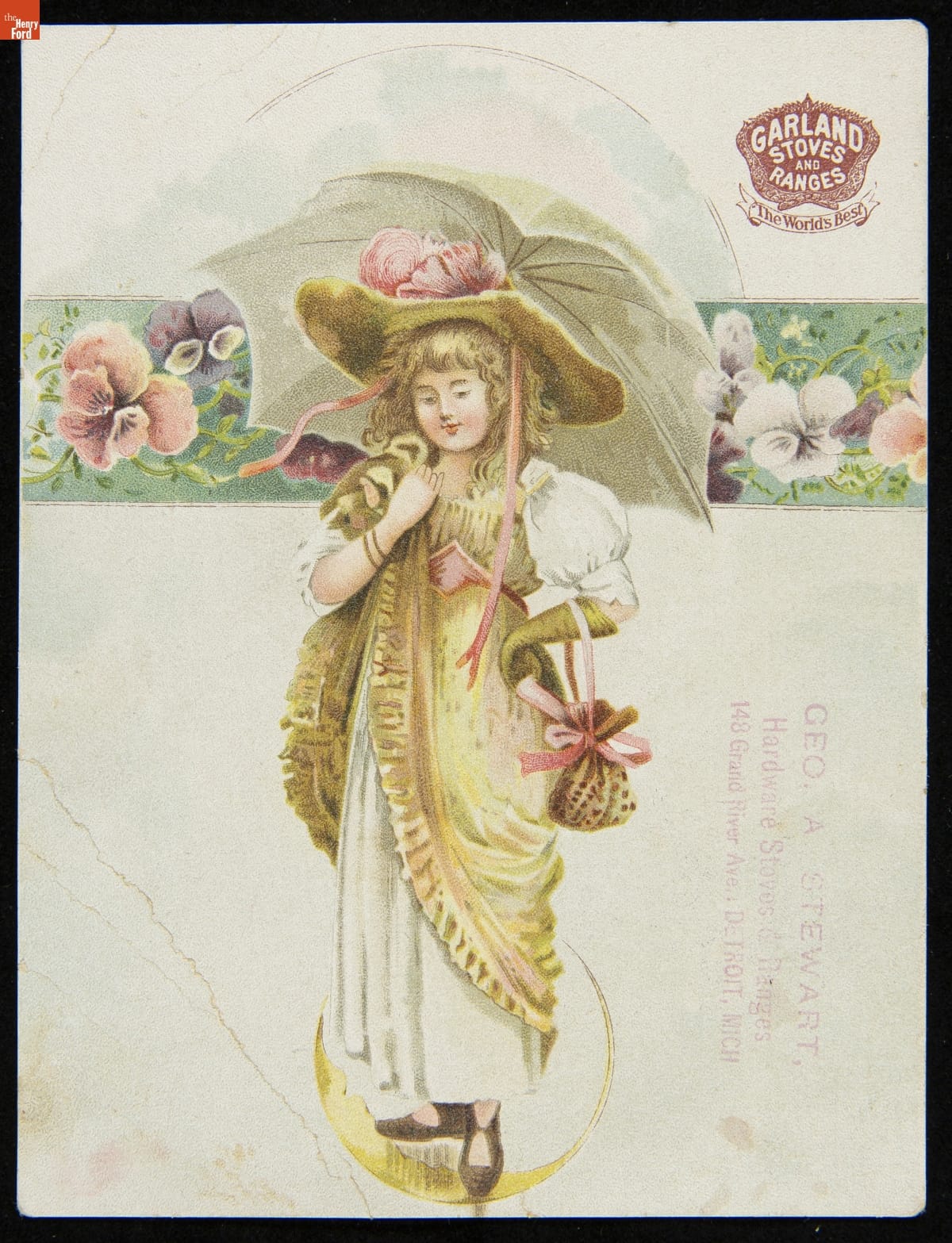
- Trade Card for Garland Stoves and Ranges, Michigan Stove Co., 1880-1900 - As color printing gained momentum in the late 19th century, trade cards became a major means of advertising goods and services. Americans enjoyed and often saved the vibrant little advertisements found in product packages or distributed by local merchants. The Michigan Stove Company's trade cards often featured children, animals, and images of its stoves, with its "Garland Stoves and Ranges" brand logo prominently displayed.
- 1880-1900
- Collections - Artifact
Trade Card for Garland Stoves and Ranges, Michigan Stove Co., 1880-1900
As color printing gained momentum in the late 19th century, trade cards became a major means of advertising goods and services. Americans enjoyed and often saved the vibrant little advertisements found in product packages or distributed by local merchants. The Michigan Stove Company's trade cards often featured children, animals, and images of its stoves, with its "Garland Stoves and Ranges" brand logo prominently displayed.