
Search
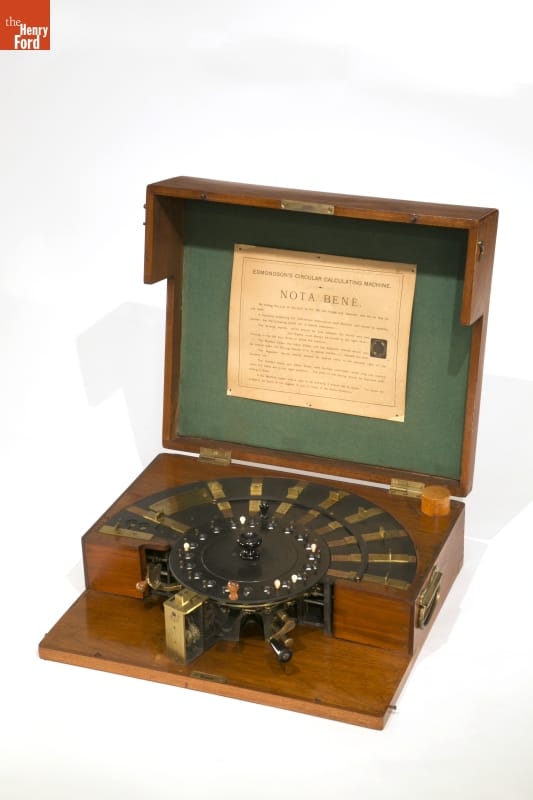
- Patent Model of Edmondson's Circular Calculating Machine, 1883 - Mechanical calculators used gears, cogs, levers, and rotating drums to solve mathematical problems indirectly. While Edmondson's Circular Calculator was rugged and reliable, its "stepped drum" system required people to slide plates and levers, making it difficult to master and time-consuming to operate. By the late 19th century, improved adding machines became popular, helping to reduce the common errors of human calculation.
- 1883
- Collections - Artifact
Patent Model of Edmondson's Circular Calculating Machine, 1883
Mechanical calculators used gears, cogs, levers, and rotating drums to solve mathematical problems indirectly. While Edmondson's Circular Calculator was rugged and reliable, its "stepped drum" system required people to slide plates and levers, making it difficult to master and time-consuming to operate. By the late 19th century, improved adding machines became popular, helping to reduce the common errors of human calculation.
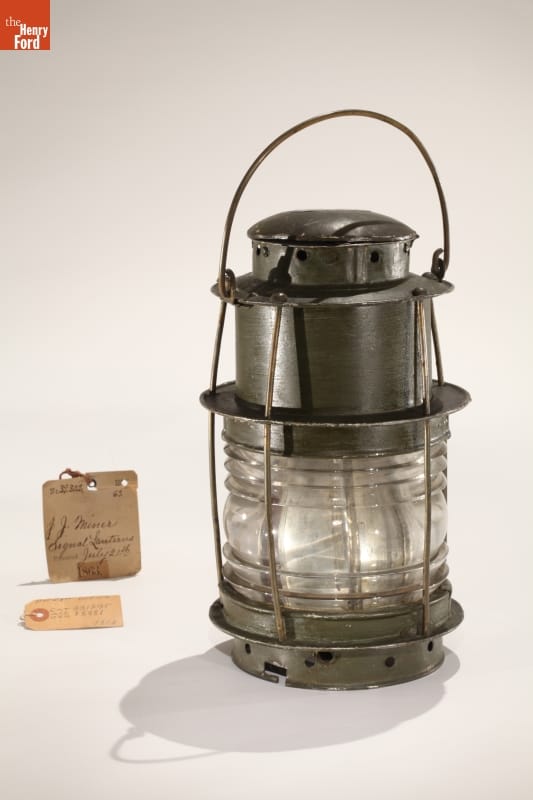
- Patent Model of Marine Signal Lantern, 1863 - This marine lantern was designed to burn oil. An opaque metal shade could be moved to expose and block its glow. Moveable red and green glass shades are its most innovative feature, which served two purposes. They allowed the lantern to act as a communications device, to send messages between ships--and as an anchor light, to avoid collisions between vessels.
- July 21, 1863
- Collections - Artifact
Patent Model of Marine Signal Lantern, 1863
This marine lantern was designed to burn oil. An opaque metal shade could be moved to expose and block its glow. Moveable red and green glass shades are its most innovative feature, which served two purposes. They allowed the lantern to act as a communications device, to send messages between ships--and as an anchor light, to avoid collisions between vessels.
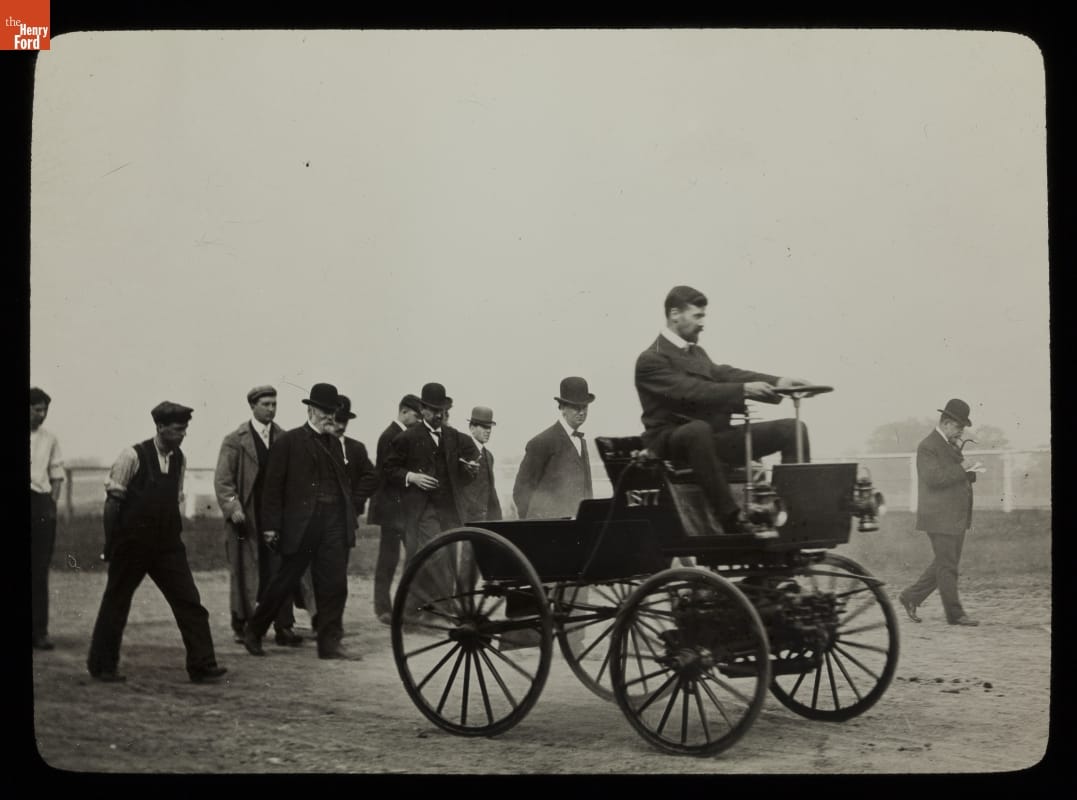
- Driving the Selden Motor Buggy during the Selden Patent Suit - George Selden conceived -- but didn't build -- a self-propelled gasoline-powered vehicle in 1877 and patented the idea in 1895. The Association of Licensed Automobile Manufacturers enforced Selden's patent, but Henry Ford fought ALAM in court. This car was completed for Selden in 1907 as evidence for the legal battle. Ford ultimately won, freeing himself and other automakers from paying royalties to ALAM.
- 1907-1911
- Collections - Artifact
Driving the Selden Motor Buggy during the Selden Patent Suit
George Selden conceived -- but didn't build -- a self-propelled gasoline-powered vehicle in 1877 and patented the idea in 1895. The Association of Licensed Automobile Manufacturers enforced Selden's patent, but Henry Ford fought ALAM in court. This car was completed for Selden in 1907 as evidence for the legal battle. Ford ultimately won, freeing himself and other automakers from paying royalties to ALAM.
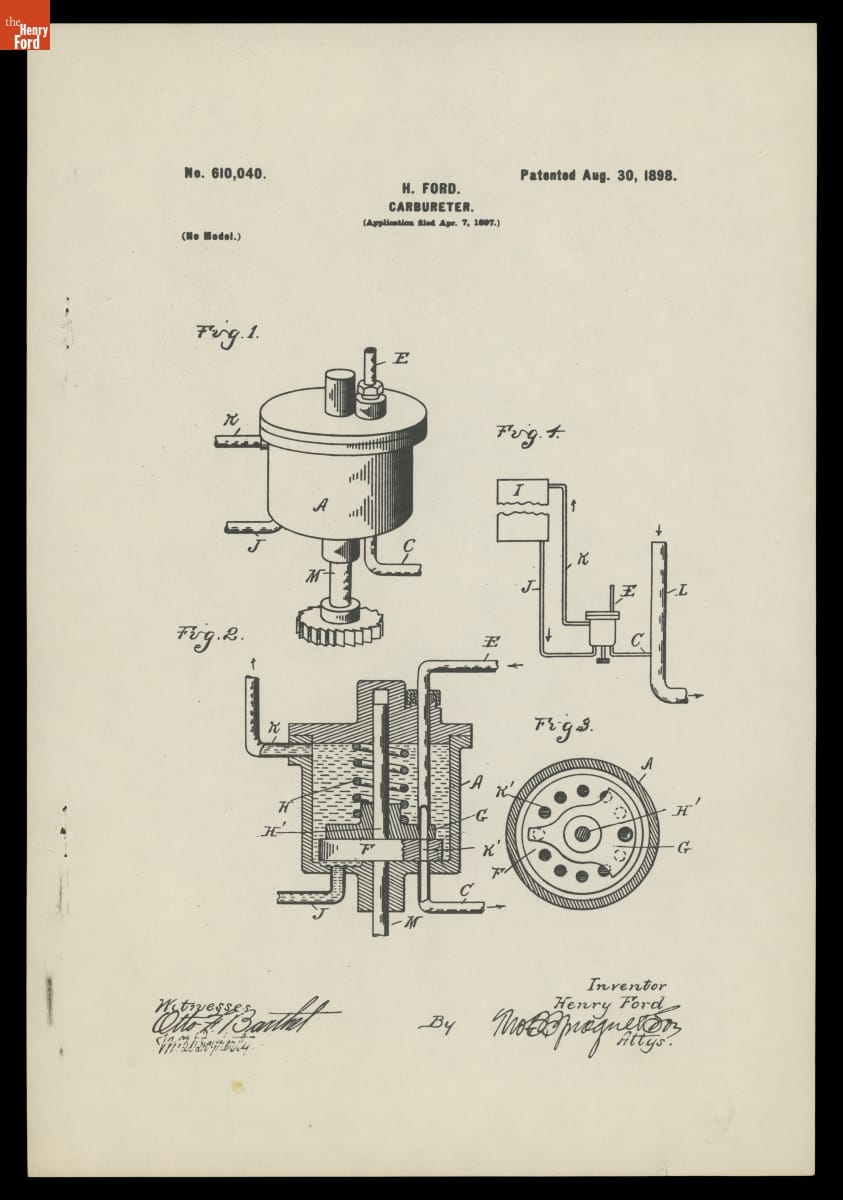
- Patent #610,040, Carburetor Improvements by Henry Ford, Granted August 30, 1898 - Henry Ford received a patent in August 1898 for an improved automobile carburetor -- the device that mixes the fuel and air sent to an engine's cylinders. It was part of Ford's work to design and build his first marketable automobile. Ford's first company, the Detroit Automobile Company, was formed in July 1899 but closed after 15 months.
- August 30, 1898
- Collections - Artifact
Patent #610,040, Carburetor Improvements by Henry Ford, Granted August 30, 1898
Henry Ford received a patent in August 1898 for an improved automobile carburetor -- the device that mixes the fuel and air sent to an engine's cylinders. It was part of Ford's work to design and build his first marketable automobile. Ford's first company, the Detroit Automobile Company, was formed in July 1899 but closed after 15 months.
- "What is the Selden Patent on Gasoline Automobiles?," 1910 - The Association of Licensed Automobile Manufacturers believed that George Selden's 1895 patent covered any and all internal combustion automobiles. When Henry Ford refused to pay ALAM's requested royalties, the organization took him to court. After a lengthy legal battle, the U.S. Court of Appeals found in Ford's favor in 1911. Automakers were freed from patent fees and Ford became a folk hero.
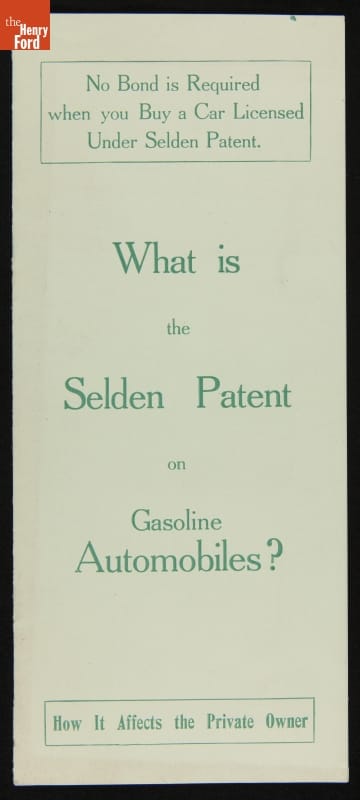
- April 12, 1910
- Collections - Artifact
"What is the Selden Patent on Gasoline Automobiles?," 1910
The Association of Licensed Automobile Manufacturers believed that George Selden's 1895 patent covered any and all internal combustion automobiles. When Henry Ford refused to pay ALAM's requested royalties, the organization took him to court. After a lengthy legal battle, the U.S. Court of Appeals found in Ford's favor in 1911. Automakers were freed from patent fees and Ford became a folk hero.
- Parson's Purgative Pills, 1870-1890 - Nineteenth-century entrepreneurs promised cures with patent medicines. Some of these concoctions, however, contained harmful ingredients or ingredients used in unsafe quantities -- the industry was unregulated and manufacturers were secretive about their recipes. Beginning with the Pure Food and Drug Act of 1906, national legislation increasingly prohibited misleading health claims and required manufacturers to list their product's contents.
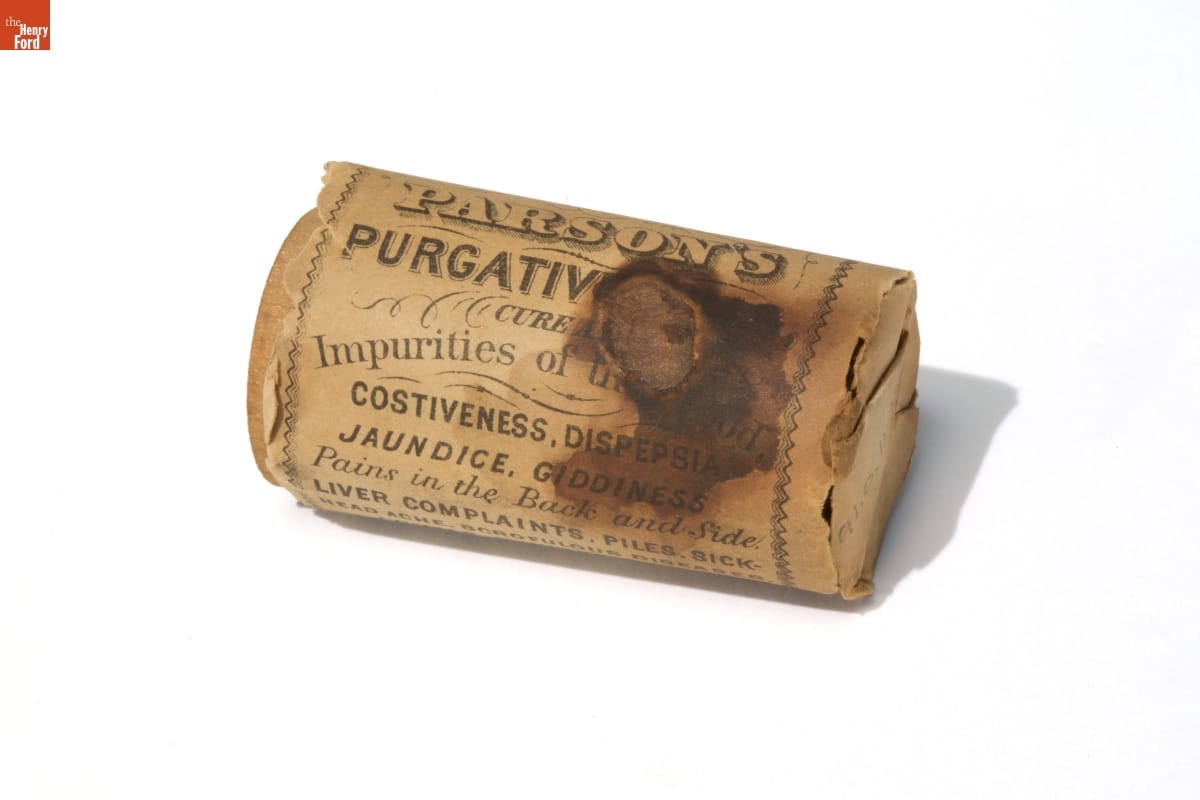
- 1870-1890
- Collections - Artifact
Parson's Purgative Pills, 1870-1890
Nineteenth-century entrepreneurs promised cures with patent medicines. Some of these concoctions, however, contained harmful ingredients or ingredients used in unsafe quantities -- the industry was unregulated and manufacturers were secretive about their recipes. Beginning with the Pure Food and Drug Act of 1906, national legislation increasingly prohibited misleading health claims and required manufacturers to list their product's contents.
- Reynold's & Parmely's Female Health Restorative, 1839-1870 - Nineteenth-century entrepreneurs promised cures with patent medicines. Some of these concoctions, however, contained harmful ingredients or ingredients used in unsafe quantities -- the industry was unregulated and manufacturers were secretive about their recipes. Beginning with the Pure Food and Drug Act of 1906, national legislation increasingly prohibited misleading health claims and required manufacturers to list their product's contents.
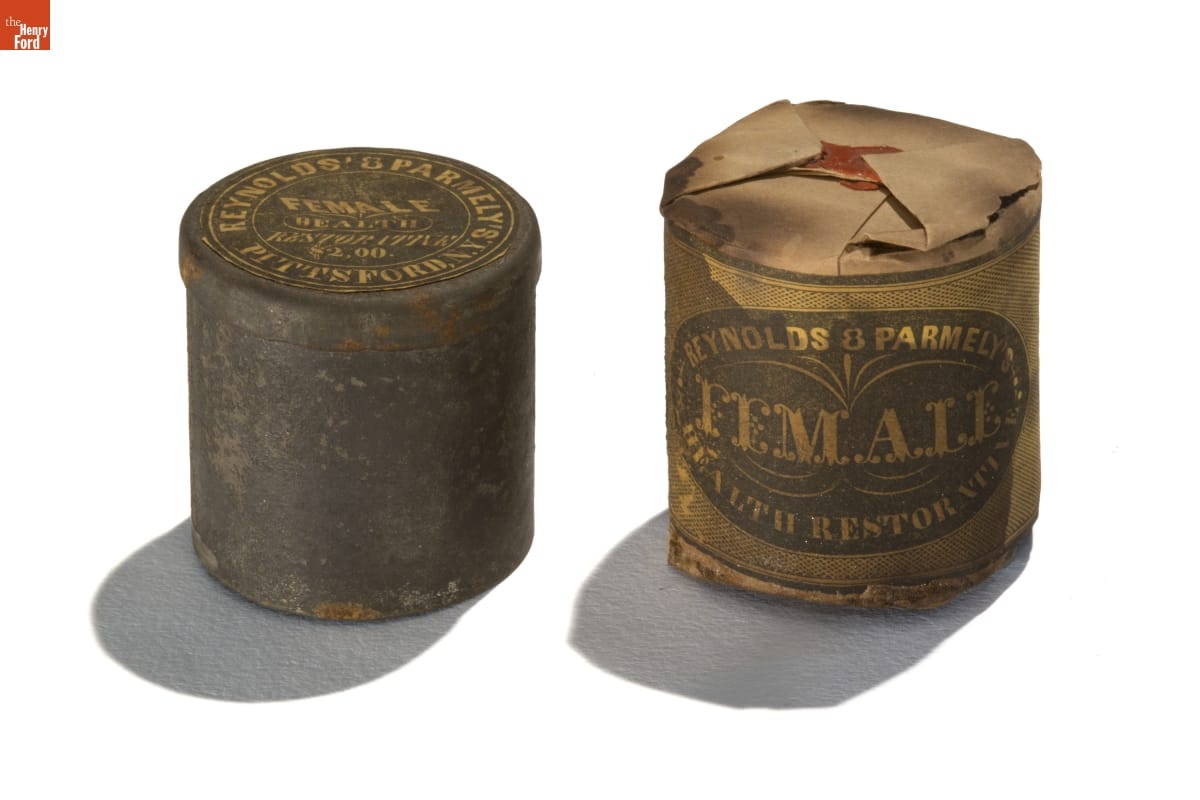
- 1839-1870
- Collections - Artifact
Reynold's & Parmely's Female Health Restorative, 1839-1870
Nineteenth-century entrepreneurs promised cures with patent medicines. Some of these concoctions, however, contained harmful ingredients or ingredients used in unsafe quantities -- the industry was unregulated and manufacturers were secretive about their recipes. Beginning with the Pure Food and Drug Act of 1906, national legislation increasingly prohibited misleading health claims and required manufacturers to list their product's contents.
- Dr. Sawens Magic Nervine Pills, 1868-1883 - Nineteenth-century entrepreneurs promised cures with patent medicines. Some of these concoctions, however, contained harmful ingredients or ingredients used in unsafe quantities -- the industry was unregulated and manufacturers were secretive about their recipes. Beginning with the Pure Food and Drug Act of 1906, national legislation increasingly prohibited misleading health claims and required manufacturers to list their product's contents.
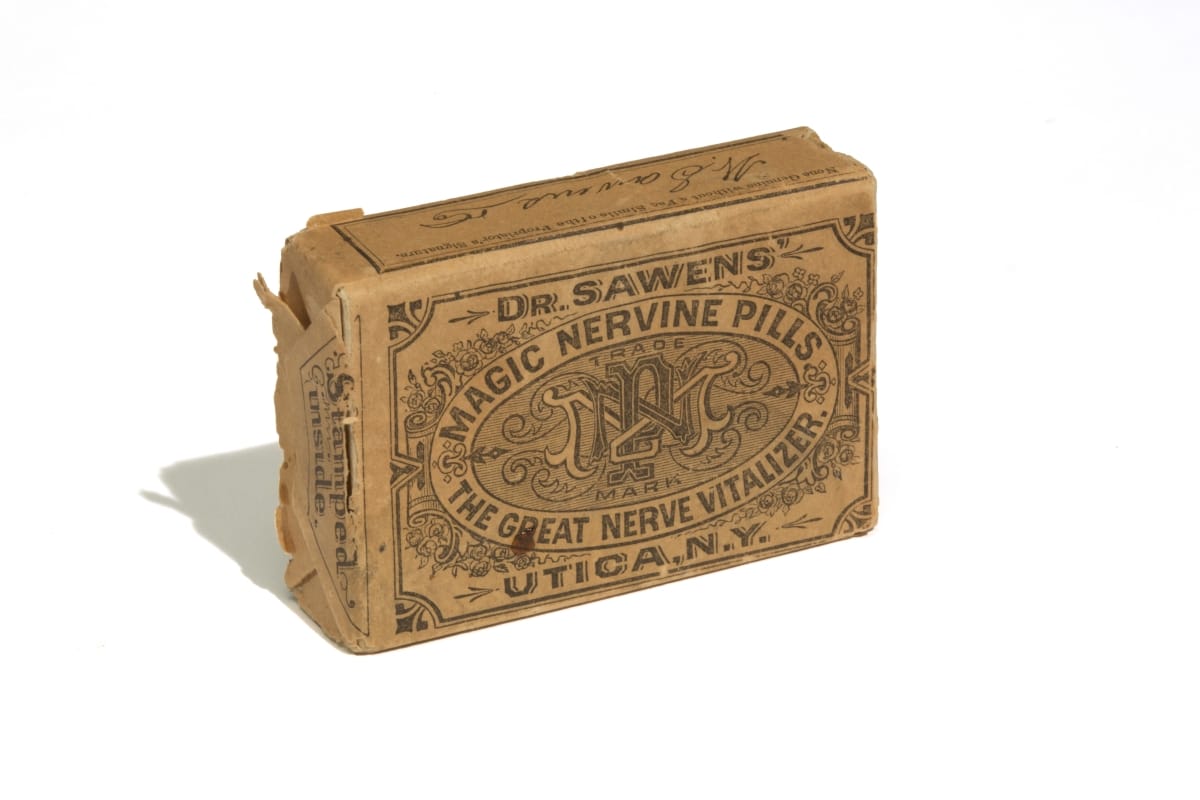
- 1868-1883
- Collections - Artifact
Dr. Sawens Magic Nervine Pills, 1868-1883
Nineteenth-century entrepreneurs promised cures with patent medicines. Some of these concoctions, however, contained harmful ingredients or ingredients used in unsafe quantities -- the industry was unregulated and manufacturers were secretive about their recipes. Beginning with the Pure Food and Drug Act of 1906, national legislation increasingly prohibited misleading health claims and required manufacturers to list their product's contents.
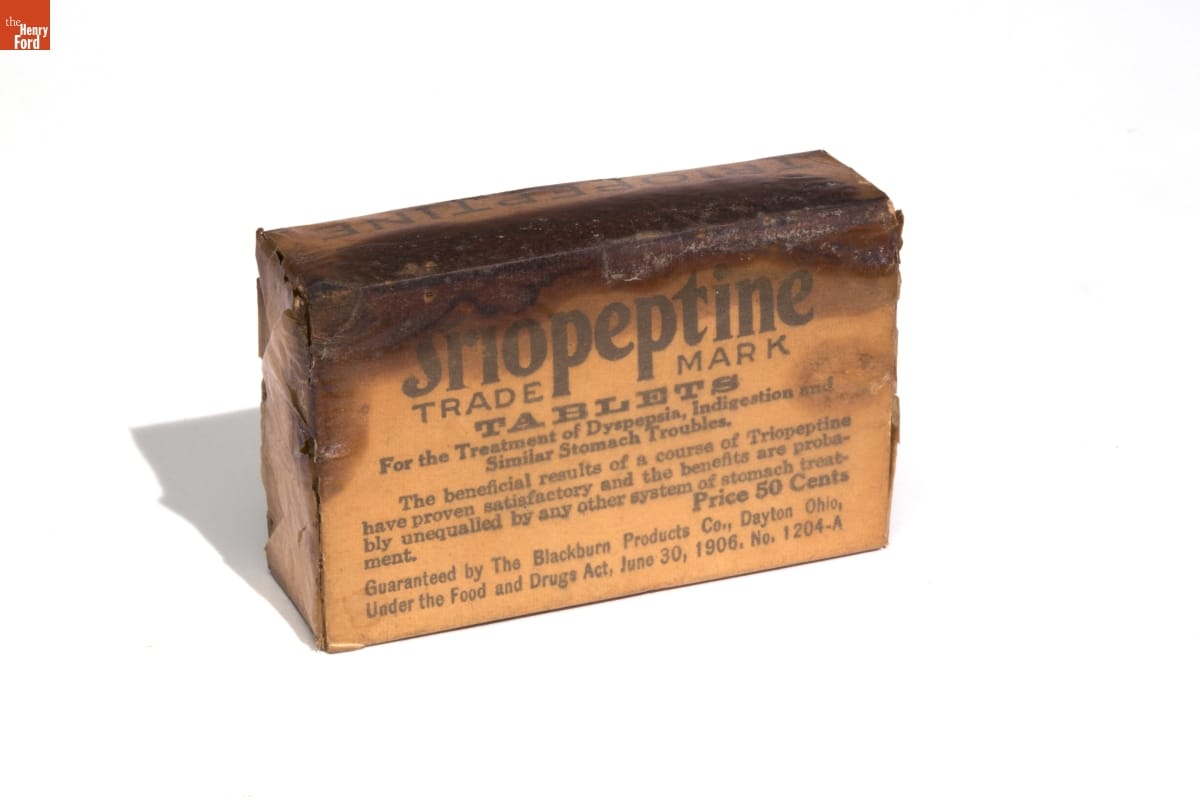
- Triopeptine Tablets, 1906-1918 - Nineteenth-century entrepreneurs promised cures with patent medicines. Some of these concoctions, however, contained harmful ingredients or ingredients used in unsafe quantities -- the industry was unregulated and manufacturers were secretive about their recipes. Beginning with the Pure Food and Drug Act of 1906, national legislation increasingly prohibited misleading health claims and required manufacturers to list their product's contents.
- 1906-1918
- Collections - Artifact
Triopeptine Tablets, 1906-1918
Nineteenth-century entrepreneurs promised cures with patent medicines. Some of these concoctions, however, contained harmful ingredients or ingredients used in unsafe quantities -- the industry was unregulated and manufacturers were secretive about their recipes. Beginning with the Pure Food and Drug Act of 1906, national legislation increasingly prohibited misleading health claims and required manufacturers to list their product's contents.
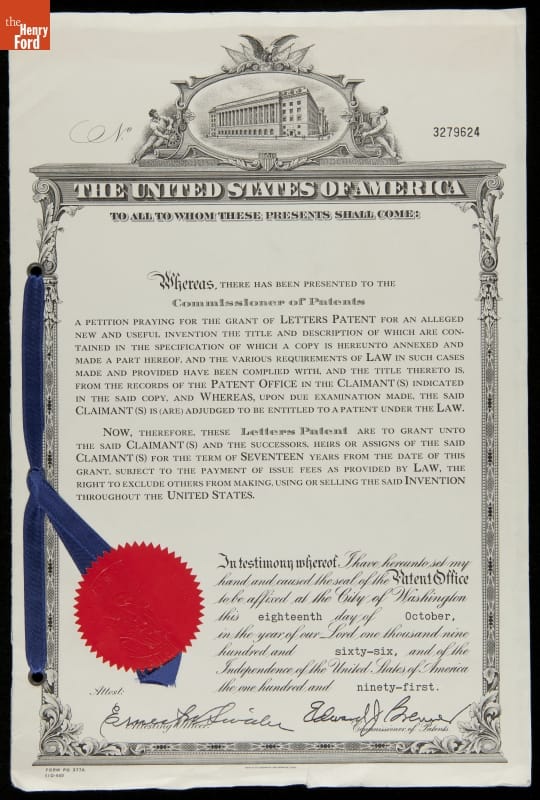
- Patent, "Programmed Article Handling," 1966 -
- October 18, 1966
- Collections - Artifact
Patent, "Programmed Article Handling," 1966