
Search
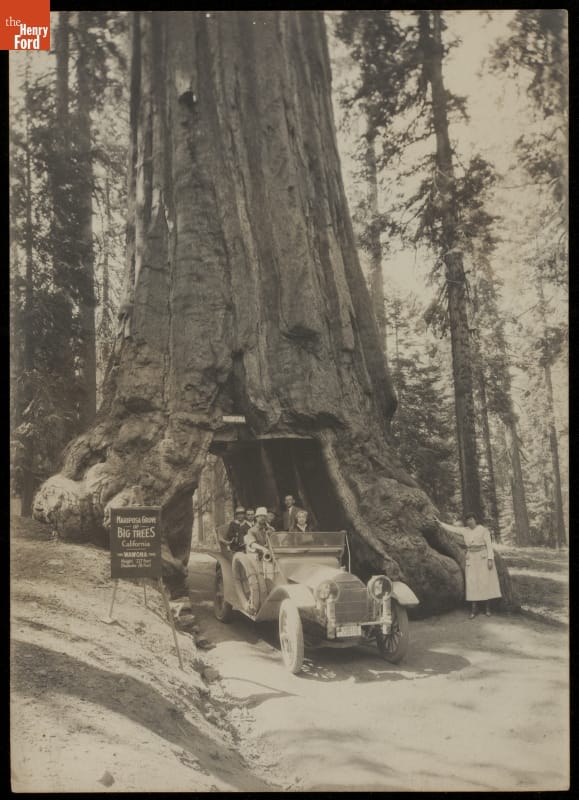
- Tourists Driving through Mariposa Grove, Yosemite Valley, California, circa 1905 - Paying customers could see some of Yosemite National Park's most famous features from the comfort of a seven-passenger Pierce-Arrow automobile. One highlight of taking this "Horseshoe Route" was a ride through the Wawona Tunnel Tree. The Giant Sequoia in Mariposa Grove was cut as a tourist attraction in 1881.
- circa 1905
- Collections - Artifact
Tourists Driving through Mariposa Grove, Yosemite Valley, California, circa 1905
Paying customers could see some of Yosemite National Park's most famous features from the comfort of a seven-passenger Pierce-Arrow automobile. One highlight of taking this "Horseshoe Route" was a ride through the Wawona Tunnel Tree. The Giant Sequoia in Mariposa Grove was cut as a tourist attraction in 1881.
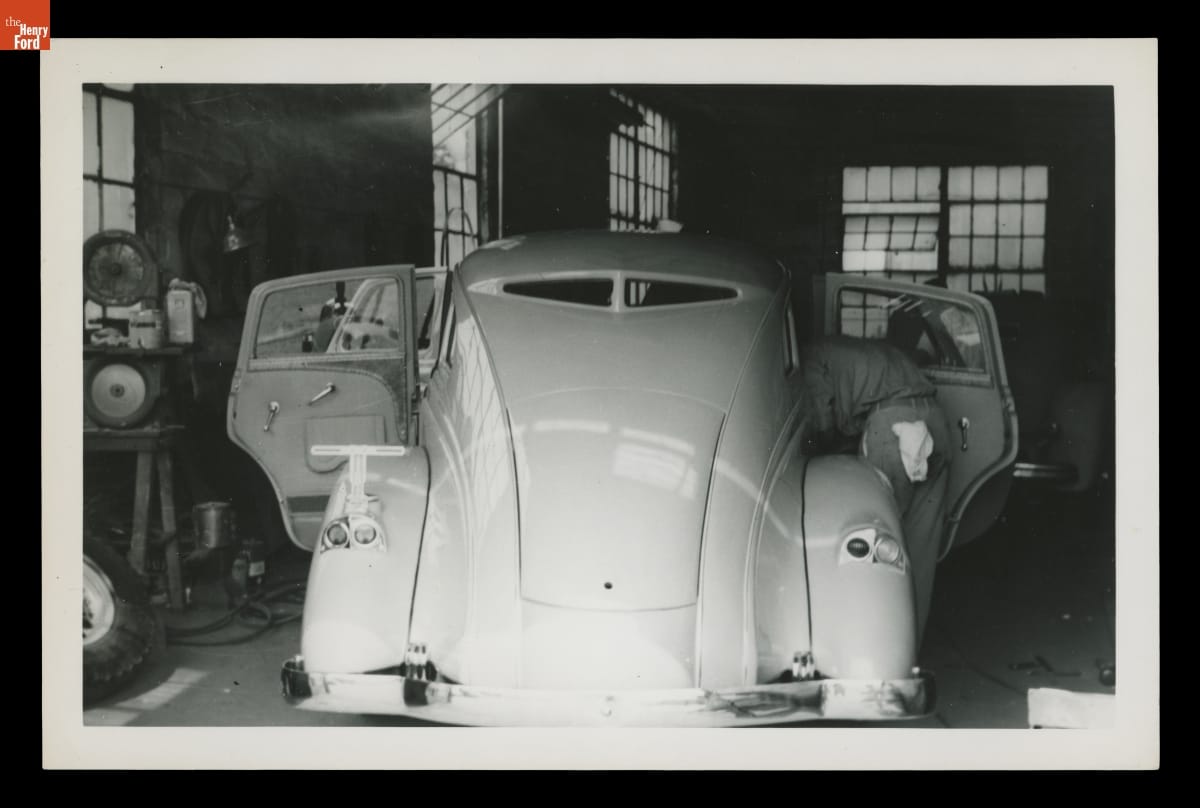
- 1933 Pierce-Arrow Silver Arrow in the Long Island Automotive Museum, August 1950 - Henry Austin Clark, Jr., collected more than 200 cars, trucks and firefighting vehicles throughout his lifetime, including a 1933 Pierce-Arrow Silver Arrow. The model wowed crowds at the 1933 Chicago World's Fair. Clark displayed many vehicles in his Long Island Automotive Museum, operated from 1948 to 1980. He also assembled an impressive library of books, journals, trade literature, and photographs.
- August 01, 1950
- Collections - Artifact
1933 Pierce-Arrow Silver Arrow in the Long Island Automotive Museum, August 1950
Henry Austin Clark, Jr., collected more than 200 cars, trucks and firefighting vehicles throughout his lifetime, including a 1933 Pierce-Arrow Silver Arrow. The model wowed crowds at the 1933 Chicago World's Fair. Clark displayed many vehicles in his Long Island Automotive Museum, operated from 1948 to 1980. He also assembled an impressive library of books, journals, trade literature, and photographs.
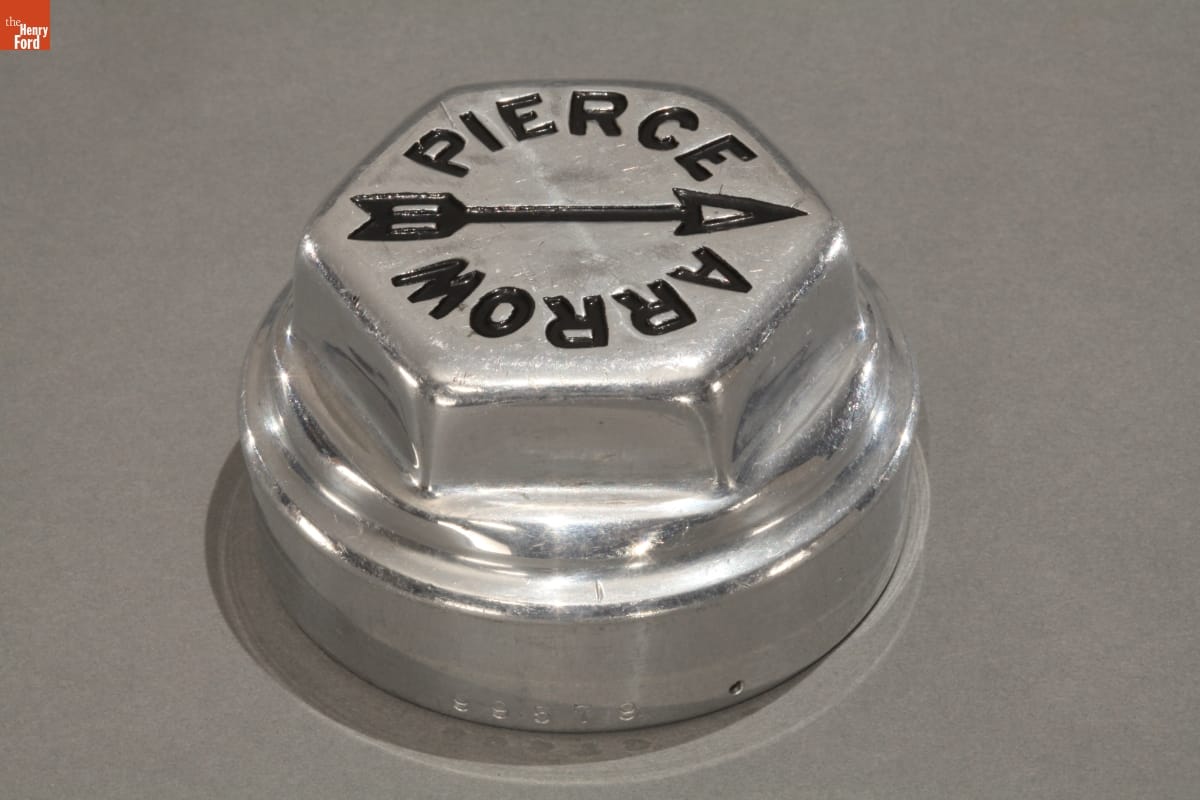
- Pierce-Arrow Hubcap, 1908-1928 - Early automobile wheels had a central hub with a greased wheel bearing. Hub caps kept grease in and dust out. As wheels evolved and hubcaps became functionally unnecessary, they remained important to both manufacturers -- who branded wheel covers with maker names or logos -- and consumers -- who identified with hubcaps as statements about their cars and themselves.
- 1908-1928
- Collections - Artifact
Pierce-Arrow Hubcap, 1908-1928
Early automobile wheels had a central hub with a greased wheel bearing. Hub caps kept grease in and dust out. As wheels evolved and hubcaps became functionally unnecessary, they remained important to both manufacturers -- who branded wheel covers with maker names or logos -- and consumers -- who identified with hubcaps as statements about their cars and themselves.
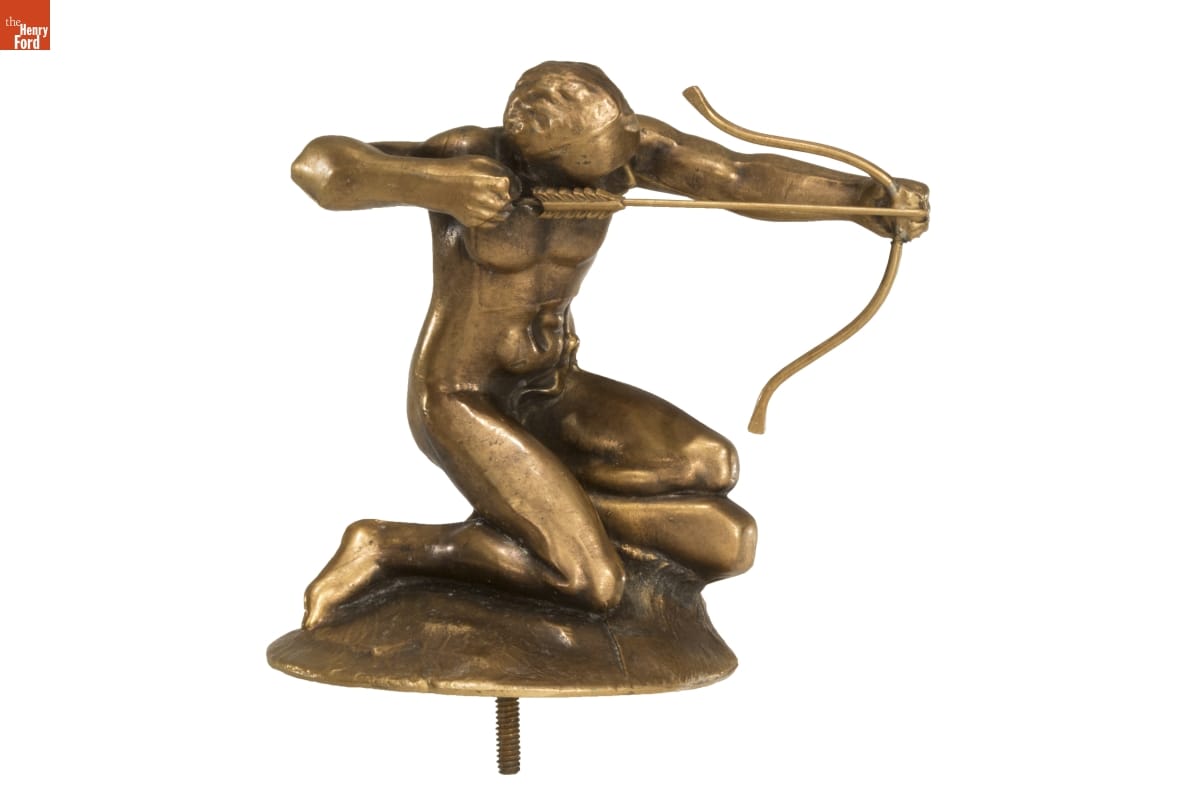
- Pierce-Arrow Archer Hood Ornament, 1931-1938 - Many early 20th century luxury automobile manufacturers outfitted their vehicles with hood ornaments or mascots. These decorative mascots were not only an advertisement for the company, but were also a symbol of the car owner's wealth and good taste. It seems appropriate that American car manufacturer Pierce-Arrow affixed an archer to the fronts of its models.
- 1931-1938
- Collections - Artifact
Pierce-Arrow Archer Hood Ornament, 1931-1938
Many early 20th century luxury automobile manufacturers outfitted their vehicles with hood ornaments or mascots. These decorative mascots were not only an advertisement for the company, but were also a symbol of the car owner's wealth and good taste. It seems appropriate that American car manufacturer Pierce-Arrow affixed an archer to the fronts of its models.
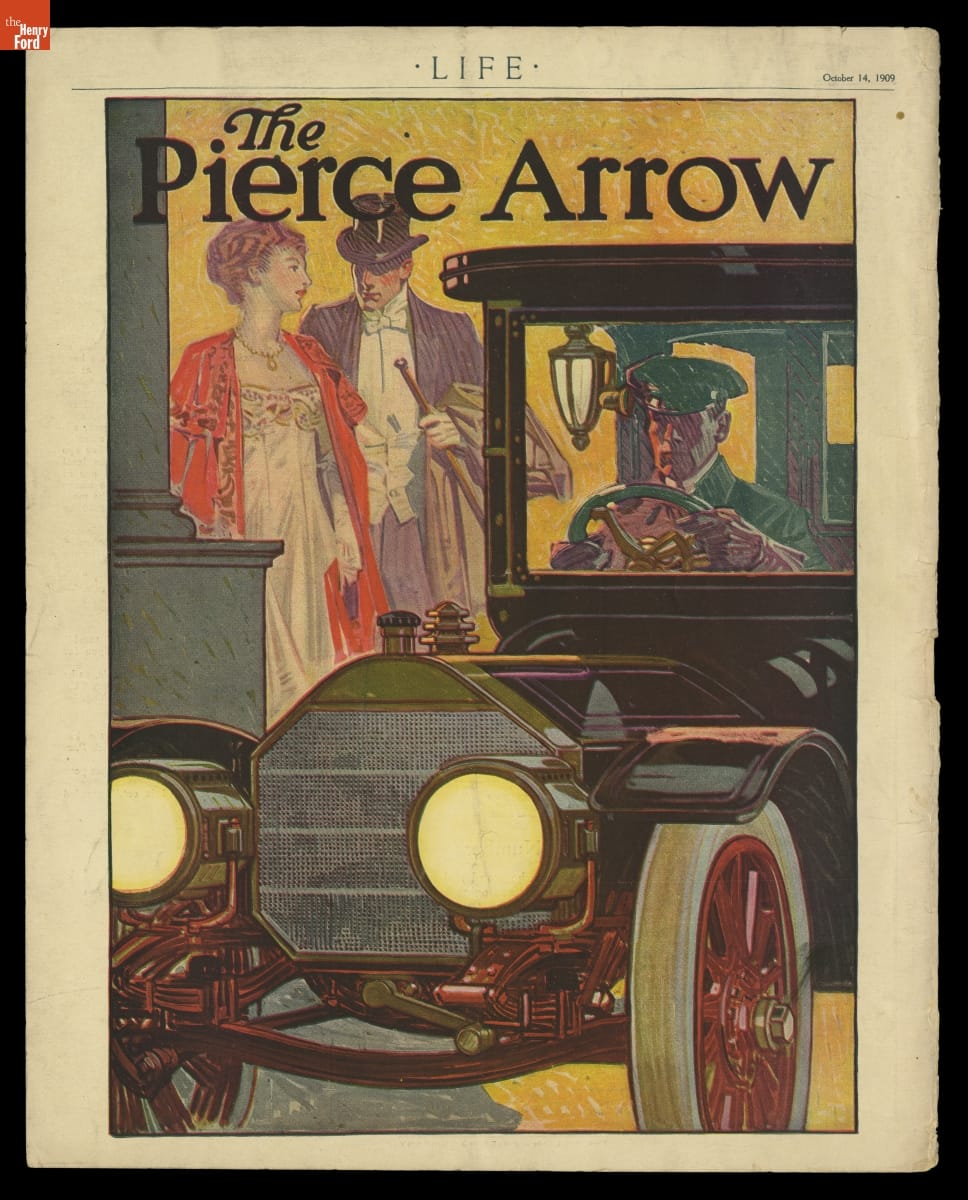
- "The Pierce-Arrow," an Advertisement from Life Magazine, October 14, 1909 - From its founding in Buffalo, New York, in 1901, Pierce-Arrow quickly grew into one of the country's most prestigious automobile marques. Alongside Packard and Peerless, Pierce-Arrow was one of the "Three Ps" that defined early American luxury motorcars. The company's Town Cars were particularly prized by business leaders and celebrities. Pierce-Arrow fell victim to the Great Depression in 1938.
- October 14, 1909
- Collections - Artifact
"The Pierce-Arrow," an Advertisement from Life Magazine, October 14, 1909
From its founding in Buffalo, New York, in 1901, Pierce-Arrow quickly grew into one of the country's most prestigious automobile marques. Alongside Packard and Peerless, Pierce-Arrow was one of the "Three Ps" that defined early American luxury motorcars. The company's Town Cars were particularly prized by business leaders and celebrities. Pierce-Arrow fell victim to the Great Depression in 1938.
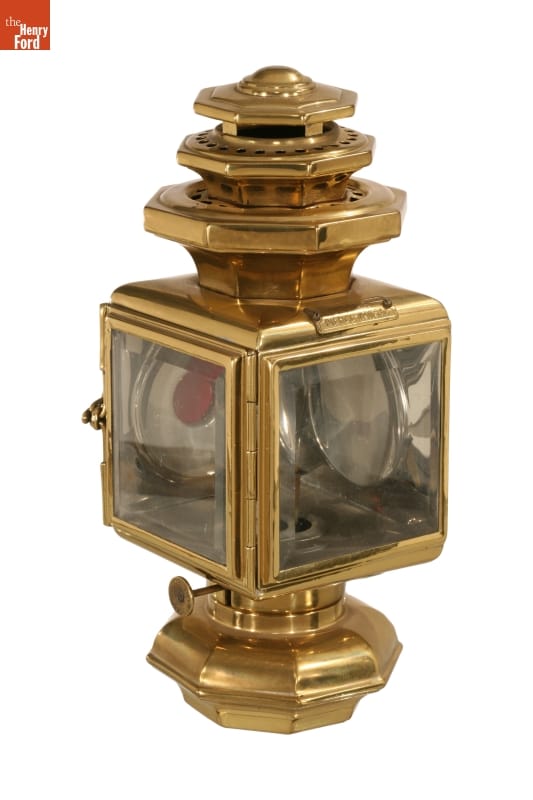
- Side Lamp for a Pierce-Arrow Automobile, circa 1910 - Automobile side lamps were useful accessories in the early 20th century. Some brightly lit cities prohibited the use of headlamps while driving at night, for fear that the glare might distract oncoming traffic. Dimmer side laps were considered a safer alternative. Motorists sometimes used their side lamps while parking at night -- particularly on dark alleys or side streets.
- circa 1910
- Collections - Artifact
Side Lamp for a Pierce-Arrow Automobile, circa 1910
Automobile side lamps were useful accessories in the early 20th century. Some brightly lit cities prohibited the use of headlamps while driving at night, for fear that the glare might distract oncoming traffic. Dimmer side laps were considered a safer alternative. Motorists sometimes used their side lamps while parking at night -- particularly on dark alleys or side streets.
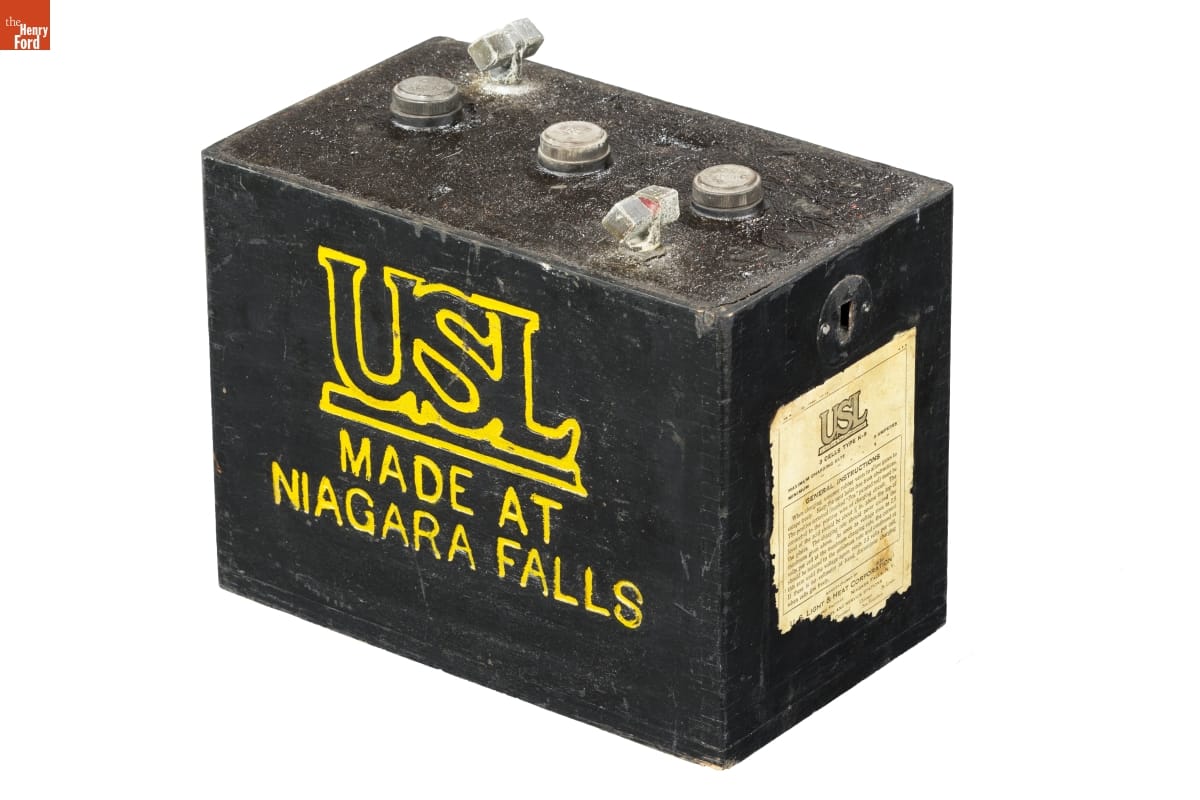
- USL Battery Corp. Type K-309 Storage Battery, 1905 -
- 1905
- Collections - Artifact
USL Battery Corp. Type K-309 Storage Battery, 1905
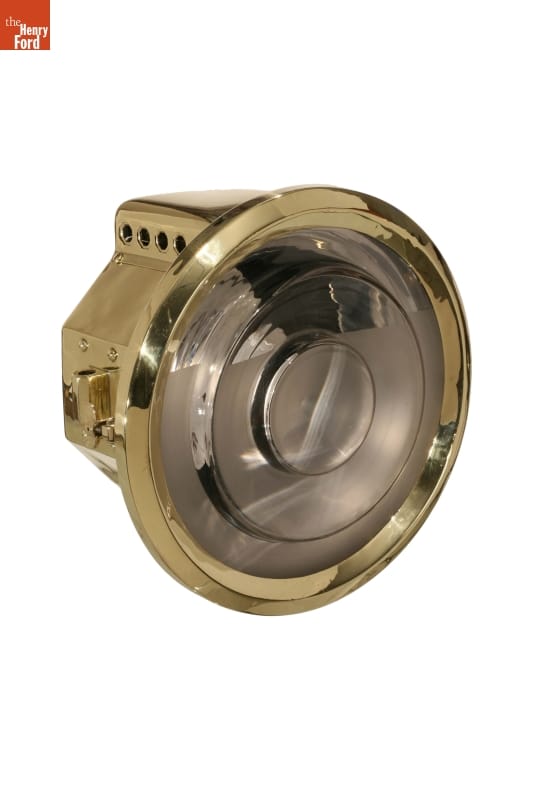
- Headlight for a Pierce-Arrow Automobile, 1901-1938 - Automotive headlamps evolved alongside the automobile. Kerosene-fueled lamps were replaced by acetylene units in the first decade of the 20th century. Acetylene-fueled lamps were, in turn, replaced by electric units in the 1910s. Headlamp lenses improved as well. Optical lenses, also introduced in the 1910s, focused the headlamp's beam and increased its intensity.
- 1901-1938
- Collections - Artifact
Headlight for a Pierce-Arrow Automobile, 1901-1938
Automotive headlamps evolved alongside the automobile. Kerosene-fueled lamps were replaced by acetylene units in the first decade of the 20th century. Acetylene-fueled lamps were, in turn, replaced by electric units in the 1910s. Headlamp lenses improved as well. Optical lenses, also introduced in the 1910s, focused the headlamp's beam and increased its intensity.
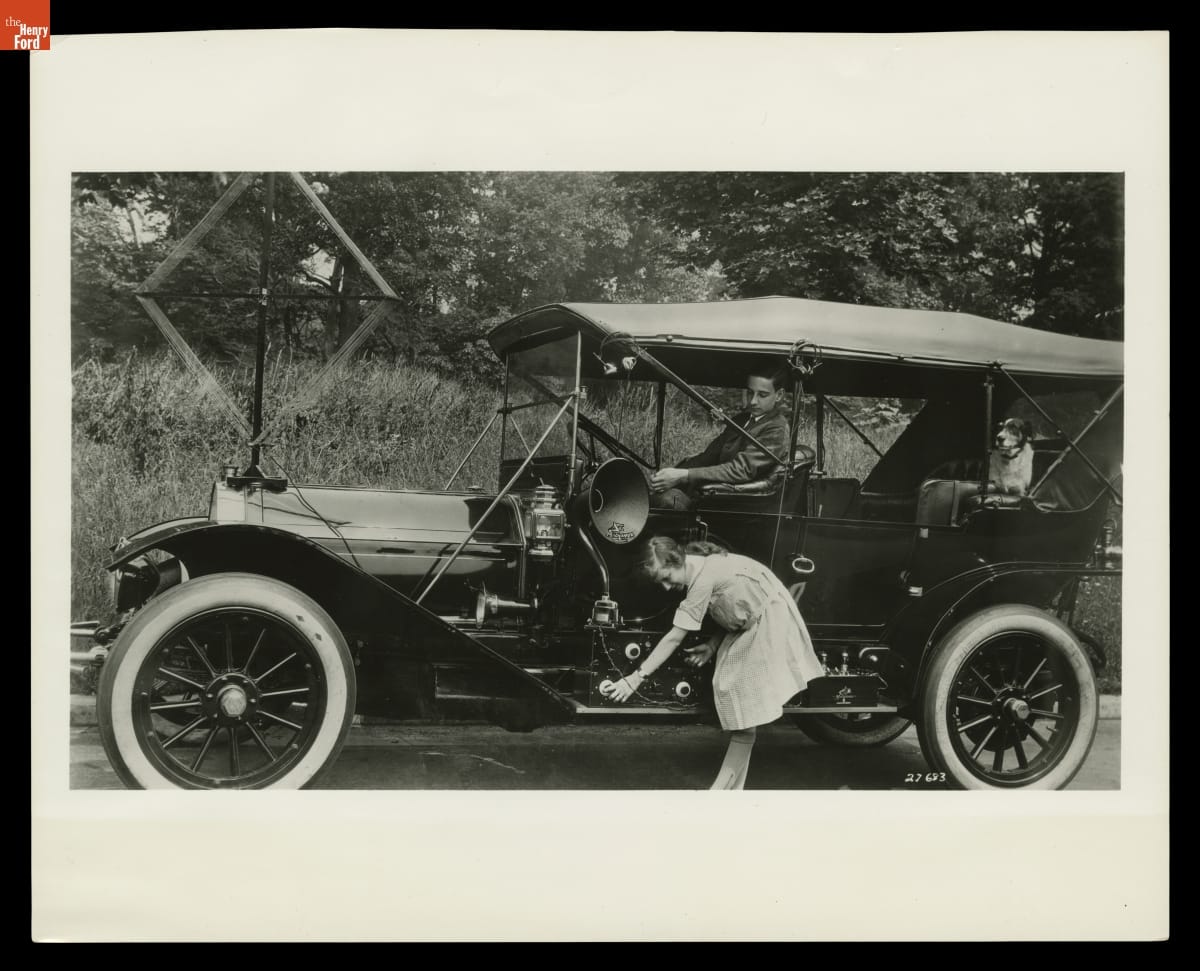
- Collin B. Kennedy Radio Receiver and Magnavox Speaker and Amplifier Installed on a Pierce-Arrow Car, 1924 - Built-in car radios didn't become common until the 1930s, but resourceful drivers added radio sets to their vehicles before that. These motorists have brought a "portable" set with them for listening while parked alongside the road. Note the large loop antenna sitting on the hood, and the two pairs of headsets hanging from the top.
- 1924
- Collections - Artifact
Collin B. Kennedy Radio Receiver and Magnavox Speaker and Amplifier Installed on a Pierce-Arrow Car, 1924
Built-in car radios didn't become common until the 1930s, but resourceful drivers added radio sets to their vehicles before that. These motorists have brought a "portable" set with them for listening while parked alongside the road. Note the large loop antenna sitting on the hood, and the two pairs of headsets hanging from the top.
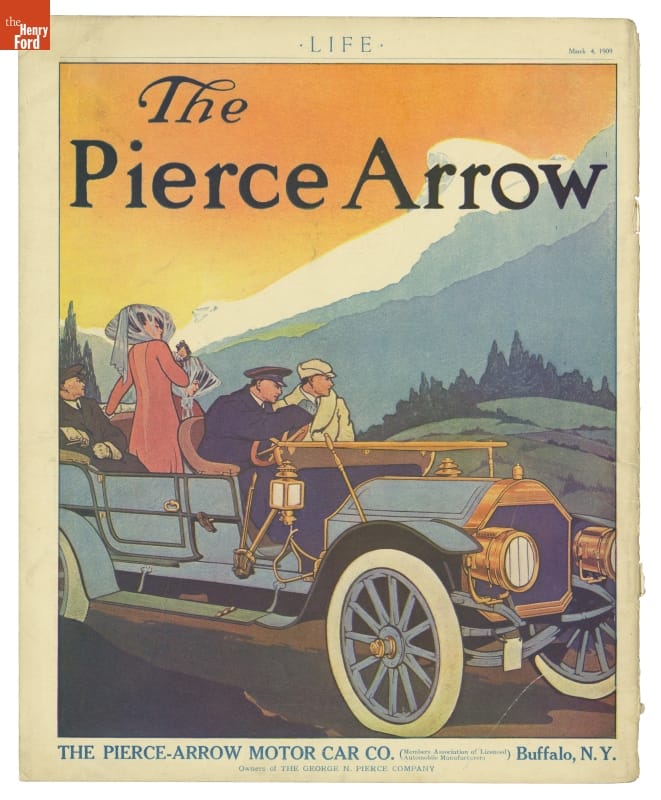
- 1909 Pierce-Arrow Motor Car Company Advertisement - Big, expensive cars, such as the Pierce-Arrow seen in this advertisement from 1909, appealed to those who had the time and money to spend on leisure activities like auto touring.
- March 04, 1909
- Collections - Artifact
1909 Pierce-Arrow Motor Car Company Advertisement
Big, expensive cars, such as the Pierce-Arrow seen in this advertisement from 1909, appealed to those who had the time and money to spend on leisure activities like auto touring.