
Search
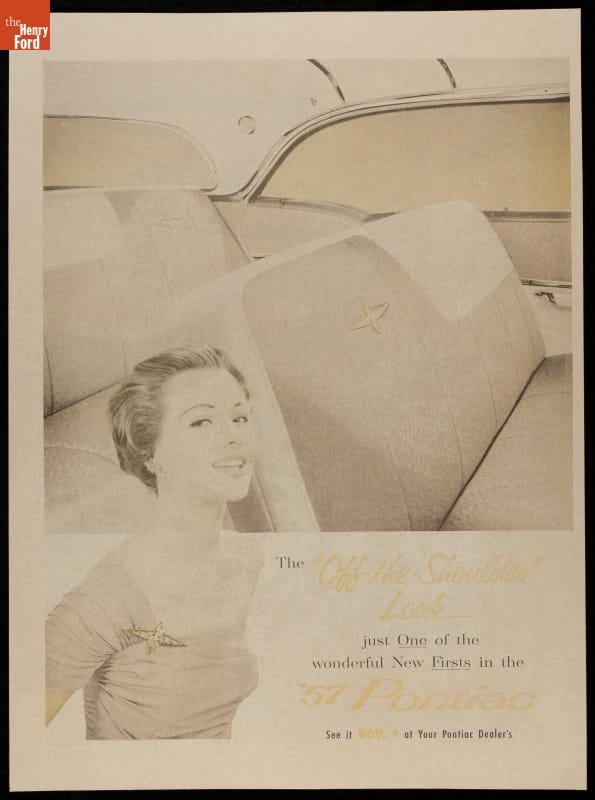
- "The Off-the-Shoulder Look is Just One of the Wonderful New Firsts in the '57 Pontiac" Advertisement, 1957 - Pontiac debuted new "Star Flight" styling for 1957. Missile-shaped side trim, flatter tailfins, lower hoods, and larger bumper grilles distinguished the new models from those of the previous year. Cars were available in three series: the entry-level Chieftain, the mid-priced Star Chief, and the premium Super Chief. Pontiac built more than 334,000 cars for 1957.
- 1957
- Collections - Artifact
"The Off-the-Shoulder Look is Just One of the Wonderful New Firsts in the '57 Pontiac" Advertisement, 1957
Pontiac debuted new "Star Flight" styling for 1957. Missile-shaped side trim, flatter tailfins, lower hoods, and larger bumper grilles distinguished the new models from those of the previous year. Cars were available in three series: the entry-level Chieftain, the mid-priced Star Chief, and the premium Super Chief. Pontiac built more than 334,000 cars for 1957.
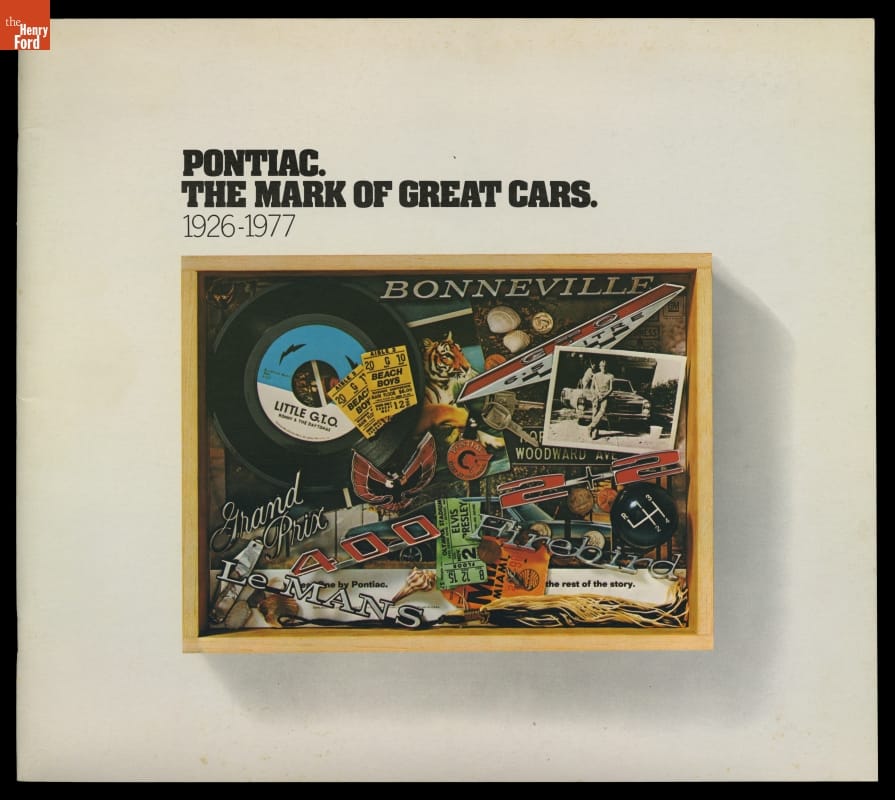
- 1977 Pontiac Sales Brochure, "Pontiac. The Mark of Great Cars. 1926-1977" - Pontiac commemorated its 50th anniversary in this 1977 sales brochure. The cover featured some of the automaker's best-known models. Pontiac added another memorable vehicle to its history that year. The 1977 Pontiac Firebird Trans Am became one of the decade's iconic cars thanks to its appearance in the hit movie <EM>Smokey and the Bandit</EM>.
- 1977
- Collections - Artifact
1977 Pontiac Sales Brochure, "Pontiac. The Mark of Great Cars. 1926-1977"
Pontiac commemorated its 50th anniversary in this 1977 sales brochure. The cover featured some of the automaker's best-known models. Pontiac added another memorable vehicle to its history that year. The 1977 Pontiac Firebird Trans Am became one of the decade's iconic cars thanks to its appearance in the hit movie Smokey and the Bandit.
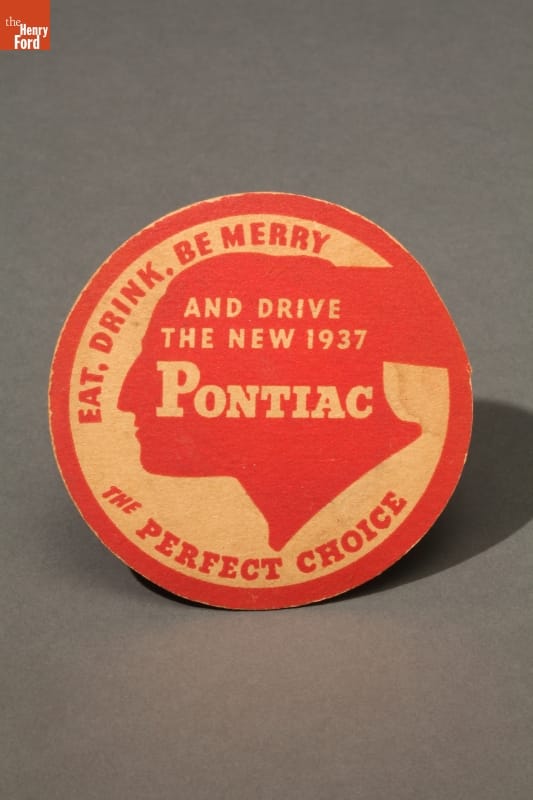
- Pontiac "The Perfect Choice" Coaster, 1937 - Promotional giveaways can place advertising messages deeper into people's lives than billboards or magazine ads. The power of branding -- coupled with consumer brand loyalty -- has also led to the creation of promotional items designed for sale to the public. Pontiac added its logo to this pressed-paper drink coaster in 1937. This throwaway promotional item provided company exposure for little investment.
- 1937
- Collections - Artifact
Pontiac "The Perfect Choice" Coaster, 1937
Promotional giveaways can place advertising messages deeper into people's lives than billboards or magazine ads. The power of branding -- coupled with consumer brand loyalty -- has also led to the creation of promotional items designed for sale to the public. Pontiac added its logo to this pressed-paper drink coaster in 1937. This throwaway promotional item provided company exposure for little investment.
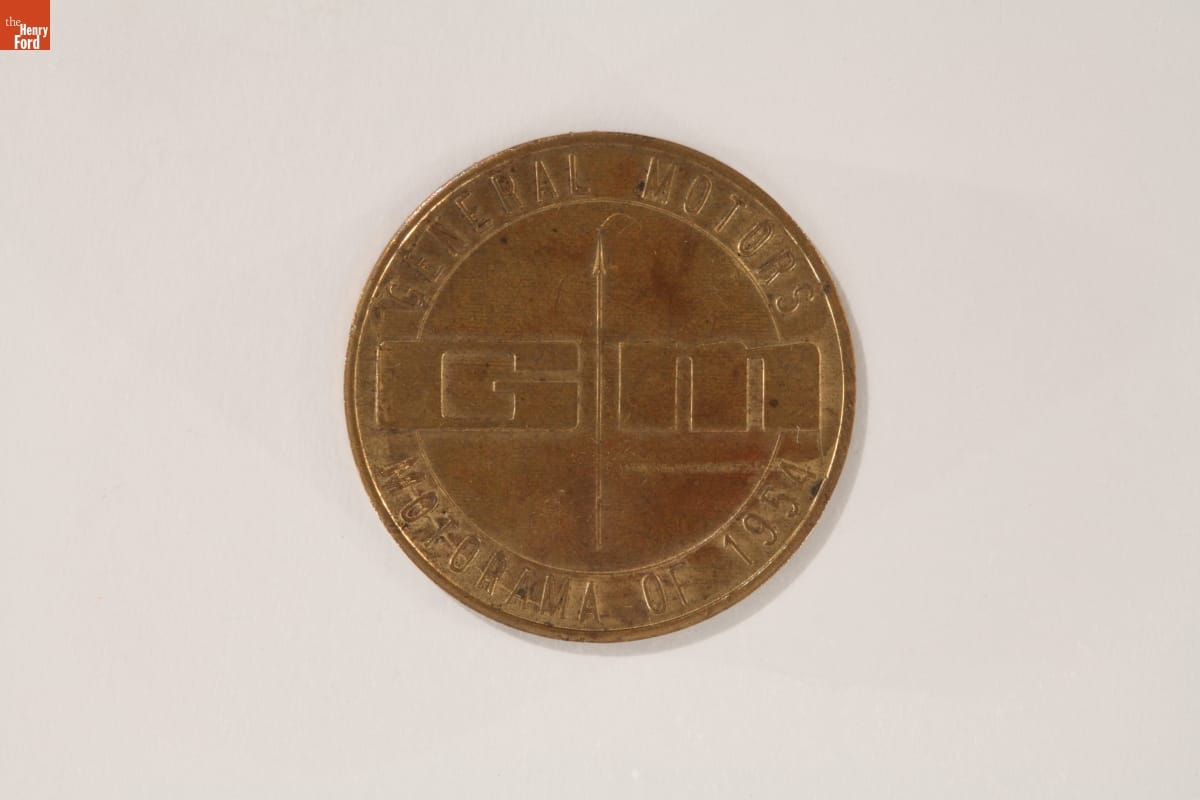
- GM Motorama Commemorative Medallion, 1954 - From 1949 to 1961, General Motors hosted a series of semi-regular shows spotlighting futuristic concept cars and aspirational production cars. In 1953, the event was named Motorama and transformed into a traveling show that toured major cities around the United States. Motorama also showcased products from GM subsidiaries, like the "kitchen of the future" equipped with Frigidaire appliances.
- 1954
- Collections - Artifact
GM Motorama Commemorative Medallion, 1954
From 1949 to 1961, General Motors hosted a series of semi-regular shows spotlighting futuristic concept cars and aspirational production cars. In 1953, the event was named Motorama and transformed into a traveling show that toured major cities around the United States. Motorama also showcased products from GM subsidiaries, like the "kitchen of the future" equipped with Frigidaire appliances.
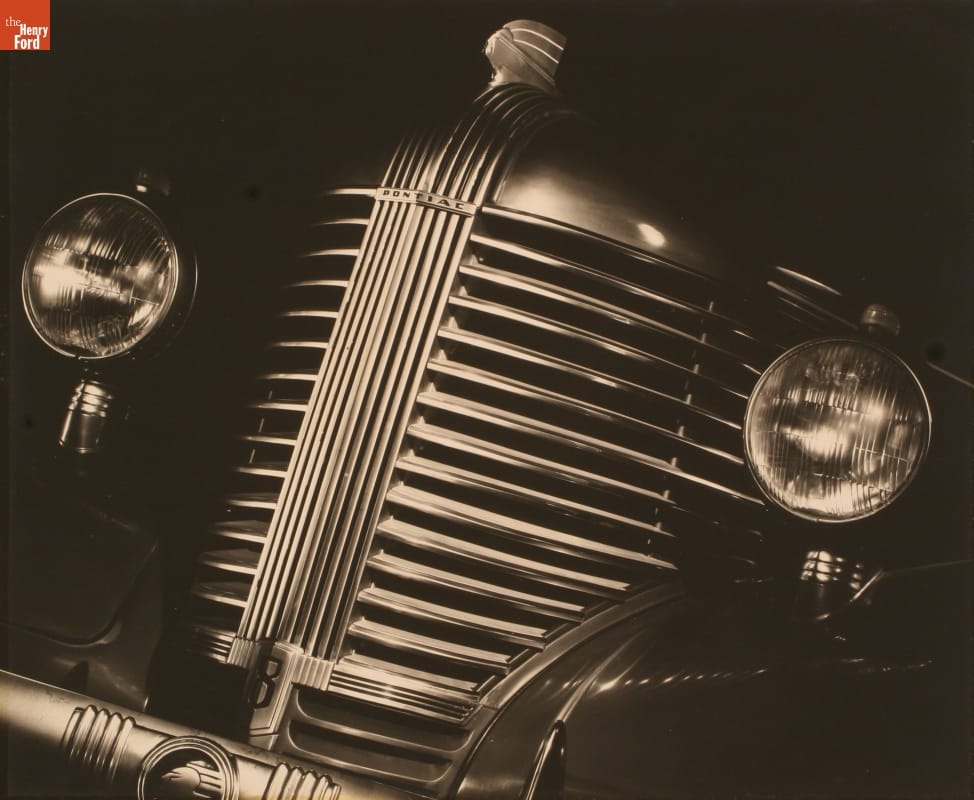
- Detail Image, 1938 Pontiac Front Grille - Before the mid-1930s, automobiles were essentially designed by the engineers who built them. But as style became more important to the buying public, engineers increasingly worked in partnership with stylists. This photograph of the highly stylized 1938 Pontiac grille illustrates the trendsetting work of stylists in General Motors' revolutionary Art and Colour Section, headed by influential designer Harley Earl.
- 1938
- Collections - Artifact
Detail Image, 1938 Pontiac Front Grille
Before the mid-1930s, automobiles were essentially designed by the engineers who built them. But as style became more important to the buying public, engineers increasingly worked in partnership with stylists. This photograph of the highly stylized 1938 Pontiac grille illustrates the trendsetting work of stylists in General Motors' revolutionary Art and Colour Section, headed by influential designer Harley Earl.
- Pure Pontiac!, 1970 - Pontiac promoted its 1971 models in this sales brochure. The Firebird Formula 455 featured prominently. The sporty car included bucket seats, front disc brakes, and a 325-horsepower 455-cubic-inch V-8 engine. The 1971 Firebird Formula also boasted twin simulated air scoops, a black grille insert, and Pontiac's "Endura" front bumper made from dent-resistant urethane.
- August 01, 1970
- Collections - Artifact
Pure Pontiac!, 1970
Pontiac promoted its 1971 models in this sales brochure. The Firebird Formula 455 featured prominently. The sporty car included bucket seats, front disc brakes, and a 325-horsepower 455-cubic-inch V-8 engine. The 1971 Firebird Formula also boasted twin simulated air scoops, a black grille insert, and Pontiac's "Endura" front bumper made from dent-resistant urethane.
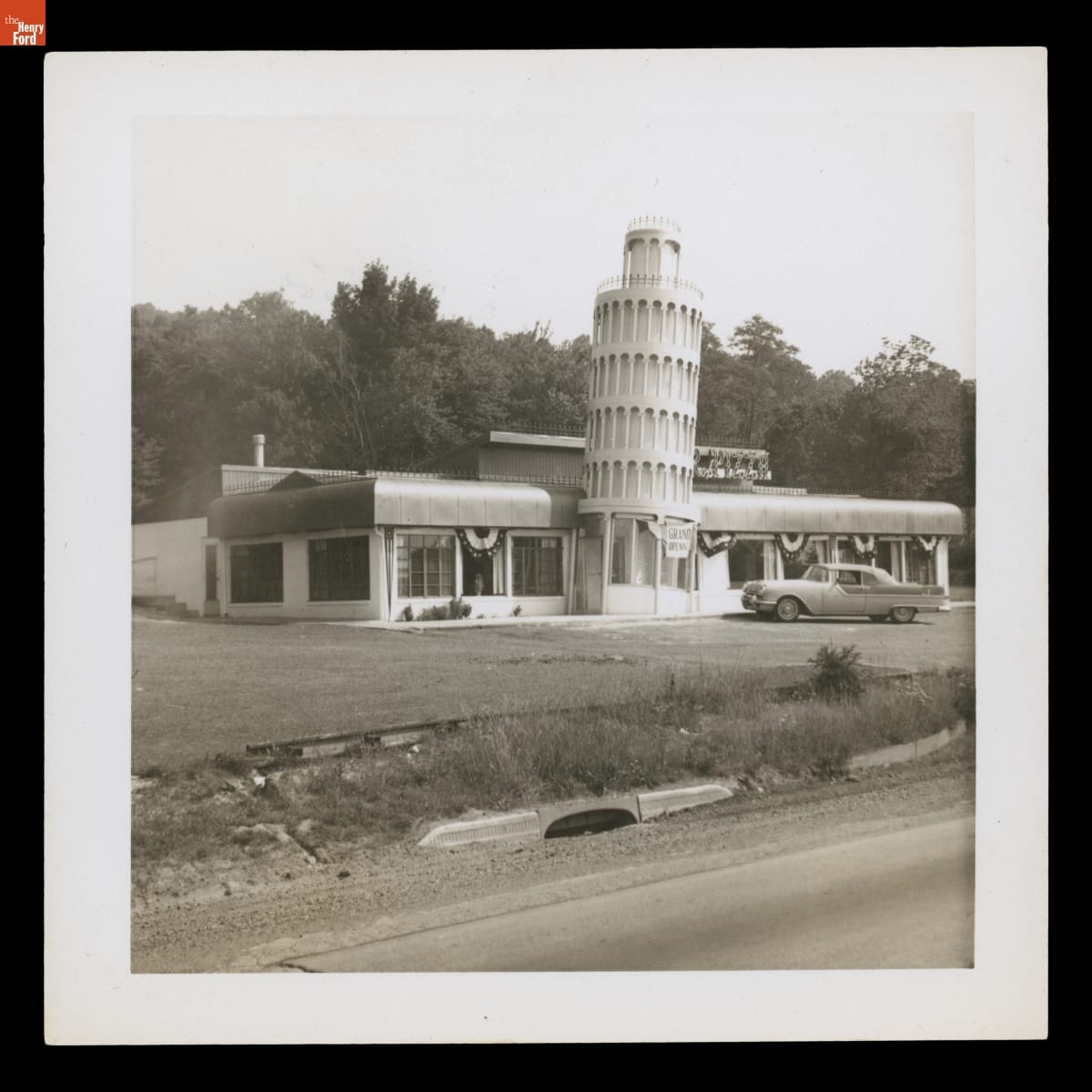
- Grand Opening of the Tower of Pizza, Green Brook, New Jersey, 1955-1970 -
- 1955-1970
- Collections - Artifact
Grand Opening of the Tower of Pizza, Green Brook, New Jersey, 1955-1970
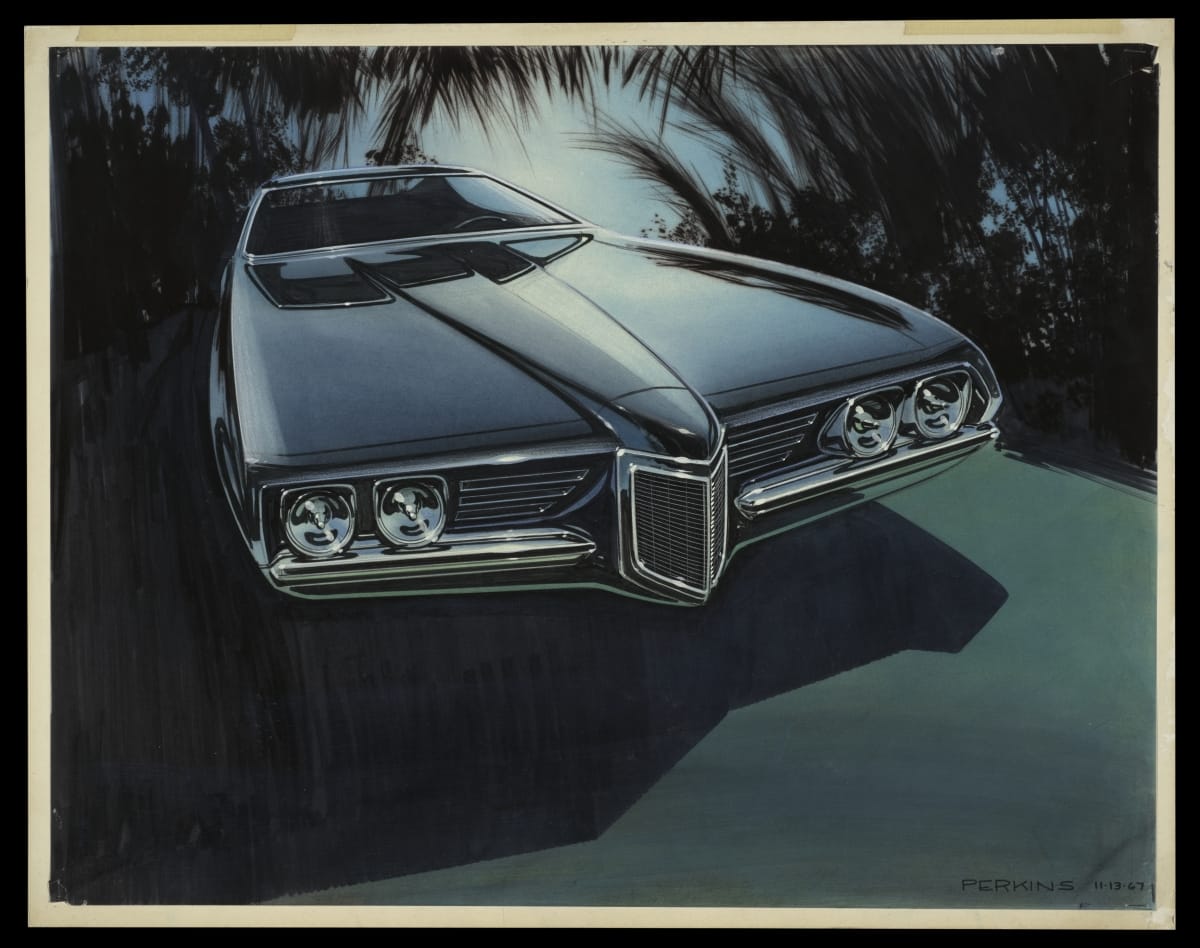
- Rendering of Proposed Pontiac Design by John Perkins, November 1967 - John Perkins began his design career at General Motors in 1962, and he graduated from the General Motors Institute in 1964. His first assignments at GM involved styling for the 1966 Oldsmobile Toronado and the 1967 Cadillac Eldorado. Perkins served as Assistant Chief Designer in the Chevrolet, Buick, and Oldsmobile studios before retiring from GM in 1999.
- November 13, 1967
- Collections - Artifact
Rendering of Proposed Pontiac Design by John Perkins, November 1967
John Perkins began his design career at General Motors in 1962, and he graduated from the General Motors Institute in 1964. His first assignments at GM involved styling for the 1966 Oldsmobile Toronado and the 1967 Cadillac Eldorado. Perkins served as Assistant Chief Designer in the Chevrolet, Buick, and Oldsmobile studios before retiring from GM in 1999.
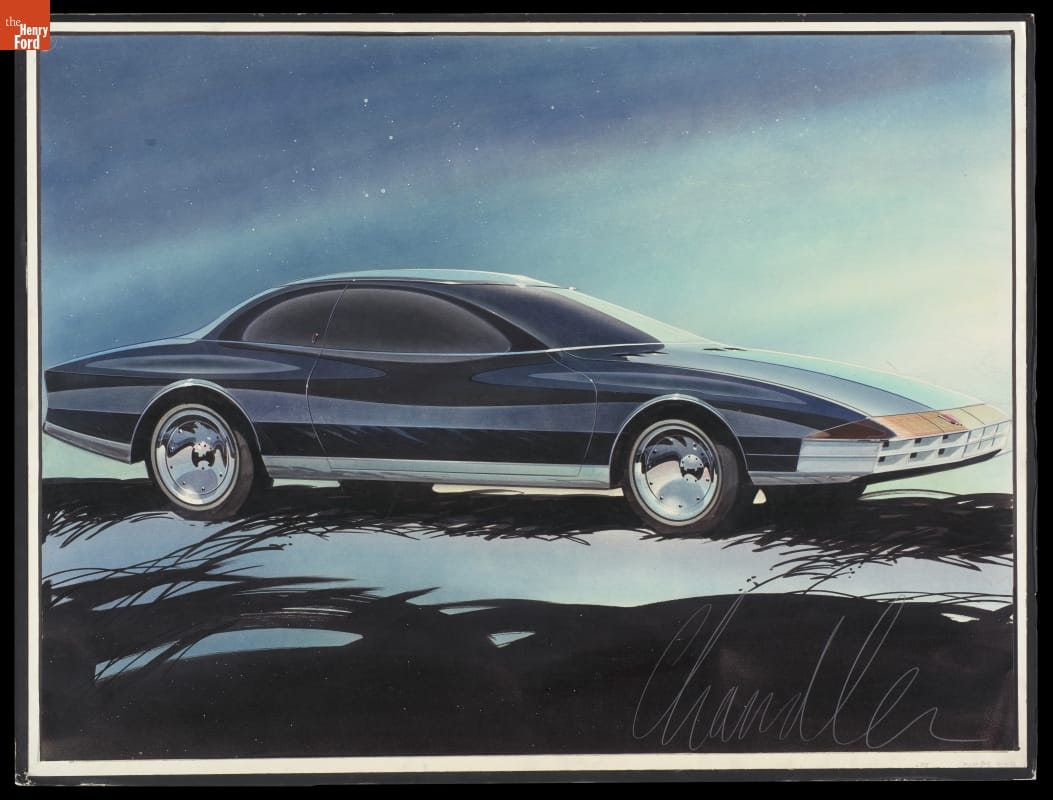
- Rendering of Proposed Pontiac Design by Maurice Chandler, circa 1975 - Maurice P. Chandler joined the General Motors Design Staff as a stylist in 1964, and by the mid-1980s, he was appointed Assistant Chief Designer. Over the years, Chandler contributed designs on many studio team products, including vehicles for Cadillac, Chevrolet, Pontiac, and Oldsmobile.
- circa 1975
- Collections - Artifact
Rendering of Proposed Pontiac Design by Maurice Chandler, circa 1975
Maurice P. Chandler joined the General Motors Design Staff as a stylist in 1964, and by the mid-1980s, he was appointed Assistant Chief Designer. Over the years, Chandler contributed designs on many studio team products, including vehicles for Cadillac, Chevrolet, Pontiac, and Oldsmobile.
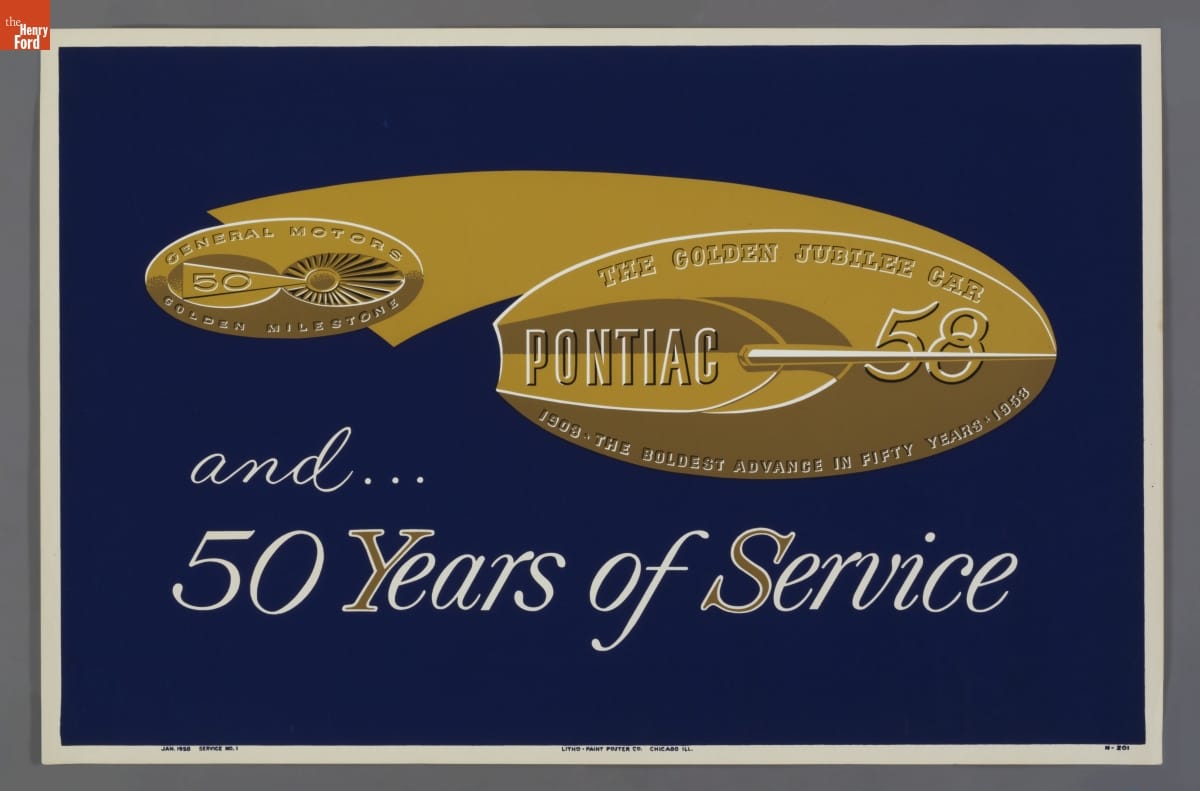
- General Motors Golden Jubilee Poster, "Pontiac 58...and 50 Years of Service," January 1958 - Artist Jacqueline Bergey Ward worked for several prominent Detroit-area commercial art studios throughout her career. This poster, created during her time with Roupp Art Studios, celebrated General Motors' 50th anniversary -- and the new line of 1958 cars from GM's Pontiac division.
- January 01, 1958
- Collections - Artifact
General Motors Golden Jubilee Poster, "Pontiac 58...and 50 Years of Service," January 1958
Artist Jacqueline Bergey Ward worked for several prominent Detroit-area commercial art studios throughout her career. This poster, created during her time with Roupp Art Studios, celebrated General Motors' 50th anniversary -- and the new line of 1958 cars from GM's Pontiac division.