
Search
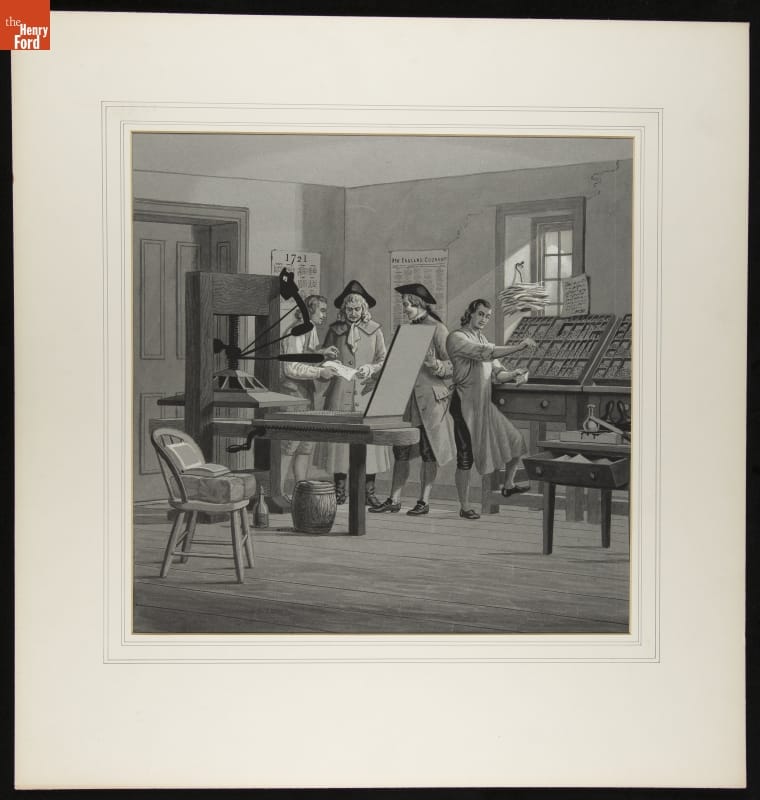
- "Franklin as a Printer, Overhearing Remarks of Visitors about His Contributions," Drawing for Magic Lantern Slide, 1902-1903 - Joseph Boggs Beale created artwork that was reproduced to make magic lantern slides. His works include some of the most artistic slide illustrations made in the late-19th and early-20th centuries. Beale was also prolific, producing more than 2000 images used in over 250 different lantern slide sets. This drawing, part of Beale's "Life of Benjamin Franklin" set, depicts Franklin working in his brother's printshop.
- 1902-1903
- Collections - Artifact
"Franklin as a Printer, Overhearing Remarks of Visitors about His Contributions," Drawing for Magic Lantern Slide, 1902-1903
Joseph Boggs Beale created artwork that was reproduced to make magic lantern slides. His works include some of the most artistic slide illustrations made in the late-19th and early-20th centuries. Beale was also prolific, producing more than 2000 images used in over 250 different lantern slide sets. This drawing, part of Beale's "Life of Benjamin Franklin" set, depicts Franklin working in his brother's printshop.
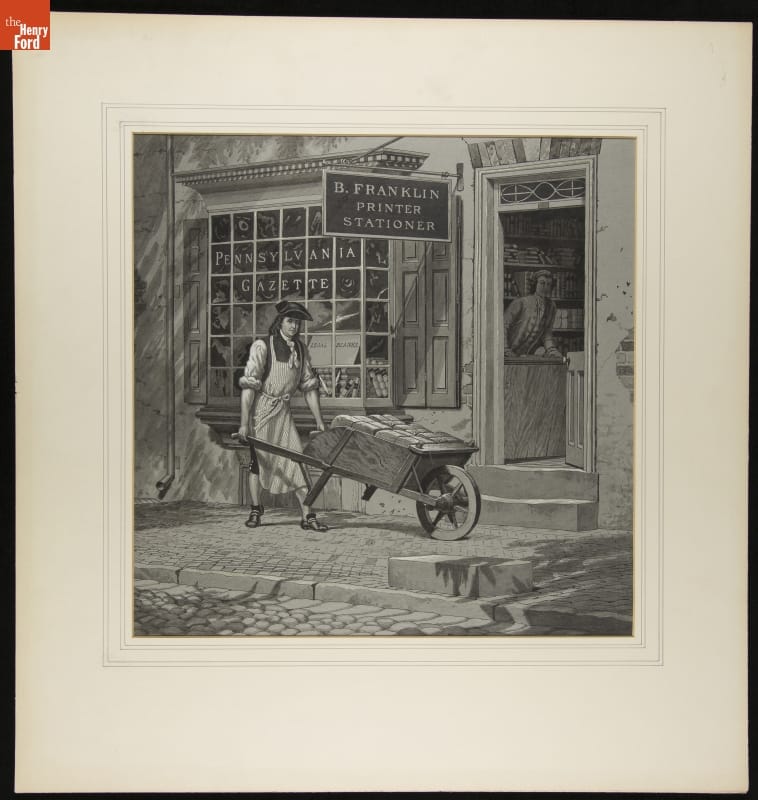
- "Franklin Acting as His Own Porter When in Business," Drawing for Magic Lantern Slide, 1902-1903 - Joseph Boggs Beale created artwork that was reproduced to make magic lantern slides. His works include some of the most artistic slide illustrations made in the late-19th and early-20th centuries. Beale was also prolific, producing more than 2000 images used in over 250 different lantern slide sets. This drawing, part of Beale's "Life of Benjamin Franklin" set, depicts Franklin delivering goods to his printshop.
- 1902-1903
- Collections - Artifact
"Franklin Acting as His Own Porter When in Business," Drawing for Magic Lantern Slide, 1902-1903
Joseph Boggs Beale created artwork that was reproduced to make magic lantern slides. His works include some of the most artistic slide illustrations made in the late-19th and early-20th centuries. Beale was also prolific, producing more than 2000 images used in over 250 different lantern slide sets. This drawing, part of Beale's "Life of Benjamin Franklin" set, depicts Franklin delivering goods to his printshop.
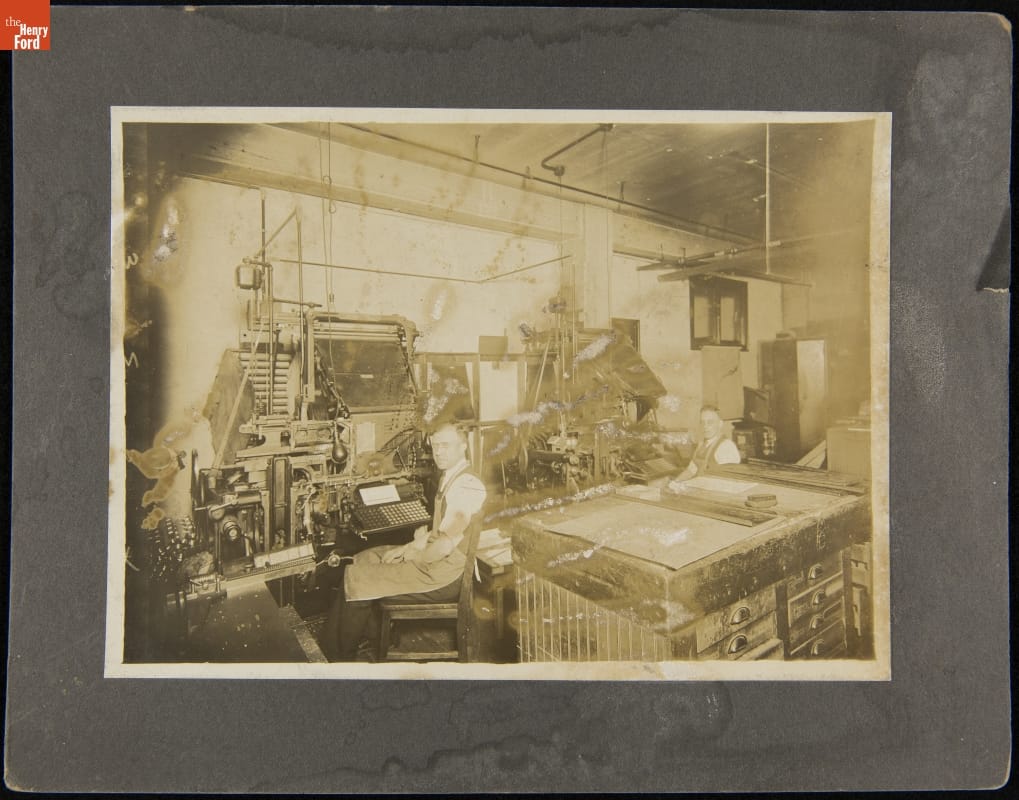
- Man Working at a Linotype Machine, circa 1910 -
- circa 1910
- Collections - Artifact
Man Working at a Linotype Machine, circa 1910
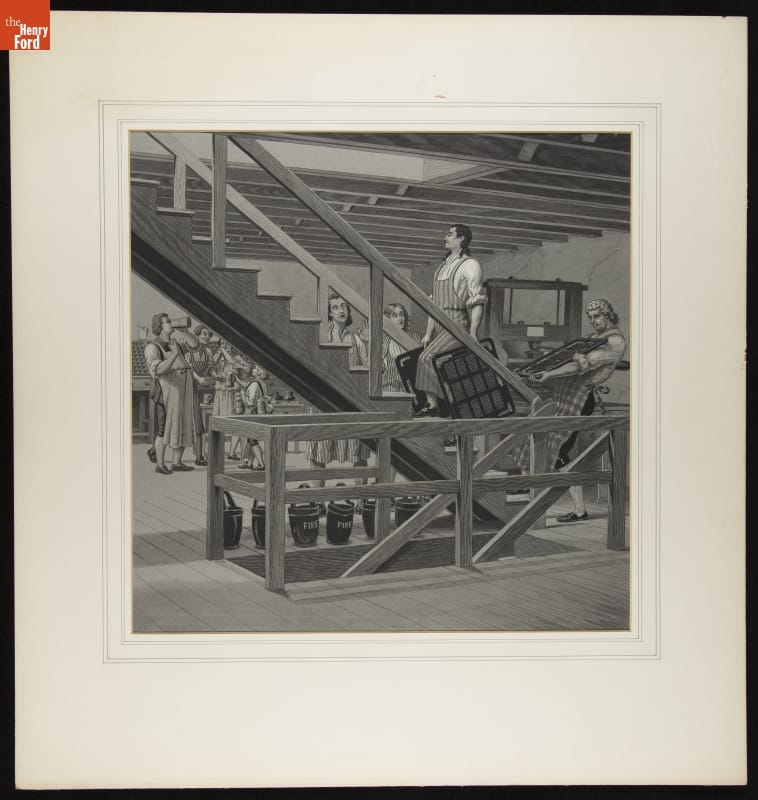
- "Franklin Working in London, Showing His Fellows How a Cold Water Man Could Carry Two Forms," Drawing for Magic Lantern Slide, 1902-1903 - Joseph Boggs Beale created artwork that was reproduced to make magic lantern slides. His works include some of the most artistic slide illustrations made in the late-19th and early-20th centuries. Beale was also prolific, producing more than 2000 images used in over 250 different lantern slide sets. This drawing, part of Beale's "Life of Benjamin Franklin" set, depicts Franklin working in a printshop in London.
- 1902-1903
- Collections - Artifact
"Franklin Working in London, Showing His Fellows How a Cold Water Man Could Carry Two Forms," Drawing for Magic Lantern Slide, 1902-1903
Joseph Boggs Beale created artwork that was reproduced to make magic lantern slides. His works include some of the most artistic slide illustrations made in the late-19th and early-20th centuries. Beale was also prolific, producing more than 2000 images used in over 250 different lantern slide sets. This drawing, part of Beale's "Life of Benjamin Franklin" set, depicts Franklin working in a printshop in London.
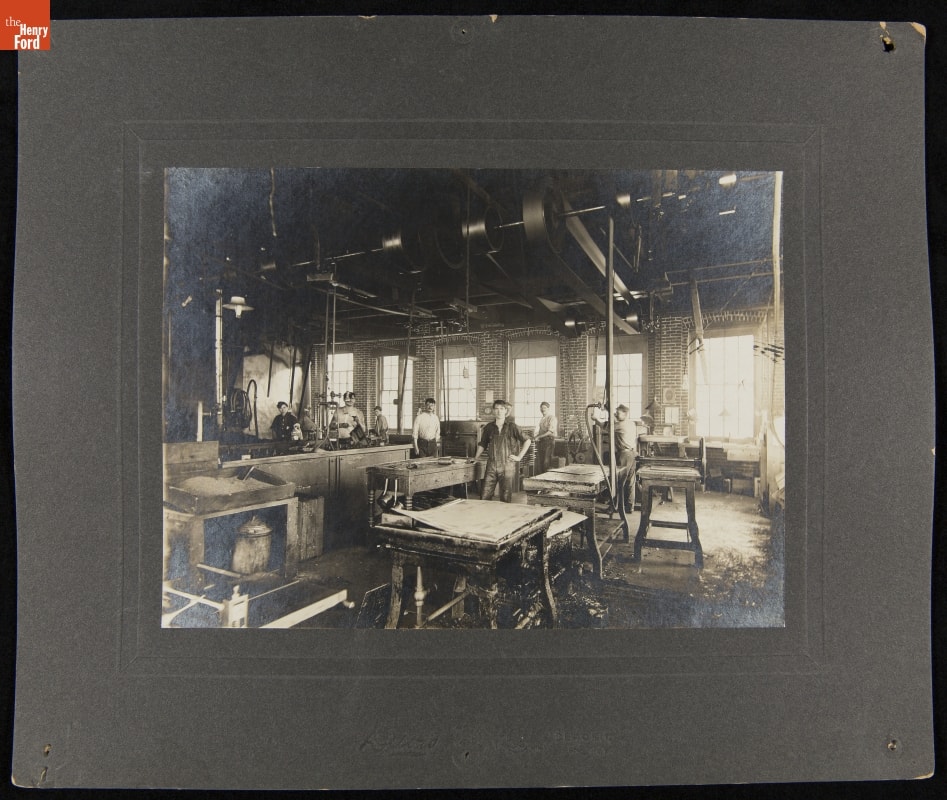
- Men Working in a Print Shop, circa 1925 -
- circa 1925
- Collections - Artifact
Men Working in a Print Shop, circa 1925
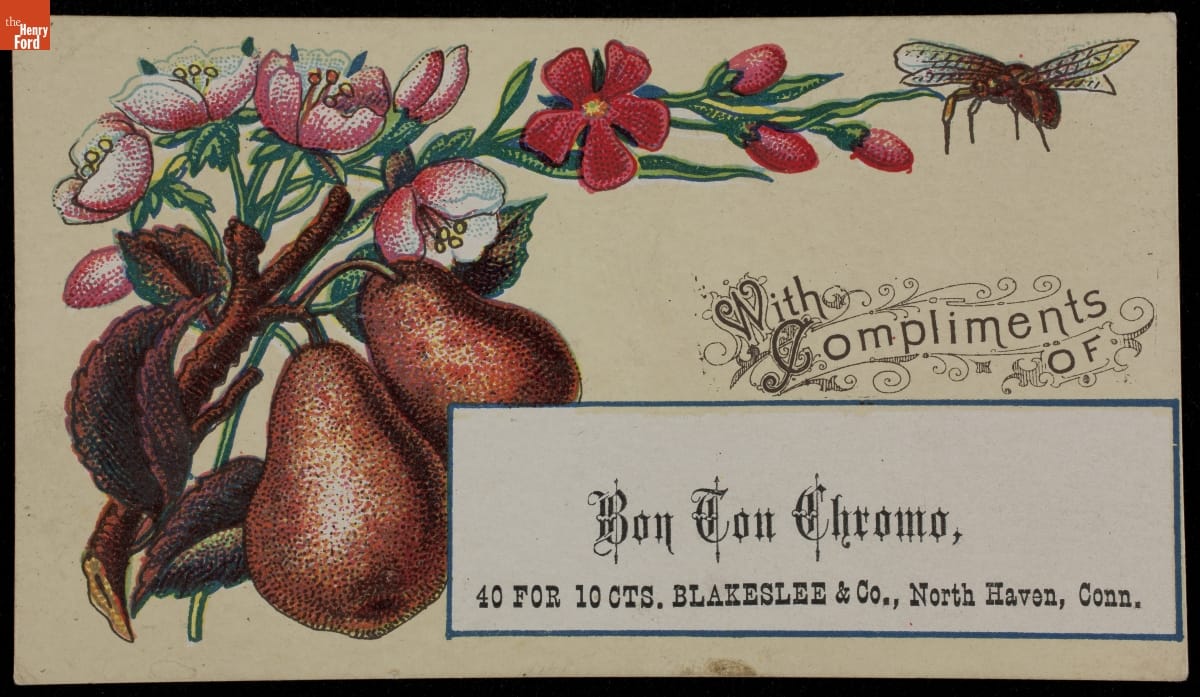
- Trade Card for Bon Ton Chromo, Blakeslee & Company, circa 1895 - In the last third of the nineteenth century, an unprecedented variety of consumer goods and services flooded the American market. Advertisers, armed with new methods of color printing, bombarded potential customers with trade cards. Americans enjoyed and often saved the vibrant little advertisements found in product packages or distributed by local merchants. Many survive as historical records of commercialism in the United States.
- circa 1895
- Collections - Artifact
Trade Card for Bon Ton Chromo, Blakeslee & Company, circa 1895
In the last third of the nineteenth century, an unprecedented variety of consumer goods and services flooded the American market. Advertisers, armed with new methods of color printing, bombarded potential customers with trade cards. Americans enjoyed and often saved the vibrant little advertisements found in product packages or distributed by local merchants. Many survive as historical records of commercialism in the United States.
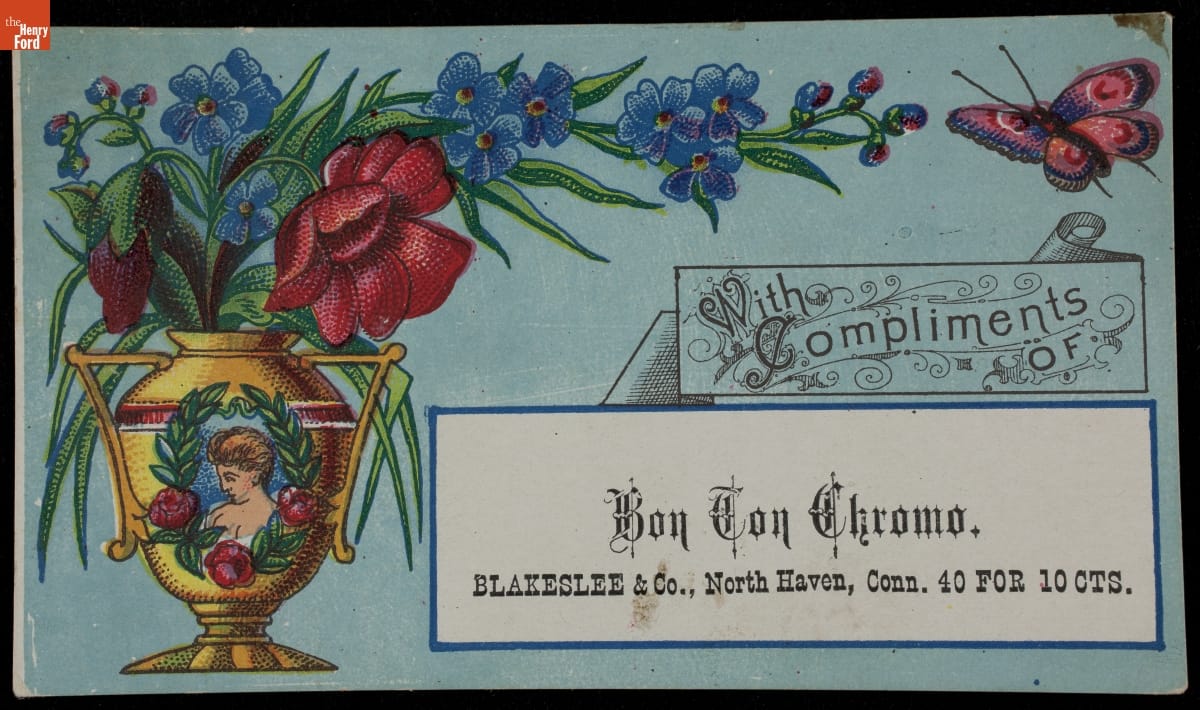
- Trade Card for Bon Ton Chromo, Blakeslee & Company, circa 1895 - In the last third of the nineteenth century, an unprecedented variety of consumer goods and services flooded the American market. Advertisers, armed with new methods of color printing, bombarded potential customers with trade cards. Americans enjoyed and often saved the vibrant little advertisements found in product packages or distributed by local merchants. Many survive as historical records of commercialism in the United States.
- circa 1895
- Collections - Artifact
Trade Card for Bon Ton Chromo, Blakeslee & Company, circa 1895
In the last third of the nineteenth century, an unprecedented variety of consumer goods and services flooded the American market. Advertisers, armed with new methods of color printing, bombarded potential customers with trade cards. Americans enjoyed and often saved the vibrant little advertisements found in product packages or distributed by local merchants. Many survive as historical records of commercialism in the United States.
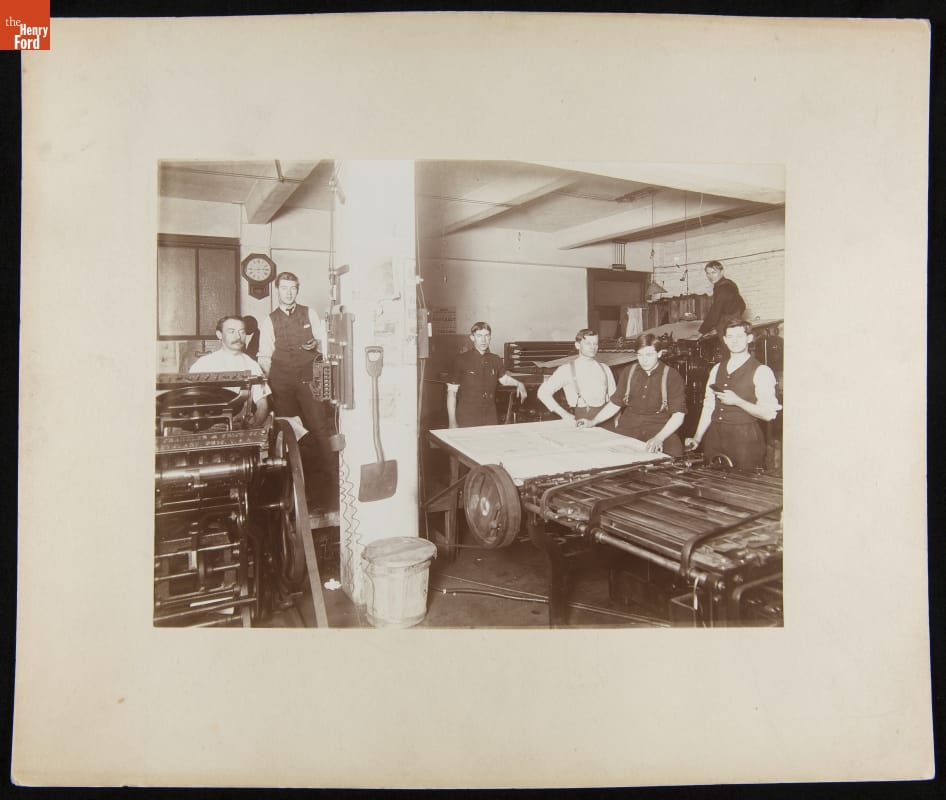
- Men Examining Proofs in a Newspaper Printing Room, Cleveland, Ohio, circa 1880 -
- circa 1880
- Collections - Artifact
Men Examining Proofs in a Newspaper Printing Room, Cleveland, Ohio, circa 1880
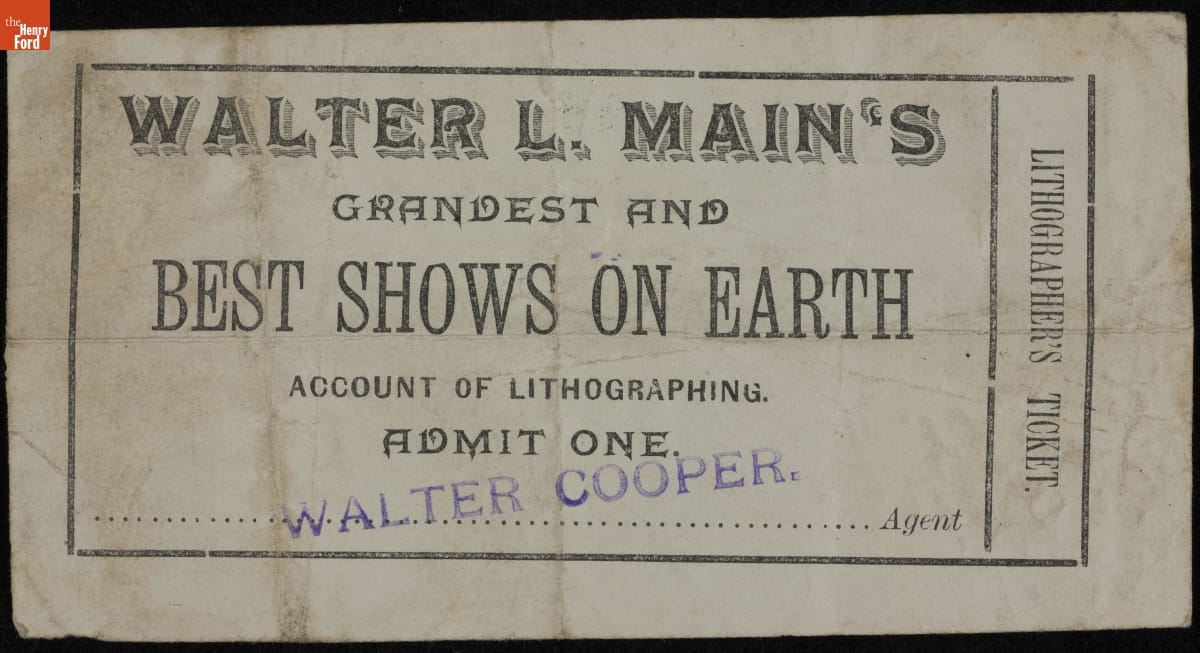
- "Lithographer's Ticket" for Admission to the Walter L. Main Circus, circa 1898 - In the late 19th and early 20th centuries, circus advance men, called "lithographers," promoted the show by posting advertisements in merchants' stores or pasting colorful posters on fences, buildings, and barns. In exchange, local businessmen, merchants and farmers would receive free passes to the circus. Lithographers for the Walter L. Main's Shows issued this ticket to those who helped publicize the soon-to-arrive attraction.
- circa 1898
- Collections - Artifact
"Lithographer's Ticket" for Admission to the Walter L. Main Circus, circa 1898
In the late 19th and early 20th centuries, circus advance men, called "lithographers," promoted the show by posting advertisements in merchants' stores or pasting colorful posters on fences, buildings, and barns. In exchange, local businessmen, merchants and farmers would receive free passes to the circus. Lithographers for the Walter L. Main's Shows issued this ticket to those who helped publicize the soon-to-arrive attraction.
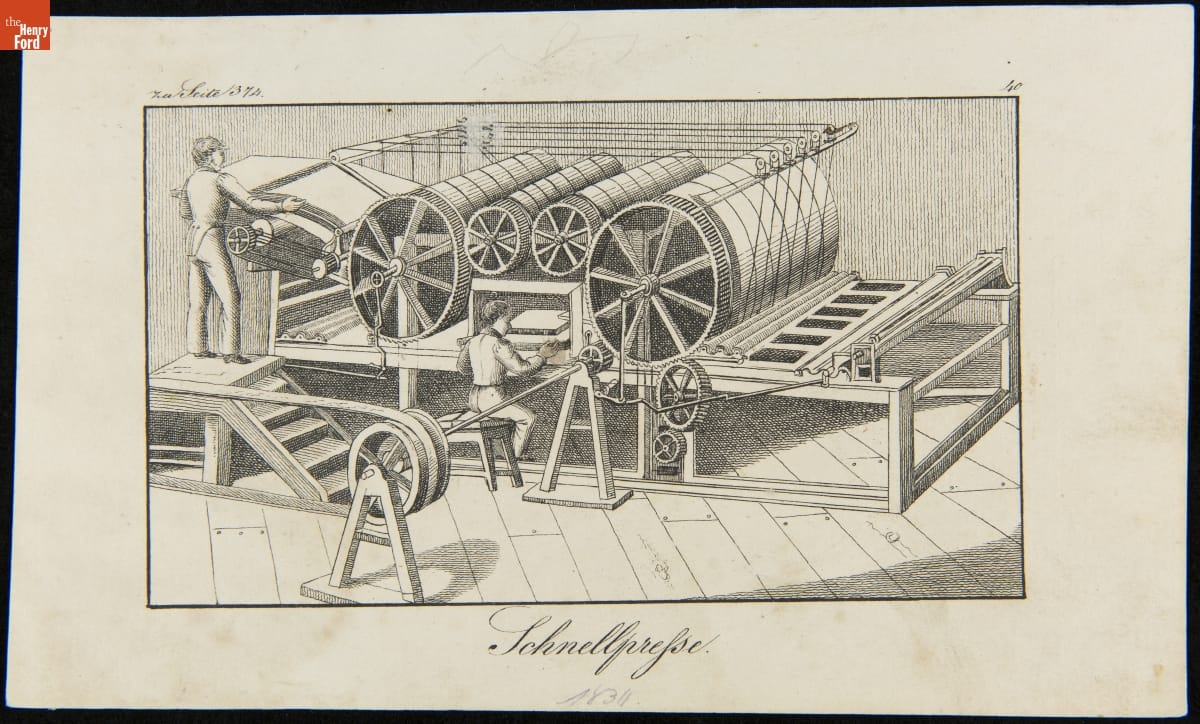
- Man Working at a Printing Press, "Schnellpresse," circa 1830 -
- circa 1830
- Collections - Artifact
Man Working at a Printing Press, "Schnellpresse," circa 1830