
Search
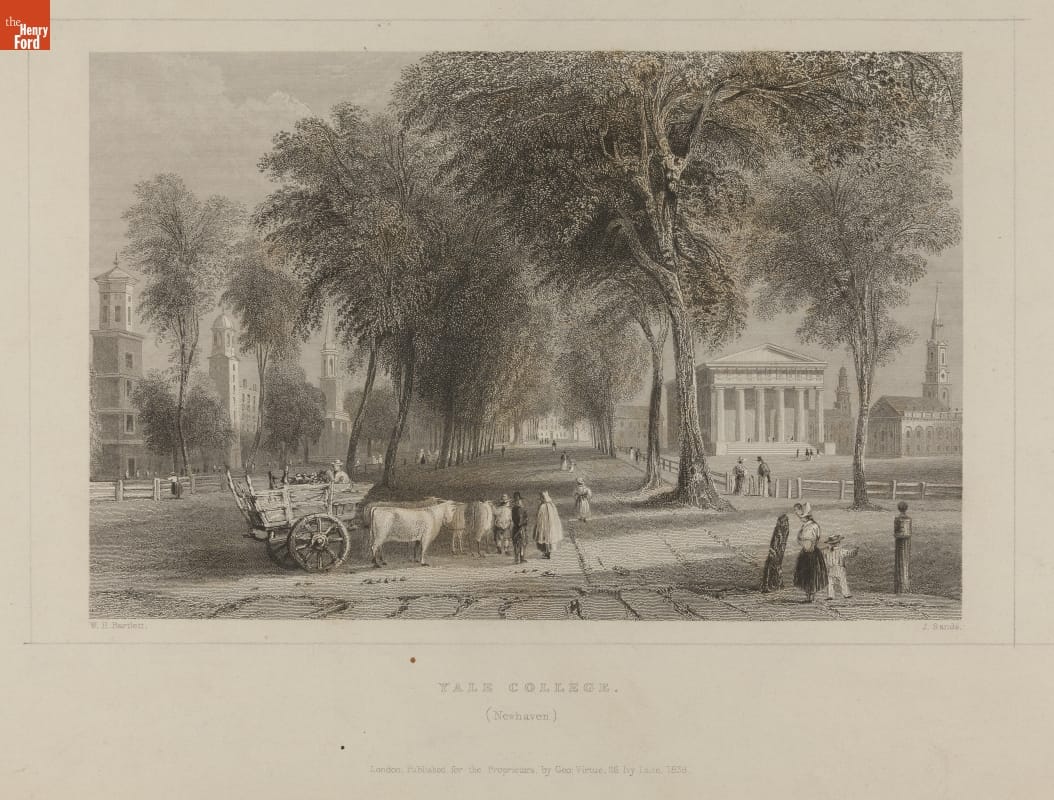
- Engraving, "Yale College, New Haven," 1838 - This 1838 engraving of New Haven, Connecticut, features a two-wheeled New England ox cart in the foreground. The picturesque print also features people strolling through town, with Yale College buildings in the background.
- 1838
- Collections - Artifact
Engraving, "Yale College, New Haven," 1838
This 1838 engraving of New Haven, Connecticut, features a two-wheeled New England ox cart in the foreground. The picturesque print also features people strolling through town, with Yale College buildings in the background.
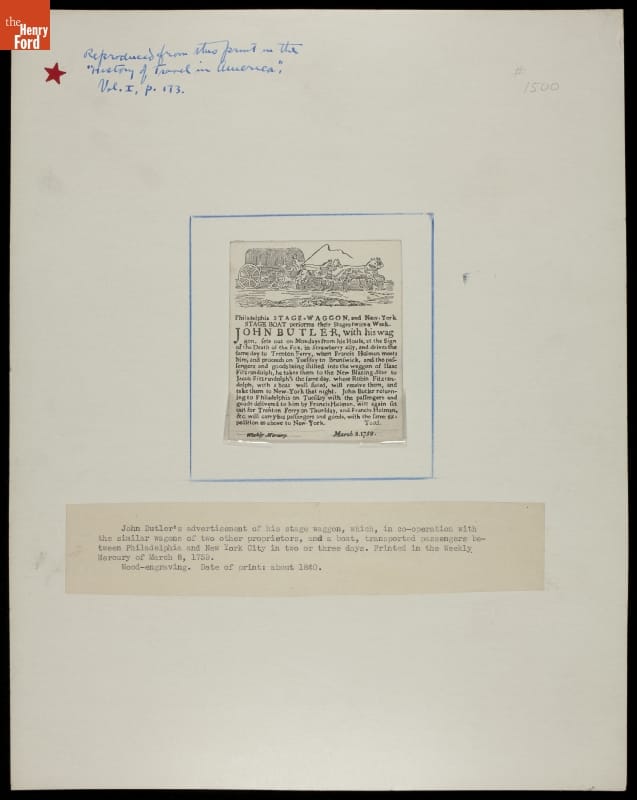
- Advertisement for Stage Wagon and Boat Transportation Between Philadelphia and New York City, circa 1840 - Originally printed March 8, 1759, in the <em>Weekly Mercury</em>, this advertisement features a wood engraving of John Butler's stage wagon. This stage line ran between Philadelphia, Pennsylvania, and New York City.
- March 08, 1759
- Collections - Artifact
Advertisement for Stage Wagon and Boat Transportation Between Philadelphia and New York City, circa 1840
Originally printed March 8, 1759, in the Weekly Mercury, this advertisement features a wood engraving of John Butler's stage wagon. This stage line ran between Philadelphia, Pennsylvania, and New York City.
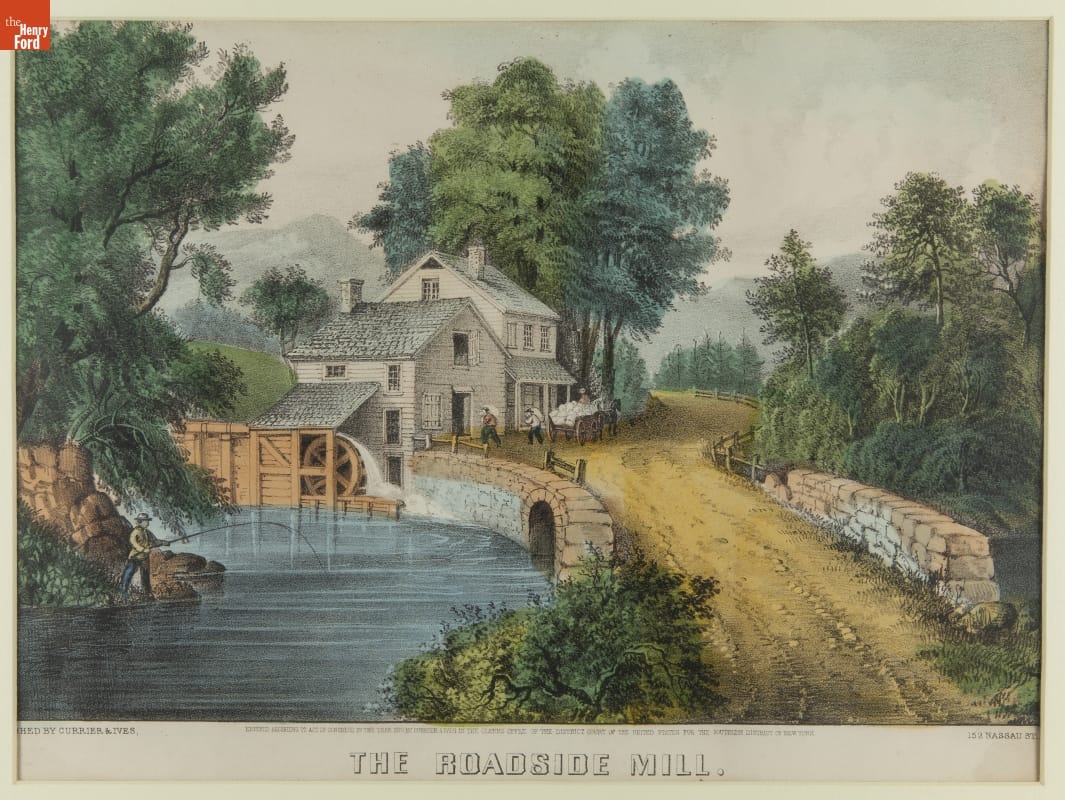
- Lithograph by Currier & Ives, "The Roadside Mill," 1870 -
- 1870
- Collections - Artifact
Lithograph by Currier & Ives, "The Roadside Mill," 1870
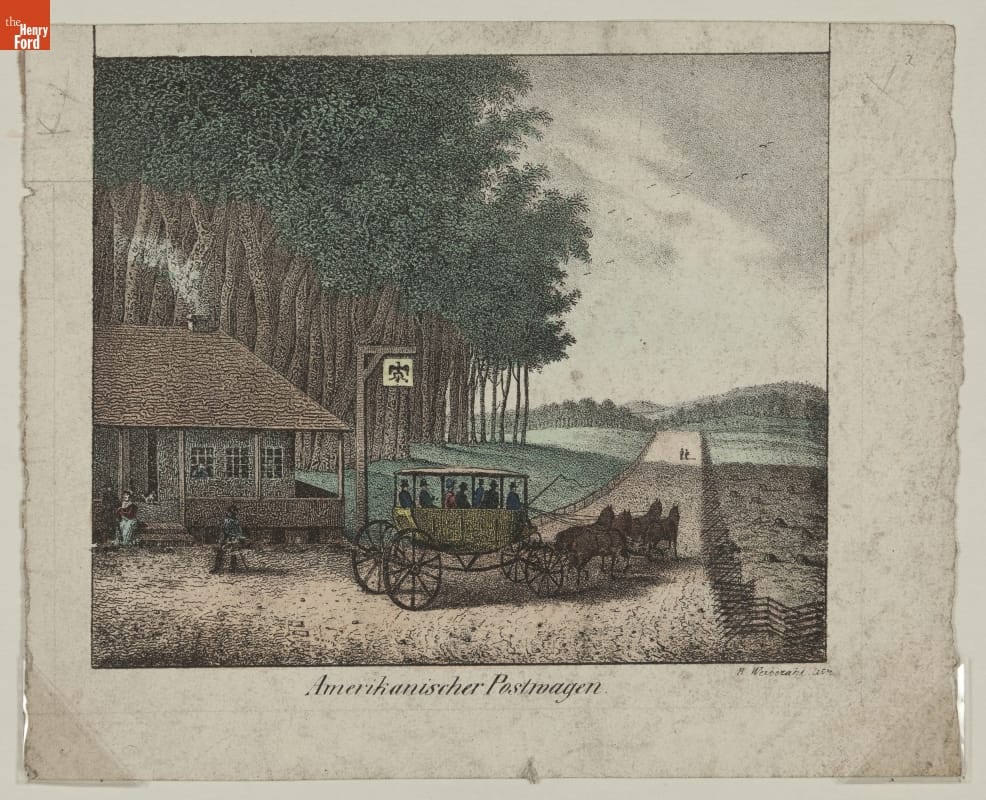
- "Amerikanischen Postwagen" (American Stage Coach, 1800-1810), Lithograph, circa 1815 - Stage wagons were light and open, though not as comfortable as later Concord stagecoaches. They could go about five miles per hour, barring bad weather or road obstructions. The gaily painted signboards of roadside taverns beckoned weary travelers, promising rest, meals, and a chance to catch up on news. Stage wagon drivers used the stop to care for their horses.
- 1800-1810
- Collections - Artifact
"Amerikanischen Postwagen" (American Stage Coach, 1800-1810), Lithograph, circa 1815
Stage wagons were light and open, though not as comfortable as later Concord stagecoaches. They could go about five miles per hour, barring bad weather or road obstructions. The gaily painted signboards of roadside taverns beckoned weary travelers, promising rest, meals, and a chance to catch up on news. Stage wagon drivers used the stop to care for their horses.
- Music Sheet Cover, "Arouse Ye, Patriot Whigs!," 1840 -

- 1840
- Collections - Artifact
Music Sheet Cover, "Arouse Ye, Patriot Whigs!," 1840
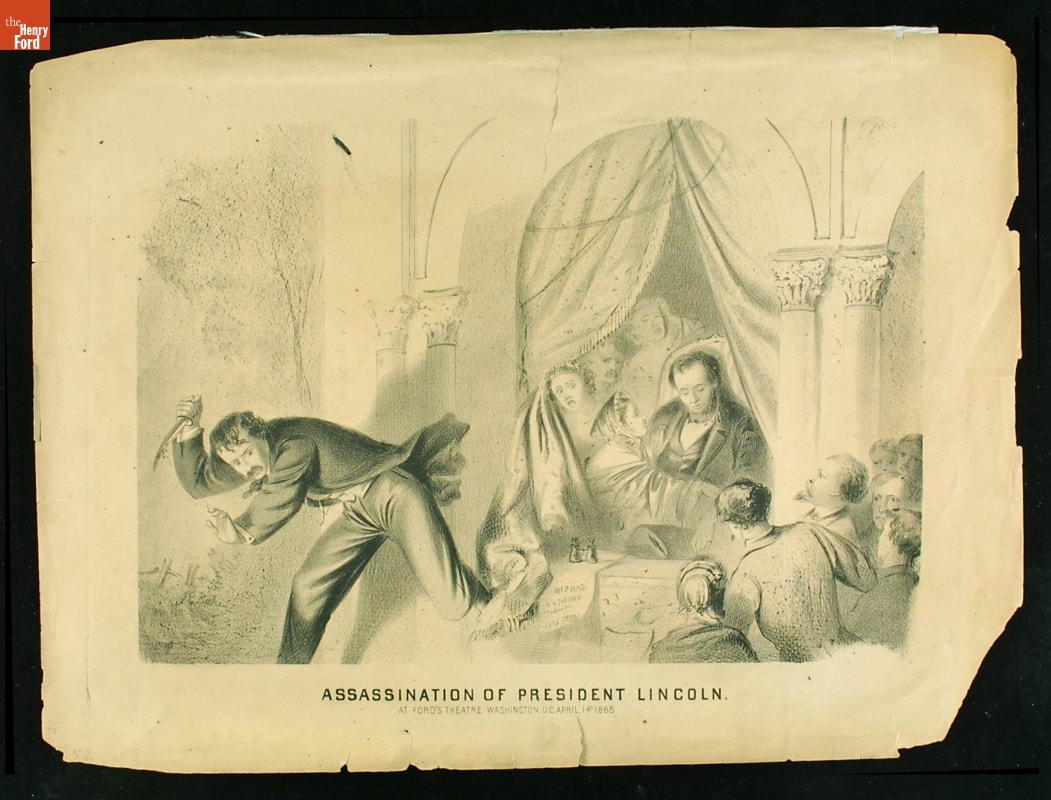
- Print, Assassination of President LIncoln, 1865-1870 - Before the existence of newspaper photos and television, lithographs helped people to understand the tragic event of President Abraham Lincoln's death in April 1865. This shows the assassin escaping after shooting President Lincoln at Ford's Theatre in Washington, D.C., on April 14, 1865. Printmakers produced various versions of this event, based on verbal reports.
- April 14, 1865
- Collections - Artifact
Print, Assassination of President LIncoln, 1865-1870
Before the existence of newspaper photos and television, lithographs helped people to understand the tragic event of President Abraham Lincoln's death in April 1865. This shows the assassin escaping after shooting President Lincoln at Ford's Theatre in Washington, D.C., on April 14, 1865. Printmakers produced various versions of this event, based on verbal reports.
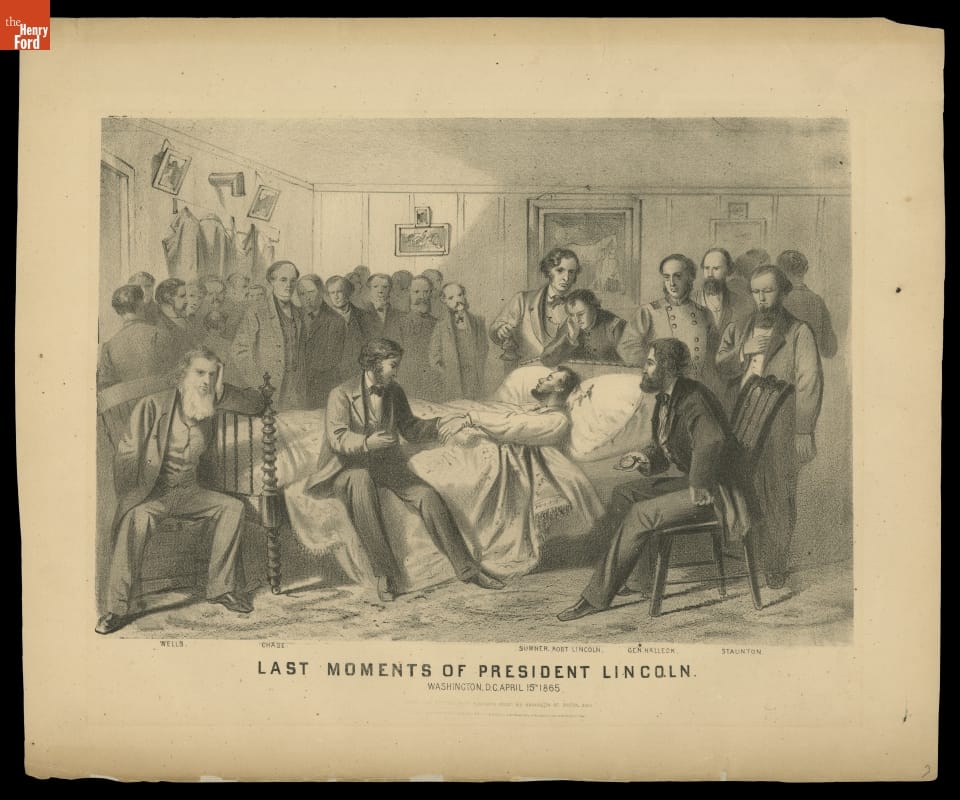
- Lithograph, "Last Moments of President LIncoln," 1865 - Abraham Lincoln's assassination in April 1865 plunged Americans into deep mourning. Before the existence of newspaper photos and television, lithographs helped people to understand the tragic event. This print depicts a room of the Petersen House, where the president died, across the street from Ford's Theatre in Washington, D.C. Not all of these people were actually in the room the morning Lincoln died.
- April 15, 1865
- Collections - Artifact
Lithograph, "Last Moments of President LIncoln," 1865
Abraham Lincoln's assassination in April 1865 plunged Americans into deep mourning. Before the existence of newspaper photos and television, lithographs helped people to understand the tragic event. This print depicts a room of the Petersen House, where the president died, across the street from Ford's Theatre in Washington, D.C. Not all of these people were actually in the room the morning Lincoln died.
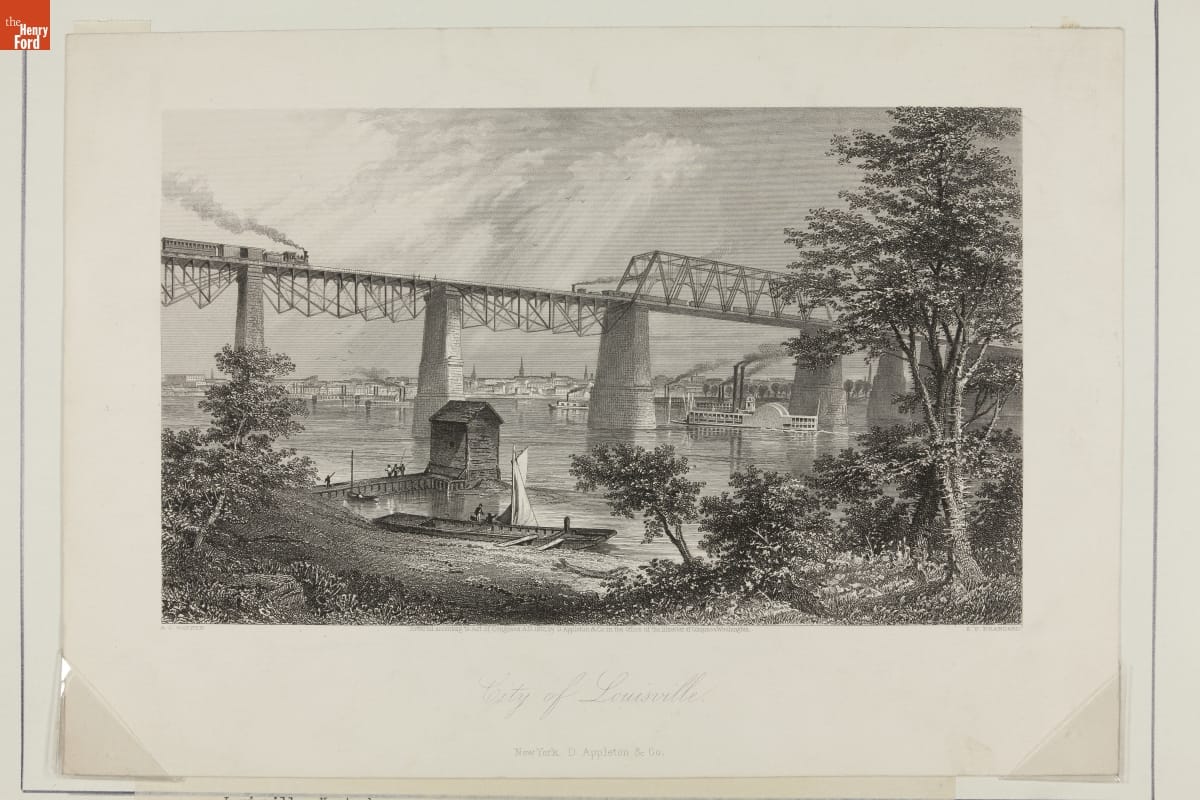
- Steel Engraving, "City of Louisville," circa 1870 - This circa 1870 steel engraving shows the city of Louisville, Kentucky, from a point across the Ohio River. Founded in 1780, Louisville grew rapidly into a major shipping port along the river, and this steel railroad bridge was the first to span the Ohio River in Louisville.
- circa 1872
- Collections - Artifact
Steel Engraving, "City of Louisville," circa 1870
This circa 1870 steel engraving shows the city of Louisville, Kentucky, from a point across the Ohio River. Founded in 1780, Louisville grew rapidly into a major shipping port along the river, and this steel railroad bridge was the first to span the Ohio River in Louisville.
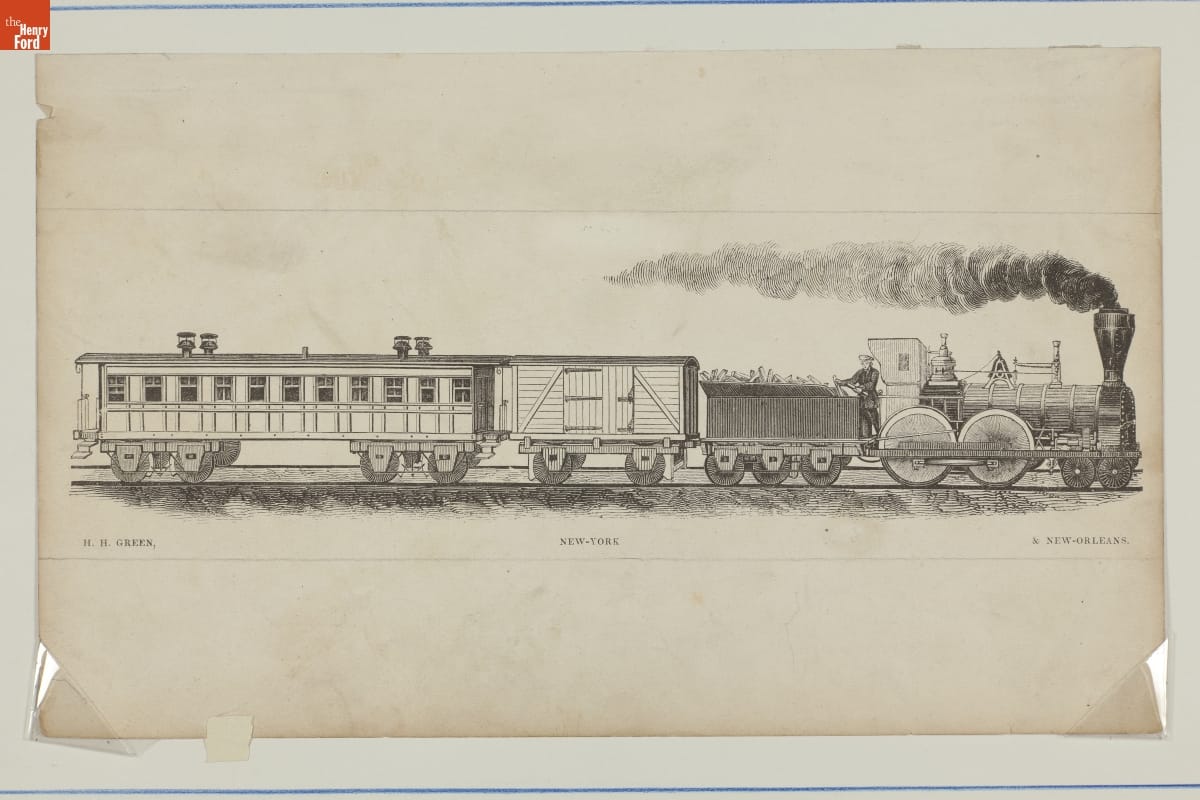
- Train with Steam Locomotive, Passenger and Freight Cars, circa 1856 - Locomotive boilers had to stay hot to produce steam. Lagging -- insulation around the boiler -- was crucial. This American-type locomotive of the 1850s had narrow wooden strips mounted around its boiler for insulation. But the wood deteriorated quickly when exposed to weather and sparks. Improved designs placed a protective sheet metal jacket over the wood.
- circa 1856
- Collections - Artifact
Train with Steam Locomotive, Passenger and Freight Cars, circa 1856
Locomotive boilers had to stay hot to produce steam. Lagging -- insulation around the boiler -- was crucial. This American-type locomotive of the 1850s had narrow wooden strips mounted around its boiler for insulation. But the wood deteriorated quickly when exposed to weather and sparks. Improved designs placed a protective sheet metal jacket over the wood.
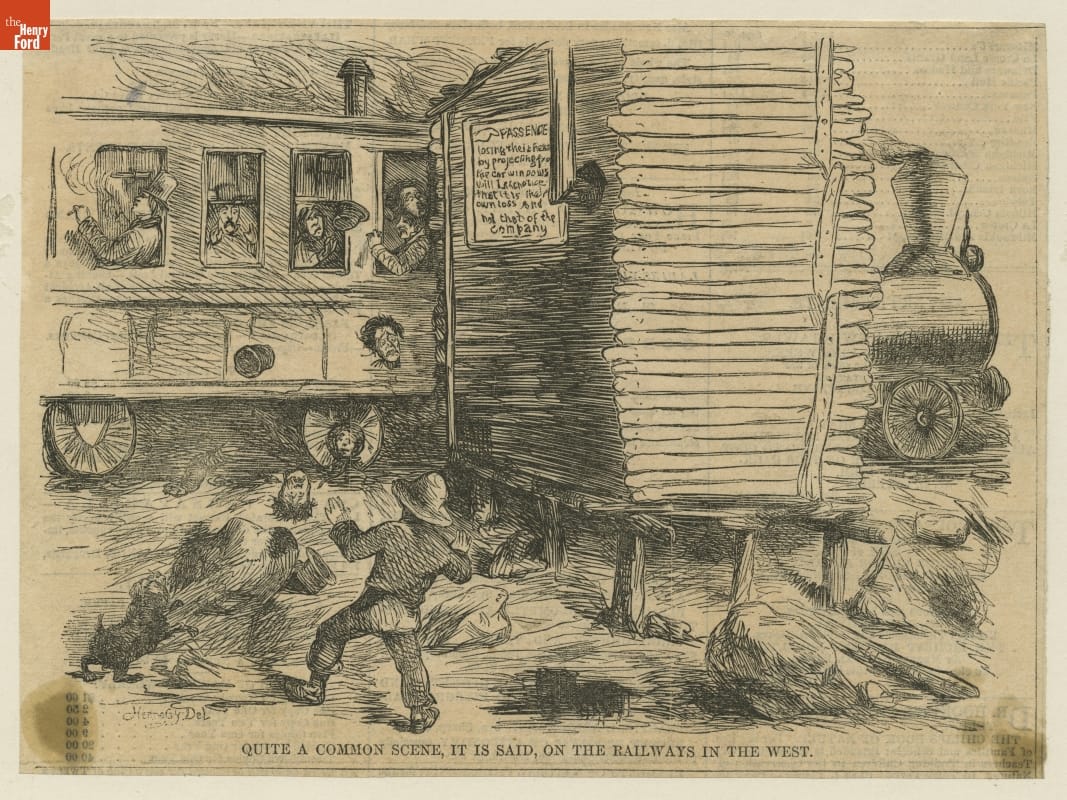
- Wood Engraving, "Quite a Common Scene, it is Said, on the Railways in the West," 1858 - While close clearances -- tight spaces between railroad cars and trackside structures -- did exist, this 1858 illustration from <em>Harper's Weekly</em> exaggerated the dangers faced by passengers who stuck their heads through windows. More likely threats from an open window included sparks, cinders and smoke from the steam locomotive pulling the train -- all of which could irritate eyes and damage clothing.
- 1858
- Collections - Artifact
Wood Engraving, "Quite a Common Scene, it is Said, on the Railways in the West," 1858
While close clearances -- tight spaces between railroad cars and trackside structures -- did exist, this 1858 illustration from Harper's Weekly exaggerated the dangers faced by passengers who stuck their heads through windows. More likely threats from an open window included sparks, cinders and smoke from the steam locomotive pulling the train -- all of which could irritate eyes and damage clothing.