
Search
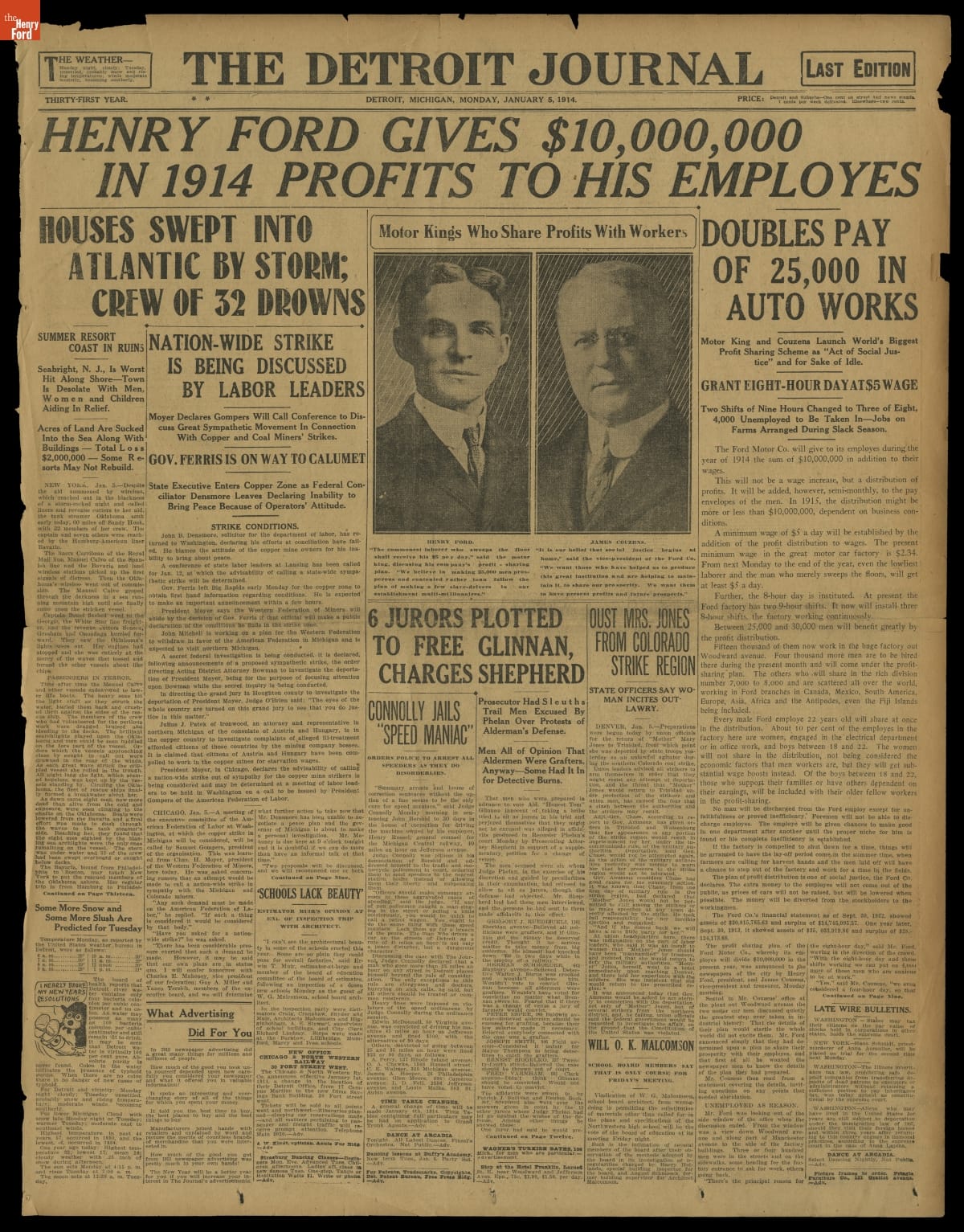
- Newspaper Article, "Henry Ford Gives $10,000,000 in 1914 Profits to His Employes" - When Henry Ford introduced the moving assembly line in 1913 he loved it but his employees didn't. The work was boring and relentless, and worker turnover was high. To get workers to stay, Henry more than doubled their pay, from $2.34 per day to $5 per day. It was headline news in Detroit and around the country.

- January 05, 1914
- Collections - Artifact
Newspaper Article, "Henry Ford Gives $10,000,000 in 1914 Profits to His Employes"
When Henry Ford introduced the moving assembly line in 1913 he loved it but his employees didn't. The work was boring and relentless, and worker turnover was high. To get workers to stay, Henry more than doubled their pay, from $2.34 per day to $5 per day. It was headline news in Detroit and around the country.
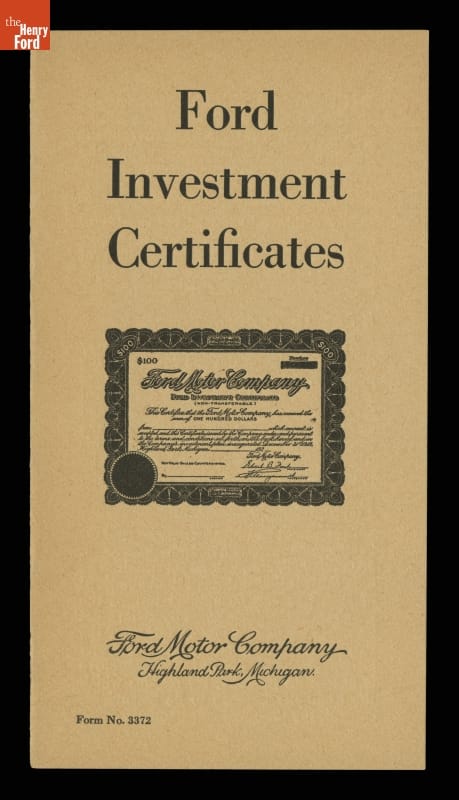
- Ford Motor Company Employee Investment Certificates Brochure, 1920-1922 -
- 1920-1922
- Collections - Artifact
Ford Motor Company Employee Investment Certificates Brochure, 1920-1922
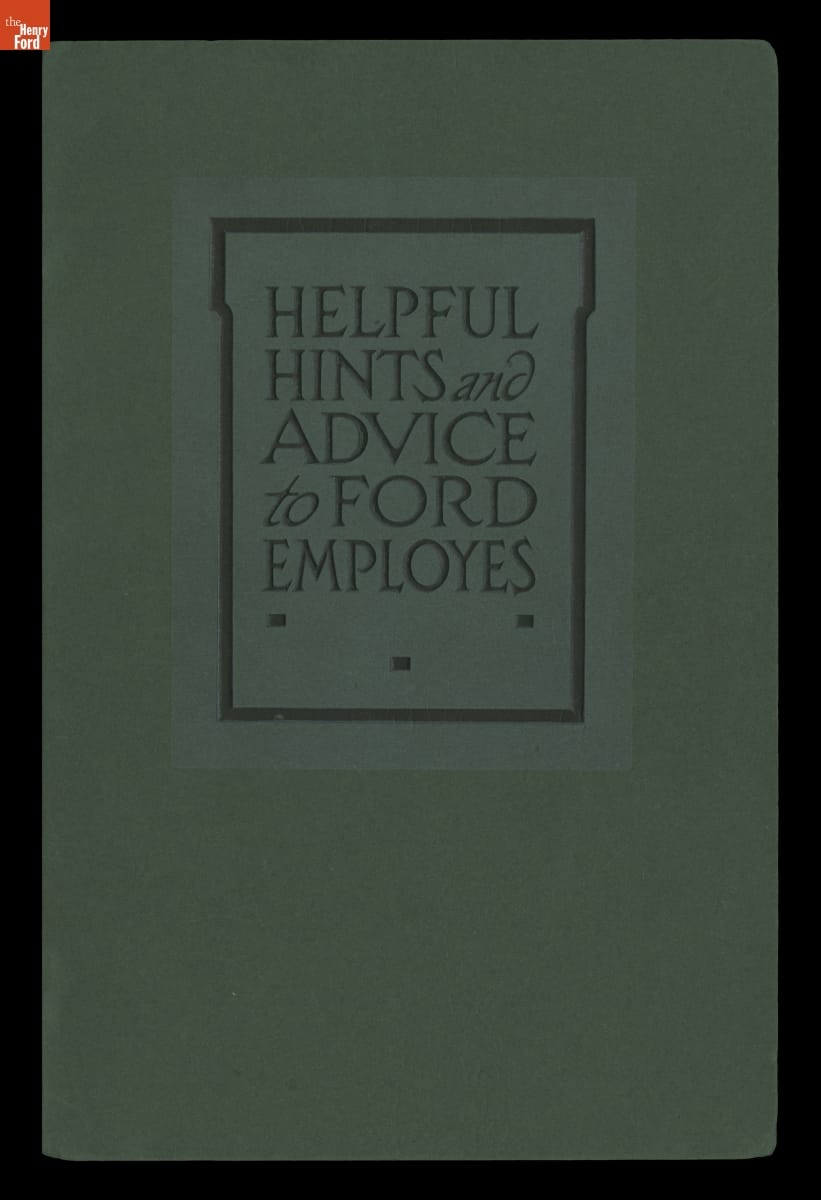
- Ford Motor Company Publication: "Helpful Hints and Advice to Ford Employes," 1915 - In 1914, Henry Ford took the radical step of paying workers $5 per day for a 40-hour work week; he called this compensation "profit-sharing." Ford's turnover problem disappeared. In addition, Ford workers could buy the cars they produced, benefitting the company. However, profit-sharing required employees to conduct their lives in a certain manner. The requirements are outlined in this pamphlet.
- 1915
- Collections - Artifact
Ford Motor Company Publication: "Helpful Hints and Advice to Ford Employes," 1915
In 1914, Henry Ford took the radical step of paying workers $5 per day for a 40-hour work week; he called this compensation "profit-sharing." Ford's turnover problem disappeared. In addition, Ford workers could buy the cars they produced, benefitting the company. However, profit-sharing required employees to conduct their lives in a certain manner. The requirements are outlined in this pamphlet.
- Newspaper Article, "Henry Ford Gives $10,000,000 in 1914 Profits to His Employes" - When Henry Ford introduced the moving assembly line in 1913 he loved it but his employees didn't. The work was boring and relentless, and worker turnover was high. To get workers to stay, Henry more than doubled their pay, from $2.34 per day to $5 per day. It was headline news in Detroit and around the country.
- January 05, 1914
- Collections - Artifact
Newspaper Article, "Henry Ford Gives $10,000,000 in 1914 Profits to His Employes"
When Henry Ford introduced the moving assembly line in 1913 he loved it but his employees didn't. The work was boring and relentless, and worker turnover was high. To get workers to stay, Henry more than doubled their pay, from $2.34 per day to $5 per day. It was headline news in Detroit and around the country.
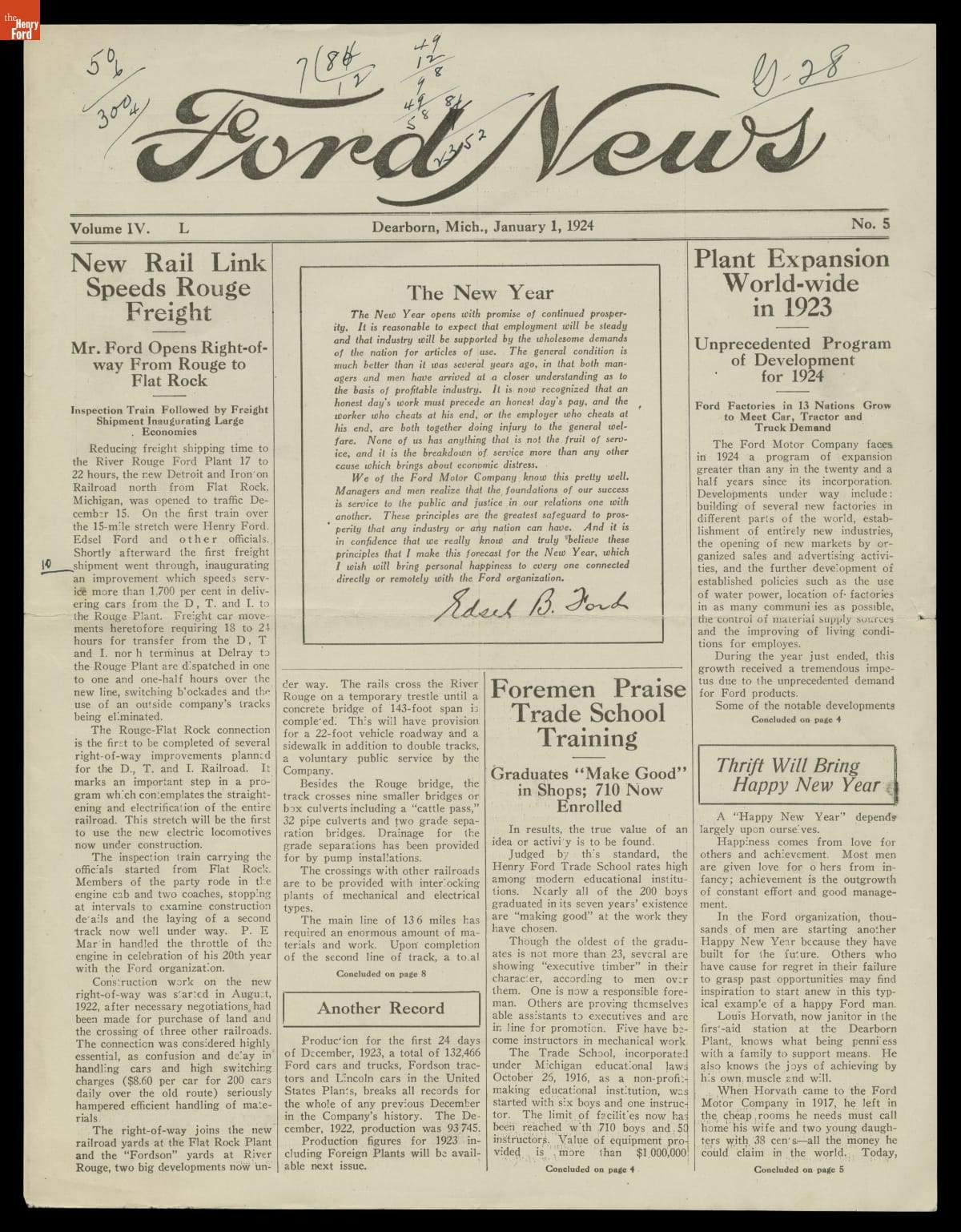
- Ford News, January 1, 1924 - Ford Motor Company published <em>Ford News</em> from 1920 to 1942. The magazine informed readers about the automaker's activities. Henry Ford purchased the Detroit, Toledo & Ironton Railroad in 1920, and he built a 15-mile branch from DT&I's mainline at Flat Rock, Michigan, to Ford's Rouge plant in 1923. <em>Ford News</em> celebrated the new branch that "speeds Rouge freight."
- January 01, 1924
- Collections - Artifact
Ford News, January 1, 1924
Ford Motor Company published Ford News from 1920 to 1942. The magazine informed readers about the automaker's activities. Henry Ford purchased the Detroit, Toledo & Ironton Railroad in 1920, and he built a 15-mile branch from DT&I's mainline at Flat Rock, Michigan, to Ford's Rouge plant in 1923. Ford News celebrated the new branch that "speeds Rouge freight."
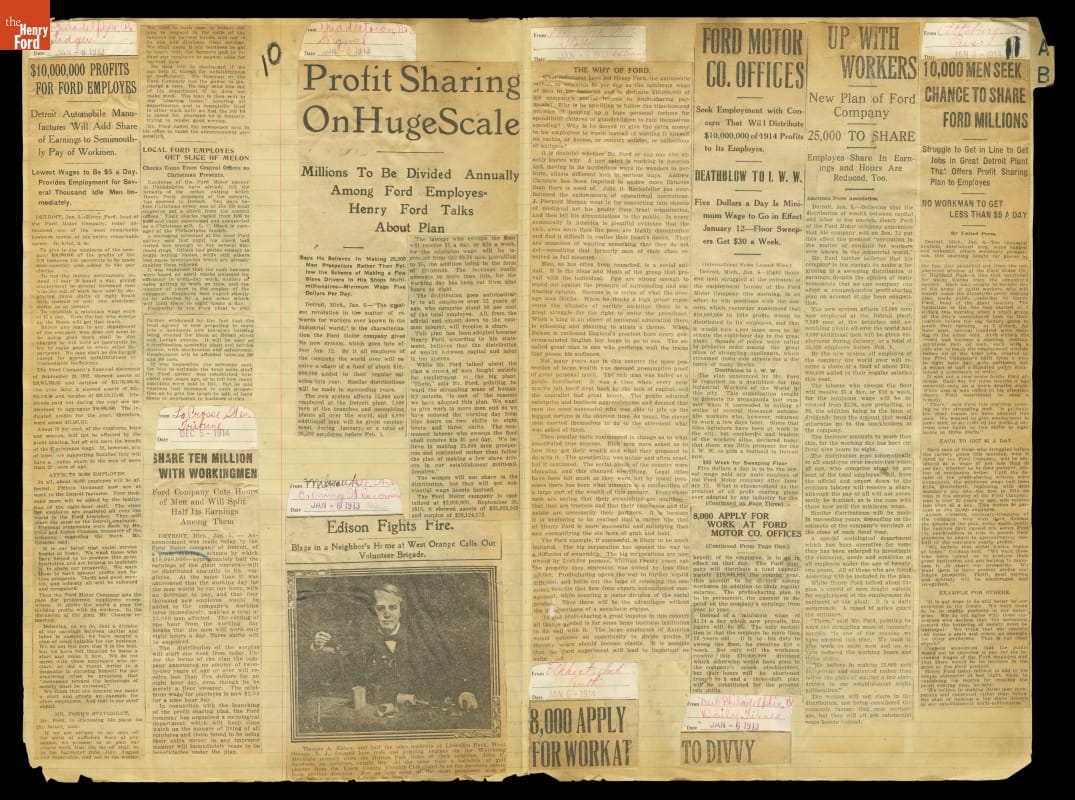
- Ford Motor Company Clipping Book, Volume 2, January 6-10, 1914 - Henry Ford's office kept a file of newspaper articles from across the country that covered Ford Motor Company and other topics of interest to Henry. These pages are from the days following Ford's announcement of the $5 per day profit sharing plan in January 1914. While Ford's primary objective was to reduce employee turnover, the $5 day was also excellent publicity.
- 03 January 1914-06 January 1914
- Collections - Artifact
Ford Motor Company Clipping Book, Volume 2, January 6-10, 1914
Henry Ford's office kept a file of newspaper articles from across the country that covered Ford Motor Company and other topics of interest to Henry. These pages are from the days following Ford's announcement of the $5 per day profit sharing plan in January 1914. While Ford's primary objective was to reduce employee turnover, the $5 day was also excellent publicity.
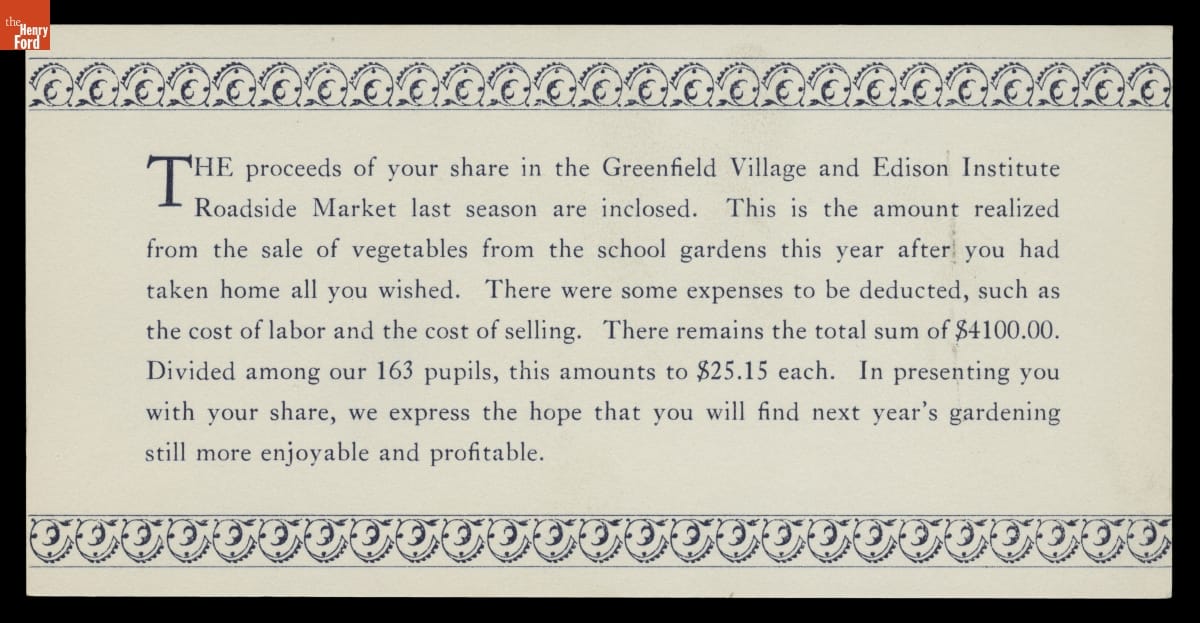
- Letter to Edison Institute Schools Students about the Sale of Their School Garden Produce, 1936 -
- 1936
- Collections - Artifact
Letter to Edison Institute Schools Students about the Sale of Their School Garden Produce, 1936
- "Helpful Hints and Advice to Ford Employes," 1915 - Part of Henry Ford's attempt to Americanize immigrant workers, this book describes the code of good conduct that Ford expected of his workers and their families -- including suggestions for appropriate housing. In fact, as soon as white auto workers could afford it, they happily purchased one of the new bungalows located away from the noisy, grimy factory.

- 1915
- Collections - Artifact
"Helpful Hints and Advice to Ford Employes," 1915
Part of Henry Ford's attempt to Americanize immigrant workers, this book describes the code of good conduct that Ford expected of his workers and their families -- including suggestions for appropriate housing. In fact, as soon as white auto workers could afford it, they happily purchased one of the new bungalows located away from the noisy, grimy factory.
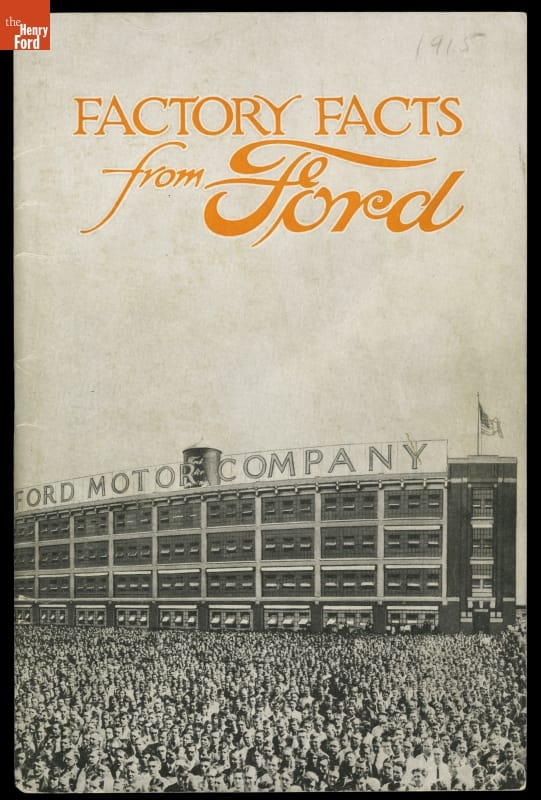
- "Factory Facts from Ford," 1915 - This pamphlet covers topics about Ford Motor Company and highlights the Ford Sociological Department. The department was created to ensure that employees, many of whom were non-English-speaking immigrants, did not squander their $5 per day wages. Investigators monitored the personal and work lives of employees. In addition, the department provided hygiene instruction, financial and legal advice, and an English-language school.
- 1915
- Collections - Artifact
"Factory Facts from Ford," 1915
This pamphlet covers topics about Ford Motor Company and highlights the Ford Sociological Department. The department was created to ensure that employees, many of whom were non-English-speaking immigrants, did not squander their $5 per day wages. Investigators monitored the personal and work lives of employees. In addition, the department provided hygiene instruction, financial and legal advice, and an English-language school.
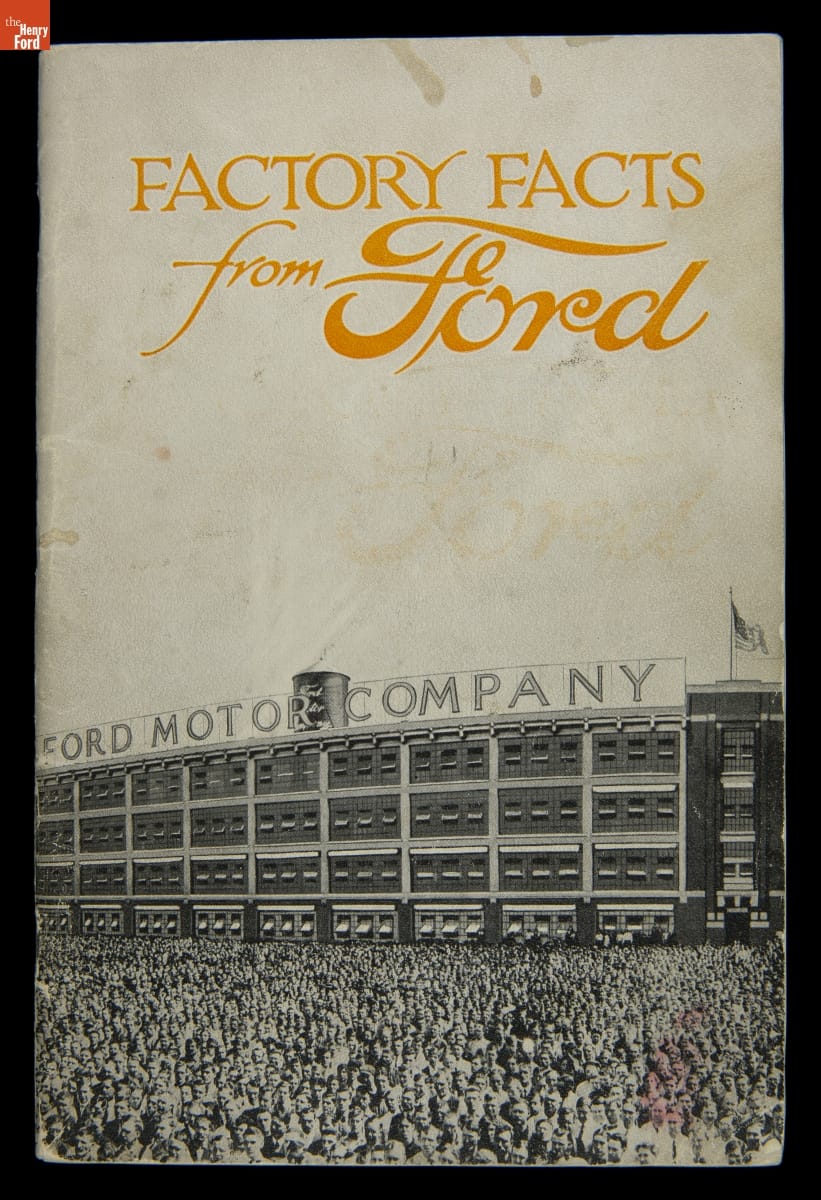
- "Factory Facts from Ford," 1917 - Beyond revolutionizing America's industrial production, Henry Ford and other managers at Ford Motor Company instituted a wide-reaching corporate welfare program that opened up the most intimate and personal details of employee's personal, family, and financial life to investigators from the Sociological Department. After the announcement of the $5 per day profit sharing plan in January 1914, Henry Ford wanted to ensure that employees, many of whom were non-English speaking immigrants, did not squander the funds. To this end, the Ford Sociological Department was created to investigate and monitor the personal and work lives of employees to the extent that investigators (later called Advisors) conducted home visits, checked bank deposits, and monitored children's school attendance as well as divorce filings. In addition, the Sociological Department advisors provided hygiene instruction, financial and legal advice, and worked with the English School to teach Ford's immigrant workers English.
- July 15, 1917
- Collections - Artifact
"Factory Facts from Ford," 1917
Beyond revolutionizing America's industrial production, Henry Ford and other managers at Ford Motor Company instituted a wide-reaching corporate welfare program that opened up the most intimate and personal details of employee's personal, family, and financial life to investigators from the Sociological Department. After the announcement of the $5 per day profit sharing plan in January 1914, Henry Ford wanted to ensure that employees, many of whom were non-English speaking immigrants, did not squander the funds. To this end, the Ford Sociological Department was created to investigate and monitor the personal and work lives of employees to the extent that investigators (later called Advisors) conducted home visits, checked bank deposits, and monitored children's school attendance as well as divorce filings. In addition, the Sociological Department advisors provided hygiene instruction, financial and legal advice, and worked with the English School to teach Ford's immigrant workers English.