
Ford Motor Company Publication: "Helpful Hints and Advice to Ford Employes," 1915
THF720761 / Ford Motor Company Publication: "Helpful Hints and Advice to Ford Employes," 1915
01
Artifact Overview
In 1914, Henry Ford took the radical step of paying workers $5 per day for a 40-hour work week; he called this compensation "profit-sharing." Ford's turnover problem disappeared. In addition, Ford workers could buy the cars they produced, benefitting the company. However, profit-sharing required employees to conduct their lives in a certain manner. The requirements are outlined in this pamphlet.
Artifact Details
Artifact
Publication (Document)
Date Made
1915
Subject Date
1915
Creators
Creator Notes
Published by Ford Motor Company
Collection Title
Location
By Request in the Benson Ford Research Center
Object ID
64.167.951.2
Credit
From the Collections of The Henry Ford. Gift of Ford Motor Company.
Material
Paper (Fiber product)
Color
Black-and-white (Colors)
Inscriptions
Printed on front cover: Helpful Hints and Advice to Ford Employes [sic]
Keywords |
|---|
02
Related Content
 Set
SetLesson: Ford’s Solutions
- 7 Artifacts
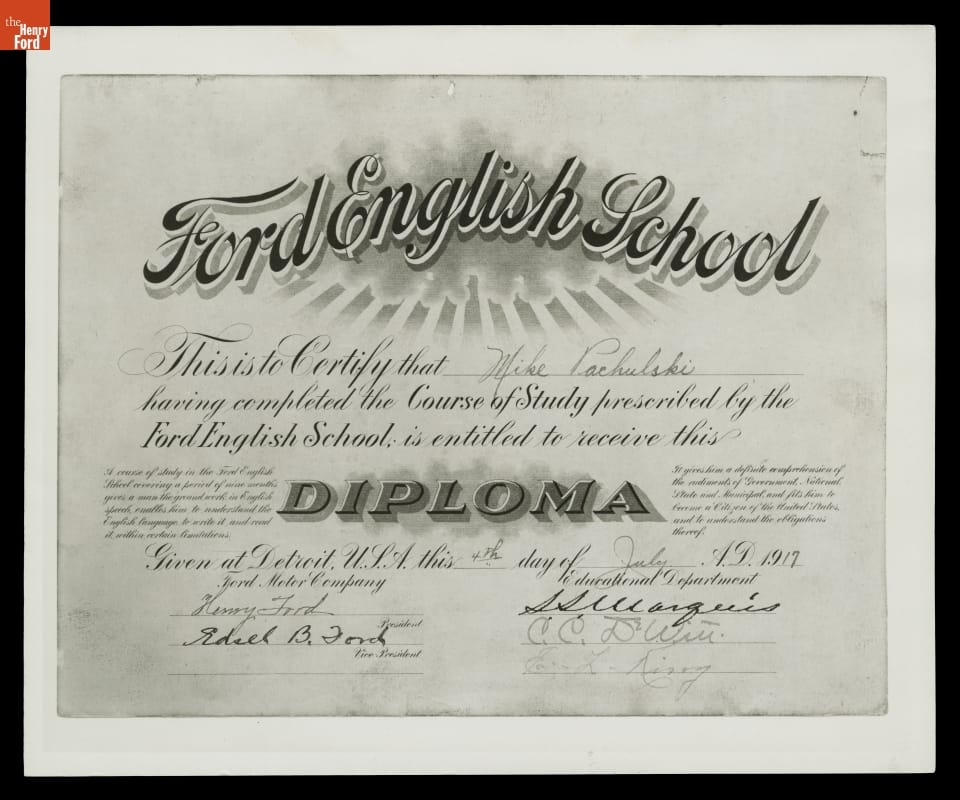
This is a photograph of a diploma awarded by the Ford English School. The school was established by the company in 1914 in order to address the problem of non-English speaking workers and the safety hazards they posed. Immigrants could use a Ford English School diploma to meet many of the requirements prior to the final citizenship exam.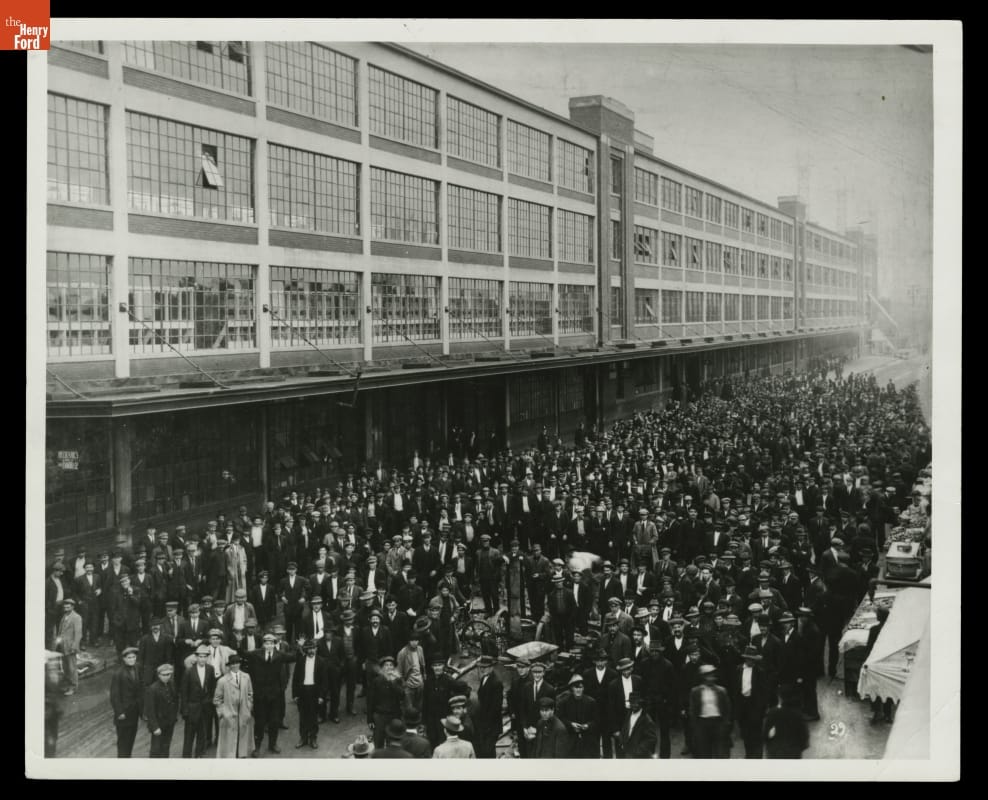 Set
SetHenry Ford: Sociological Department
- 16 Artifacts
Ford workers disliked the new assembly line methods so much that by late 1913, labor turnover was 380 percent. The company's announcement to pay five dollars for an eight-hour day compared to the previous rate of $2.34 for a nine-hour day made many workers willing to submit to the relentless discipline of the line in return for such high wages.- Set
Henry Ford: $5 Day
- 8 Artifacts
Ford workers disliked the new assembly line methods so much that by late 1913, labor turnover was 380 percent. The company's announcement to pay five dollars for an eight-hour day compared to the previous rate of $2.34 for a nine-hour day made many workers willing to submit to the relentless discipline of the line in return for such high wages.