
Search
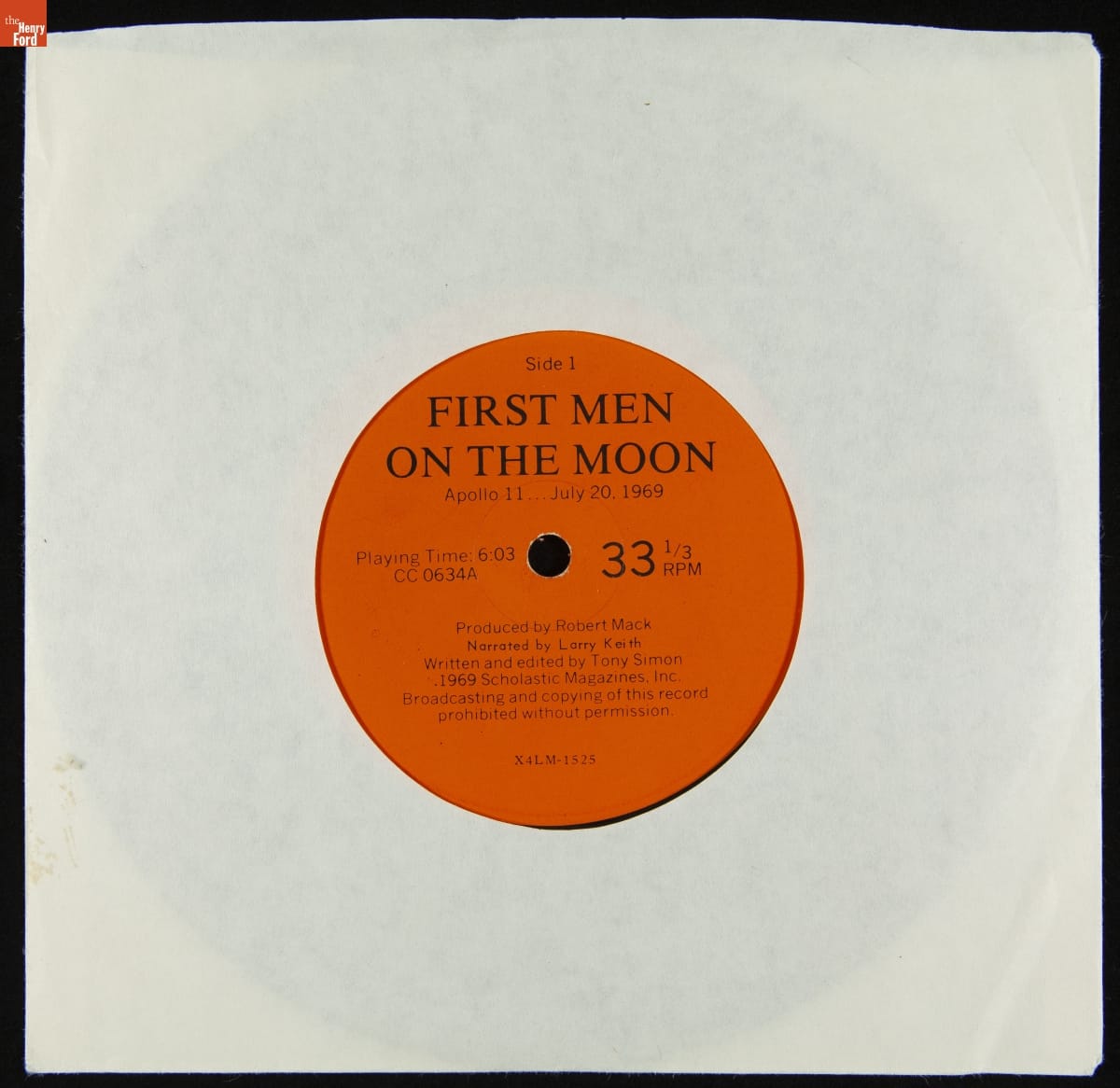
- Record Album, "First Men on the Moon," 1969 - Scholastic Magazines, Inc., a well-respected educational publisher founded in the 1920s, produced this documentary record commemorating the 1969 Apollo 11 Moon landing. The album uses narration and excerpts from official NASA transcripts to recreate this significant event. The Scholastic company also produced a poster with space imagery and the album's text on the back so young readers could follow along.
- 1969
- Collections - Artifact
Record Album, "First Men on the Moon," 1969
Scholastic Magazines, Inc., a well-respected educational publisher founded in the 1920s, produced this documentary record commemorating the 1969 Apollo 11 Moon landing. The album uses narration and excerpts from official NASA transcripts to recreate this significant event. The Scholastic company also produced a poster with space imagery and the album's text on the back so young readers could follow along.
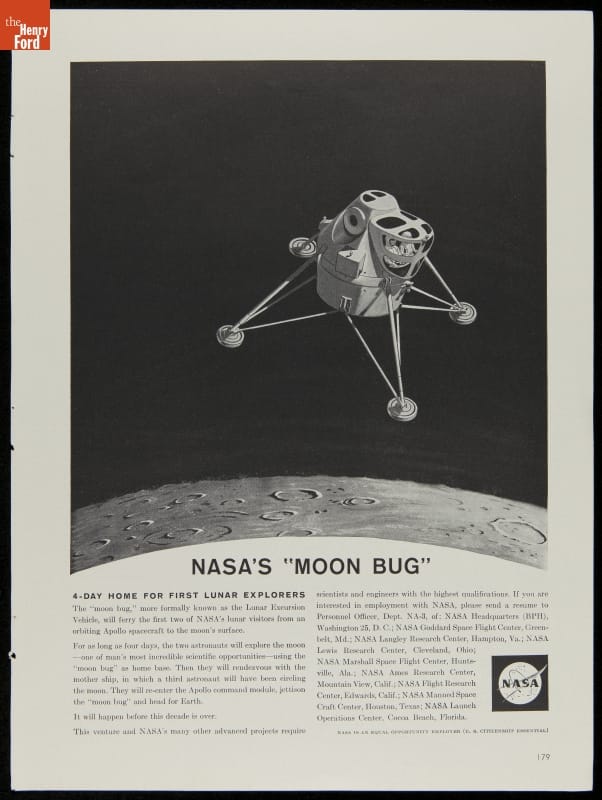
- Recruiting Advertisement for NASA, "Moon Bug," November 1962 - President John F. Kennedy's vision to explore the "new frontier" of space ignited the public's imagination. It was also an overt Cold War strategy against the Soviet Union which launched the first man in space April 12, 1961. NASA published this ad series in 1962 to convince aerospace engineers and scientists to join them for the U.S. effort to conquer space.
- November 01, 1962
- Collections - Artifact
Recruiting Advertisement for NASA, "Moon Bug," November 1962
President John F. Kennedy's vision to explore the "new frontier" of space ignited the public's imagination. It was also an overt Cold War strategy against the Soviet Union which launched the first man in space April 12, 1961. NASA published this ad series in 1962 to convince aerospace engineers and scientists to join them for the U.S. effort to conquer space.
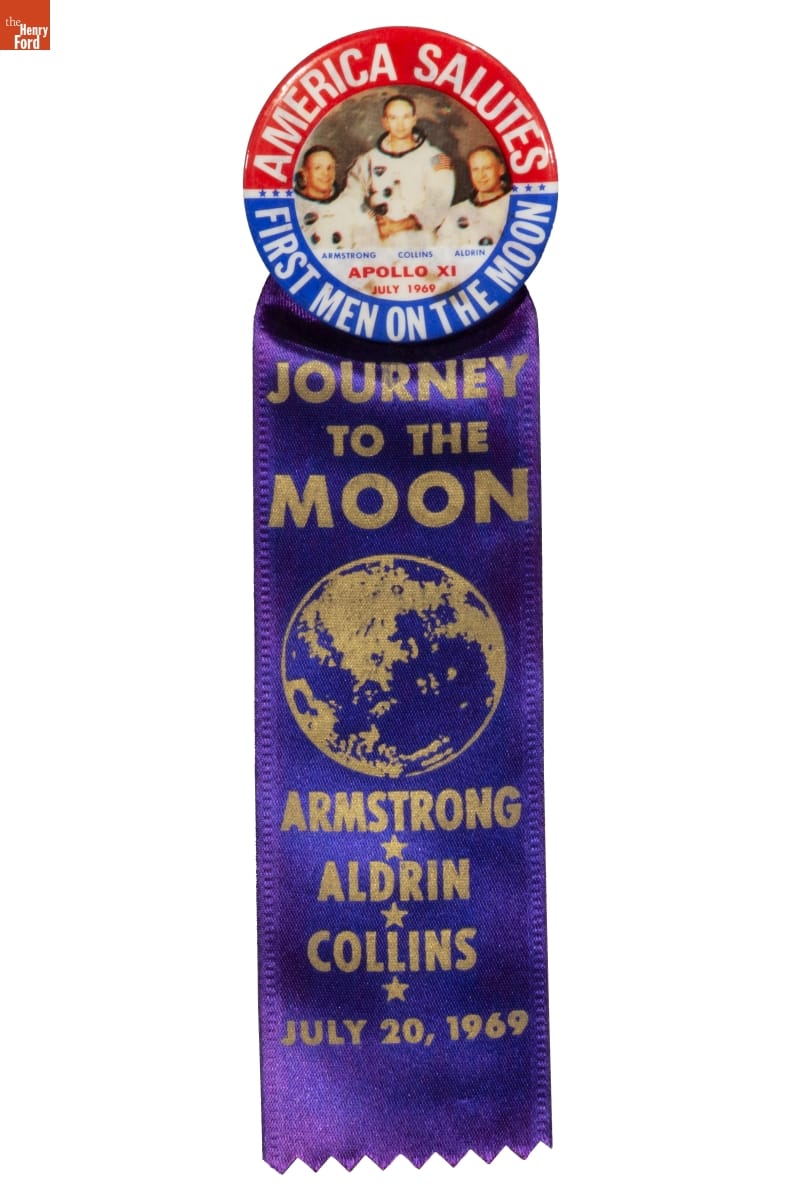
- "First Men on the Moon" Button and Ribbon, circa 1969 - On July 20, 1969, Apollo XI landed on the Moon. NASA astronauts Neil Armstrong and Edwin "Buzz" Aldrin became the first men to walk on the Moon's surface, while Michael Collins orbited in the command module. The landing and the astronaut's first steps on the lunar surface captivated audiences watching the live telecast. Proud Americans purchased souvenirs to remember this historic event.
- July 20, 1969
- Collections - Artifact
"First Men on the Moon" Button and Ribbon, circa 1969
On July 20, 1969, Apollo XI landed on the Moon. NASA astronauts Neil Armstrong and Edwin "Buzz" Aldrin became the first men to walk on the Moon's surface, while Michael Collins orbited in the command module. The landing and the astronaut's first steps on the lunar surface captivated audiences watching the live telecast. Proud Americans purchased souvenirs to remember this historic event.
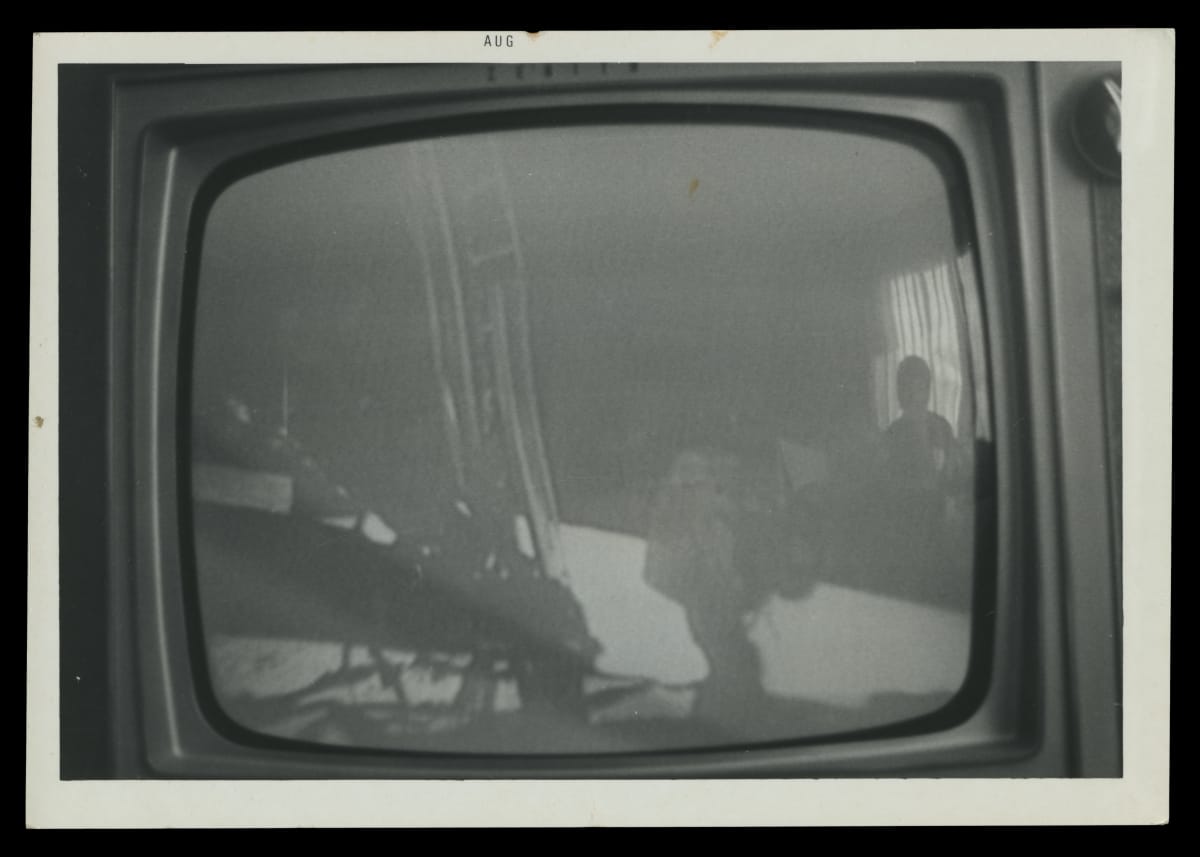
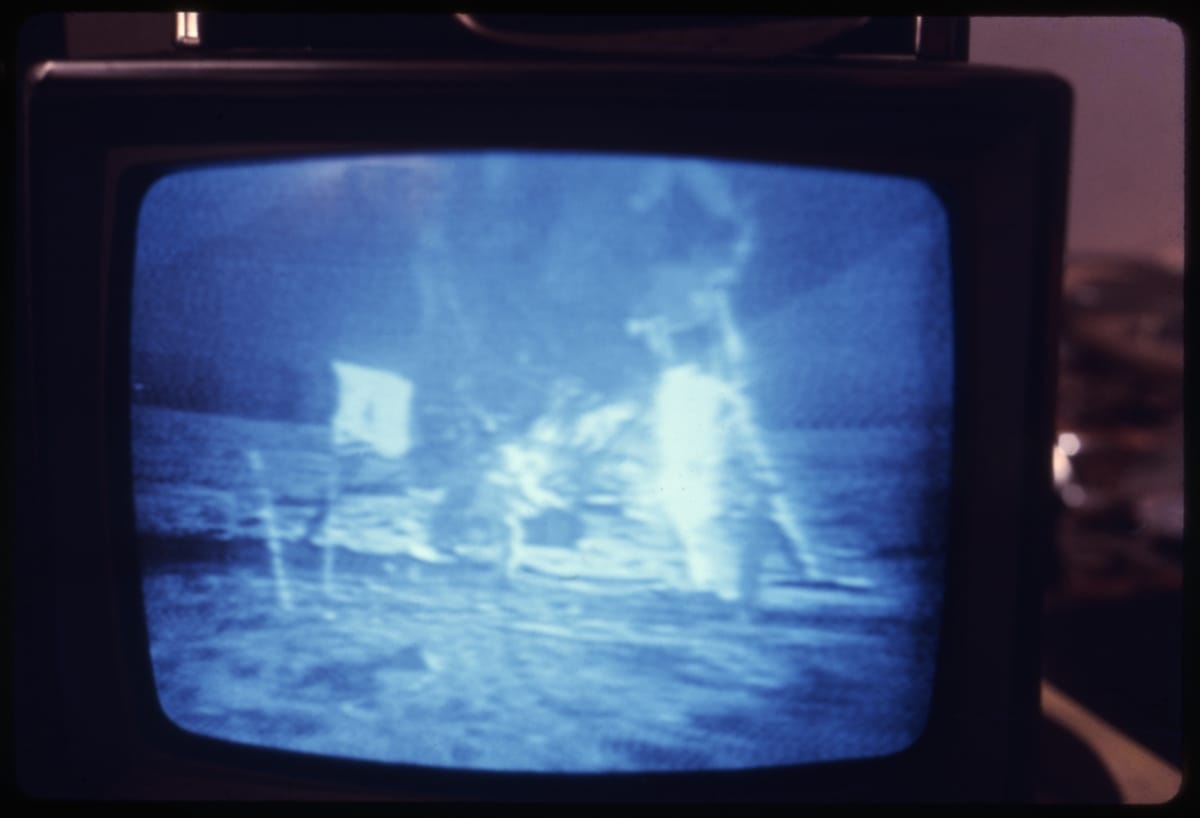
- Home Television Broadcast of NASA's Apollo 11 Moon Landing, July 20, 1969 - NASA's Apollo lunar missions captivated audiences watching the live events on their home televisions. When video recording technology was not widely available, people captured the events with what was available - the family camera. These images document many layers of technology, which united to make the missions possible. They also capture public fascination and desire to commemorate one's place in historical moments.
- July 20, 1969
- Collections - Artifact
Home Television Broadcast of NASA's Apollo 11 Moon Landing, July 20, 1969
NASA's Apollo lunar missions captivated audiences watching the live events on their home televisions. When video recording technology was not widely available, people captured the events with what was available - the family camera. These images document many layers of technology, which united to make the missions possible. They also capture public fascination and desire to commemorate one's place in historical moments.
- Home Television Broadcast of NASA's Apollo 11 Moon Landing, July 20, 1969 - NASA's Apollo lunar missions captivated audiences watching the live events on their home televisions. When video recording technology was not widely available, people captured the events with what was available - the family camera. These images document many layers of technology, which united to make the missions possible. They also capture public fascination and desire to commemorate one's place in historical moments.
- July 20, 1969
- Collections - Artifact
Home Television Broadcast of NASA's Apollo 11 Moon Landing, July 20, 1969
NASA's Apollo lunar missions captivated audiences watching the live events on their home televisions. When video recording technology was not widely available, people captured the events with what was available - the family camera. These images document many layers of technology, which united to make the missions possible. They also capture public fascination and desire to commemorate one's place in historical moments.
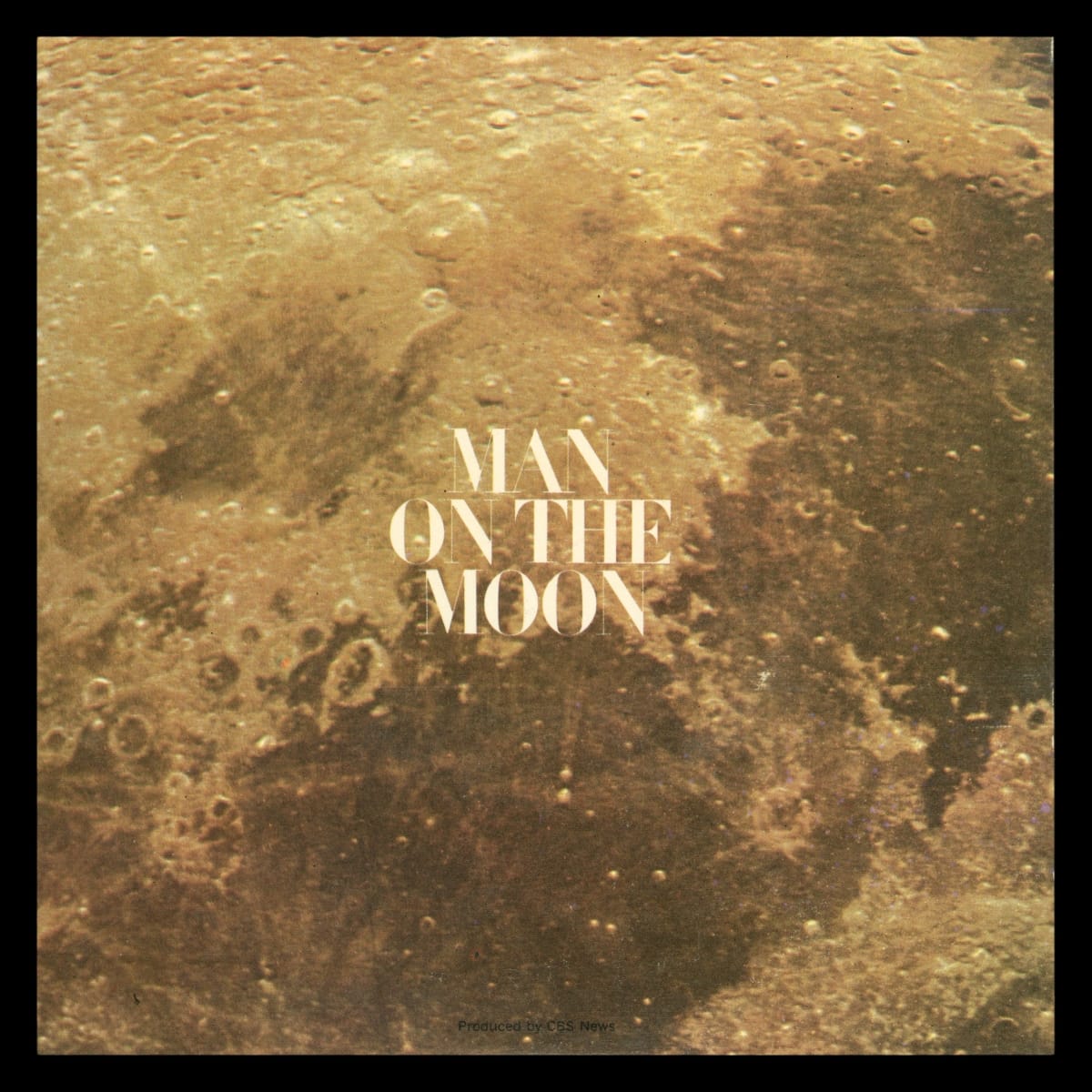
- Record Album, "Man on the Moon," Narrated by Walter Cronkite, 1969 - The 1960s were an age of space exploration, beginning with the Soviet Union's launch of Sputnik in 1957 through the landing of America's Apollo 11 on the moon in 1969. CBS news anchorman, Walter Cronkite narrates this history of the U.S. space program. President John F. Kennedy provided the major boost to the program by requesting increased funding on May 25, 1961.
- 1969
- Collections - Artifact
Record Album, "Man on the Moon," Narrated by Walter Cronkite, 1969
The 1960s were an age of space exploration, beginning with the Soviet Union's launch of Sputnik in 1957 through the landing of America's Apollo 11 on the moon in 1969. CBS news anchorman, Walter Cronkite narrates this history of the U.S. space program. President John F. Kennedy provided the major boost to the program by requesting increased funding on May 25, 1961.
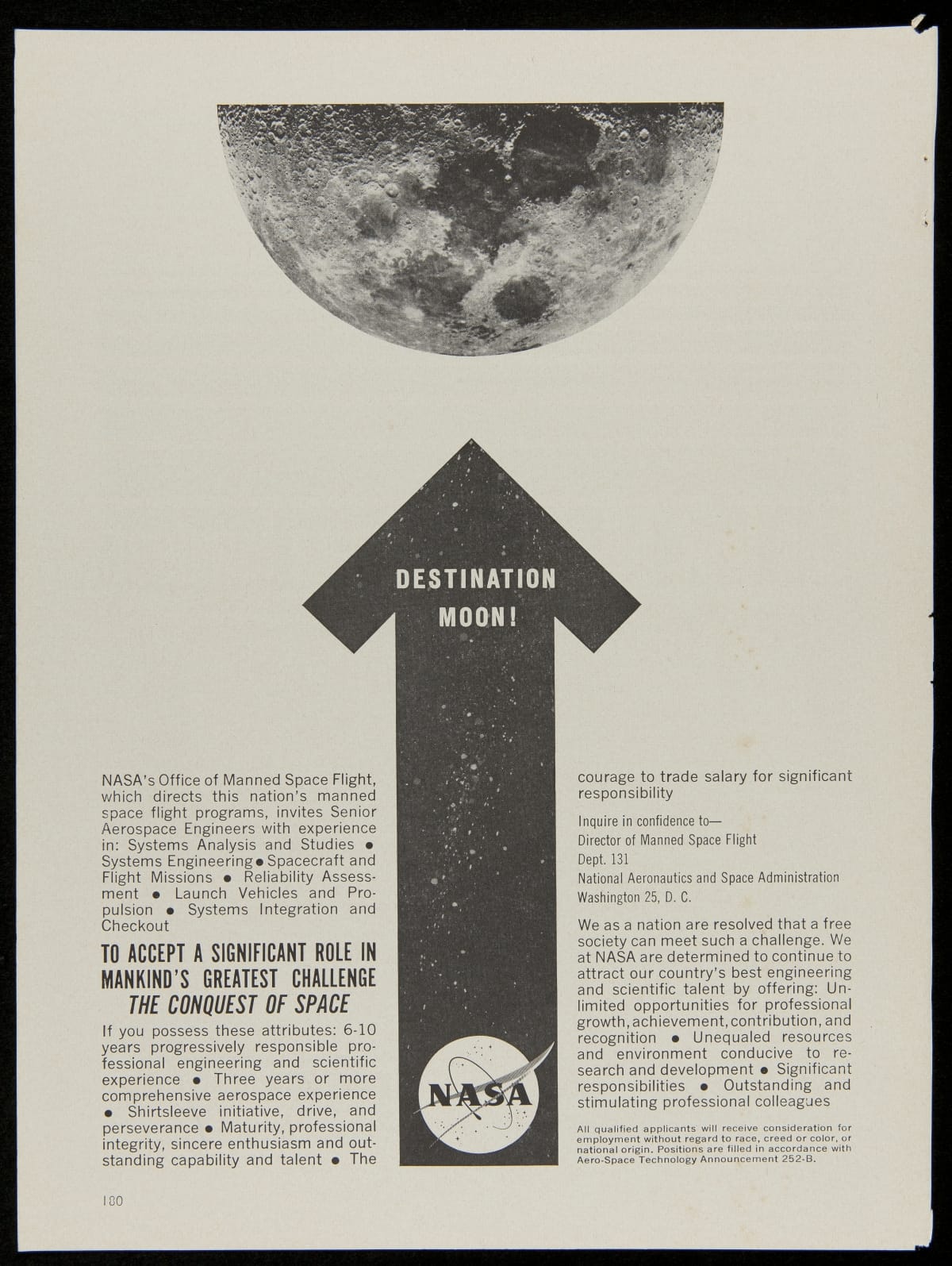
- Recruiting Advertisement for NASA, "Destination Moon!," July 1962 - President John F. Kennedy's vision to explore the "new frontier" of space ignited the public's imagination. It was also an overt Cold War strategy against the Soviet Union which launched the first man in space April 12, 1961. NASA published this ad series in 1962 to convince aerospace engineers and scientists to join them for the U.S. effort to conquer space.
- July 01, 1962
- Collections - Artifact
Recruiting Advertisement for NASA, "Destination Moon!," July 1962
President John F. Kennedy's vision to explore the "new frontier" of space ignited the public's imagination. It was also an overt Cold War strategy against the Soviet Union which launched the first man in space April 12, 1961. NASA published this ad series in 1962 to convince aerospace engineers and scientists to join them for the U.S. effort to conquer space.
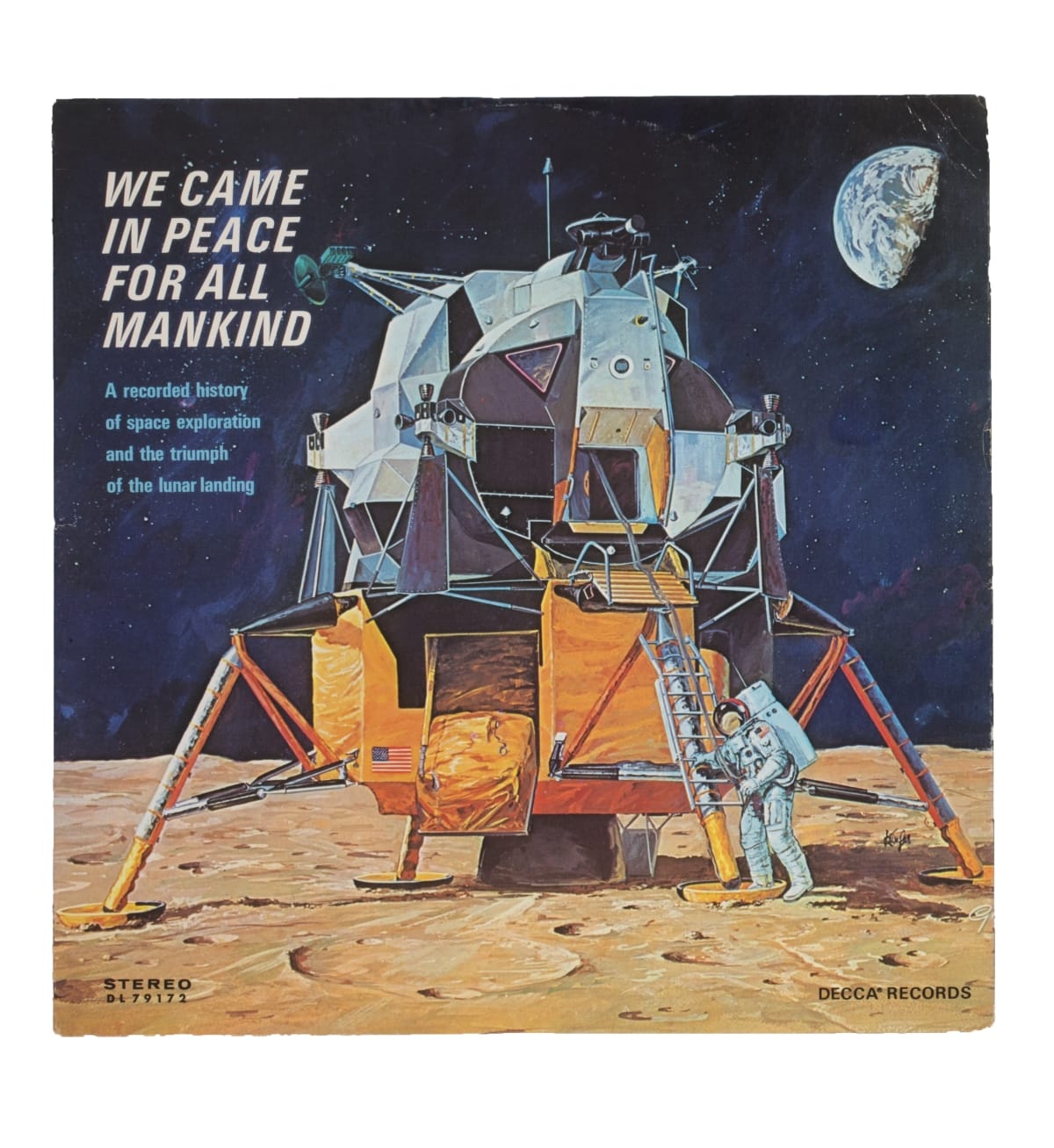
- Record Album, "We Came in Peace for All Mankind," 1969 - This milestone in space exploration began with President John F. Kennedy's request to increase funding for the U.S. space program on May 25, 1961, "Special Message to Congress on Urgent National Needs." He stated, "I believe this nation should commit itself to achieving the goal, before this decade is out, of landing a man on the moon and returning him safely to the earth."
- 1960-1969
- Collections - Artifact
Record Album, "We Came in Peace for All Mankind," 1969
This milestone in space exploration began with President John F. Kennedy's request to increase funding for the U.S. space program on May 25, 1961, "Special Message to Congress on Urgent National Needs." He stated, "I believe this nation should commit itself to achieving the goal, before this decade is out, of landing a man on the moon and returning him safely to the earth."
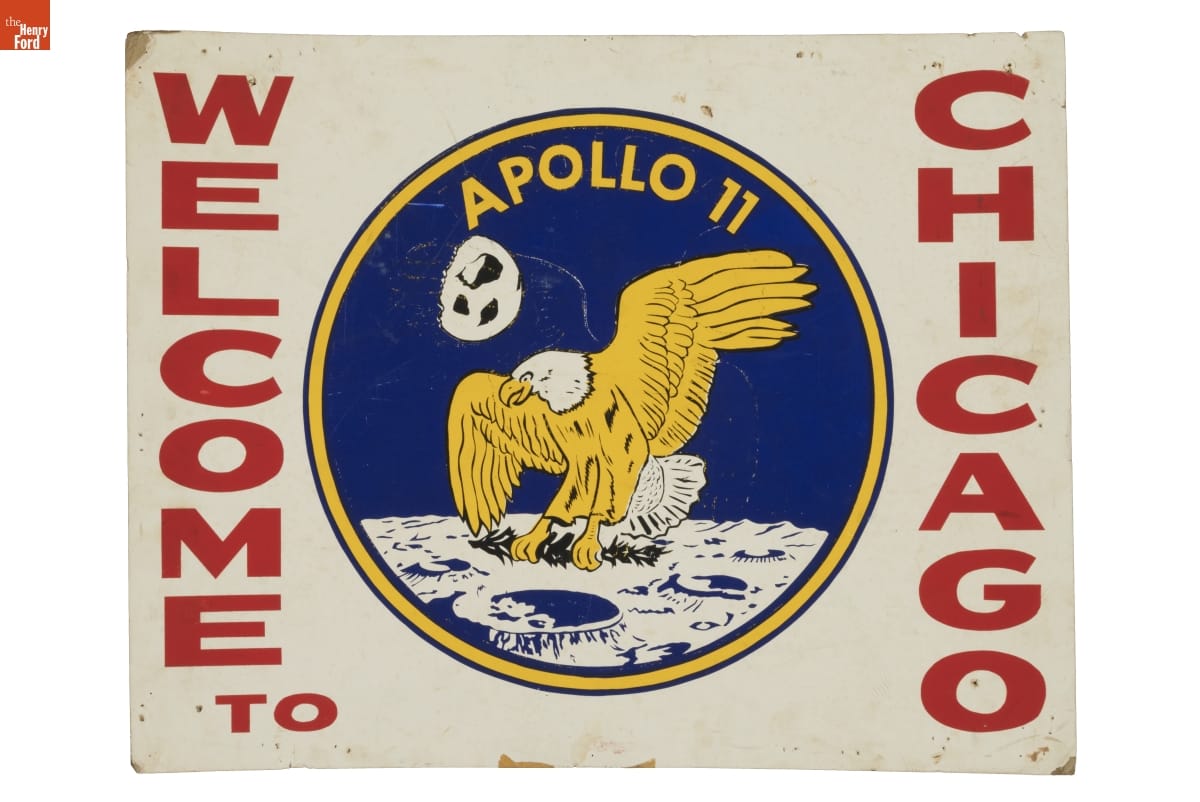
- Apollo 11 Ticker Tape Parade Sign, 1969 - The crew of Apollo 11 -- Neil Armstrong, Edwin "Buzz" Aldrin (the first men to walk on the Moon) and Michael Collins (command module pilot) -- were given a hero's welcome upon their return from space. On August 13, 1969, Chicago, Illinois, hosted a ticker-tape parade for the astronauts. This sign was one of many that lined the parade route.
- August 13, 1969
- Collections - Artifact
Apollo 11 Ticker Tape Parade Sign, 1969
The crew of Apollo 11 -- Neil Armstrong, Edwin "Buzz" Aldrin (the first men to walk on the Moon) and Michael Collins (command module pilot) -- were given a hero's welcome upon their return from space. On August 13, 1969, Chicago, Illinois, hosted a ticker-tape parade for the astronauts. This sign was one of many that lined the parade route.
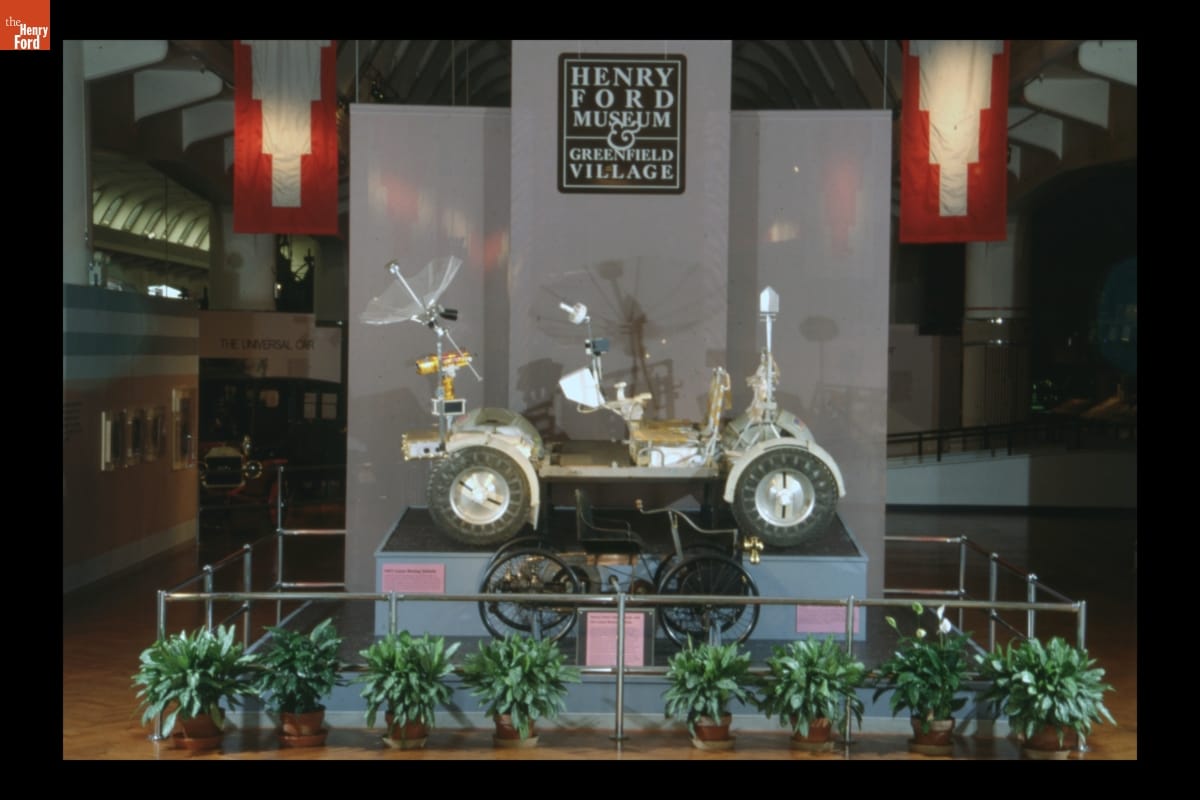
- NASA Lunar Roving Vehicle (LRV) on Temporary Exhibit with Henry Ford's Quadricycle in Henry Ford Museum, May 1989 - Though they are separated by 75 years (and 239,000 miles), there is a distinct resemblance between Henry Ford's 1896 Quadricycle and NASA's 1971 Lunar Roving Vehicle. The two vehicles offered a fascinating contrast when displayed together in Henry Ford Museum in 1989.
- May 03, 1989
- Collections - Artifact
NASA Lunar Roving Vehicle (LRV) on Temporary Exhibit with Henry Ford's Quadricycle in Henry Ford Museum, May 1989
Though they are separated by 75 years (and 239,000 miles), there is a distinct resemblance between Henry Ford's 1896 Quadricycle and NASA's 1971 Lunar Roving Vehicle. The two vehicles offered a fascinating contrast when displayed together in Henry Ford Museum in 1989.