
Search
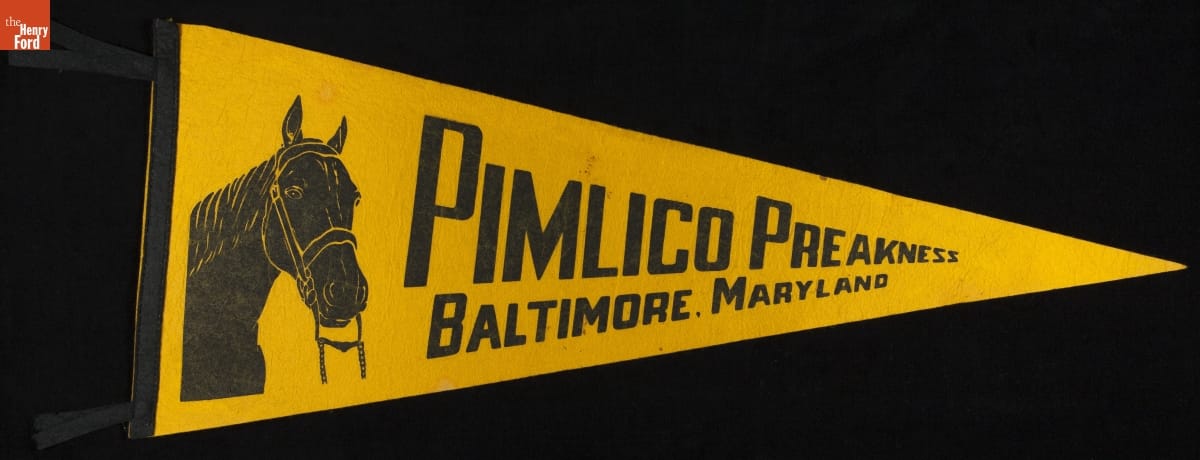
- Pennant, "Pimlico Preakness, Baltimore, Maryland," 1940-1965 -
- 1940-1965
- Collections - Artifact
Pennant, "Pimlico Preakness, Baltimore, Maryland," 1940-1965
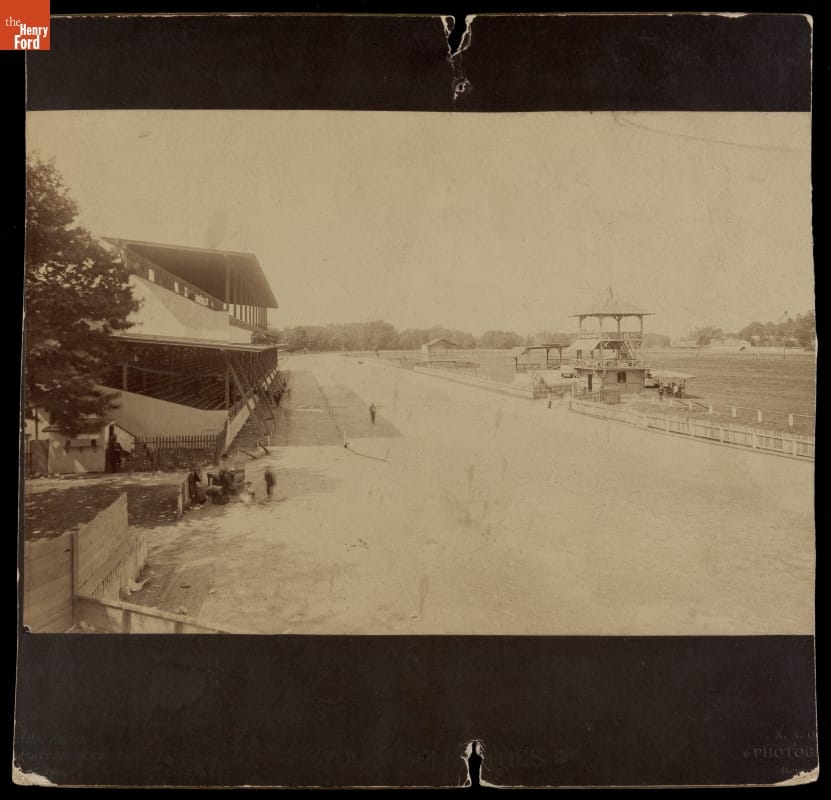
- Hampden Park Racetrack, Springfield, Massachusetts, circa 1885 - American bicycle racing flourished in the late 19th century. Horse tracks could be converted for bicycle racing -- a shorter oval was created while still using the stretch in front of the grandstands. This photograph shows the Hampden Park race track in Springfield, Massachusetts. On the back is a drawing showing the bicycle oval in relation to the horse racing track.
- circa 1885
- Collections - Artifact
Hampden Park Racetrack, Springfield, Massachusetts, circa 1885
American bicycle racing flourished in the late 19th century. Horse tracks could be converted for bicycle racing -- a shorter oval was created while still using the stretch in front of the grandstands. This photograph shows the Hampden Park race track in Springfield, Massachusetts. On the back is a drawing showing the bicycle oval in relation to the horse racing track.
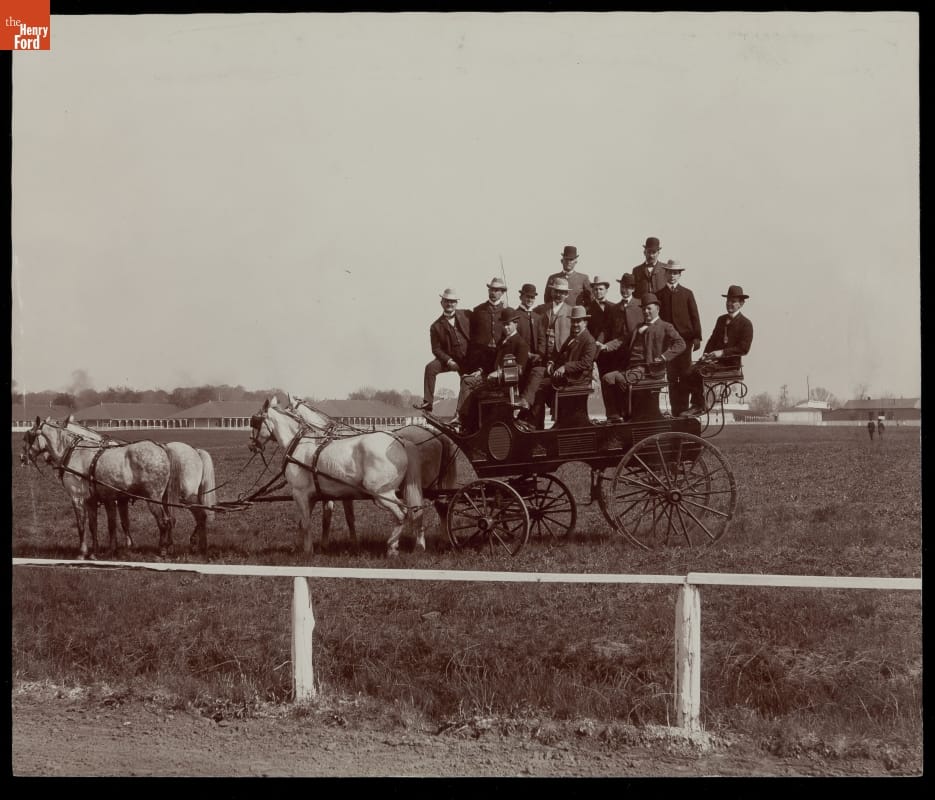
- Governor Beckham and Party at the Races, Derby Day, Louisville, Kentucky, 1901 - From 1895 to 1924, the Detroit Publishing Company was one of the world's major image publishers. The company had a wide-ranging stock of original photographs. Among them was this image showing a group of spectators - including Kentucky governor J. C. W. Beckham - aboard a coach at the 27th running of the Kentucky Derby horse race in Louisville, 1901.
- 1901
- Collections - Artifact
Governor Beckham and Party at the Races, Derby Day, Louisville, Kentucky, 1901
From 1895 to 1924, the Detroit Publishing Company was one of the world's major image publishers. The company had a wide-ranging stock of original photographs. Among them was this image showing a group of spectators - including Kentucky governor J. C. W. Beckham - aboard a coach at the 27th running of the Kentucky Derby horse race in Louisville, 1901.
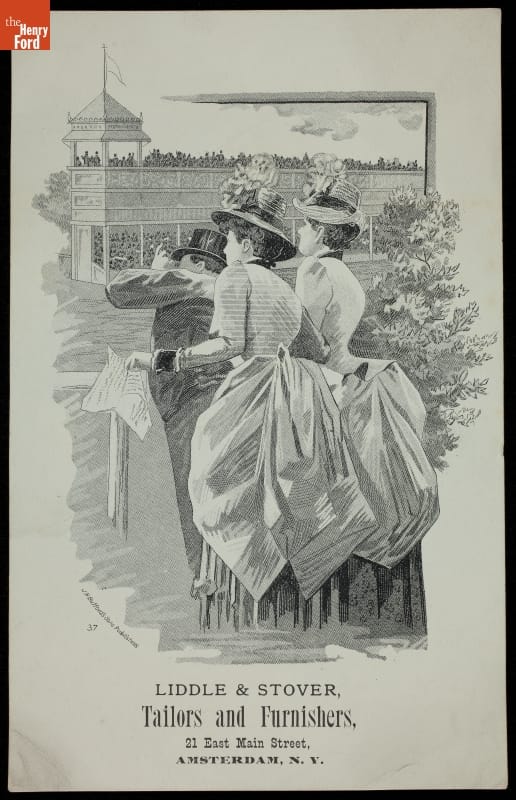
- Trade Card for Liddle & Stover Tailors, J.H. Bufford & Co., 1885 - In the last third of the nineteenth century, an unprecedented variety of consumer goods and services flooded the American market. Advertisers bombarded potential customers with trade cards. Americans enjoyed and saved the often illustrated little advertisements found in product packages or distributed by local merchants. Many survive as historical records of commercialism in the United States.
- 1885
- Collections - Artifact
Trade Card for Liddle & Stover Tailors, J.H. Bufford & Co., 1885
In the last third of the nineteenth century, an unprecedented variety of consumer goods and services flooded the American market. Advertisers bombarded potential customers with trade cards. Americans enjoyed and saved the often illustrated little advertisements found in product packages or distributed by local merchants. Many survive as historical records of commercialism in the United States.
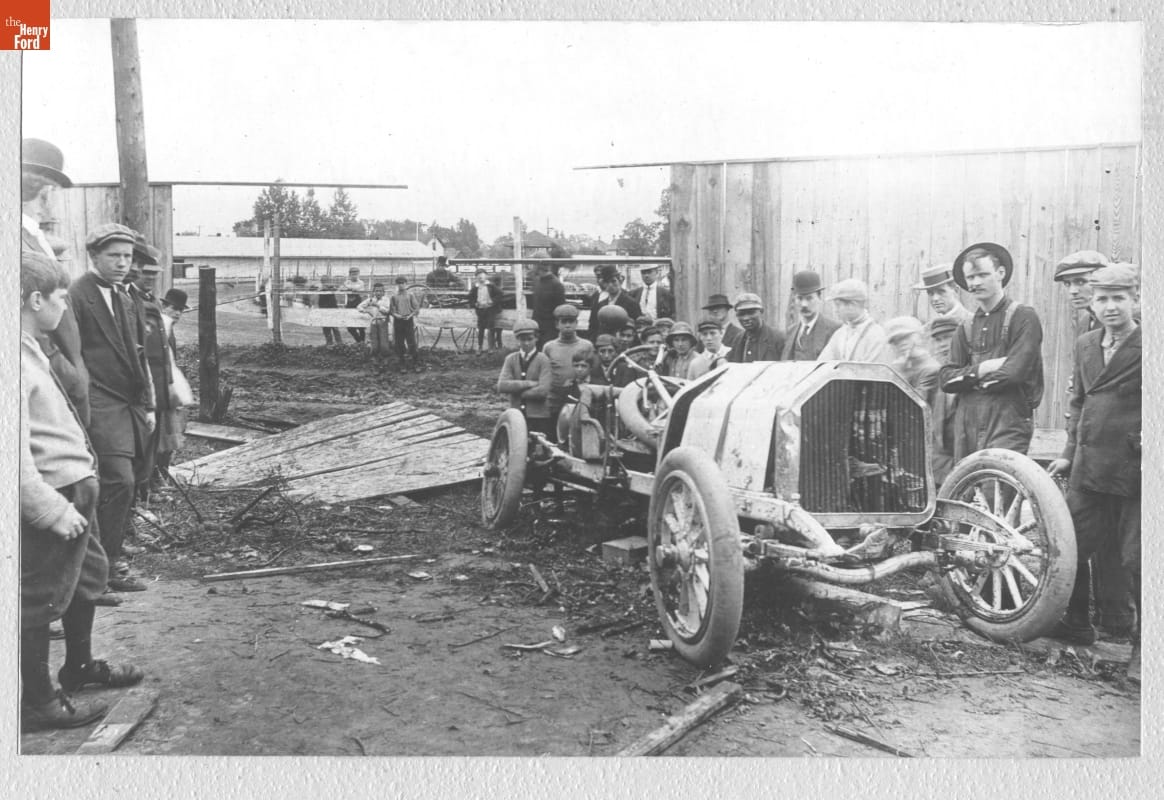
- Damaged Race Car After a Racing Accident, 1905-1915 - Automobile racing has been a dangerous sport for drivers and fans. The thrill and excitement of pushing powerful machines to their limits at unheard of speeds drew drivers to the sport and fans to the roadsides and tracks. Sometimes, things could go very wrong as in this photo showing the aftermath of a car that broke through a wooden fence. It is not known how the driver, and fans, fared but it is safe to assume that everyone had a thrill that day.
- 1905-1915
- Collections - Artifact
Damaged Race Car After a Racing Accident, 1905-1915
Automobile racing has been a dangerous sport for drivers and fans. The thrill and excitement of pushing powerful machines to their limits at unheard of speeds drew drivers to the sport and fans to the roadsides and tracks. Sometimes, things could go very wrong as in this photo showing the aftermath of a car that broke through a wooden fence. It is not known how the driver, and fans, fared but it is safe to assume that everyone had a thrill that day.
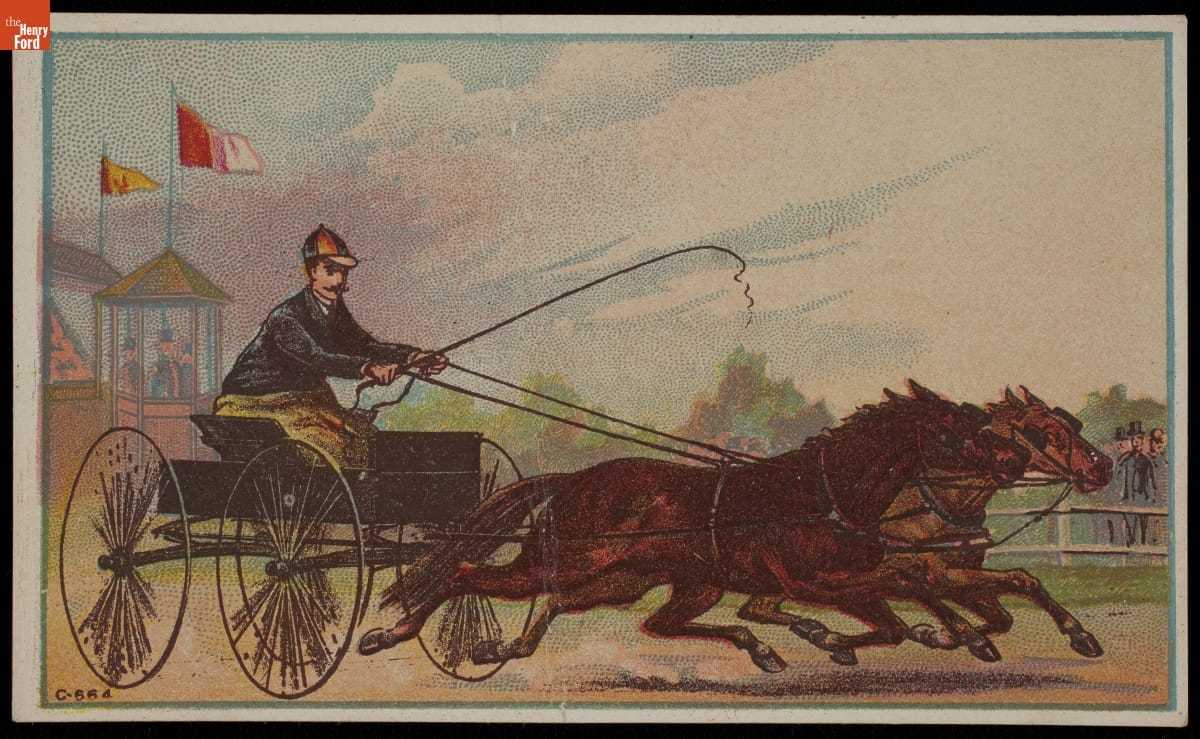
- Trade Card for Carriages and Buggies, Royal J. Ford, circa 1891 - In the last third of the nineteenth century, an unprecedented variety of consumer goods and services flooded the American market. Advertisers, armed with new methods of color printing, bombarded potential customers with trade cards. Americans enjoyed and often saved the vibrant little advertisements found in product packages or distributed by local merchants. Many survive as historical records of commercialism in the United States.
- circa 1891
- Collections - Artifact
Trade Card for Carriages and Buggies, Royal J. Ford, circa 1891
In the last third of the nineteenth century, an unprecedented variety of consumer goods and services flooded the American market. Advertisers, armed with new methods of color printing, bombarded potential customers with trade cards. Americans enjoyed and often saved the vibrant little advertisements found in product packages or distributed by local merchants. Many survive as historical records of commercialism in the United States.
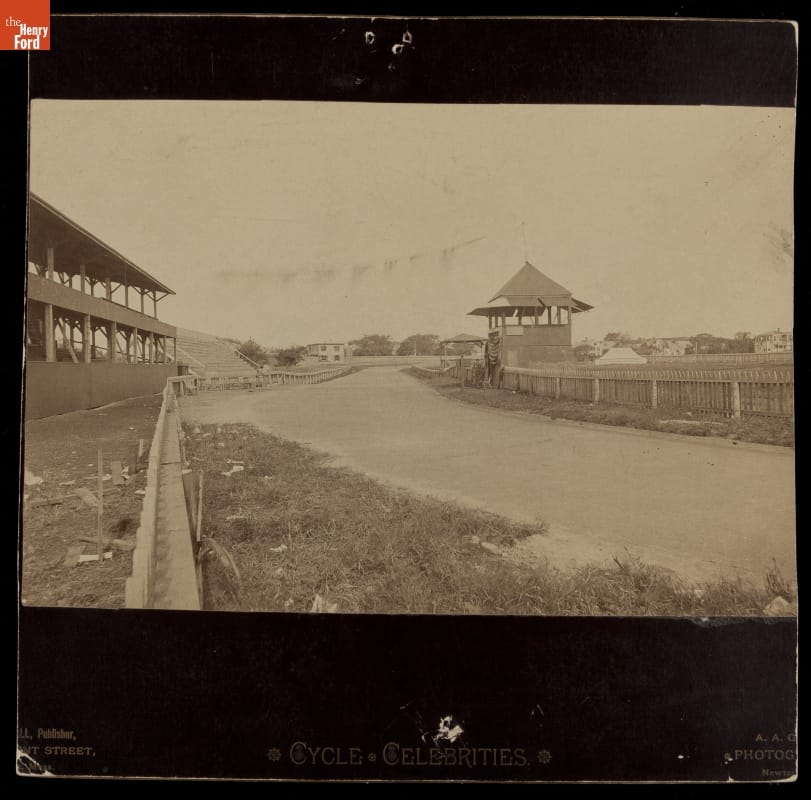
- Glendale Racetrack, Lynn, Massachusetts, 1886 - American bicycle racing flourished in the late 19th century. Cyclists raced over urban and country roads, converted horse tracks, or indoor wooden velodromes. This photograph shows the one-third-mile outdoor track in Lynn, Massachusetts, in the mid-1880s.
- 1886
- Collections - Artifact
Glendale Racetrack, Lynn, Massachusetts, 1886
American bicycle racing flourished in the late 19th century. Cyclists raced over urban and country roads, converted horse tracks, or indoor wooden velodromes. This photograph shows the one-third-mile outdoor track in Lynn, Massachusetts, in the mid-1880s.
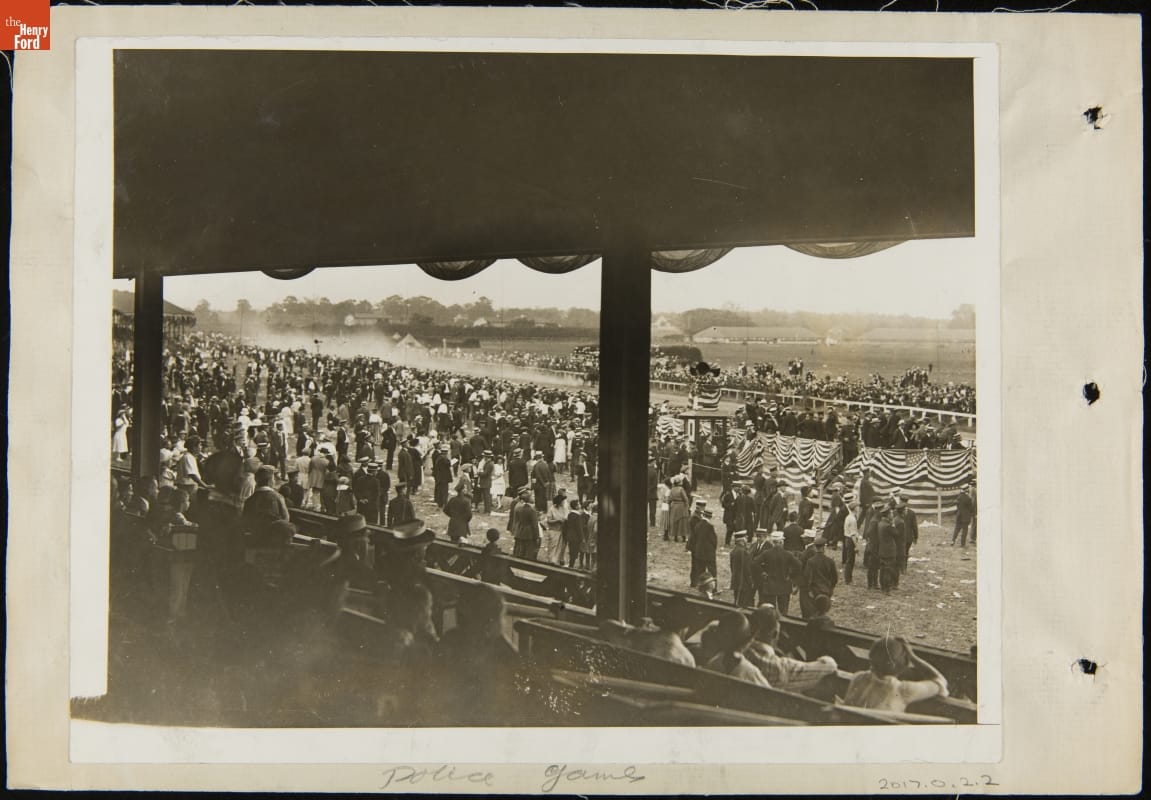
- Crowd Viewing Mounted Competitions at New York Police Field Day Games, 1920-1925 -
- 1920-1925
- Collections - Artifact
Crowd Viewing Mounted Competitions at New York Police Field Day Games, 1920-1925
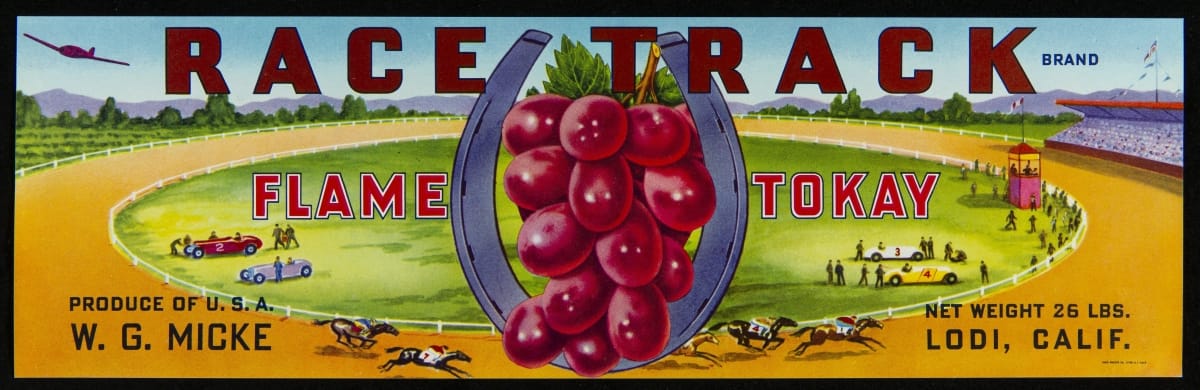
- Crate Label, "Race Track Brand Flame Tokay Grapes," 1930-1940 - In 1869, the transcontinental railroad opened eastern markets to the West Coast produce industry for the first time. As produce companies shipped crates of fruits and vegetables across the country, they needed a way to distinguish their goods from their competitors'. Colorful, eye-catching labels, like this one for Race Track Brand Flame Tokay Grapes, were created to attract grocers purchasing goods from wholesale markets.
- 1930-1940
- Collections - Artifact
Crate Label, "Race Track Brand Flame Tokay Grapes," 1930-1940
In 1869, the transcontinental railroad opened eastern markets to the West Coast produce industry for the first time. As produce companies shipped crates of fruits and vegetables across the country, they needed a way to distinguish their goods from their competitors'. Colorful, eye-catching labels, like this one for Race Track Brand Flame Tokay Grapes, were created to attract grocers purchasing goods from wholesale markets.