
Search
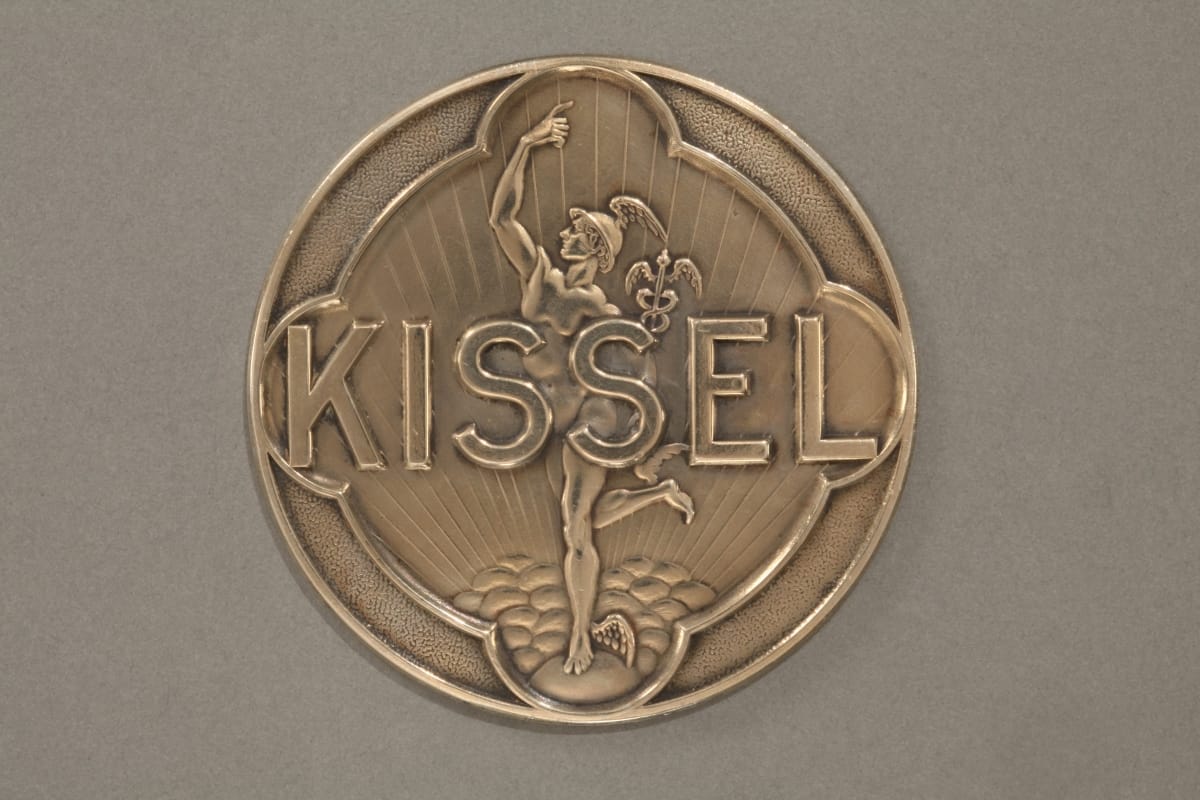
- Kissel Radiator Emblem, circa 1920 - Louis Kissel and his two sons formed Kissel Motor Car Company in Hartford, Wisconsin, in 1906. It was one of a number of businesses run by the family. Rather than assemble vehicles from purchased parts, Kissel manufactured nearly the entire car. The start of the Great Depression caused financial problems for the automobile company and car manufacturing ceased soon after.
- circa 1920
- Collections - Artifact
Kissel Radiator Emblem, circa 1920
Louis Kissel and his two sons formed Kissel Motor Car Company in Hartford, Wisconsin, in 1906. It was one of a number of businesses run by the family. Rather than assemble vehicles from purchased parts, Kissel manufactured nearly the entire car. The start of the Great Depression caused financial problems for the automobile company and car manufacturing ceased soon after.
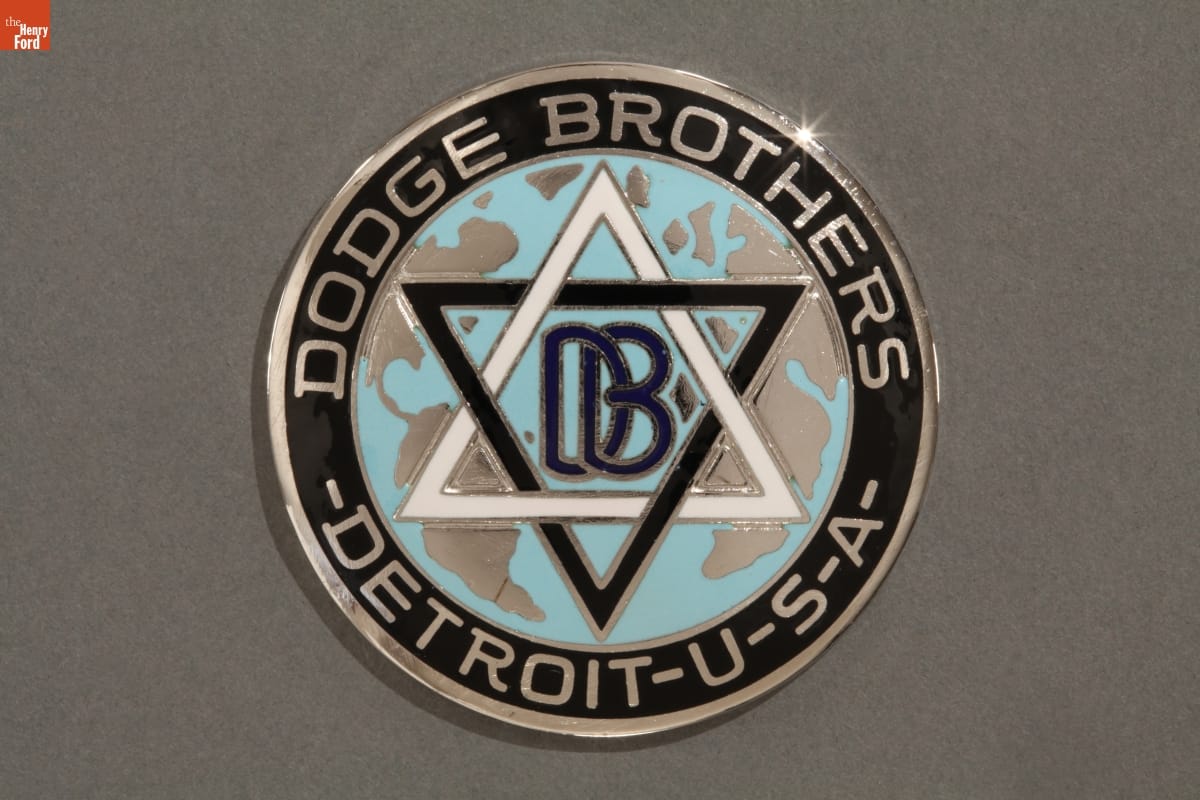
- Dodge Brothers Automobile Emblem, circa 1925 - After several years as suppliers to Ford Motor Company, brothers John and Horace Dodge formed their own automobile company in 1914. They selected a logo with two interlocking triangles to represent the brothers' close collaboration. Although their logo resembles the Jewish Star of David, John and Horace Dodge were Presbyterians. Chrysler purchased the Dodge Brothers company in 1928.
- circa 1925
- Collections - Artifact
Dodge Brothers Automobile Emblem, circa 1925
After several years as suppliers to Ford Motor Company, brothers John and Horace Dodge formed their own automobile company in 1914. They selected a logo with two interlocking triangles to represent the brothers' close collaboration. Although their logo resembles the Jewish Star of David, John and Horace Dodge were Presbyterians. Chrysler purchased the Dodge Brothers company in 1928.
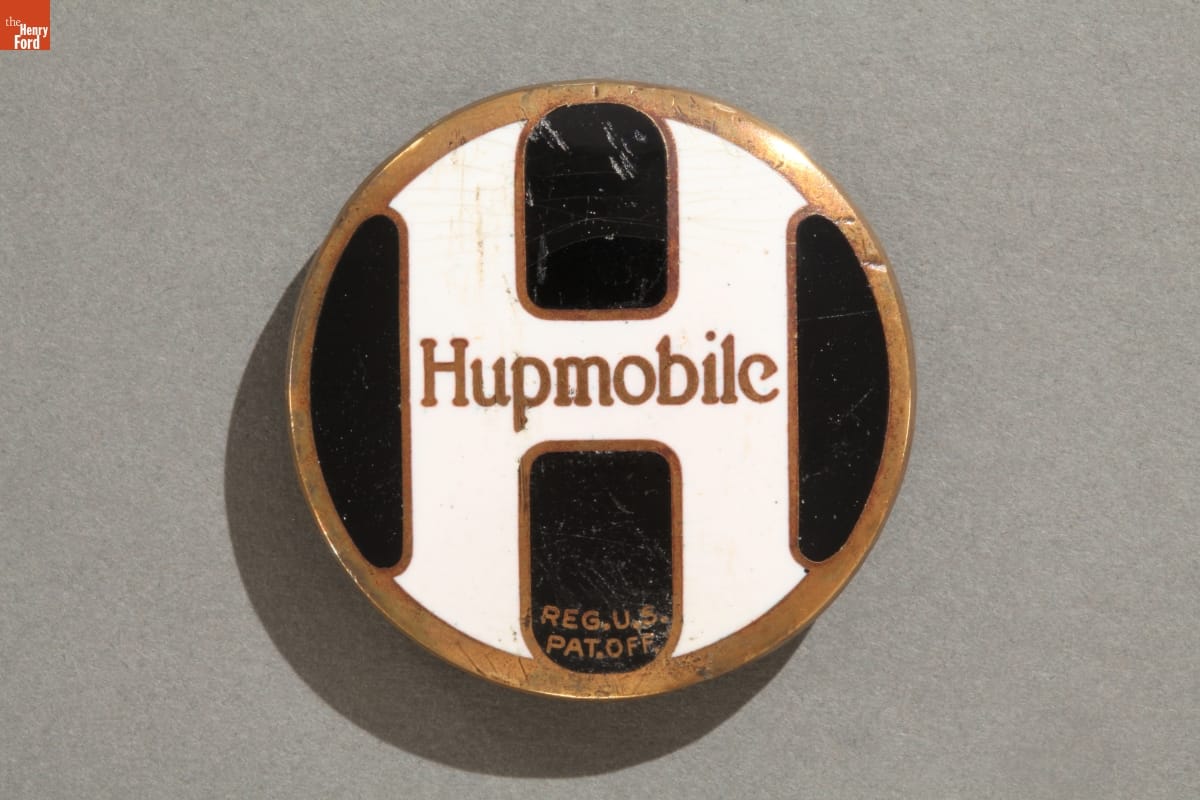
- Hupmobile Automobile Emblem, circa 1925 - Robert Hupp and his brother Louis started Hupp Motor Car Company in 1908. Robert sold his interest in 1911, but the company kept the name. Hupp produced low and medium-priced reliable cars over the next decades. During the Great Depression, the company, like many other automobile manufacturers, struggled. Production of the Hupmobile ceased in 1940.
- circa 1925
- Collections - Artifact
Hupmobile Automobile Emblem, circa 1925
Robert Hupp and his brother Louis started Hupp Motor Car Company in 1908. Robert sold his interest in 1911, but the company kept the name. Hupp produced low and medium-priced reliable cars over the next decades. During the Great Depression, the company, like many other automobile manufacturers, struggled. Production of the Hupmobile ceased in 1940.
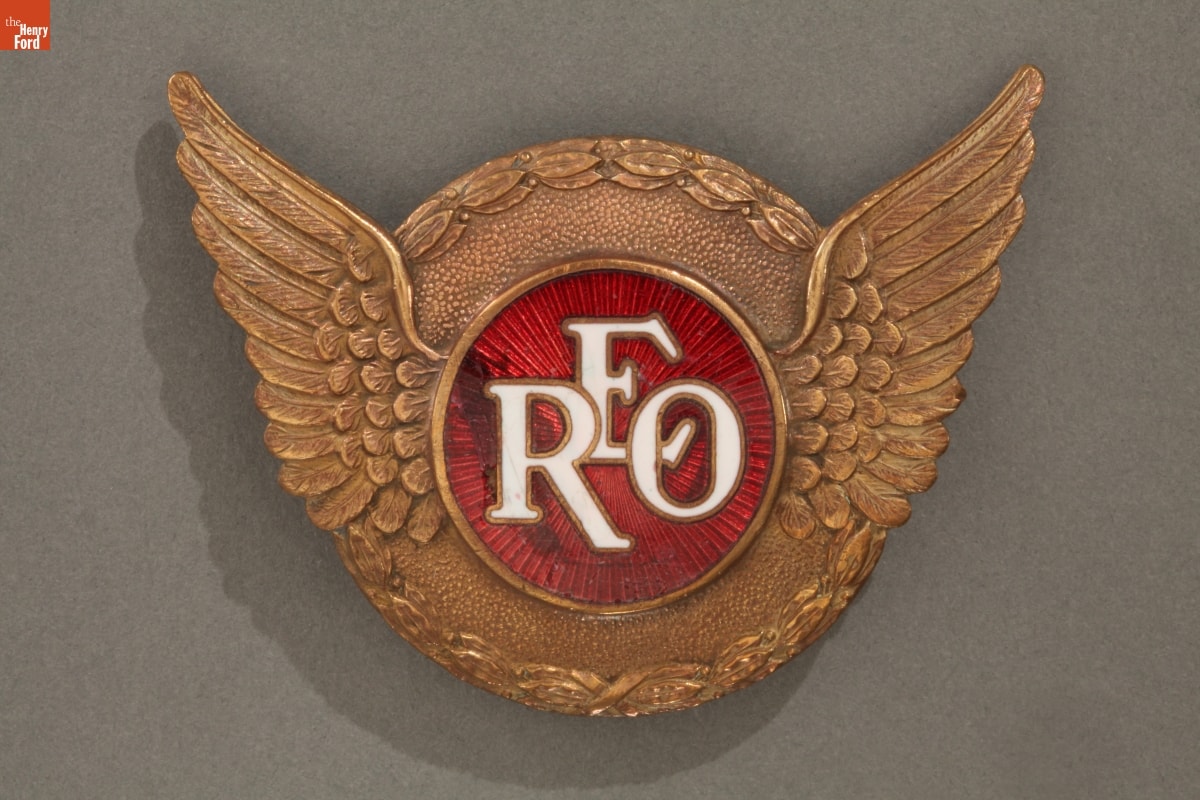
- REO Automobile Emblem, 1920-1930 - REO took its name from the initials of its founder, Ransom Eli Olds, previously founder of Oldsmobile. REO made cars and trucks that were steady sellers up through the Depression. Its last car was manufactured in 1936. The name continued in a truck division of one of its succeeding owners, White Motors. The REO brand lasted into the 1970s.
- 1920-1930
- Collections - Artifact
REO Automobile Emblem, 1920-1930
REO took its name from the initials of its founder, Ransom Eli Olds, previously founder of Oldsmobile. REO made cars and trucks that were steady sellers up through the Depression. Its last car was manufactured in 1936. The name continued in a truck division of one of its succeeding owners, White Motors. The REO brand lasted into the 1970s.
- Graham-Paige Automobile Emblem, 1930 - Truck-building brothers Joseph, Robert and Ray Graham purchased Paige-Detroit Motor Car Company in 1927 and rebranded it Graham-Paige. The brothers' new automobile, introduced in January 1928, sold more than 73,000 units in its first year. But the Great Depression devastated Graham-Paige. The company's last cars appeared in 1940, and its assets went to Kaiser-Frazer in 1947.
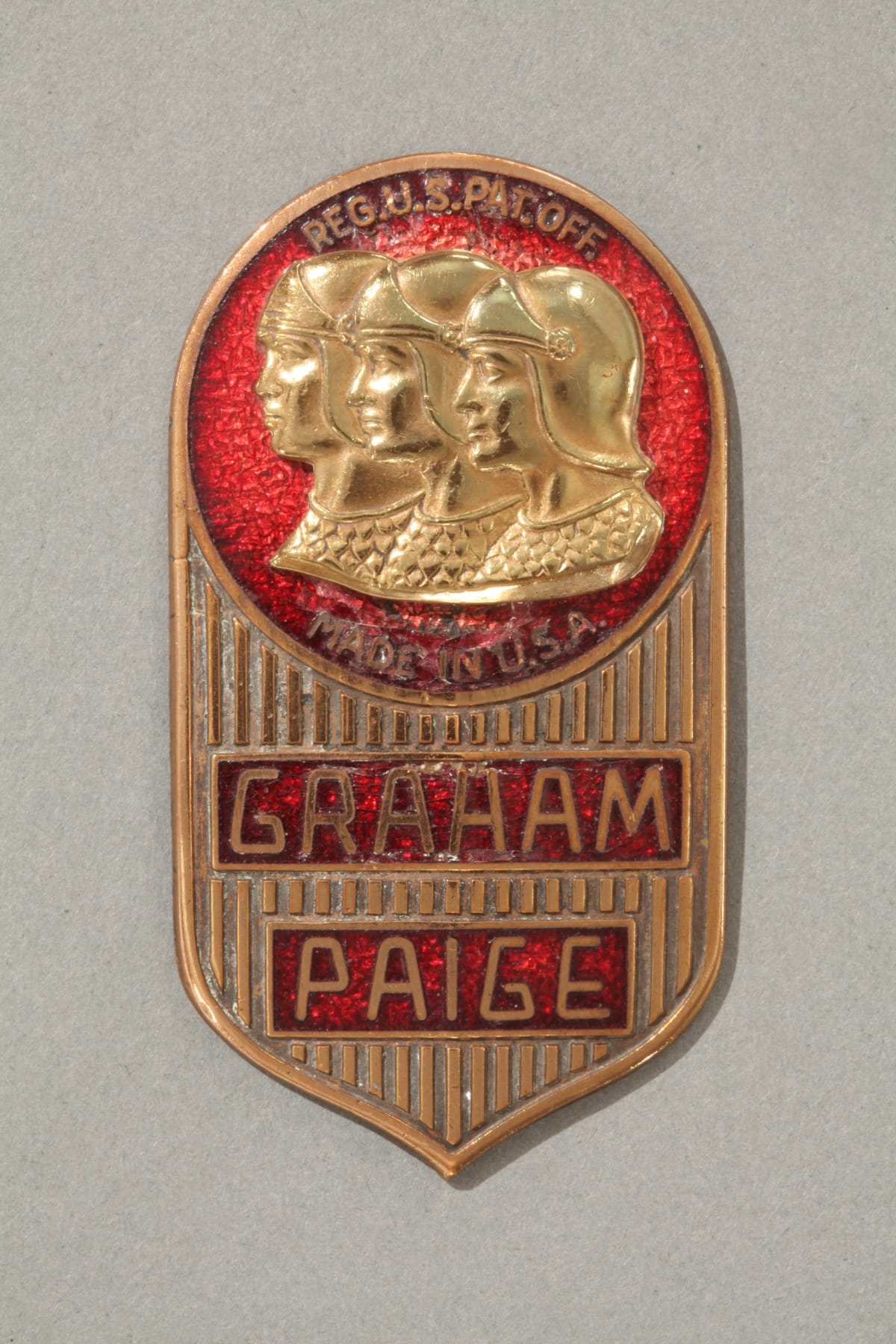
- 1930
- Collections - Artifact
Graham-Paige Automobile Emblem, 1930
Truck-building brothers Joseph, Robert and Ray Graham purchased Paige-Detroit Motor Car Company in 1927 and rebranded it Graham-Paige. The brothers' new automobile, introduced in January 1928, sold more than 73,000 units in its first year. But the Great Depression devastated Graham-Paige. The company's last cars appeared in 1940, and its assets went to Kaiser-Frazer in 1947.
- Oakland Radiator Emblem, circa 1925 - This oval emblem consists of the company name surrounded by an oak leaf wreath topped with an acorn. The inscription in the banner states that Oakland is a product of General Motors. Oakland began as an independent company in 1907, but in 1909 became part of the newly formed General Motors Corporation. The Oakland brand name lasted until 1931.
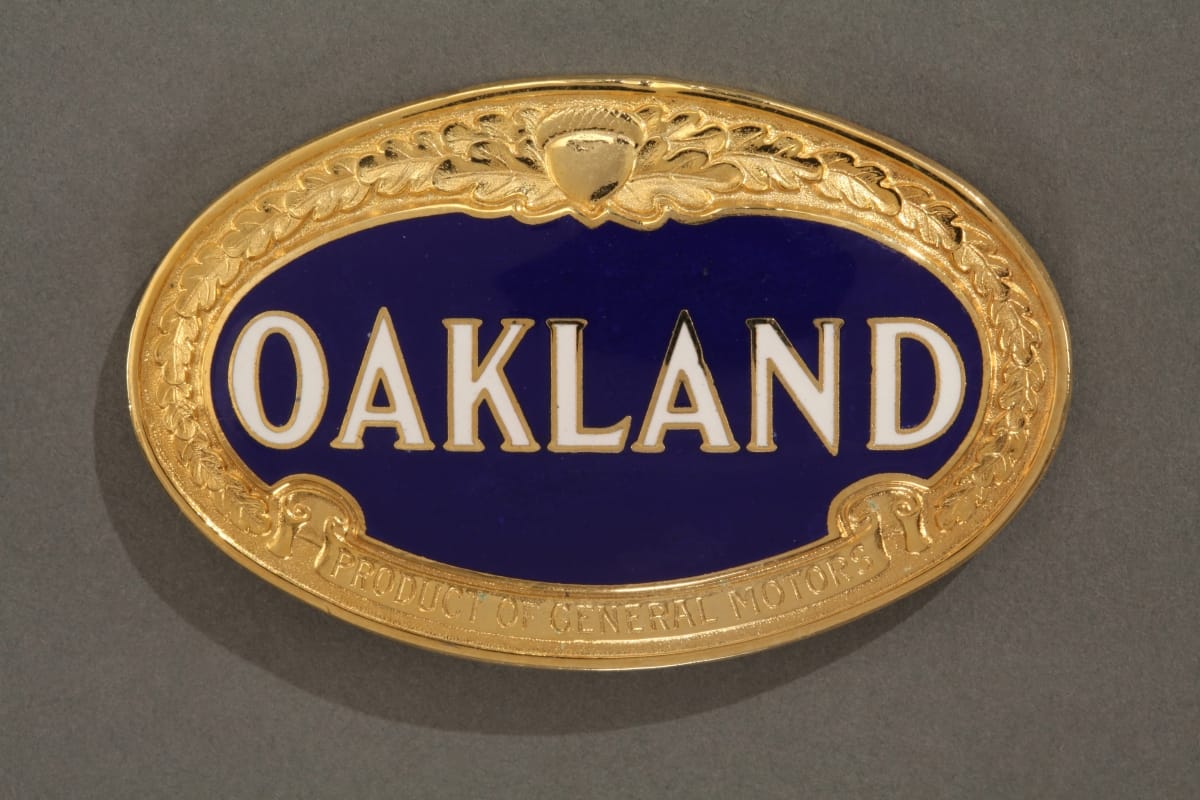
- circa 1925
- Collections - Artifact
Oakland Radiator Emblem, circa 1925
This oval emblem consists of the company name surrounded by an oak leaf wreath topped with an acorn. The inscription in the banner states that Oakland is a product of General Motors. Oakland began as an independent company in 1907, but in 1909 became part of the newly formed General Motors Corporation. The Oakland brand name lasted until 1931.
- Chandler Radiator Emblem, circa 1920 - Frederick Chandler, a native of Cleveland, Ohio, formed Chandler Motor Car Company in 1913. The car, which also bore the owner's name, was moderately priced and sold well. The company merged with another Chandler automobile company, Cleveland Automobile Company, in 1926. Two years later, Hupp Motor Car Corporation absorbed the company and the vehicle name was dropped.
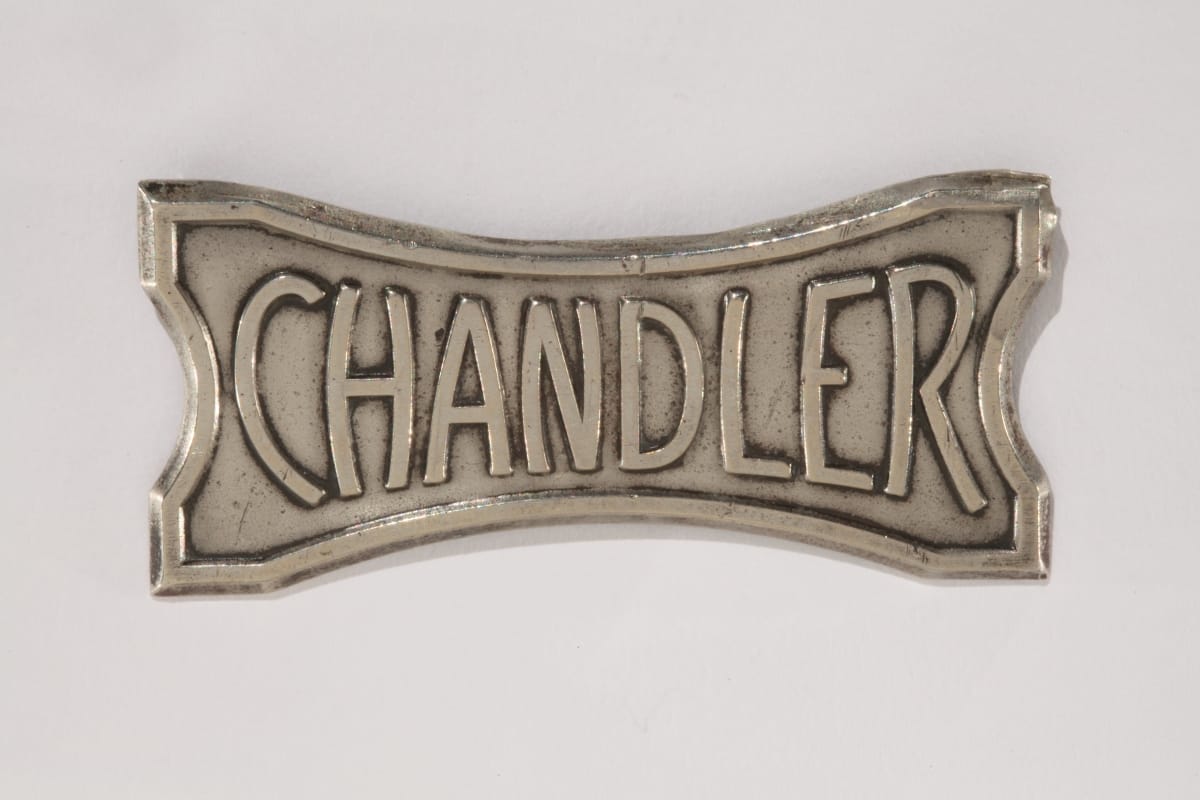
- circa 1920
- Collections - Artifact
Chandler Radiator Emblem, circa 1920
Frederick Chandler, a native of Cleveland, Ohio, formed Chandler Motor Car Company in 1913. The car, which also bore the owner's name, was moderately priced and sold well. The company merged with another Chandler automobile company, Cleveland Automobile Company, in 1926. Two years later, Hupp Motor Car Corporation absorbed the company and the vehicle name was dropped.
- Peerless Radiator Emblem, 1920-1930 - This emblem underscores the quality and luxury of Peerless vehicles. Peerless Motor Car Company, founded in 1900, manufactured quality luxury cars and, for a time, was "peerless." But during the 1920s, the company found it hard to compete with other luxury car makers. The years following the stock market crash of 1929 brought an end to the manufacturer.
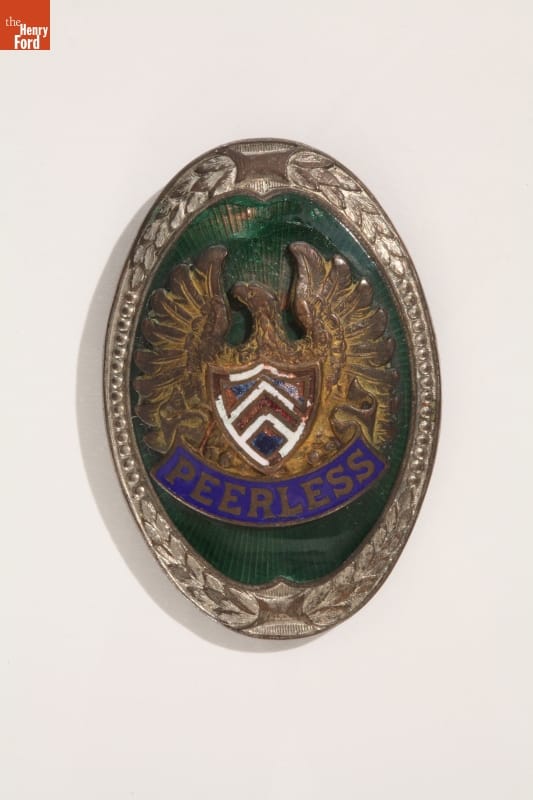
- 1920-1930
- Collections - Artifact
Peerless Radiator Emblem, 1920-1930
This emblem underscores the quality and luxury of Peerless vehicles. Peerless Motor Car Company, founded in 1900, manufactured quality luxury cars and, for a time, was "peerless." But during the 1920s, the company found it hard to compete with other luxury car makers. The years following the stock market crash of 1929 brought an end to the manufacturer.
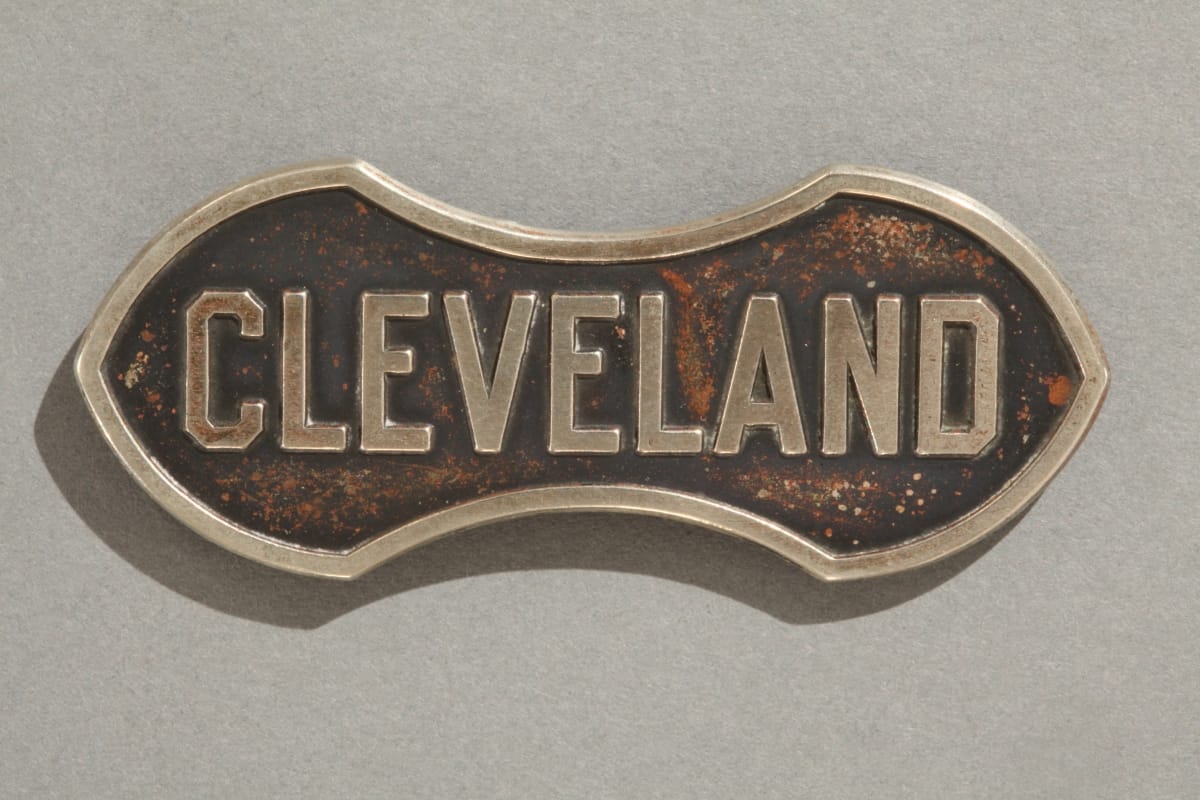
- Cleveland Automobile Emblem, 1915-1925 - Frederick Chandler, of Cleveland, Ohio, formed Chandler Motor Car Company in 1913. Six years later he established another firm, the Cleveland Automobile Company. The Cleveland cars were lower-priced vehicles compared to the Chandlers. The two companies merged in 1926 and the Cleveland vehicle name was dropped. Two years later Chandler-Cleveland was sold to Hupp Motor Car Corporation of Detroit.
- 1915-1925
- Collections - Artifact
Cleveland Automobile Emblem, 1915-1925
Frederick Chandler, of Cleveland, Ohio, formed Chandler Motor Car Company in 1913. Six years later he established another firm, the Cleveland Automobile Company. The Cleveland cars were lower-priced vehicles compared to the Chandlers. The two companies merged in 1926 and the Cleveland vehicle name was dropped. Two years later Chandler-Cleveland was sold to Hupp Motor Car Corporation of Detroit.
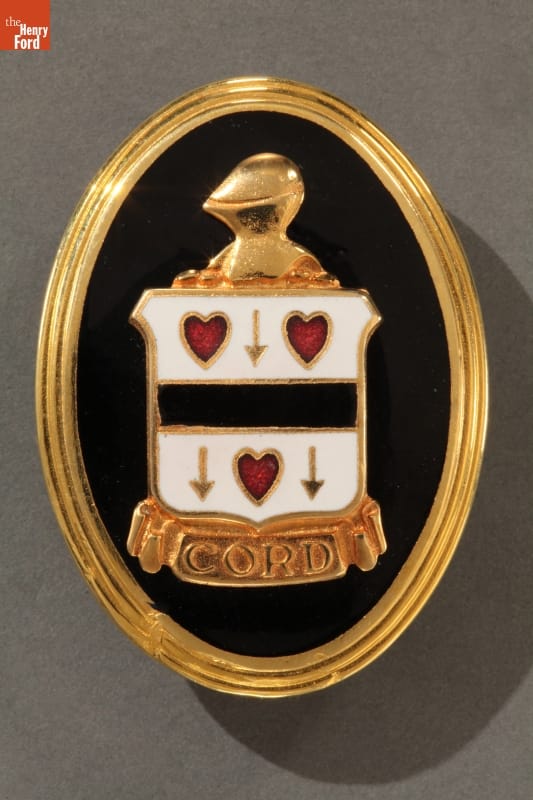
- Cord Automobile Emblem, 1937 - Errett Lobban Cord became general manager of the Auburn Automobile Company in 1924. He hired imaginative designers, purchased Duesenberg, and began a line of front-wheel-drive Cord automobiles named for himself. Though stylish and well engineered, Cord's cars were expensive. The company did not survive the Great Depression. Cord used this family crest logo -- invented by an advertising firm to create prestige.
- 1937
- Collections - Artifact
Cord Automobile Emblem, 1937
Errett Lobban Cord became general manager of the Auburn Automobile Company in 1924. He hired imaginative designers, purchased Duesenberg, and began a line of front-wheel-drive Cord automobiles named for himself. Though stylish and well engineered, Cord's cars were expensive. The company did not survive the Great Depression. Cord used this family crest logo -- invented by an advertising firm to create prestige.