
Search
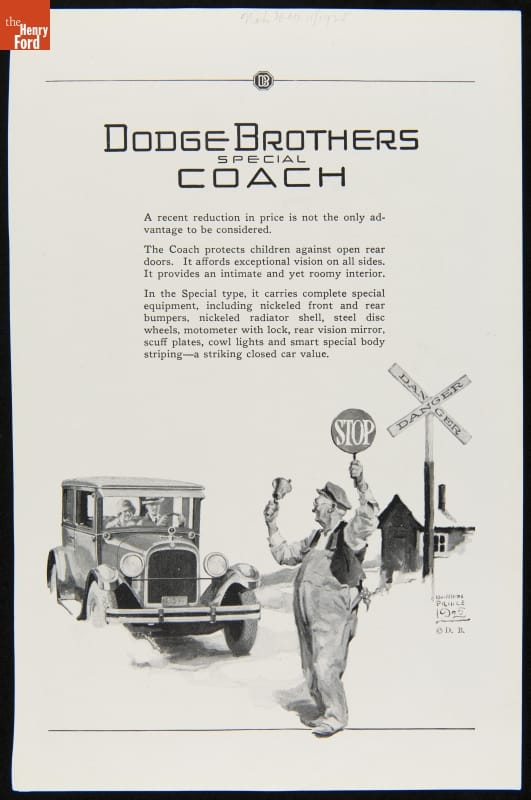
- 1926 Dodge Brothers Advertisement, "Dodge Brothers Special Coach" - Dodge Brothers introduced its all-steel auto bodies -- the industry's first -- for 1923. This 1926 advertisement promotes the company's two-door Special Coach. Dodge Brothers' upmarket Special line included nickeled bumpers and radiators, steel disc wheels, and a motometer radiator cap, among other features. The Special Coach started at $1,135.
- November 01, 1925
- Collections - Artifact
1926 Dodge Brothers Advertisement, "Dodge Brothers Special Coach"
Dodge Brothers introduced its all-steel auto bodies -- the industry's first -- for 1923. This 1926 advertisement promotes the company's two-door Special Coach. Dodge Brothers' upmarket Special line included nickeled bumpers and radiators, steel disc wheels, and a motometer radiator cap, among other features. The Special Coach started at $1,135.
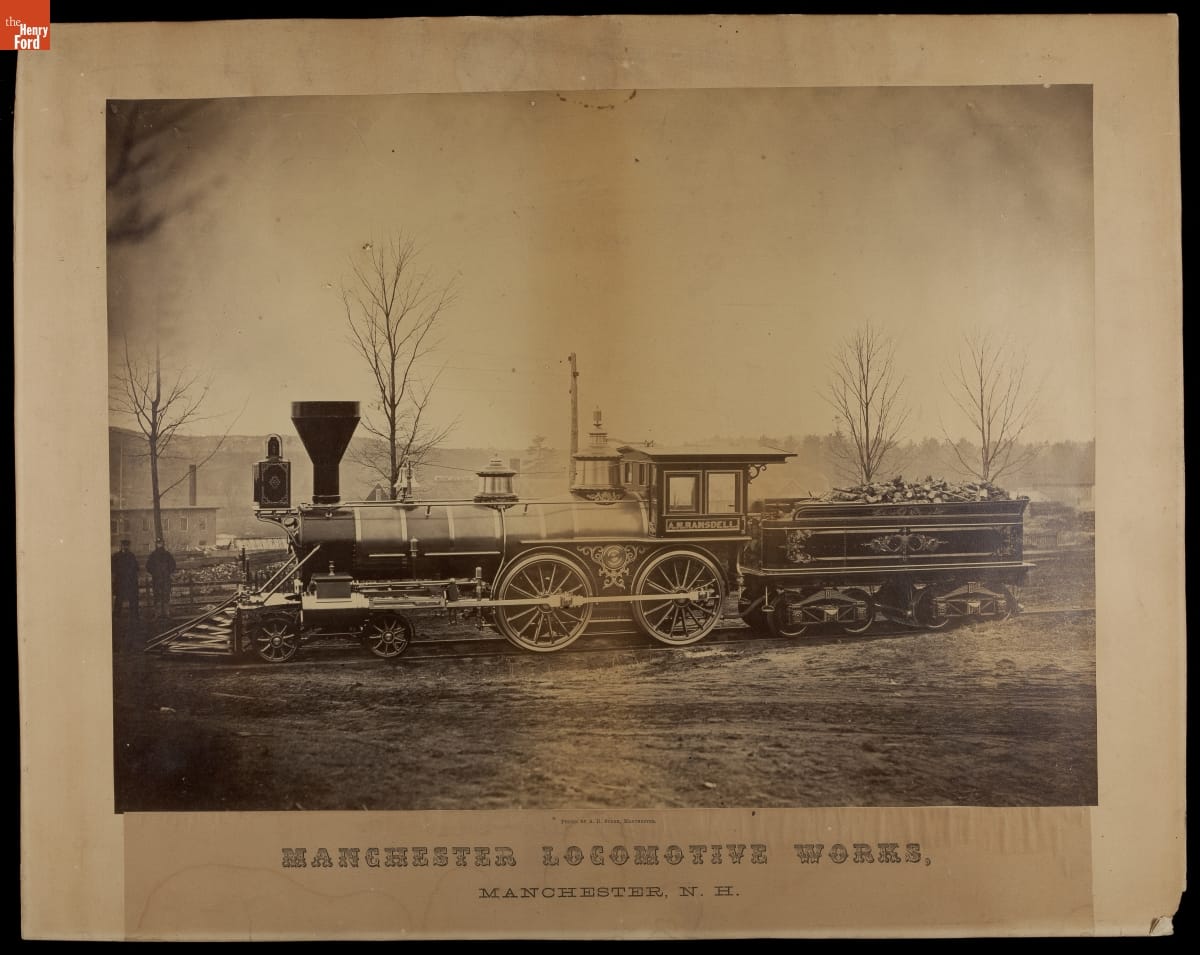
- Manchester Locomotive Works, Manchester, New Hampshire, circa 1860 - The 4-4-0 American-type locomotive <EM>A.M. Ramsdell</EM> was photographed fresh from the shops of the Manchester Locomotive Works. Lavish decorations were typical on mid-1800s locomotives. Manufacturers and operators took pride in their engines as symbols of industry and progress. The Manchester Locomotive Works merged into the American Locomotive Company in 1901.
- circa 1860
- Collections - Artifact
Manchester Locomotive Works, Manchester, New Hampshire, circa 1860
The 4-4-0 American-type locomotive A.M. Ramsdell was photographed fresh from the shops of the Manchester Locomotive Works. Lavish decorations were typical on mid-1800s locomotives. Manufacturers and operators took pride in their engines as symbols of industry and progress. The Manchester Locomotive Works merged into the American Locomotive Company in 1901.
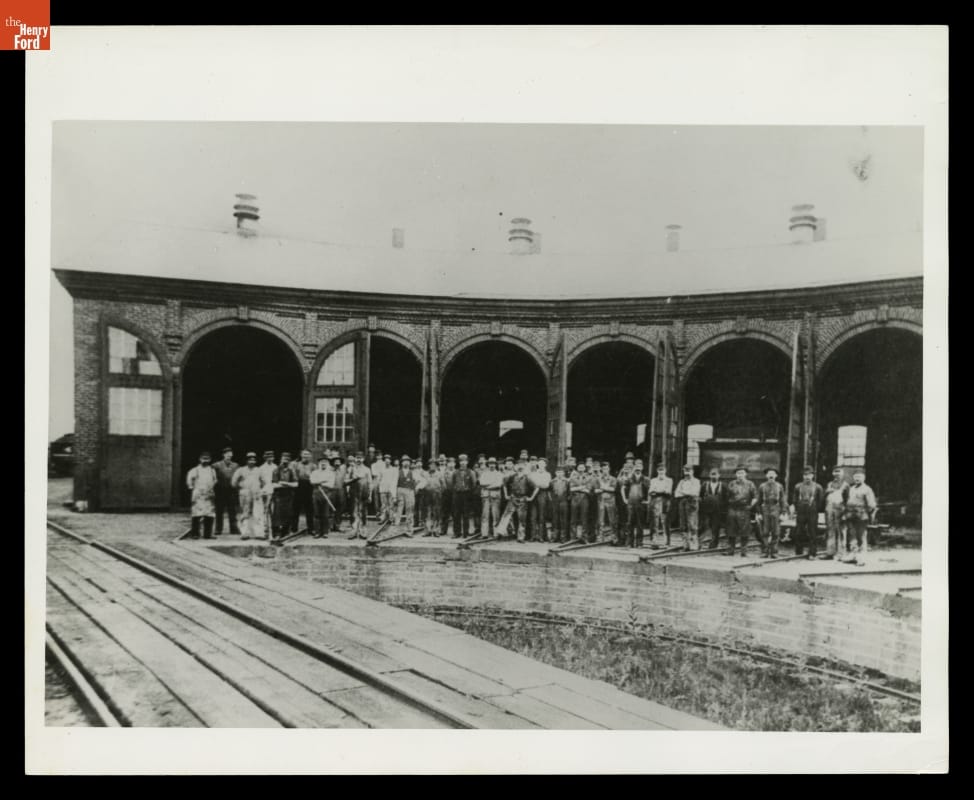
- Detroit Toledo & Milwaukee Roundhouse, Original Site, Marshall, Michigan, 1890-1900 - This photograph shows the Detroit, Toledo & Milwaukee Roundhouse in its original location in Marshall, Michigan. The roundhouse's crew is posed in front of the building. Steam locomotives required constant maintenance from an army of skilled and unskilled workers, and the roundhouse is where that work took place.
- 1890-1900
- Collections - Artifact
Detroit Toledo & Milwaukee Roundhouse, Original Site, Marshall, Michigan, 1890-1900
This photograph shows the Detroit, Toledo & Milwaukee Roundhouse in its original location in Marshall, Michigan. The roundhouse's crew is posed in front of the building. Steam locomotives required constant maintenance from an army of skilled and unskilled workers, and the roundhouse is where that work took place.
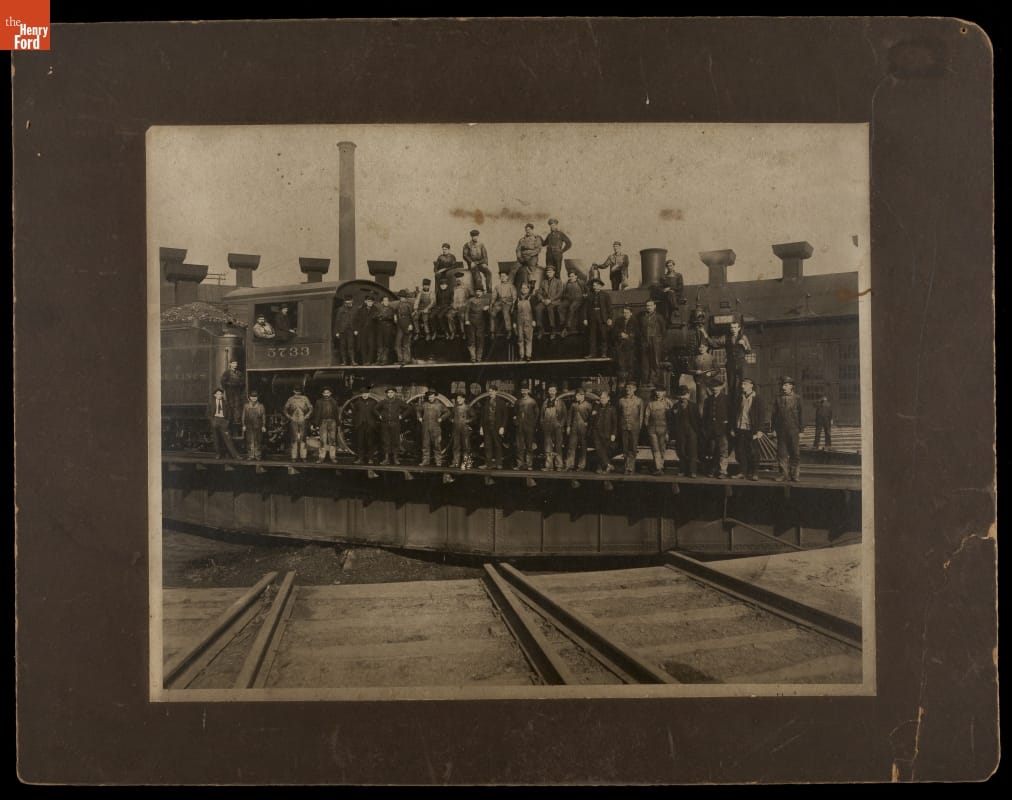
- Railroad Workers Standing with Steam Locomotive on Turntable, circa 1900 - Workers posed with a 2-8-0 Consolidation-type locomotive sitting on a turntable. The locomotive, numbered 5733, most likely belonged to the New York Central Lines. The men probably worked at the roundhouse in back, servicing and maintaining this locomotive and others like it. Some of the men wore suits and ties, suggesting that they were supervisors or administrators.
- circa 1900
- Collections - Artifact
Railroad Workers Standing with Steam Locomotive on Turntable, circa 1900
Workers posed with a 2-8-0 Consolidation-type locomotive sitting on a turntable. The locomotive, numbered 5733, most likely belonged to the New York Central Lines. The men probably worked at the roundhouse in back, servicing and maintaining this locomotive and others like it. Some of the men wore suits and ties, suggesting that they were supervisors or administrators.
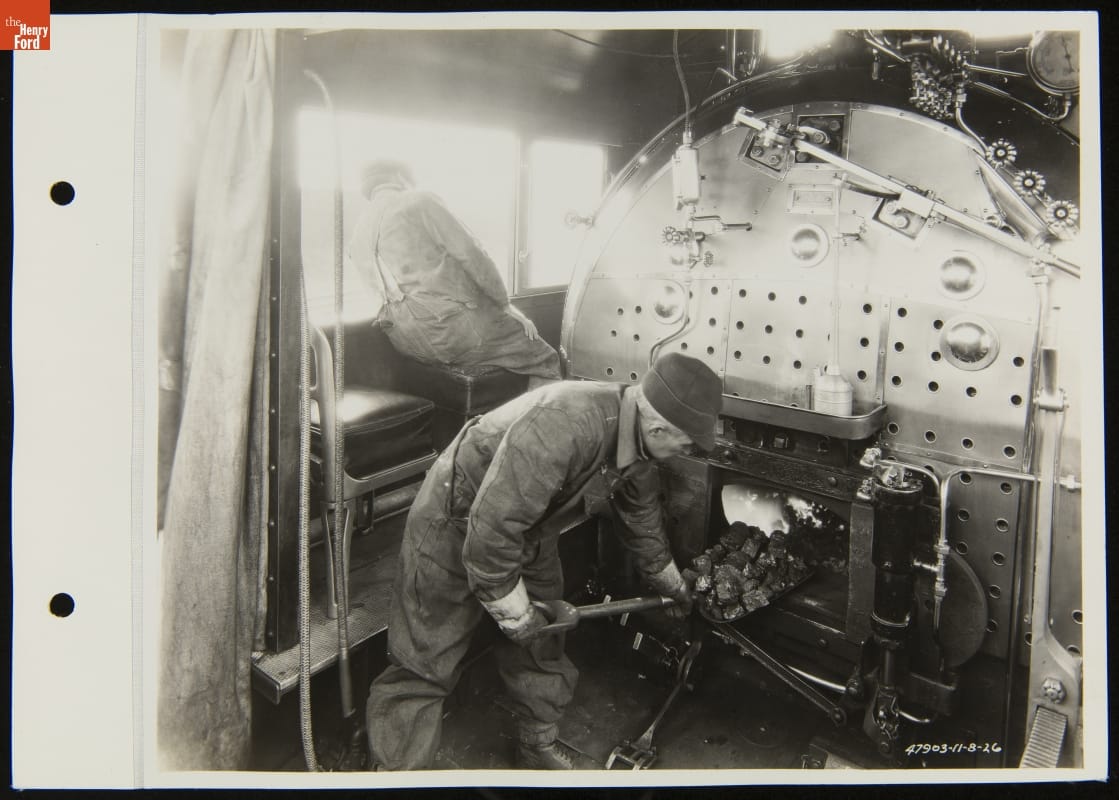
- Railroad Fireman Shoveling Coal inside Steam Locomotive, Detroit, Toledo & Ironton Railroad, November 1926 - The fireman tended the fire on a steam locomotive. It took skill and practice. Shovel too little coal and there wasn't enough heat to produce the necessary steam. Shovel too much and you wasted fuel and money. Adoption of the mechanical stoker, which fed coal into the firebox with a screw conveyor, eased the fireman's job after World War I.
- November 08, 1926
- Collections - Artifact
Railroad Fireman Shoveling Coal inside Steam Locomotive, Detroit, Toledo & Ironton Railroad, November 1926
The fireman tended the fire on a steam locomotive. It took skill and practice. Shovel too little coal and there wasn't enough heat to produce the necessary steam. Shovel too much and you wasted fuel and money. Adoption of the mechanical stoker, which fed coal into the firebox with a screw conveyor, eased the fireman's job after World War I.
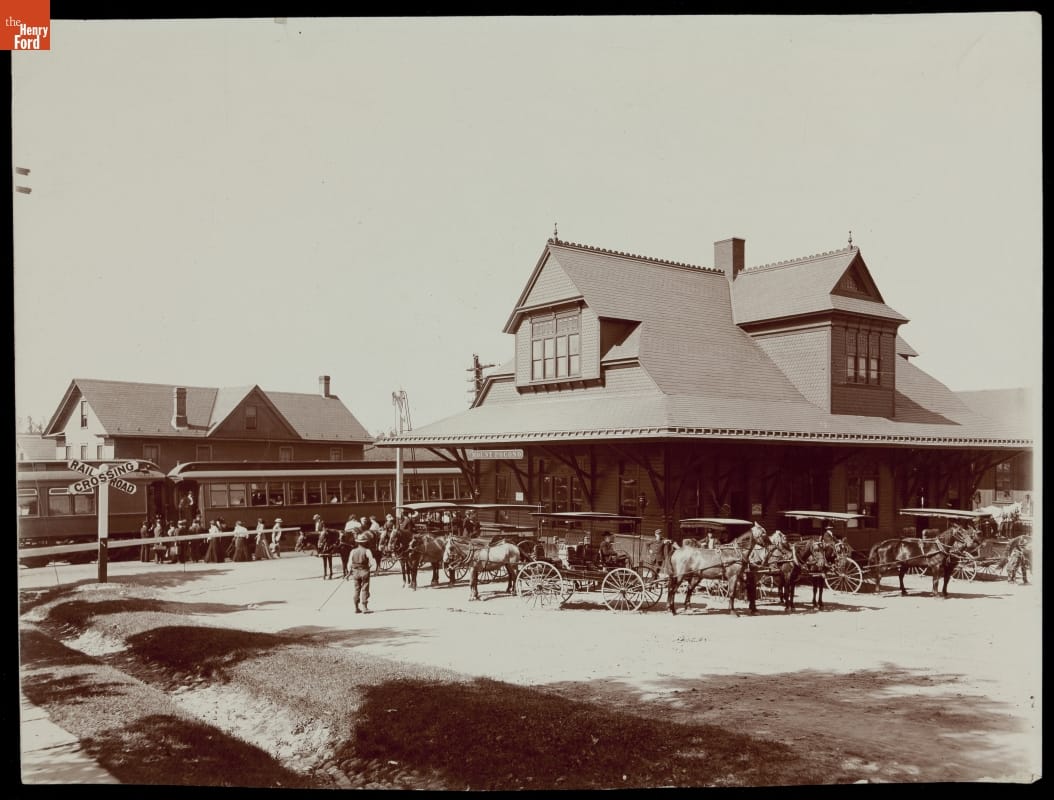
- "Lackawanna Railway Station, Mt. Pocono, Pennsylvania," circa 1905 - The arrival of the Delaware, Lackawanna and Western Railroad transformed the Pocono Mountains from a secluded wilderness into a scenic vacation destination. Once New Yorkers and Philadelphians found they could easily make the trip there in about two hours, Mount Pocono became the site of numerous boarding houses, hotels, and resorts. This train station was constructed in 1886.
- circa 1905
- Collections - Artifact
"Lackawanna Railway Station, Mt. Pocono, Pennsylvania," circa 1905
The arrival of the Delaware, Lackawanna and Western Railroad transformed the Pocono Mountains from a secluded wilderness into a scenic vacation destination. Once New Yorkers and Philadelphians found they could easily make the trip there in about two hours, Mount Pocono became the site of numerous boarding houses, hotels, and resorts. This train station was constructed in 1886.
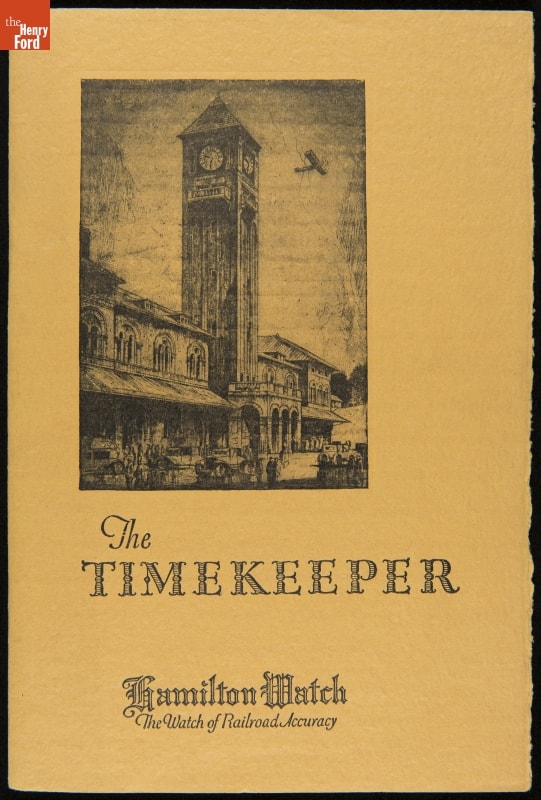
- Catalog for Hamilton Watch Company, "Hamilton Watch The Watch of Railroad Accuracy," 1928 -
- 1906
- Collections - Artifact
Catalog for Hamilton Watch Company, "Hamilton Watch The Watch of Railroad Accuracy," 1928
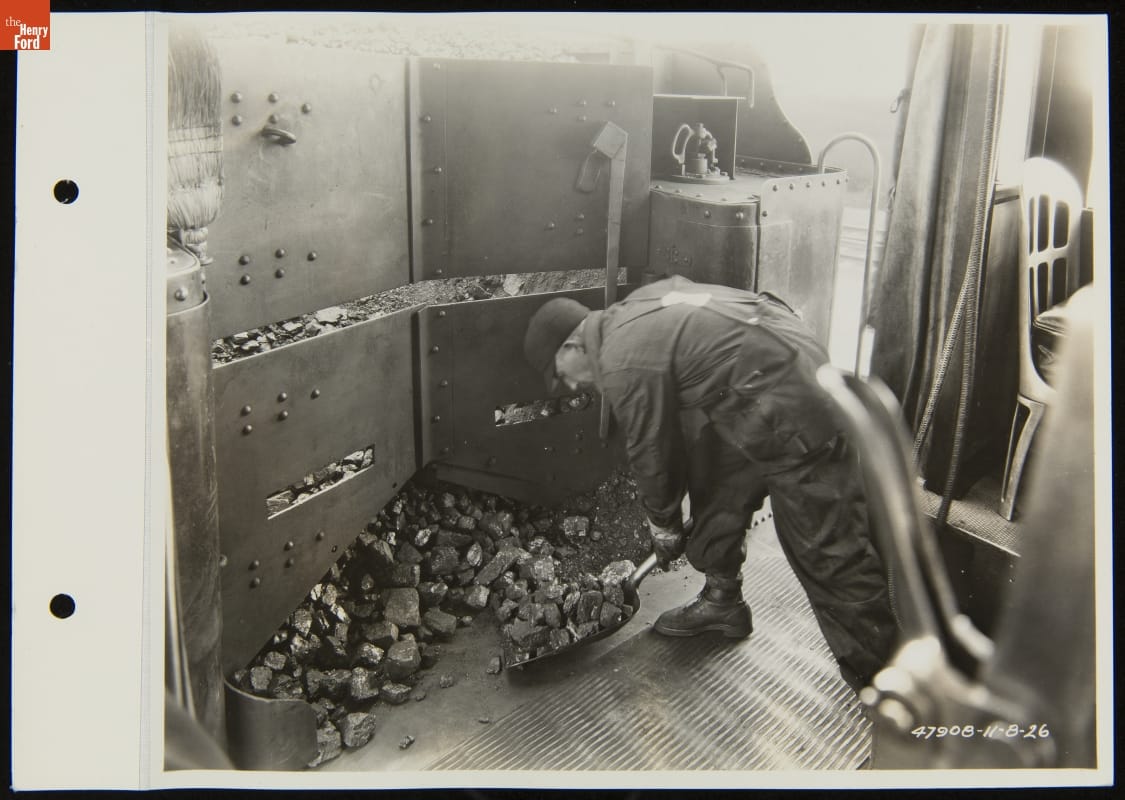
- Railroad Fireman Shoveling Coal inside Steam Locomotive, Detroit, Toledo & Ironton Railroad, November 1926 - The fireman tended the fire on a steam locomotive. It took skill and practice. Shovel too little coal and there wasn't enough heat to produce the necessary steam. Shovel too much and you wasted fuel and money. Adoption of the mechanical stoker, which fed coal into the firebox with a screw conveyor, eased the fireman's job after World War I.
- November 08, 1926
- Collections - Artifact
Railroad Fireman Shoveling Coal inside Steam Locomotive, Detroit, Toledo & Ironton Railroad, November 1926
The fireman tended the fire on a steam locomotive. It took skill and practice. Shovel too little coal and there wasn't enough heat to produce the necessary steam. Shovel too much and you wasted fuel and money. Adoption of the mechanical stoker, which fed coal into the firebox with a screw conveyor, eased the fireman's job after World War I.
- Portrait of a Railroad Employee, circa 1885 -
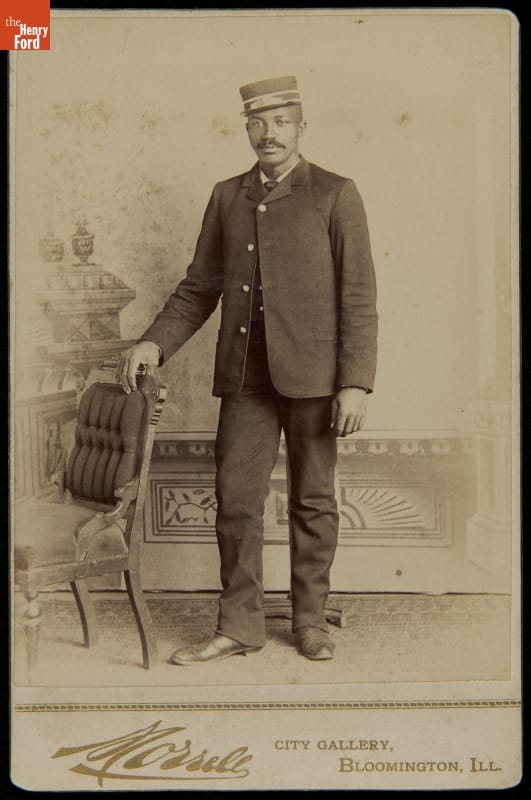
- circa 1885
- Collections - Artifact
Portrait of a Railroad Employee, circa 1885