
Search
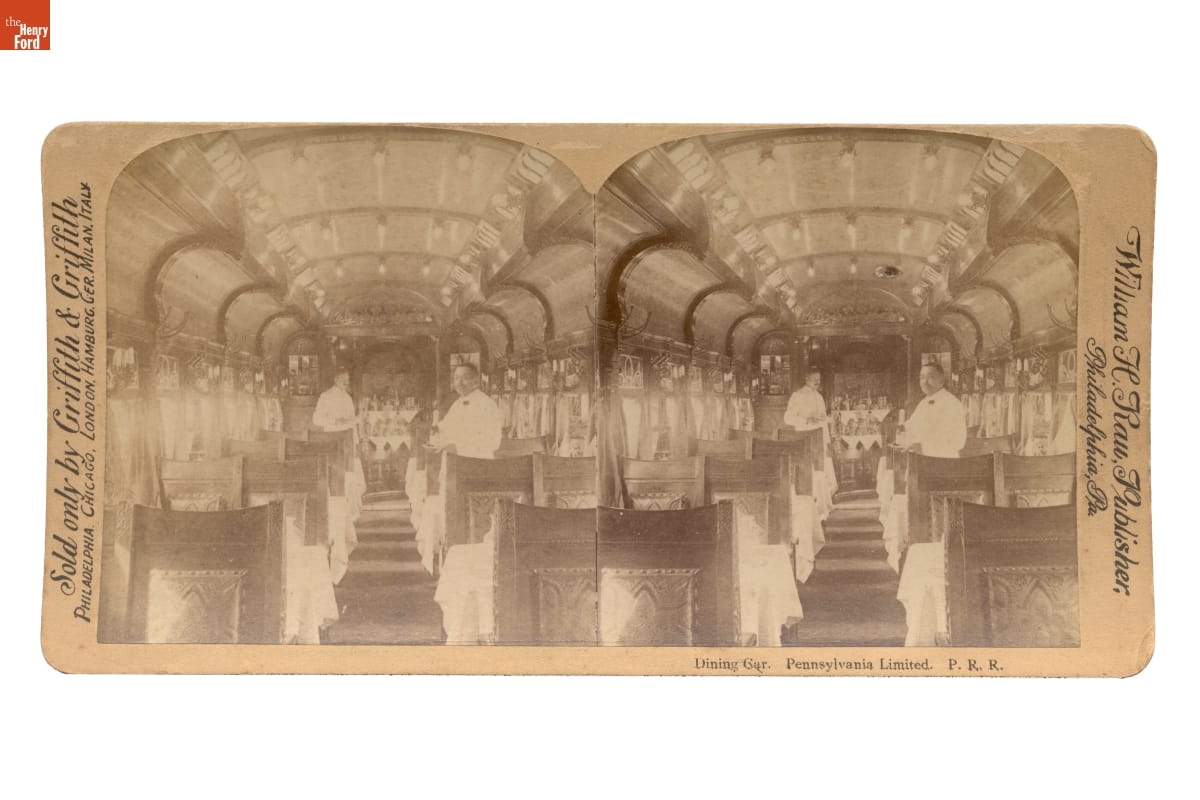
- Dining Car, Pennsylvania Limited, Pennsylvania Railroad, circa 1900 - Railroads took pride in their dining cars. They were expensive to operate, but quality food and service helped a railroad distinguish itself from competitors. For African Americans, working on a railroad dining car was one of the few avenues available to enter the Black middle class in the 19th and early 20th centuries.
- circa 1900
- Collections - Artifact
Dining Car, Pennsylvania Limited, Pennsylvania Railroad, circa 1900
Railroads took pride in their dining cars. They were expensive to operate, but quality food and service helped a railroad distinguish itself from competitors. For African Americans, working on a railroad dining car was one of the few avenues available to enter the Black middle class in the 19th and early 20th centuries.
- Henry Ford's Private Railroad Car "Fair Lane," 1921 - By 1920, Henry and Clara Ford found it increasingly difficult to travel with any degree of privacy. They purchased a private railcar and named it <EM>Fair Lane</EM>. The car had four private rooms, an observation lounge, a dining room, and a fully equipped kitchen. It could accommodate eight passengers. The couple made over 400 trips using <EM>Fair Lane</EM> before selling the passenger car in 1942.

- June 23, 1921
- Collections - Artifact
Henry Ford's Private Railroad Car "Fair Lane," 1921
By 1920, Henry and Clara Ford found it increasingly difficult to travel with any degree of privacy. They purchased a private railcar and named it Fair Lane. The car had four private rooms, an observation lounge, a dining room, and a fully equipped kitchen. It could accommodate eight passengers. The couple made over 400 trips using Fair Lane before selling the passenger car in 1942.
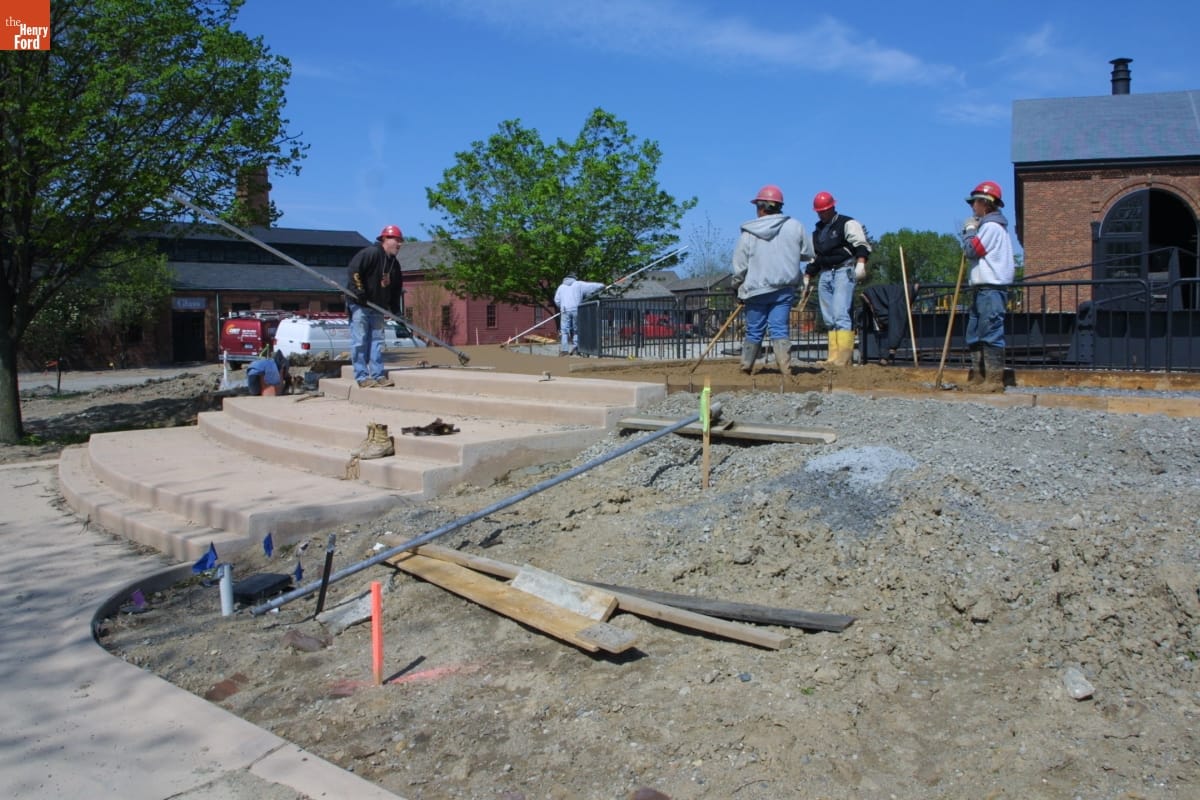
- Railroad Turntable during the Greenfield Village Restoration Project, May 2003 - By 2000, Greenfield Village began showing its age. Buildings and crumbling infrastructure desperately needed repair. Museum planners envisioned a revitalized village. They created themed "Historic Districts" by relocating and refurbishing the historic structures. Workers repaved streets and upgraded water, sewer, electric, and gas lines. In June 2003, nine months after restoration began, visitors passed through a new entrance into a reborn Greenfield Village.
- May 01, 2003
- Collections - Artifact
Railroad Turntable during the Greenfield Village Restoration Project, May 2003
By 2000, Greenfield Village began showing its age. Buildings and crumbling infrastructure desperately needed repair. Museum planners envisioned a revitalized village. They created themed "Historic Districts" by relocating and refurbishing the historic structures. Workers repaved streets and upgraded water, sewer, electric, and gas lines. In June 2003, nine months after restoration began, visitors passed through a new entrance into a reborn Greenfield Village.
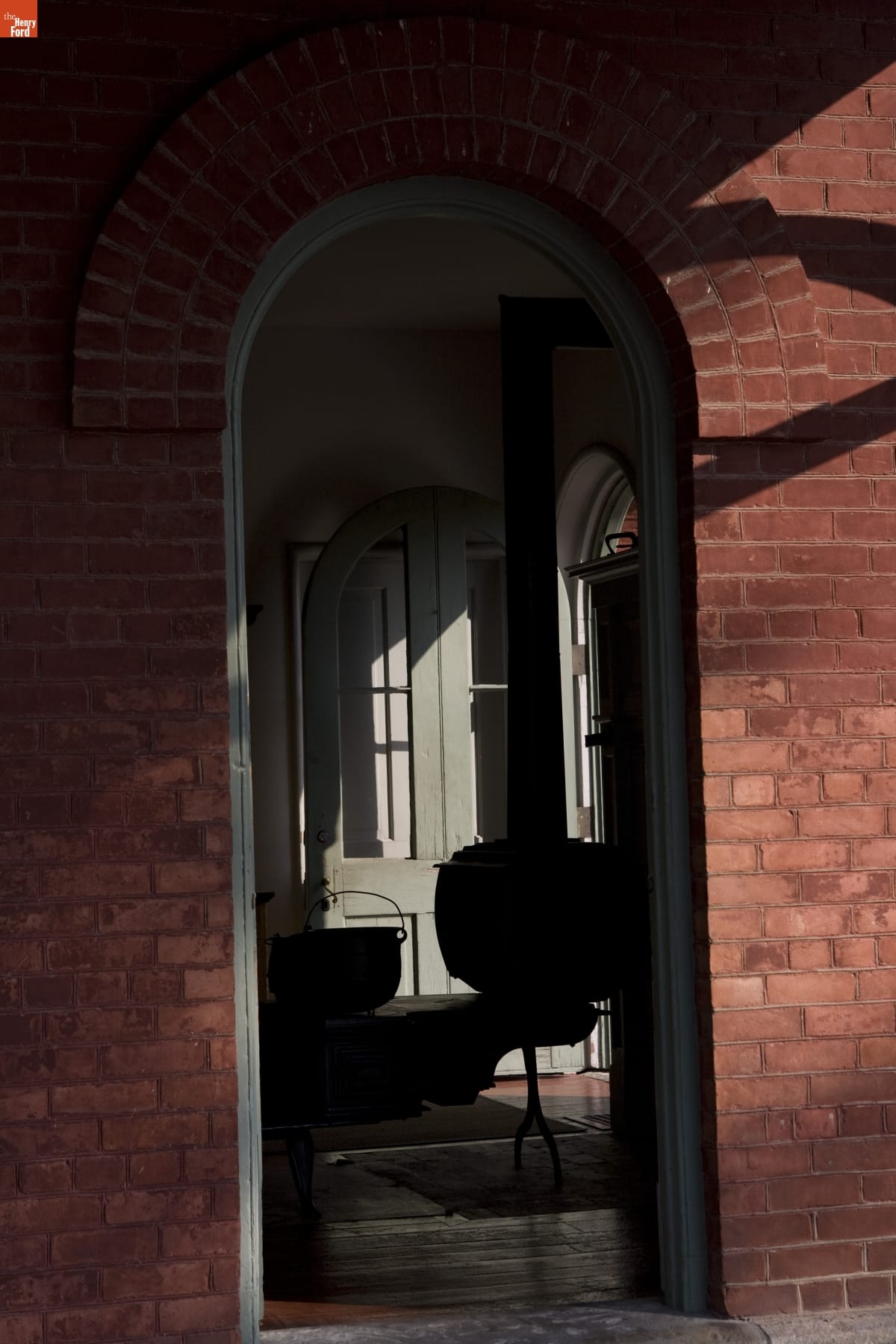
- Smiths Creek Depot in Greenfield Village, September 2007 - Henry Ford purchased Smiths Creek Depot from the Grand Trunk Western Railway in 1929. Thomas Edison passed the building often while working as a railroad newsboy. Originally located about nine miles southwest of Port Huron, Michigan, the depot was moved to Ford's museum complex in Dearborn, Michigan. This photo shows Smiths Creek Depot at Greenfield Village in 2007.
- September 01, 2007
- Collections - Artifact
Smiths Creek Depot in Greenfield Village, September 2007
Henry Ford purchased Smiths Creek Depot from the Grand Trunk Western Railway in 1929. Thomas Edison passed the building often while working as a railroad newsboy. Originally located about nine miles southwest of Port Huron, Michigan, the depot was moved to Ford's museum complex in Dearborn, Michigan. This photo shows Smiths Creek Depot at Greenfield Village in 2007.
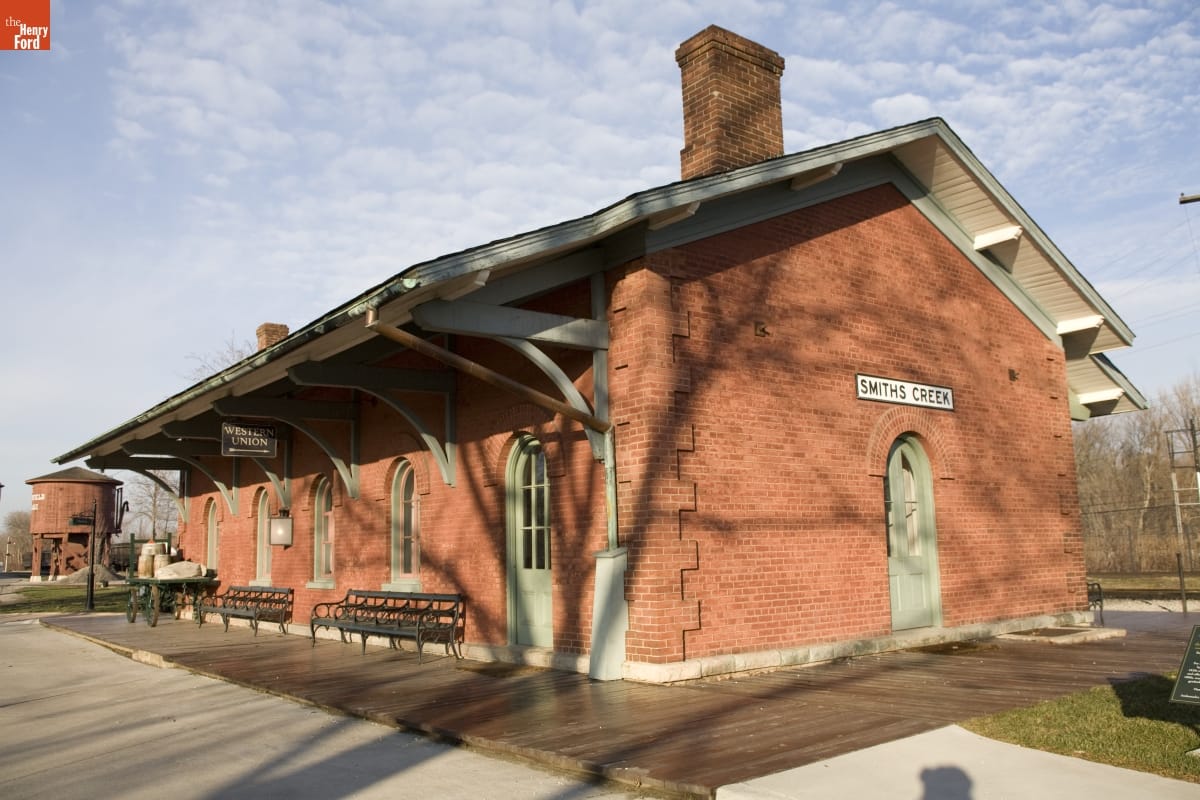
- Smiths Creek Depot in Greenfield Village, September 2007 - Henry Ford purchased Smiths Creek Depot from the Grand Trunk Western Railway in 1929. Thomas Edison passed the building often while working as a railroad newsboy. Originally located about nine miles southwest of Port Huron, Michigan, the depot was moved to Ford's museum complex in Dearborn, Michigan. This photo shows Smiths Creek Depot at Greenfield Village in 2007.
- September 01, 2007
- Collections - Artifact
Smiths Creek Depot in Greenfield Village, September 2007
Henry Ford purchased Smiths Creek Depot from the Grand Trunk Western Railway in 1929. Thomas Edison passed the building often while working as a railroad newsboy. Originally located about nine miles southwest of Port Huron, Michigan, the depot was moved to Ford's museum complex in Dearborn, Michigan. This photo shows Smiths Creek Depot at Greenfield Village in 2007.
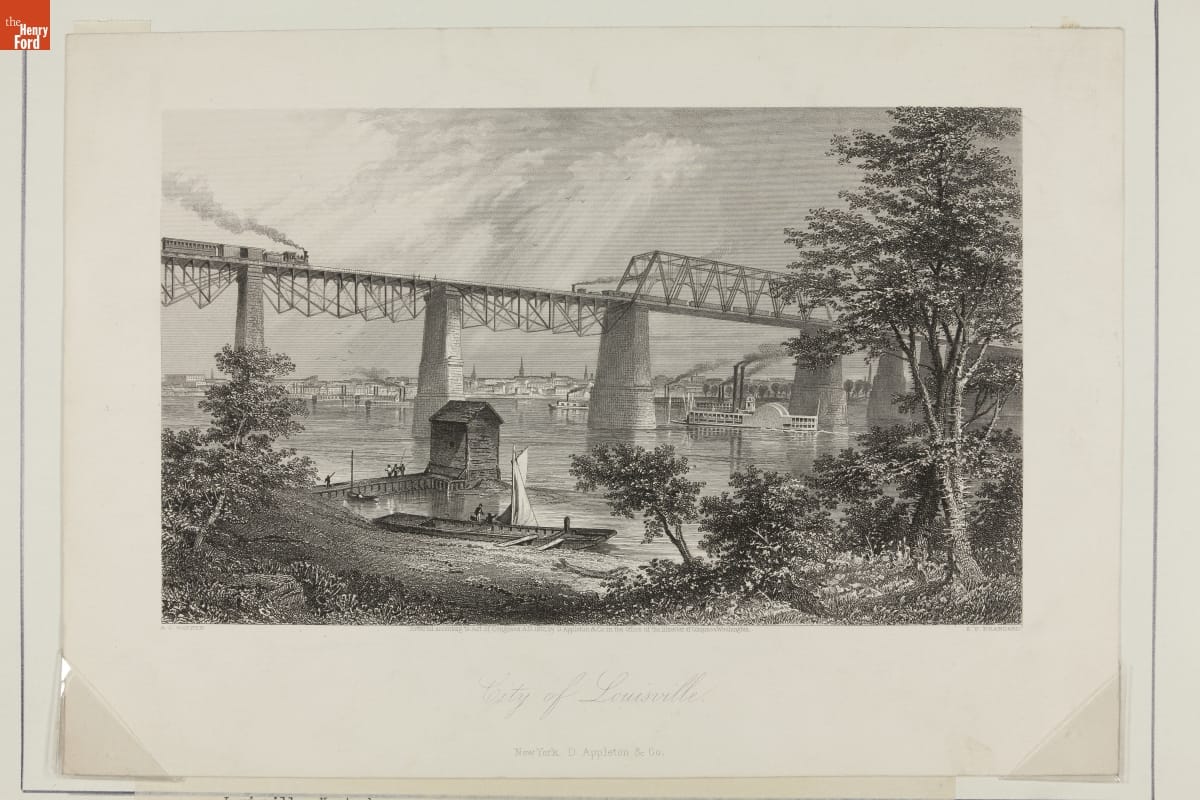
- Steel Engraving, "City of Louisville," circa 1870 - This circa 1870 steel engraving shows the city of Louisville, Kentucky, from a point across the Ohio River. Founded in 1780, Louisville grew rapidly into a major shipping port along the river, and this steel railroad bridge was the first to span the Ohio River in Louisville.
- circa 1872
- Collections - Artifact
Steel Engraving, "City of Louisville," circa 1870
This circa 1870 steel engraving shows the city of Louisville, Kentucky, from a point across the Ohio River. Founded in 1780, Louisville grew rapidly into a major shipping port along the river, and this steel railroad bridge was the first to span the Ohio River in Louisville.
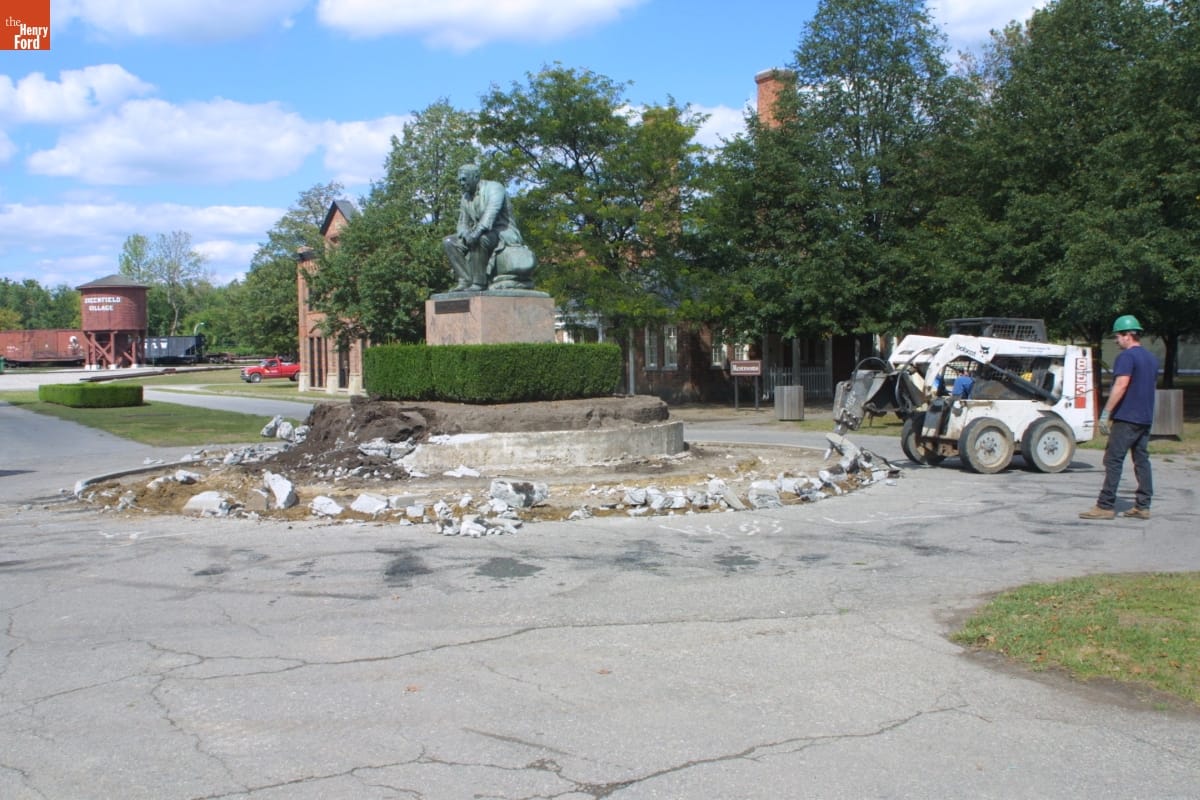
- Thomas Edison Statue before Relocation during the Greenfield Village Restoration Project, September 2002 - By 2000, Greenfield Village began showing its age. Buildings and crumbling infrastructure desperately needed repair. Museum planners envisioned a revitalized village. They created themed "Historic Districts" by relocating and refurbishing the historic structures. Workers repaved streets and upgraded water, sewer, electric, and gas lines. In June 2003, nine months after restoration began, visitors passed through a new entrance into a reborn Greenfield Village.
- September 01, 2002
- Collections - Artifact
Thomas Edison Statue before Relocation during the Greenfield Village Restoration Project, September 2002
By 2000, Greenfield Village began showing its age. Buildings and crumbling infrastructure desperately needed repair. Museum planners envisioned a revitalized village. They created themed "Historic Districts" by relocating and refurbishing the historic structures. Workers repaved streets and upgraded water, sewer, electric, and gas lines. In June 2003, nine months after restoration began, visitors passed through a new entrance into a reborn Greenfield Village.
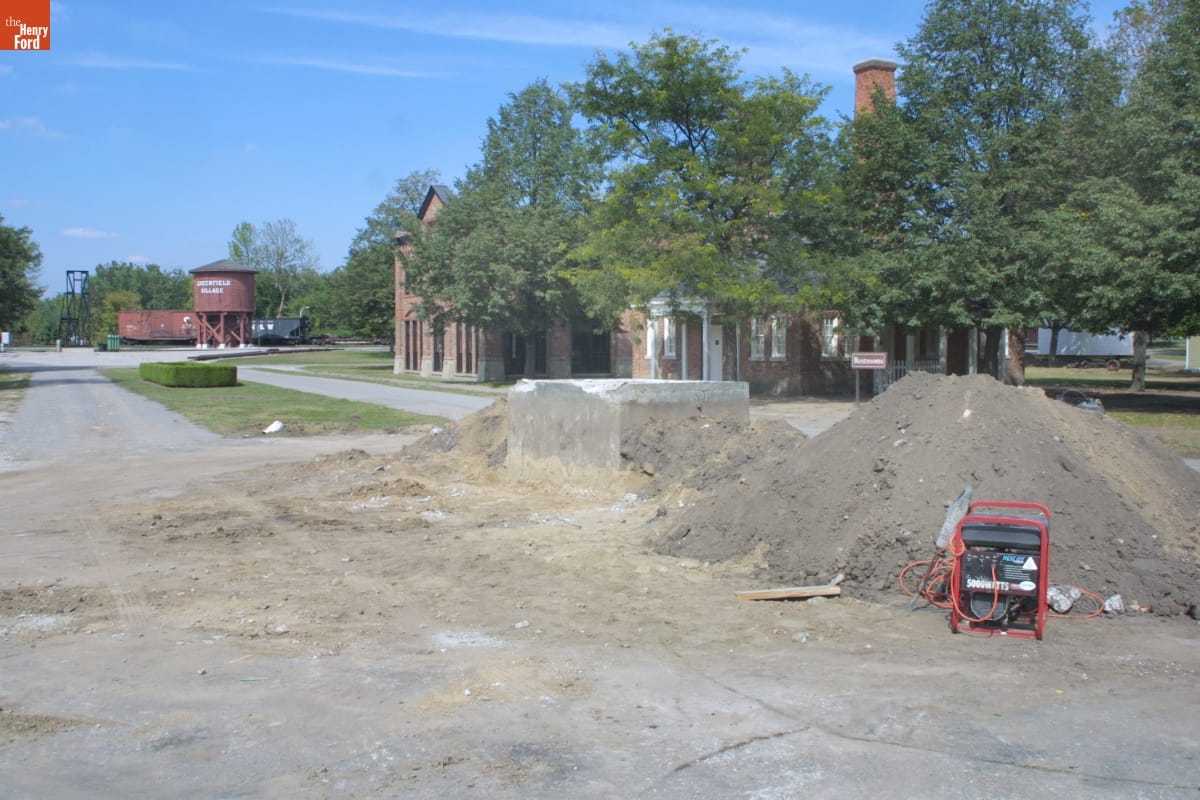
- Thomas Edison Statue Former Site after Relocation during the Greenfield Village Restoration Project, September 2002 - By 2000, Greenfield Village began showing its age. Buildings and crumbling infrastructure desperately needed repair. Museum planners envisioned a revitalized village. They created themed "Historic Districts" by relocating and refurbishing the historic structures. Workers repaved streets and upgraded water, sewer, electric, and gas lines. In June 2003, nine months after restoration began, visitors passed through a new entrance into a reborn Greenfield Village.
- September 01, 2002
- Collections - Artifact
Thomas Edison Statue Former Site after Relocation during the Greenfield Village Restoration Project, September 2002
By 2000, Greenfield Village began showing its age. Buildings and crumbling infrastructure desperately needed repair. Museum planners envisioned a revitalized village. They created themed "Historic Districts" by relocating and refurbishing the historic structures. Workers repaved streets and upgraded water, sewer, electric, and gas lines. In June 2003, nine months after restoration began, visitors passed through a new entrance into a reborn Greenfield Village.
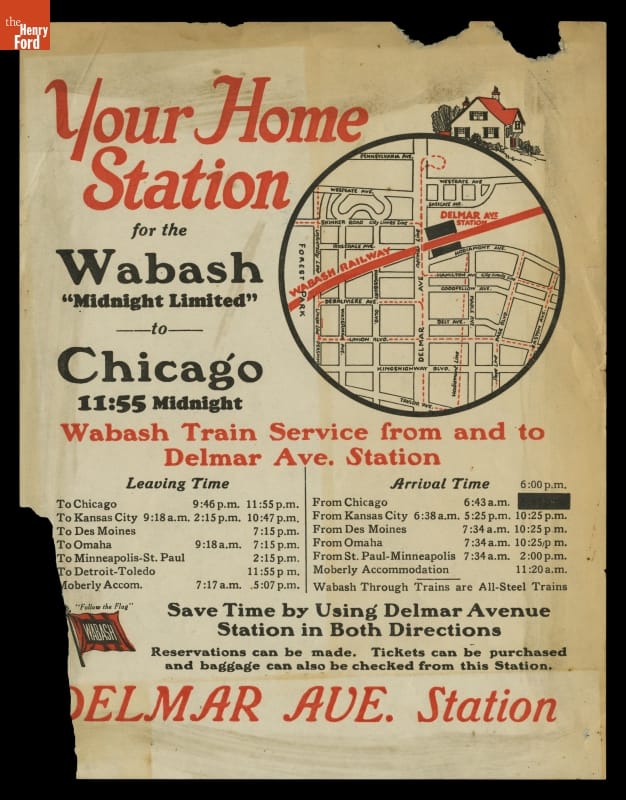
- Handbill and Timetable for Wabash Railway's "Midnight Limited," Leaving from Delmar Avenue Station, St. Louis, Missouri, 1929 - The Wabash Railway, with origins dating back to 1838, was a strong Midwestern carrier until Amtrak took over the national passenger railroad system in 1971. In 1928, the Wabash Railway erected the Delmar Avenue Station, providing west-end and suburban St. Louis residents -- particularly businessmen -- convenient access to their railroad system without having to go all the way downtown.
- 1929
- Collections - Artifact
Handbill and Timetable for Wabash Railway's "Midnight Limited," Leaving from Delmar Avenue Station, St. Louis, Missouri, 1929
The Wabash Railway, with origins dating back to 1838, was a strong Midwestern carrier until Amtrak took over the national passenger railroad system in 1971. In 1928, the Wabash Railway erected the Delmar Avenue Station, providing west-end and suburban St. Louis residents -- particularly businessmen -- convenient access to their railroad system without having to go all the way downtown.
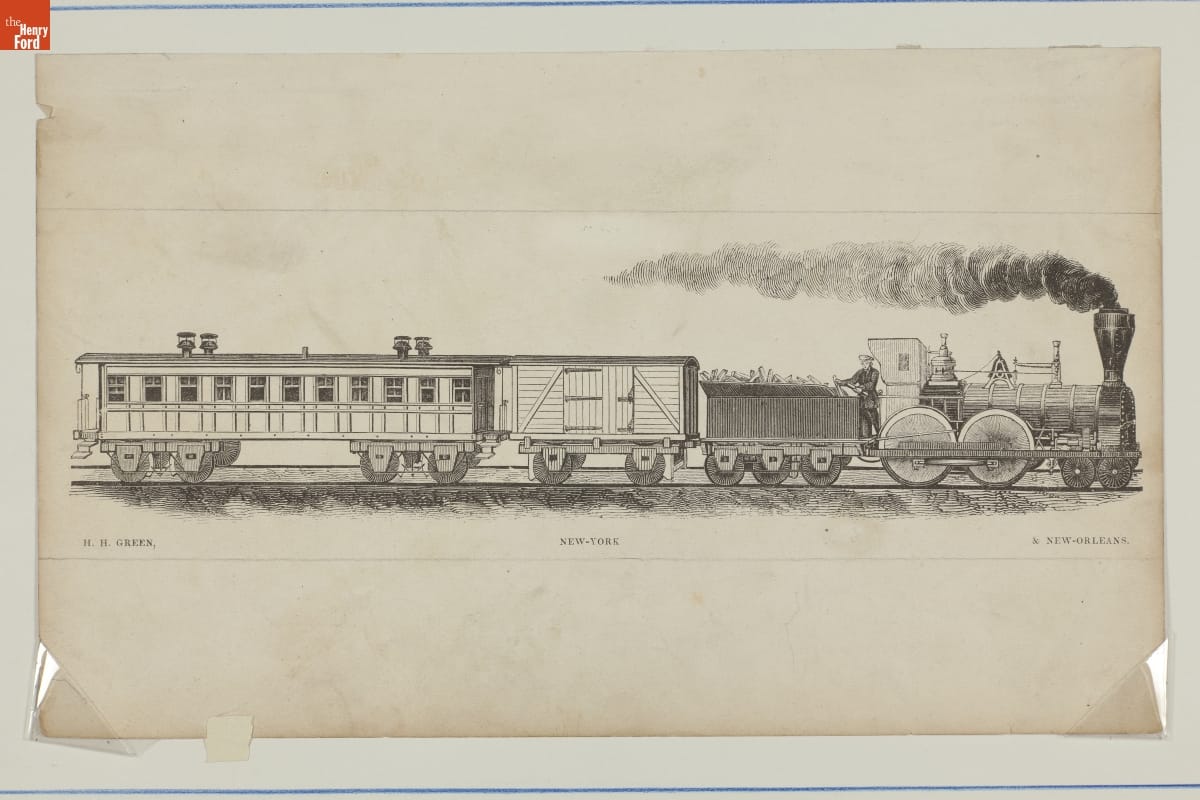
- Train with Steam Locomotive, Passenger and Freight Cars, circa 1856 - Locomotive boilers had to stay hot to produce steam. Lagging -- insulation around the boiler -- was crucial. This American-type locomotive of the 1850s had narrow wooden strips mounted around its boiler for insulation. But the wood deteriorated quickly when exposed to weather and sparks. Improved designs placed a protective sheet metal jacket over the wood.
- circa 1856
- Collections - Artifact
Train with Steam Locomotive, Passenger and Freight Cars, circa 1856
Locomotive boilers had to stay hot to produce steam. Lagging -- insulation around the boiler -- was crucial. This American-type locomotive of the 1850s had narrow wooden strips mounted around its boiler for insulation. But the wood deteriorated quickly when exposed to weather and sparks. Improved designs placed a protective sheet metal jacket over the wood.