
Search
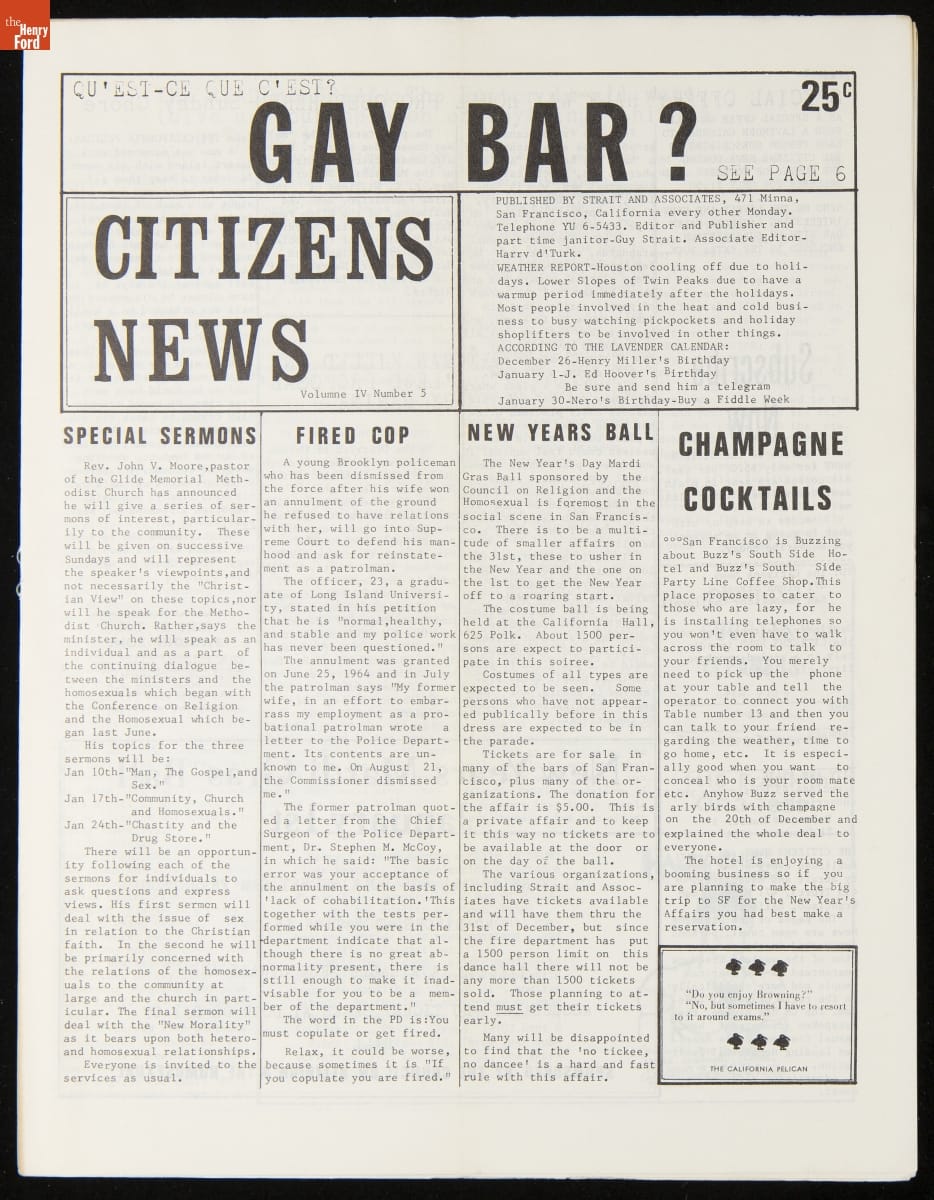
- Citizens News, Volume IV, Number 5, 1964-1965 - LGBTQ+ newspapers became more available beginning in the 1950s as organizations added print media to their activist tool kit. These newspapers were a regionally focused way to rally the LGBTQ+ community, share information, and fight discrimination. Many of these newspapers came to rely on gay bars as a location for disbursement as they were among the only private gay spaces in many cities.
- 1964-1965
- Collections - Artifact
Citizens News, Volume IV, Number 5, 1964-1965
LGBTQ+ newspapers became more available beginning in the 1950s as organizations added print media to their activist tool kit. These newspapers were a regionally focused way to rally the LGBTQ+ community, share information, and fight discrimination. Many of these newspapers came to rely on gay bars as a location for disbursement as they were among the only private gay spaces in many cities.
- Martha W. Martin Autograph Album, 1837-1858 -
- 1837-1858
- Collections - Artifact
Martha W. Martin Autograph Album, 1837-1858
- Photograph Album of Heinz Company Employees and Friends, 1880-1933 - Company scrapbooks are often reminders of the company's history, significant moments in time, and the employees who worked there. This album, compiled by the H. J. Heinz Company, includes photographs and portraits of H. J. Heinz, company sales personnel, employees, and friends of H. J. Heinz.
- 1880-1933
- Collections - Artifact
Photograph Album of Heinz Company Employees and Friends, 1880-1933
Company scrapbooks are often reminders of the company's history, significant moments in time, and the employees who worked there. This album, compiled by the H. J. Heinz Company, includes photographs and portraits of H. J. Heinz, company sales personnel, employees, and friends of H. J. Heinz.
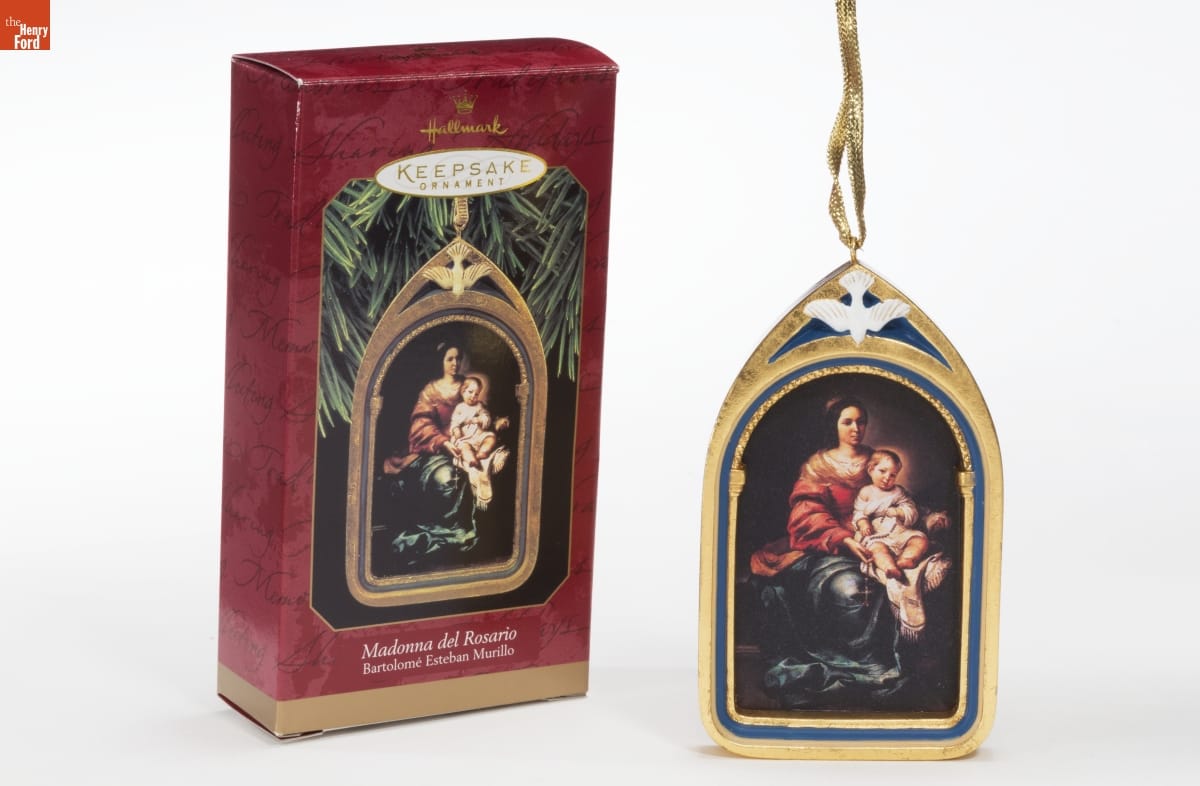
- Hallmark "Madonna del Rosario" Christmas Ornament, 1997 - Already known for greeting cards, Hallmark introduced a line of Christmas ornaments in 1973. The company's annual release of an increasing array of ornaments revolutionized Christmas decorating, appealing to customers' interest in marking memories and milestones as well as expressing one's personality and unique tastes.
- 1997
- Collections - Artifact
Hallmark "Madonna del Rosario" Christmas Ornament, 1997
Already known for greeting cards, Hallmark introduced a line of Christmas ornaments in 1973. The company's annual release of an increasing array of ornaments revolutionized Christmas decorating, appealing to customers' interest in marking memories and milestones as well as expressing one's personality and unique tastes.
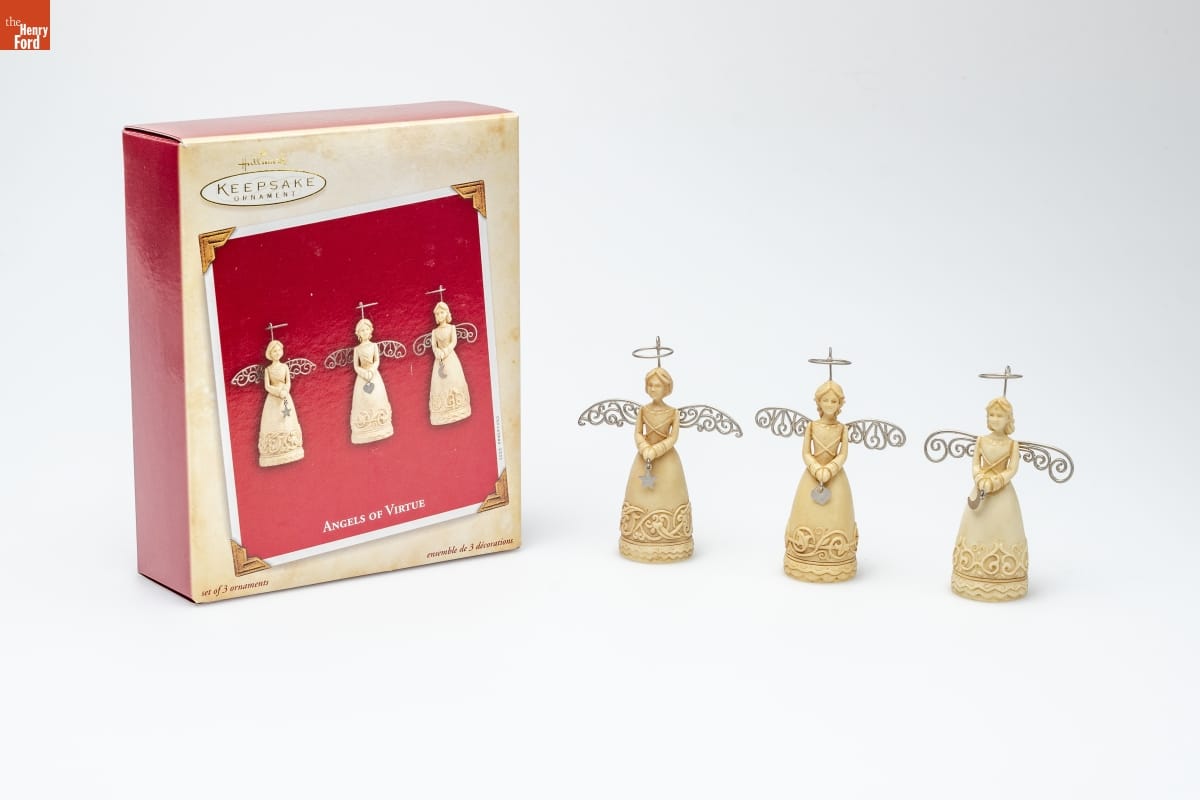
- Hallmark "Angels of Virtue" Christmas Ornaments, 2003 - Already known for greeting cards, Hallmark introduced a line of Christmas ornaments in 1973. The company's annual release of an increasing array of ornaments revolutionized Christmas decorating, appealing to customers' interest in marking memories and milestones as well as expressing one's personality and unique tastes.
- 2003
- Collections - Artifact
Hallmark "Angels of Virtue" Christmas Ornaments, 2003
Already known for greeting cards, Hallmark introduced a line of Christmas ornaments in 1973. The company's annual release of an increasing array of ornaments revolutionized Christmas decorating, appealing to customers' interest in marking memories and milestones as well as expressing one's personality and unique tastes.
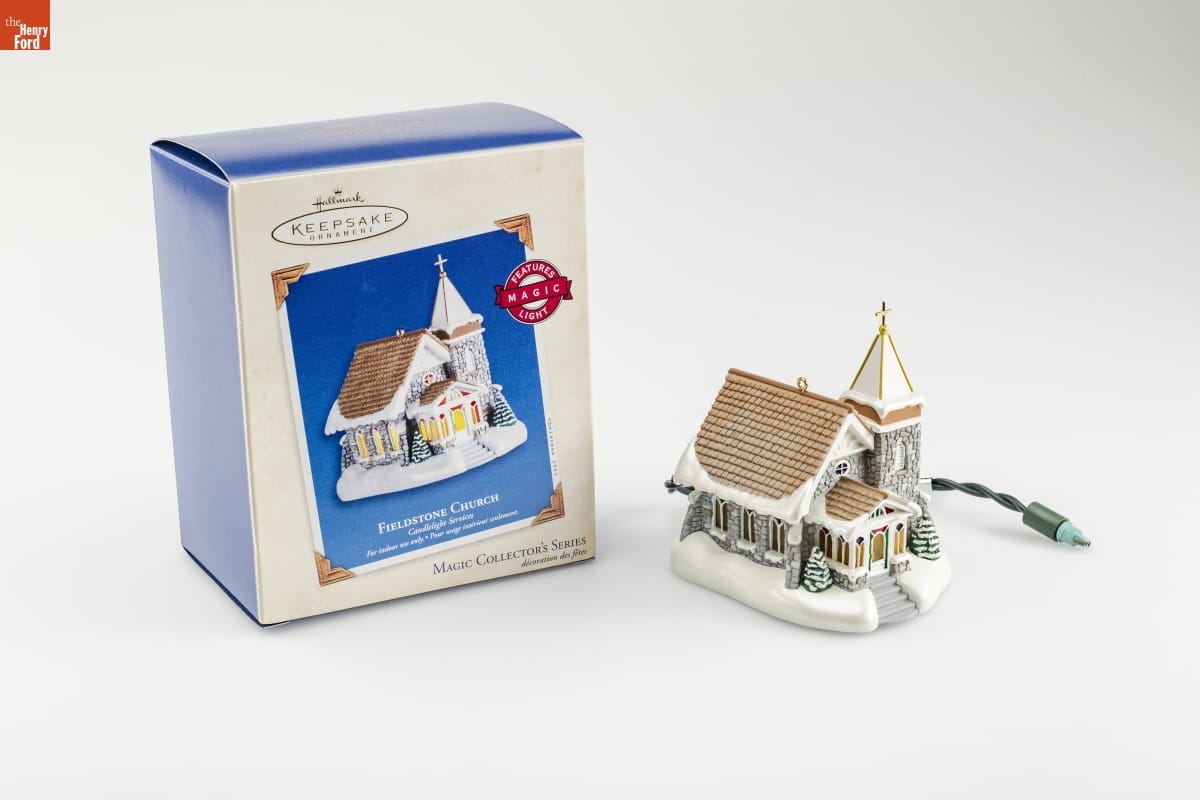
- Hallmark "Candlelight Services Series: Fieldstone Church" Christmas Ornament, 2003 - Already known for greeting cards, Hallmark introduced a line of Christmas ornaments in 1973. The company's annual release of an increasing array of ornaments revolutionized Christmas decorating, appealing to customers' interest in marking memories and milestones as well as expressing one's personality and unique tastes.
- 2003
- Collections - Artifact
Hallmark "Candlelight Services Series: Fieldstone Church" Christmas Ornament, 2003
Already known for greeting cards, Hallmark introduced a line of Christmas ornaments in 1973. The company's annual release of an increasing array of ornaments revolutionized Christmas decorating, appealing to customers' interest in marking memories and milestones as well as expressing one's personality and unique tastes.
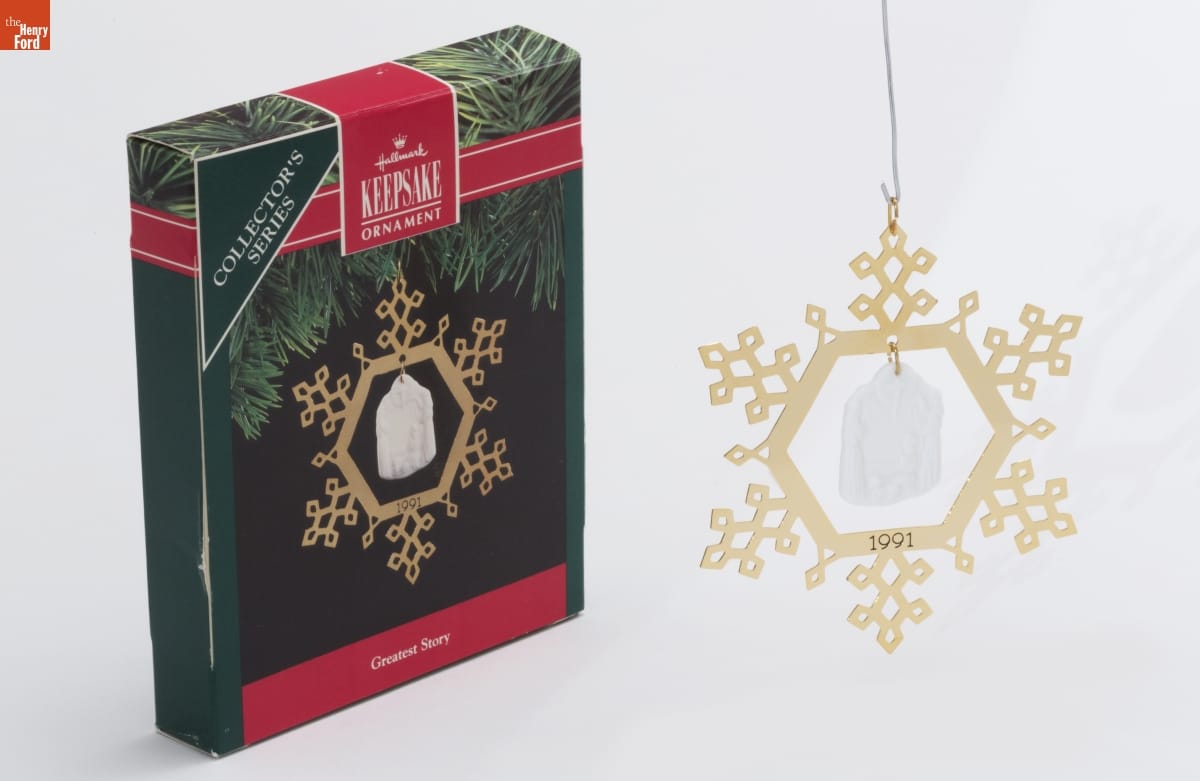
- Hallmark "Greatest Story Series" Christmas Ornament, 1991 - Already known for greeting cards, Hallmark introduced a line of Christmas ornaments in 1973. The company's annual release of an increasing array of ornaments revolutionized Christmas decorating, appealing to customers' interest in marking memories and milestones as well as expressing one's personality and unique tastes.
- 1991
- Collections - Artifact
Hallmark "Greatest Story Series" Christmas Ornament, 1991
Already known for greeting cards, Hallmark introduced a line of Christmas ornaments in 1973. The company's annual release of an increasing array of ornaments revolutionized Christmas decorating, appealing to customers' interest in marking memories and milestones as well as expressing one's personality and unique tastes.
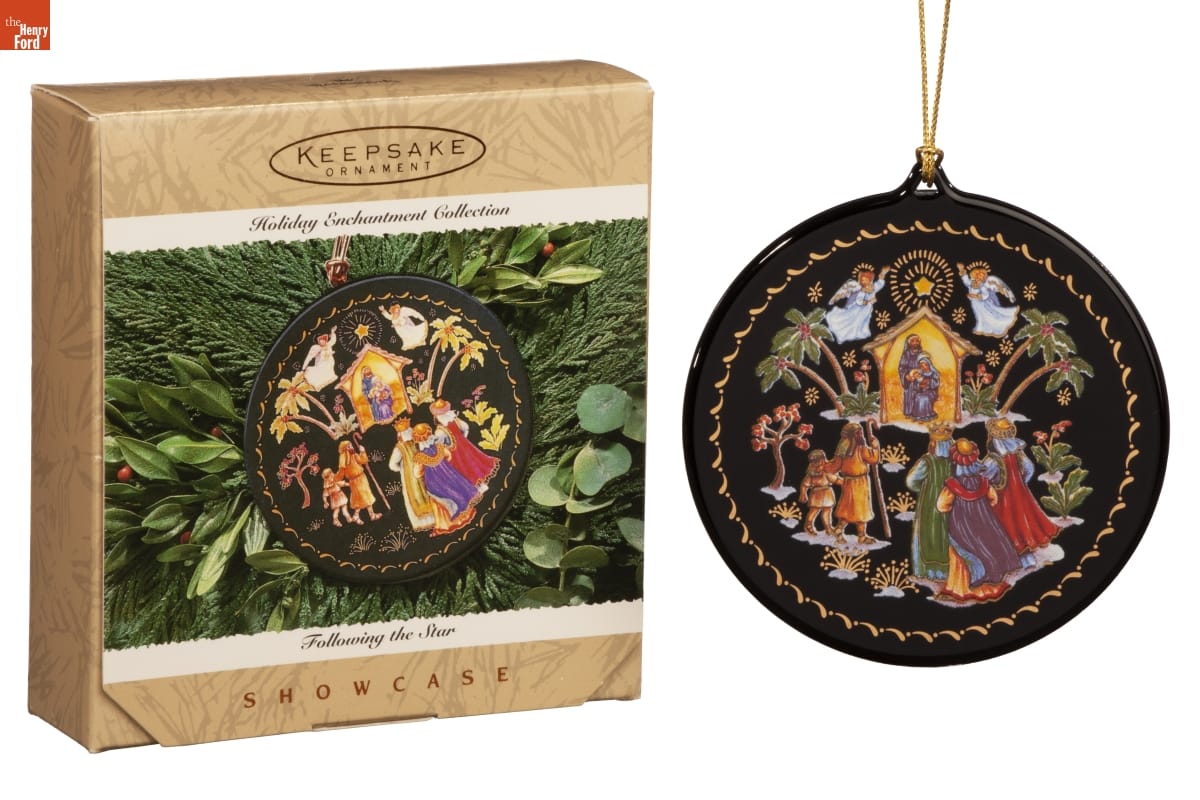
- Hallmark "Holiday Enchantment Collection: Following the Star" Christmas Ornament, 1995 - Already known for greeting cards, Hallmark introduced a line of Christmas ornaments in 1973. The company's annual release of an increasing array of ornaments revolutionized Christmas decorating, appealing to customers' interest in marking memories and milestones as well as expressing one's personality and unique tastes.
- 1995
- Collections - Artifact
Hallmark "Holiday Enchantment Collection: Following the Star" Christmas Ornament, 1995
Already known for greeting cards, Hallmark introduced a line of Christmas ornaments in 1973. The company's annual release of an increasing array of ornaments revolutionized Christmas decorating, appealing to customers' interest in marking memories and milestones as well as expressing one's personality and unique tastes.
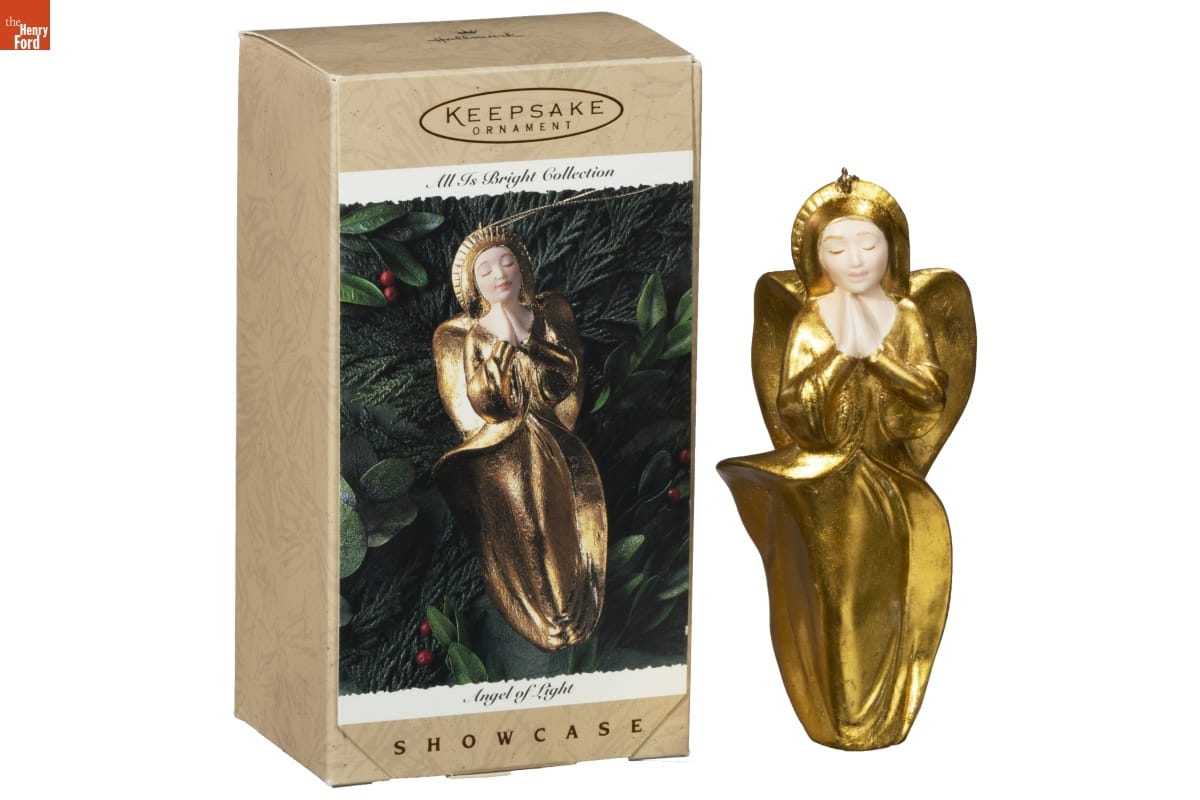
- Hallmark "All Is Bright Collection: Angel of Light" Christmas Ornament, 1995 - Already known for greeting cards, Hallmark introduced a line of Christmas ornaments in 1973. The company's annual release of an increasing array of ornaments revolutionized Christmas decorating, appealing to customers' interest in marking memories and milestones as well as expressing one's personality and unique tastes.
- 1995
- Collections - Artifact
Hallmark "All Is Bright Collection: Angel of Light" Christmas Ornament, 1995
Already known for greeting cards, Hallmark introduced a line of Christmas ornaments in 1973. The company's annual release of an increasing array of ornaments revolutionized Christmas decorating, appealing to customers' interest in marking memories and milestones as well as expressing one's personality and unique tastes.
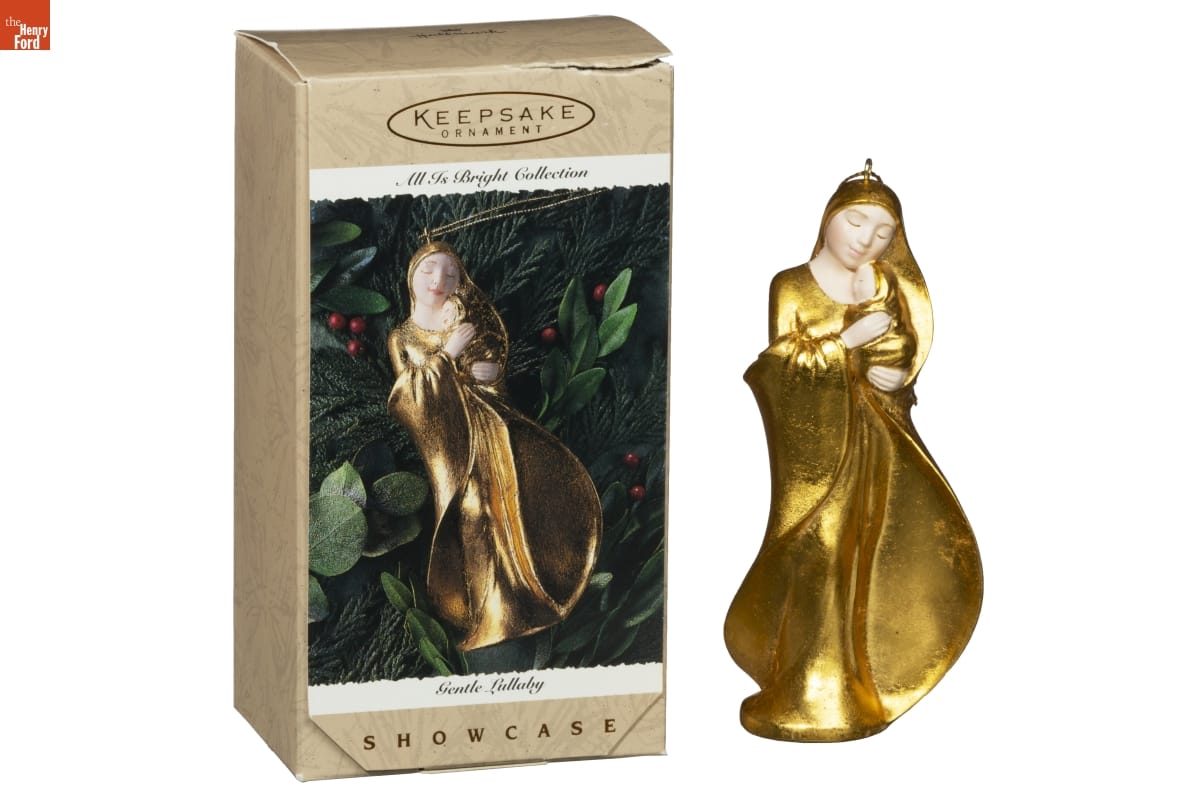
- Hallmark "All Is Bright Collection: Gentle Lullaby" Christmas Ornament, 1995 - Already known for greeting cards, Hallmark introduced a line of Christmas ornaments in 1973. The company's annual release of an increasing array of ornaments revolutionized Christmas decorating, appealing to customers' interest in marking memories and milestones as well as expressing one's personality and unique tastes.
- 1995
- Collections - Artifact
Hallmark "All Is Bright Collection: Gentle Lullaby" Christmas Ornament, 1995
Already known for greeting cards, Hallmark introduced a line of Christmas ornaments in 1973. The company's annual release of an increasing array of ornaments revolutionized Christmas decorating, appealing to customers' interest in marking memories and milestones as well as expressing one's personality and unique tastes.