
Search
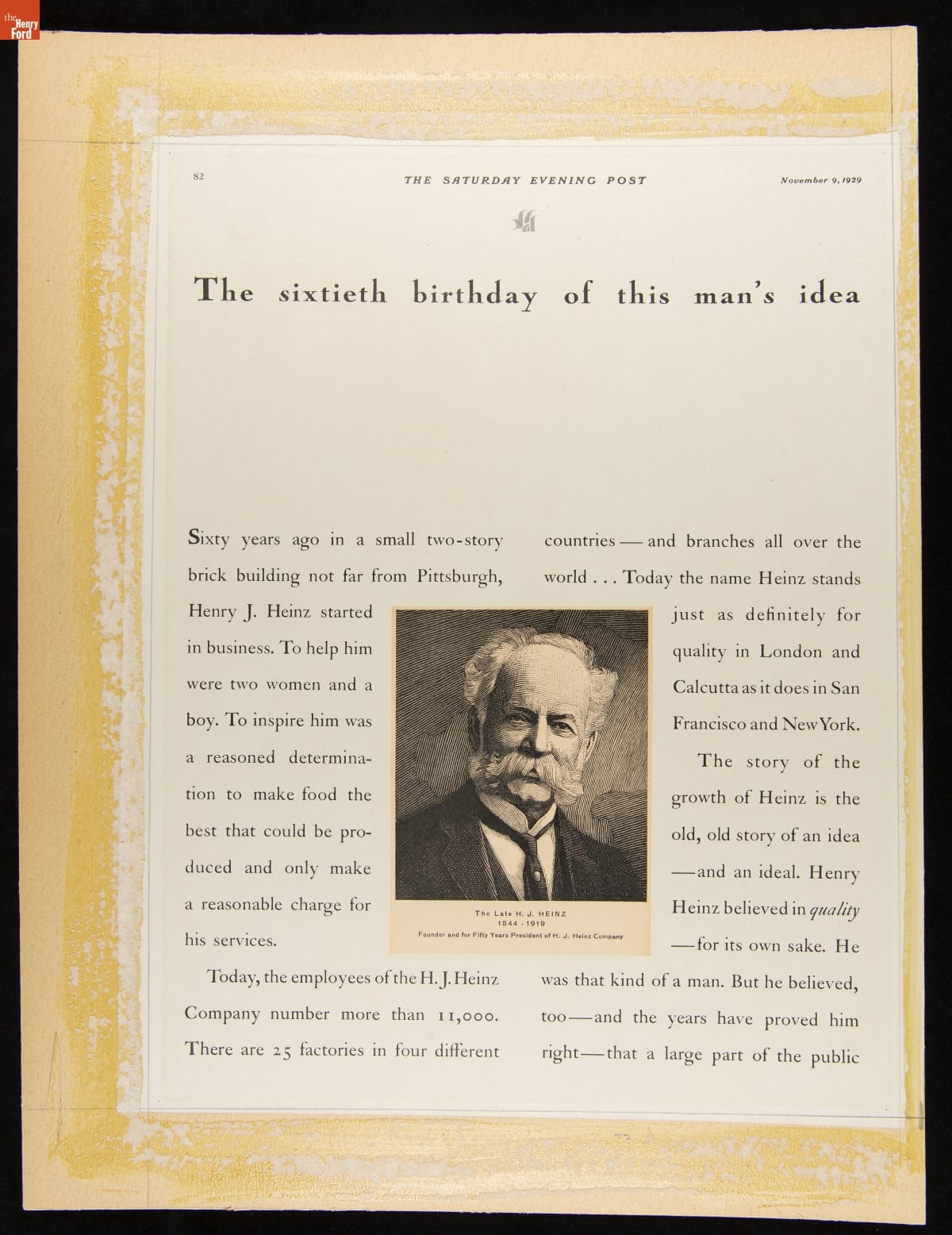
- "The Sixtieth Birthday of This Man's Idea," Heinz Company Advertisement, November 9, 1929 - This two-page tear sheet advertising layout was created to be published in the Saturday Evening Post on November 9, 1929, in honor of the H.J. Heinz Company's 60th birthday. The advertisement describes H.J. Heinz's commitment to quality and how the company continues to strive for the highest-quality ingredients and products even after its founders' death in 1919.
- November 09, 1929
- Collections - Artifact
"The Sixtieth Birthday of This Man's Idea," Heinz Company Advertisement, November 9, 1929
This two-page tear sheet advertising layout was created to be published in the Saturday Evening Post on November 9, 1929, in honor of the H.J. Heinz Company's 60th birthday. The advertisement describes H.J. Heinz's commitment to quality and how the company continues to strive for the highest-quality ingredients and products even after its founders' death in 1919.
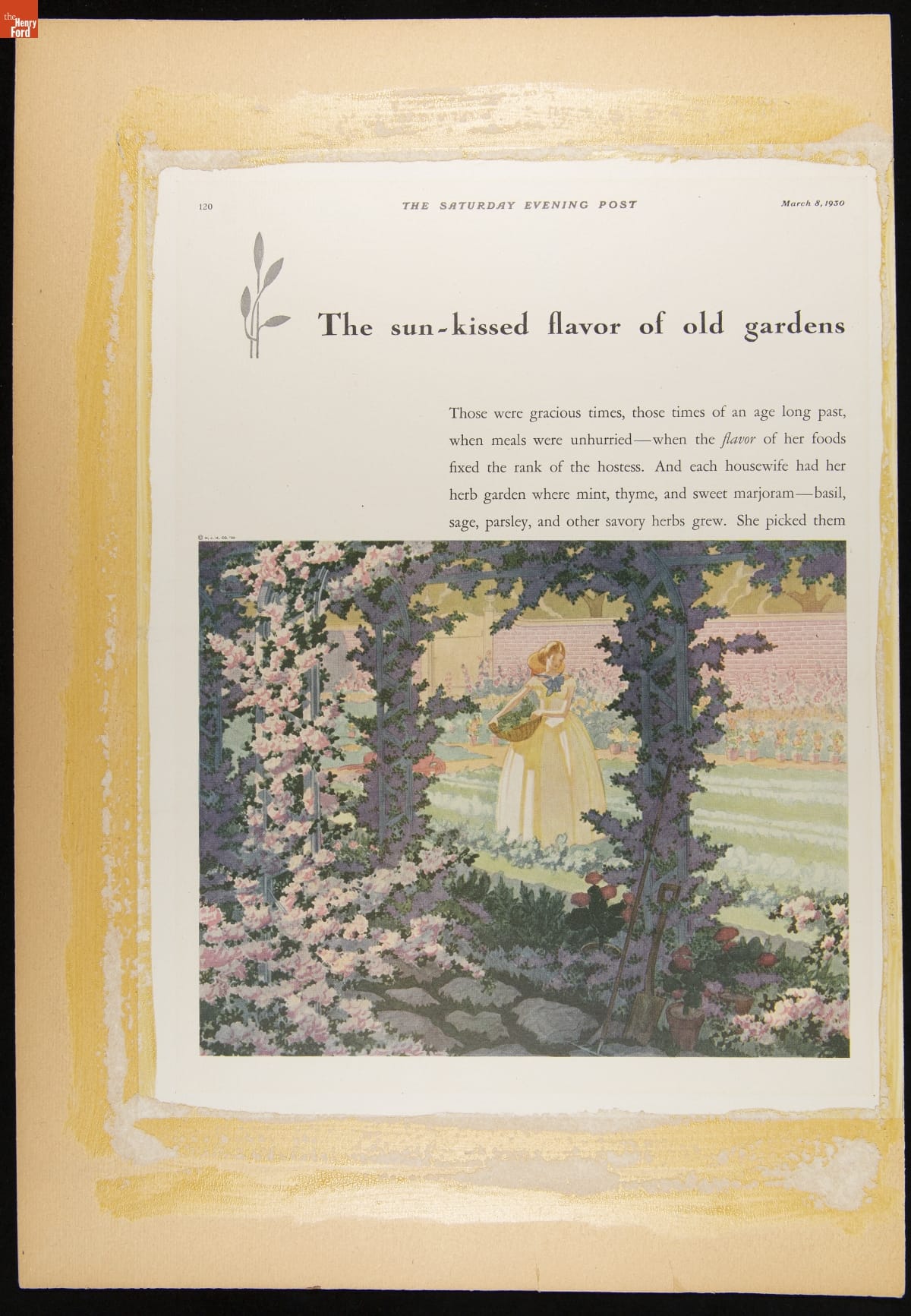
- "The Sun-Kissed Flavor of Old Gardens," Heinz Company Advertisement, March 8, 1930 - This two-page tear sheet advertising layout was created to be published in the Saturday Evening Post on March 8, 1930. The advertisement describes how old ways of cooking were painstaking and time consuming, whereas Heinz products exhibit the same great taste of old recipes without all the hassle.
- March 08, 1930
- Collections - Artifact
"The Sun-Kissed Flavor of Old Gardens," Heinz Company Advertisement, March 8, 1930
This two-page tear sheet advertising layout was created to be published in the Saturday Evening Post on March 8, 1930. The advertisement describes how old ways of cooking were painstaking and time consuming, whereas Heinz products exhibit the same great taste of old recipes without all the hassle.
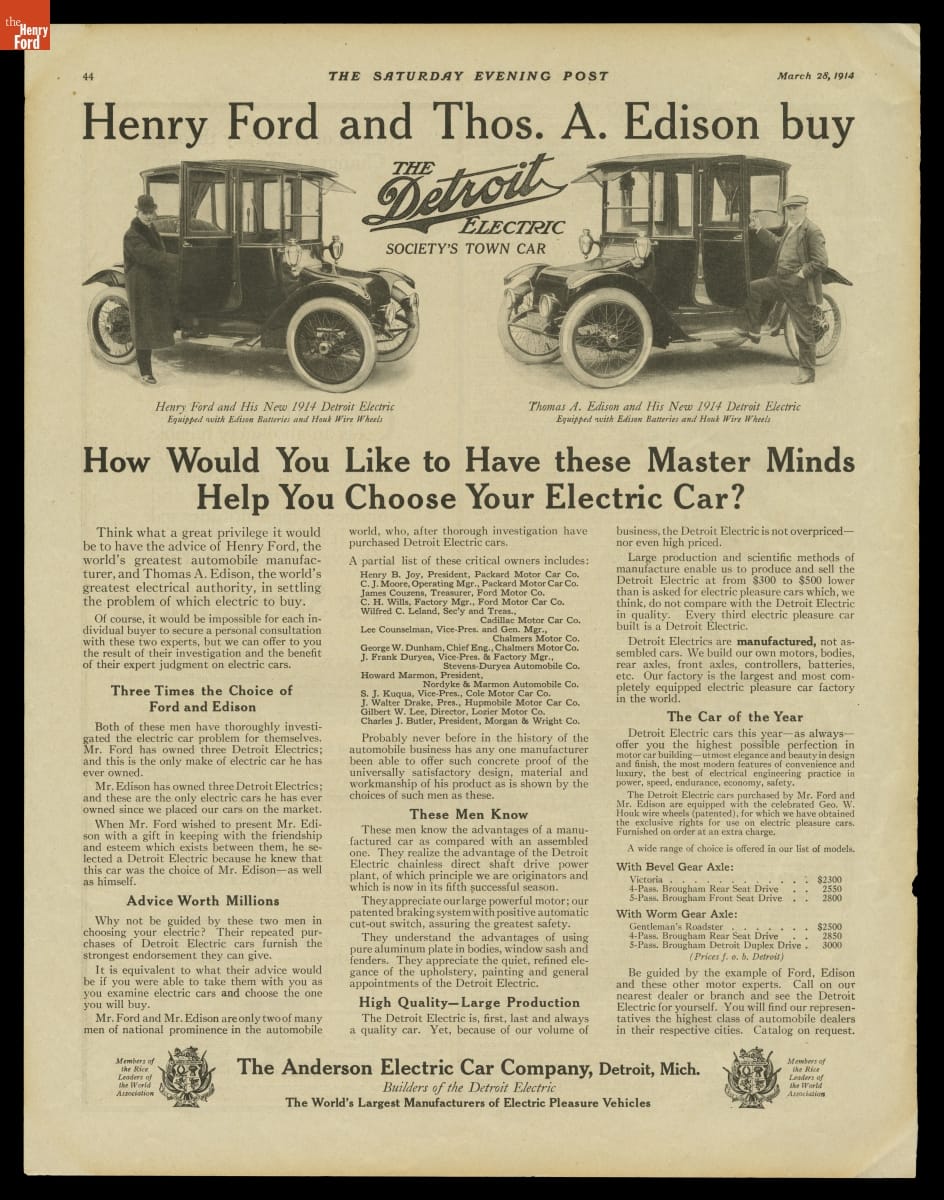
- "Henry Ford and Thomas A. Edison Buy the Detroit Electric," 1914 - Detroit Electric was the best-known and longest-lived American electric car company, producing automobiles from 1907-1939. The company marketed its cars to well-to-do customers -- particularly women -- looking for a clean, quiet car in which to take short trips in cities, where electricity was readily available and range wasn't an issue. Detroit Electric buyers included Henry Ford and Thomas Edison.
- March 28, 1914
- Collections - Artifact
"Henry Ford and Thomas A. Edison Buy the Detroit Electric," 1914
Detroit Electric was the best-known and longest-lived American electric car company, producing automobiles from 1907-1939. The company marketed its cars to well-to-do customers -- particularly women -- looking for a clean, quiet car in which to take short trips in cities, where electricity was readily available and range wasn't an issue. Detroit Electric buyers included Henry Ford and Thomas Edison.
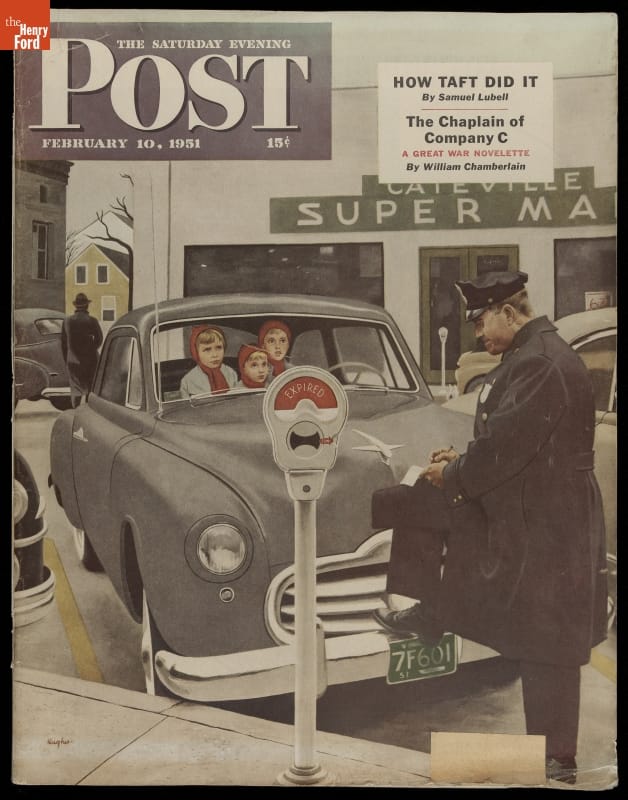
- "The Saturday Evening Post," February 10, 1951 - The <EM>Saturday Evening Post</EM> relied on a number of cover artists throughout its history to engage people to leaf through the magazine's pages. Time has expired in this illustration by cover artist George Hughes. The conflicted policeman struggles to issue a parking ticket under the soulful stares of three innocent children.
- February 10, 1951
- Collections - Artifact
"The Saturday Evening Post," February 10, 1951
The Saturday Evening Post relied on a number of cover artists throughout its history to engage people to leaf through the magazine's pages. Time has expired in this illustration by cover artist George Hughes. The conflicted policeman struggles to issue a parking ticket under the soulful stares of three innocent children.
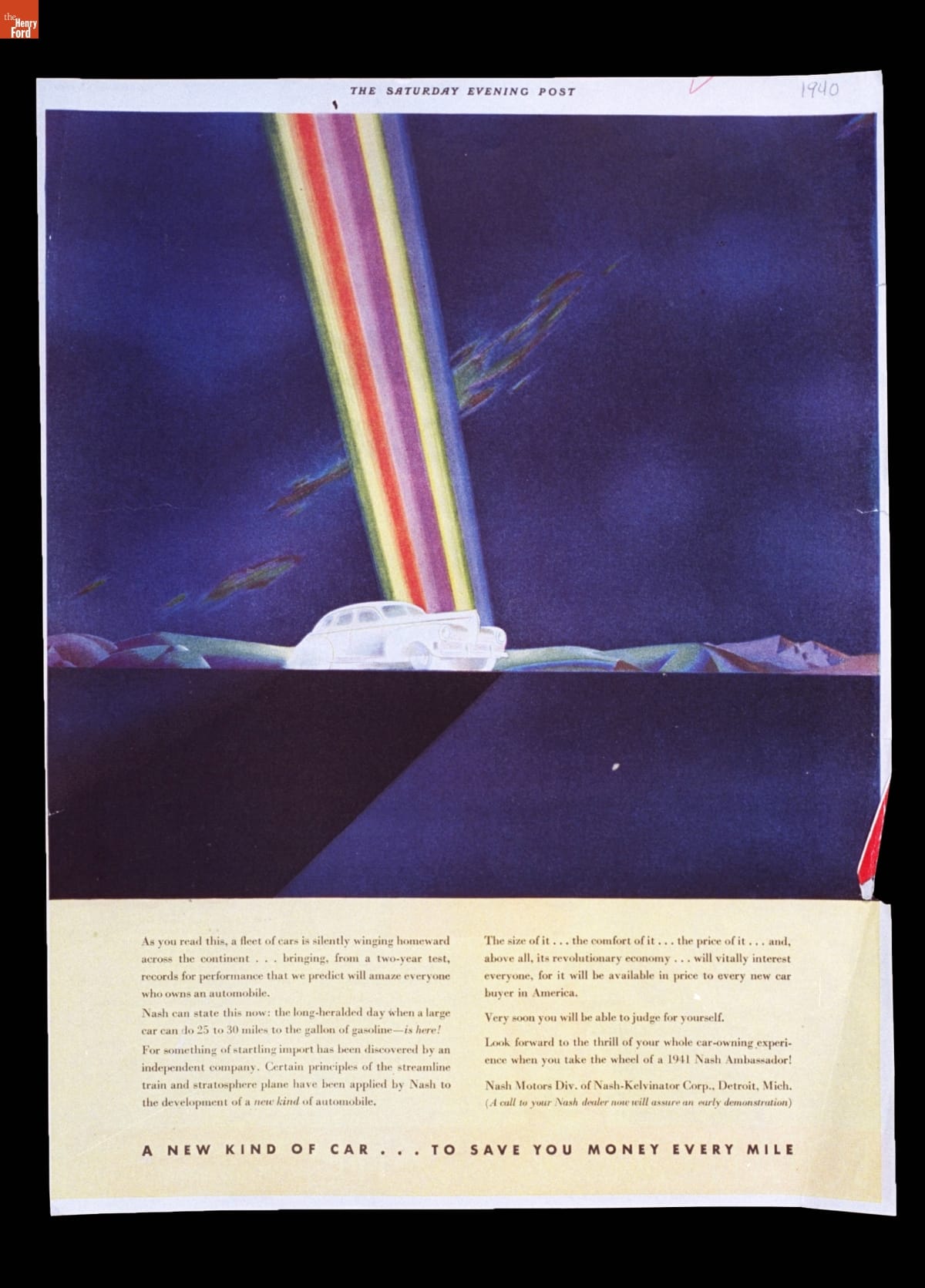
- A New Kind of Car... To Save You Money Every Mile, September 28, 1940 - In 1916, Charles W. Nash founded Nash Motors Company in Kenosha, Wisconsin, focusing on mid-priced vehicles. The company absorbed several Wisconsin-based automobile firms in the 1920s and later merged with refrigerator manufacturer Kelvinator. Nash-Kelvinator Corporation merged with Hudson Motor Car Company to create American Motors Company in 1954. The Nash brand was phased out in 1957.
- September 28, 1940
- Collections - Artifact
A New Kind of Car... To Save You Money Every Mile, September 28, 1940
In 1916, Charles W. Nash founded Nash Motors Company in Kenosha, Wisconsin, focusing on mid-priced vehicles. The company absorbed several Wisconsin-based automobile firms in the 1920s and later merged with refrigerator manufacturer Kelvinator. Nash-Kelvinator Corporation merged with Hudson Motor Car Company to create American Motors Company in 1954. The Nash brand was phased out in 1957.
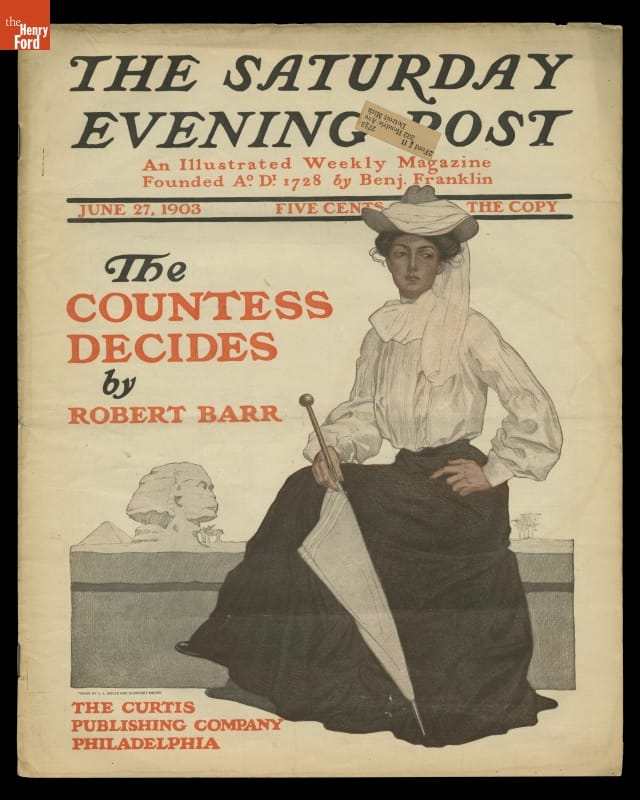
- "The Saturday Evening Post," June 27, 1903 - Before The Call of the Wild was a book, it was serialized in four issues of <EM>The Saturday Evening Post</EM>, a popular weekly magazine. This issue of the magazine -- part of a subscription owned by Clara Ford -- presented Part Two of the story. Jack London's approach was to unfold the story through the thoughts and emotions of his dog-hero, Buck.
- June 27, 1903
- Collections - Artifact
"The Saturday Evening Post," June 27, 1903
Before The Call of the Wild was a book, it was serialized in four issues of The Saturday Evening Post, a popular weekly magazine. This issue of the magazine -- part of a subscription owned by Clara Ford -- presented Part Two of the story. Jack London's approach was to unfold the story through the thoughts and emotions of his dog-hero, Buck.
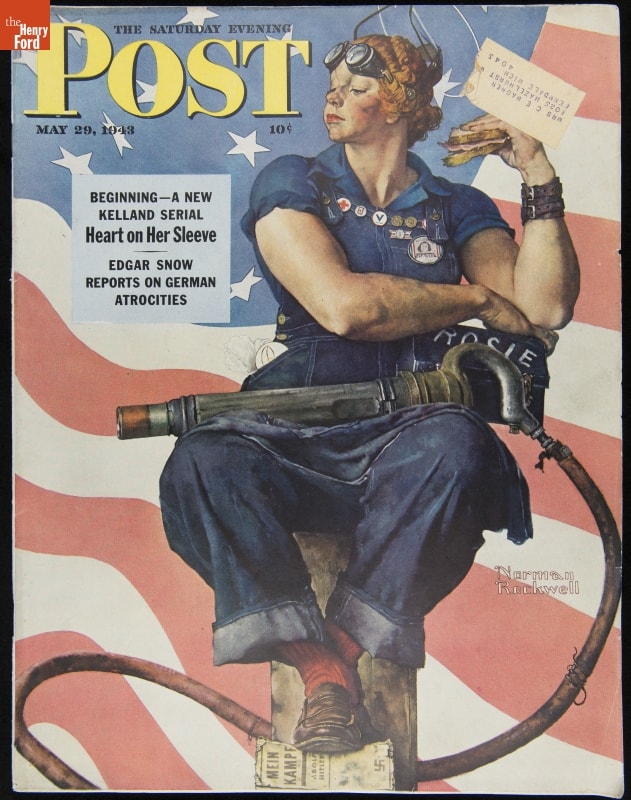
- "The Saturday Evening Post," May 29, 1943 - <em>The Saturday Evening Post</em>, first published in 1821 as a four-page weekly newspaper, became one of America's most popular weekly publications by the mid-1900s. The magazine contained news, commentaries, fiction, and general interest articles. But its most distinctive feature was its front cover illustrations by artists such as George Hughes, John Falter, J.C. Leyendecker, and Norman Rockwell.
- May 29, 1943
- Collections - Artifact
"The Saturday Evening Post," May 29, 1943
The Saturday Evening Post, first published in 1821 as a four-page weekly newspaper, became one of America's most popular weekly publications by the mid-1900s. The magazine contained news, commentaries, fiction, and general interest articles. But its most distinctive feature was its front cover illustrations by artists such as George Hughes, John Falter, J.C. Leyendecker, and Norman Rockwell.
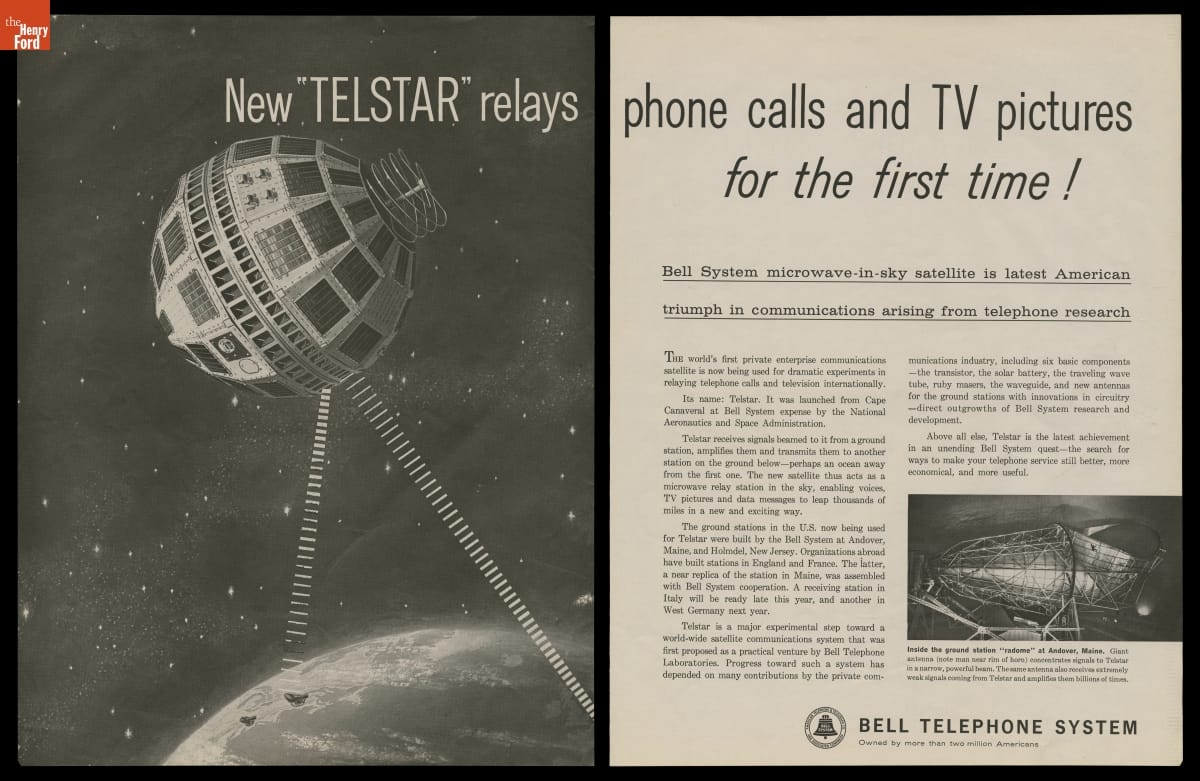
- "New TELSTAR Relays," Bell Telephone System Advertisement, 1962 -
- 11 August 1962-18 August 1962
- Collections - Artifact
"New TELSTAR Relays," Bell Telephone System Advertisement, 1962
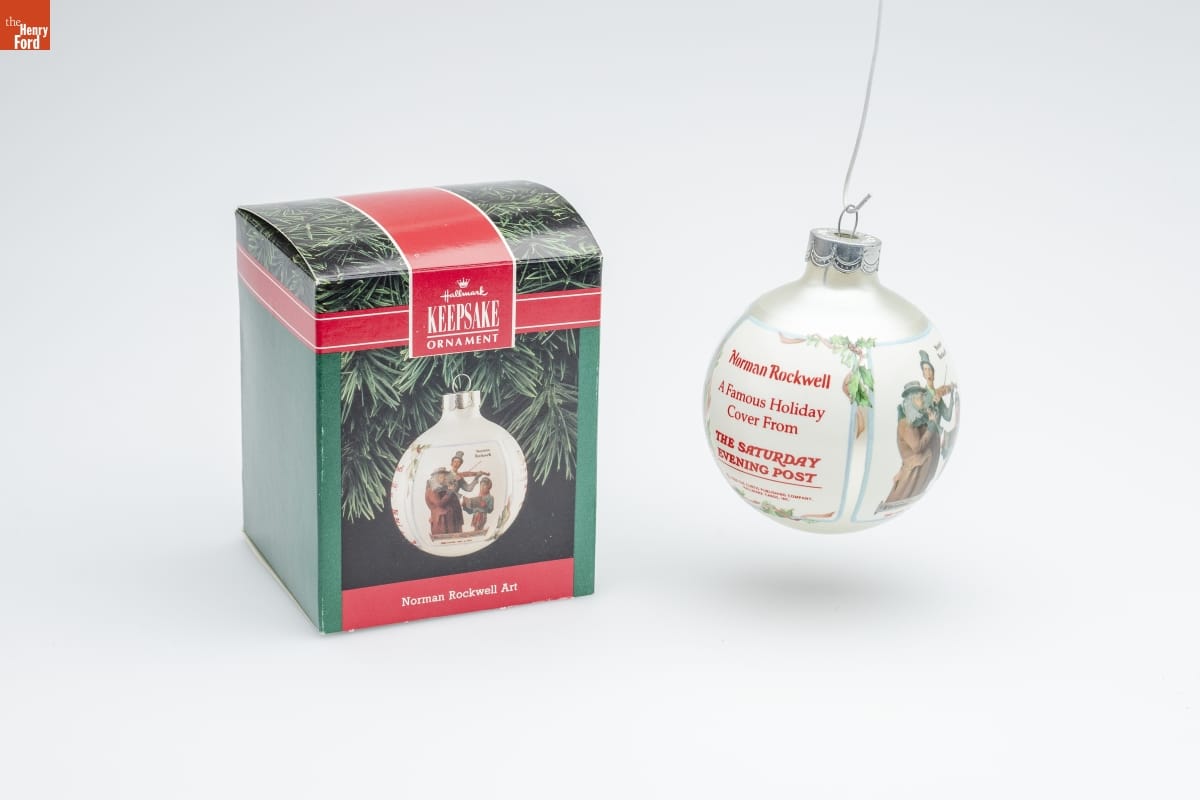
- Hallmark "Norman Rockwell Art" Christmas Ornament, 1992 - Already known for greeting cards, Hallmark introduced a line of Christmas ornaments in 1973. The company's annual release of an increasing array of ornaments revolutionized Christmas decorating, appealing to customers' interest in marking memories and milestones as well as expressing one's personality and unique tastes.
- 1992
- Collections - Artifact
Hallmark "Norman Rockwell Art" Christmas Ornament, 1992
Already known for greeting cards, Hallmark introduced a line of Christmas ornaments in 1973. The company's annual release of an increasing array of ornaments revolutionized Christmas decorating, appealing to customers' interest in marking memories and milestones as well as expressing one's personality and unique tastes.
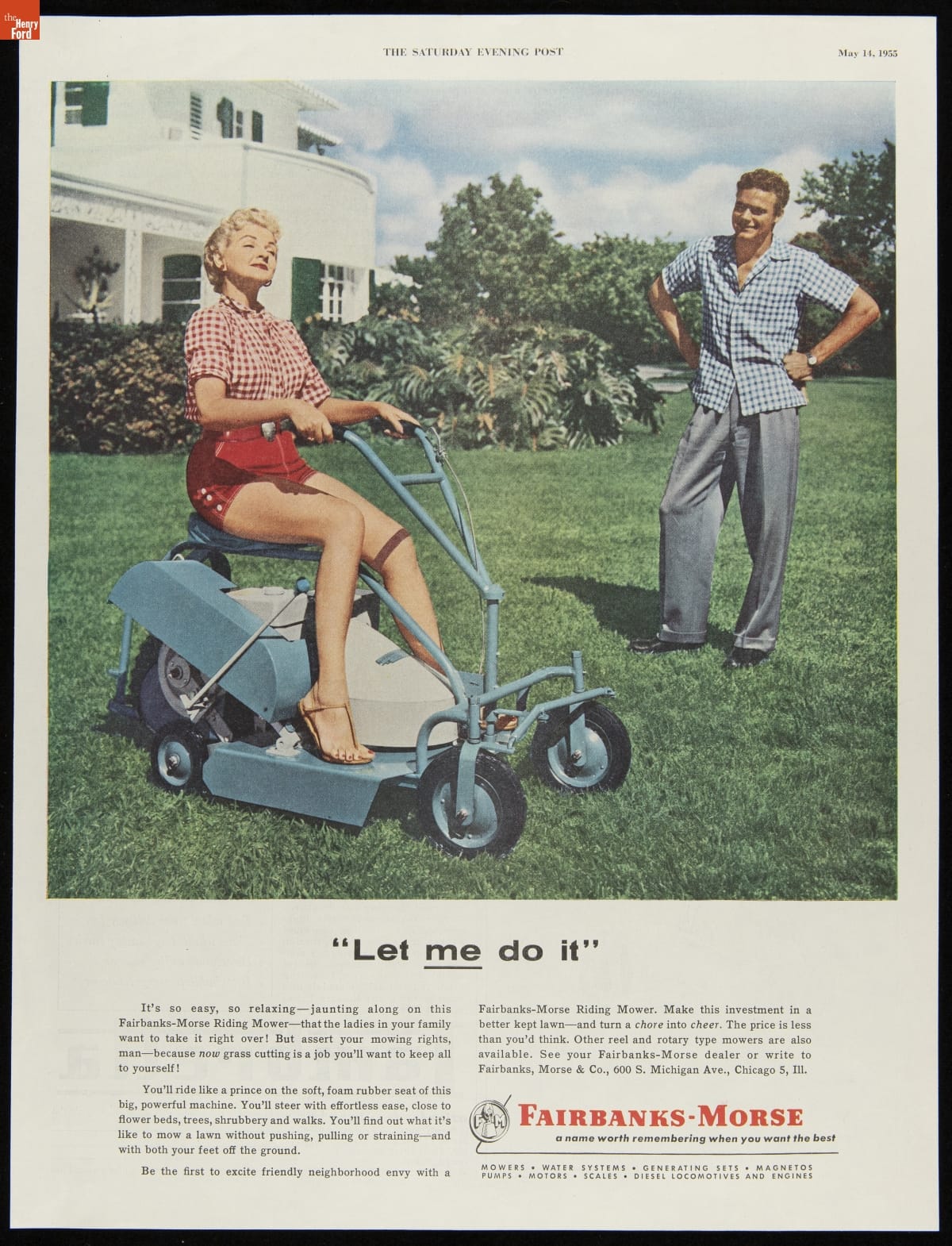
- "Let me do it:" Fairbanks-Morse Riding Lawn Mower, May 14, 1955 - With the rise of the suburban neighborhood at the end of the 19th century, and its explosive growth in the years that followed World War II, maintaining a "perfect" lawn became the new standard. Manufacturers promoted a whole set of specialty equipment to support this American obsession.
- May 14, 1955
- Collections - Artifact
"Let me do it:" Fairbanks-Morse Riding Lawn Mower, May 14, 1955
With the rise of the suburban neighborhood at the end of the 19th century, and its explosive growth in the years that followed World War II, maintaining a "perfect" lawn became the new standard. Manufacturers promoted a whole set of specialty equipment to support this American obsession.