
Search
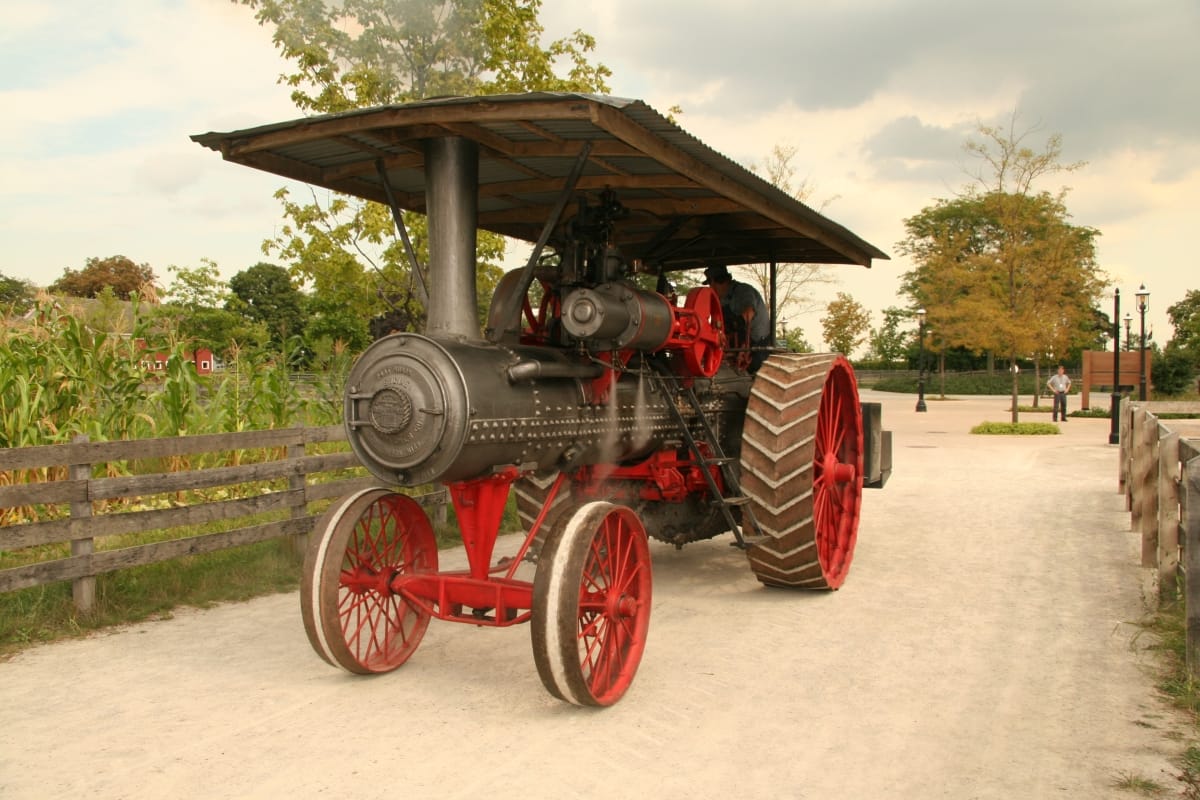
- Port Huron Steam Traction Engine, "Longfellow," 1916 - The late 19th to early 20th centuries saw huge steam engines like this used for threshing grain. They could move over the roads under their own power. Individual farmers generally did not own such machines. Rather, men made a business of moving from farm to farm, threshing grain during harvest time. Joseph Freund of Westphalia, Michigan, bought this machine in 1917 and used it to power a Port Huron "Rusher" thresher-separator in Clinton and Ionia Counties, Michigan.
- December 22, 1916
- Collections - Artifact
Port Huron Steam Traction Engine, "Longfellow," 1916
The late 19th to early 20th centuries saw huge steam engines like this used for threshing grain. They could move over the roads under their own power. Individual farmers generally did not own such machines. Rather, men made a business of moving from farm to farm, threshing grain during harvest time. Joseph Freund of Westphalia, Michigan, bought this machine in 1917 and used it to power a Port Huron "Rusher" thresher-separator in Clinton and Ionia Counties, Michigan.
- James L. Robertson & Sons Indicator, circa 1900 -
- circa 1900
- Collections - Artifact
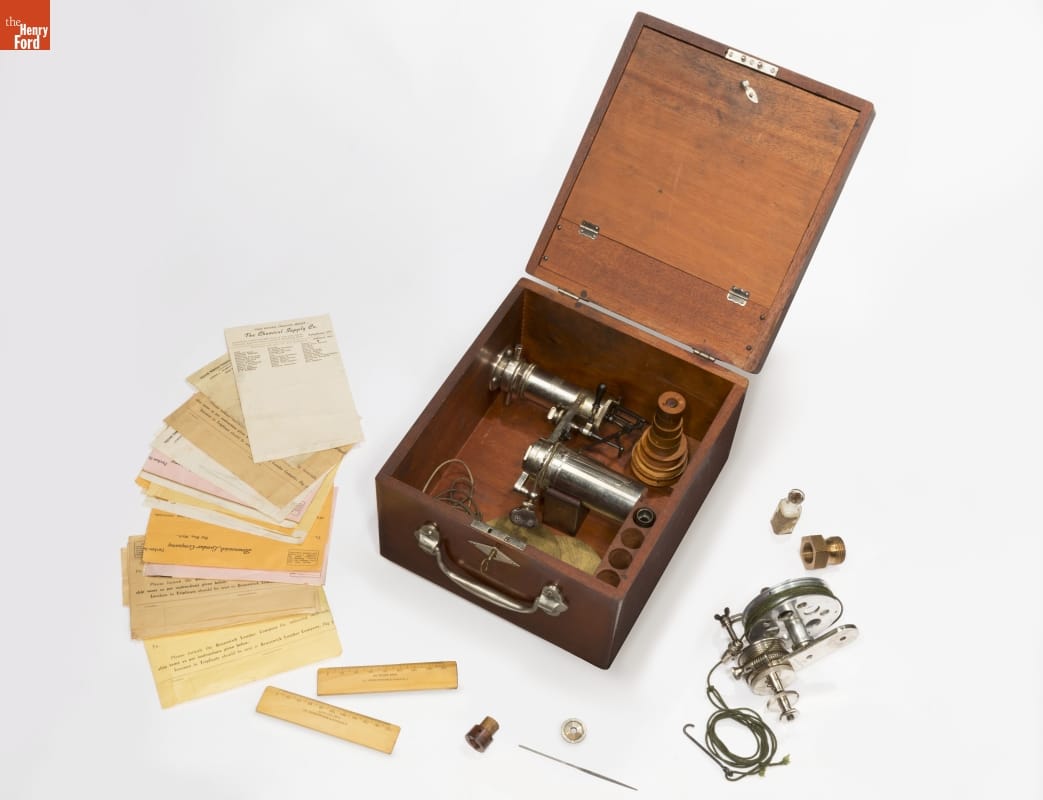
James L. Robertson & Sons Indicator, circa 1900
- Assembly of Marine Compound Steam Engines, Detroit Shipbuilding Company, Wyandotte, Michigan, 1901 - From 1895 to 1924, the Detroit Publishing Company was one of the major image publishers in the world. The company's wide-ranging stock of original photographs documented life and landscapes from across the nation and around the globe. From the tens of thousands of negatives, the company created prints, postcards, lantern slides, panoramas, and other merchandise for sale to educators, businessmen, advertisers, homeowners and travelers.

- 1901
- Collections - Artifact
Assembly of Marine Compound Steam Engines, Detroit Shipbuilding Company, Wyandotte, Michigan, 1901
From 1895 to 1924, the Detroit Publishing Company was one of the major image publishers in the world. The company's wide-ranging stock of original photographs documented life and landscapes from across the nation and around the globe. From the tens of thousands of negatives, the company created prints, postcards, lantern slides, panoramas, and other merchandise for sale to educators, businessmen, advertisers, homeowners and travelers.
- Champion Portable Steam Engine, circa 1880 -
- circa 1880
- Collections - Artifact
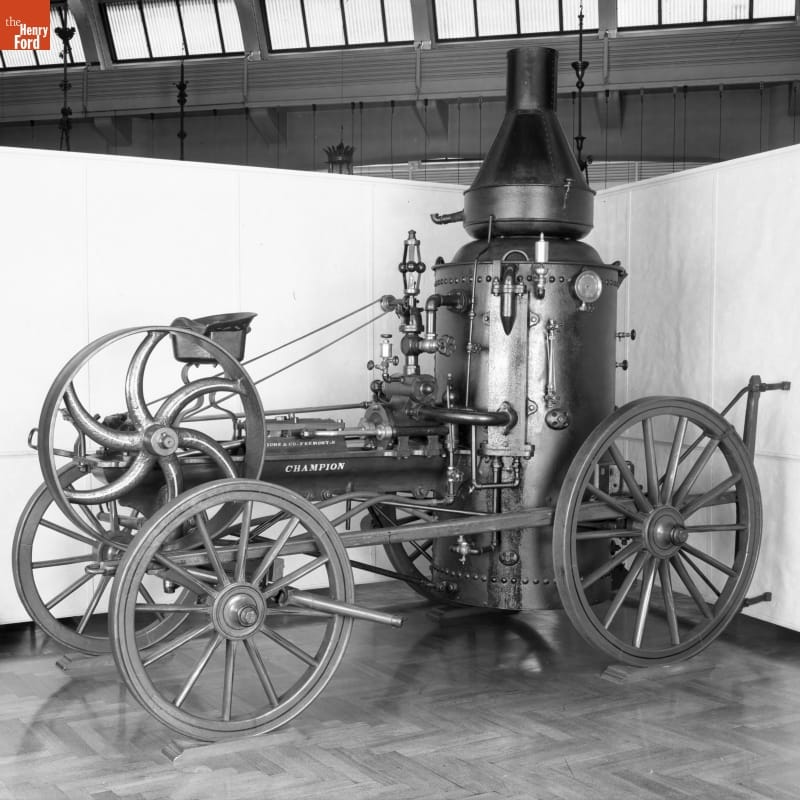
Champion Portable Steam Engine, circa 1880
- Bigelow Stationary Steam Engine, circa 1865 -
- circa 1865
- Collections - Artifact
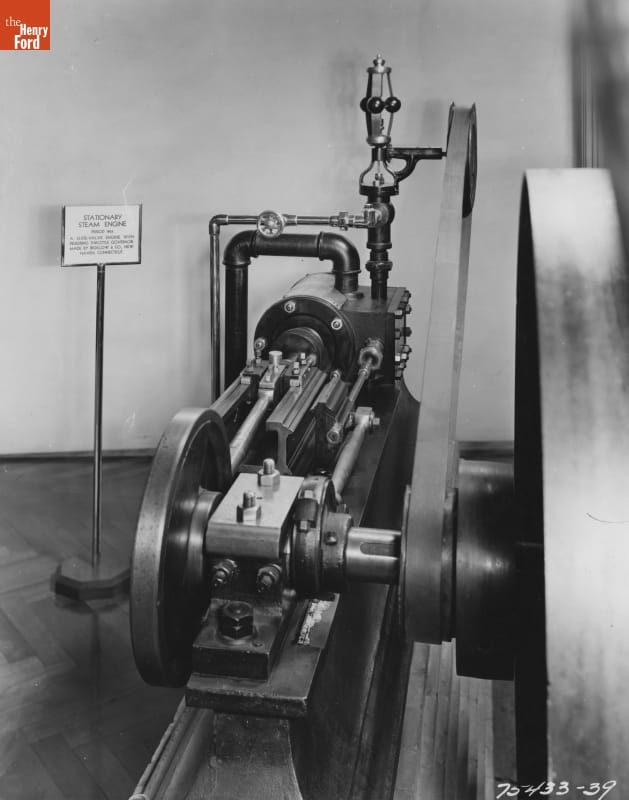
Bigelow Stationary Steam Engine, circa 1865
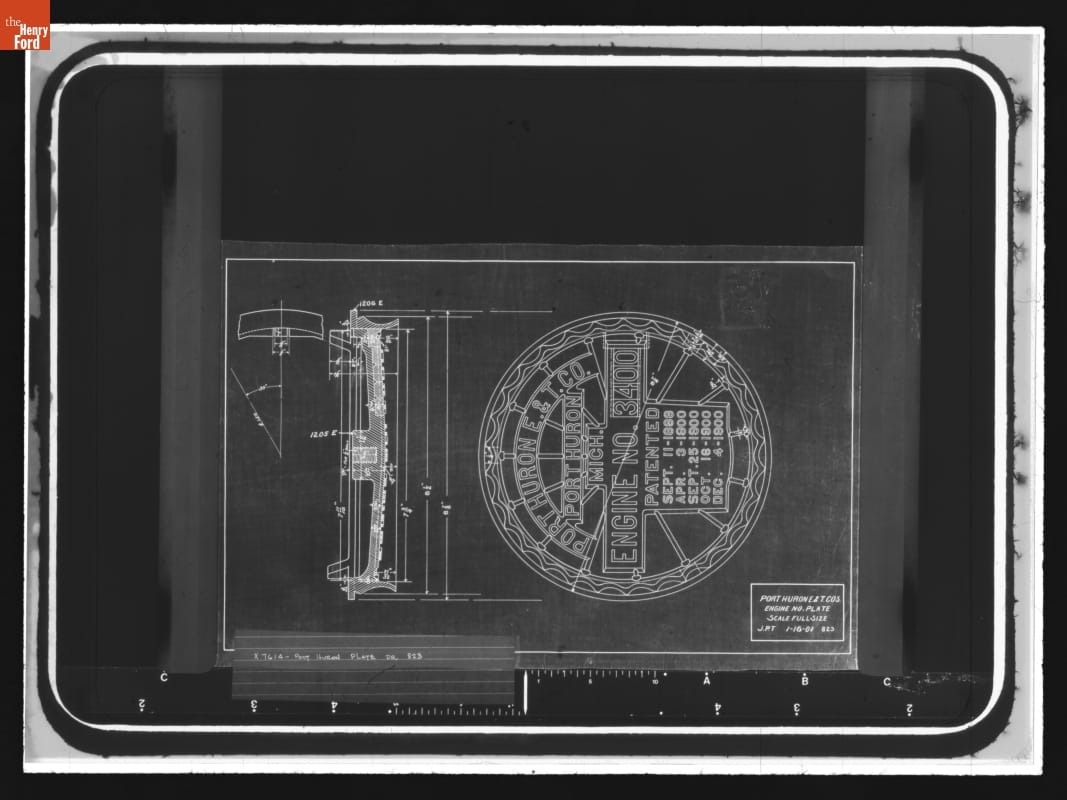
- Port Huron Engine & Thresher Company Drawing, "Engine No. Plate," January 16, 1901 - The Port Huron Engine & Thresher Company began manufacturing agricultural machinery and steam engines in the last quarter of the 19th century. By 1920, it had produced more than 6,000 engines to run threshers, sawmills, and other equipment. The Henry Ford houses more than sixty technical drawings that specify engineering requirements of various parts and components for the company's steam engines.
- January 16, 1901
- Collections - Artifact
Port Huron Engine & Thresher Company Drawing, "Engine No. Plate," January 16, 1901
The Port Huron Engine & Thresher Company began manufacturing agricultural machinery and steam engines in the last quarter of the 19th century. By 1920, it had produced more than 6,000 engines to run threshers, sawmills, and other equipment. The Henry Ford houses more than sixty technical drawings that specify engineering requirements of various parts and components for the company's steam engines.
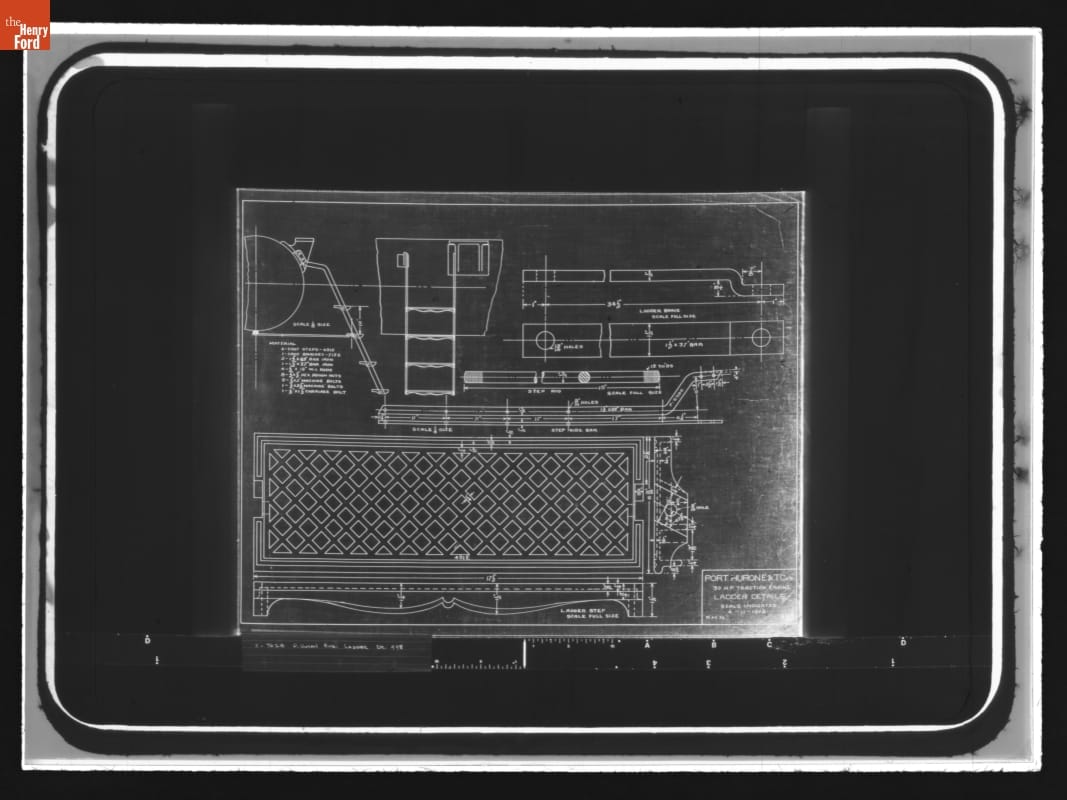
- Port Huron Engine & Thresher Company Drawing, "30 H.P. Traction Engine Ladder Details," April 11, 1902 - The Port Huron Engine & Thresher Company began manufacturing agricultural machinery and steam engines in the last quarter of the 19th century. By 1920, it had produced more than 6,000 engines to run threshers, sawmills, and other equipment. The Henry Ford houses more than sixty technical drawings that specify engineering requirements of various parts and components for the company's steam engines.
- April 11, 1902
- Collections - Artifact
Port Huron Engine & Thresher Company Drawing, "30 H.P. Traction Engine Ladder Details," April 11, 1902
The Port Huron Engine & Thresher Company began manufacturing agricultural machinery and steam engines in the last quarter of the 19th century. By 1920, it had produced more than 6,000 engines to run threshers, sawmills, and other equipment. The Henry Ford houses more than sixty technical drawings that specify engineering requirements of various parts and components for the company's steam engines.
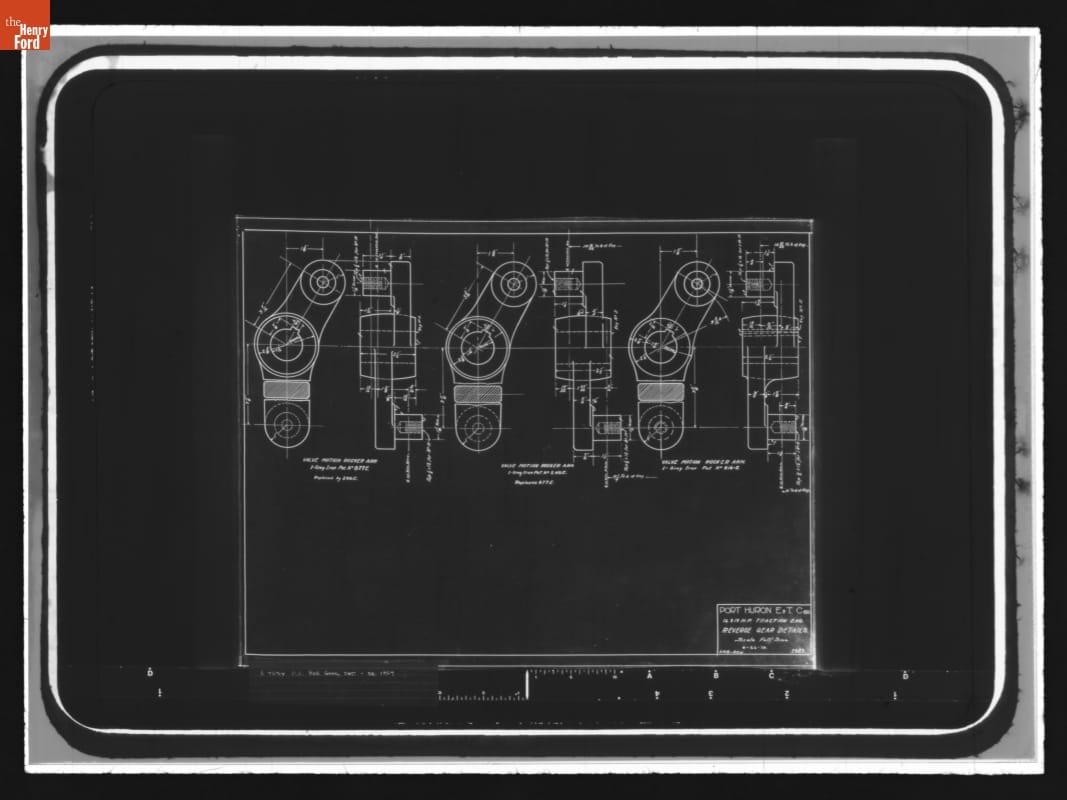
- Port Huron Engine & Thresher Company Drawing, "16 & 19 H.P. Traction Eng. Reverse Gear Details," June 26, 1913 - The Port Huron Engine & Thresher Company began manufacturing agricultural machinery and steam engines in the last quarter of the 19th century. By 1920, it had produced more than 6,000 engines to run threshers, sawmills, and other equipment. The Henry Ford houses more than sixty technical drawings that specify engineering requirements of various parts and components for the company's steam engines.
- June 26, 1913
- Collections - Artifact
Port Huron Engine & Thresher Company Drawing, "16 & 19 H.P. Traction Eng. Reverse Gear Details," June 26, 1913
The Port Huron Engine & Thresher Company began manufacturing agricultural machinery and steam engines in the last quarter of the 19th century. By 1920, it had produced more than 6,000 engines to run threshers, sawmills, and other equipment. The Henry Ford houses more than sixty technical drawings that specify engineering requirements of various parts and components for the company's steam engines.
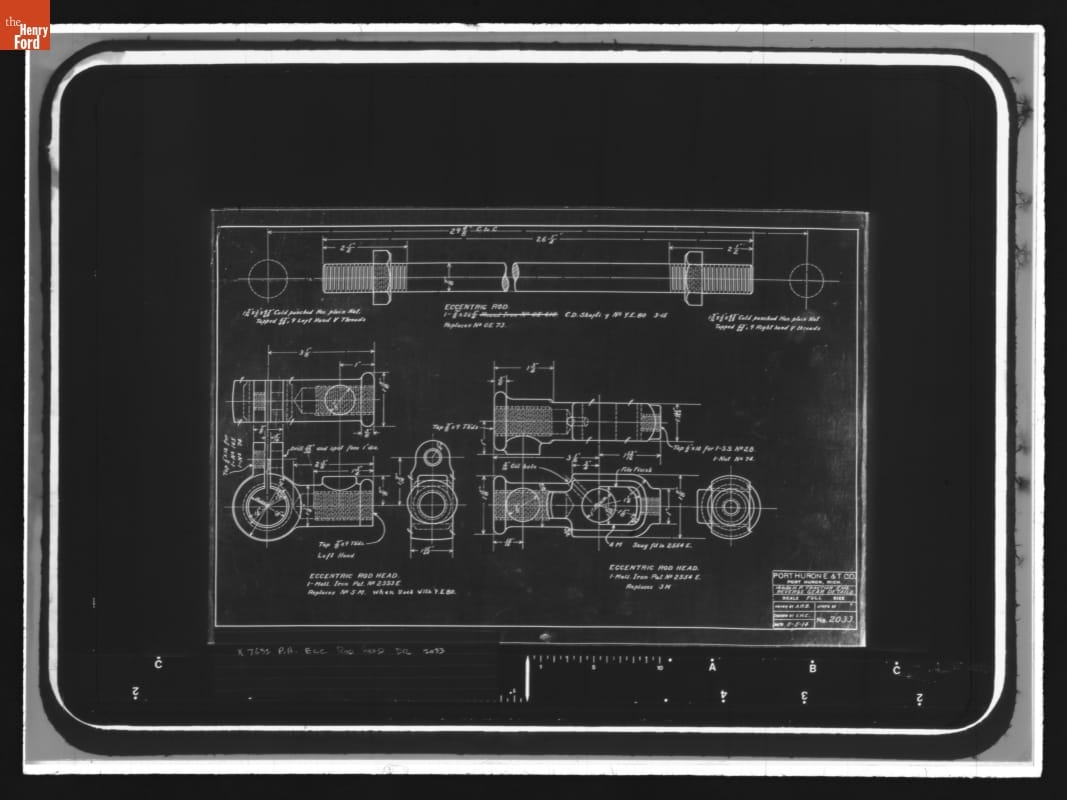
- Port Huron Engine & Thresher Company Drawing, "14 to 20 H.P. Traction Eng. Reverse Gear Details," May 5, 1914 - The Port Huron Engine & Thresher Company began manufacturing agricultural machinery and steam engines in the last quarter of the 19th century. By 1920, it had produced more than 6,000 engines to run threshers, sawmills, and other equipment. The Henry Ford houses more than sixty technical drawings that specify engineering requirements of various parts and components for the company's steam engines.
- May 05, 1914
- Collections - Artifact
Port Huron Engine & Thresher Company Drawing, "14 to 20 H.P. Traction Eng. Reverse Gear Details," May 5, 1914
The Port Huron Engine & Thresher Company began manufacturing agricultural machinery and steam engines in the last quarter of the 19th century. By 1920, it had produced more than 6,000 engines to run threshers, sawmills, and other equipment. The Henry Ford houses more than sixty technical drawings that specify engineering requirements of various parts and components for the company's steam engines.
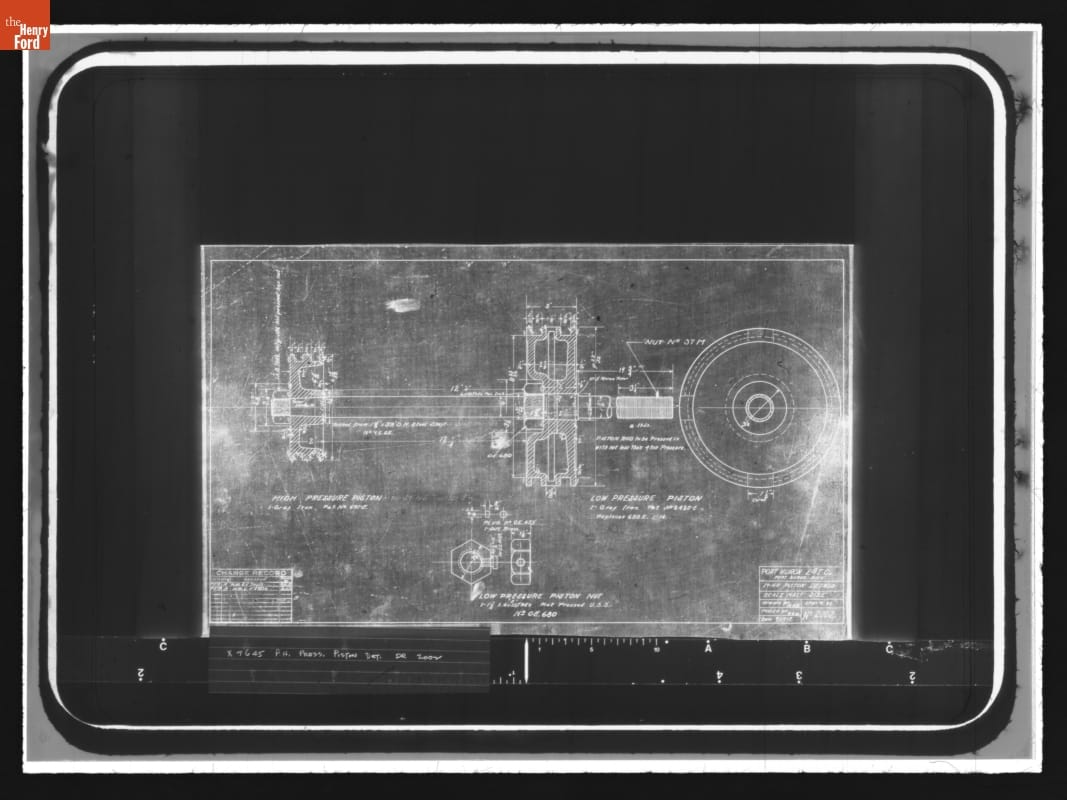
- Port Huron Engine & Thresher Company Drawing, "19-H.P. Piston Details," September 19, 1913 - The Port Huron Engine & Thresher Company began manufacturing agricultural machinery and steam engines in the last quarter of the 19th century. By 1920, it had produced more than 6,000 engines to run threshers, sawmills, and other equipment. The Henry Ford houses more than sixty technical drawings that specify engineering requirements of various parts and components for the company's steam engines.
- September 19, 1913
- Collections - Artifact
Port Huron Engine & Thresher Company Drawing, "19-H.P. Piston Details," September 19, 1913
The Port Huron Engine & Thresher Company began manufacturing agricultural machinery and steam engines in the last quarter of the 19th century. By 1920, it had produced more than 6,000 engines to run threshers, sawmills, and other equipment. The Henry Ford houses more than sixty technical drawings that specify engineering requirements of various parts and components for the company's steam engines.