
Search
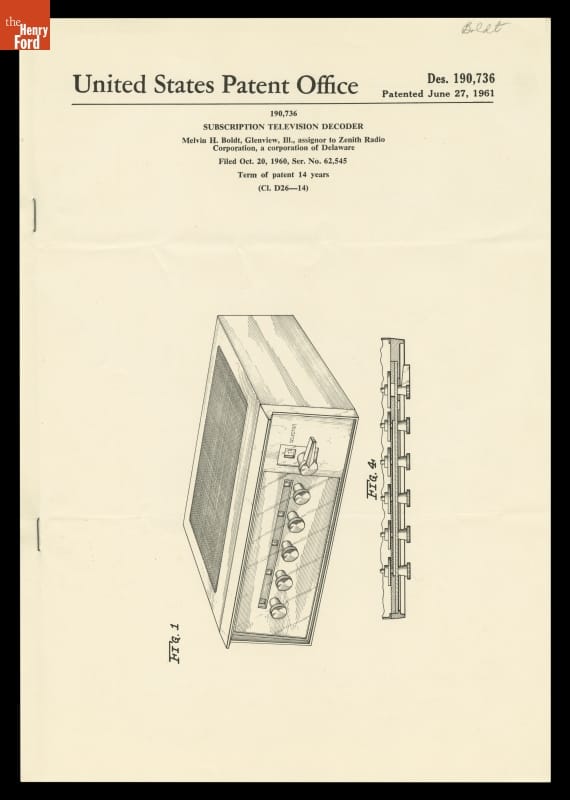
- United States Patent for Subscription Television Decoder Unit, June 27, 1961 -
- June 27, 1961
- Collections - Artifact
United States Patent for Subscription Television Decoder Unit, June 27, 1961
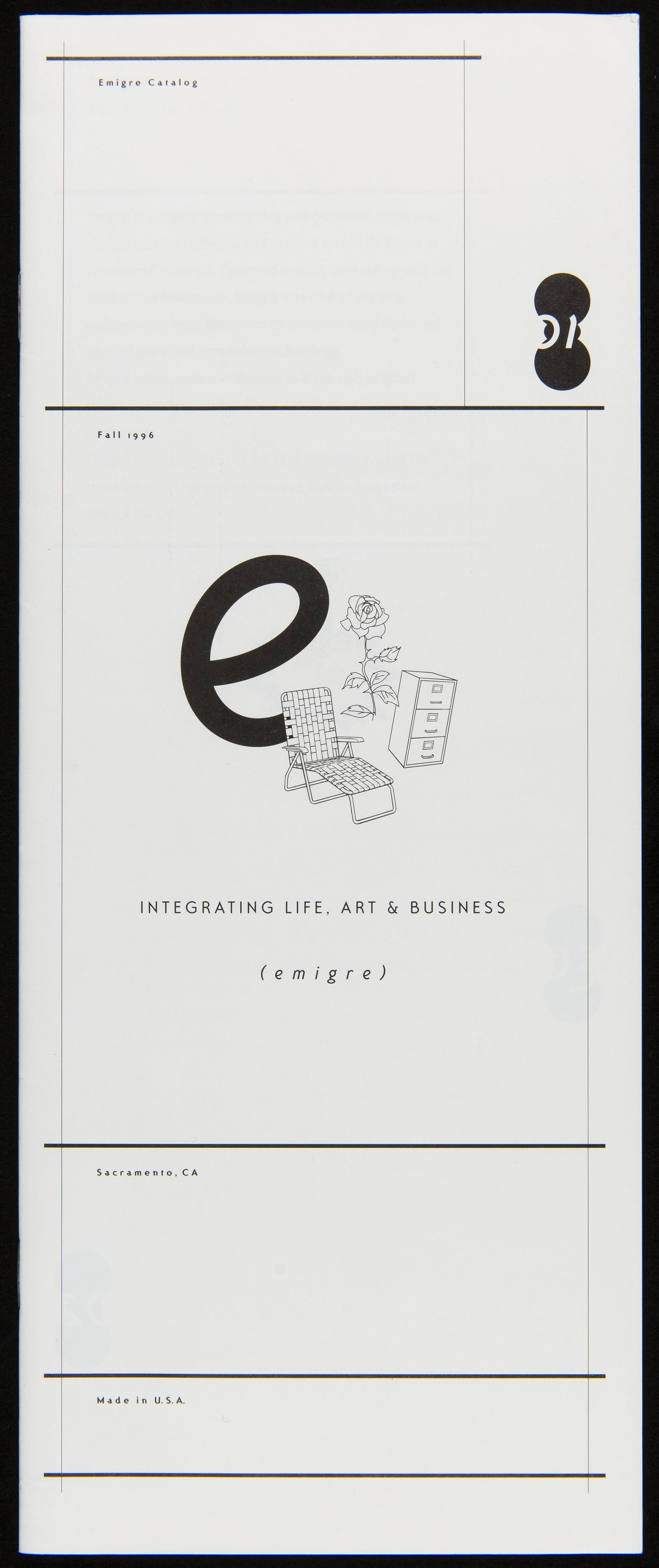
- Mail Order Catalog, "Emigre Catalog: Integrating Life, Art & Business," Fall 1996 - Emigre is a digital type foundry established by Rudy VanderLans and Zuzana Licko. The company's history is linked with the introduction of the 1984 Macintosh computer, used to design their early bitmapped typefaces. Emigre's digital work gained notoriety -- defying visual communication standards with fractured, layered combinations of text and image. This item advertised fonts or other items available for purchase.
- 1996
- Collections - Artifact
Mail Order Catalog, "Emigre Catalog: Integrating Life, Art & Business," Fall 1996
Emigre is a digital type foundry established by Rudy VanderLans and Zuzana Licko. The company's history is linked with the introduction of the 1984 Macintosh computer, used to design their early bitmapped typefaces. Emigre's digital work gained notoriety -- defying visual communication standards with fractured, layered combinations of text and image. This item advertised fonts or other items available for purchase.
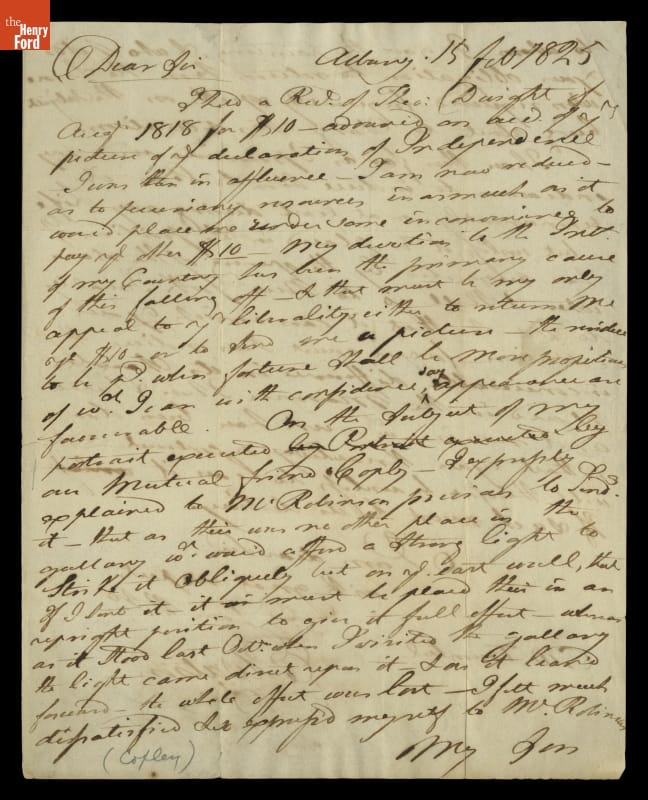
- Letter to John Trumbull from Elkanah Watson, February 15, 1825 - Elkanah Watson subscribed to purchase a print of John Trumbull's painting, <EM>Declaration of Independence</EM>. (The painting was commissioned for the U.S. Capitol and Trumbull authorized engravings to make extra money.) Watson had paid half, but was unable to complete his payment. In this letter, Watson appealed to Trumbull's "liberality" to either reimburse the amount already paid or wait for payment until Watson's "fortune shall be more propitious."
- February 15, 1825
- Collections - Artifact
Letter to John Trumbull from Elkanah Watson, February 15, 1825
Elkanah Watson subscribed to purchase a print of John Trumbull's painting, Declaration of Independence. (The painting was commissioned for the U.S. Capitol and Trumbull authorized engravings to make extra money.) Watson had paid half, but was unable to complete his payment. In this letter, Watson appealed to Trumbull's "liberality" to either reimburse the amount already paid or wait for payment until Watson's "fortune shall be more propitious."
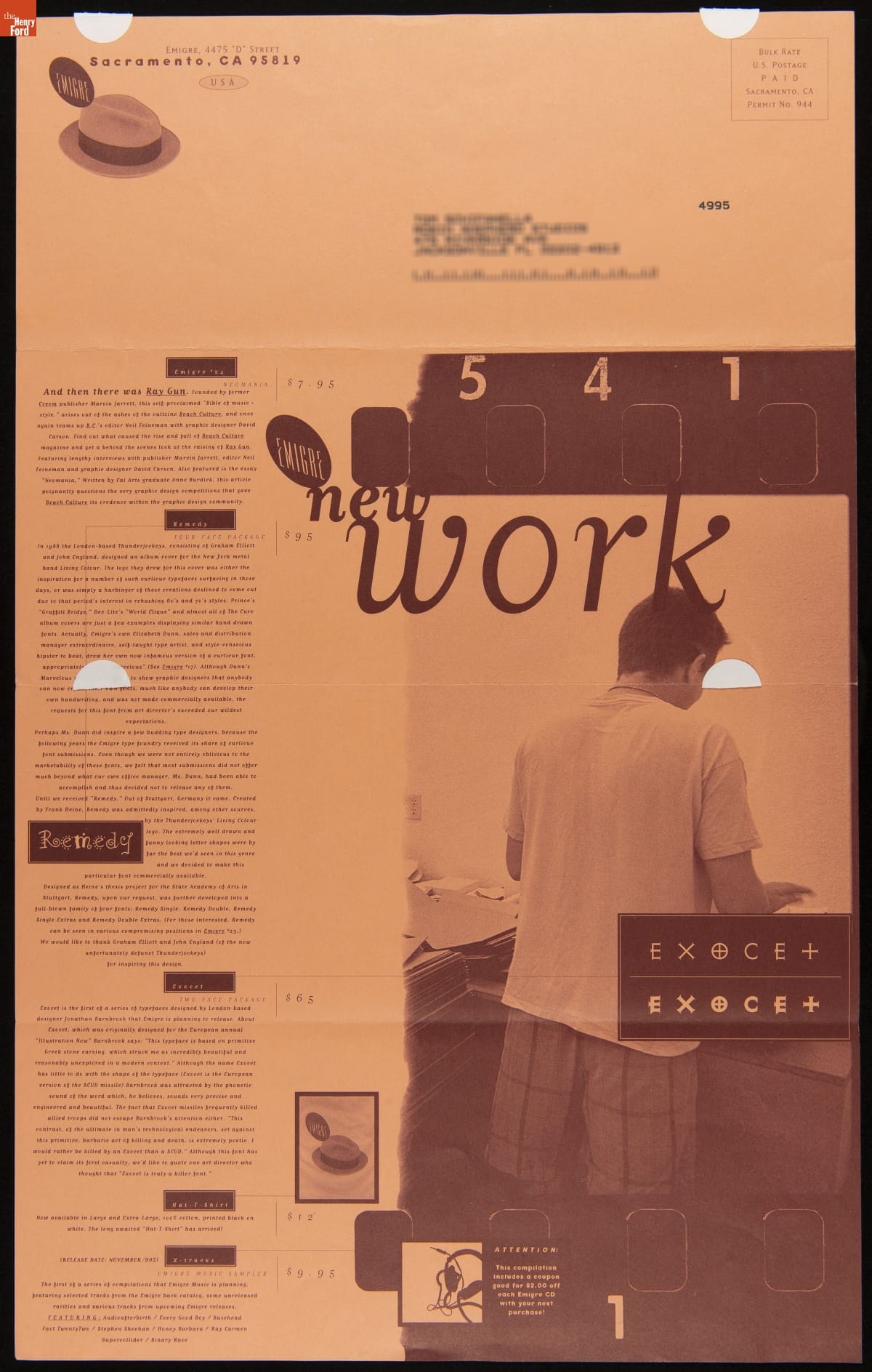
- Brochure, Emigre No. 24, "Neomania," 1991 - Emigre is a digital type foundry established by Rudy VanderLans and Zuzana Licko. The company's history is linked with the introduction of the 1984 Macintosh computer, used to design their early bitmapped typefaces. Emigre's digital work gained notoriety -- defying visual communication standards with fractured, layered combinations of text and image. This item advertised fonts or other items available for purchase.
- 1991
- Collections - Artifact
Brochure, Emigre No. 24, "Neomania," 1991
Emigre is a digital type foundry established by Rudy VanderLans and Zuzana Licko. The company's history is linked with the introduction of the 1984 Macintosh computer, used to design their early bitmapped typefaces. Emigre's digital work gained notoriety -- defying visual communication standards with fractured, layered combinations of text and image. This item advertised fonts or other items available for purchase.
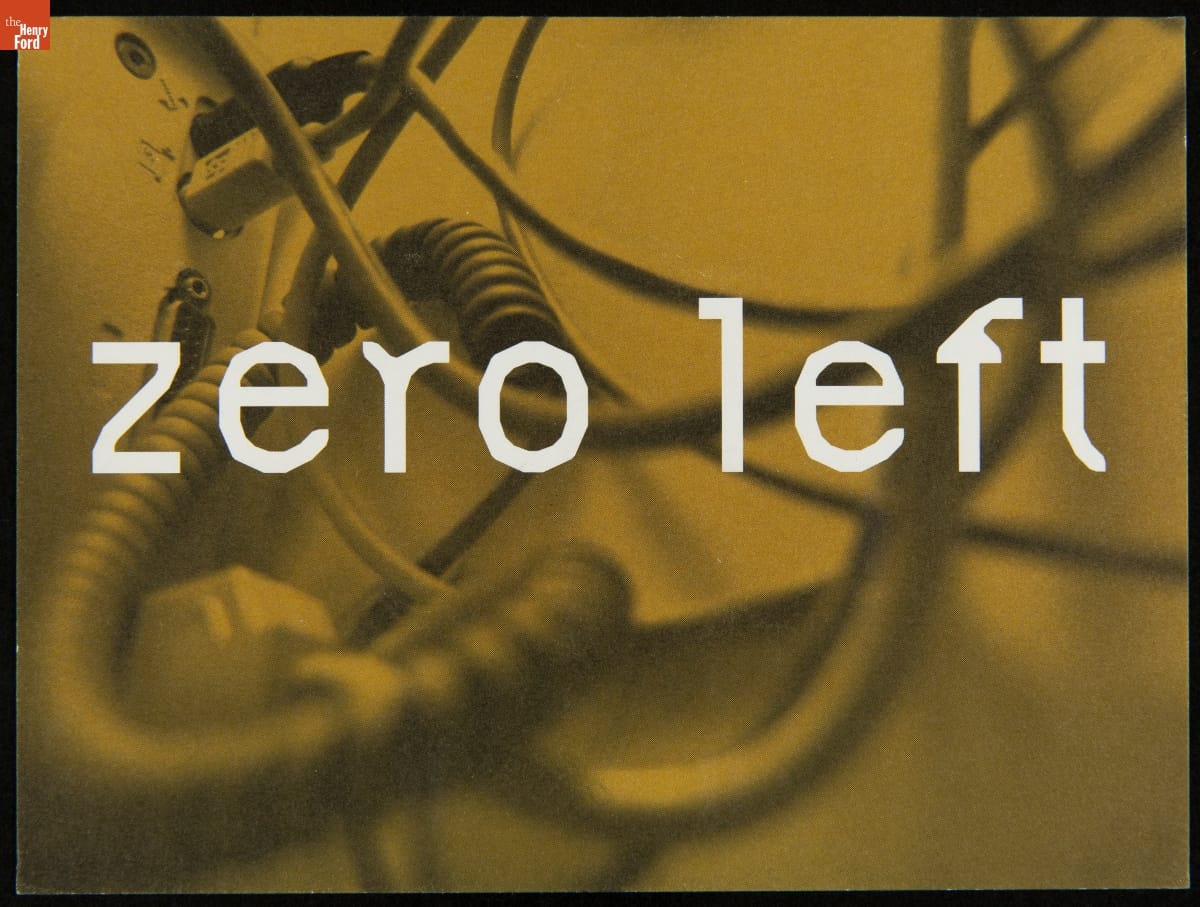
- Reminder Postcard to Renew Emigre Magazine Subscription, "Zero Left," August 9, 1990 - Emigre is a digital type foundry established by Rudy VanderLans and Zuzana Licko. The company's history is linked with the introduction of the 1984 Macintosh computer, used to design their early bitmapped typefaces. Emigre's digital work gained notoriety -- defying visual communication standards with fractured, layered combinations of text and image. This item advertised fonts or other items available for purchase.
- August 09, 1990
- Collections - Artifact
Reminder Postcard to Renew Emigre Magazine Subscription, "Zero Left," August 9, 1990
Emigre is a digital type foundry established by Rudy VanderLans and Zuzana Licko. The company's history is linked with the introduction of the 1984 Macintosh computer, used to design their early bitmapped typefaces. Emigre's digital work gained notoriety -- defying visual communication standards with fractured, layered combinations of text and image. This item advertised fonts or other items available for purchase.
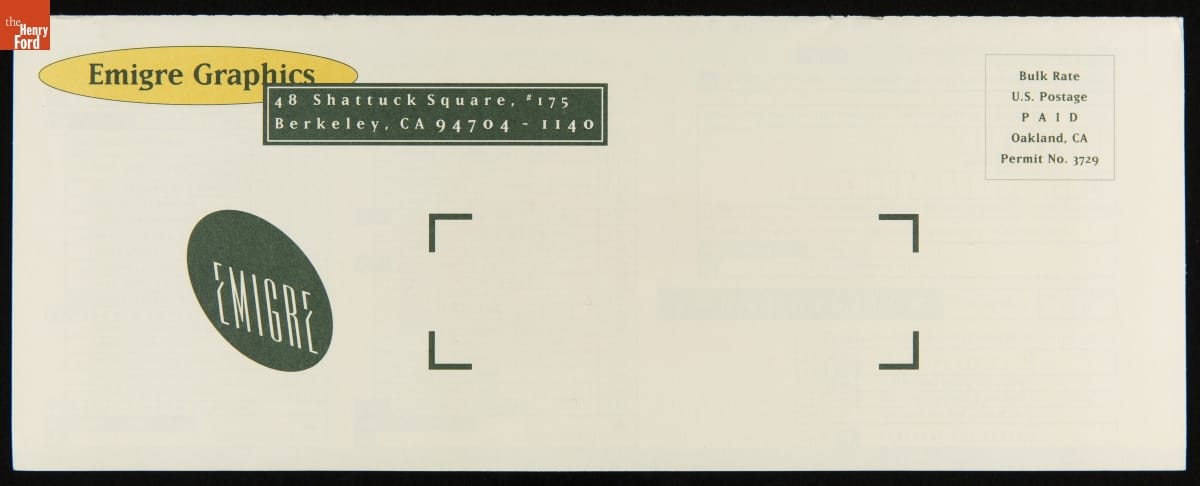
- Emigre Envelope, 1989-1990 - Emigre is a digital type foundry established by Rudy VanderLans and Zuzana Licko. The company's history is linked with the introduction of the 1984 Macintosh computer, used to design their early bitmapped typefaces. Emigre's digital work gained notoriety -- defying visual communication standards with fractured, layered combinations of text and image. This item advertised fonts or other items available for purchase.
- 1989-1990
- Collections - Artifact
Emigre Envelope, 1989-1990
Emigre is a digital type foundry established by Rudy VanderLans and Zuzana Licko. The company's history is linked with the introduction of the 1984 Macintosh computer, used to design their early bitmapped typefaces. Emigre's digital work gained notoriety -- defying visual communication standards with fractured, layered combinations of text and image. This item advertised fonts or other items available for purchase.
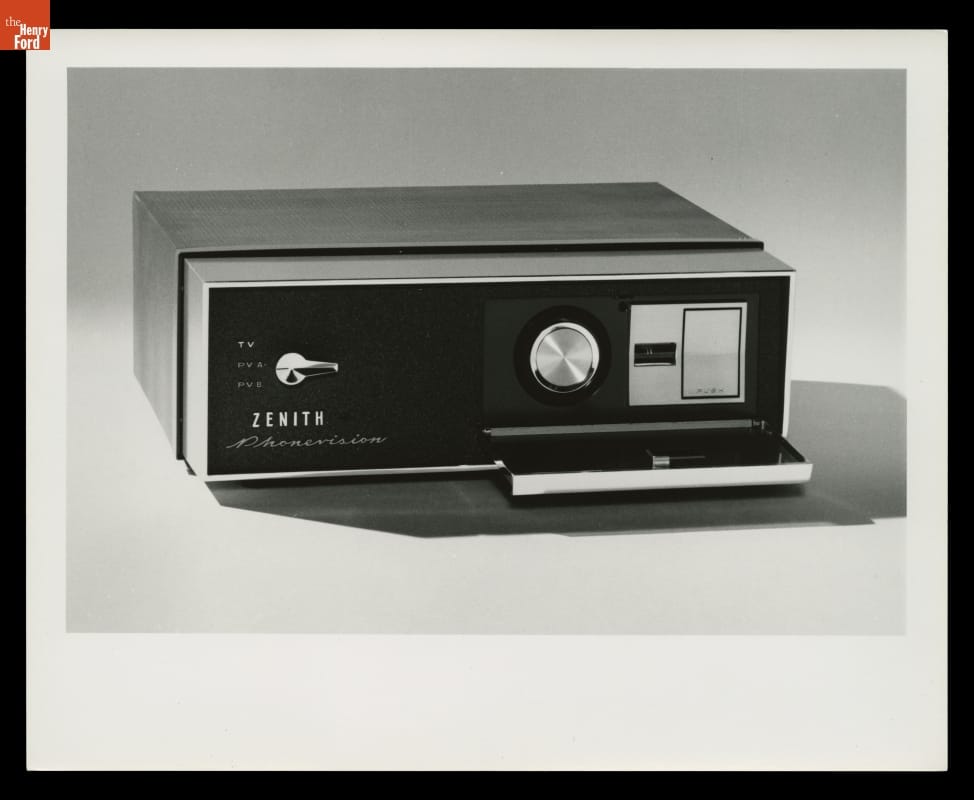
- Zenith "Phonevision" Subscription Television Decoder Unit with Control Panel Open, 1958 -
- 1958
- Collections - Artifact
Zenith "Phonevision" Subscription Television Decoder Unit with Control Panel Open, 1958
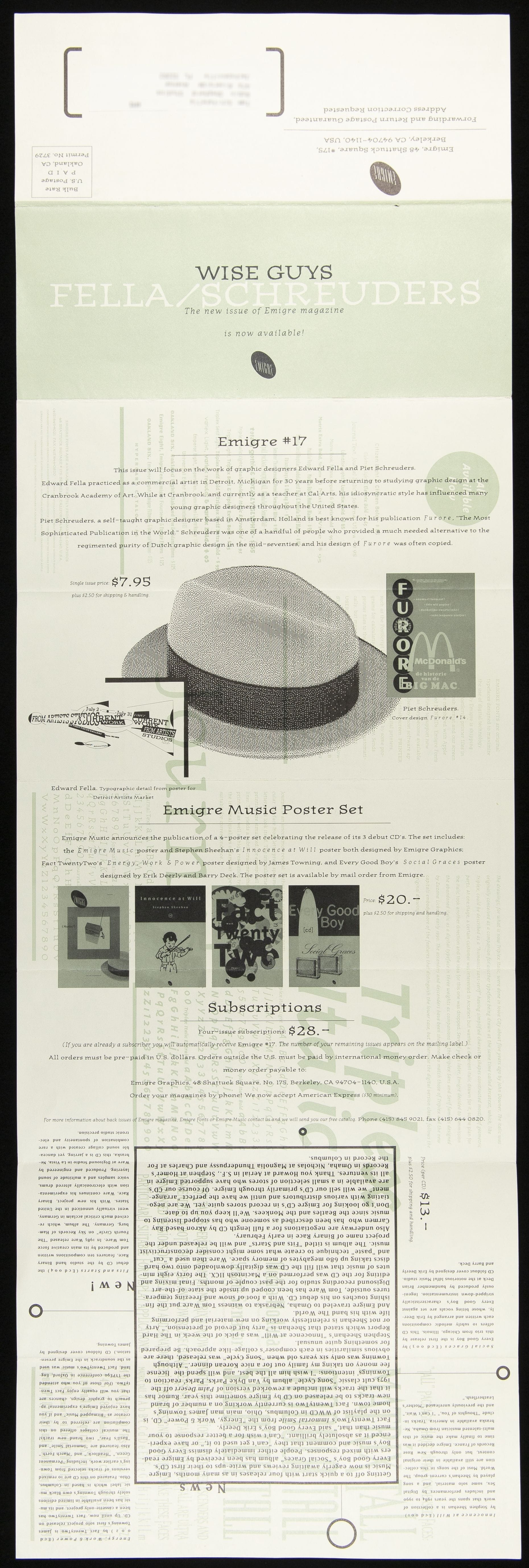
- Brochure, Emigre No. 17, "Wise Guys," 1990 - Emigre is a digital type foundry established by Rudy VanderLans and Zuzana Licko. The company's history is linked with the introduction of the 1984 Macintosh computer, used to design their early bitmapped typefaces. Emigre's digital work gained notoriety -- defying visual communication standards with fractured, layered combinations of text and image. This item advertised fonts or other items available for purchase.
- 1990
- Collections - Artifact
Brochure, Emigre No. 17, "Wise Guys," 1990
Emigre is a digital type foundry established by Rudy VanderLans and Zuzana Licko. The company's history is linked with the introduction of the 1984 Macintosh computer, used to design their early bitmapped typefaces. Emigre's digital work gained notoriety -- defying visual communication standards with fractured, layered combinations of text and image. This item advertised fonts or other items available for purchase.
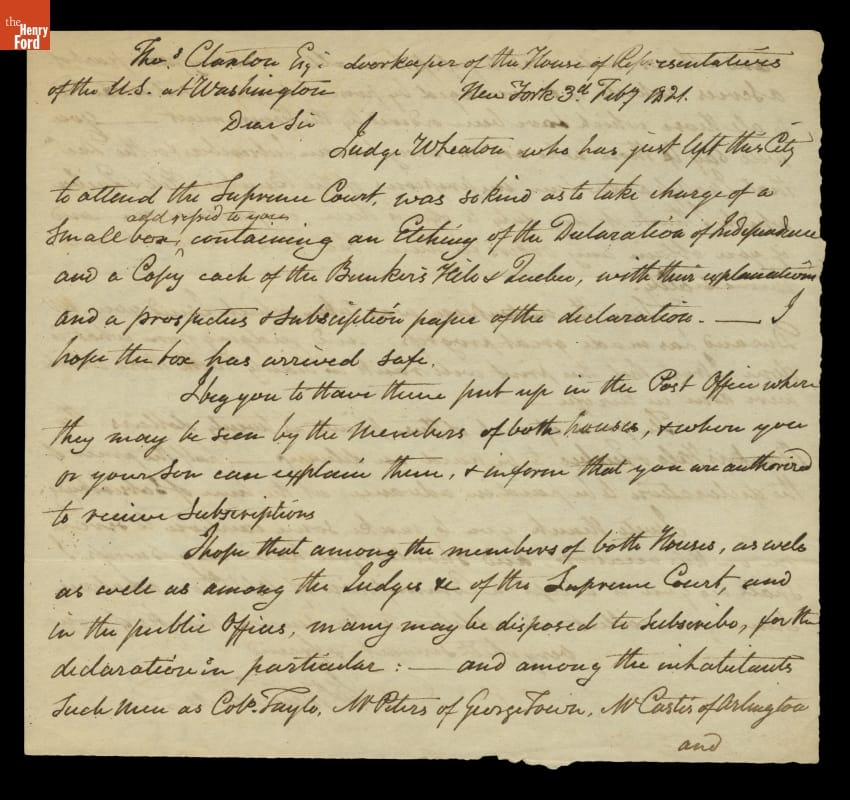
- Letter from John Trumbull to Thomas Claxton, February 3, 1821 - After completing his painting <EM>Declaration of Independence</EM>, John Trumbull authorized engraving plates made to create prints of this work. Trumbull sent an early proof to Thomas Claxton, Doorkeeper of the House of Representatives, who was to place the print in the Capitol Post Office so Congressmen and other officials could view it. Trumbull promised Claxton a commission on any sales of the print.
- February 03, 1821
- Collections - Artifact
Letter from John Trumbull to Thomas Claxton, February 3, 1821
After completing his painting Declaration of Independence, John Trumbull authorized engraving plates made to create prints of this work. Trumbull sent an early proof to Thomas Claxton, Doorkeeper of the House of Representatives, who was to place the print in the Capitol Post Office so Congressmen and other officials could view it. Trumbull promised Claxton a commission on any sales of the print.
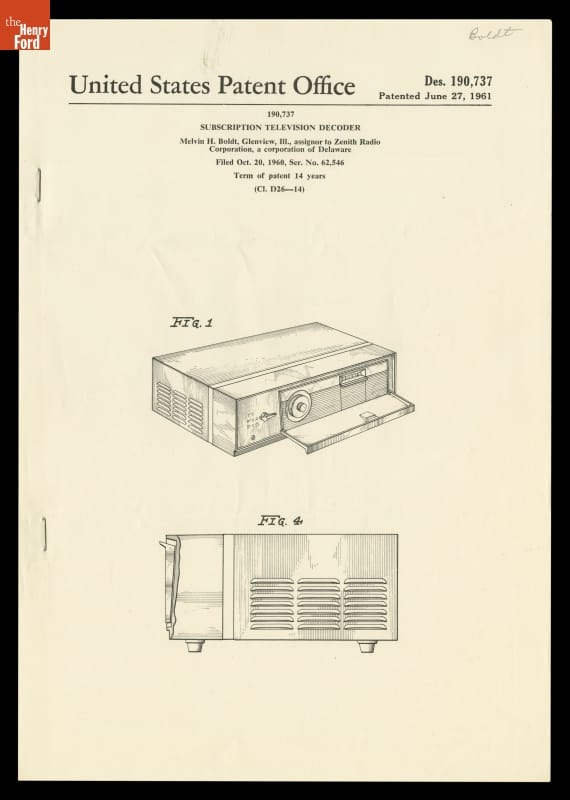
- United States Patent for Subscription Television Decoder Unit, June 27, 1961 - Phonevision, the first subscription television system, allowed people to watch popular Hollywood films at home. To order a film, viewers called an operator, who would send a signal over the telephone and into a descrambling unit on top of the television. While a few extra steps were involved, Phonevision was similar to today's web-based "on-demand" streaming services.
- June 27, 1961
- Collections - Artifact
United States Patent for Subscription Television Decoder Unit, June 27, 1961
Phonevision, the first subscription television system, allowed people to watch popular Hollywood films at home. To order a film, viewers called an operator, who would send a signal over the telephone and into a descrambling unit on top of the television. While a few extra steps were involved, Phonevision was similar to today's web-based "on-demand" streaming services.