
Search
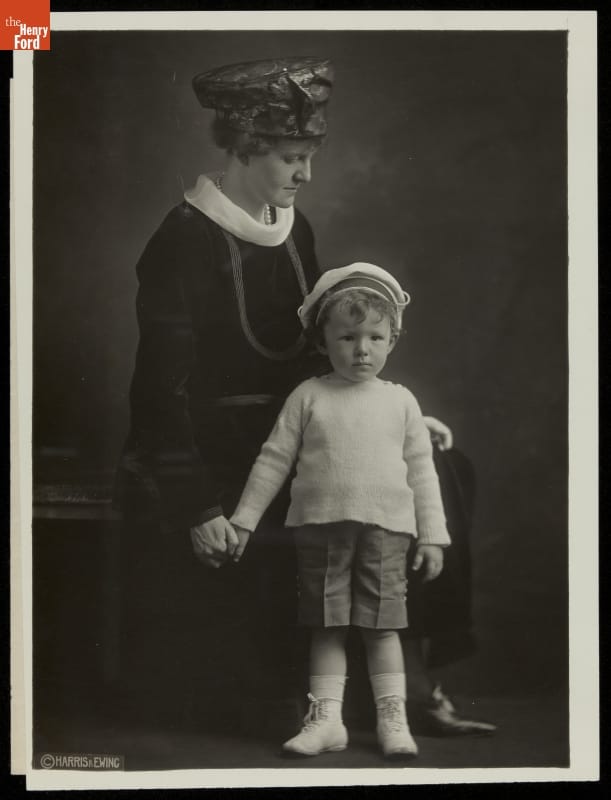
- Cornelia Pinchot with Her Son, Gifford Bryce Pinchot, 1917-1921 - Cornelia Pinchot, pictured here with her only child, was the wife of pioneer conservationist Gifford Pinchot and a Progressive Era reformer. Pinchot was active in the American fight for women's suffrage, which culminated with the ratification of the Nineteenth Amendment to the United States Constitution in 1920. The amendment prohibited the right to vote from being denied based on sex.
- 1917-1921
- Collections - Artifact
Cornelia Pinchot with Her Son, Gifford Bryce Pinchot, 1917-1921
Cornelia Pinchot, pictured here with her only child, was the wife of pioneer conservationist Gifford Pinchot and a Progressive Era reformer. Pinchot was active in the American fight for women's suffrage, which culminated with the ratification of the Nineteenth Amendment to the United States Constitution in 1920. The amendment prohibited the right to vote from being denied based on sex.
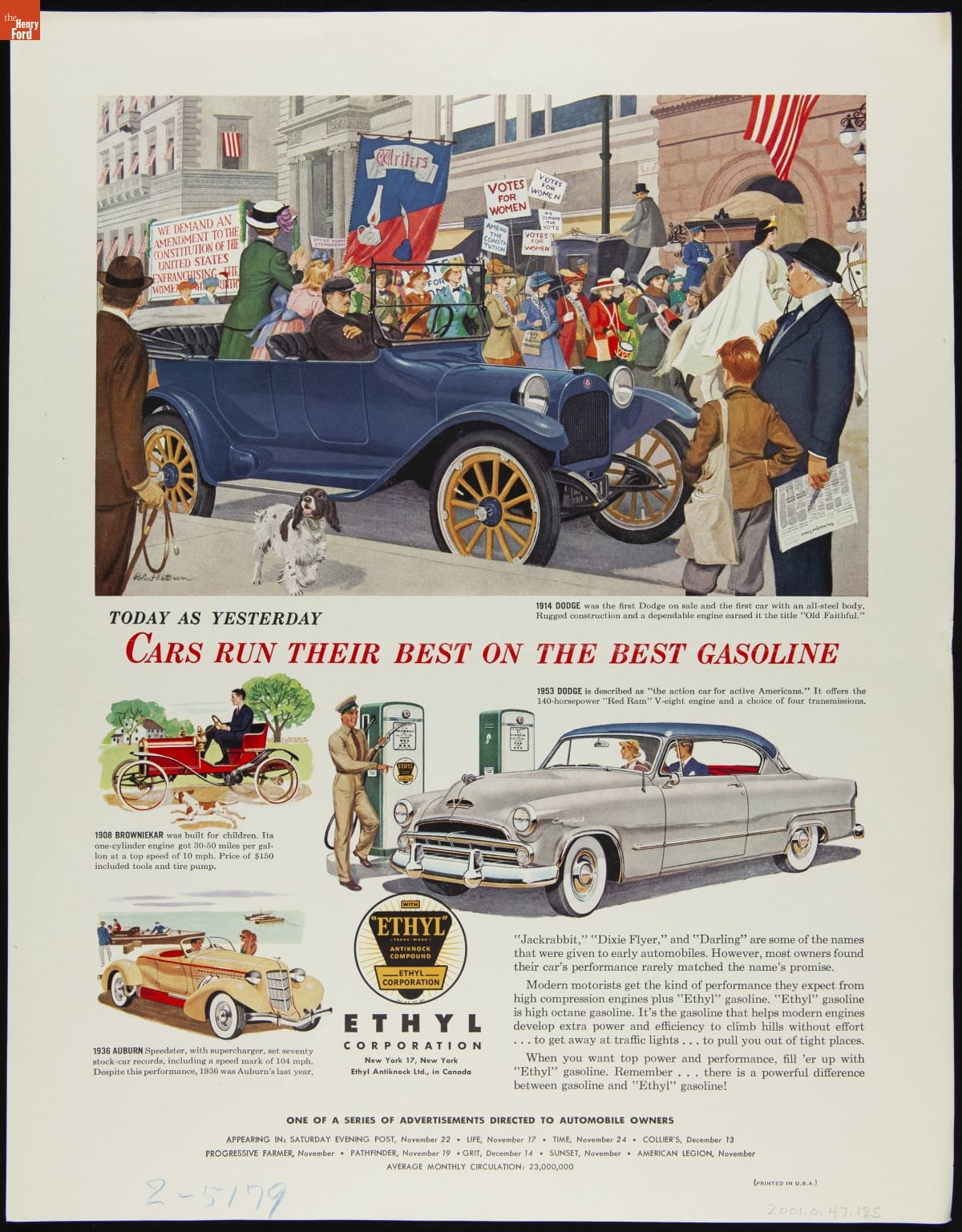
- Today as Yesterday Cars Run their Best on the Best Gasoline, circa 1952 - This advertisement for Ethyl antiknock gasoline additive features historic vehicles from Browniekar, Auburn, and Dodge. The main image shows a 1914 Dodge touring car being used at a rally for women's suffrage. The automobile served as a mobile podium and billboard for American women who fought for the vote in the early 20th century.
- 1953
- Collections - Artifact
Today as Yesterday Cars Run their Best on the Best Gasoline, circa 1952
This advertisement for Ethyl antiknock gasoline additive features historic vehicles from Browniekar, Auburn, and Dodge. The main image shows a 1914 Dodge touring car being used at a rally for women's suffrage. The automobile served as a mobile podium and billboard for American women who fought for the vote in the early 20th century.
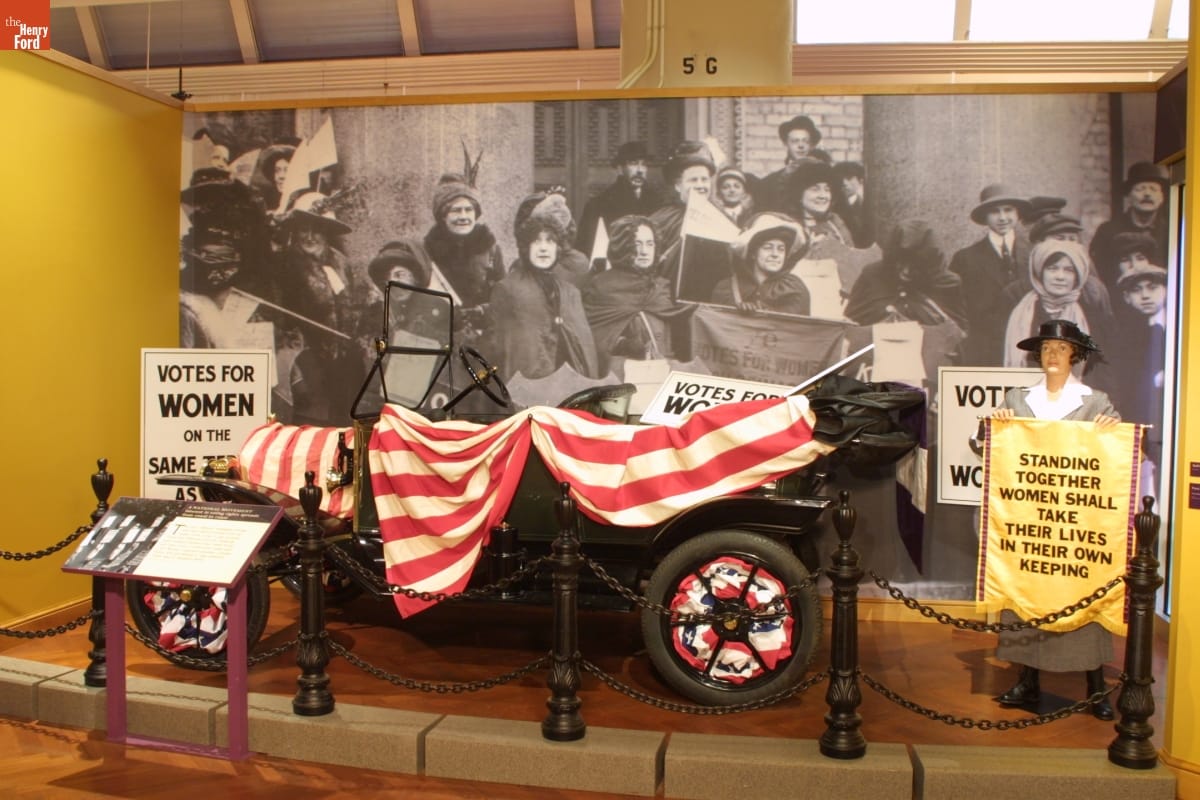
- "Votes for Women" Section of "With Liberty and Justice for All" Exhibit in Henry Ford Museum, January 2006 - <em>With Liberty and Justice for All</em> opened in Henry Ford Museum of American Innovation in 2006. The exhibit explored struggles that arose in the quest for freedom in America, and included sections devoted to Independence, Freedom and Union, Votes for Women, and the Civil Rights Movement. The Votes for Women area acknowledged the automobile's role in women's fight for suffrage.
- January 17, 2006
- Collections - Artifact
"Votes for Women" Section of "With Liberty and Justice for All" Exhibit in Henry Ford Museum, January 2006
With Liberty and Justice for All opened in Henry Ford Museum of American Innovation in 2006. The exhibit explored struggles that arose in the quest for freedom in America, and included sections devoted to Independence, Freedom and Union, Votes for Women, and the Civil Rights Movement. The Votes for Women area acknowledged the automobile's role in women's fight for suffrage.
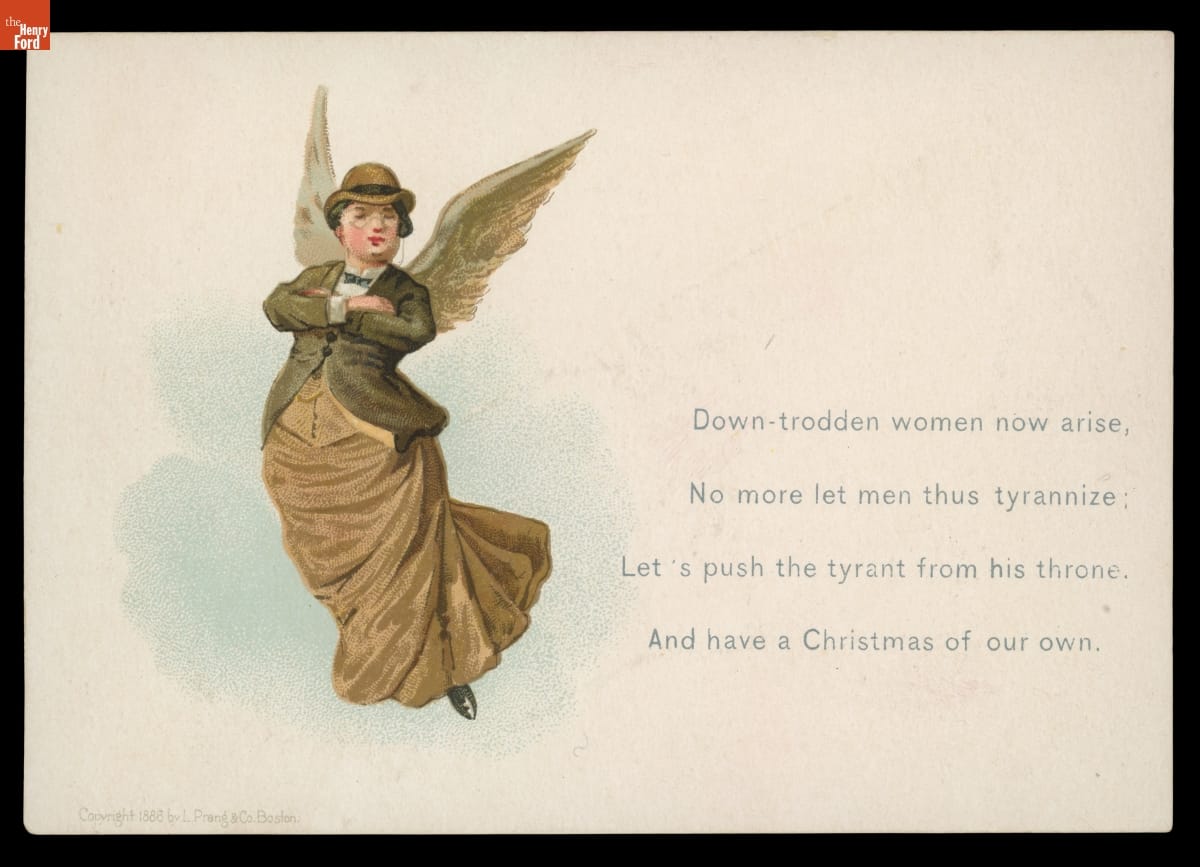
- "...Have a Christmas of Our Own," 1886 - In the mid-1800s, Americans began mailing commercially designed European greeting cards wishing friends, family, or neighbors a merry Christmas. Domestically published holiday cards became available after 1874, when German immigrant Louis Prang - through the L. Prang and Company in Boston - began printing and selling Christmas cards in the United States. This is one of his designs from 1886.
- 1886
- Collections - Artifact
"...Have a Christmas of Our Own," 1886
In the mid-1800s, Americans began mailing commercially designed European greeting cards wishing friends, family, or neighbors a merry Christmas. Domestically published holiday cards became available after 1874, when German immigrant Louis Prang - through the L. Prang and Company in Boston - began printing and selling Christmas cards in the United States. This is one of his designs from 1886.
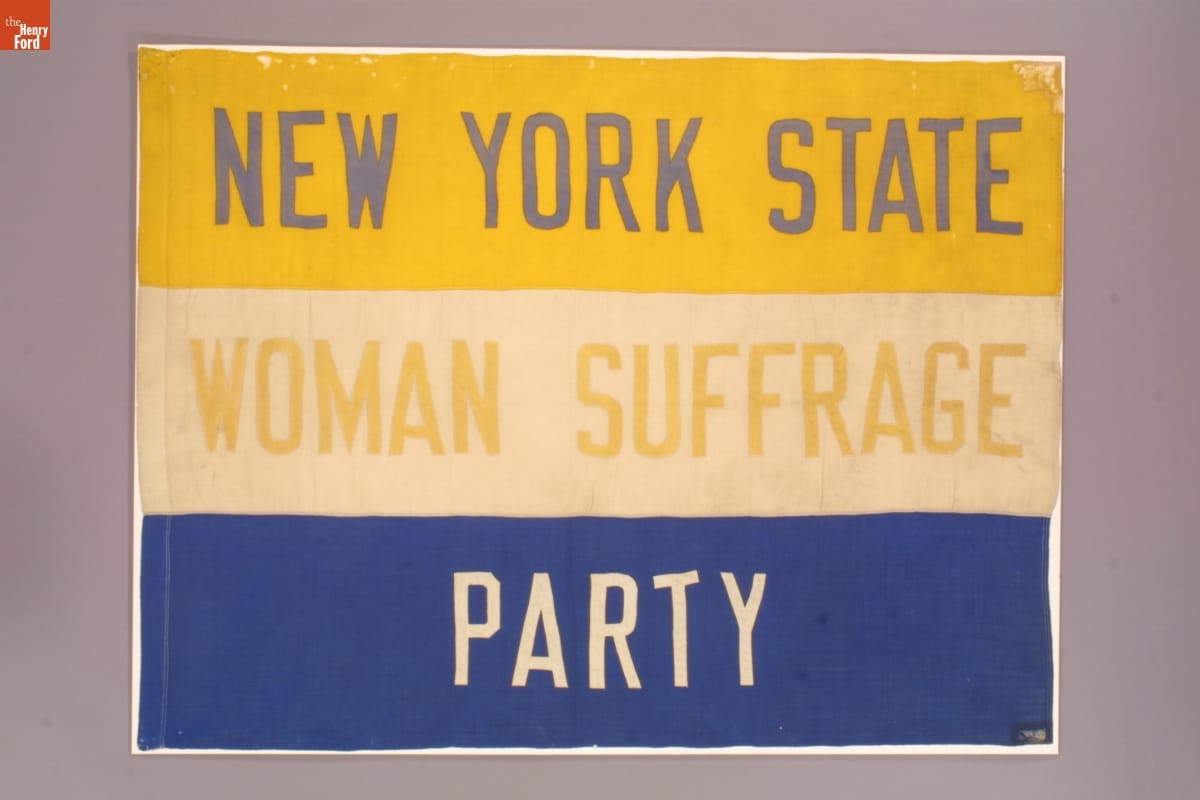
- Political Banner, New York State Woman Suffrage Party, 1910 - This banner was carried in rallies and marches by members of the New York State Woman Suffrage Party. Reformers had been advocating giving women the vote since the 1840s. However, it was not until the passage of the 19th amendment in 1920 that women gained the vote.
- 1910
- Collections - Artifact
Political Banner, New York State Woman Suffrage Party, 1910
This banner was carried in rallies and marches by members of the New York State Woman Suffrage Party. Reformers had been advocating giving women the vote since the 1840s. However, it was not until the passage of the 19th amendment in 1920 that women gained the vote.
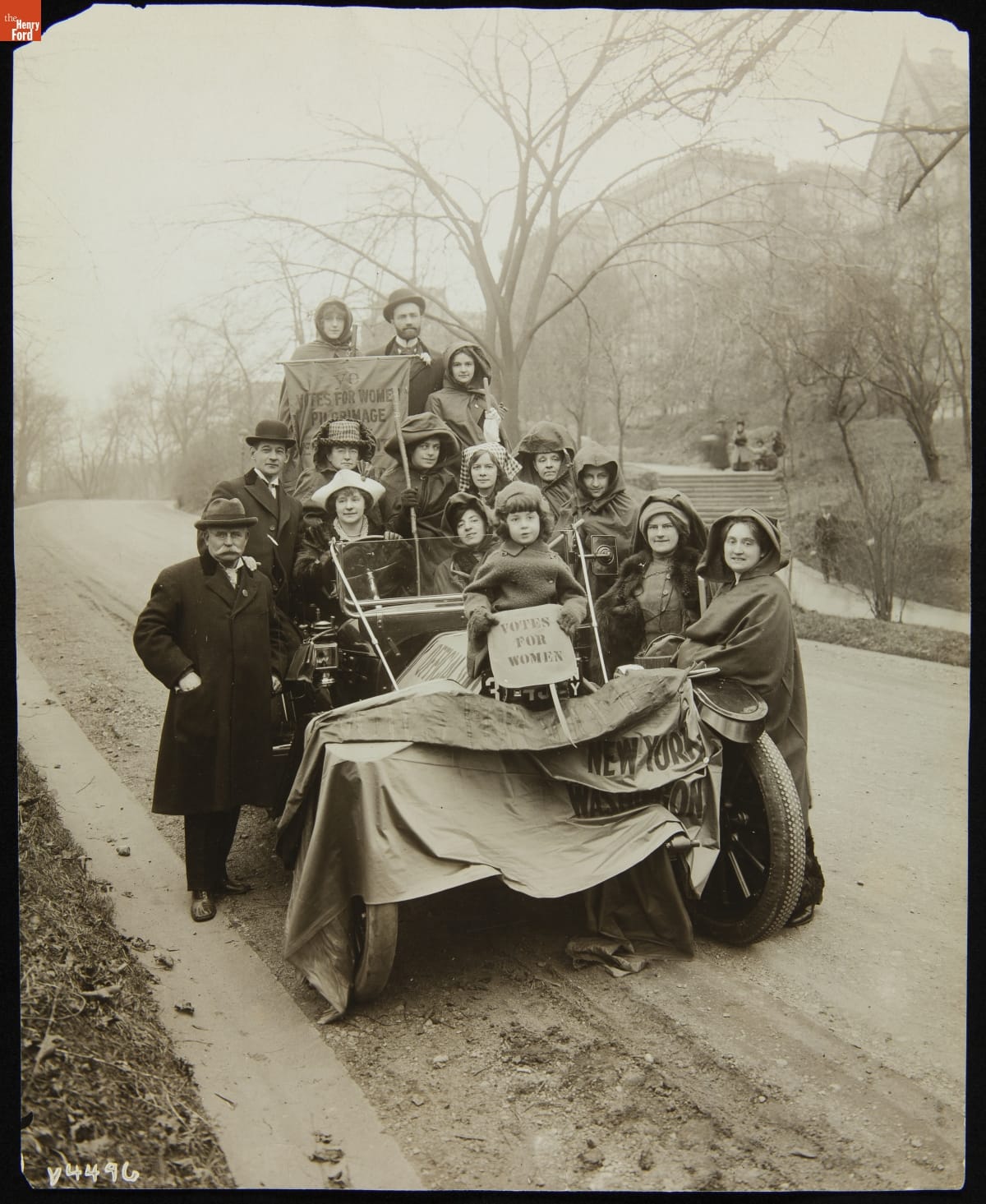
- Olive Schultz at the Wheel of a Buick Automobile with Other Suffragists Prior to the New York to Washington, D.C. Suffrage Hike, 1913 - In 1913, National American Woman Suffrage Association (NAWSA) activist Rosalie Jones led a well-publicized hike from New York City to Washington, D.C. Jones's "army" of suffragists hiked more than 200 miles in 20 days, distributing literature and delivering speeches along the way. Olive Schultz piloted the group's scout vehicle. Reaching Washington on March 3, the hikers joined thousands of demonstrators in a NAWSA-organized suffrage procession.
- 1913
- Collections - Artifact
Olive Schultz at the Wheel of a Buick Automobile with Other Suffragists Prior to the New York to Washington, D.C. Suffrage Hike, 1913
In 1913, National American Woman Suffrage Association (NAWSA) activist Rosalie Jones led a well-publicized hike from New York City to Washington, D.C. Jones's "army" of suffragists hiked more than 200 miles in 20 days, distributing literature and delivering speeches along the way. Olive Schultz piloted the group's scout vehicle. Reaching Washington on March 3, the hikers joined thousands of demonstrators in a NAWSA-organized suffrage procession.
- "Patriotic Suffrage Rally," circa 1917 - In the early 20th century, women and men alike joined the already decades-long fight for women's suffrage, or equal voting rights. They often appealed to patriotic sentiment, staging parades and organizing public demonstrations calling for the right to vote. This rally poster features a woman in a tricorne hat, associating suffragists with the patriots of the American Revolution.

- circa 1917
- Collections - Artifact
"Patriotic Suffrage Rally," circa 1917
In the early 20th century, women and men alike joined the already decades-long fight for women's suffrage, or equal voting rights. They often appealed to patriotic sentiment, staging parades and organizing public demonstrations calling for the right to vote. This rally poster features a woman in a tricorne hat, associating suffragists with the patriots of the American Revolution.
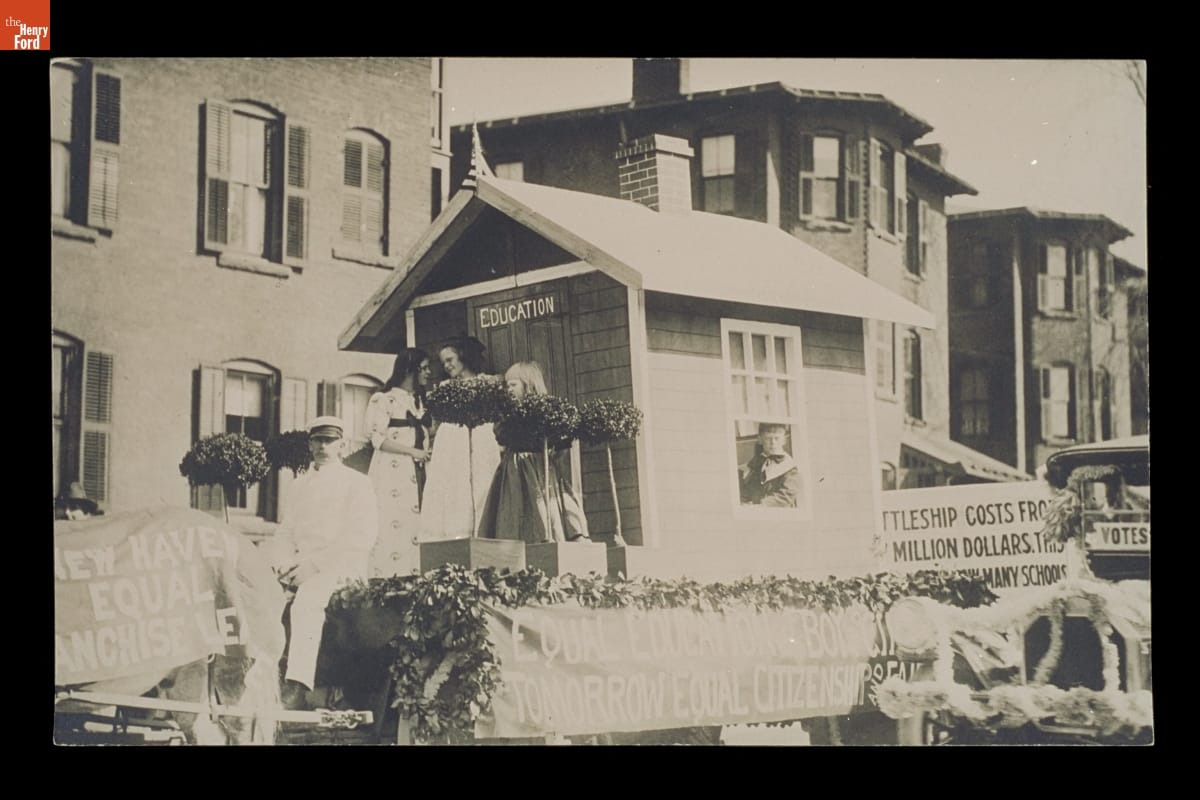
- Parade for Women's Suffrage and Equal Education, New Haven, Connecticut, circa 1915 - In the 1910s, many Americans joined the already decades-long fight for women's suffrage, or equal voting rights. To rally support, suffragists staged parades. These often elaborate processions championed numerous individual causes. This float in New Haven, Connecticut, related "equal education for boys and girls" to "equal citizenship" in the future. A constitutional amendment granting women suffrage was finally ratified in 1920.
- circa 1915
- Collections - Artifact
Parade for Women's Suffrage and Equal Education, New Haven, Connecticut, circa 1915
In the 1910s, many Americans joined the already decades-long fight for women's suffrage, or equal voting rights. To rally support, suffragists staged parades. These often elaborate processions championed numerous individual causes. This float in New Haven, Connecticut, related "equal education for boys and girls" to "equal citizenship" in the future. A constitutional amendment granting women suffrage was finally ratified in 1920.
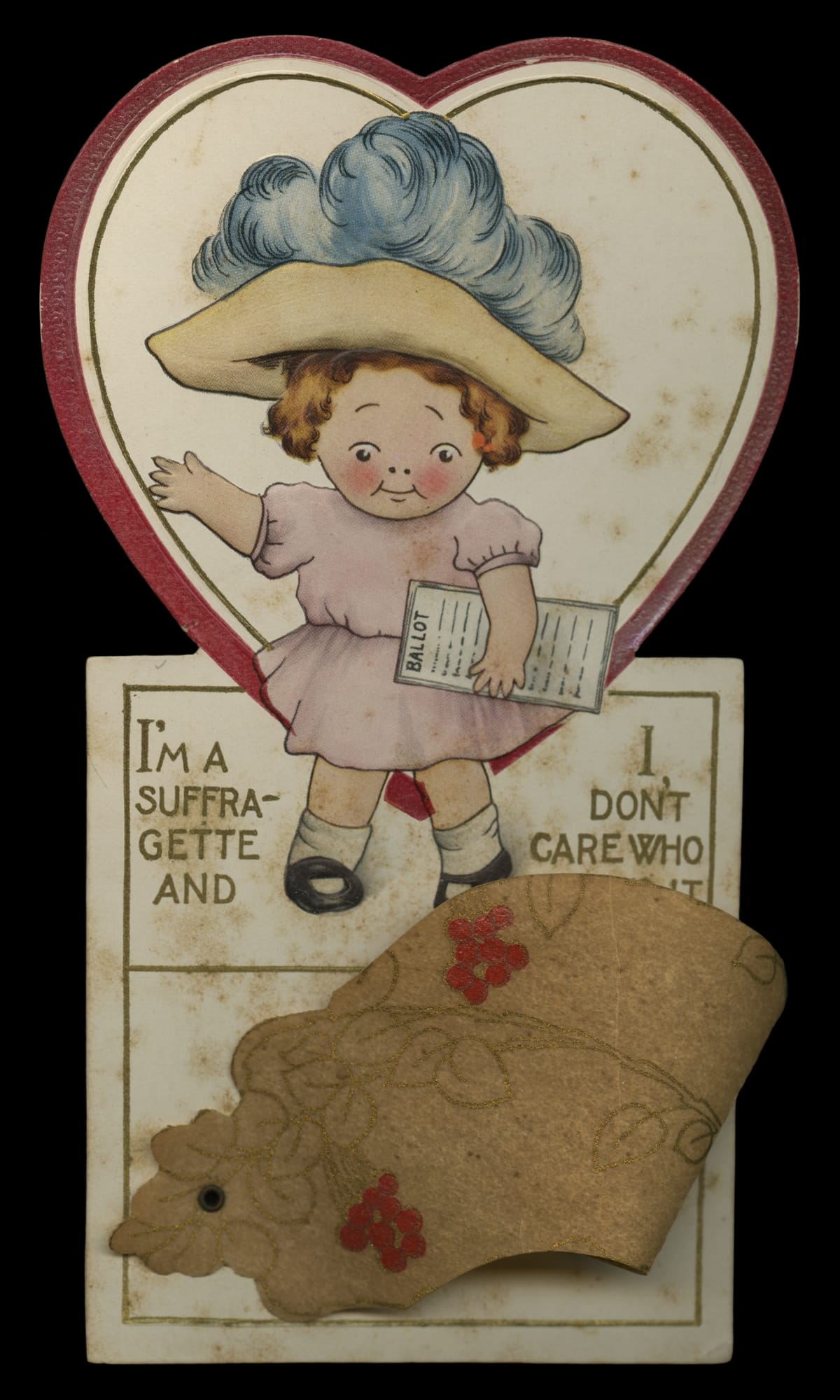
- Valentine Card, "I'm a Suffragette and I Don't Care Who Knows It," circa 1910 - The custom of sending messages of affection on February 14 dates back to Roman times, when mid-February was a time to meet and court prospective mates. The earliest American valentines were labors of love, handmade by the sender. The spread of commercially produced valentines in the second half of the nineteenth century made sending and receiving Valentine's Day cards a more lighthearted activity.
- circa 1910
- Collections - Artifact
Valentine Card, "I'm a Suffragette and I Don't Care Who Knows It," circa 1910
The custom of sending messages of affection on February 14 dates back to Roman times, when mid-February was a time to meet and court prospective mates. The earliest American valentines were labors of love, handmade by the sender. The spread of commercially produced valentines in the second half of the nineteenth century made sending and receiving Valentine's Day cards a more lighthearted activity.
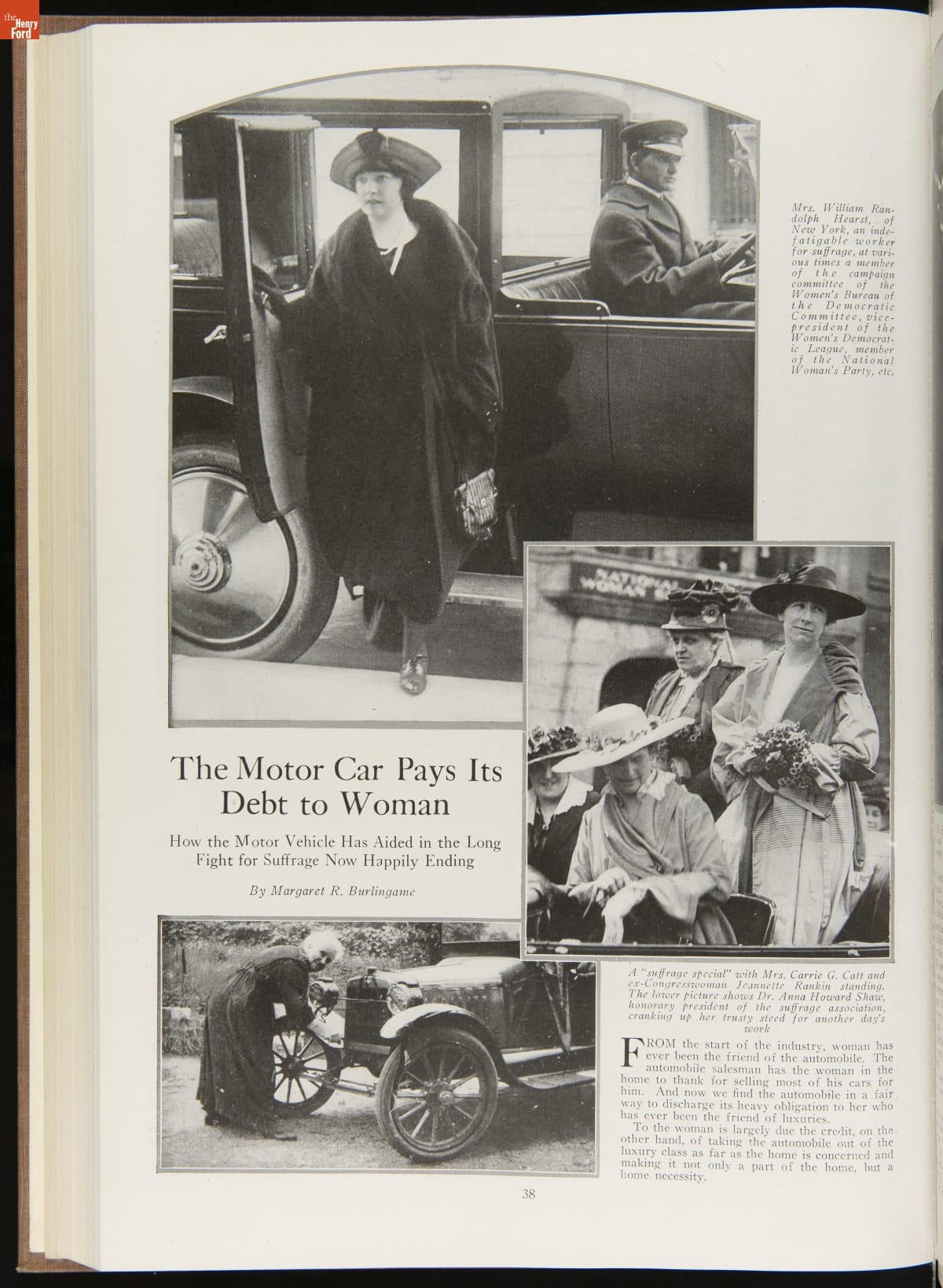
- "Motor" Magazine, Bound Volume for January-September 1919 - The automobile became a vital tool in the fight for women's suffrage. Cars allowed suffragists to travel more widely, spreading their message to audiences in several cities each day. Cars also served as mobile podiums and billboards for the cause. Women secured the national right to vote with the ratification of the 19th Amendment in 1920.
- January 1919-September 1919
- Collections - Artifact
"Motor" Magazine, Bound Volume for January-September 1919
The automobile became a vital tool in the fight for women's suffrage. Cars allowed suffragists to travel more widely, spreading their message to audiences in several cities each day. Cars also served as mobile podiums and billboards for the cause. Women secured the national right to vote with the ratification of the 19th Amendment in 1920.