
Search
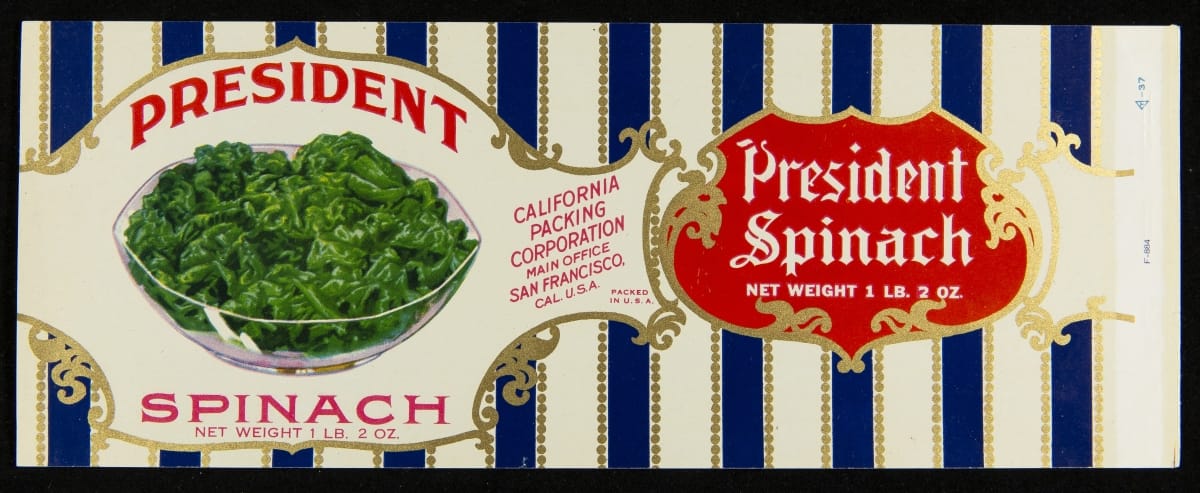
- Can Label, "President Brand Spinach," 1920-1940 - Manufacturers of similar products sought ways to make their company's goods stand out on store shelves. Attractive labels, like this design for President Brand Spinach, helped catch the attention of potential customers -- hopefully encouraging them to purchase the company's product rather than that of a competitor.
- 1920-1940
- Collections - Artifact
Can Label, "President Brand Spinach," 1920-1940
Manufacturers of similar products sought ways to make their company's goods stand out on store shelves. Attractive labels, like this design for President Brand Spinach, helped catch the attention of potential customers -- hopefully encouraging them to purchase the company's product rather than that of a competitor.
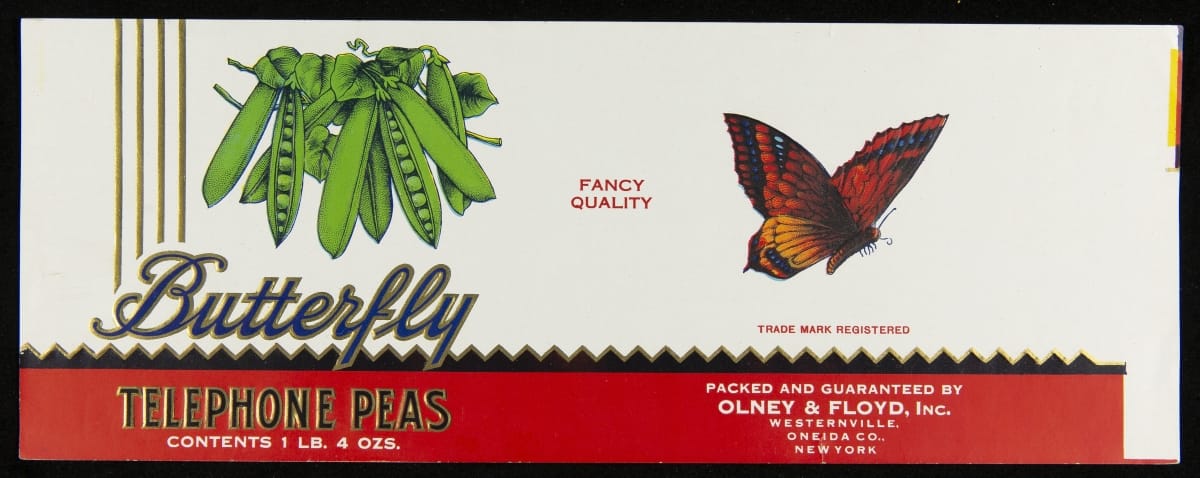
- Can Label, "Butterfly Brand Telephone Peas," circa 1950 - Throughout the late-19th to early-20th centuries, lithographers created labels to help sell products. Manufacturers of foodstuffs utilized the same design for several different products -- a strategy which helped customers distinguish one brand over another. Olney and Floyd's Butterfly Brand products were easy to identify with their colorful, eye-catching labels and signature butterfly.
- circa 1950
- Collections - Artifact
Can Label, "Butterfly Brand Telephone Peas," circa 1950
Throughout the late-19th to early-20th centuries, lithographers created labels to help sell products. Manufacturers of foodstuffs utilized the same design for several different products -- a strategy which helped customers distinguish one brand over another. Olney and Floyd's Butterfly Brand products were easy to identify with their colorful, eye-catching labels and signature butterfly.
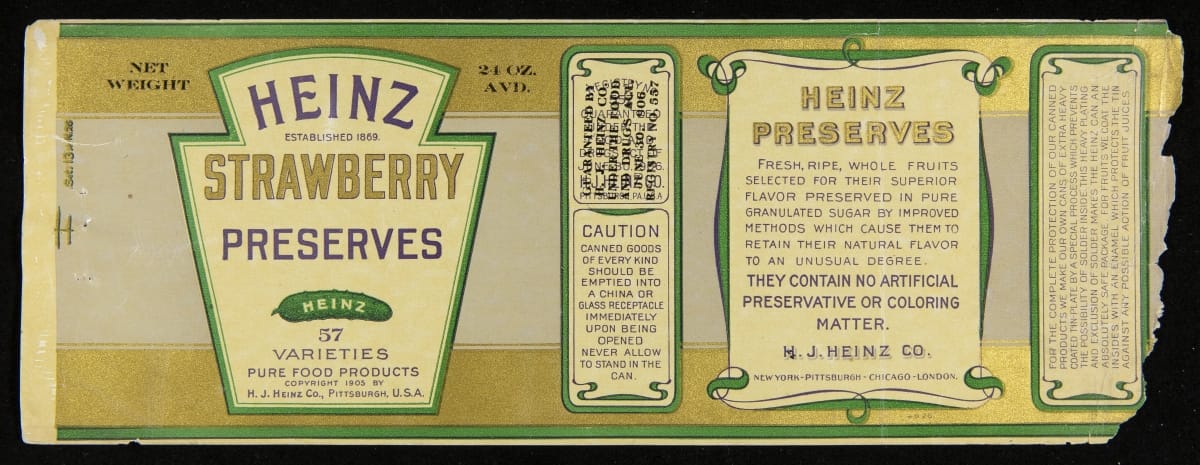
- Can Label, "Heinz Brand Strawberry Preserves," 1906-1910 - Manufacturers of similar products sought ways to make their companies' goods stand out on store shelves. Some companies established a uniform label design for their multi-product offerings -- a strategy which helped customers distinguish one brand over another. H.J. Heinz products were identified by the famous Heinz pickle and signature "keystone" logo. These design features are still found on Heinz products today.
- 1906-1910
- Collections - Artifact
Can Label, "Heinz Brand Strawberry Preserves," 1906-1910
Manufacturers of similar products sought ways to make their companies' goods stand out on store shelves. Some companies established a uniform label design for their multi-product offerings -- a strategy which helped customers distinguish one brand over another. H.J. Heinz products were identified by the famous Heinz pickle and signature "keystone" logo. These design features are still found on Heinz products today.
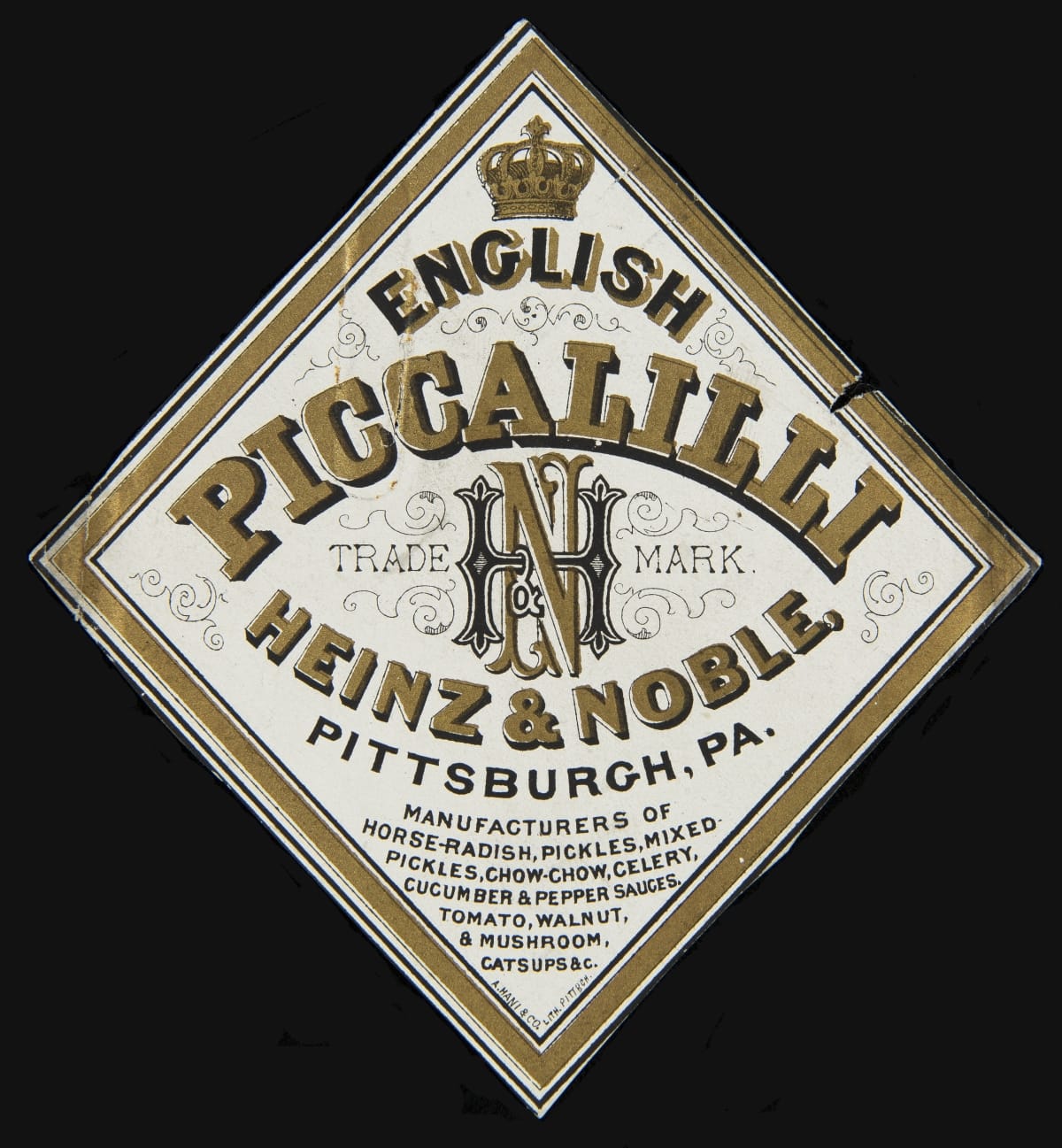
- Label, "Heinz & Noble Brand English Piccalilli," circa 1872 - In 1869, entrepreneur H.J. Heinz entered the processed food business with L.C. Noble to form Heinz & Noble. Horseradish was their first product, quickly followed by celery sauce and pickled cucumbers (pickles today). The company's product line continued to expand to include other varieties of pickled foods and condiments, like English Piccalilli, a type of relish.
- circa 1872
- Collections - Artifact
Label, "Heinz & Noble Brand English Piccalilli," circa 1872
In 1869, entrepreneur H.J. Heinz entered the processed food business with L.C. Noble to form Heinz & Noble. Horseradish was their first product, quickly followed by celery sauce and pickled cucumbers (pickles today). The company's product line continued to expand to include other varieties of pickled foods and condiments, like English Piccalilli, a type of relish.
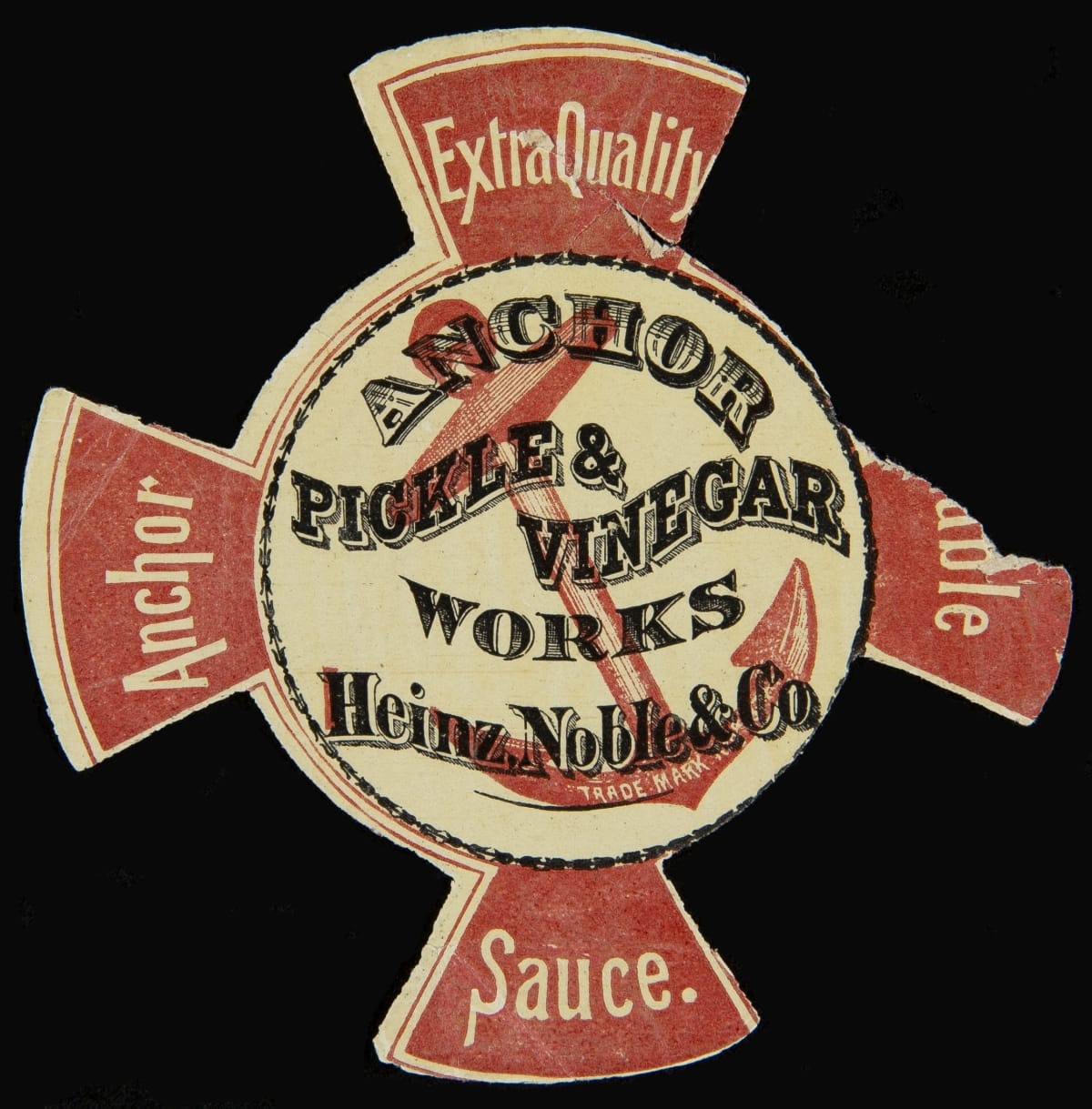
- Label, "Heinz, Noble & Company Brand Sauce Product," circa 1875 - In 1869, entrepreneur H.J. Heinz entered the processed food business with L.C. Noble selling products under the Anchor Brand. Horseradish was their first product, quickly followed by celery sauce and pickled cucumbers (pickles today) among other pickled foods and condiments. In 1872, L.C. Noble's brother joined the partnership and the company's name officially became Heinz, Noble & Co. until it went bankrupt in 1875.
- circa 1875
- Collections - Artifact
Label, "Heinz, Noble & Company Brand Sauce Product," circa 1875
In 1869, entrepreneur H.J. Heinz entered the processed food business with L.C. Noble selling products under the Anchor Brand. Horseradish was their first product, quickly followed by celery sauce and pickled cucumbers (pickles today) among other pickled foods and condiments. In 1872, L.C. Noble's brother joined the partnership and the company's name officially became Heinz, Noble & Co. until it went bankrupt in 1875.
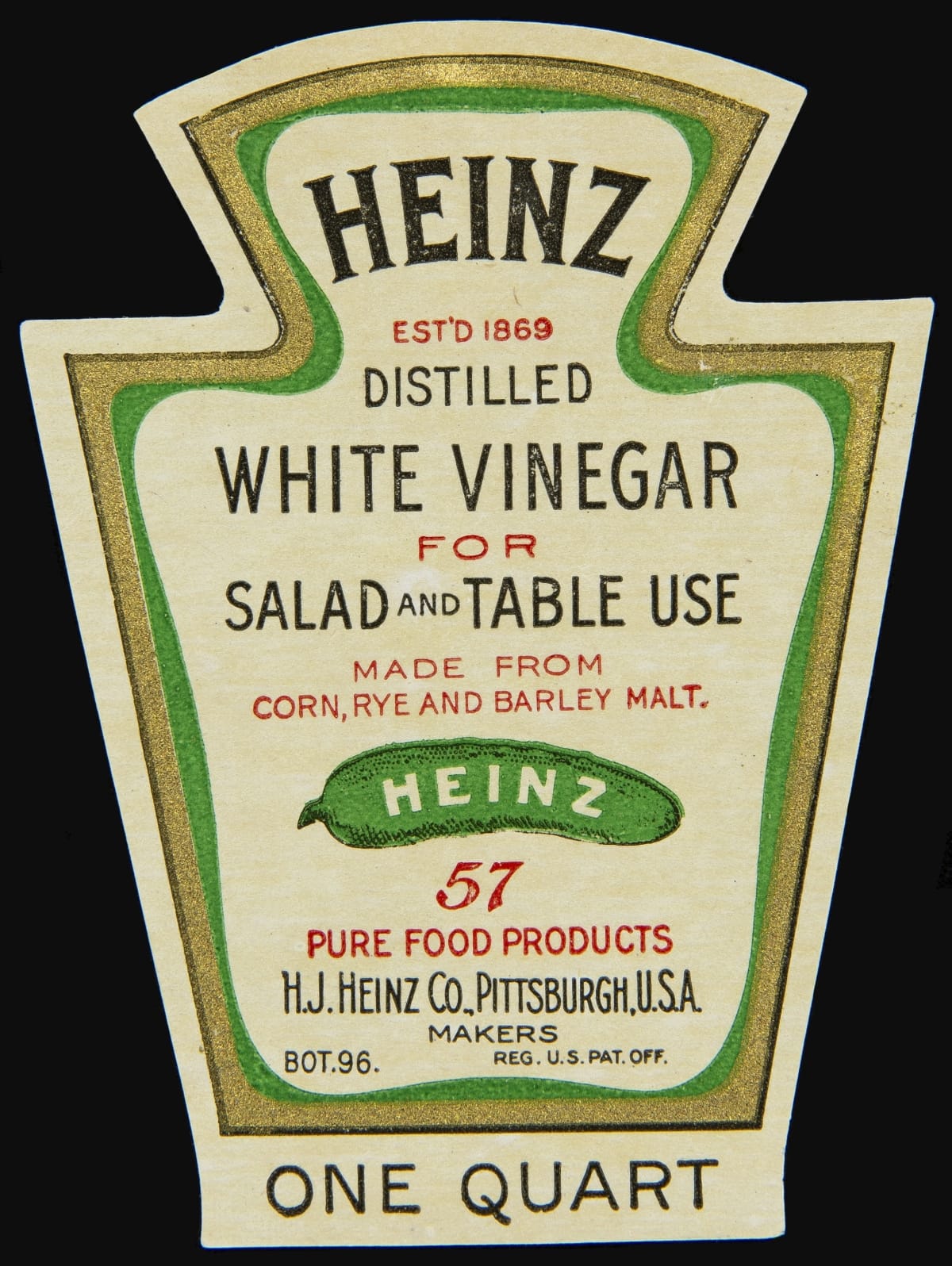
- Label, "H. J. Heinz Brand Distilled White Vinegar," 1888-1940 - Manufacturers of similar products sought ways to make their companies' goods stand out on store shelves. Some companies established a uniform label design for their multi-product offerings -- a strategy which helped customers distinguish one brand over another. H.J. Heinz products were identified by the famous Heinz pickle and signature "keystone" logo. These design features are still found on Heinz products today.
- 1888-1940
- Collections - Artifact
Label, "H. J. Heinz Brand Distilled White Vinegar," 1888-1940
Manufacturers of similar products sought ways to make their companies' goods stand out on store shelves. Some companies established a uniform label design for their multi-product offerings -- a strategy which helped customers distinguish one brand over another. H.J. Heinz products were identified by the famous Heinz pickle and signature "keystone" logo. These design features are still found on Heinz products today.
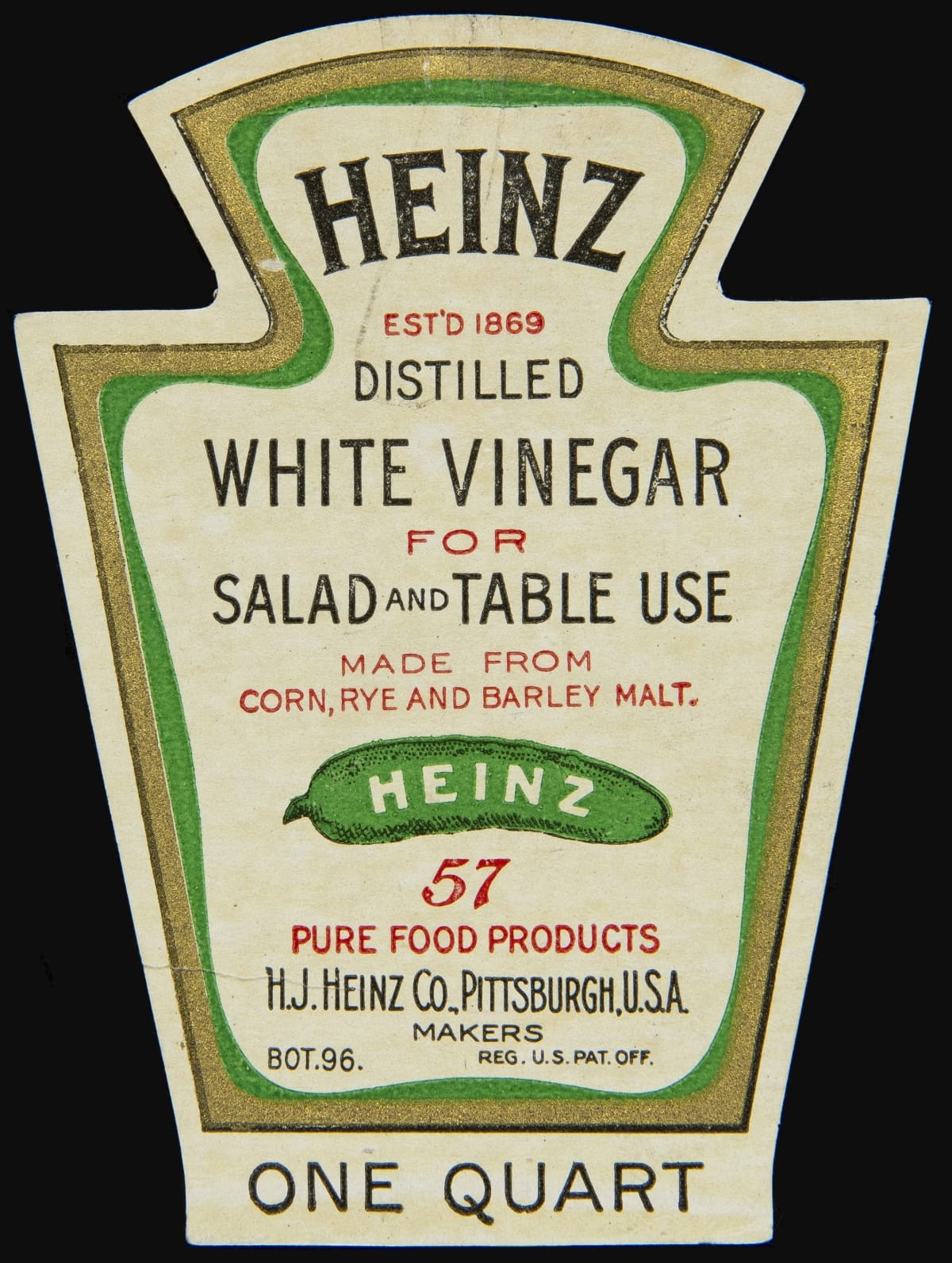
- Label, "H. J. Heinz Brand Distilled White Vinegar," 1888-1940 - Manufacturers of similar products sought ways to make their companies' goods stand out on store shelves. Some companies established a uniform label design for their multi-product offerings -- a strategy which helped customers distinguish one brand over another. H.J. Heinz products were identified by the famous Heinz pickle and signature "keystone" logo. These design features are still found on Heinz products today.
- 1888-1940
- Collections - Artifact
Label, "H. J. Heinz Brand Distilled White Vinegar," 1888-1940
Manufacturers of similar products sought ways to make their companies' goods stand out on store shelves. Some companies established a uniform label design for their multi-product offerings -- a strategy which helped customers distinguish one brand over another. H.J. Heinz products were identified by the famous Heinz pickle and signature "keystone" logo. These design features are still found on Heinz products today.
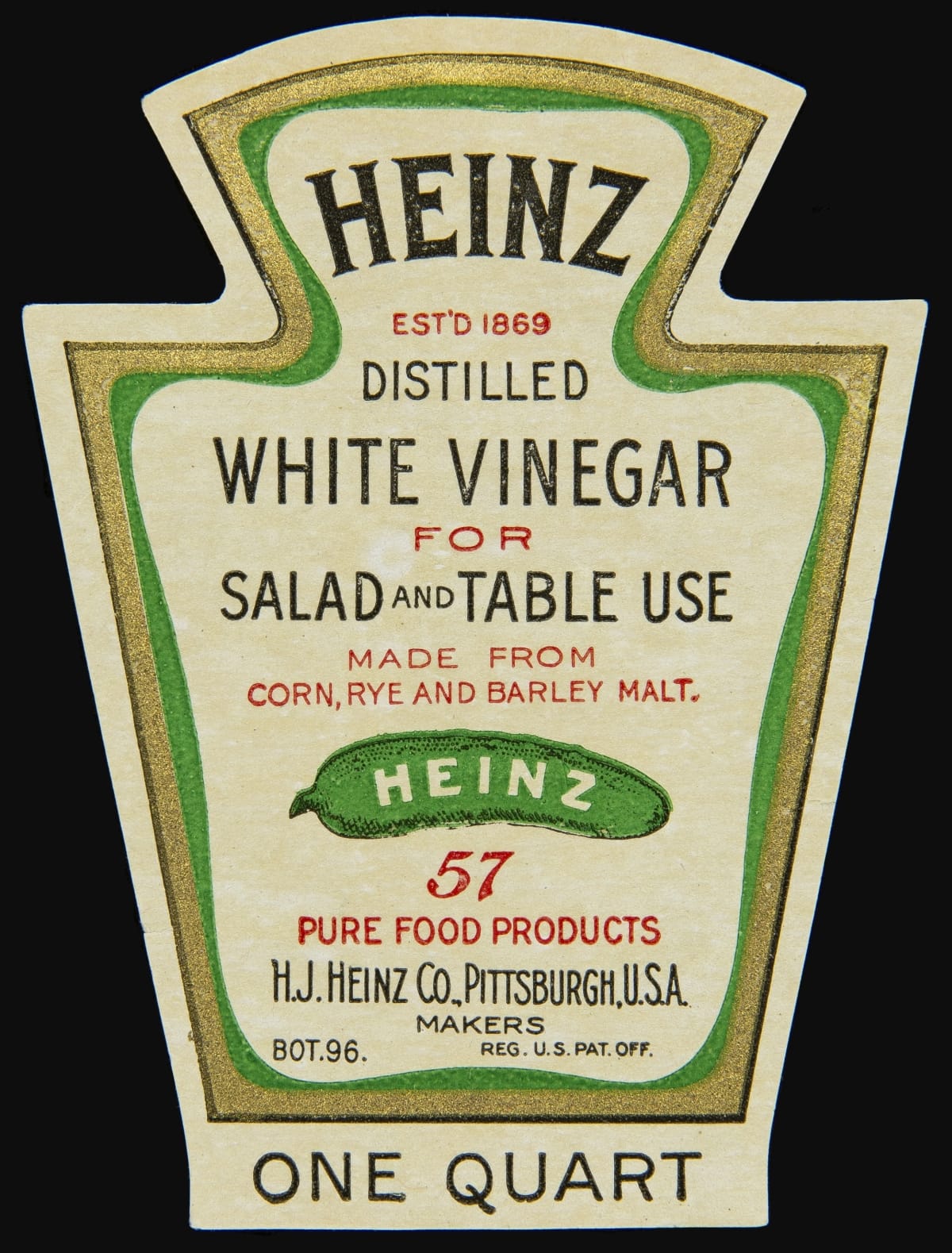
- Label, "H. J. Heinz Brand Distilled White Vinegar," 1888-1940 - Manufacturers of similar products sought ways to make their companies' goods stand out on store shelves. Some companies established a uniform label design for their multi-product offerings -- a strategy which helped customers distinguish one brand over another. H.J. Heinz products were identified by the famous Heinz pickle and signature "keystone" logo. These design features are still found on Heinz products today.
- 1888-1940
- Collections - Artifact
Label, "H. J. Heinz Brand Distilled White Vinegar," 1888-1940
Manufacturers of similar products sought ways to make their companies' goods stand out on store shelves. Some companies established a uniform label design for their multi-product offerings -- a strategy which helped customers distinguish one brand over another. H.J. Heinz products were identified by the famous Heinz pickle and signature "keystone" logo. These design features are still found on Heinz products today.
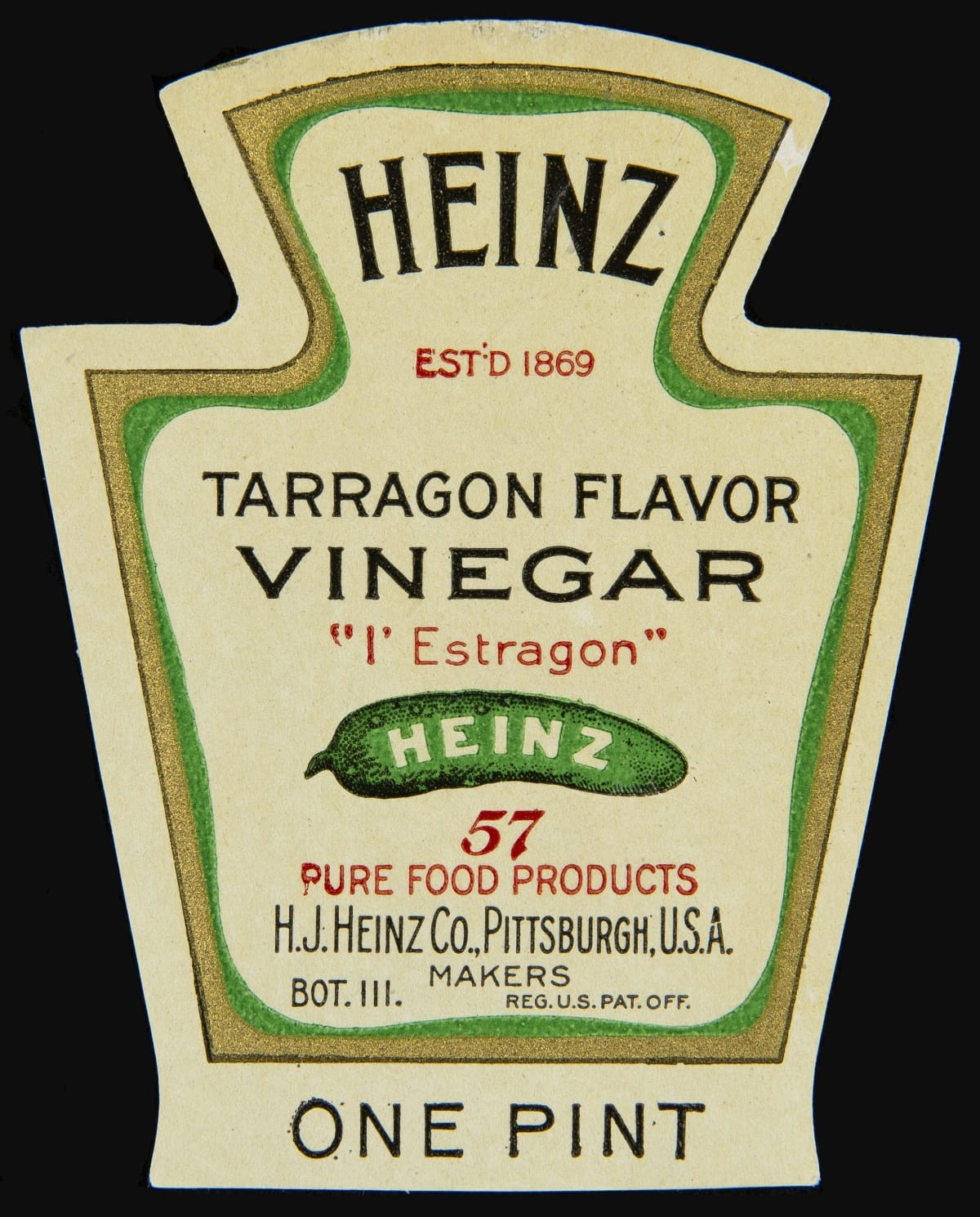
- Label, "H. J. Heinz Brand Tarragon Flavored Vinegar," 1888-1940 - Manufacturers of similar products sought ways to make their companies' goods stand out on store shelves. Some companies established a uniform label design for their multi-product offerings -- a strategy which helped customers distinguish one brand over another. H.J. Heinz products were identified by the famous Heinz pickle and signature "keystone" logo. These design features are still found on Heinz products today.
- 1888-1940
- Collections - Artifact
Label, "H. J. Heinz Brand Tarragon Flavored Vinegar," 1888-1940
Manufacturers of similar products sought ways to make their companies' goods stand out on store shelves. Some companies established a uniform label design for their multi-product offerings -- a strategy which helped customers distinguish one brand over another. H.J. Heinz products were identified by the famous Heinz pickle and signature "keystone" logo. These design features are still found on Heinz products today.
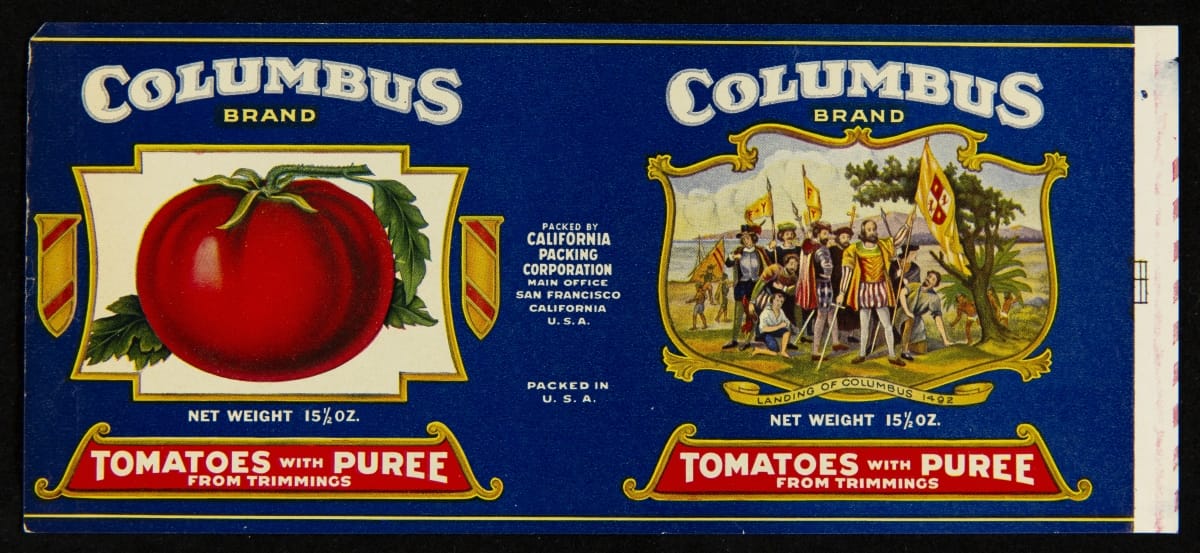
- Can Label, "Columbus Brand Tomatoes with Puree," circa 1930 - Manufacturers of similar products sought ways to make their company's goods stand out on store shelves. Attractive labels, like this design for Columbus Brand Tomatoes with Puree, helped catch the attention of potential customers -- hopefully encouraging them to purchase the company's product rather than that of a competitor.
- circa 1930
- Collections - Artifact
Can Label, "Columbus Brand Tomatoes with Puree," circa 1930
Manufacturers of similar products sought ways to make their company's goods stand out on store shelves. Attractive labels, like this design for Columbus Brand Tomatoes with Puree, helped catch the attention of potential customers -- hopefully encouraging them to purchase the company's product rather than that of a competitor.