
Search
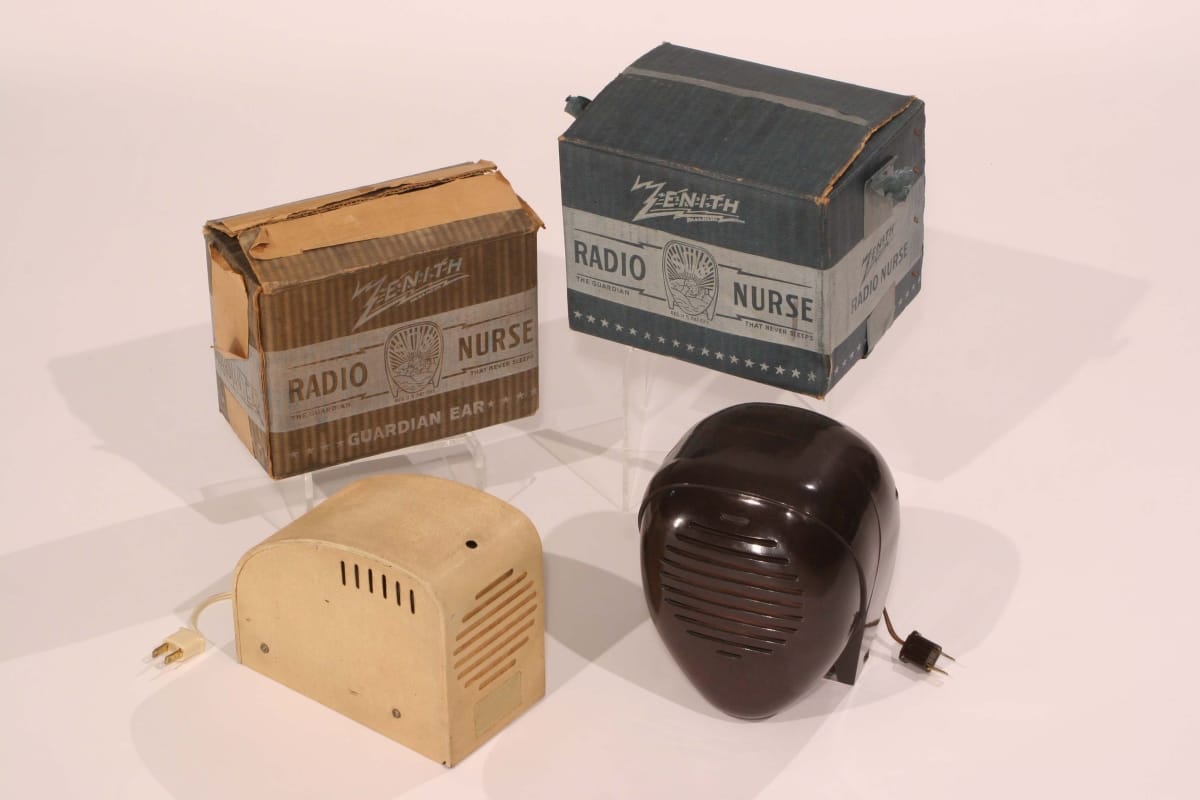
- Zenith Radio Nurse, 1938 - The first baby monitor was created by Zenith president, Eugene McDonald, Jr. Concerned for his daughter's safety following the 1932 Lindbergh baby kidnapping, McDonald's device allowed monitoring of children after bedtime. The "Guardian Ear" transmitter was installed in a child's bedroom while the "Radio Nurse" receiver was placed near parents. Sculptor Isamu Noguchi created the receiver's aesthetic, which looked like an abstracted image of a nurse with cap.
- 1938
- Collections - Artifact
Zenith Radio Nurse, 1938
The first baby monitor was created by Zenith president, Eugene McDonald, Jr. Concerned for his daughter's safety following the 1932 Lindbergh baby kidnapping, McDonald's device allowed monitoring of children after bedtime. The "Guardian Ear" transmitter was installed in a child's bedroom while the "Radio Nurse" receiver was placed near parents. Sculptor Isamu Noguchi created the receiver's aesthetic, which looked like an abstracted image of a nurse with cap.
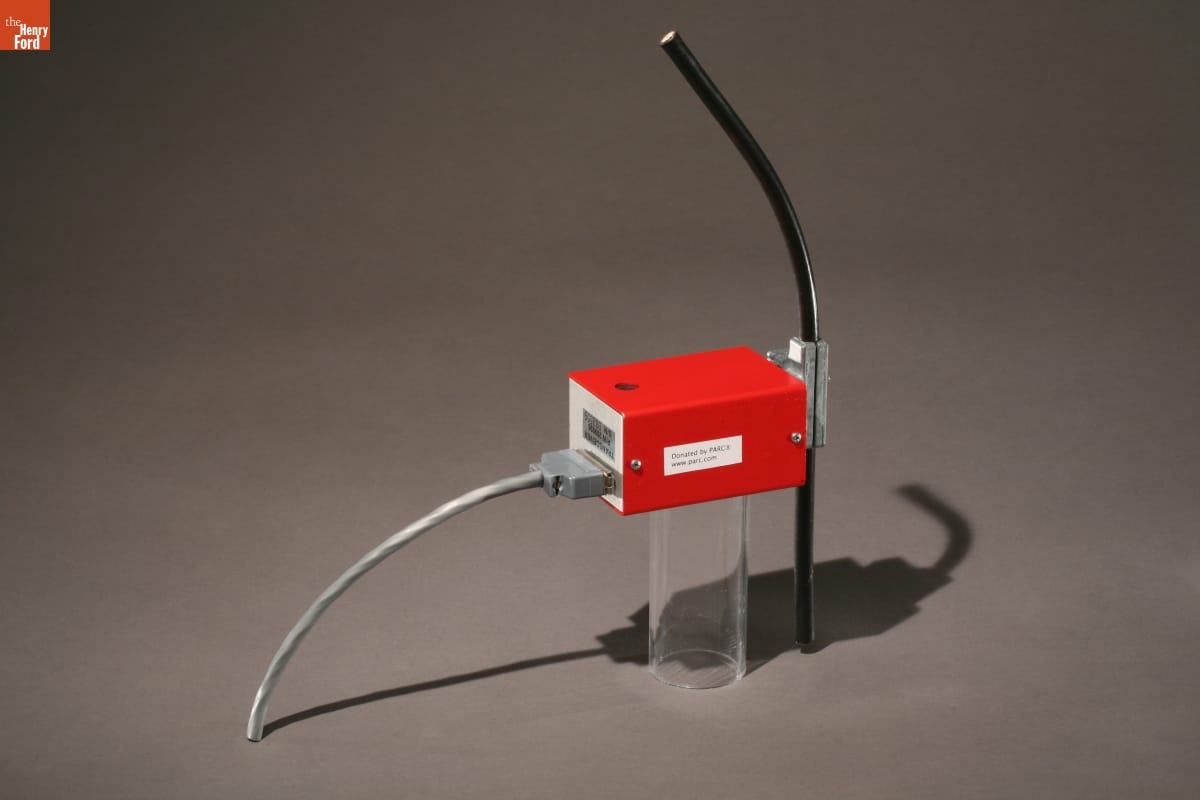
- Transceiver, Section of the Original Ethernet, 1973-1974 - This is a section of the original Ethernet, developed by Bob Metcalfe and David Boggs at the Xerox Palo Alto Research Center (PARC) in 1973. PARC was a center of innovation; this pioneering internetworking architecture was developed to connect (PARC-developed) personal computers to (PARC-developed) laser printers. Ethernet has changed business and home computing and has reigned for thirty years as a global standard.
- 1973-1974
- Collections - Artifact
Transceiver, Section of the Original Ethernet, 1973-1974
This is a section of the original Ethernet, developed by Bob Metcalfe and David Boggs at the Xerox Palo Alto Research Center (PARC) in 1973. PARC was a center of innovation; this pioneering internetworking architecture was developed to connect (PARC-developed) personal computers to (PARC-developed) laser printers. Ethernet has changed business and home computing and has reigned for thirty years as a global standard.
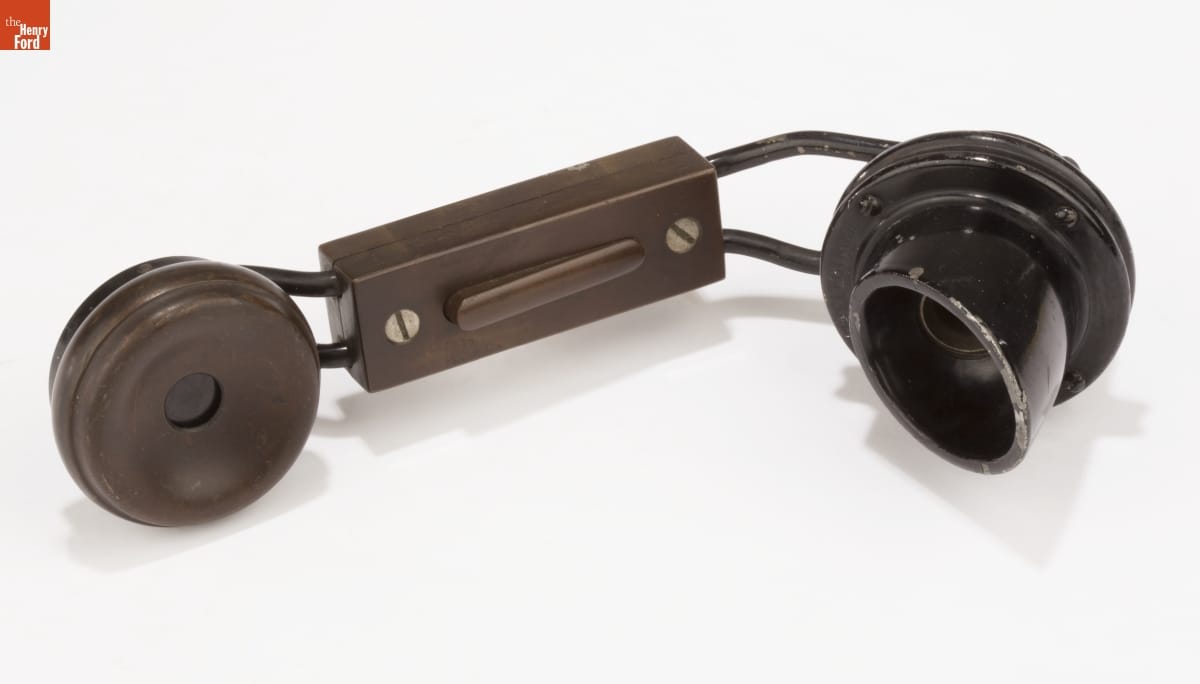
- Monophone Telephone Transceiver, 1893 -
- 1893
- Collections - Artifact
Monophone Telephone Transceiver, 1893
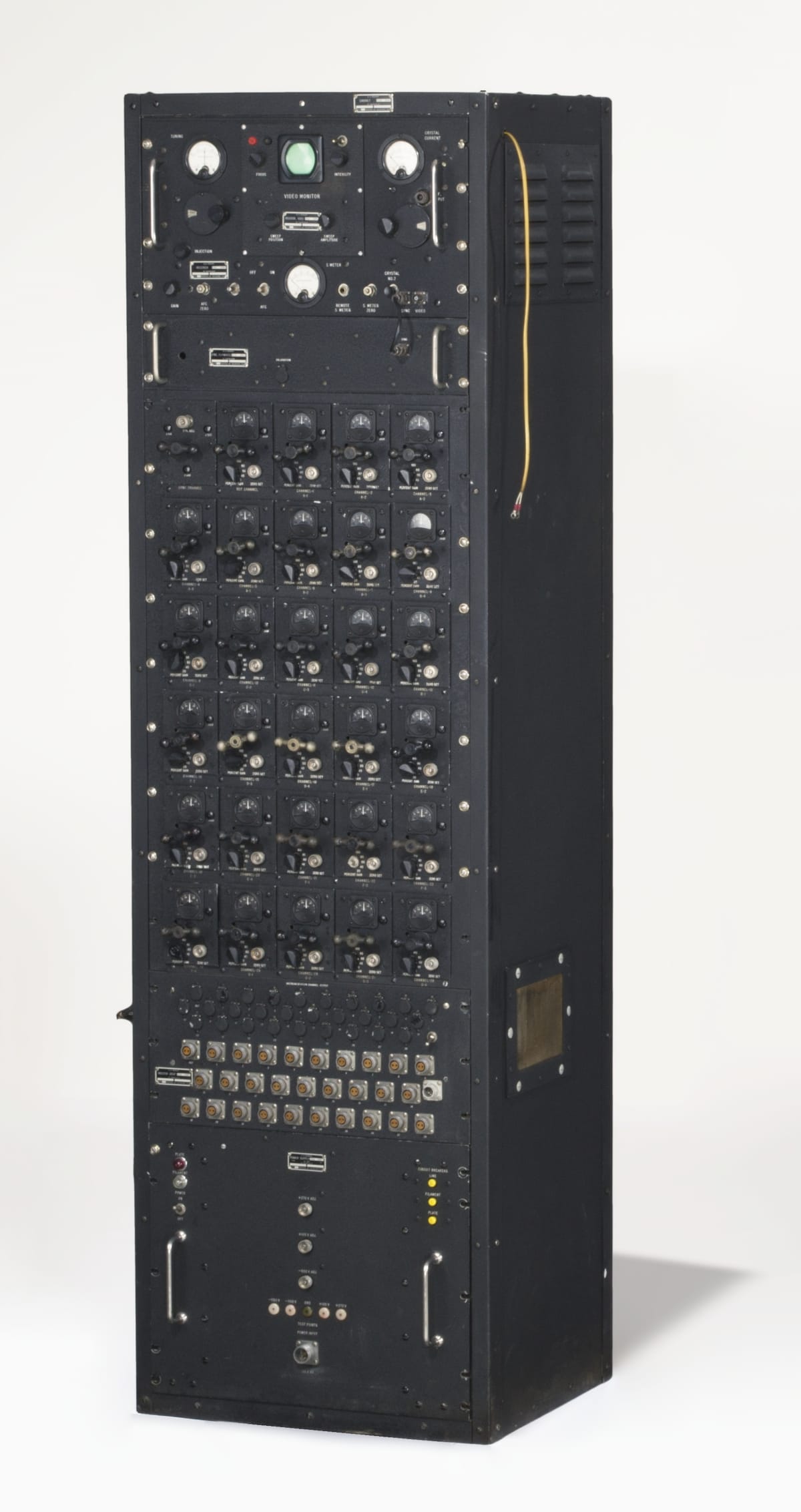
- Radiation, Inc. RF Receiver, Type UKR-1, circa 1951 - Telemetry systems collect and display instrument information from remote and often hazardous locations. Rocketry, underwater exploration, and tracking of wild animals are just some of the fields that depend upon radio telemetry. These particular units were used to collect data during Operation Teapot, a series of nuclear detonation tests undertaken by the United States in 1955 in Nevada.
- circa 1951
- Collections - Artifact
Radiation, Inc. RF Receiver, Type UKR-1, circa 1951
Telemetry systems collect and display instrument information from remote and often hazardous locations. Rocketry, underwater exploration, and tracking of wild animals are just some of the fields that depend upon radio telemetry. These particular units were used to collect data during Operation Teapot, a series of nuclear detonation tests undertaken by the United States in 1955 in Nevada.
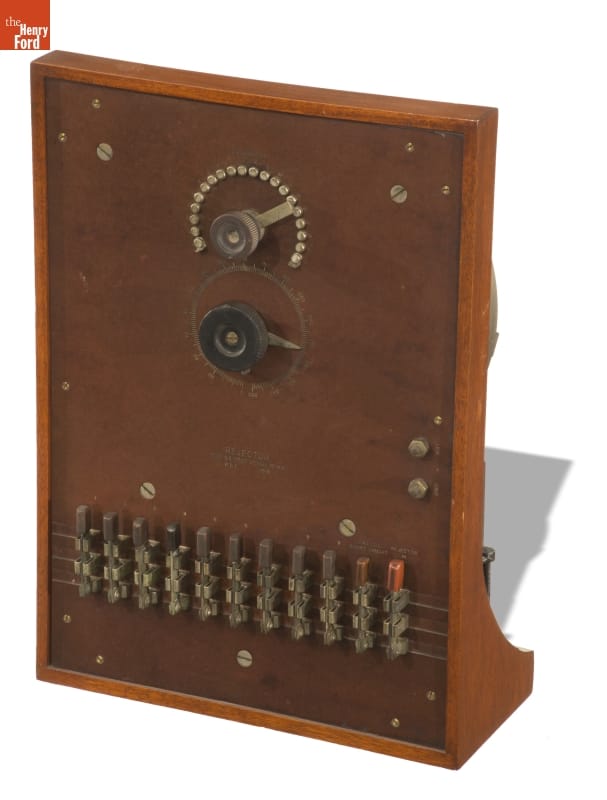
- Rejector Circuit Board, Type SE-3523, 1918 - In radio's early years, as airwaves grew more crowded, amateur operators and commercial transmitting stations alike were frustrated by static interference. Interference was human generated or atmospheric; common culprits included proximity to AC power lines or overlapping transmissions from multiple stations. The rejector circuit board diminished and eliminated unwanted, intrusive wireless signals, resulting in clear reception of a desired channel.
- 1918
- Collections - Artifact
Rejector Circuit Board, Type SE-3523, 1918
In radio's early years, as airwaves grew more crowded, amateur operators and commercial transmitting stations alike were frustrated by static interference. Interference was human generated or atmospheric; common culprits included proximity to AC power lines or overlapping transmissions from multiple stations. The rejector circuit board diminished and eliminated unwanted, intrusive wireless signals, resulting in clear reception of a desired channel.
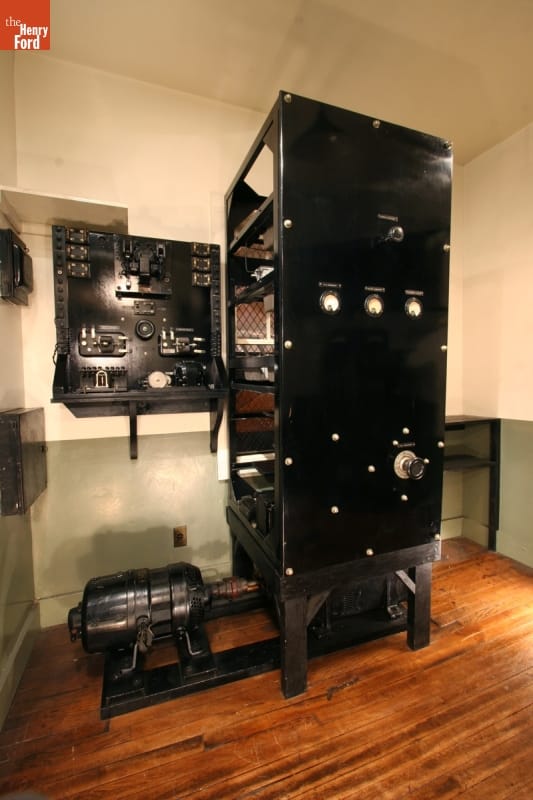
- Radio Beacon Transmitter Used at Ford Airport, 1927 - The radio beacon may be Henry Ford's most important contribution to aviation. Early pilots depended on landmarks, preventing reliable navigation in bad weather. Ford's engineers developed a radio beacon that simultaneously transmitted the Morse code letter "A" (dot-dash) in one direction and the letter "N" (dash-dot) in another. The pilot steered until the separate signals merged into a steady hum.
- 1927
- Collections - Artifact
Radio Beacon Transmitter Used at Ford Airport, 1927
The radio beacon may be Henry Ford's most important contribution to aviation. Early pilots depended on landmarks, preventing reliable navigation in bad weather. Ford's engineers developed a radio beacon that simultaneously transmitted the Morse code letter "A" (dot-dash) in one direction and the letter "N" (dash-dot) in another. The pilot steered until the separate signals merged into a steady hum.
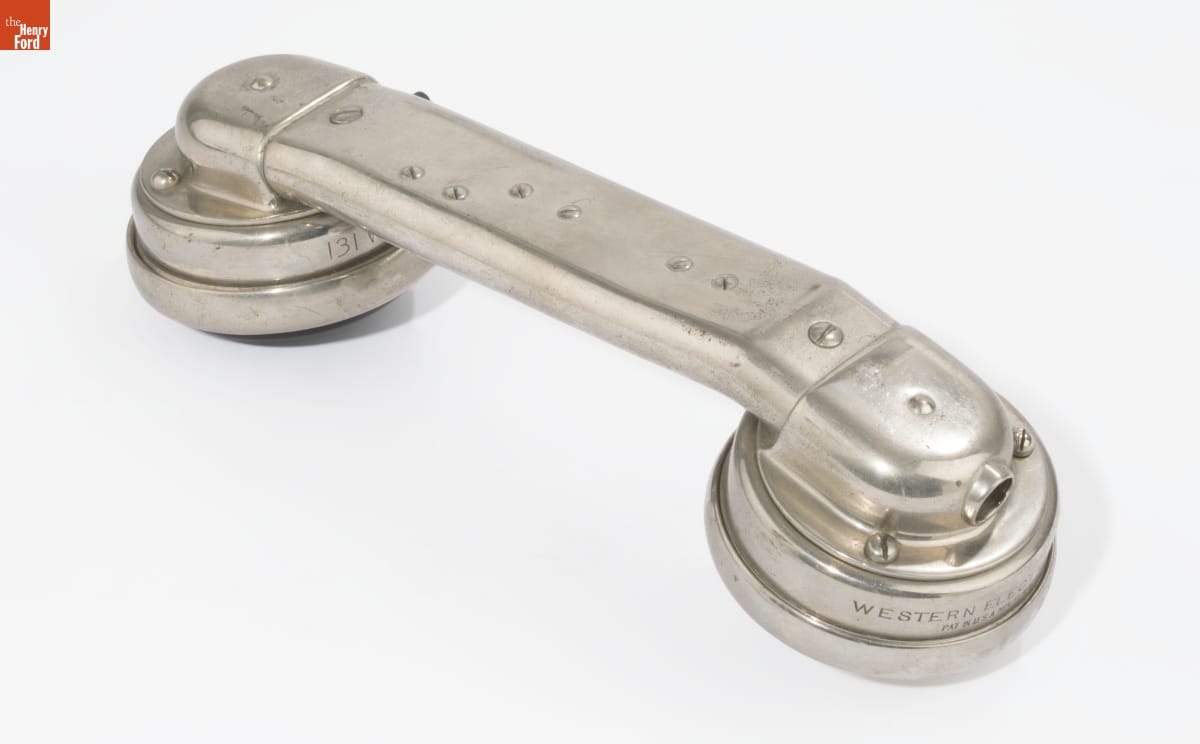
- Western Electric Lineman's Telephone Handset, Type 1001, 1903-1910 - A lineman's set is used by professional telecommunications workers for the installation and troubleshooting of telephone lines. These devices use a clip with a sharp spike on it, which pierces through wires without the need to strip away the insulating covering. Lineman's sets can hook into exterior phone lines, or the wires leading into the phone jacks in customer's homes.
- 1903-1910
- Collections - Artifact
Western Electric Lineman's Telephone Handset, Type 1001, 1903-1910
A lineman's set is used by professional telecommunications workers for the installation and troubleshooting of telephone lines. These devices use a clip with a sharp spike on it, which pierces through wires without the need to strip away the insulating covering. Lineman's sets can hook into exterior phone lines, or the wires leading into the phone jacks in customer's homes.
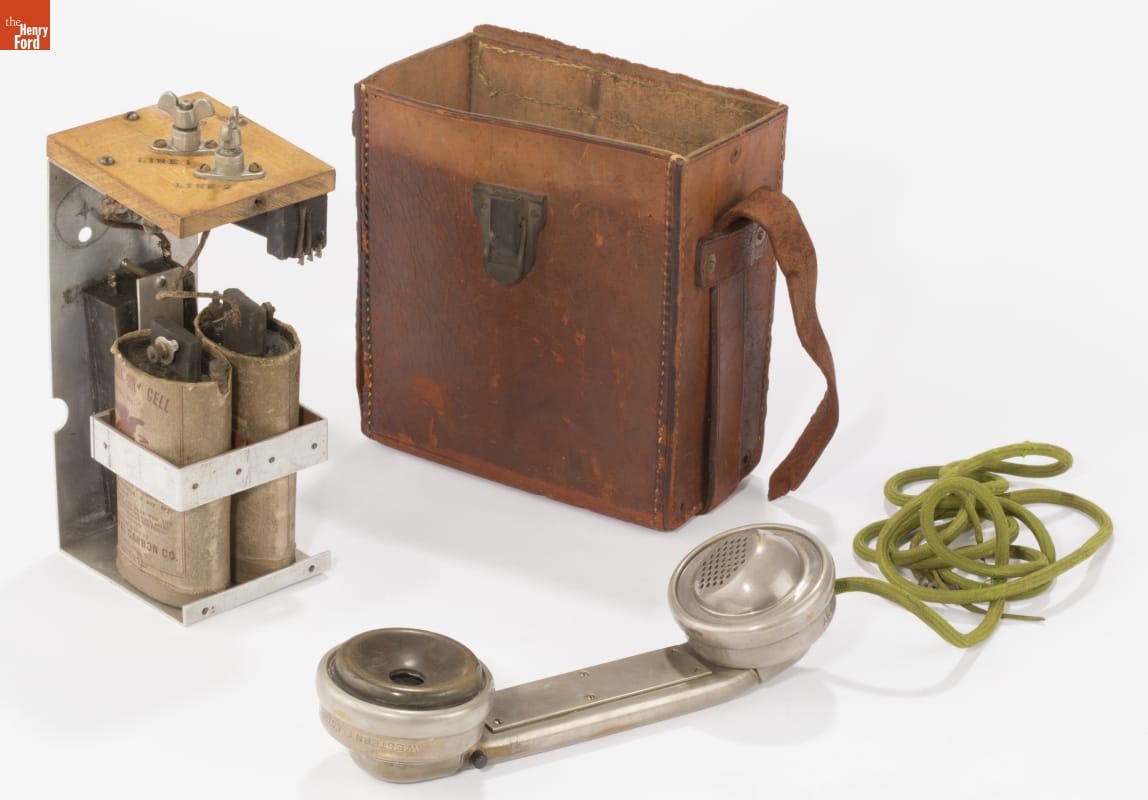
- Western Electric Lineman's Telephone, Type Y-545-2, 1909 - A lineman's set is used by professional telecommunications workers for the installation and troubleshooting of telephone lines. These devices use a clip with a sharp spike on it, which pierces through wires without the need to strip away the insulating covering. Lineman's sets can hook into exterior phone lines, or the wires leading into the phone jacks in customer's homes.
- July 21, 1909
- Collections - Artifact
Western Electric Lineman's Telephone, Type Y-545-2, 1909
A lineman's set is used by professional telecommunications workers for the installation and troubleshooting of telephone lines. These devices use a clip with a sharp spike on it, which pierces through wires without the need to strip away the insulating covering. Lineman's sets can hook into exterior phone lines, or the wires leading into the phone jacks in customer's homes.
- Radio Receiver Used in the Piccards' Stratospheric Balloon Ascension, 1934 - The Piccard stratosphere flight departed Ford Airport field on October 23, 1934. Spouses Jean and Jeannette Piccard ascended 10.9 miles in a metal gondola carried by a hydrogen balloon. To maintain ground communication, William Duckwitz built this radio transceiver, installing it in the "radio car" that trailed the flight. Duckwitz's call sign, W8CJT, is burned into its base.

- October 23, 1934
- Collections - Artifact
Radio Receiver Used in the Piccards' Stratospheric Balloon Ascension, 1934
The Piccard stratosphere flight departed Ford Airport field on October 23, 1934. Spouses Jean and Jeannette Piccard ascended 10.9 miles in a metal gondola carried by a hydrogen balloon. To maintain ground communication, William Duckwitz built this radio transceiver, installing it in the "radio car" that trailed the flight. Duckwitz's call sign, W8CJT, is burned into its base.
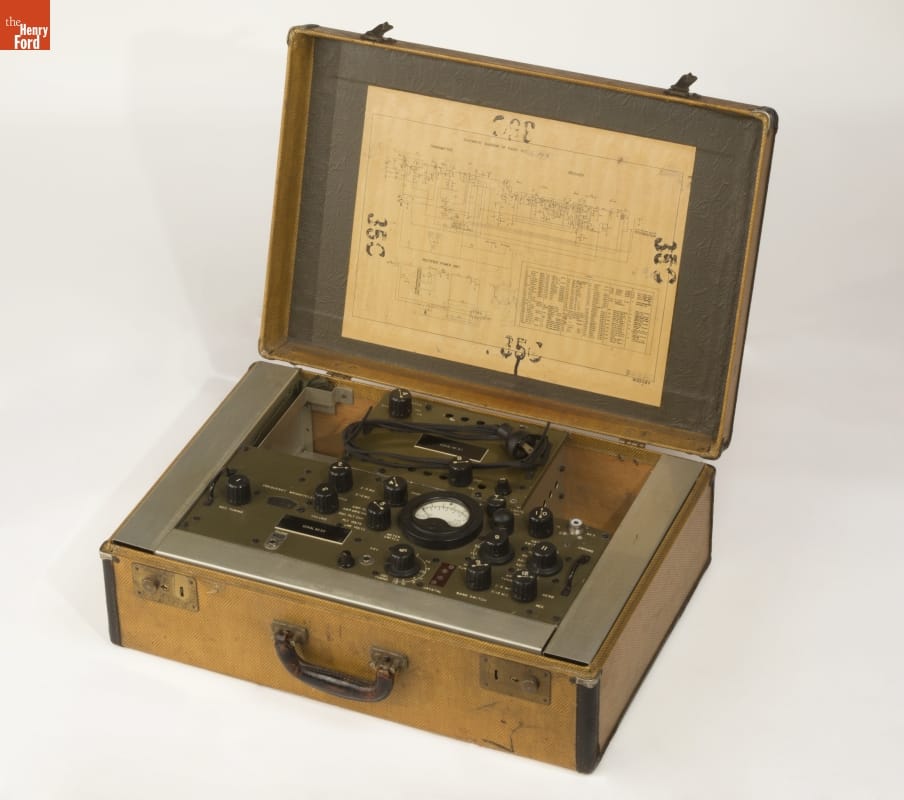
- Military Suitcase Radio, 1940-1945 -
- 1940-1945
- Collections - Artifact
Military Suitcase Radio, 1940-1945