
Search
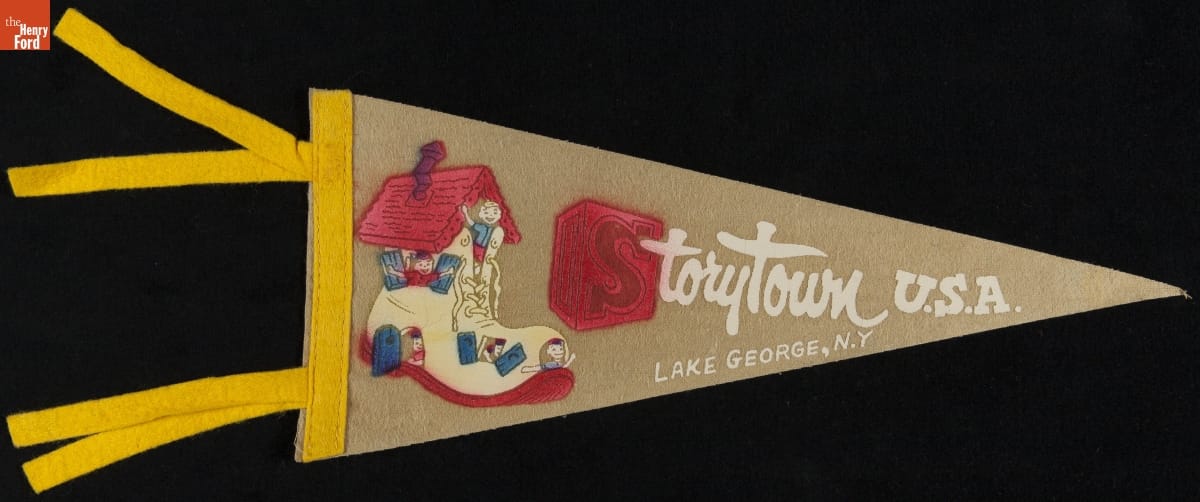
- Pennant, "Storytown U.S.A, Lake George, N.Y.," 1954-1965 -
- 1954-1965
- Collections - Artifact
Pennant, "Storytown U.S.A, Lake George, N.Y.," 1954-1965
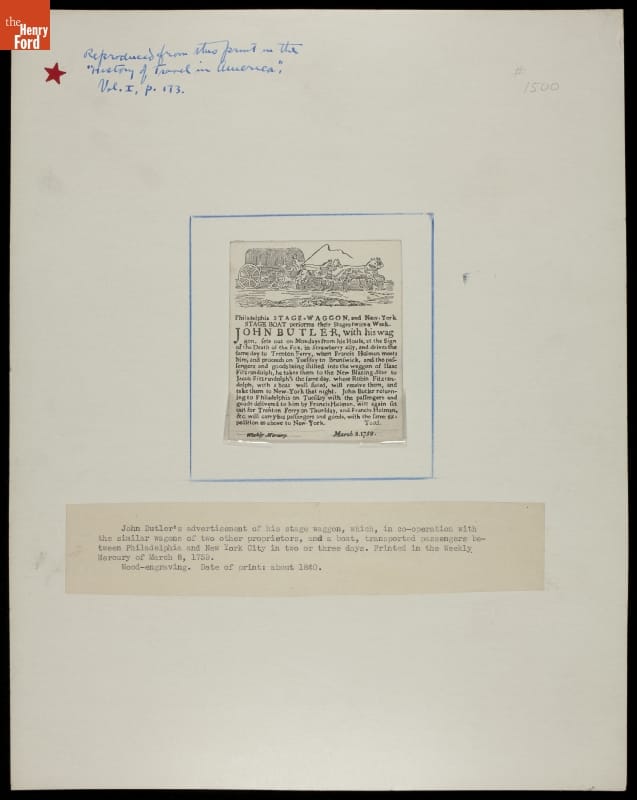
- Advertisement for Stage Wagon and Boat Transportation Between Philadelphia and New York City, circa 1840 - Originally printed March 8, 1759, in the <em>Weekly Mercury</em>, this advertisement features a wood engraving of John Butler's stage wagon. This stage line ran between Philadelphia, Pennsylvania, and New York City.
- March 08, 1759
- Collections - Artifact
Advertisement for Stage Wagon and Boat Transportation Between Philadelphia and New York City, circa 1840
Originally printed March 8, 1759, in the Weekly Mercury, this advertisement features a wood engraving of John Butler's stage wagon. This stage line ran between Philadelphia, Pennsylvania, and New York City.
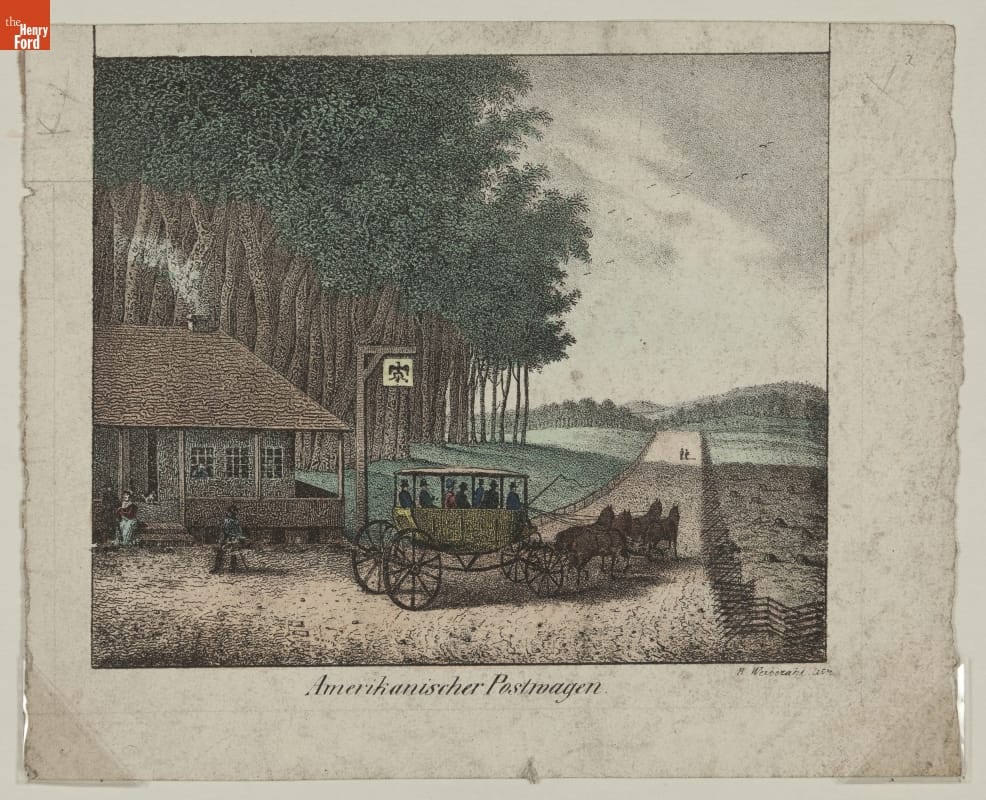
- "Amerikanischen Postwagen" (American Stage Coach, 1800-1810), Lithograph, circa 1815 - Stage wagons were light and open, though not as comfortable as later Concord stagecoaches. They could go about five miles per hour, barring bad weather or road obstructions. The gaily painted signboards of roadside taverns beckoned weary travelers, promising rest, meals, and a chance to catch up on news. Stage wagon drivers used the stop to care for their horses.
- 1800-1810
- Collections - Artifact
"Amerikanischen Postwagen" (American Stage Coach, 1800-1810), Lithograph, circa 1815
Stage wagons were light and open, though not as comfortable as later Concord stagecoaches. They could go about five miles per hour, barring bad weather or road obstructions. The gaily painted signboards of roadside taverns beckoned weary travelers, promising rest, meals, and a chance to catch up on news. Stage wagon drivers used the stop to care for their horses.
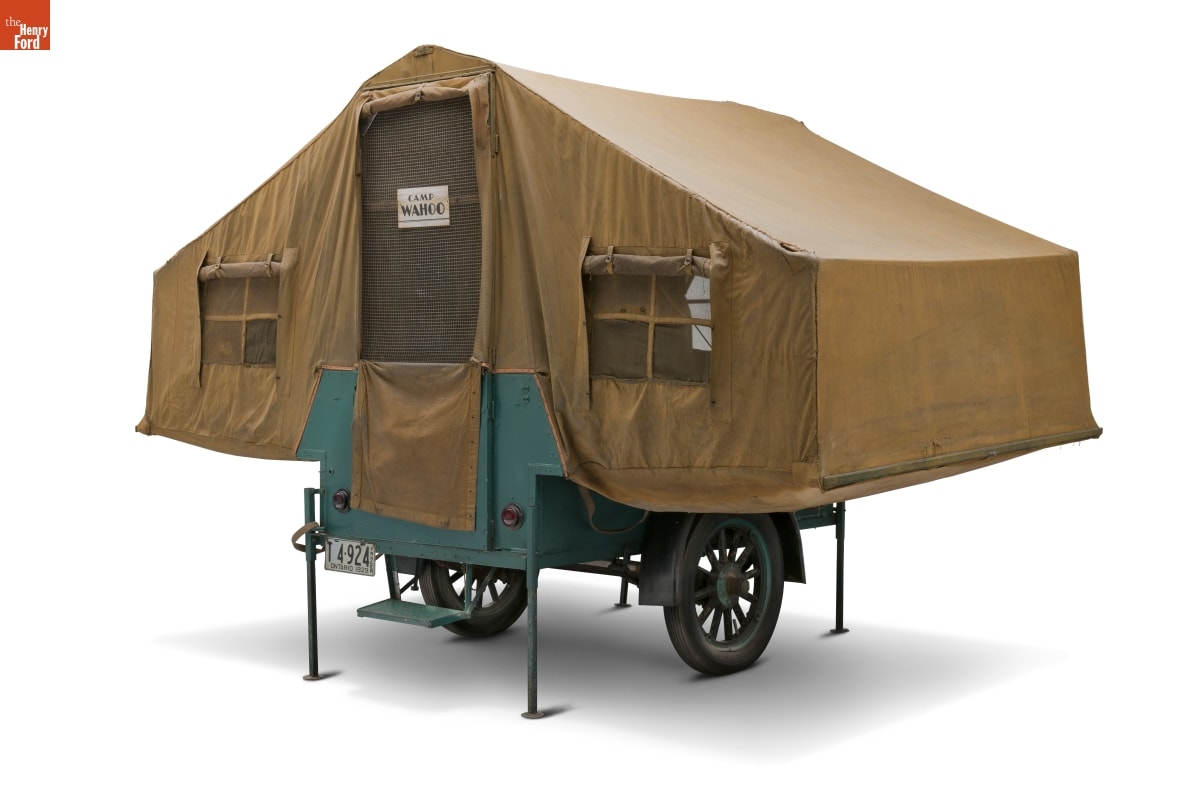
- Gilkie Tent Trailer, circa 1927 - Campers who wanted to get close to nature -- but not too close -- loved fold-out tent trailers. These two-wheelers folded down for easy towing by day and then mushroomed into miniature homes at night. Story has it that Warren and Ray Gilkison designed and built their first tent trailer in their father's machine shop for a family camping trip.
- circa 1927
- Collections - Artifact
Gilkie Tent Trailer, circa 1927
Campers who wanted to get close to nature -- but not too close -- loved fold-out tent trailers. These two-wheelers folded down for easy towing by day and then mushroomed into miniature homes at night. Story has it that Warren and Ray Gilkison designed and built their first tent trailer in their father's machine shop for a family camping trip.
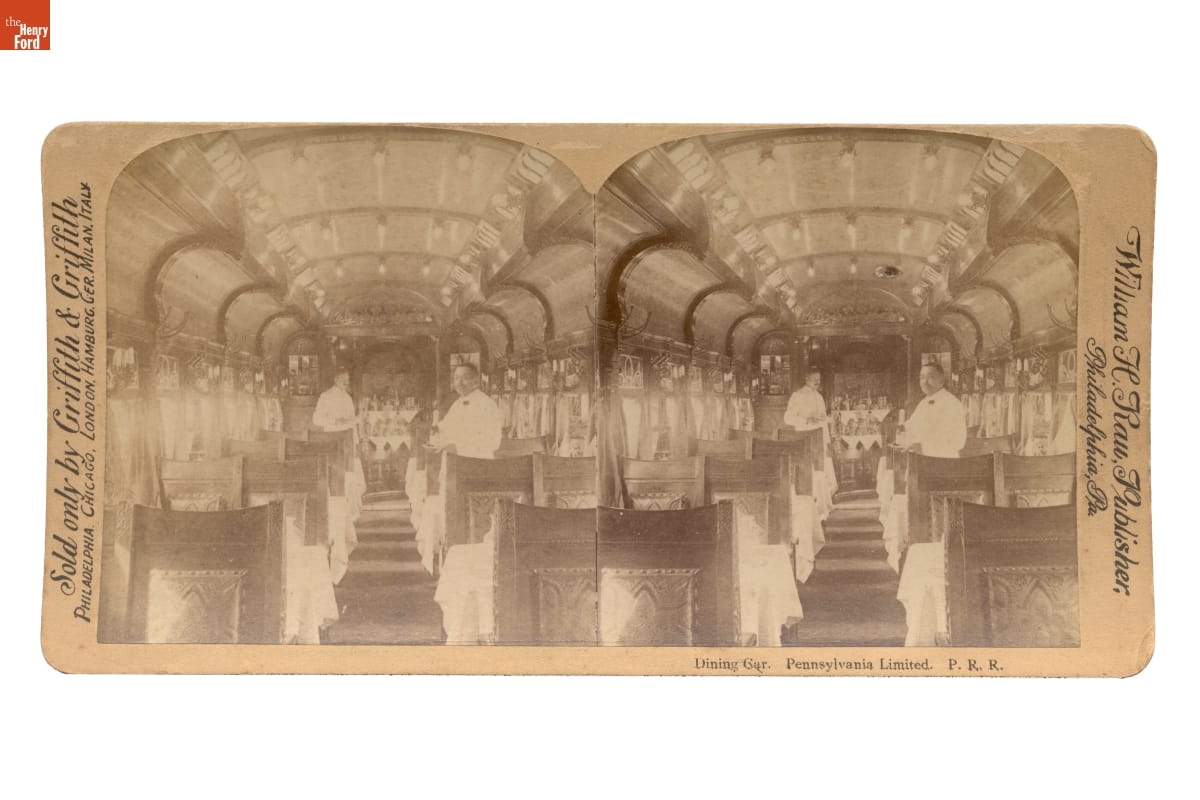
- Dining Car, Pennsylvania Limited, Pennsylvania Railroad, circa 1900 - Railroads took pride in their dining cars. They were expensive to operate, but quality food and service helped a railroad distinguish itself from competitors. For African Americans, working on a railroad dining car was one of the few avenues available to enter the Black middle class in the 19th and early 20th centuries.
- circa 1900
- Collections - Artifact
Dining Car, Pennsylvania Limited, Pennsylvania Railroad, circa 1900
Railroads took pride in their dining cars. They were expensive to operate, but quality food and service helped a railroad distinguish itself from competitors. For African Americans, working on a railroad dining car was one of the few avenues available to enter the Black middle class in the 19th and early 20th centuries.
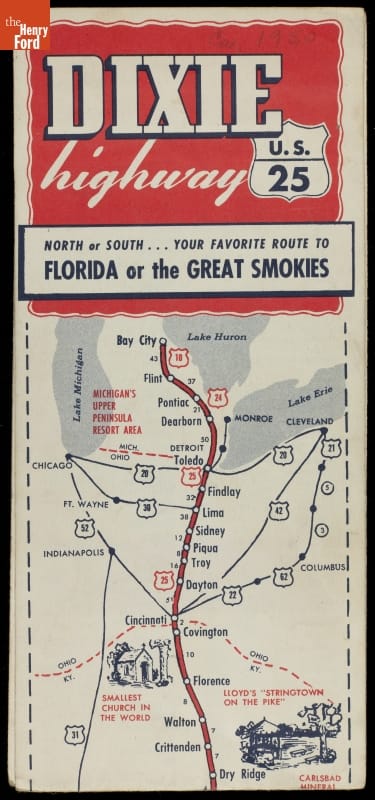
- "Dixie Highway, U.S. 25," circa 1950 - This brochure from about 1950 uses the more familiar trail name for Route 25 from Michigan to Florida -- the Dixie Highway.
- circa 1950
- Collections - Artifact
"Dixie Highway, U.S. 25," circa 1950
This brochure from about 1950 uses the more familiar trail name for Route 25 from Michigan to Florida -- the Dixie Highway.
- Henry Ford's Private Railroad Car "Fair Lane," 1921 - By 1920, Henry and Clara Ford found it increasingly difficult to travel with any degree of privacy. They purchased a private railcar and named it <EM>Fair Lane</EM>. The car had four private rooms, an observation lounge, a dining room, and a fully equipped kitchen. It could accommodate eight passengers. The couple made over 400 trips using <EM>Fair Lane</EM> before selling the passenger car in 1942.

- June 23, 1921
- Collections - Artifact
Henry Ford's Private Railroad Car "Fair Lane," 1921
By 1920, Henry and Clara Ford found it increasingly difficult to travel with any degree of privacy. They purchased a private railcar and named it Fair Lane. The car had four private rooms, an observation lounge, a dining room, and a fully equipped kitchen. It could accommodate eight passengers. The couple made over 400 trips using Fair Lane before selling the passenger car in 1942.
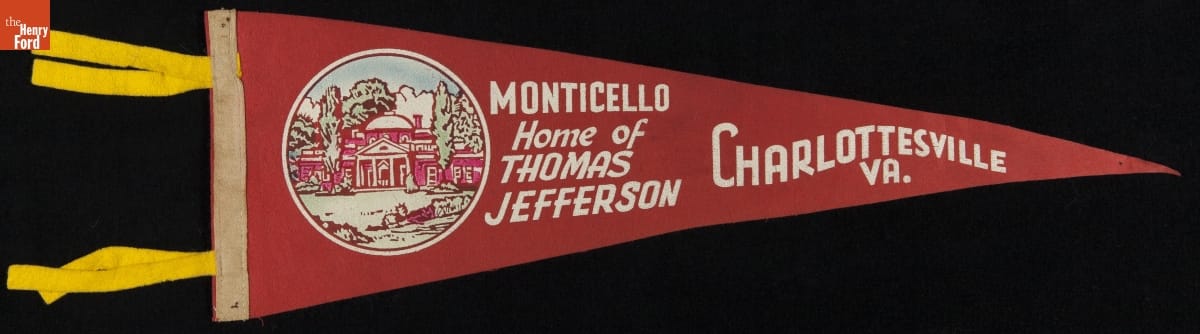
- Pennant, "Monticello," 1940-1965 - After World War II, highways were flooded with family vacationers out to enjoy their new cars and all that America had to offer. Some families wanted to view the country's scenic beauty; others headed for places of historic importance such as Thomas Jefferson's Monticello. Souvenirs like this pennant helped vacationers remember their visit to Jefferson's Virginia home.
- 1940-1965
- Collections - Artifact
Pennant, "Monticello," 1940-1965
After World War II, highways were flooded with family vacationers out to enjoy their new cars and all that America had to offer. Some families wanted to view the country's scenic beauty; others headed for places of historic importance such as Thomas Jefferson's Monticello. Souvenirs like this pennant helped vacationers remember their visit to Jefferson's Virginia home.
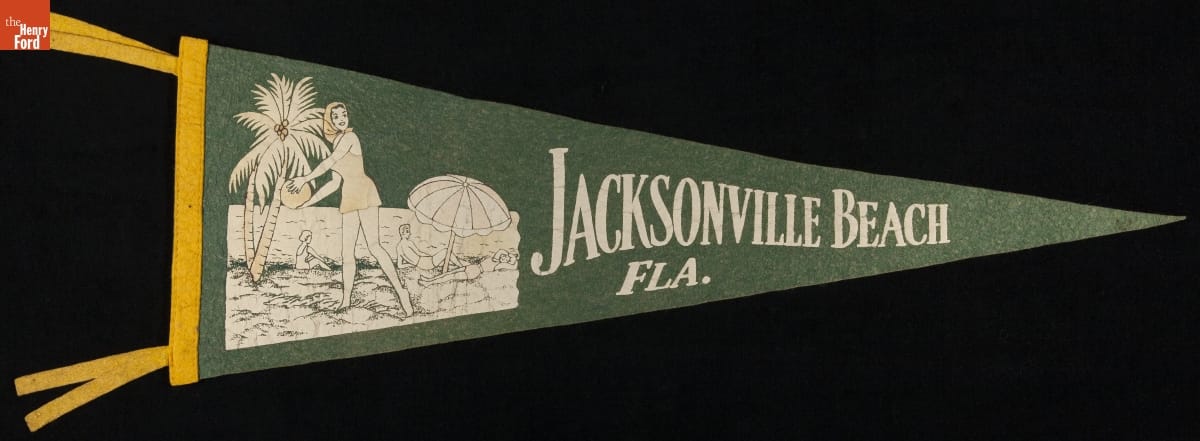
- Pennant, "Jacksonville Beach, Fla.," 1940-1965 -
- 1940-1965
- Collections - Artifact
Pennant, "Jacksonville Beach, Fla.," 1940-1965
- Pennant, "Atlantic City," 1940-1965 -
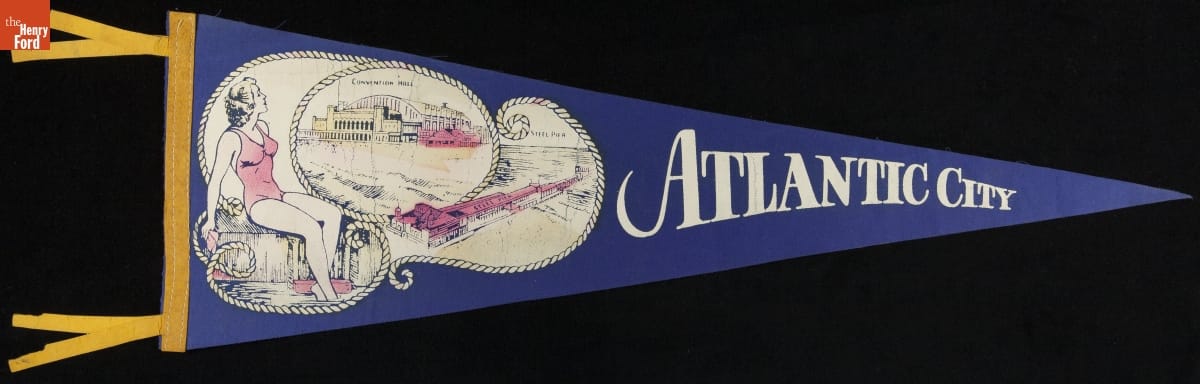
- 1940-1965
- Collections - Artifact
Pennant, "Atlantic City," 1940-1965